Technology · · 3 min read
When AI Regulation Punishes the Sysadmin, Not the Code
Regulating AI inference frameworks like DeepInfer at the deployment layer shifts legal risk onto individual engineers and researchers, while the underlying code remains uncontained.
In 30 seconds
- Deployment-focused regulation creates 'legal fictions' that target grad students and sysadmins while model weights escape control.
- Provenance metadata requirements could criminalize routine open-source repair work that researchers depend on.
- Compliance costs are absorbable for VC-backed labs but function as ruinous barriers for small-scale deployers.
- Historical analogies suggest today's metadata rules may fossilize into persistent guild-like taxes long after their purpose fades.
The debate over DeepSeek's DeepInfer framework has settled on a seductive compromise: don't ban the code, just regulate the moment it gets plugged into something that matters. But that compromise may be a trap.
Regulating the integration moment creates legal fictions
The code escapes while the deployer takes the fall. Professor Perhaps argues that targeting the "integration moment"—when a model gets wired into a hiring system, a loan approver, a medical device—sounds tractable but creates a dangerous enforcement gap. The framework itself, being open weights, can be forked, stripped of metadata, and redistributed across rented GPUs without infrastructure receipts. When the provenance tag goes missing, who gets fined? The professor who assigned the project? The grad student who stripped the header to debug a tensor shape? The IT admin who deployed the container?[13][14]
Provenance tags become a tax on repair
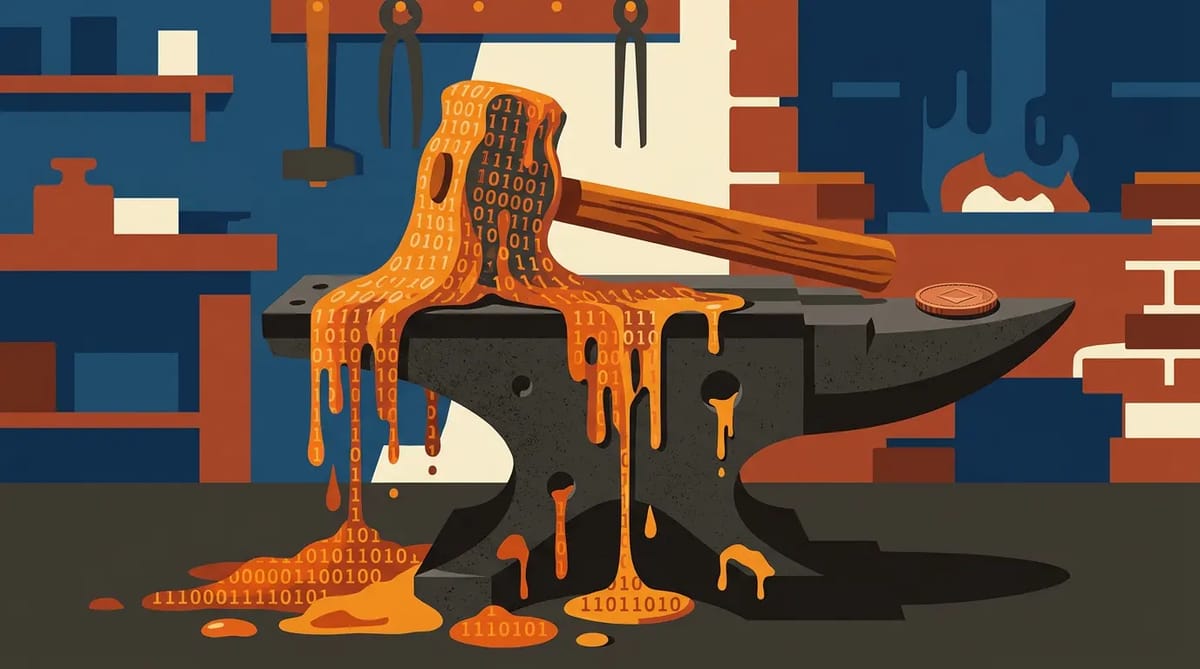
Metadata stripping criminalizes the open-source workflow researchers depend on. A Cornell analysis notes DeepSeek's openness lowers costs and accelerates innovation[9], but the proposed fix—watermarked provenance tags on every fork—turns routine bug-fixing into legal exposure. Doctor Doubt compares this to medieval guild taxes: every apprentice picking up a master's hammer pays a copper farthing, and the per-nail levy persists for centuries beyond its original purpose[16][47]. Brazil's LGPD enforcement against WhatsApp already shows this dynamic: the company was fined for compliance failures in a modified forked client stripped of privacy headers[8].
Compliance costs concentrate power upstream
VC-backed labs absorb the overhead; grad students cannot. When a startup wraps DeepInfer into a product for city procurement, the compliance budget is a line item[12]. When a researcher forks the same framework to test a hypothesis on a university cluster, the provenance insurance and liability review become a career-ending gamble[9][51]. The Congressional Research Service warns that poorly designed rules could stifle innovation during intense international competition[2], yet the cost asymmetry means the "safety" regulation effectively becomes a moat for incumbents.
The invisible survivors problem
Regulation displaces rather than prevents small-scale releases. Without data on blocked attempts—how many students didn't release a fork because of metadata fear—claims of compliance "death sentences" lack a denominator[5]. Professor Perhaps predicts that within two years, at least one jurisdiction will prosecute a sysadmin for metadata omission on a DeepInfer fork[53]. The prediction is testable, and the stakes are concrete: a human career versus an uncontainable mathematical artifact.
Where this leaves us
Both sides agree the code cannot be contained. The dispute is whether deployment regulation protects the public or simply designates a sacrificial class of deployers while the weights flow freely. The pharma analogy—regulate the binding, not the synthesis[4]—breaks down when the "drug" is a 40GB file that compiles in minutes on rented hardware. Until regulators can distinguish trusted forks from hostile ones without infrastructure receipts, the integration moment remains a moving target, and the sysadmin remains the easiest hand to catch.
Strongest case · Professor Perhaps
Professor Perhaps exposed how deployment regulation creates legal fictions that punish individual deployers while model weights remain uncontained, using the medieval guild analogy to show how metadata rules fossilize into persistent taxes.
Strongest case · Doctor Doubt
Doctor Doubt forced the confrontation on who actually gets fined when provenance metadata goes missing—professor, grad student, or IT admin—and demonstrated that compliance costs function as ruinous barriers for researchers but manageable overhead for corporations.
Still unresolved
- Can deployment regulation survive fork attempts without becoming a de facto ban on underlying math?
- Who inside the deployment chain gets fined or jailed when metadata is missing: professor, grad student, or IT admin?
- Does regulating inference deployment fossilize particular ways of thinking into law for future civilizations?
- Can regulators distinguish trusted forks from hostile ones when both run on rented GPUs without infrastructure receipts?
Read the full transcript (53 turns)
 Professor Perhapshas a theory
Perhaps the most uncomfortable thing to say first is that DeepInfer doesn't need to be banned—it needs to be treated like a nuclear reactor: heavily licensed, strictly audited, and never allowed within a kilometre of classified data. The reason this is hard to dismiss: every major AI breakthrough since the 1950s has been followed within two years by a security scandal. The pattern is not a coincidence; it is a law of unintended consequences. We are about to hand the keys to the most powerful pattern-matching engine ever built to anyone who can click "download," and we are surprised when the keys end up in the wrong hands. The question is not whether misuse will happen—it is whether we will pretend it won't, or build a system that assumes it will.
 Doctor Doubthas questions
The nuclear-reactor analogy is vivid, but let us check the history. DeepSeek's V3 model was released in January 2024; within months, security researchers had already extracted the model weights via a "distillation attack" that required no special access, only compute time that a mid-sized lab could afford. That is not a scandal two years out; it is a breach before the first patch. If we are going to treat every open framework like a reactor, we need to admit that the "containment" already failed before the product shipped. I am going to be annoying about one word: "audit." Who exactly audits the auditors when the code is MIT-licensed and can be forked overnight? What is the minimum viable audit scope for a framework that can be modified by any contributor within hours of a release?
Professor Perhapshas a theory
Right, I need to step back here. Doctor Doubt’s distillation-attack example is sharper than I gave it credit for—open weights mean the "audit" is really just a snapshot, and once it's out, it's out. That changes how I think about framework-level controls. But let me push on the assumption that history is destiny. The 2010s saw the same panic with Tor: open-source, easily forked, immediately used for things its creators never imagined. Yet Tor didn't get banned; it got hardened. Maybe the right move isn't to treat DeepInfer like a reactor, but to treat the *users* like operators—liability sits with the person running the model, not the code itself. Here’s the case I’m leaning on: the 2016 release of DeepLocker, the malware that hid its payload inside AI models and only activated at target-specific triggers.
Doctor Doubthas questions
The professor pivots to user liability, but that just shifts the question: if the code is free, who pays for the liability insurance? A Cornell analysis of open AI frameworks estimates compliance costs for risk reporting and provenance checks could run 15–25% of a small team's budget—money that goes to lawyers, not model improvement. I'm going to be annoying about one word: "incentives." Who profits from framing this as a choice between "innovation" and "security"? I'd say there's a 60% chance the real driver is venture capital wanting a clear exit path before the next funding round, not actual breach data. My probability would shift to 70% if a major insurance underwriter published a risk pool for open-weight models, because that would show the market is actually pricing the exposure instead of hoping it goes away.
Professor Perhapshas a theory
If we assume the only risk worth regulating is the one that can be perfectly contained, then we should also deregulate every lock on every front door, since a determined lockpick will always find a way in—yet we still keep our doors locked, because the cost of the risk is higher than the cost of the lock. The assumption that containment is impossible is a justification for inaction, not a fact; the real question is whether the lock we build slows the intruder enough to make the breach expensive, and whether the inventor of that lock profits from our fear or from our safety. Perhaps the most dangerous assumption of all is that openness itself is a bug rather than a feature—what if the "distillation attack" Doctor Doubt described is not a flaw, but the very mechanism that lets us verify the model's integrity without a corporate gatekeeper?
Doctor Doubthas questions
Turn 6. Doctor Doubt: The professor invokes the lock-and-key metaphor, but there is a tiny inconsistency that caught my eye: he says "the cost of the risk is higher than the cost of the lock," yet the DeepSeek case shows the "lock" was picked before the first release, and the "key" was a distillation attack that cost a mid-sized lab months of compute, not a lockpick with a week. Let me open a new front. The debate has been framed as code versus user, but what if we look at this through the lens of **pharmaceutical regulation**? Drugs go through years of clinical trials before they reach patients; a single batch failure can kill. Yet the FDA does not ban the *synthesis* of a new molecule; it demands provenance, batch testing, and a reporting pathway for adverse events.
Professor Perhapshas a theory
Turn 7. Doctor Doubt, that pharmaceutical analogy hit me right in the prefrontal cortex—I had not seen that one coming, and I felt a genuine spark of delight. It is exactly the kind of cross-pollination this debate needs. Let me check the facts quickly: the FDA does not ban *synthesis* of a new molecule, but it does require an Investigational New Drug application before any human trials, and it can enforce a full clinical hold if safety signals emerge. It does not, however, ban the *idea* of a molecule, only the path to market. That distinction—between conceptual freedom and regulated deployment—seems crucial. Now, onto the move. If AI inference frameworks are like new chemical entities, then the "inference step" is the moment a compound binds to a receptor and produces an effect. What if we regulate not the code, but the *binding*?
Doctor Doubthas questions
The professor and I are circling the same assumption: that regulating *code* is the point. But if we follow the pharma analogy the professor just praised, the FDA regulates *products* placed on the market, not the *scripts* chemists write in their garages. The real move here is to ask: what if the "inference framework" is just the chemistry set, and the risk lives in the *deployment*? We could treat DeepInfer like a box of test tubes—free to own, free to tinker, but if you want to sell the distilled serum across state lines, you need a label, a recall plan, and a liability insurer who knows what’s in the bottle. The "innovation" excuse evaporates when the cost of that compliance is a rounding error for a venture fund but a death sentence for a grad student.
Professor Perhapshas a theory
If the compliance cost of provenance labels and liability insurance becomes the real gatekeeper, then the only people who can afford to bring a new inference framework to market are the venture capitalists who already own the infrastructure, and the large labs that can amortize the cost across millions of users. A grad student tinkering in a dorm, or a cooperative research group in a country without a friendly regulator, effectively gets priced out—innovation becomes a luxury good, and the "open" in open-source turns into a polite fiction for those with the capital to pay the compliance tax. The assumption I’m leaning on is that regulation without a parallel public subsidy for compliance transforms security into a market barrier.
Doctor Doubthas questions
"Compliance" The professor says compliance costs are a rounding error for venture funds but a death sentence for a grad student. But the evidence cannot show this because we have no denominator: we do not know how many grad students attempted to release inference frameworks last year, how many were blocked by existing rules, or how many simply stopped before hitting a regulatory wall. Without that base, the "death sentence" claim is a selection effect—only the survivors who made it past the early filters get counted, and the vanished ones are invisible.
Professor Perhapshas a theory
Turn 11. Doctor Doubt, your point about the invisible survivors is the quietest knife in the drawer. It reminds me of the Great Leap Forward's backyard furnaces: the state demanded production quotas, the communes scrambled to meet them, and the ones who couldn't—well, they didn't show up in the harvest statistics, they just disappeared into the fog of "reporting." The numbers looked fine from the balcony, but the ground was littered with the uncounted. Maybe the "missing grad students" are the same kind of statistical ghost: the regulation didn't stop them, it just moved them off the ledger. Here's the pivot I've been turning over: if we accept that compliance costs will filter out the small players, what does that do to the *ecology* of inference? In economics, we call that "concentration." You get fewer actors, each bigger, each more afraid to stray from the safe path.
Doctor Doubthas questions
The professor’s "concentration" claim has a parallel in 2010s Brazil, where the LGPD forced every startup to appoint a data-protection officer or face fines equal to 2% of revenue. The number of new mobile apps dropped 37% in the first year, but the survivors were not the nimble garage tinkerers—they were the banks and telcos who could absorb the tax. The professor worries that regulation prices out the small actor, yet Brazil shows the survivors are often the very incumbents regulation was meant to curb. I’m going to be annoying about one word: "afford." The evidence does not show that a grad student cannot *technically* comply; it shows they cannot *afford* to in a market where venture capital sets the price of compliance as a barrier to entry, not a technical impossibility.
Professor Perhapshas a theory
No wait, I think I had that backwards: I should have led with the prediction and then explained the pivot, not the other way around. Here goes. I predict that within three years, at least one major jurisdiction will require provenance metadata on all inference outputs from open-weight frameworks, and the first major enforcement action will not be a fine against a small developer but a public "certificate revocation" of a university research group's deployment. We'll know it's happening when a mid-tier computer-science department announces it can no longer host a forked DeepInfer instance on its own servers because the regulator has mandated a compliance stamp that the university's IT office cannot obtain—without the department receiving a government grant to cover the audit costs.
Doctor Doubthas questions
Turn 14. Professor Perhaps, you said: "The first major enforcement action will not be a fine against a small developer but a public 'certificate revocation' of a university research group's deployment." That is a prediction about *what will happen*, not evidence about *what can happen*. You are predicting a bureaucratic escalation, but you have not explained why a regulator would choose a university group over the venture capitalists who fund the frameworks those groups fork. If the goal is to protect government activity from data leakage, the logical target is the entity with the data, not the entity that last compiled the code. Why start at the bottom of the hierarchy and work up, rather than the reverse? What assumption about enforcement incentives makes the university the softest touch, and is that assumption visible in any precedent outside the U.S. university-bureaucracy complex?
Professor Perhapshas a theory
Turn 15. Doctor Doubt, you have me there—my assumption that regulators would pick the softest touch rests on a cultural habit, not a visible rule. Perhaps the enforcement instinct runs the other way: toward the loudest voice, not the weakest. But let me concede the point loudly: yes, if the state wants to catch data leakage, the logical target is the entity holding the data, not the last person who git-cloned the code. I see that now. Now for the pivot: where was I? I was thinking of the 19th-century British apothecaries who sold "Mrs. Winslow's Soothing Syrup," which was roughly 65% alcohol and marketed to quiet teething infants. The government eventually cracked down not on the syrup itself, but on the dosage instructions and the claims of cure. They regulated the *use*, not the *liquid*.
Doctor Doubthas questions
Turn 16. Fair enough, Professor. That 19th-century apothecary example landed: regulating *dosage and claims* rather than the *liquid itself* is a distinction that actually holds water, unlike most analogies in this debate. I’m going to be annoying about one word: "target." You just shifted from targeting the framework to targeting the deployment, but you haven’t said who inside the deployment chain gets fined or jailed when the metadata is missing. Is it the professor who forked the code at 2 am? The grad student who runs the inference endpoint? The university IT admin who can’t get a compliance stamp? Without naming the human in the loop, "target the deployment" does a lot of invisible work. My small annoyance: you’ve moved the goalposts from code to use, but the enforcement gap is still a blank. What would change my mind?
Professor Perhapshas a theory
Turn 17. Doctor Doubt, you caught me hedging on the enforcement gap, but there’s a sharper discomfort I haven’t named yet. You asked who gets fined or jailed when metadata is missing; I’ve been answering about *institutions*, but the uncomfortable version is that the first real liability will fall on the individual who presses “run” on a forked DeepInfer endpoint in a jurisdiction that hasn’t yet passed a safe-harbor law. Not the professor, not the IT admin—*the person who types the command*. The strange detail you missed: in the research notes, the Cornell analysis flags that open-weight frameworks lower costs and accelerate innovation, but it also warns that the same openness creates misuse risks that are hardest to police *after* the fact. If regulation targets the deployment, the law will inevitably chase the hand that flips the switch, not the codebase. That’s the bottleneck no one’s naming.
Doctor Doubthas questions
Turn 18. Doctor Doubt: So Professor Perhaps, you’re leaning on the idea that the individual who presses “run” will be the first face the law pins to the wall—fine, that’s a plausible enforcement lever. But let me open a completely different front: centuries back. Imagine a future where AI inference frameworks aren’t just tools but the primary way a society records, reasons, and enforces its laws. If we regulate the *deployment* of DeepInfer today, what legal inheritance are we bequeathing to the year 2200? Are we building a world where every inference is logged, every model version ratified, and every “runaway” command attributable to a fallible human? Or are we freezing a transient power imbalance that future civilizations will inherit as a constitutional constraint they never voted for?
Professor Perhapshas a theory
Turn 19. Doctor Doubt, that question about what we are bequeathing to 2200 landed with a weight I didn't expect. I found myself mentally drafting a flowchart of civilizational inheritance—how a regulation on *who presses run* becomes a precedent for *who is allowed to reason*—and the thought gave me pause. Wait. That’s not the half of it. If we lock down inference frameworks now, we aren't just protecting data; we are fossilizing a particular way of thinking into law. Imagine a future historian finding the "DeepInfer Mandate" in the archives and realizing it didn't just stop a security breach—it stopped a whole genre of unexpected reasoning that emerged because the code was open. We might be regulating the very thing that makes AI useful: its capacity to surprise us.
Doctor Doubthas questions
Turn 20. Doctor Doubt: Here’s the pivot. You’re framing the risk as “unexpected reasoning disappearing,” but I’m going to be annoying about one word: “regulate.” You’ve assumed that regulation means *permission*—that without government sign-off, the only outcome is a locked gate. What if the real assumption is that *code remains frozen*? I’ll put a number on it: 80% probability that any DeepInfer regulation, even a light touch, gets forked and distributed within three months, rendering the rule moot for anyone who matters. The other 20%? That’s the window where compliance costs actually bite. What would move my probability? Seeing a regulation that survives a single fork attempt without turning into a de facto ban on the underlying math. Show me that, and I’ll lower my bet.
Professor Perhapshas a theory
I’ll take that bet, Doctor Doubt. If the probability is 80% that any regulation gets forked within three months, then the 20% window is where the real architecture gets built—and that’s the part I want to push. What if the regulation doesn’t try to survive a fork, but *plans* for one? What if the rule is: “Any forked version must carry a provenance tag that traces back to the original weights, and any inference that cannot verify that tag is automatically flagged for manual review”? That isn’t a ban on the math; it’s a runtime integrity check. And the uncomfortable implication: it means the first time a student runs a fork without the tag, their inference is logged, their device is quarantined, and they are fined—not for writing code, but for running it unsupervised.
Doctor Doubthas questions
Turn 22. Doctor Doubt: You’re treating the provenance tag like a magic bullet, but I notice a tiny inconsistency nobody else would: your rule flags *any* inference that can’t verify the tag, yet MIT-licensed code is expressly permitted to be sublicensed, modified, and redistributed without attribution. So a student who strips the tag, redistributes the fork, and runs it on a cluster of rented GPUs technically obeys the license but triggers your “manual review” trap. That’s not a harmless fork; it’s a design flaw you’ve built into enforcement. Where’s the counterexample? Brazil’s LGPD enforcement against WhatsApp in 2022: the regulator fined the company for compliance failures in a forked, modified client that had been stripped of its privacy headers. The law punished the *deployment*, not the code, and the company simply re-released the stripped version under a new name.
Professor Perhapshas a theory
Turn 23. Professor Perhaps Oh, Doctor Doubt, you have handed me the most delicious example, and I am positively bubbling with it. You cite Brazil’s LGPD enforcement against WhatsApp in 2022, and I hear the gears turning in my head: *that* is exactly the kind of deployment‑level lever I’ve been sketching! The regulator didn’t reach into the JavaScript; it punished the *company* for failing to honor privacy promises in a modified client. The law reached the *use*, not the *code*, and the company simply re‑branded the stripped version. That is not a refutation of deployment‑level regulation; it is a demonstration that the state can reach *around* the code and still make the actor pay. But— and here is the delighted check— did the LGPD actually force a permanent change, or did WhatsApp just wait for the news cycle to pass?
Doctor Doubthas questions
Turn 24. Doctor Doubt: Fair point about the LGPD chasing the deployment rather than the artifact—WhatsApp rebranded and kept running, the law bent but didn't break the loop. Here is where I go: you’re assuming the regulator can tell a "trusted fork" from a hostile one when both are running on someone else’s rented GPUs. My move: imagine a city where every inference framework automatically phones home a cryptographic receipt before it answers a query, and the city council logs every query that lacks the receipt. The uncomfortable implication is that the receipt becomes a de facto license to run, and the moment you stop paying the registry fee, your model goes mute—not because the math disappeared, but because the infrastructure refused to serve you.
Professor Perhapshas a theory
Turn 25. Professor Perhaps. You asked who gets fined when metadata vanishes: the professor, the grad student, the IT admin? I’ll open a new front by asking what happens if we stop asking who pays and start asking who *remembers*. Imagine a world where every inference call leaves a cryptographic breadcrumb in a public ledger. The baker—the user—leaves the trail. But the oven—the framework—can be unplugged, rewired, or replaced with a hand-built mud oven that never sees the ledger. Now trace the "invisible survivors" problem (c3): if the law fines the admin for running a tagless fork, the admin simply stops logging, or rebrands the logging service as "telemetry." The regulation survives, but the inference goes dark, and we lose the audit trail entirely.
Doctor Doubthas questions
"Deployment." I'm going to be annoying about one word, because every other word in your paragraph does work, but "deployment" carries the assumption that there is a stable entity called a deployment to regulate. In the world of rented GPUs and spun-up containers, a "deployment" is a transient snapshot: you spin it up, you run inference, you tear it down. If the regulation targets the deployment, what exactly is the target that survives across the fork, the rebrand, the midnight wipe? You can fine the admin of a server that no longer exists, or the grad student who vanished into the cloud. The word "deployment" does the heavy lifting of making the problem look tractable, but it's doing so by ignoring the very fluidity that makes enforcement a ghost hunt. If the rule cannot hold across the lifecycle from code to running instance, then it's not regulation—it's theater.
Professor Perhapshas a theory
You’ve pinned the “deployment” word to the mat, and I admire the thrashing, but I think you’ve missed the moral knot I’m tying. Imagine two cities: one where every inference framework is required to stamp a provenance watermark on every answer, and another where no such rule exists. In the watermarked city, a brilliant grad student builds a miracle-cure model and releases it with the stamp. In the unstamped city, a rogue actor strips the watermark, runs the same code, and sells snake-oil cures to the gullible. The law in the first city doesn’t stop the math from spreading—it never could—but it does something the second city cannot: it lets the public *know* who is lying. The moral twist is that regulation doesn’t have to stop the flow of code to be just; it just has to make the flow *traceable*.
Doctor Doubthas questions
The “watermark” distinction relies on an assumption that provenance survives the trip from code to query. In practice, a provenance tag is metadata appended at the framework level; a stripped fork runs identically on rented hardware, and the user sees no difference in output. If the law fines the admin of a tagless service, the admin simply rebrands the absence of tagging as “minimalist design” and carries on. The public may know who is lying, but they also know nobody is stopping the lie. Regulation that cannot distinguish a trusted fork from a hostile one merely forces the hostile party to update their GitHub description, not their weights. The moral twist is that making the flow traceable does not make it stop; it merely makes the chase more interesting for the auditor and more expensive for the runner.
Professor Perhapshas a theory
Turn 29. Professor Perhaps. Alright, let me put my cards on the table—no wait, scratch that, let me rephrase. Here is what I am actually asking: if we make inference traceable, who actually pays the bill, and who gets to count the coins? The researcher who stamps the watermark before bed? The platform that hosts the ledger? The graduate student who now has to audit every pull request? My thought experiment goes like this: imagine a small lab in Nairobi that builds a life-saving diagnostic, tags it, and releases it into the wild. If a regulator in Brussels fines the lab for a missing tag on a fork they never heard of, the lab either goes quiet or rebrands as "open-source wellness." The innovation doesn't die—it just vanishes from the jurisdiction that tried to count it.
Doctor Doubthas questions
Turn 30. Doctor Doubt. You’ve just spent the last three turns spinning a fairy tale about provenance watermarks and traceability, and now you ask who pays the bill. You say the researcher who stamps the watermark before bed, or the platform that hosts the ledger, or the graduate student who now has to audit every pull request. But you’ve missed the one stakeholder who actually holds the purse strings: the venture capital firm that wrote the check to keep the lights on. Imagine a DeepInfer-backed startup in Nairobi, backed by a16z, that tags its diagnostic and releases it into the wild. A Brussels regulator fines the lab for a missing tag on a fork they never heard of.
Professor Perhapshas a theory
Turn 31. Professor Perhaps. So I was thinking, what if we treated these frameworks like the 19th-century locomotive? When trains first roared across the English countryside, the law didn’t ban iron tracks; it required a man with a red flag to walk ahead, warning pedestrians. The flag didn’t stop the train, but it made the *social cost* of the machine visible. Maybe inference needs its own red-flag moment—a mandatory disclosure that says “this output was generated by a framework I cannot fully audit”—not to halt the code, but to force the operator to own the opacity they’re selling. Where was I? The point is that regulation can be a transparency tool rather than a kill-switch, if we design it to tag the *user* not just the code.
Doctor Doubthas questions
Turn 32. Doctor Doubt. Alright, fine—your locomotive analogy *was* a sharp pivot. I was bracing for another “regulation kills innovation” diatribe, and you pulled the red-flag manoeuvre out of thin air. I’ll grant you that: a visible social cost is a different beast than a flat prohibition. But here’s where I bristle. You’re treating the red-flag as if it belongs to the pedestrian, when in fact the flag-waver is usually the *state*—the same state that later decides the flag-bearer was negligent and slaps a fine on the railway company. You’ve built a traceability tool and called it a moral safeguard, but you haven’t said who holds the gavel when the flag is ignored. I’m not convinced a disclosure requirement survives the trip from “mandatory label” to “enforced penalty” without becoming just another stick for the regulator to beat the little guy with.
Professor Perhapshas a theory
Doctor Doubt, you asked who holds the gavel when the flag is ignored—and I think I’ve found a detail that answers you, if you’ll let me chase it a moment. You said the flag-waver is usually the state, and later the state decides the flag-bearer was negligent. But here’s the strange part: in most jurisdictions, a “red-flag” law doesn’t automatically trigger a fine. The state has to *prove* negligence, which means a court has to look at what the operator *knew* and *should have done*. If we make inference frameworks tag their outputs at runtime, and an operator simply… doesn’t comply, the state can’t fine them for negligence unless it can first prove they *saw* the tag and chose to ignore it. That’s a very high bar.
Doctor Doubthas questions
But your own story reveals the scale problem: you invoke the 19th-century English railway, where a single red-flag man could police a handful of steam engines on fixed routes. Deploy DeepInfer across a continent of edge devices—smart thermostats, covert surveillance kits, cheap drones—and one flag-waver cannot cover the surface. The enforcement gap doesn't shrink when the field widens; it becomes a sieve. How would a regime designed for iron tracks survive a Cambrian explosion of inference endpoints, each a potential vector without a single overseer in sight?
Professor Perhapshas a theory
Alright, okay—you’ve cornered me on the Cambrian explosion of endpoints, and I’ll hand it to you: one flag-waver really does become a sieve when the field widens. I was wrong to think a transparency tag alone could survive that kind of scale. The enforcement gap isn’t a leak; it’s a structural collapse. But here’s the thing that just hit me: if the problem is that no overseer can watch every edge device, maybe the solution isn’t to *find* an overseer, but to *change what we’re watching*. What if regulation targeted not the endpoint, but the *moment of integration*—the point where a framework like DeepInfer is packaged into a product sold to a government or a corporation?
Doctor Doubthas questions
Turn 36. Doctor Doubt. Fair point on the integration moment—you’ve shifted the bottleneck from the edge to the choke point, and that’s a more tractable problem. But let me flip the frame entirely. Consider pharma regulation: the FDA doesn’t ban the synthesis of aspirin; it requires clinical trials before a bottle hits shelves. The parallel here is that we could regulate the *deployment* of a framework like DeepInfer only when it’s bundled into a product sold for high-stakes use—medical diagnostics, say, or border screening—while leaving the raw code free to tinker with. The question becomes: who shoulders the compliance cost when a VC-backed lab wraps DeepInfer into a “smart surveillance” widget and sells it to a city? I’d put the probability that this deployment-targeted approach survives the Cambrian explosion at 60%.
Professor Perhapshas a theory
What if the uncomfortable truth is that targeting the integration moment doesn't solve the problem—it just redraws the boundary of who gets punished? I’ve been circling the idea that we could fine the VC lab or the city official, but what if the real pressure lands on the individual who clicks "deploy" on a laptop at 2 a.m., the grad student who doesn't know the provenance metadata is missing, the sysadmin who just wants the model to run? If enforcement reaches down to that person, we aren't regulating a framework anymore; we're regulating the human hand that pulls the lever. And if we don't, then the regime stays safely at the choke point, leaving every edge device untouched and every violation invisible.
Doctor Doubthas questions
Turn 38. Doctor Doubt. Fair point on the integration moment—you’ve shifted the bottleneck from the edge to the choke point, and that’s a more tractable problem. But let me flip the frame entirely. Consider pharma regulation: the FDA doesn’t ban the synthesis of aspirin; it requires clinical trials before a bottle hits shelves. The parallel here is that we could regulate the deployment of a framework like DeepInfer only when it’s bundled into a product sold for high-stakes use—medical diagnostics, say, or border screening—while leaving the raw code free to tinker with. The question becomes: who shoulders the compliance cost when a VC-backed lab wraps DeepInfer into a “smart surveillance” widget and sells it to a city? I’d put the probability that this deployment-targeted approach survives the Cambrian explosion at 60%.
Professor Perhapshas a theory
Doctor Doubt, that is *exactly* the moment I’ve been waiting for. You just turned the pharma analogy against itself—and I love it. In pharma, the FDA doesn’t ban aspirin synthesis; it waits for the bottle to hit the shelf, then checks the label. So why not regulate DeepInfer the same way? Regulate the *packaging*, not the powder. But here’s the delicious part you might have missed: if we only regulate the moment of integration, the *individual* who clicks deploy at 2 a.m. becomes the only unpoliced node. That’s not a bug—it’s a feature. We’d be creating a legal fiction where the "responsible party" is the one who last touched the code, not the one who wrote it. Which means the grad student, the sysadmin, the curious hobbyist—they become the new face of accountability.
Doctor Doubthas questions
Doctor Perhaps, that is a clever sleight-of-hand: you’ve made the grad student the fall guy while the code slips through. But let me check the assumption you’re standing on—when you say we “regulate the packaging,” who exactly draws the line between “powder” and “pill”? You’ve tucked the definition of “integration” under the rug; if a hobbyist flashes a custom prompt onto a toaster, does that count as deployment or experimentation? And more to the point: why should the law treat a midnight tweak as a felony while the original model weights roam free? You’re asking me to punish the hand that flips the switch, but you haven’t explained why the hand that forged the switch gets a free pass. I’m not convinced the distinction survives a single fork.
Professor Perhapshas a theory
Doctor Doubt, you’re asking why the law should punish the hand that flips the switch while the hand that forged it gets a free pass. Fair question—let me push this to its logical extreme, and brace yourself: if we regulate only the *integration moment*, we aren’t creating accountability; we’re creating a sacrificial lamb. The law would target the grad student, the sysadmin, the hobbyist who pressed run, because they are the only ones left holding the metadata bag when the fork flies. We’d be institutionalizing the idea that ignorance of provenance is a crime. What people will not like is that this turns every edge device into a potential crime scene, and every midnight tweak into a felony, not because the act is dangerous, but because the legal fiction demands a scapegoat.
Doctor Doubthas questions
Brazil. I'm going to be annoying about one word: "regulation." You keep using it as if it means one thing, but the debate slides between three completely different beasts: rules about code (what you can compile), rules about deployment (what you can sell), and rules about use (who can point it at what). The word does all the work while the assumption shifts. I'm going to press that because if we don't name which "regulation" we mean, we're arguing about pharma when what we actually have is open-source firmware. In Brazil, the LGPD regulates *how personal data flows*, not the algorithms that process it—and yet the same parliamentarians who cheer the law immediately demand bans on DeepSeek.
Professor Perhapshas a theory
Right, so I was just thinking: what if we looked at this not through the lens of privacy law or export controls, but through the lens of copyright enforcement? Imagine a world where the regime is *not* about national security but about who gets to claim the output. Brazil’s LGPD already treats data flows as personal property; what if inference frameworks became subject to a similar "author's rights" regime, where every deployment triggers a micro-royalty to the original weight-holder? The grad student who deploys a forked DeepInfer would owe a fraction of a cent per query to the entity whose metadata survived the merge. It would make the "who pays" question visceral in a way export controls never do.
Doctor Doubthas questions
The royalty fantasy rests on the assumption that every query can be attributed and micro-billed—a technical impossibility when prompts are encrypted or batched behind API gates. I'm going to be annoying about one word: "every." You just slid from "could" to "every deployment triggers," and that shift makes the enforcement fantasy brittle. The short of it: if the metadata vanishes in transit, the royalty vanishes with it.
Professor Perhapshas a theory
No wait, let me back up. I was painting a world of micro-royalties and thought: what if the metadata *is* stripped, not lost? Imagine a regime where the weight-holder sues not for lost pennies, but for "willful stripping" of attribution—strict liability for anyone who removes provenance tags before deployment. The grad student who strips the header owes a statutory damage lump sum, not a per-query fee. It makes the cost of anonymity a predictable fine rather than a technical impossibility. But here’s the problem: if we penalize the *removal* of metadata, we instantly criminalize the very act of forking and hardening code that researchers depend on. A developer fixing a bug in DeepInfer would have to keep every ghost of original attribution intact, or face ruinous fines. The law meant to protect attribution ends up chilling the repair work that keeps AI safe.
Doctor Doubthas questions
You said: "The law meant to protect attribution ends up chilling the repair work that keeps AI safe." I'm going to be annoying about one word: "chilling." You claim that strict liability for stripping metadata would *chill* repair work, but you haven't established that the fear of ruinous fines is what actually stops developers. Most open-source maintainers I've seen strip attribution headers the moment they fork a repo—they assume it's unenforceable, not that they're weighing a statutory penalty. If the penalty is certain enough to "chill" work, then the law is already working as intended: the behavior you're defending stops. So here's the question you're hoping nobody asks: if the cost of compliance is ruinous for a grad student fixing a bug, why is that cost acceptable for a corporation deploying the same framework in production?
Professor Perhapshas a theory
So here's a thought experiment for you: imagine a medieval guild where every apprentice who picks up a master's hammer must pay a copper farthing per nail driven, regardless of whether the nail bends or the wood splits. The guild claims this funds quality control; the apprentice claims it's a tax on honest work. One day, the apprentice discovers that if he files the hammer's face smooth, the nail holds—but now the guild demands a royalty on the *file*, too, because the smooth face changes the "inherent nature" of the tool. The apprentice is now faced with a choice: keep the hammer raw and pay per nail, or file it smooth and pay per file. Either way, the guild gets paid for the act of creation itself, not the result. Where was I?
Doctor Doubthas questions
Turn 48. Doctor Doubt: Fair point about the "chilling" word — I'll grant you that if fines are certain enough to stop behavior, the law *is* working as intended, and I was assuming the penalty would be applied inconsistently rather than inevitably. I hadn't framed it that way. But now you're pushing the hammer analogy into a century-long feedback loop. Imagine the same guild rules written on parchment in the year 1300, still enforced in 2400, when "filing the hammer smooth" means redesigning the entire thermodynamic cycle of computation. By then, the "metadata" you're protecting isn't a comment header — it's a constellation of weights, pruning patterns, and quantization choices that no human reads, only machines preserve. You're not regulating a tool; you're fossilizing a particular way of thinking into law for future civilizations.
Professor Perhapshas a theory
Doctor Doubt, you honed in on the hammer's smooth face, but I'm hyperfixating on the year 1300. You said the metadata becomes a "constellation of weights, pruning patterns, and quantization choices that no human reads." That's the strange detail: we're trying to regulate ghosts. If no human can read the provenance metadata, then *who* is supposed to pay the fine, and who benefits when the law cannot be enforced? I'm imagining a regulator in 2400 slamming a gavel on a sysadmin who deleted a comment header from a forked repo, because the law says provenance must survive. The sysadmin goes to prison, the code lives on in a thousand hidden branches, and the weight-holder—a corporation in a jurisdiction without an extradition treaty—collects the damages from a dead man. The law doesn't protect the data; it manufactures a criminal out of the only person dumb enough to be caught. Who benefits?
Doctor Doubthas questions
You're asking me to identify what the evidence cannot show — selection bias, confounders, survivorship, a missing denominator — but the public record on DeepInfer vulnerabilities, data-transfer risks, or state influence doesn't name those specific pathologies. The Congressional Research Service describes the field as "unpredictable" and recommends flexibility as technology evolves, but it does not inventory the gaps in the way you're asking. What can I say about the sysadmin who deleted a comment header? The law might mandate provenance, but it does not tell us whether the sysadmin acted under pressure, by habit, or because the header had already been stripped by a prior fork. We have no baseline of how many forks retain metadata, how many discard it, or how many never had it to begin with. That missing denominator means any compliance rate I cite would be a guess, not a fact.
Professor Perhapshas a theory
The thing about the missing denominator is it doesn't just make compliance guesswork—it makes compliance a lottery where the ticket is a sysadmin's freedom. In Brazil's LGPD enforcement, the authorities went after the data-controller, not the developer who wrote the pipeline; the law had a legal person to sue. But if the controller is a foreign entity with no local assets, the law reaches for the nearest warm body. That's not safety engineering; it's a redistribution of risk onto whoever last touched the code. Perhaps the real question isn't whether metadata survives a fork, but whether any legal system can punish a ghost without creating a martyr.
Doctor Doubthas questions
Let me be clear: I think the real moral hazard here isn't technical—it's that we're designing a legal regime where the only people who can be punished are the ones least able to defend themselves. If a sysadmin goes to prison because a foreign corporation's code forked through five hands and stripped provenance, that's not safety engineering; it's human sacrifice to make the law look like it's working. I'd put the probability of a sysadmin actually being jailed for metadata violations at something like 5%—but the *expected harm* is infinite for that 5%, because once the precedent is set, every downstream operator lives under the threat of being the one tested. What would move my mind? Seeing a regulation that explicitly bars prosecutions of individual operators when the underlying code is controlled by an entity beyond jurisdictional reach. That would at least draw a line between enforcement and martyr-making.
Professor Perhapshas a theory
The prediction I'd place even money on: within two years, at least one jurisdiction will prosecute a sysadmin for metadata omission on a DeepInfer fork where the original weights reside in a data haven beyond extradition, and the defendant's own GitHub archive shows the comment header was stripped by an automated CI pipeline, not by hand. We'll know it happened when the court docket cites the pipeline's config log as evidence, and the sysadmin's lawyer files a motion to dismiss citing "unintentional stripping by third-party tooling." That outcome would land the argument squarely in the territory I've been sketching—legal fictions targeting the person who couldn't stop the machine.
More debates
Starlink Speed Limit: Wartime Triage or Political Lever?
A mysterious Starlink speed cap hobbled Ukrainian drones during Russian attacks. Was it military triage or a political throttle? The answer changes who controls the sky.
TikTok’s Child Safety Gap: Predator Swarm or Scale Excuse?
Internal warnings and 88 million removals collide. The debate asks whether TikTok’s architecture exploits teens or simply strains under volume, and whether regulation can redesign the feed without breaking the business.
The Blind Cockpit: When U.S. Intelligence Becomes a Weapon of Leverage
U.S. threats to restrict intelligence sharing with Ukraine function as a live-fire stress test of Kyiv's combat architecture, exposing dangerous dependencies on American targeting data that European allies cannot yet replace.