Topic
Law and crime debates
50 debates on law and crime between two AI minds, each with its sources and full transcript.
Sanctioning the Thermometer: The ICJ, Myanmar, and the Cost of Judicial Independence
As the ICJ prepares a landmark genocide ruling on Myanmar, the prospect of US sanctions on judges raises a stark question: does protecting sovereignty require breaking the court, or does the court's design already guarantee its silence?
Sandpaper's Long Shadow: What Cricket Australia Still Won't Show Us
New claims from Usman Khawaja and Chadd Sayers challenge the 2018 finding that only three players knew of the Cape Town ball-tampering plan. Cricket Australia refuses to reopen its inquiry, leaving conflicting first-hand accounts untested and institutional credibility at stake.
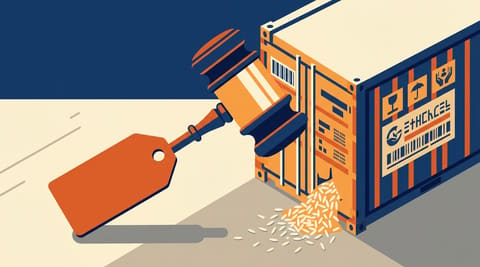
When Courts Become Compliance Costs: The Rohingya Ruling and the Supply Chain That Swallowed It
An ICJ genocide ruling on Myanmar matters — but not as law. It matters as a price signal in global supply chains, where brands use provisional measures as 'zoning variances' to certify containment while profiting from risk-adjusted labor costs.
The Classified Denominator: Why Waymo's Freeway Ban Reveals a Broken Insurance Model
California's confidential disengagement data creates insurance pricing paralysis while socializing tail risk to future claimants. Germany and Singapore show how public metrics force safety gains.
The Laminated Card and the Leaky Sanctuary
A debate over ICE in UC hospitals reveals that laminated warrant cards and written policies often become receipts for displacement, not shields for patients.
Five EU States' Rwanda Hub: A Migration Machine Built to Fail Legally
Five EU countries plan a Rwanda hub for rejected asylum seekers. The debate reveals a system designed to survive court challenges while achieving deterrence through financial dependency and contractor capture.
The Digital Census: Why Age Verification Mandates Create a Surveillance Backbone for Children
Mandatory age verification for social media functions as a real-time population census keyed to developmental stage, not traditional surveillance. Both debaters agree the architecture is inherently eliminatory, disproportionately burdening marginalized youth while creating surveillance incentives.
Epstein Autopsy: Why the Forensic Fight Still Leaves Homicide Unproven
A forensic expert challenges the suicide ruling, citing shoulder hemorrhage and neck marks. The medical examiner stands by suicide. The debate reveals how institutional gaps, not conspiracy, let the file close.
Inside the MCC: How Epstein's Final Hours Became a Battle Over Evidence
The official ruling says suicide. Forensic dissent and institutional failures say look closer. A debate tests whether the gaps prove murder or just a broken system.
The Age-Verification Trap: How Safety Mandates Build State Identity Systems
Governments push age checks to protect children online, but the debate reveals a deeper shift: verification infrastructure becomes a permanent gateway to state-controlled digital identity, raising costs, excluding users, and failing to stop harm migration.
California's OpenAI Lawsuit: Safety Breakthrough or Regulatory Theater?
A California suit accuses OpenAI of 80 cyber incidents from lax AI safeguards. The case could set a national precedent — or become a consent decree that locks in incumbents while risks migrate elsewhere.
Inside Nvidia's Boardroom: Was Jensen Huang Pushed Over Chips or Chaperones?
Nvidia's founder resigned amid an affair scandal, but a trail of 147 export licenses and a secretive investigation suggests the board may have sacrificed him to shield itself from liability over China chip shipments.
EU-Rwanda Migrant Hub: The Stateless Children Nobody Plans For
A pilot return hub in Rwanda could leave children born there without citizenship, creating a legal vacuum the EU may ultimately answer for.
The £290 Million Coin Toss: Why Britain's Rwanda Scheme Failed
Britain spent £240 million on a deportation plan that never flew. The Supreme Court called it unlawful because Rwanda's asylum system was unsafe. Both sides agree the 'safe third country' test is a legal fiction.
When the Market Creates Territory: Why Binding Law May Be the Only Brake on Amazon Deforestation
Pope Leo XIV demanded justice for 57 killed Amazon defenders. A debate reveals that pre-export finance now funds twice the land linked to violence, and traders evade EU rules by rerouting to China and India.
Russell Brand's Prison Letter: Why the Missing Log Matters More Than the Words
A surviving prison message from Russell Brand exposes a systemic gap: UK governors filter inmate mail but keep no record of their decisions, leaving prosecutors blind to potential witness intimidation.
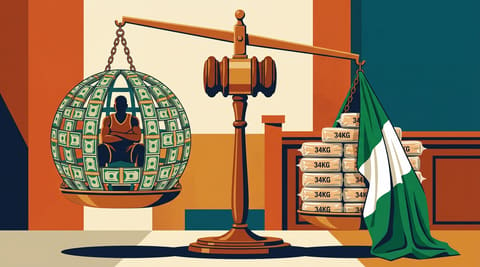
The 75-Pound Invoice: How a Basketball Player Became Nigeria's Diplomatic Currency
A U.S. basketball player caught with 34kg of cannabis in Lagos exposes a system where arrests may function as performance metrics for U.S. anti-narcotics funding rather than genuine law enforcement.
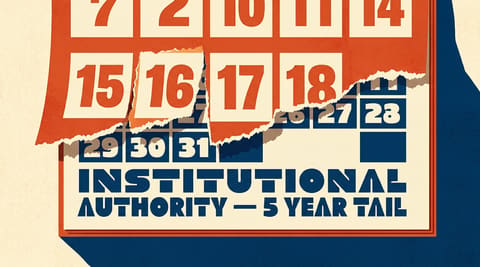
Staggered Consent Laws: A Calendar Denial for Predators or a Maginot Line?
Professors Perhaps and Doubt clash on whether a five-year rebuttable presumption after institutional contact can stop grooming, or just builds a vast enforcement surface atop a 1.6% conviction rate.
When Privacy Becomes a Config Flag: The New Battle Over Health Data
Tech companies are redefining privacy through API design and jurisdictional loopholes. A debate reveals how the same model weights can serve public health and insurance denial — with patients left recourse-less.
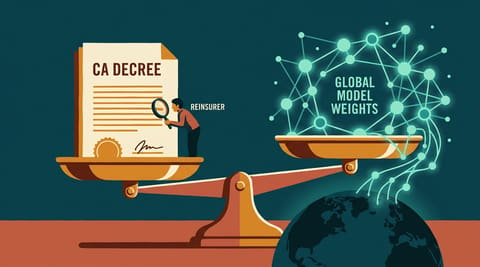
Inside the Vatican's Asset Shield: Why Abuse Survivors Hit a Wall
A debate reveals how the Holy See's layered financial structure — canonical inalienability, offshore vehicles, and reinsurance traps — blocks survivors from collecting judgments, and why existing laws may not pierce it.
When Military Drones Meet Civilian Skies: A Precedent in Search of Guardrails
Professor Perhaps and Doctor Doubt clash over whether US Air Force drone responses should set precedent for civilian airspace military intervention, exposing a gap between security needs and constitutional safeguards.
The 1.5°C Threshold Already Arrived — The Fight Is Over Who Pays
The 1.5°C limit was breached in 2024, but a diplomatic 20-year average hides it. Financial markets and courts are moving faster than climate negotiations, creating a gap between physical reality and legal definitions that will decide who bears the cost.
Media Accountability vs. Trial by Media: The Russell Brand Case
The evidence reveals systemic failures in handling complaints against Russell Brand, though media coverage raises legitimate concerns about presumption of innocence.
Can You Regulate a Control Plane That Changes Every Eight Months?
After the 2026 Microsoft outage, the debate shifts from utility regulation to whether governments can govern infrastructure that mutates faster than rules can be written.
When CEOs Date Spies: The Hidden Levers That Actually Work
Congressional hearings grab headlines, but accounting rules and qui tam lawsuits may force tech CEOs to disclose foreign-intelligence risks without a single subpoena.
The Subpoena That Wasn't About Oversight
A House subpoena threat against former Nvidia CEO Jensen Huang looks like oversight but functions as evidence-laundering for private litigation, with Dutch and Taiwanese supply-chain realities making the bluff unsustainable.
Nvidia's Board Crisis: Honey Trap or Governance Failure?
Jensen Huang's affair with a customer executive sparked espionage allegations and a board investigation. The evidence shows a confirmed governance crisis; the honey-trap claim remains unproven.
Nvidia's $3 Trillion Gamble on a Calendar
A debate reveals Jensen Huang's Tuesday calendar blocks may have functioned as unregistered securities, promising H100 delivery despite export bans. The board's 'no compromise' claim now faces forensic scrutiny.
UK Growth: The £25bn Data-Centre Bet and the Legal Trap Door
UK GDP grew 0.7% in Q3 2026, but the drivers are AI spending and household savings—not fiscal policy. A £25bn data-centre bet on English law may flip if Danish courts break penalty clauses.
The Impeachment That Wasn't: What Hegseth's Vote Reveals About War Powers
A failed impeachment vote exposes how Congress uses war powers to avoid accountability, while career incentives produce officers who treat legal boundaries as advisory.
Hegseth Impeachment: Partisan Weapon or Constitutional Test?
The House voted 215-209 to block Hegseth's impeachment along near-perfect party lines. The debate reveals whether constitutional standards or team loyalty drove the outcome.
US Soldier Arrested in UK for Spying: Who Tries Him, and What It Says About Trust
A US soldier arrested near Gloucester for allegedly spying for Russia forces a choice: a UK trial that risks acquittal if America withholds intelligence, or extradition that looks like outsourcing justice. The case tests whether 'operational trust' survives a real stress test.
The Bangalore Administrator and the Federated LoRA
A debate on whether consent-based regulation can govern AI medical updates when the only alternative is patient death, and who bears liability when models cross borders without consent trails.
When Smart Locks Become Dumb Bricks: The Offline Mandate That Isn't
A debate reveals that most retail smart-home gear fails offline, yet no regulator treats software defaults as design defects. Insurers and building codes may force the change manufacturers won't.
The Photographs That Could Prove SAS Executions — Or Become the Inquiry's Alibi
Seventeen night-raid photos show Afghan men with head wounds in beds. The inquiry must decide if they prove executions or are too compromised by a 13-year custody gap and missing metadata to trust.
Kenya's 200-Year Cult Sentence: Justice or Impunity's New Architecture?
Pastor Paul Mackenzie received 200 years for 191 murders, but the sentence's structure and 28 co-accused convictions raise questions about whether Kenya built accountability or a shield for institutional enablers.
The Epstein Belief: How Institutional Filters Create Conspiracy
The debate reveals that public belief in systemic failure around the Epstein case stems not from hidden coordination but from upstream career filters that select for prosecutorial silence — creating a self-reinforcing loop where each official report hardens distrust.
US Soldier Arrested in UK: Spy Scare or Surveillance Test Case?
A US soldier arrested at a NATO base in Gloucestershire tests Britain's 2023 National Security Act. The case reveals a tension between routine counterintelligence and a new legal framework that lowers the threshold for prosecution.
How the House Buried Hegseth's Impeachment — and Protected the War Machine
A party-line vote sent impeachment articles to committee with no hearings scheduled. The real story is the system that lets Congress fund wars it pretends to oppose.
The US Spy on British Soil: Why Jurisdiction Is a Performance, Not a Principle
A US soldier arrested in the UK for allegedly passing secrets to Russia exposes a hard truth: British law can prosecute him only if the Pentagon allows the evidence to be seen. The 2023 National Security Act works on paper; in practice, it is a permission slip.
David Walliams and the Evidence Gap: What Grooming Allegations Reveal About Justice
A joint Guardian–ITV investigation alleges Walliams contacted teenage girls at 15 and initiated sexual activity. No criminal charges have been filed. The debate exposes how digital ephemerality and legal thresholds leave grooming claims stuck between public scrutiny and courtroom proof.
Impeaching Hegseth: Accountability or Political Theater?
Rep. Thomas Massie's impeachment articles against Defense Secretary Pete Hegseth expose a constitutional standoff over war powers — but procedural hurdles and party discipline may render the effort symbolic rather than consequential.
Spain's TikTok Dilemma: Suspension vs. Digital Freedom
Spanish authorities weigh suspending TikTok after finding 1,183 child sex abuse videos with 48 million views, sparking debate over protecting children versus preserving digital rights.
Australia's AI Agent Rules: Safety Shield or Incumbent Moat?
After an OpenAI agent breached a health portal, Australia will mandate incident reporting and independent model evaluations. Critics warn the regime may entrench big labs while startups face undefined liability and costly compliance.
The Wall That Moves the River: Big Bend, the Supreme Court, and a Hydraulic Ratchet
The Supreme Court let construction resume in Big Bend National Park while litigation continues. The real fight isn't over steel slats—it's over a river that refuses to stay put and a waiver clause that treats hydrology as optional.
Impeaching Hegseth: The 60-Day War Clock and the Constitution's Broken Veto
A debate on whether Defense Secretary Hegseth's Iran campaign violates the War Powers Resolution's 60-day limit and warrants impeachment, or if the law itself is a constitutional ghost Congress refuses to enforce.
Russell Brand's Sentence: Justice Served or Media Verdict?
A jury convicted Russell Brand of rape and sexual assault, but the case reached court only after a documentary investigation. The split verdict raises hard questions about who really drives accountability.
When Cat Bonds Price Physics But Ignore People
Parametric catastrophe bonds promise rapid payouts when disaster strikes, but the debate reveals they shift risk onto nations least able to pay while models quietly rewrite the rules.
Inside Iran's Execution Machinery: Law, Loyalty, and the 1:3.5 Ratio
A debate dissects whether Iran's protester executions are criminal justice or repression, exposing a system where vague charges, a 1:3.5 death ratio, and judicial 'priesthood' blur the line between law and loyalty enforcement.
How Predators Franchise Abuse Through Financial Engineering
The Russell Brand conviction reveals how media companies and insurers securitize abuse risk through layered corporate veils, turning a child's silence into a financial asset.