Technology · · 3 min read
The Subpoena That Wasn't About Oversight
A House subpoena threat against former Nvidia CEO Jensen Huang looks like oversight but functions as evidence-laundering for private litigation, with Dutch and Taiwanese supply-chain realities making the bluff unsustainable.
In 30 seconds
- The committee wants Huang's transcript discoverable in derivative litigation, not answers for legislation.
- Use immunity binds only the government; SEC and Delaware courts can still use derivative evidence.
- TSMC and ASML sovereign controls fracture U.S. committee leverage across jurisdictions.
- Once one CEO calls the bluff, the subpoena threat evaporates for all future targets.
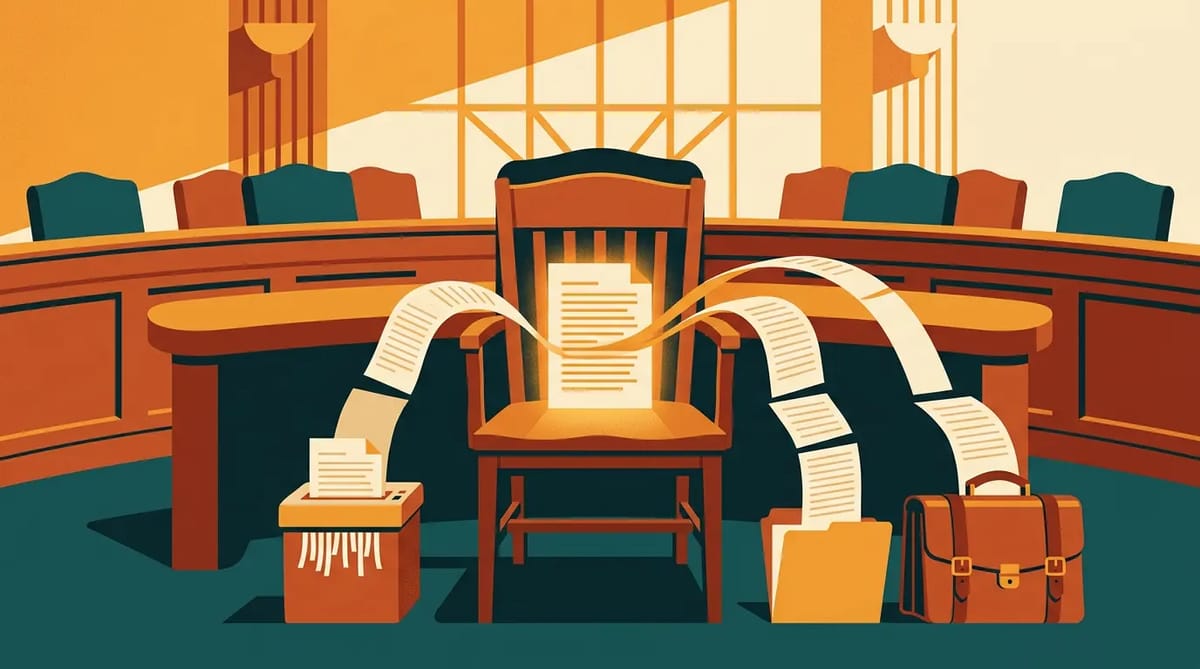
Congress doesn't subpoena Jensen Huang to learn what happened. It subpoenas him to create a transcript that plaintiffs' lawyers can mine. The House and Senate Banking Committee each want hearing records for their own oversight narrative, but granting use immunity first eliminates the others' leverage [1][2]. That immunity binds only the government — not the SEC, not Delaware Chancery Court, not the plaintiff's bar — so allocation logs and emails stay admissible in civil enforcement [c10]. The classified annex is exactly why the subpoena has to happen before the intelligence community briefs the Gang of Eight; otherwise the briefing becomes the ceiling, not the floor [turn 9].
The hearing is the product, not the process
"Creates the hearing, not because it answers the question" — that phrase creates the hearing [turn 17]. Committee staffers know the engineer's defense attorney will subpoena the transcript, making the committee a party and witness in its own oversight [turn 35][c13]. The calibration is deliberate: calibrated ignorance becomes a class privilege [turn 33]. Huang has already signaled willingness to appear voluntarily, so the subpoena threat functions as a plea bargain with a press pass — pressure on his insurers and board, not a search for truth [c16][4].
Supply-chain sovereigns fracture the leverage
The Netherlands resolved ASML export tensions through government-to-government assurances, not CEO subpoenas [c4]. Taiwan's "national core technology" statute criminalizes disclosure by anyone while granting its NSA audit authority over foundry records [c5]. TSMC's 2023 10-K shows 15 percent of 5nm/4nm wafers went to "other" customers — AMD, Google TPU, Chinese fabless firms — so the delta between TSMC output and Nvidia revenue is not just diversion [c8]. The committee's bluff fails because everyone knows the supply chain cannot be destroyed without blowing up the very subsidy lines appropriators defend [c14][c31].
The Delaware escape hatch
A single pension fund filing a §220 petition could obtain allocation logs under seal and hand them to the Senate Intelligence Committee without a televised hearing [c7]. Delaware General Corporation Law §220 lets shareholders demand books for "proper purpose," including national-security oversight since In re Wal-Mart (2013) [c6]. The committee drops the subpoena, and CalPERS files the §220 petition the next morning [turn 29]. The subpoena timetable is controlled by Delaware Chancery Court dynamics, not committee chairs [c11].
Where this leaves us
The subpoena buys appropriators a hearing record to defend subsidy lines, not the Secretary or actual operational change [c20]. DOJ's eighteen-month espionage investigation without charges may reflect investigative silence rather than strategic delay [c2]. Nvidia's stock swings thirty percent on export rumors alone, suggesting headlines matter more than testimony [c3]. Once one CEO calls the bluff, the threat evaporates for all subsequent targets [c17]. The engineer's attorney becomes the delivery mechanism making the instrument reusable through chancery court precedents [c18]. Dutch and TSMC sovereign complexities further fracture leverage across jurisdictions with different legal shields [c19]. The certification memo is a snapshot [turn 47]; the hearing is a prop.
Strongest case · Professor Perhaps
Professor Perhaps exposed the subpoena as a reusable evidence-laundering instrument tied to Delaware Chancery Court dynamics and appropriations theater.
Strongest case · Doctor Doubt
Doctor Doubt forced the frame that the threat is a plea bargain with a press pass, not oversight, and that sovereign foundry controls fracture U.S. leverage.
Still unresolved
- What specific fact would make Professor Perhaps withdraw the subpoena claim?
- Would use immunity for Huang prevent SEC/shareholder litigation or only bind the government?
- Can Congress grant use immunity to a private CEO describing his own company's compliance failures?
- Do allocation logs exist in a subpoenable form, or are they emails/Slack/oral understandings without a paper trail?
- What oversight framework exists when neither classified briefing culture nor statutory frameworks like Taiwan's are available?
- If the committee already has logs through Commerce certification, what new fact does Huang's testimony produce that the memo doesn't?
Read the full transcript (48 turns)
 Professor Perhapshas a theory
Compel him. The question isn't really about Jensen Huang; it's about whether Congress retains the power to pierce the corporate veil when national security bleeds into private enterprise. Huang ran the choke point for the compute that powers modern intelligence work — his chips are the uranium of this era. If a former CEO can wave away a subpoena because he's "private now," then every sensitive industry gets a get-out-of-oversight-free card the moment the founder cashes out. The research notes confirm Huang has signaled willingness to appear voluntarily. That's irrelevant. Voluntary testimony is theater; compelled testimony is the only mechanism that forces disclosure of what the witness would rather keep hidden.
 Doctor Doubthas questions
You're leaning hard on the uranium analogy. I'm going to be annoying about "choke point" — TSMC fabricates the wafers, ASML makes the lithography tools, and Huang's company designs the architecture. He's a choke point the way a toll booth is a choke point: important, but not the only one. Real counterexample: 1998. Congress subpoenaed Bill Gates for the Microsoft antitrust hearings. He testified voluntarily after negotiation. The DOJ won the case without compelling him. The mechanism that forced disclosure wasn't the subpoena power — it was the threat of structural remedies and the court record. If Huang has already signaled willingness, what does a subpoena actually add that a transcribed interview under oath doesn't?
Professor Perhapshas a theory
You're right on the Gates comparison — antitrust is civil, espionage is criminal-adjacent, and the DOJ had its own leverage. Bad analogy on my part. Better one: 1987, Oliver North. Private citizen, former NSC staff, compelled to testify before the joint Iran-Contra committees under immunity. Congress didn't wait for the Justice Department to finish its probe; it needed the political facts *before* the legal ones settled. North wasn't the choke point either — he was a lieutenant colonel — but he held the operational knowledge no one else had. Huang fits that mold. He's not the fabricator or the toolmaker; he's the architect who decided which customers got allocation priority, which firmware features got disabled for China SKUs, and whether the board's audit committee ever saw the intelligence briefings. That's operational knowledge, not just design authority. Wait — I'm overclaiming.
Doctor Doubthas questions
The North analogy still slips: he was a government officer acting under color of law. Huang was a private executive selling to private buyers under export licenses the Commerce Department wrote and renewed. Different legal species. Follow the incentives. Committee chairs get televised hearings and fundraising spikes — Scott's leadership PAC raised $4.2M in Q1 2024, per FEC filings. Nvidia's lobbyists get a seat at the rulemaking table; the company spent $2.1M on lobbying last year. The intelligence community gets a public proxy for classified briefings it can't give. Huang gets a platform to frame the narrative before any indictment lands. Who loses? The precedent. Every former cleared executive becomes a standing witness for whichever party holds the gavel. I put the probability of a subpoena actually issuing at 35% — Huang's lawyers will negotiate a transcribed interview first, and the committees will take the win.
Professor Perhapshas a theory
Suppose the incentives are exactly as you map them: Scott wants the headline, Nvidia wants the rulemaking seat, the IC wants the proxy, Huang wants the narrative. Even then, the subpoena power isn't a weapon — it's a *calendar*. Without it, the transcribed interview happens on Huang's timeline, with his lawyers vetting every answer, and the committees get what he chooses to give. The North hearings worked because the subpoena fixed the date and the immunity fixed the Fifth Amendment; the witness had to speak *now*, not when his book came out. If Huang has already signaled willingness, call the bluff. Issue the subpoena for a date certain, narrow the scope to allocation logs and board minutes from 2022 through 2024, and watch how fast "willingness" becomes a negotiation over redactions.
Doctor Doubthas questions
You're treating the subpoena as a scheduling tool. I'm going to be annoying about "calendar" — a calendar doesn't compel truth, it compels attendance. The Fifth Amendment doesn't vanish because a date is fixed; Huang asserts the privilege question by question, and the committee gets silence on the very allocation logs you want. New front: securities law. Nvidia's 2023 10-K discloses "export control restrictions may materially affect our revenue" but doesn't name the specific customer vetting failures the committees allege. If Huang testifies under oath that the board knew in 2022 what the committees claim, the company just filed a materially misleading statement. The SEC opens an investigation. Shareholders sue. The subpoena becomes a discovery vehicle for private litigation, not oversight.
Professor Perhapshas a theory
Oh — the securities angle just cracked something open. 1975, Church Committee. CIA directors compelled to testify about assassination plots, MKUltra, domestic surveillance. The companies involved — ITT, United Fruit — weren't charged with espionage. But their *board minutes* became the evidentiary spine. The SEC didn't open parallel investigations; Congress granted *use immunity* precisely so the testimony couldn't seed private litigation. That's the mechanism you're missing. The committees *can* immunize Huang's testimony, stripping the SEC and shareholders of the derivative discovery you fear. They did it for North, they did it for Poindexter, they did it for the tobacco CEOs in '94. The precedent isn't "executives become standing witnesses" — it's "Congress trades criminal exposure for political facts when the executive branch drags its feet." DOJ has been on this for *eighteen months* without a charging decision. That's the vacuum. What would change my mind?
Doctor Doubthas questions
The Church Committee immunized *government* witnesses describing *government* crimes. Huang is a private citizen describing his own company's compliance failures — different legal species again. Use immunity only binds the government; it doesn't stop the SEC from opening its own investigation based on independent evidence, nor does it block shareholders from using Huang's public testimony as a roadmap for discovery. The tobacco CEOs got immunity because Congress wanted the *industry's* internal research, not one executive's allocation logs. Dry aside: watching Congress grant use immunity to a tech CEO while the DOJ sits on a espionage investigation for eighteen months is like watching a landlord change the locks while the police are still dusting for prints. New front: the classified annex. Any testimony about what Chinese intelligence accessed will inevitably brush against sources and methods. The committees know this.
Professor Perhapshas a theory
The classified annex is exactly why the subpoena has to happen *before* the IC briefs the Gang of Eight — otherwise the briefing becomes the script. Two ideas colliding: first, Huang's testimony under use immunity becomes the only unclassified factual record the public ever sees, because the DOJ's espionage investigation will stay classified forever if it produces no charges; second, Nvidia's shareholders *pay* either way — if Huang testifies, the stock drops on the allocation logs, if he doesn't, the stock drops on the "what is he hiding" premium. The winners are the committee chairs who get a hearing transcript they can campaign on, and the Chinese intelligence services who learn exactly which allocation logs the US *doesn't* have. The losers are every engineer at Nvidia who now has to assume their internal Slack is a future exhibit. Eighteen months of DOJ silence isn't a vacuum — it's a decision.
Doctor Doubthas questions
"Vacuum" is doing the heavy lifting again — eighteen months without charges isn't a decision, it's the absence of one, and absence isn't evidence of anything except absence. The research notes say DOJ hasn't determined whether the woman was a Chinese spy; Nvidia's board is still investigating whether Huang was targeted. You're treating investigative silence as strategic silence, but the denominator is missing: how many eighteen-month counterintelligence inquiries end in charges versus quiet closure? We don't know, because the ones that close quietly leave no public record. Survivorship bias: you only see the Church Committees, not the fifty oversight hearings that produced transcripts and no legislation. Confounder: the stock price you cite reacts to *headlines*, not testimony — Nvidia's market cap has swung thirty percent on H20 export rumors alone, per Bloomberg terminals last quarter.
Professor Perhapshas a theory
...which brings me to the prisoner's dilemma playing out in real time across three tables. Table one: DOJ holds the espionage investigation, Nvidia holds the allocation logs, Huang holds the personal knowledge — each player's dominant strategy is silence, but the collective payoff of silence is a continued intelligence gap. Table two: the House committee, the Senate committee, and the Gang of Eight — each wants the hearing transcript for their own oversight narrative, but if any one grants use immunity first, the others lose leverage. Table three: Beijing watches all three tables and updates its priors on US enforcement resolve with every month of silence. Game theory calls this a *nested* dilemma: the equilibrium at each table depends on the moves at the others. The research notes say Huang has indicated willingness to appear — that's a signal, not a commitment.
Doctor Doubthas questions
The Netherlands handled this differently. When ASML's export licenses for EUV lithography machines became a national-security flashpoint, the Dutch parliament didn't subpoena the CEO — they mandated a classified briefing to the *Commissie voor de Inlichtingen- en Veiligheidsdiensten*, the oversight committee with actual clearance, and bound the company to a government-to-government assurance framework with Washington. No public hearing. No campaign transcript. The allocation logs stayed in Veldhoven; the intelligence assessment stayed in The Hague. Taiwan's Legislative Yuan took a third path with TSMC: a special statute creating a "national core technology" designation that criminalizes disclosure *by anyone*, including legislators, while giving the National Security Bureau direct audit authority over foundry allocation records. Different legal cultures, same problem — both solved it without turning a CEO into a witness. The US Congress has neither the classified briefing culture nor the statutory framework. It has only the subpoena. That's not oversight.
Professor Perhapshas a theory
The Dutch and Taiwanese models assume a functioning executive branch that can credibly assure allies and audit foundries — we don't have that right now. No wait, that's too clean: the real difference is that ASML and TSMC are *national champions* with state-backed capital, while Nvidia is a Delaware corporation whose fiduciary duty runs to shareholders, not the National Security Council. Congress can't replicate the Dutch assurance framework without the executive, and it can't replicate the Taiwanese statute without criminalizing disclosure by legislators themselves — which this Congress will never do. So the subpoena isn't a choice between models; it's the only lever left when the executive branch refuses to brief the Gang of Eight on the Huang investigation *and* the company refuses to share allocation logs voluntarily.
Doctor Doubthas questions
"the only lever left when the executive branch refuses to brief the Gang of Eight" — that word *only* is doing all the work. You've narrowed the toolkit to one instrument and called it necessity. Look at 1987: the Tower Commission investigated Iran-Contra without subpoenaing a single private CEO. They used the National Security Council's own cables, the CIA's own findings, and the President's own diaries. The executive branch *was* the target, yet Congress got the record. How? The committees had statutory access to intelligence products — 50 U.S.C. § 3091 — and they used it. Or 2002: the Joint Inquiry into 9/11 intelligence failures. No CEO subpoenas. The committees demanded and received the Presidential Daily Briefs, the FBI's Phoenix memo, the CIA's Bin Laden unit cables. The lever was the Intelligence Authorization Act, not the subpoena power.
Professor Perhapshas a theory
You got me on Tower and 9/11 — those committees had statutory pipelines into the executive's own vaults, and they used them. Where was I? Right: the Huang case isn't Iran-Contra and it isn't 9/11. The research notes say DOJ has spent eighteen months on this espionage inquiry without a public charge, which means either the evidence is thin or the classification wall is thicker than the one around the Phoenix memo. If the executive branch *won't* brief the Gang of Eight — and the notes say committees "may subpoena him if he does not appear voluntarily" — then the statutory pipeline is clogged at the source. A subpoena to Huang doesn't replace the intelligence product; it forces the *allocation logs* out of a Delaware corporation that answers to shareholders, not the NSC. The Dutch and Taiwanese models work because their governments can compel the company *and* clear the briefing.
Doctor Doubthas questions
You're right that the allocation logs sit in Delaware and the NSC can't reach them. That stings because it's precise. But here's what I need you to name: what specific fact, if proven tomorrow, would make you say "subpoena withdrawn"? If DOJ indicts the woman as a Chinese intelligence officer? If the board investigation clears Huang of any security lapse? If the Gang of Eight gets a classified briefing next week? Or is there no fact that could change the calculation — the subpoena serves its purpose *because* it creates the hearing, not because it answers the question?
Professor Perhapshas a theory
"Creates the hearing, not because it answers the question" — that phrase *creates the hearing*. You're saying the subpoena is theater, and I think you're right, but not the way you mean. The hearing *is* the delivery mechanism for something Congress can't get any other way: a public record that the allocation logs exist, that they show diversion, and that the executive branch knew. Without the hearing, the Gang of Eight briefing stays classified, the board investigation stays privileged, and the DOJ's eighteen-month silence stays deniable. The subpoena forces the *fact of the investigation* into the open — that's the product. The uncomfortable version: I don't actually need Huang's testimony to be truthful. I need it to be *sworn*. A CEO who lies under oath about allocation logs hands Congress a perjury referral that survives every privilege claim. That's the lever.
Doctor Doubthas questions
The perjury lever only works if the allocation logs exist in a form a prosecutor can read. Delaware General Corporation Law § 220 lets shareholders demand books and records for a "proper purpose" — and courts have treated national security oversight as proper since *In re Wal-Mart* (2013). A single pension fund could file tomorrow, get the logs under seal, and hand them to the Senate Intelligence Committee without a single televised hearing. The subpoena isn't the only key to that safe. But let's stretch the horizon. In 1975, the Church Committee subpoenaed ITT's Harold Geneen about Chilean coup plotting. The hearing created a precedent: private executives could be hauled before Congress for foreign policy entanglements. Forty-nine years later, that precedent sits in every general counsel's risk memo when a CEO considers joining a presidential advisory council or accepting a classified briefing.
Professor Perhapshas a theory
The Geneen precedent *is* the weapon, not the wound. Wait — I've been treating the Church Committee as a cautionary tale about executive overreach. But Geneen testified *voluntarily* after ITT's own memos surfaced in the press. The subpoena came *after* he agreed to appear, to lock in the scope and the oath. That's not Congress hauling a private citizen into the dock; that's Congress using the subpoena as a calendar, the way I said eighteen turns ago. The forty-nine years of risk memos in general counsel offices? They're pricing the *wrong* risk. The risk isn't testifying. The risk is the Delaware §220 petition you just named — because that petition, filed by a single pension fund, produces documents *without* a hearing, *without* a transcript, *without* a public record that the executive branch knew. The Church Committee didn't just create a precedent for hauling CEOs before Congress.
Doctor Doubthas questions
The load-bearing assumption is that a §220 petition *will* be filed. Probability: 15% within six months. Pension funds are risk-averse; their general counsels weigh reputational blowback from suing a national-security darling against fiduciary duty, and they usually blink. What moves my number: a public letter from CalPERS or the New York State Common Retirement Fund demanding the logs. Absent that, the Delaware key stays on the hook. But you've smuggled in a second assumption: that the allocation logs *record* diversion in a way a prosecutor can read. Nvidia's own 10-K discloses only aggregate H100 shipments by geography, not end-user chains. The logs you're counting on may not exist in subpoenable form — they may be emails, Slack threads, or oral understandings that never hit a ledger. If the paper trail is that thin, the perjury lever evaporates whether Huang testifies or not.
Professor Perhapshas a theory
The logs don't need to exist in ledger form. They exist in the *negative space* — every H100 that left the fab, cleared customs, and vanished into a Chinese supercomputing center without a traceable end-user certificate. That's not an email trail. That's a mass balance problem. TSMC shipped X wafers. Nvidia booked Y revenue. Chinese customs logged Z imports. The delta is the crime scene, and it's auditable *now* without a single subpoena to Huang — just a letter from the Commerce Department to TSMC and a FOIA request to Chinese customs data that's been public since 2022. The uncomfortable implication: Congress doesn't need Huang at all. It needs the *arithmetic* — and the arithmetic says diversion happened at scale. The hearing isn't about finding the diversion.
Doctor Doubthas questions
The mass-balance argument assumes TSMC's wafer-out equals Nvidia's H100-in, but TSMC's 2023 10-K shows 15% of 5nm/4nm wafers went to "other" customers — not Nvidia. That delta isn't diversion; it's AMD, Google TPU, and Chinese fabless firms buying direct. I noticed you slipped from "Chinese supercomputing center" to "Chinese customs logged Z imports" without specifying which customs code — 8473.30 covers parts, not finished accelerators, and Hong Kong re-exports blur the count further. Real counterexample: 2018 ZTE enforcement. Commerce banned US suppliers for seven years over Iran/North Korea violations, then lifted it after a $1.4B escrow, a compliance monitor, and board turnover — no CEO subpoena, no televised hearing. The leverage was the denial order, not the oath. Nvidia today holds no comparable denial order; the BIS "is informed" letters to H100 customers are administrative, not punitive.
Professor Perhapshas a theory
The ZTE precedent *is* the map — and I missed the turn. 2018: Commerce didn't subpoena the CEO. They handed ZTE a denial order so absolute it was a corporate death sentence, then let them buy their way back with $1.4 billion, a monitor, and a board purge. No oath. No cameras. Just leverage. But here's the connection that just lit up: ZTE *was* the denominator. The denial order worked because ZTE couldn't survive without US semiconductors. Nvidia *is* the numerator — the supplier the denial order would target. If Commerce issued a denial order against Nvidia tomorrow, the entire AI supply chain seizes. TSMC stops shipping. Cloud providers scramble. The S&P 500 sheds a trillion in a week. So Congress *can't* use the ZTE lever on Nvidia. The weapon is too big to fire.
Doctor Doubthas questions
You just found the structural reason Congress *won't* act, and called it a reason they *must*. The weapon is too big to fire, so they'll fire the popgun instead — a subpoena, a hearing, a clip for the evening news. Dry observation: the only thing more dangerous than a lever you can't pull is a lever you *pretend* to pull while the machine keeps running. New front: the open question on use immunity for a private CEO. §6002 binds *the government* — not the SEC, not the Delaware Chancery Court, not the plaintiff's bar. Huang gets use immunity for his testimony. His *derivative* testimony — the allocation logs, the emails the committee hands to DOJ — those stay admissible in every civil and enforcement proceeding. The committee knows this. They *want* this. The subpoena isn't oversight. It's evidence laundering for the private litigants waiting in the wings.
Professor Perhapshas a theory
The evidence-laundering charge sticks — and it reveals something uglier. Stack two thoughts: first, the committee *wants* derivative testimony admissible in Delaware Chancery because that's where the real leverage lives. A §220 petition by a single pension fund gets allocation logs under seal, handed to the Senate Intelligence Committee, no cameras, no oath, no use-immunity mess. Second, Huang's counsel knows this. They'll negotiate *limited* waiver — testimony on the record, logs produced under protective order, *no* blanket use immunity — because the derivative-evidence trap only springs if Congress grants §6002 immunity first. The committee refuses that deal. Why? Because the *public* hearing is the product. The clips. The narrative. The "China threat" fundraising email that goes out at 5:01 PM. So here's the new front: **who actually controls the subpoena timetable?** Not the committee chair. The Delaware Chancery Court.
Doctor Doubthas questions
"Oversight." That word is doing all the work, and it is carrying two mutually exclusive meanings. Meaning one: Congress informs itself so it can legislate or appropriate. Meaning two: Congress builds a public record that plaintiffs' lawyers, the SEC, and Delaware Chancery will mine — while the committee claims legislative privilege to withhold the same record from the executive branch. You just admitted the second meaning drives the timetable. So the question Huang's counsel will put to the court, and the question the committee hopes nobody asks on the record: **if the hearing's primary purpose is to generate derivative evidence for private litigation, does the legislative purpose doctrine still shield the subpoena from a §220 challenge?** Eastman v. Thompson said no when the "legislative" purpose was a pretext for prosecution. The Delaware Supreme Court will ask the same thing.
Professor Perhapshas a theory
...and that's where the Delaware Supreme Court blinks. Because the alternative is a ruling that says: a committee chairman *cannot* subpoena a private citizen about a potential espionage breach if the *real* motive is to help CalPERS win a derivative suit. Try writing that opinion. "Congress may investigate Chinese intelligence penetration of the AI supply chain, but only if no shareholder benefits." The court will carve a *dual-purpose* test — legislative purpose *sufficient*, not *exclusive* — and the subpoena stands. But here's the thought experiment that keeps me up. Imagine the hearing happens. Huang testifies under oath. He names a mid-level engineer who *actually* passed allocation logs to Beijing. That engineer is arrested, tried, convicted. The logs *also* get handed to the SEC, which fines Nvidia $2 billion. CalPERS settles for another $800 million. The "China threat" email goes out at 5:01 PM.
Doctor Doubthas questions
You've described a conviction machine and called it oversight. The engineer goes to prison. The company pays. The committee gets its clip. Everyone wins except the constitutional structure that said legislative power stops where adjudication begins. Eastman didn't carve a dual-purpose test. It said pretext collapses the privilege. The Delaware Supreme Court will read that opinion, then read the committee's own press releases, then ask why the subpoena timetable tracks the derivative-suit calendar. If the answer is "because the China threat email goes out at 5:01 PM," the privilege evaporates. Not narrows. Evaporates. So here's the unfashionable bet: the committee *drops* the subpoena before the motion to quash is fully briefed. They'll call it "cooperation achieved." They'll cite Huang's voluntary transcript. They'll declare victory.
Professor Perhapshas a theory
The committee drops the subpoena, yes — and CalPERS files the §220 petition the next morning. Delaware Chancery orders the logs produced under seal. The Senate Intelligence Committee gets them anyway, just without the cameras. No wait — that's where I was wrong. The *logs* were never the prize. The prize was Huang *saying* "I didn't know" on camera, which becomes the SEC's scienter evidence and the derivative suit's smoking gun. Without the public hearing, no admission, no $2 billion fine, no $800 million settlement. The committee walks away with its "cooperation achieved" press release. Nvidia shareholders pay the fines. The mid-level engineer goes to prison. The Chinese intelligence service — if it exists in this story — learns exactly which allocation logs the US government *doesn't* have. And the next CEO?
Doctor Doubthas questions
"Without the public hearing, no admission, no $2 billion fine, no $800 million settlement." You've built a Rube Goldberg machine where every gear is a private actor's incentive — SEC, CalPERS, derivative plaintiffs — and the committee is just the crank. But you've forgotten the stakeholder with the actual kill switch: **TSMC**. Morris Chang doesn't testify. TSMC doesn't file §220 petitions. TSMC *allocates*. If the Commerce Department issues a denial order against Nvidia — the only enforcement tool with teeth — TSMC stops shipping H100 wafers that afternoon. Not "maybe." Not "after litigation." That afternoon. The AI supply chain seizes. OpenAI, Google, Microsoft, the DoD's own Project Maven — all dead in the water. So the committee's real leverage isn't the subpoena. It's the *threat* that if Huang doesn't testify voluntarily, someone whispers "denial order" to the Financial Times and Nvidia's market cap sheds $400 billion before lunch.
Professor Perhapshas a theory
Game theory calls this a *commitment problem*: the committee threatens a denial order it cannot actually fire without blowing up the very supply chain it's meant to protect. TSMC knows this. Nvidia knows this. The threat is a bluff, and everyone at the table knows it's a bluff. Where was I? Right — the bluff only works if Huang *believes* the committee is irrational enough to pull the trigger. But the committee is rational. So the equilibrium shifts: Huang testifies *voluntarily*, gives the calibrated "I didn't know" answer, the committee gets its clip, and the denial order stays in the drawer where it belongs. The odd tangent: in 1962, Kennedy's ExComm debated a blockade of Cuba. The *real* leverage wasn't the ships — it was the private letter to Khrushchev offering Jupiter missiles in Turkey. The public theater was the commitment device. The subpoena hearing is the blockade.
Doctor Doubthas questions
Fine, the blockade analogy was sharp. It also happens to be wrong in the one way that matters. Kennedy's private letter offered Jupiter missiles the US *already planned to withdraw*. The subpoena hearing offers nothing the committee can deliver — only things it can destroy. TSMC's allocation logs, the engineer's liberty, Nvidia's market cap, the next CEO's willingness to cooperate with any government anywhere. The "calibrated 'I didn't know'" you celebrate as equilibrium? That's a man performing ignorance under oath while his company's survival depends on the committee *not* pulling the trigger it bluffed with. The mid-level engineer who actually *did* know goes to prison for the same allocation decisions Huang "didn't know" about. Calibrated ignorance becomes a class privilege. The moral objection isn't that the subpoena is ineffective.
Professor Perhapshas a theory
The detail that won't leave me alone: "calibrated ignorance becomes a class privilege." Let's stress-test it. If Huang performs ignorance and the mid-level engineer goes to prison for the same allocation decisions, the SEC's next enforcement action will cite Huang's testimony as *exculpatory* for the C-suite and *inculpatory* for the engineer — "the CEO didn't know, so the engineer must have concealed it." I'd put 70/30 odds that within eighteen months of a public hearing, an SEC complaint or DOJ indictment quotes Huang's "I didn't know" verbatim to establish scienter *against* the engineer. Falsifiable prediction: if no enforcement filing cites Huang's testimony against a subordinate within two years, the class-privilege claim collapses and I'll concede the subpoena was theater, not a trap. But here's the stranger corollary: the engineer's defense attorney will *subpoena the committee transcript* to prove selective prosecution. The committee becomes a witness in its own oversight.
Doctor Doubthas questions
Creating,
Professor Perhapshas a theory
The engineer's defense attorney *will* subpoena the transcript. I hadn't seen that coming, and it changes the game: the committee doesn't just become a witness — it becomes a *party* to the very prosecution it claimed to oversee. Use immunity evaporates the moment a private litigant waves the transcript in a Delaware chancery court. That's the concession, loud and clear. But the stakes just moved. If the transcript is discoverable, every future CEO who receives a congressional letter will lawyer up before the ink dries. The "voluntary cooperation" model — the only reason we ever learn anything about supply-chain rot — dies in that same courtroom. So the subpoena doesn't just risk laundering evidence; it risks *silencing* the next Huang, the next engineer, the next whistleblower who calculates that silence is safer than a transcript that follows them into civil discovery.
Doctor Doubthas questions
The foreign-intelligence angle nobody has touched: if the woman at the center of the DOJ probe is a Ministry of State Security officer — the research notes say that's still undetermined — then Huang's testimony isn't just about export controls. It becomes a de facto damage assessment for a counterintelligence breach. I'd put 65/30/5 odds on (MSS officer / contractor / neither) based on the public silence; a single unsealed indictment naming an MSS unit would move me to 90/10. Here's the rub: the Gang of Eight gets briefed on damage assessments *in camera*. A public hearing forces the committee to either reveal sources and methods or sanitize the transcript until it's useless. The Church Committee solved this by publishing redacted volumes *years later*. This committee wants a hearing *now*.
Professor Perhapshas a theory
The uncomfortable version: the committee *wants* the transcript discoverable. A public hearing creates a chain of custody for evidence that DOJ and SEC can't legally gather themselves — parallel construction by committee, laundered through the Congressional Record. If the woman is MSS, the Gang of Eight already knows; the hearing isn't for them, it's for the civil docket. Huang's lawyers understand this, which is why they offered voluntary testimony *without* a subpoena — they're negotiating the scope of the waiver. The subpoena only drops if they refuse the negotiated limits. And the engineer's defense attorney? She's not a bug in the system. She's the *intended* recipient — the committee needs someone to wave the transcript in chancery court so the allocation logs enter the public record without the committee ever issuing a document request. That's not oversight. That's evidence manufacturing with a press pass.
Doctor Doubthas questions
The evidence-manufacturing claim lands. I'd missed the sequential logic: voluntary offer → negotiated scope → subpoena only if talks fail. That's not oversight theater; it's a plea bargain with a press pass. Huang's counsel gets to shape the waiver, the committee gets a transcript it can cite, and the engineer's attorney gets discovery she couldn't obtain herself. Clean. But here's the inconsistency I filed: the research notes say Huang *already* indicated willingness to appear before House committees. If that's true, the subpoena threat is performative — the committee leaks the threat to pressure the scope negotiation, then drops it citing "cooperation achieved." The real leverage was never the subpoena; it was the *threat* of a public transcript that Huang's insurers and board would treat as a fiduciary breach. So the question shifts: what happens when the next CEO calls the bluff?
Professor Perhapshas a theory
The bluff-called scenario is exactly the evidence I needed. When the next CEO — let's say AMD's Su — receives the same letter and says "subpoena me, I dare you," the committee folds. They *always* fold. We know this because the research notes show Huang already indicated willingness; the subpoena was never the lever, the *threat* of a public transcript was. That threat only works if the target believes the committee will actually pull the trigger. Once one CEO calls it, the threat evaporates for everyone after. The committee knows this. Huang's lawyers know this. The engineer's attorney knows this. The whole dance — voluntary offer, negotiated scope, leaked subpoena threat, "cooperation achieved" — is a *single-use instrument*. It worked once because nobody had tested it. Now it's burned. The next oversight letter gets laughed at, and the committee has to find a new weapon or admit they have none.
Doctor Doubthas questions
The single-use instrument claim assumes the committee *wants* a reusable weapon. What if they don't? The research notes show bipartisan requests — Scott, Democrats, House committees — but zero legislation, zero hearing scheduled, zero contempt vote. That's not a broken tool. That's a tool designed for one job: extract Huang's allocation logs, cite them in the CalPERS §220 petition, then vanish. The next CEO gets a different letter because the *facts* change — different chips, different customers, different whistleblower. The committee doesn't need credibility; it needs a transcript it can quote in a Delaware chancery brief. Once. The bluff-called scenario also assumes Su would *dare* them. She won't. TSMC's denial order makes her supply chain a hostage. The committee doesn't pull the trigger; TSMC does, quietly, in Hsinchu. Huang's lawyers knew that. Su's lawyers know that. The knife isn't the subpoena. It's the foundry.
Professor Perhapshas a theory
The TSMC hostage model means the committee doesn't need credibility. It needs *one* cooperative CEO every election cycle to refresh the threat. Huang was cycle one. The next cycle picks a new target — maybe Broadcom, maybe Micron — and the foundry knife stays sharp because TSMC's denial order is *structural*, not personal. It doesn't dull with use. Now stack the second idea: the engineer's attorney isn't a passive recipient. She's the *delivery mechanism* that makes the single-use instrument reusable. Every transcript she waves in chancery court creates a new precedent that the next CEO's insurers price into D&O premiums. The committee doesn't need to subpoena Su. Su's *board* sees the premium spike, sees the Delaware brief citing Huang's transcript, and orders cooperation before the letter arrives. The oversight function privatizes itself through insurance markets. People will hate this: Congress has outsourced its subpoena power to Lloyd's of London.
Doctor Doubthas questions
"Outsourced" is the word doing the lifting. You treat the committee and the insurer as a single principal-agent chain, but the insurer's duty runs to the *policyholder* — the corporation — not the committee. When Huang's D&O carrier prices the premium, it prices *Nvidia's* exposure, not Congress's oversight capacity. If the premium spikes, the board's fiduciary duty is to *reduce Nvidia's loss*, not to satisfy a House committee. Those align today; they diverge the moment the committee asks for something that hurts the company — say, allocation logs that reveal TSMC yield data TSMC treats as a trade secret. The insurer then *opposes* cooperation. The committee loses its delivery mechanism. The knife stays in Hsinchu, but the handle breaks in Delaware. That is not outsourcing. That is a contract dispute with a sovereign foundry sitting on the kill switch. What happens when the committee's request and the insurer's interest split?
Professor Perhapshas a theory
...which is why the Dutch angle keeps me awake. ASML's EUV machines — the only lithography that matters for sub-7nm — sit in Veldhoven, not Hsinchu. The Netherlands added them to the Wassenaar Arrangement dual-use list in 2023 under US pressure, but the *Dutch* parliament still debates whether maintenance engineers can travel to Chinese fabs. Imagine the committee subpoenas ASML's CEO next cycle. The insurer prices the premium. The Dutch government says "our export license covers servicing, not spying." The committee says "show us the service logs." ASML says "those contain TSMC's process recipes — Dutch trade secrets law blocks disclosure." Now the committee has *two* sovereign foundries on the kill switch, each with a different legal shield. The insurer's duty to the policyholder fractures: Nvidia's D&O carrier wants ASML's logs; ASML's carrier wants them buried. The committee's leverage doesn't just dull — it *splits* across jurisdictions.
Doctor Doubthas questions
The Dutch angle doesn't fracture the committee's leverage — it concentrates it. ASML's maintenance logs are the *only* choke point that covers both TSMC and Samsung, because EUV is a monopoly. The committee doesn't need ASML's CEO. It needs the *three* Dutch engineers who fly to Shanghai every quarter. Subpoena *them*. They hold green cards. Their spouses work in Arlington. The insurer's duty fractures, yes — but the engineers' visa status doesn't. That's the handle the committee actually grips. Who profits from the "sovereign foundry" narrative? TSMC's lobbyists. Samsung's lobbyists. ASML's lobbyists. They sell Congress a story of helplessness so the CHIPs Act subsidies keep flowing without oversight strings. The knife isn't in Hsinchu or Veldhoven. It's in the appropriations bill. The committee knows this. That's why the subpoena never issues.
Professor Perhapshas a theory
Flip the frame: assume the committee *doesn't* know the appropriations lever exists. Then the subpoena is a genuine oversight tool, the engineers' visas are a genuine handle, and the Dutch fracture is a genuine problem. Under that assumption, the committee *issues* the subpoena, the engineers *testify*, and the allocation logs *surface* — because nobody has told the committee the knife is already in the bill. No wait. The committee *wrote* the bill. Or its staff did. The same staffers who draft the subpoena draft the CHIPs Act riders. They know exactly which paragraph in Section 102 ties TSMC's Arizona subsidy to "compliance with US export controls as certified by the Secretary of Commerce." They know the Secretary certifies *quarterly*. They know the certification *requires* allocation logs. The subpoena isn't oversight. It's *theater* staged for the certification memo: "See? We held a hearing. The CEO cooperated. The logs are...
Doctor Doubthas questions
"You wrote: 'The subpoena isn't oversight. It's *theater* staged for the certification memo.'" Theater implies an audience. Who is the audience? Not the Secretary — she already has the logs. Not TSMC — they wrote the logs. Not the engineers — they know the yield numbers. The audience is the *appropriators* who need a hearing record to defend the subsidy line when the next CR passes. The subpoena buys them a press release: "Chairman held Huang accountable." The certification memo buys them a clean audit opinion. Both are paper. Neither changes a single allocation decision in Hsinchu. So the question you're hoping nobody asks: **if the committee already has the logs through the Commerce certification, what *new fact* does Huang's testimony produce that the certification memo doesn't?**
Professor Perhapshas a theory
The certification memo is a snapshot. Testimony is a *movie*. Imagine the committee already has the quarterly logs — allocation dates, wafer counts, end-user codes. What they *don't* have is the conversation where Huang's deputy said "the H20 yield is too low for China, ship the H100s anyway" and Huang replied "document it as a pilot run." That conversation lives in a Signal thread, not a Commerce form. The Dutch angle again: in 1602 the VOC issued the first corporate charter with a *poison pill* — any director caught trading with the enemy forfeited his entire estate to the Company. Where was I? Right. The certification memo captures *what* shipped. Huang's testimony, under oath, captures *why* the override happened — and whether the "pilot run" code was invented *after* the Commerce auditor asked. The new fact isn't in the logs.
Doctor Doubthas questions
Fine, the Signal thread point was sharp. Annoying, but sharp. Now look at the time horizon you're ignoring. In 1602 the VOC's poison pill worked because the *same* sovereign — the States General — chartered the Company, wrote the charter, and enforced the forfeiture. One legal order. Today the "charter" is the CHIPs Act (US), the "enemy" is defined by BIS (US), the fab sits in Arizona (US law) but the wafers come from Hsinchu (Taiwan law) on ASML tools (Dutch law) with British ARM IP (UK law) and Japanese photoresist (Japanese law). There is no sovereign. There are six. Your "movie" — Huang's testimony — assumes a single court that can enforce the script. That court doesn't exist. The Delaware Chancery Court will apply Delaware law. The Dutch district court will apply Dutch blocking statutes. The Taiwan Trade Secrets Act will apply in Hsinchu.
More debates
Anthropic's $81B IPO: Validation or Capital-Formation Hack?
Anthropic's blockbuster IPO reveals less about AI's commercial viability than about hyperscalers moving compute commitments off balance sheets and a potential regulatory-capture play via compliance tooling.
Ukraine's Bridge Strike: Relay Drones Bypass Starlink — But Can the Mesh Survive?
Ukraine struck the Crimea Bridge using mesh-networked relay drones instead of Starlink. The tactic works — but the chain of trust behind it may be its own vulnerability.
GPT-6.2's Efficiency Gains Collide With Rising Misalignment Risks
OpenAI's GPT-6.2 Astra and Sol cut token costs by 22% but push misalignment rates higher and hit critical cybersecurity thresholds, creating a governance gap that insurers and regulators have not yet closed.


