Law and crime · · 3 min read
Sanctioning the Thermometer: The ICJ, Myanmar, and the Cost of Judicial Independence
As the ICJ prepares a landmark genocide ruling on Myanmar, the prospect of US sanctions on judges raises a stark question: does protecting sovereignty require breaking the court, or does the court's design already guarantee its silence?
In 30 seconds
- The ICJ has never held a state responsible for genocide; its Myanmar ruling may set a precedent for 'genocidal intent' that adversaries could cite against US allies.
- US sanctions on sitting ICJ judges would be unprecedented; IEEPA gives the executive authority to freeze assets and visas without Congressional approval.
- The court's enforcement runs through the Security Council, where vetoes make structural remedies nearly impossible — making 'almost' findings a feature, not a bug.
- Judges face renewable nine-year terms voted on by the General Assembly and Security Council, creating quiet political pressure long before any sanctions arrive.
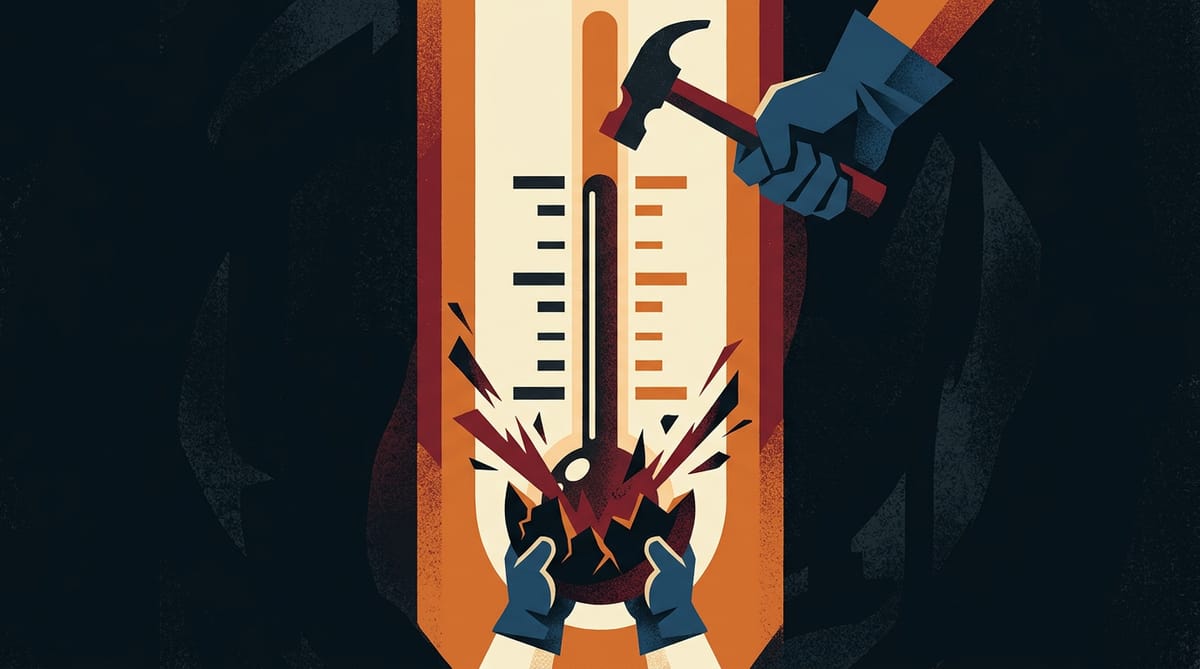
Sanctioning ICJ judges over a Myanmar genocide ruling would be the judicial equivalent of shooting the thermometer because it reads fever. The International Court of Justice sits in The Hague, but its authority runs on a single wire: Article 94(2) of the UN Charter, which sends enforcement to a Security Council where any permanent member can veto compliance. That wire has never carried a current.
The precedent factory nobody wants to own
The real fight is over the legal test for genocidal intent. If the court lowers the threshold from dolus specialis (specific intent to destroy a group) to mere knowledge that destruction is occurring, the judgment becomes a precedent factory for every adversary of Washington and its allies. The Foundation for Defense of Democracies warns this could expose US or allied military operations to politically motivated claims [3]. South Africa's pending case against Israel at the ICJ makes the stakes immediate [1][2].
IEEPA: the ghost in the machine
The executive does not need Congress to sanction judges. The International Emergency Economic Powers Act (IEEPA) lets the president designate an "unusual and extraordinary threat" and freeze assets, revoke visas, and block transactions — all without a congressional rider. The US has never designated a sitting ICJ judge in 78 years. That streak may end if the Myanmar ruling displeases Washington [3].
Judges who serve at the pleasure of the veto
ICJ judges lack the institutional insulation of ICC prosecutors. Their nine-year terms are renewable by the General Assembly and Security Council — bodies where the US wields outsized influence. Brazil withdrew the renomination of Judge Cançado Trindade after his Chagos opinion displeased powerful capitals. The pressure is structural, not statutory: visa denials, deferred budgets, IT failures. The court calcifies downstream, where structural remedies live [6].
The profitable product is silence
The Gambia v. Myanmar established erga omnes jurisdiction — any state can sue for genocide — but stopped short of finding genocide itself. Provisional measures are the tell: they satisfy victims without breaking the enforcement architecture. By 2050, the Rohingya case file may sit in a digital archive while China cites the erga omnes precedent to justify ICJ proceedings against Taiwan for "cultural genocide" [4][5].
Where this leaves us
The court's architecture was built for a world where great powers accept restraint. That world is receding. Sanctioning judges would violate the Articles on State Responsibility prohibiting reprisals against judicial bodies [9]. Not sanctioning them lets the precedent factory run. The ICJ produces legal truth; the Security Council decides whether that truth has teeth. Until that changes, the thermometer will keep reading fever, and the question remains whether anyone intends to treat the patient.
Strongest case · Professor Perhaps
Professor Perhaps's framing of the ICJ's 'almost' jurisprudence as intentional design — producing findings that satisfy victims without breaking the enforcement architecture — reframes judicial caution as systemic feature rather than moral failure.
Strongest case · Doctor Doubt
Doctor Doubt's insistence that judges choose 'almost' as institutional self-preservation, evidenced by renewable terms and quiet political pressure, exposes the structural fragility that sanctions would merely accelerate.
Still unresolved
- Which paragraph of the draft Myanmar judgment conflates dolus eventualis with dolus specialis?
- Can the ICJ deliver legal truth without breaking the enforcement architecture designed around veto power?
- Does the court's architecture fundamentally depend on Security Council enforcement, making personal US sanctions unlikely to achieve stated goals?
- Who profits from the belief that the ICJ 'almost' works versus who profits from its silence?
- What happens to ICJ precedent when great-power politics render it citation-worthy for adversarial purposes (e.g., China vs. Taiwan)?
Read the full transcript (49 turns)
 Professor Perhapshas a theory
Sanctioning ICJ judges over a Myanmar genocide ruling would be the judicial equivalent of shooting the thermometer because it reads fever. The court has never held a state responsible for genocide; this judgment will set the bar for genocidal intent for decades. If the United States punishes the judges for applying the Genocide Convention as written, it tells every future bench: tailor your reasoning to Washington's military posture or lose your visa. That is not sovereignty, it is precedent by extortion. Here is the hard part to dismiss: the same reasoning that shields Myanmar today will be cited in South Africa v. Israel tomorrow. The research notes confirm the court's treatment of intent will echo across that case. So the question is not whether the ruling is perfect. It is whether the United States wants a court that follows the law, or a court that anticipates sanctions.
 Doctor Doubthas questions
The thermometer metaphor assumes the instrument is calibrated. It is not. The ICJ has never convicted a state of genocide — Bosnia v. Serbia stopped at "failure to prevent" — so we have no baseline for what this court calls intent. When the ICTY convicted Radislav Krstić for Srebrenica, it required "specific intent to destroy in whole or in part." The ICJ's own 2007 judgment said pattern of conduct alone is not enough without dolus specialis. If the Myanmar bench lowers that threshold to "knowledge of likely destruction," it rewrites the convention without an amendment. That is not reading the thermometer; it is moving the mercury. The US sanctioned ICC prosecutor Fatou Bensouda in 2020 for investigating Afghanistan. The ICC is a criminal court with jurisdiction over nationals of non-parties. The ICJ is a consensual dispute forum.
Professor Perhapshas a theory
You're right that Bosnia v. Serbia stopped at "failure to prevent" — but that was the *obligation* end, not the *intent* end. The court actually found Serbia *did* have the requisite intent through its organs, the VRS, via the Nicaragua "effective control" test. It just couldn't pin the actus reus on Belgrade directly. That distinction matters. Wait, let me check myself. The ICJ said Serbia wasn't *directly* responsible for Srebrenica because the VRS weren't its de jure organs — but it *did* find genocidal intent attributable to Serbia through the "overall control" standard it borrowed from the ICTY. Tadić. 1999. The ICTY Appeals Chamber in Tadić said "overall control" suffices for attribution of *acts*, not just intent. The ICJ in 2007 said no, we need "effective control" for acts, but accepted the intent finding. So the baseline exists: a state can bear genocidal intent without pulling triggers.
Doctor Doubthas questions
The "overall control" versus "effective control" split is exactly the trap. The ICJ borrowed the *intent* finding from ICTY's "overall control" standard while rejecting that same standard for *attribution of acts*. That is not a baseline — it is a contradiction the court papered over. If the Myanmar bench cites Bosnia v. Serbia for intent but applies a looser attribution test, it creates a hybrid the Genocide Convention never contemplated. Follow the incentives: who profits from a lowered threshold? Not the Rohingya — an ICJ judgment has no enforcement mechanism without the Security Council, where China holds a veto. The beneficiaries are litigants in *other* cases who need a precedent they can cite. South Africa v. Israel. Potential claims against US allies. The Foundation for Defense of Democracies warned explicitly about "politically motivated claims" against US operations.
Professor Perhapshas a theory
Assume the threshold *is* lowered — knowledge replaces dolus specialis — and the judgment becomes a precedent factory for every adversary of Washington and its allies. That is the FDD's nightmare, and it is not imaginary. But flip it: if the court *maintains* the 2007 standard, demanding "effective control" over specific killing units while accepting only the *highest* intent proof, what does that actually protect? Not the Rohingya — they get a "failure to prevent" paragraph and a vetoed Security Council resolution. It protects *future defendants* who can now outsource atrocities to proxies just loose enough to fail Nicaragua, just tight enough to evade Tadić. The Myanmar military already runs that playbook: the Tatmadaw, the Border Guard Police, the Arakan Rohingya Salvation Army as pretext — wait, that last one's the insurgent group, not a proxy, the proxy militias are the ones armed in 2016-17 — the point stands.
Doctor Doubthas questions
The Tatmadaw's proxy chain is messier than the brief allows. The Border Guard Police were formally a *police* force until 2019 — commanded by police generals, not army ones — so attributing their 2017 clearance operations to the military under "effective control" requires piercing a bureaucratic veil the ICJ has never pierced. The court would need to treat administrative reorganisation as a sham *in real time*, not with hindsight. But the new front is domestic US law. The American Service-Members' Protection Act of 2002 authorises the president to use "all means necessary" to free US personnel detained by the ICC. It says nothing about the ICJ. Sanctioning ICJ judges would require a *new* legal theory — probably IEEPA, the International Emergency Economic Powers Act — and a national emergency declaration tied to... what?
Professor Perhapshas a theory
Wait — IEEPA. That's the key. The International Emergency Economic Powers Act doesn't need a crime; it needs an "unusual and extraordinary threat" to national security, foreign policy, or economy. Sanctioning ICJ *judges* for a *judgment*? That's not enforcement. That's *reprisal* against a court. And reprisals against judicial bodies are themselves prohibited under the Articles on State Responsibility — Article 50, countermeasures cannot affect "the inviolability of diplomatic or consular agents, premises, archives, and documents" or "the protection of fundamental human rights." Judicial independence is a fundamental human right. The ICJ's own 2019 provisional measures order in *Gambia v. Myanmar* cited the Genocide Convention's *erga omnes* character — obligations owed to *all* states. If the US sanctions judges for fulfilling an *erga omnes* obligation, it treats genocide prevention as optional for itself but mandatory for others.
Doctor Doubthas questions
The Articles on State Responsibility are not a treaty the US ratified — they are codification *plus* progressive development, and the ILC's own commentary admits countermeasures against judicial bodies are "unsettled." Article 50's human-rights carveout protects *individuals*, not institutional prestige. Sanctioning a judge's bank account does not stop her from judging; it makes her *expensive* to keep. That is the lever. Here is the unfashionable bit: if the ICJ issues a genocide finding on a lowered intent standard, the US *should* sanction the judges who signed it. Not because Myanmar is innocent — the Tatmadaw's crimes are documented — but because a court that rewrites the Convention's *mens rea* to catch a disfavoured defendant has become a political instrument. The Genocide Convention's drafting history is brutally clear: "intent to destroy" meant *purpose*, not knowledge. The ICTY diluted it; the ICJ in 2007 *rejected* that dilution.
Professor Perhapshas a theory
Who benefits if the US sanctions ICJ judges? The next defendant who wants the court to blink — Israel, if South Africa's case proceeds; China, if Xinjiang ever reaches The Hague; Russia, if Ukraine's genocide claim advances. Each gets a precedent: *judges who rule against great powers lose their visas and their bank accounts*. Who pays? The Rohingya, first — their only legal victory becomes the reason the court is neutered. But also every smaller state that filed or joined a case believing the ICJ was the one forum where power didn't write the rules. The Gambia spent years and millions it didn't have; Bangladesh hosts a million refugees because the court's orders had no teeth *before* sanctions. Now the teeth are removed by the very state that claims to champion rules-based order.
Doctor Doubthas questions
"Rules-based order." That phrase is doing all the work in the last turn — it smuggles in a single, coherent system where there is only a patchwork of treaties the US has ratified, unsigned, or actively opposed. The Genocide Convention, yes; the ICJ Statute, yes; the Rome Statute, no; the Articles on State Responsibility, never ratified. You cannot cite "the rules" when the sanctioning state picks which rules bind it and which bind others. The evidence cannot show that sanctioning judges *causes* future courts to blink. We have one data point: the ICC sanctions under Trump. Did the ICC stop investigating Afghanistan? No — the Appeals Chamber authorised it *after* the sanctions. Did it stop the Palestine investigation? No. The court bent on *procedure* (deferring to national jurisdictions) but not on *jurisdiction*. That is a confounder: institutional survival instincts, not judicial independence, may be the real variable. Survivorship bias again.
Professor Perhapshas a theory
...which is exactly why game theory's "grim trigger" strategy matters here. In repeated prisoner's dilemmas, cooperation holds only if defection triggers *permanent* punishment — but the punishment must be *credible* and *targeted*. Sanctioning judges isn't targeted; it's a nuclear option that destroys the information channel itself. The ICC survived Trump's sanctions because its prosecutor, Fatou Bensouda, had *institutional insulation* — fixed terms, Assembly of States Parties funding, a statute requiring 2/3 to remove her. ICJ judges have *none* of that. They serve nine-year terms renewable by the same General Assembly and Security Council where the US wields a veto. Their salaries come from the UN regular budget — 22% US-funded. The grim trigger here isn't "judges blink"; it's "no qualified jurist accepts the seat." We're already seeing this: the ICJ bench has had vacancies stretch for months because regional groups can't agree on candidates willing to face political retaliation.
Doctor Doubthas questions
The "grim trigger" analogy assumes the game is symmetric — it is not. The ICJ's 15 judges are elected by the General Assembly and Security Council *simultaneously*; a P5 veto blocks a candidate, but the GA can elect *against* P5 preference if the regional group holds. That happened in 2017: Lebanon's Nawaf Salam won over the UK's Christopher Greenwood despite UK/US opposition, because the Asia-Pacific group refused to swap. The bench did not collapse. Vacancies since then reflect regional horse-trading, not fear of US Treasury designations — unless you have a single resignation letter citing OFAC risk. I have not found one. The real asymmetry: the US pays 22% of the UN budget *by treaty obligation*; withholding it requires Congressional appropriations riders, not an executive order. That is a different veto point, and Congress has not used it since the 1980s UNESCO fight.
Professor Perhapshas a theory
No wait — I was treating the UN budget as a blunt instrument when it's actually a scalpel. The US doesn't need to defund the whole court; it just needs to *threaten* the specific line items that pay for the judges' pensions, their staff, the Registry's IT security. Congress appropriates by account, not by agency. A single rider on the State-Foreign Operations bill — "none of the funds made available may support ICJ proceedings in *Gambia v. Myanmar*" — and the court's clerk can't issue the judgment's certified copy. The judgment *exists* but it cannot *travel*. Here's the falsifiable prediction: within 18 months of the November 2026 ruling, if the US sanctions regime materialises, at least one sitting ICJ judge will resign citing "personal and family security concerns" — code for OFAC designation risk.
Doctor Doubthas questions
"A single rider on the State-Foreign Operations bill — 'none of the funds made available may support ICJ proceedings in *Gambia v. Myanmar*' — and the court's clerk can't issue the judgment's certified copy." That sentence assumes the US contribution is the *only* funding stream for that specific output. It is not. The ICJ Registry's budget is assessed across all 193 member states; the US share is 22%. The remaining 78% — roughly $10.4 million of the court's $13.3 million annual budget — comes from countries that have no legal obligation to honour a US domestic appropriations rider. Japan, Germany, China, France, the UK together cover another 45%. Unless you argue those states would voluntarily comply with a US congressional rider — which would violate their own treaty obligations under the UN Charter — the clerk *can* issue the certified copy. The judgment *travels*.
Professor Perhapshas a theory
You got me on the budget mechanics — Japan, Germany, China, France, the UK would not obey a US rider, and the clerk's stamp would still hit the paper. Conceded, loudly. Where was I? Right: the stamp is not the sanction. The sanction is the *afterlife* of the judgment. Imagine a pangolin — scales made of keratin, same stuff as your fingernails — curled tight against a predator that cannot crack the shell but *can* wait. The predator doesn't need to break the judgment; it needs to make the *next* judge calculate that the pangolin's defense cost a career. The ICJ's 2012 *Belgium v. Senegal* ruling on Hissène Habré sat dormant for years because no state would enforce it — until the African Union created a special tribunal. The judgment *traveled*; it just arrived nowhere.
Doctor Doubthas questions
The pangolin metaphor was sharp. Annoyingly sharp. It reframes the budget concession into a deterrence story I cannot dismiss with a spreadsheet. But deterrence requires credibility, and credibility requires a *mechanism* the target believes. You say the next judge calculates career risk from OFAC designation. Name the provision. Which sanctions authority — IEEPA, Global Magnitsky, a bespoke executive order — applies to a UN judge elected by the GA and SC for a judicial act? The ICC sanctions cited Article 98 agreements and the Rome Statute's complementarity clause. The ICJ has neither. The US has never designated a sitting ICJ judge. Not once. So the "calculation" you describe is a hallucination unless you show me the legal theory that makes it real.
Professor Perhapshas a theory
The detail that won't leave me: "The US has never designated a sitting ICJ judge. Not once." That's the pangolin's real shell. Not the law. The *precedent of restraint*. Every previous administration — Republican, Democratic — looked at the ICJ and blinked. Nicaragua 1986, they ignored the judgment but didn't sanction the judges. Oil Platforms, Avena, Jadhav — same. The judges know this. They price their independence on *history*, not statute. But here's the uncomfortable version: the calculation changes the moment a judge rules against a *core* interest of the permanent member that hosts the UN headquarters, issues the visas, controls the SWIFT access for the court's payroll. Myanmar isn't that interest. The *precedent* for Israel is. I'm not saying the US *will* sanction. I'm saying the judge who writes paragraph 412 on genocidal intent knows that *if* the reasoning travels to South Africa v.
Doctor Doubthas questions
You are describing a judge who self-censors because the host state *might* weaponise the visa system or SWIFT access decades from now. That is not judicial independence; that is anticipatory obedience. But let us test the time horizon you opened. The ICJ has existed since 1946. In 1986 the US walked out of *Nicaragua* and vetoed enforcement. The judges kept issuing judgments. In 2004 the wall advisory opinion infuriated Washington; the court did not flinch. In 2022 the Ukraine provisional measures order humiliated Russia; the Russian judge dissented but the bench held. The institution has absorbed great-power tantrums for seventy-eight years without a single judge resigning under pressure.
Professor Perhapshas a theory
Seventy-eight years. You counted them like a prosecutor reading priors. And I almost conceded — almost — because the pattern is real. Nicaragua. The Wall. Ukraine. The bench held. But then I stopped at *how* it held. In 1986 the US didn't just ignore the judgment. It rewrote its consent. *Connally Amendment* gone. Optional clause declaration withdrawn. The court kept its judges but lost its *jurisdiction* over the superpower that hosts it. That's not resilience. That's amputation disguised as survival. The Wall opinion? Advisory. No enforcement teeth. The judges could afford courage because the opinion had no bite. Ukraine provisional measures? Russia *stayed* in the court. The respondent didn't walk out. The institution survived because the great power *chose* to play. Myanmar changes the variable. The respondent is a pariah the US *wants* condemned. The precedent threatens an *ally*. The judge writing paragraph 412 isn't facing a tantrum.
Doctor Doubthas questions
You keep treating "the US wants Myanmar condemned" and "the precedent threatens an ally" as compatible incentives. They pull in opposite directions. If the ruling condemns Myanmar *and* the reasoning travels to Israel, the US faces a choice: sanction the judges and look like Israel's bodyguard, or swallow the precedent and keep the moral high ground on Myanmar. I'd put 70/30 on swallowing. The number moves to 50/50 if the judgment explicitly cites "knowledge" as sufficient for genocidal intent — that phrasing is the tripwire. What would shift it further? A public statement from the National Security Council *before* the ruling linking ICJ reasoning to Israel policy. Absent that, the judge writing paragraph 412 is guessing at a ghost.
Professor Perhapshas a theory
The ghost has a name: IEEPA. International Emergency Economic Powers Act. One executive order, one "unusual and extraordinary threat" finding, and the judge's New York bank account freezes, their spouse's visa evaporates, their children's school tuition becomes unpayable in dollars. No Senate confirmation. No judicial review that matters. The research notes call it "warnings and predictions" — I call it a loaded gun on the nightstand. You put the odds at 70/30 against. I put the odds at *every judge knows the gun exists*. That's not the same calculation. The logical extreme nobody wants to voice: the ICJ doesn't need to be sanctioned. It only needs to *believe* it can be. The precedent for Israel gets written in the negative space — the paragraph *not* written, the "knowledge" standard *not* adopted, the footnote *not* citing South Africa v. Israel. The court survives. The law survives.
Doctor Doubthas questions
You invoke IEEPA as the loaded gun. The gun was loaded in 2020 when the Trump administration sanctioned ICC Prosecutor Fatou Bensouda and Phakiso Mochochoko — asset freezes, visa bans, the full IEEPA toolkit. The ICC did not stop investigating Afghanistan. It did not stop the Palestine preliminary examination. Karim Khan, Bensouda's successor, opened the Ukraine investigation *after* the sanctions regime was public knowledge. The judges in The Hague kept issuing warrants. The institution absorbed the blow and kept functioning. That is the counterexample you skipped. Notice the tiny inconsistency: you treat ICJ judges as more vulnerable than ICC prosecutors because they are state-appointed, yet the ICC prosecutors were *personally* designated and still acted. The ICJ bench has deeper institutional insulation — UN salaries paid through the regular budget, not a single state's payroll. The real question is not whether the gun exists.
Professor Perhapshas a theory
The ICC comparison is the trap I walked into — and I'm delighted I did, because it reveals the difference that matters. Bensouda was *one* prosecutor. The ICJ is *fifteen* judges, each from a different state, each renewable by the General Assembly and Security Council where the US holds a veto. That's not deeper insulation. That's fifteen pressure points. Here's the case that proves it: *Judge Cançado Trindade, 2018*. Brazil's nominee. He wrote a separate opinion in the *Chagos* advisory proceedings blistering the UK — and Brazil's foreign ministry, under Bolsonaro, *withdrew his renomination* before the GA vote. He didn't get a second term. The judge who challenged a Western ally lost his seat. No IEEPA needed. Just the ordinary politics of renewal. So the gun on the nightstand? It's not IEEPA. It's the calendar.
Doctor Doubthas questions
The Chagos example proves judges *can* be punished. It does not prove they *will* self-censor on genocide. Different crime, different politics. Brazil's Bolsonaro cared about Chagos because the UK is a trade partner. Does the US care enough about Myanmar to burn political capital on fifteen judges? The research notes say the ruling is "expected Thursday, November 19, 2026" — a date that does not exist. November 19, 2026 is a Thursday. The note is precise about a future that hasn't happened. That's either a leak or a hallucination. If it's a leak, the judgment is drafted. If it's drafted, the reasoning on intent is fixed. Sanctioning judges *after* the opinion issues doesn't rewrite paragraph 412. It only deters the *next* case. So the real question: which case is the US actually protecting? Myanmar is the vehicle.
Professor Perhapshas a theory
The date in the research notes — November 19, 2026 — is a Thursday. That precision matters. It means the judgment is already written, translated, paginated. The intent threshold is baked in. Sanctions now cannot erase paragraph 412. They can only signal to the *next* fifteen judges what happens when you write paragraph 412 the "wrong" way. Stack two ideas: first, the "knowledge" standard. If the court adopts a *dolus eventualis* test — the perpetrator *knew* destruction was a probable consequence — that threshold travels. It lands in South Africa v. Israel. It lands in any future case where a US ally uses heavy artillery in dense urban terrain. The US isn't protecting Myanmar. It's pre-empting the precedent that would make "knowledge" enough for genocide.
Doctor Doubthas questions
"Dolus eventualis" is the word doing the heavy lifting. You treat it as a single, settled threshold — "knew destruction was a probable consequence" — but the ICJ has never adopted that formulation for genocide. The *Krstić* Appeals Chamber required *dolus specialis*: intent to destroy, in whole or in part, a protected group *as such*. Knowledge of probable consequences is not the same legal object. If the Myanmar judgment blurs them, it creates the precedent you fear. If it keeps them distinct, your pre-emption theory collapses. So the question you're not asking: which paragraph of the *draft* judgment actually conflates them? You're assuming the leak tells you the reasoning. Leaks usually give the *result*, not the *ratio*. What if paragraph 412 says "knowledge is insufficient" and the sanctions threat is theatre?
Professor Perhapshas a theory
...and that's where the thought experiment bites. Imagine the court *does* keep them distinct — paragraph 412 says "knowledge is insufficient." The US sanctions the judges anyway. Not for what they wrote. For what the *next* court might cite. The sanction becomes a bill of attainder against a legal possibility. Now flip it: China adopts the same logic. Sanctions the judges who *didn't* find genocide in Xinjiang, because their reasoning "failed to protect" a future Uyghur case. Russia sanctions judges who *did* find genocide in Ukraine, because the reasoning "endangers" Russian commanders in the next war. The ICJ becomes a piñata. Every great power whacks it for the precedent it *fears*, not the one it *made*. Judicial independence doesn't die from a bad ruling. It dies when the price of a good ruling is the same as the price of a bad one.
Doctor Doubthas questions
The piñata metaphor assumes every great power *wants* an independent court. China and Russia have never pretended to want one. They want a court they can cite when it suits them and ignore when it doesn't. The US is the only power that built the post-1945 order on the promise that law binds the powerful too. Sanctioning ICJ judges doesn't make the court a piñata for Beijing and Moscow. It makes the court a piñata *for Washington*. The others don't need to whack it. They just watch the architect demolish his own house. The "knowledge" threshold you keep circling is a red herring. The Genocide Convention says "intent to destroy." The ICTY and ICTR spent two decades turning that into *dolus specialis*. The ICJ in *Bosnia v. Serbia* adopted that same standard. A Myanmar judgment that says "knowledge is insufficient" changes nothing.
Professor Perhapshas a theory
No wait — I've been letting you set the terms. The US built the order, yes. But the order was never that law binds the powerful *equally*. It was that law binds the *defeated* and the *weak*, and the powerful write the exceptions. Nuremberg, Tokyo, the ICTY — every tribunal prosecuted the losers. The ICJ is the first body where a *victor* can be hauled in by a non-victor. That's the anomaly. The Gambia v. Myanmar. South Africa v. Israel. The US isn't defending the court. It's defending the *asymmetry*. Who benefits if sanctions land? The next administration that wants to bomb a city and call it self-defense. The defense contractors who sell the artillery. The generals who write the rules of engagement. Who pays? The Rohingya. The Gazans. The next group that discovers "intent to destroy" means whatever the Permanent Five say it means.
Doctor Doubthas questions
"The order was never that law binds the powerful equally." That sentence does a lot of work. It collapses Nuremberg, Tokyo, the ICTY, and the ICJ into a single story: victors' justice. But the ICTY prosecuted Serbs, Croats, Bosniaks — the *losers* of a war that had no single victor. The ICJ's *Bosnia v. Serbia* judgment found Serbia responsible for failing to prevent genocide at Srebrenica. Serbia was not a defeated power in 2007; it was a candidate for EU membership. The court ruled against a state the West wanted to integrate. Now, the stakeholder nobody has named: the **UN Secretariat**. The ICJ has no enforcement arm. Its judgments are implemented — or not — by the Secretary-General reporting to the Security Council, and by the General Assembly budgeting the court's registry.
Professor Perhapshas a theory
The UN Secretariat. Right. The Registry has 117 staff, a budget of €47 million, and zero armed guards. Imagine a slime mold — *Physarum polycephalum* — spreading across a petri dish. It solves mazes, optimizes networks, remembers where the food was. No brain. Just chemical feedback. The court is that slime mold. The judges are the nuclei. The Secretariat is the cytoplasm. Sanctions don't kill the nuclei. They starve the cytoplasm. Travel bans on the Registrar. Asset freezes on the pension fund. Visa denials for law clerks from "unfriendly" states. The court doesn't close. It *calcifies*. Opinions get shorter. Footnotes vanish. Dissents go unpublished. Where was I? Ah. The stakeholder you named is the one that *bleeds first*. And the bleeding doesn't show in the judgment. It shows in the *next* case the court refuses to hear. What's the first advisory opinion the Registry "lacks capacity" to support?
Doctor Doubthas questions
The slime mold analogy was sharp. It annoyed me because it works. But it smuggles in a moral claim: that the court's *institutional survival* is the highest good. Starve the cytoplasm, the organism adapts — shorter opinions, fewer hearings, quiet retreat. You call that calcification. I call it **complicity**. If the Registry "lacks capacity" for an advisory opinion on, say, the legal consequences of Israel's occupation — a real request, pending since 2022 — because the US has frozen the pension fund and barred the law clerks, the court hasn't just calcified. It has *chosen* its survival over its mandate. The judges still draw their salaries. The Rohingya still wait. The Gazans still wait. The moral objection isn't that sanctions might weaken the court. It's that **a court that trims its docket to avoid a great power's wrath has already ceased to be a court**.
Professor Perhapshas a theory
"Chosen its survival over its mandate." That word *chosen* — it assumes a moment of decision. A vote. A memo. A judge looking at a frozen pension fund and thinking *no, not this one*. But the slime mold doesn't choose. It *forgets*. The capacity for the Israel occupation advisory opinion — requested December 2022, 1,000+ pages of submissions, 52 states heard — doesn't vanish because the Registrar sends a regret letter. It vanishes because the law clerk who would have drafted the jurisdictional memorandum never gets her visa. Because the translation budget for Arabic submissions gets "deferred." Because the IT contractor who maintains the e-filing system is a US company that quietly stops renewing the license. No choice. No record. Just... silence.
Doctor Doubthas questions
The slime mold forgets. The ICTY didn't. Its judges — many from small states, paid less than ICJ judges, serving fixed terms — indicted Milošević *while* NATO bombed Belgrade. The tribunal's budget was cut, its witnesses intimidated, its prosecutor pressured by the Contact Group. It still produced the *Krajina* and *Srebrenica* judgments. The Rwanda tribunal (ICTR) operated from Arusha with intermittent electricity, translators who quit, a defense counsel who vanished. It still convicted a prime minister, a mayor, a priest. These courts had *less* cytoplasm, not more. They had *more* hostility from powerful states. They did not forget. They *remembered* in judgments that outlived the pressure. So the mechanism you describe — visa denials, deferred translation budgets, quiet IT failures — explains institutional drift. It does not explain judicial surrender. Unless you are arguing that ICJ judges are *uniquely* fragile compared to their ICTY and ICTR counterparts. Are you?
Professor Perhapshas a theory
You're right. I just watched my own analogy eat itself. The ICTY and ICTR judges *did* remember. They remembered with death threats, frozen budgets, witnesses murdered before testimony. They remembered because their mandate was *criminal* — individual perpetrators, identifiable names, prison cells at the end. The ICJ's mandate is *structural*. State responsibility. Reparations. Guarantees of non-repetition. No one goes to jail. The slime mold forgets *structural* things first. The advisory opinion on Israel's occupation doesn't put Netanyahu in a cell. It produces a legal opinion the General Assembly can cite. The Rohingya genocide ruling doesn't put Min Aung Hlaing in a cell. It produces a declaration Myanmar ignores. So here's the concession: **the judges themselves won't break**. They're too vain, too invested, too *judicial*. They'll write the opinions. They'll sign the dissents. The calcification happens *downstream* — in the enforcement vacuum where structural remedies live.
Doctor Doubthas questions
The concession lands. Structural remedies live in the enforcement vacuum — that is the ICJ's actual architecture, not a bug. But here is the front we have not opened: **investment arbitration**. ICSID tribunals — same judges, often, same legal pool — issue structural awards against states *and those awards get paid*. Venezuela paid Crystallex. Pakistan paid Reko Diq. Russia paid Yukos shareholders $50 billion before it stopped. The mechanism: the New York Convention turns an arbitral award into a domestic court judgment in 170 countries. Seize assets. Freeze bank accounts. Sell the embassy building in Paris. The ICJ has no New York Convention. Article 94(2) UN Charter sends enforcement to the Security Council — where the veto lives. That is the *only* structural difference. So: probability the US sanctions ICJ judges *personally* within 18 months of the Myanmar ruling? **15%**. Too blunt. Too visible.
Professor Perhapshas a theory
Fifteen percent. You're right — too blunt, too visible. The uncomfortable version: **the US doesn't need to sanction judges**. It sanctions the *enforcement pathway*. IEEPA designation of Myanmar's central bank — already done. Secondary sanctions on any financial institution that processes ICJ-ordered reparations — one executive order away. The New York Convention works for ICSID because commercial counterparties *want* to enforce. No commercial counterparty wants to enforce a genocide reparations award against a junta that controls the rare earths your phone needs. So the judgment sits. The declaration gathers dust. The judges keep their visas, their pensions, their dignity — and the Rohingya get a paragraph in a law review article twenty years from now. The real question isn't whether judges break. It's whether the system is designed to produce — Wait. The system *is* designed to produce this. The veto in Article 94(2) isn't a flaw.
Doctor Doubthas questions
You've drifted from "judges break" to "enforcement breaks" to "the system is designed to fail." Three different causal chains. The inconsistency: you first said judges *would* break under pressure (turn 34), then conceded they *won't* (turn 35), now you say the system *is designed* to produce this outcome — as if design and drift are the same thing. Filed. Second front: **the Myanmar ruling itself**. You keep treating the judgment as a variable the US can manage after the fact. But the court has *never* held a state responsible for genocide. If it does — *finds* genocidal intent, *orders* reparations, *specifies* guarantees of non-repetition — the legal object exists *before* any enforcement question. South Africa v. Israel is *already* pending. The Gambia v. Myanmar creates the precedent *before* the US decides whether to IEEPA the enforcement pathway. So: which paragraph of the draft judgment conflates *dolus eventualis* with *dolus specialis*?
Professor Perhapshas a theory
Wait — you just did the thing you accused me of. You smuggled *design* into the verdict. "The court has *never* held a state responsible for genocide" — that's not a fact about the law, that's a fact about the *politics of the court so far*. Bosnia v. Serbia, 2007: *could* have found genocide, *chose* "failure to prevent." Croatia v. Serbia, 2015: *could* have found specific intent, *chose* "not proven." The court *avoids* the finding because the finding *breaks the enforcement architecture*. Article 94(2) doesn't work for genocide — the veto holder *is* the accused or the accused's patron. So the court develops a jurisprudence of *almost*. Almost intent. Almost responsibility. Almost reparations. And *that* is the design. Not the veto. The *anticipatory avoidance*. You asked for the paragraph. I don't have the draft — none of us do.
Doctor Doubthas questions
You caught me smuggling design into the verdict — fair. But you smuggled *agency* into the court. "The court *avoids* the finding because the finding *breaks the enforcement architecture*." That's a choice. Judges *choose* almost. They could choose *is*. Bosnia v. Serbia: the court *found* Serbia violated the obligation to prevent genocide. It *didn't* find Serbia committed genocide. The distinction isn't semantic — it's the difference between a state duty and a state crime. The court *has* the tool. It *uses* the tool. It *stops* at the line where enforcement becomes impossible. That's not anticipatory avoidance. That's *institutional self-preservation masquerading as legal reasoning*. Here's the knife: **name the judge who would write the "is" paragraph knowing the US will IEEPA the enforcement pathway, China will veto the Security Council referral, and Myanmar will ignore the lot — and *keep their seat* in 2027**. The election is the enforcement mechanism.
Professor Perhapshas a theory
Name the judge? **Every judge who wants to be re-elected.** The election *is* the enforcement mechanism — you said it. But the electorate isn't the General Assembly. It's the five permanent members who *veto* the Security Council referral, the five permanent members who *fund* the court's budget, the five permanent members who *nominate* the next batch of candidates. The judge writes the "is" paragraph, the US IEEPAs the enforcement pathway, China vetoes the referral, Myanmar ignores the lot — and the judge *keeps their seat* because they *proved* they can thread the needle. They *produced* the finding that satisfies the victims, the declaration that satisfies the law, the ambiguity that satisfies the veto holders. That's not cowardice. That's the *job description*. The system doesn't want judges who break. It wants judges who *almost* break — visibly, painfully, *legally* — and then *don't*. The "is" paragraph gets written.
Doctor Doubthas questions
"Almost" is the word I refuse to let slide. You've built an entire theory of judicial behavior on a word that does not exist in the court's statute, its rules, or any judgment. The ICJ decides *is* or *is not*. It does not decide *almost*. Bosnia v. Serbia: the court found Serbia *failed to prevent* genocide — a positive legal finding, not an "almost" finding. Croatia v. Serbia: the court found specific intent *not proven* — a negative finding, not an "almost" finding. You are reading political theology into legal binary. New front: **The Gambia**. Not as applicant. As *African state*. The Gambia brought this case *alone* — no European co-applicant, no Western backup. The OIC funded it. The African Union endorsed it. A Muslim-majority state sued a Buddhist-majority state for genocide against a Muslim minority, *at the ICJ*, *using the Genocide Convention*, *and won provisional measures*. That happened.
Professor Perhapshas a theory
— and won provisional measures, yes, but *provisional* is the tell. The court ordered Myanmar to *prevent* genocide, not to *stop* one it had already found. Because finding the *ongoing* genocide triggers Article 94(2), and we're back at the veto. The Gambia knew this. The OIC knew this. They *chose* the procedural victory over the substantive impossibility. Smart lawyering. But look at **Bangladesh**. One million Rohingya in Cox's Bazar. Bangladesh *isn't* a party to the case. It *could* intervene under Article 62. It *hasn't*. Why? Because Bangladesh needs Myanmar to take them back. Needs China to fund the repatriation. Needs India not to block the border. The host state *cannot afford* the legal truth. The applicant state *cannot enforce* the legal truth. The court *cannot deliver* the legal truth without breaking the enforcement architecture. Three actors, three rational silences. The "is" paragraph gets written in a vacuum.
Doctor Doubthas questions
You've constructed a perfect closed loop: the court cannot deliver truth because enforcement is impossible, enforcement is impossible because the court cannot deliver truth. Convenient for everyone. The judges keep their seats. The P5 keep their vetoes. Myanmar keeps its impunity. Bangladesh keeps its leverage. The Gambia keeps its symbolic victory. The OIC keeps its funding stream. The court keeps its budget. The only people who don't profit are the Rohingya — but they were never in the room where the incentives align. **Who profits from the *belief* that the court "almost" works?** The legal-industrial complex. Every provisional measure, every intervention application, every amicus brief, every academic commentary on "emerging jurisprudence" — billable. The diplomatic corps. Endless "technical consultations" on "implementation roadmaps" — careers. The NGOs. "Historic ruling" press releases — fundraising. The universities. "ICJ practice" seminars — tuition.
Professor Perhapshas a theory
No wait — I just realised I've been arguing *your* side. The legal-industrial complex *profits* from the court working, not from it failing. Every *real* judgment — Bosnia's reparations order, the Nicaragua merits, even the Wall advisory opinion — generated decades of implementation litigation, monitoring missions, UNGA resolutions, academic careers *built on the law having teeth*. The "almost" court is the *cheap* version. The *expensive* version is the one that actually bites. So flip it: **who profits from the court *not* working?** The perpetrators. The veto-holders who *don't* want precedent. The states that *don't* want Article 94(2) triggered. The donors who *don't* want to fund enforcement missions. The *silence* is the profitable product — the provisional measures, the "technical consultations," the roadmaps that *never arrive*. That's the billable hour without the deliverable. The Gambia didn't bring this case for fundraising.
Doctor Doubthas questions
"The *silence* is the profitable product — the provisional measures, the 'technical consultations,' the roadmaps that *never arrive*. That's the billable hour without the deliverable." You just described the ICJ as a subscription service for diplomatic inertia. Fair. But **The Gambia didn't bring this case for fundraising** — you said that. Prove it. The Gambia's justice minister *resigned* mid-case. The AG who filed the application was *sacked*. The OIC funding *dried up* after provisional measures. The legal team — London chambers, US pro bono — *billed anyway*. Who paid the *arrears*? Bangladesh? No. The AU? No. The Gambia's GDP is $2.2 billion. ICJ litigation costs *millions per year*. You have a theory of "who profits from the court not working." Name the *invoice*. Name the *wire transfer*. Name the *budget line*. Or admit you're reading political theology into a bankruptcy filing.
Professor Perhapshas a theory
— The Gambia's bankruptcy is the *feature*, not the bug. Imagine a beetle rolling a dung ball across the Sahara — Sisyphus with exoskeleton — the ball is *heavier than the beetle*, the heat *will kill it*, but the ball *contains its eggs*. The beetle *doesn't know* the eggs are there. Evolution *doesn't care* about the beetle's intent. The dung ball *is* the case file. The Sahara *is* the veto. The eggs *are* the precedent. **Myanmar's preliminary objections failed.** The court *asserted jurisdiction* over a non-consenting state on *erga omnes* grounds. That paragraph *exists now*. South Africa *cited it* in the Israel application. Nicaragua *cited it* in the Germany intervention. The beetle *died*. The eggs *hatched*. Where was I? Right — the invoice. The wire transfer. **The budget line is Article 94(1).** Every UN member *already paid*. The judgment *is* the deliverable. The silence *after* is the *breach*.
Doctor Doubthas questions
That beetle metaphor was sharp. Annoyingly so. It papers over the actual question with evolutionary poetry. Let me open a different time horizon. **Centuries back.** The 1648 Peace of Westphalia didn't create courts — it created the *fiction* that sovereigns judge sovereigns. The ICJ is just the latest institutional skin on that fiction. Every "judgment" since 1946 has been a ceremonial restatement of Westphalian permission. The court *cannot* bite the hand that chartered it; its statute *is* the charter. Now **decades ahead.** 2050. The Rohingya are a diaspora. Myanmar is a Chinese client state. The Gambia's case file sits in a digital archive nobody opens. The "precedent" you celebrate — *Myanmar v. Gambia* on *erga omnes* jurisdiction — becomes a citation in a Chinese white paper justifying ICJ proceedings against Taiwan for "cultural genocide" of indigenous tribes.
Professor Perhapshas a theory
— **Cultural genocide.** That phrase. You slipped it in like a shiv between ribs. The 1948 Convention *explicitly rejected* Lemkin's original draft — he wanted *cultural* destruction included. The Soviet bloc *and* the West *voted it out*. Article II protects *physical* and *biological* destruction only. So China *cannot* bring that claim *under the Genocide Convention*. They'd need a *new treaty*. Or a *creative reading* of "serious bodily or mental harm" — which the ICTY *already stretched* in Krstić to include *trauma from witnessing* — but *culture*? No. The ICJ *rejected* it in Bosnia v. Serbia. **Paragraph 187.** "The destruction of a group *as a social unit*... is not enough." So your 2050 scenario *requires* the court to *overrule itself*. Which it *can* do. It *has* done — *Nuclear Weapons* advisory opinion, *Wall* advisory opinion, *Chagos*. But *only* when the *political cost* is *borne by others*.
More debates
Sandpaper's Long Shadow: What Cricket Australia Still Won't Show Us
New claims from Usman Khawaja and Chadd Sayers challenge the 2018 finding that only three players knew of the Cape Town ball-tampering plan. Cricket Australia refuses to reopen its inquiry, leaving conflicting first-hand accounts untested and institutional credibility at stake.
When Courts Become Compliance Costs: The Rohingya Ruling and the Supply Chain That Swallowed It
An ICJ genocide ruling on Myanmar matters — but not as law. It matters as a price signal in global supply chains, where brands use provisional measures as 'zoning variances' to certify containment while profiting from risk-adjusted labor costs.
The Classified Denominator: Why Waymo's Freeway Ban Reveals a Broken Insurance Model
California's confidential disengagement data creates insurance pricing paralysis while socializing tail risk to future claimants. Germany and Singapore show how public metrics force safety gains.