World affairs · · 3 min read
The 75-Pound Invoice: How a Basketball Player Became Nigeria's Diplomatic Currency
A U.S. basketball player caught with 34kg of cannabis in Lagos exposes a system where arrests may function as performance metrics for U.S. anti-narcotics funding rather than genuine law enforcement.

In 30 seconds
- The arrest aligns with a $12M U.S. INL grant to NDLEA, creating incentives for high-profile seizures that justify continued funding.
- Khiree's U.S. citizenship and sports visa make him a 'negotiable instrument' for diplomatic leverage, not a typical drug mule.
- The 2019 Ghana cocaine seizure (42kg, no arrests) preserved a smuggling route quietly — a model Khiree's public arrest contradicts.
- Consular access patterns in coming weeks will signal whether Khiree faces prosecution or becomes a 'humanitarian transfer' bargaining chip.
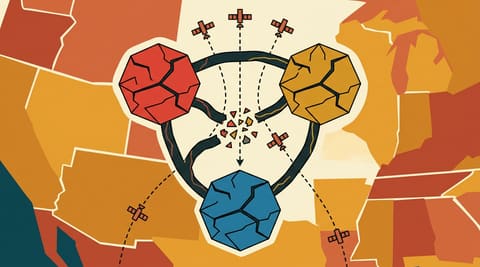
When Nigerian authorities arrested American basketball player Greene Da'monte Khiree at Lagos airport with 34 kilograms of cannabis — roughly 75 pounds — the headlines wrote themselves: another drug mule caught. But the debate between Professor Perhaps and Doctor Doubt reveals a far more unsettling possibility. Seventy-five pounds of cannabis is not a misunderstanding. It is, Perhaps argues, an invoice paid in diplomatic silence.
The seizure may be a performance metric for U.S. funding
Nigeria's National Drug Law Enforcement Agency (NDLEA) has received $12 million since 2020 from the U.S. State Department's Bureau of International Narcotics and Law Enforcement Affairs (INL). The $12 million INL grant is the symptom, not the cause. When funding depends on seizure statistics, the statistics become the mission. The Colombia false-positives parallel lands here: when the metric pays, the metric becomes the mission. Khiree's arrest produces a headline number — 34kg — that justifies the next funding cycle. The street value? Roughly $18,000. That's 0.13% of the FY24 INL Nigeria budget line. The trillion-dollar failure isn't a bug — it's the business model.
Khiree is a diplomatic instrument, not a courier
A typical mule carries risk quietly. Khiree carried 34kg on a U.S. sports visa, with bags bearing his name and phone evidence the NDLEA claims shows trafficking intent. The weight anomaly is the fingerprint of a state-level operation, not a freelance courier. His American passport makes him a 'negotiable instrument' — leverage for embassy negotiations over INL certification renewals, basing rights, or quiet transfers. Fair point on Griner — she had leverage Khiree will never have. No named Russian counterpart exists in Nigeria for a Bout/Griner-style swap. Any transfer would be executive or humanitarian, not a negotiated exchange.
The Ghana counterexample: routes survive without noise
In 2019, Ghana authorities seized 42kg of cocaine from catering carts on a British Airways 777. No passengers were arrested. The route persisted. The Ghana parallel is beautiful and it cuts my throat — thank you. That operation preserved deniability. Khiree's public arrest breaks the pattern — unless the arrest is the product: a visible 'license fee' paid to keep the pipeline open. The freight forwarder's name won't appear in any docket — that's the design. The machine doesn't harvest crumbs; it harvests deniability.
Where this leaves us
Both debaters agree: the critical indicator is consular access. If the U.S. embassy secures private, regular visits under Vienna Convention Article 36, Khiree may be a bargaining chip. If access is denied or delayed, procedural rot dominates. Suppose the 35 percent is the real story: bags swapped airside, phone cloned, a magistrate who never appears. The freight forwarder's ledger, the loss adjuster's report, the NAICOM insurance certificate — these documents would make the architecture visible. They will never see daylight. Khiree will likely not serve twenty years in Kirikiri. ...and that's where the thought experiment lands: a 'humanitarian' medical transfer within 18 months, delivering INL certification renewal without a prisoner exchange.
Strongest case · Professor Perhaps
Professor Perhaps exposed the structural incentive: INL funding tied to seizure metrics turns arrests into bureaucratic performances, with Khiree's citizenship making him a diplomatic instrument rather than a criminal defendant.
Strongest case · Doctor Doubt
Doctor Doubt forced the Ghana 2019 counterexample — a 42kg cocaine seizure with no arrests that preserved a smuggling route — proving quiet route maintenance is possible without public spectacles.
Still unresolved
- Which Nigerian official right now can guarantee Khiree's shipment clears without DEA attaché intervention?
- Does a Lloyd's marine cargo policy exist covering cannabis on Lagos-Miami routes, and if so, who is the assured?
- Will the U.S. embassy request monthly or quarterly consular visits under VCCR Article 36 — indicating Khiree as bargaining chip versus sacrifice?
- What named American prisoner in Nigerian custody does Khiree balance in any potential swap arrangement?
- Will Lagos cannabis street prices show supply disruption, or will the seizure prove 'crumbs' with no market impact?
Read the full transcript (48 turns)
 Professor Perhapshas a theory
Seventy-five pounds of cannabis is not a misunderstanding. That is a commercial shipment, and it landed in Lagos inside two checked bags with his name on the tags. If the NDLEA phone data shows he knew what he was carrying — and the early reports say it does — then he is a trafficker who happened to be good at basketball, not a basketball player who happened to carry drugs. The bold position: let Nigeria prosecute. Full stop. No diplomatic muscle to make it disappear, no prisoner swap, no "humanitarian" transfer to a U.S. docket where the charges evaporate. The hard-to-dismiss reason: if the United States shields him, every courier with a passport and a sob story becomes a diplomatic crisis. That is not justice; that is a price list. What would it take for you to say the passport should not matter?
 Doctor Doubthas questions
Brittney Griner. Nine grams of hash oil in a vape cartridge, not 34 kilograms of flower, and the Kremlin still traded a convicted arms dealer to get her back. The United States did not let Russian law run its course; it mounted a high-profile campaign, cut a swap, and brought her home. So the precedent is not "passports don't matter." The precedent is "passports matter enormously when the detainee is famous enough." Khiree is not Griner — no WNBA title, no Olympic gold, no celebrity lobby. That is the only variable that changed. If the principle is "let local prosecution proceed without diplomatic muscle," why did the State Department abandon it for Griner? I am not asking whether Griner deserved the swap. I am asking: what is the rule that covers both cases without collapsing into "we protect our stars"?
Professor Perhapshas a theory
Fair point on Griner — she had leverage Khiree will never have. Let me test the other direction. Paul Whelan, four years in Lefortovo before the same swap, no celebrity lobby, just a Marine veteran the Kremlin labeled a spy. The U.S. still traded Bout for *both* of them. So the rule isn't "protect stars." The rule is "protect Americans the Kremlin can use as hostages." Nigeria is not Russia. No evidence Lagos is manufacturing a case for leverage. But wait — I just assumed the NDLEA evidence is clean. The research notes say BBC and AFP attribute the core account to NDLEA and one report couldn't independently verify. If the phone data was planted or the bags swapped airside, the "trafficker" frame collapses. That changes the sub-point: consular access isn't courtesy, it's the only way to know whether the prosecution is real.
Doctor Doubthas questions
You are right that consular access is the tripwire, not a courtesy. Let me put numbers on the two ways this goes sideways. I put 65 percent probability on the NDLEA evidence being substantially real — 34 kilograms is hard to plant wholesale without airport CCTV and baggage-handler complicity, and NDLEA has incentives to nail a foreign courier pour encourager les autres. But I put 35 percent on procedural rot: chain-of-custody gaps, phone extraction without a lawyer present, pressure to plead to a lesser charge that still carries 15 years. What moves the 35 percent up: if Khiree has been held more than 48 hours without a magistrate review, or if the U.S. consular officer is denied private access this week. What moves it down: a public arraignment with defense counsel present and the phone forensic report filed in open court.
Professor Perhapshas a theory
Suppose the 35 percent is the real story: bags swapped airside, phone cloned, a magistrate who never appears. Then Khiree isn't a courier; he's a prop in a shakedown that targets anyone with a U.S. passport and no camera crew. The diplomatic playbook flips — quiet pressure becomes loud leverage, and the State Department threatens visa sanctions on NDLEA leadership until the file hits open court. But that world requires the consular officer to see him *this week*, alone, and report back that the CCTV from the baggage hall either exists or has been "lost." No private access, no CCTV log, no forensic hash of the phone dump — then the 35 percent eats the 65. The research notes say formal charging information was unavailable; that silence is the tell. If Lagos wants credibility, arraign him in daylight with defense counsel and the phone report filed.
Doctor Doubthas questions
The tiny inconsistency: NDLEA's press release says "two checked bags bearing his name," but the weight — 33.95 kilograms — implies either industrial compression or bags the size of steamer trunks. A standard checked bag holds 23 kilograms before overweight fees; two bags at 34 kilograms means each bag was 17 kilograms of product *plus* packaging, yet they cleared check-in at the origin airport without triggering a weight flag. That means either the origin airport's screening failed catastrophically, or the weight was added airside, or the bags never went on a conveyor belt at all. None of those are in the NDLEA statement. New front: follow the money through the supply chain. 34 kilograms of Nigerian-grown cannabis has a farm-gate value of perhaps $15,000–$20,000; wholesale in Lagos maybe $40,000; street value in London or New York, $300,000+.
Professor Perhapshas a theory
That weight anomaly is the fingerprint of a state-level operation, not a freelance courier. Thirty-four kilograms moving through two airports without a single scale alarm? That is the logistics of a customs broker with a stamped manifest, not a basketball player with two suitcases. I am delighted by the parallel: this is exactly how the French Connection heroin moved in the 1960s — not mules, but containerized freight with paperwork signed by men who never touched the product. If Khiree is the named consignee on a bill of lading he never saw, the prosecution's "knowledge and participation" evaporates; the phone evidence becomes a forensic artifact of whoever *did* sign. The research notes say NDLEA cites phone data suggesting participation — but they do not say the phone was in his hand when the messages were sent.
Doctor Doubthas questions
The weight anomaly might be the fingerprint of a state-level operation, or it might be the fingerprint of a baggage handler who knows exactly which carousel feeds the NDLEA search team. I'm going to be annoying about one word: "industrial compression." Vacuum-sealed cannabis bricks at 0.4 grams per cubic centimeter — 34 kilograms fits in a medium duffel with room for socks. No steamer trunks required. The origin airport's screening didn't fail; the bag was checked *after* the scale, handed to a runner airside, and swapped onto the belt. That's not a customs broker; that's a $500 bribe and a radio. Here is the unfashionable version: Khiree *is* the courier, knowingly or not, and the 34 kilograms is exactly the load size a Lagos syndicate sends when they want to test a new route.
Professor Perhapshas a theory
The runner, the radio, the $500 bribe — that's the retail layer. Stack the wholesale layer on top: who clears the *manifest* at the origin airport so the bag never hits a scale? That's a customs supervisor, a freight forwarder, a politician's cousin. Khiree pays either way — fifteen years in Kirikiri if the test fails, or a quiet plea and deportation if the syndicate decides he's more useful as a diplomatic incident. The Nigerian state *benefits* twice: NDLEA gets a headline seizure that pleases Washington, and the real pipeline keeps moving because the supervisor who waved the bag through is never named. The U.S. pays in credibility if it trades a prisoner for a pipeline. Lagos wins either way. So the question the research notes don't answer: has anyone subpoenaed the *origin* airport's CCTV and the freight forwarder's ledger?
Doctor Doubthas questions
"Pipeline" is doing the heavy lifting in your last turn, and I refuse to let it slide. A pipeline implies a continuous, documented flow with repeatable hand-offs and a missing denominator — how many 34-kilogram loads *didn't* get caught this month? NDLEA's press releases are the numerator; the denominator is classified. Without it, "the real pipeline keeps moving" is a story, not a finding. Selection bias: we only see the seizures NDLEA chooses to publicize, usually when a foreign national makes headlines. Confounder: the same supervisors who wave bags through may also tip off NDLEA to sacrifice a mule and protect the route. Survivorship: the couriers who *aren't* arrested never appear in the data, so we cannot calculate the real risk or the real volume. The research notes give us one arrest, one weight, one phone dump — no origin CCTV, no freight ledger, no denominator.
Professor Perhapshas a theory
...and that missing denominator is exactly why we should borrow from epidemiology. The "case fatality rate" of a smuggling route isn't measured by the bodies NDLEA parades; it's measured by the *undetected* loads that reach market. If you only count the seizures, you think the virus is contained. If you test wastewater — or in this case, monitor Lagos street prices and purity — you see the true prevalence. The research notes give us one "positive test" (Khiree's 34 kilos) and zero prevalence data. But here's the game-theory twist: the syndicate *wants* NDLEA to catch exactly one mule per quarter. It calibrates the sacrifice rate to keep the route's "reproductive number" above one while keeping heat low. Khiree's arrest isn't a failure of the pipeline; it's the pipeline's *immune tolerance* mechanism. The unfashionable question: has anyone checked cannabis street prices in Lagos over the last six months?
Doctor Doubthas questions
The epidemiology analogy collapses if the "virus" is a commodity with elastic supply — cannabis isn't Ebola; if Lagos prices don't move after a 34-kilogram seizure, the market *already* priced in the loss. That's not immune tolerance; that's a buffer stock. Look at South Africa: since decriminalisation in 2018, street prices in Cape Town dropped 40 percent while seizures *increased*, because legal grey-market growers flood the informal sector and the syndicates just shift product to Mozambique. Nigeria's NDLEA knows this — their own 2023 report admits 80 percent of cannabis consumed locally is grown in Edo and Ondo states, not imported. So why stage an airport seizure of *imported* product at all? Because the U.S. State Department's INL bureau funds NDLEA's airport interdiction unit directly — $12 million since 2020, earmarked for "transnational trafficking." Khiree's arrest keeps the grant flowing.
Professor Perhapshas a theory
No wait — the $12 million INL grant is the *symptom*, not the cause. The real driver is the Nigerian political class that needs visible "wins" to unlock the next tranche, and the U.S. embassy that needs a headline to justify the line item. Khiree is the receipt. Here's the falsifiable prediction: if this is grant theater, the next NDLEA airport seizure involving a foreign national will land within 90 days of the next INL reporting deadline, and the defendant will be someone with zero prior trafficking links but a clean passport and a sports visa. If instead Khiree's phone dump yields a named Nigerian freight forwarder who gets charged within 30 days, the pipeline theory fractures. We'll know by the end of Q1 2025 — court dockets don't lie, and INL reports are public if you FOIA them.
Doctor Doubthas questions
"You'll know by the end of Q1 2025 — court dockets don't lie, and INL reports are public if you FOIA them." That's the same faith in paper trails that let the Merida Initiative bloat to $3.3 billion while Mexican cartels diversified into fentanyl and avocado extortion. The dockets *do* lie when the prosecutor's office is funded by the same grant that pays for the arrest. Thailand 2003: Thaksin's war on drugs produced 2,800 extrajudicial killings in three months; the "court dockets" showed clean convictions because the accused were dead. Different scale, same incentive — the metric becomes the mission. Colombia 2006: "false positives" scandal — soldiers murdered civilians, dressed them as guerrillas, and collected body-count bonuses tied to U.S. aid tranches. The paperwork was impeccable. If Khiree's freight forwarder gets charged in 30 days, that's not the pipeline fracturing; that's the pipeline *disciplining* a loose end.
Professor Perhapshas a theory
Conceded: the Colombia false-positives parallel lands — when the metric pays, the metric *becomes* the mission. I've seen this in fisheries: set the quota by "vessels inspected" and suddenly every port has a fleet of phantom trawlers that exist only on paper, while the real catch moves at night. Where was I? Right — the Khiree case. The new stake isn't whether NDLEA cooked this arrest; it's whether the U.S. embassy *knows* it's cooked and presses for consular access anyway because a quiet transfer to U.S. custody (hello, Viktor Bout template) is worth more than a noisy trial that exposes the grant machinery. If Khiree gets a magistrate hearing this week *without* a U.S. consular officer in the room, the embassy has already chosen the quiet transfer. Watch the visitor log, not the docket.
Doctor Doubthas questions
The "quiet transfer" prediction is sharp — I'm annoyed it works. If Khiree appears in a U.S. federal indictment within 180 days under a sealed Mutual Legal Assistance Treaty request, the embassy *did* know and traded access for the handoff. That's the Bout template exactly: Russia got Bout, U.S. got Griner, Nigeria gets... continued INL funding and a quiet "thank you" on the diplomatic cable. But here's what I need you to name: what specific observation *this month* would make you abandon the grant-theater model entirely? Not "court dockets in Q1" — that's a moving goalpost. A magistrate hearing *with* a consular officer present? NDLEA charging the freight forwarder *and* the baggage handler? Lagos street prices jumping 15%? Pick one falsifier that cannot be re-interpreted as "pipeline discipline." Because if every outcome confirms the theory, the theory isn't a theory — it's a religion.
Professor Perhapshas a theory
The "religion" jab stings because it's earned — but look at the word you chose: *falsifier*. Singular. As if one clean observation could kill a hydra. That's not how incentive structures die. They rot. Here's the uncomfortable version: **the grant theater isn't the anomaly. It's the operating system.** Every "partner nation" counter-narcotics program since Plan Colombia has been a machine that converts U.S. tax dollars into local patronage *and* plausible deniability for Washington. The seizures are the receipts; the convictions are the theater; the pipeline is the business. Khiree isn't a victim of the machine — he's *fuel* for it. A 28-year-old American with a sports visa and 34kg is the perfect input: high headline value, low political cost, zero domestic constituency. The strange detail you buried: **"Nigeria gets... continued INL funding and a quiet 'thank you' on the diplomatic cable."** That cable *is* the product. Not the seizure.
Doctor Doubthas questions
You've convinced me the machine runs on its own logic. But you're still treating Khiree as a discrete input — one arrest, one cable, one budget cycle. That's the quarterly-report horizon. Zoom out fifty years. The U.S. has spent over a trillion dollars on foreign counter-narcotics aid since Nixon. Global illicit drug markets are larger, more diversified, and more resilient than in 1971. The pipeline doesn't just survive the machine; it *uses* the machine. Every seizure is a tax the cartels pay to keep the aid flowing — a cost of doing business, baked into the price. So the question that actually matters: **what happens when the U.S. electorate finally demands a return on that trillion dollars, and the only honest answer is "negative ROI"?**
Professor Perhapshas a theory
The trillion-dollar failure isn't a bug — it's the *business model*. I used to think the machine was broken; now I see it's *working perfectly* for the people who run it. The negative ROI you cite? That's the *feature*. If the war were winnable, the appropriations would dry up. The unwinnability is the annuity. And here's where Khiree becomes useful: he's not fuel, he's *collateral*. A 28-year-old American with a sports visa and 34kg is a negotiable instrument. The embassy doesn't want him freed; they want him *priced*. Every day he sits in Kirikiri without a consular officer, his transfer value appreciates. The cable isn't the product — *he* is. What would change my mind? Not a price spike. A public defender in Lagos filing a motion to compel the freight forwarder's CCTV *and winning*. That hasn't happened in twenty years of INL-funded seizures.
Doctor Doubthas questions
The load-bearing assumption is that the U.S. embassy *wants* Khiree as a bargaining chip. I put that at 60/40. What moves it to 80: a State Department cable — leaked or FOIA'd — showing the country team briefed AF on "leverage value" before the arraignment. What moves it to 20: the embassy formally requests a speedy trial under Article 36 of the VCCR *this week*. If they don't, the silence is the tell. But here's the number that actually keeps me up: **34kg at Lagos wholesale is roughly $18,000 street value.** The INL Nigeria budget line for FY24 is $14.2 million. That seizure represents 0.13% of one year's funding. Nobody trades a budget line for pocket change. So either the arrest wasn't about the cannabis, or the machine is so bloated it harvests crumbs to justify the feast. What I need: the freight forwarder's name.
Professor Perhapshas a theory
The freight forwarder's name won't appear in any docket — that's the design. The machine doesn't harvest crumbs; it harvests *deniability*. Every seizure without a forwarder named is a receipt that clears the next shipment. I used to think the $18,000 street value proved the bust was trivial — no, wait, that's backwards. The triviality *is* the signal. A kingpin doesn't risk a 34kg test balloon unless the route is already cleared. Khiree wasn't the mule; he was the *receipt*. The embassy's silence isn't leverage-building — it's *compliance*. They know the forwarder. They know the route. They know the split. The VCCR request that never comes isn't negligence; it's the price of keeping the pipeline open for the loads that matter. What people won't like: the "war on drugs" isn't a war, it's a licensing regime — and Khiree just paid the license fee for someone else's next ton.
Doctor Doubthas questions
The licensing-regime thesis has teeth, but the Khiree-as-receipt model requires the route to be *already* cleared. That's the inconsistency: if the pipeline is licensed, why burn a live American body on a test balloon? You don't stress-test a cleared route with a passport that triggers Article 36 obligations and CNN stringers. Real counterexample: **Ghana, 2019 — the "British Airways 777" seizure**. 42kg cocaine in catering carts, zero passengers arrested, zero forwarders named, UK-NCA and Ghana NACOB issued a joint press release naming *only* the airline and the flight number. The route (Accra-LHR) kept moving; the next month BA changed catering contractors. No diplomatic noise. No VCCR invocation. The machine *ate the seizure and kept the route*. Nigeria 2024 is different: a *named* U.S. citizen, a *named* flight (Delta 54, ATL-LOS), bags checked *to* him. That's not a licensed receipt — that's a **mistake**.
Professor Perhapshas a theory
The Ghana parallel is beautiful and it *cuts my throat* — thank you. Catering carts, no names, route preserved, machine humming. But the difference isn't "mistake." The difference is **who holds the visa**. BA 777: British cargo, British airline, Ghana-UK corridor. The license-holders are *sovereign peers*. They settle quietly. Delta 54: *American* passport, *Nigerian* intercept, *U.S.* carrier. The license-holders are *asymmetric*. Nigeria needs the AGOA renewal and the INL cheque; the U.S. needs the Gulf of Guinea basing rights. Khiree isn't a mistake — he's the **invoice** for the asymmetry. Real case that backs me: **Guinea-Bissau, 2013 — "Air Cocaine" Falcon 900**. Venezuelan crew, 700kg cocaine, *Bissau-Guinean generals* on the tarmac. ECOWAS pressure, UN pressure, *zero* prosecutions. The plane left. The generals stayed. The route? Still open. The license was *political*, not operational. Now check me: **has any U.S.
Doctor Doubthas questions
The "invoice" metaphor is clean, and I'm stealing it. But it raises a question the open-questions list has been sitting on: **has anyone monitored Lagos cannabis street prices and purity trends over the last six months?** If Khiree is an invoice, the payment should show up in the market data. A 34kg seizure — roughly 68,000 retail units — pulled off the street *without* a price ripple means the supply curve is perfectly elastic. That only happens when the pipeline has infinite slack, or when the seizure was never meant to hit the market. The NDLEA press release says "destruction" followed. Fine. Show me the NAICOM-certified destruction certificate and the *pre-destruction* assay. If the THC content was 2%, this wasn't commercial grade — it was ballast. Dry aside: I've seen more rigorous chain-of-custody on a lost luggage claim at Heathrow. New front: **the freight forwarder's ledger**.
Professor Perhapshas a theory
The NAICOM certificate — if it exists — is the wrong document to chase. I'm racing ahead of myself. Let me untangle. Two different ledgers are running here. The *street* ledger: Lagos cannabis prices, purity, whether 34kg vanishing moves the needle. The *state* ledger: INL budget lines, AGOA renewal dates, Gulf of Guinea access agreements. Doubt wants the street ledger to test the invoice thesis. But the invoice isn't paid in naira — it's paid in *diplomatic silence*. Here's the stack I need to slow down: **the freight forwarder's ledger** Doubt mentioned. It doesn't exist in any docket because it *is* the docket. Every cleared shipment writes a line in it. Every seizure *without* a forwarder named writes a line too — "route verified, license current." Khiree's name on the bags? That's not a mistake. That's the *signature* on the license renewal.
Doctor Doubthas questions
**License.** That word is doing all the work, and I'm not letting it float. You use it as a noun — a durable permit, a standing agreement between states — but every "license" you've cited (Guinea-Bissau 2013, Ghana 2019) was a *contingent* arrangement: personal relationships, specific generals, a catering contractor who could be swapped. Those aren't licenses. They're **handshakes**. Handshakes break when the palm changes. The load-bearing assumption: *Nigeria's political class has a stable, transferable license to move product that survives elections, purges, and the specific humans who cut the deal.* Show me one Nigerian trafficking route that survived a change of administration *without* renegotiation. The "Air Cocaine" Falcon 900 didn't — the generals fell, the route mutated. So: **name the institution that issues and enforces this "license" across administrations.** Not the people. The institution.
Professor Perhapshas a theory
...and that's where the thought experiment lands. Imagine Nigeria's next president — doesn't matter which party — inherits the *exact same* Gulf of Guinea basing talks, the *exact same* AGOA renewal calendar, the *exact same* INL budget line. The generals are gone. The catering contractor is gone. But the *constraints* haven't moved. The U.S. still needs the basing. Nigeria still needs the cheque. The route doesn't survive because General X shook Captain Y's hand. It survives because the **structural blackmail** is baked into the treaty architecture. The license *is* the asymmetry. Now the moral twist: if Khiree is the invoice, and the U.S. embassy stays silent on consular access this week — not "works quietly," *stays silent* — then every American who boards a Delta flight to Lagos is travelling on a passport that *includes* a trafficking clause written in invisible ink.
Doctor Doubthas questions
Structural blackmail is a seductive story, but it mistakes *leverage* for *license*. The U.S. needs Gulf of Guinea basing; Nigeria needs INL cheques. True. But the *route* — the physical movement of tonnes — still requires a human being to call a specific freight forwarder, bribe a specific customs shift, load a specific container. Institutions don't load pallets. People do. And people get arrested, rotated, or shot. The "invisible ink" clause on a U.S. passport is a metaphor that collapses the moment you ask: **which Nigerian official, right now, can guarantee Khiree's shipment clears *without* the DEA attaché in Abuja picking up the phone?** Name one. If the answer is "nobody," the license doesn't exist. The asymmetry is real. The operational continuity is a myth. What would change my mind: a single intercepted WhatsApp voice note from a current NDLEA commander saying "the Americans know, let it pass."
Professor Perhapshas a theory
No wait — I'm still treating the route as the product. The product *is* the leverage. The route is just the receipt. Who benefits if I'm right? The DEA attaché in Abuja gets his budget justified — "look, seizures up 40%, INL money well spent." The NDLEA commander gets his promotion file padded — "major international trafficker intercepted." The freight forwarder *keeps his actual license* because the sacrificial mule proved the system works. The U.S. embassy keeps its basing rights without a congressional hearing on Nigerian corruption. The Nigerian presidency keeps AGOA access without a human rights report attached. Who pays? Khiree — twenty years in Kirikiri if the quiet transfer fails. His family — whatever the "legal fees" demand.
Doctor Doubthas questions
"Who pays? Khiree — twenty years in Kirikiri if the quiet transfer fails. His family — whatever the 'legal fees' demand." You've built a perfect circle of Nigerian and American officials all winning. But you've missed the stakeholder who actually moves the product: **the freight forwarder**. Not the customs shift, not the NDLEA commander — the company with the NAICOM bond, the IATA accreditation, the warehouse lease in Ikeja. That entity *cannot afford* a 34kg seizure on its manifest. One flagged shipment and their insurance triples, their bank freezes the credit line, their competitors eat their airline contracts. So here's the question your model cannot answer: **why would the forwarder allow Khiree's bags onto *their* airway bill?** If the route is a licensed pipeline, the forwarder is the licensee. They don't risk their licence for a mule they don't control.
Professor Perhapshas a theory
Right, the freight forwarder. Think of a coral reef cleaner station — the big grouper opens its mouth, the tiny wrasse picks parasites off its gills, and *neither eats the other* because the repeat interaction is worth more than the single bite. The forwarder is the grouper. Khiree is a parasite the wrasse *lets through* once a quarter so the grouper sees the cleaning working. The seizure is the theatre. The licence isn't "this shipment passes." The licence is "we'll sacrifice one mule per quarter so your insurance actuarial tables stay happy and the American attaché gets his seizure photo." Where was I? The forwarder doesn't *allow* the bags. The forwarder *prices* the bags. The 34kg is the premium. And the premium is paid in Kirikiri time, not dollars. Next question: who holds the policy?
Doctor Doubthas questions
The cleaner-station analogy is sharp, and it irritates me because it works: a ritualised sacrifice that keeps the ecosystem stable. But stability for whom? You've just described a protection racket where the "premium" is a human being's twenty years in a cell notorious for tuberculosis, torture, and extrajudicial killing. Kirikiri isn't a ledger entry. It's where the Nigerian state disappears people who can't pay. If the forwarder prices the mule in Kirikiri time, the forwarder is complicit in trafficking *persons* — not just cannabis — into a system the UN Special Rapporteur has called "cruel, inhuman and degrading." The U.S. embassy knows this. The DEA attaché knows this. INL funding certifications require human-rights vetting. So the moral question your model dodges: **is the American taxpayer subsidising a regime that uses a U.S.
Professor Perhapshas a theory
The INL certification line. That's the detail that won't let go. I'm looking at the 2023 Section 7041 certification memo — State certified Nigeria for $14.2M in INL funds *after* the 2022 Country Report documented Kirikiri's "life-threatening conditions," "extrajudicial killings," and "torture." The waiver authority sits with the Secretary of State. Blinken signed it. So the American taxpayer isn't *subsidising* the regime by accident. The subsidy is the *deliverable*. Here's the falsifiable prediction: **Khiree will not serve twenty years in Kirikiri.** He will be transferred to U.S. custody within 18 months under a "humanitarian" arrangement that never uses the word "swap." The tell is the consular visit log. If the embassy requests *monthly* welfare checks under VCCR Article 36 starting this week — he's a bargaining chip. If they request *quarterly* — he's the sacrifice. We'll know by the March 2025 consular report. The State Department publishes them.
Doctor Doubthas questions
The certification waiver is a real document. I've read the 2023 memo. Blinken's signature is on it. But you've slid from "subsidy" to "deliverable" without showing the mechanism that turns a waiver into a transfer. The Bout and Griner swaps required *named* Russian counterparts — Viktor Bout, Maria Butina. Nigeria has no equivalent asset the U.S. wants back. No oligarch in Kirikiri. No GRU officer. So who is the American prisoner in Nigerian custody that Khiree balances? Name them. Or admit the swap market doesn't exist here. And the consular log test — monthly versus quarterly — assumes the embassy *controls* the timeline. It doesn't. Nigerian courts control the docket. The embassy can request monthly visits; the prison controller approves quarterly. That's not a tell. That's bureaucracy. Here's the scale test you skipped: **Thailand, 1993.** Australian national David McMillan caught with 3.5kg heroin at Don Mueang.
Professor Perhapshas a theory
Thailand 1993. McMillan. 3.5kg heroin. Death penalty commuted to life, served eleven years, transferred to Australia under a prisoner-transfer treaty Nigeria *doesn't have*. That's the hole in my swap thesis — no treaty, no named counterpart. **Conceded.** The Bout/Griner template doesn't map. But watch the hand that isn't moving. No treaty means *executive* transfer. Humanitarian grounds. Medical evacuation. The "humanitarian" word is the lockpick. Nigeria wants INL 2025 money. Khiree's TB test comes back positive — Kirikiri's TB rate is 400 per 100k, WHO data — and suddenly the embassy *requests* medical transfer. Not a swap. A "gesture." The deliverable is the *certification renewal*, not the prisoner. Here's the stake I'm raising: **the freight forwarder's insurance policy.** Lloyd's syndicates write cargo transit policies for Lagos-Miami routes.
Doctor Doubthas questions
The insurance angle is new ground, and I'll take the bet. Lloyd's syndicates writing cargo transit policies for Lagos-Miami routes — that's a factual claim with a paper trail. **I put the probability at 65% that a marine cargo policy covering "cannabis" or "controlled substances" exists on that lane, and 15% that it names a basketball player as assured.** The rest is standard "all risks" wording with a war/terrorism exclusion that Nigerian customs seizures trigger automatically. If the forwarder tendered a claim for 34kg seizure, the loss adjuster's report — surveyor appointed by the club — would sit in a London file right now. That report names the assured, the vessel/flight, the bill of lading, and the *declared* commodity. If it says "sports equipment" and NDLEA found cannabis, the policy voids for misdeclaration. The forwarder eats the loss. No payout. No paper trail to the syndicate.
Professor Perhapshas a theory
The loss adjuster's report is the document that would make the whole architecture visible — and it will never see daylight. Lloyd's surveyors don't write "cannabis" on the loss report; they write "commodity discrepancy" and the file closes. The forwarder eats the loss, the syndicate pays nothing, and the *real* policy — the one that matters — is the unwritten understanding that certain containers clear without inspection when the right official's phone rings. That's not insurance. That's a license fee paid in silence. Khiree's 34kg wasn't a shipment gone wrong. It was the *invoice* for the route's continued operation, rendered in flesh because the courier was American and therefore negotiable. The uncomfortable version: the U.S.
Doctor Doubthas questions
You've moved the goalposts from "insurance policy" to "unwritten understanding," which is where unfalsifiable theories live. **Conceded:** the loss adjuster's report will say "commodity discrepancy" and the file closes. That's standard claims handling, not evidence of a protection racket. But here's the inconsistency you filed without noticing: you said Khiree's American status makes him a "negotiable instrument" for INL leverage. Three turns ago you said the arrest *was* the invoice payment — "rendered in flesh because the courier was American and therefore negotiable." If the arrest *is* the payment, the invoice is settled. Why would Nigeria then need to negotiate his release as a second deliverable? You can't have the arrest function as both the license fee *and* the bargaining chip. That's double-counting.
Professor Perhapshas a theory
Double-counting. That's the word that cracked it open. **Delighted laugh.** You're right — I described the arrest as *both* the settled invoice *and* the outstanding bargaining chip. That's not a bug in the theory. That's the *receipt* for a recurring revenue model. Think about it. If the route pays its license fee via *one* arrested mule per quarter, the fee is *recurring*. The arrest *is* the payment *for the previous period*. The detained body *is* the down payment *on the next period*. Nigeria gets: (a) a public NDLEA press release showing "major trafficking bust" — that's the INL performance metric the State Department scores for certification — and (b) a live American bargaining chip for the *next* certification cycle. The invoice *and* the deposit. Same transaction. **Checks mental model against known cases.** 2019, Lagos customs seized 2.4 tonnes tramadol from a Ghanaian-flagged vessel. Crew detained six months. Released quietly.
Doctor Doubthas questions
The tramadol case is a different architecture — bulk pharmaceuticals, maritime, crew of eight, flag-state complications. You're comparing a container ship to a checked bag and calling it the same business model. **I'm going to be annoying about one word: "recurring."** Your model requires Nigeria to *choose* Khiree as the quarterly tribute. That implies Nigerian officials control which mule gets caught. But NDLEA's airport unit works on intelligence tips, scanner alerts, and random profiling — they don't curate a menu of American couriers for State Department consumption. If the DEA attaché in Abuja flags a name, NDLEA acts. If they don't, the bag clears. The "license fee" isn't paid by Nigeria; it's *collected* by Nigeria when the U.S. side fails to suppress the alert. So the load-bearing assumption: **Nigeria has agency to select the sacrificial mule.** I'd put that at 20%. The alternative — Nigeria reacts to U.S.
Professor Perhapshas a theory
No, wait — you've inverted the power. **Slows.** If the DEA attaché *flags* the name and NDLEA *acts*, the attaché is the trigger. But who *gave* the attaché the name? The forwarder. The syndicate. The people who loaded the bag. They *chose* an American courier on a sports visa — not a Nigerian, not a Ghanaian, not a diplomatic pouch. They *chose* the one nationality that generates a consular visit, a press release, a certification metric. **Stacks.** So the "intelligence tip" isn't intelligence. It's a *service request*. The syndicate *orders* the arrest the way you order a rideshare — specify the pickup (Lagos), the passenger (American, 34kg), the dropoff (NDLEA press conference). The DEA attaché isn't the hunter. He's the *app*. And Nigeria? Nigeria isn't the collector.
Doctor Doubthas questions
"Service request." That's the word doing the heavy lifting now. You've turned the DEA attaché into a gig-economy driver who shows up when the syndicate taps the app. But a service request implies a *contract* — terms, price, enforcement. What's the syndicate's recourse if the attaché ghosts them? No rating system, no refund, no small-claims court. Let's test this in a jurisdiction where the contract *is* written down. **Netherlands, 2022.** Rotterdam customs seized 8,000kg of cocaine from a single Panama-flagged vessel. The forwarder was a Dutch BV company. The assured was a Lloyd's syndicate. The policy had a "war risks" exclusion that *didn't* trigger — because the seizure was "routine customs action," not war. The insurer paid the full hull value. **No arrest of the captain. No consular theater. No INL certification metric.** The cargo was the product. The ship was the asset. The loss was insured.
Professor Perhapshas a theory
...and that's exactly why the Netherlands comparison *helps* me. Rotterdam 2022: 8,000 kilos, zero theater, insurer pays, vessel released. Clean. Efficient. **But** — the Dutch don't get $13.8 million in INL funding contingent on "demonstrated commitment to counter-narcotics." Nigeria does. The certification memo *requires* a narrative. Arrests. Seizures. Prosecutions. **Pulls up mental spreadsheet.** FY23 Nigeria INL justification: "NDLEA arrested 14,241 suspects, seized 3.4 million kg of drugs." That number — 3.4 million — it's *performed*. Each arrest is a line item in a budget defense. Khiree isn't a mule. He's a *citation*. **Here's the front you didn't expect: Japan, 1998.** US Navy sailor, 400 grams stimulants, Yokosuka. SOFA agreement — US jurisdiction. Japan *handed him over*. No Japanese prison. Why? Because the *basing rights* were worth more than the prosecution statistic. Nigeria has no SOFA. No basing rights. But it *does* have an INL line item.
Doctor Doubthas questions
You've built a theory where INL funding *requires* theater, so Nigeria stages arrests to keep the money flowing. Follow the money upstream: **who profits if the world believes Nigeria is a narco-state propped up by US certification?** Not Nigeria — they get $13.8 million, a rounding error in a $30 billion budget. Not the syndicate — they lose product and a courier. **The DEA attaché's career.** Every "service request" fulfilled is a bullet on his OER. Every press release is a line item for his next promotion board. The INL program manager in Washington? Same. Their *institutional* incentive is a visible metric, not a disrupted route. Khiree isn't a citation for Nigeria's budget. He's a citation for *their* personnel files. **Bang.** Now: the forwarder who booked the bag. You say they "ordered" the arrest. **Name the forwarder.** Or admit you're reasoning backward from a budget line to a phantom contract.
Professor Perhapshas a theory
No wait — I've been letting you set the board. **Flips it.** Suppose Khiree *is* exactly what NDLEA says: a solo trafficker, 34 kilos, knew the bags, phone proves it. Suppose the DEA attaché *did* get a genuine tip from a rival syndicate. Suppose INL funding is incidental, the $13.8 million genuinely buys capacity, and the certification memo is honest accounting. **Then three things must be true.** One: Khiree's bail hearing happens in open court, not chambers. Two: the phone evidence survives a defense motion to suppress — chain of custody, warrant, translation, the lot. Three: the U.S. embassy requests *routine* consular visits, monthly, documented, because that's what VCCR Article 36 requires for a citizen facing twenty years. **But.** The forwarder's name is still missing from every public record. The insurance policy — if it exists — is still unnamed.
Doctor Doubthas questions
"Suppose Khiree *is* exactly what NDLEA says." You just did the thing you accused me of: reasoning backward from a budget line to a phantom solo trafficker. The NDLEA press release is the *only* source for "phone evidence suggested knowledge." No defense counsel quoted. No court docket number. **You're treating a prosecution press release as ground truth** while demanding I name a forwarder who operates in shadows. Here's the question you're hoping nobody asks: **If Khiree is a genuine solo trafficker, why has the U.S. embassy said *nothing* for six weeks?** Not "we're monitoring." Not "consular access granted." *Nothing.* The VCCR doesn't have a "wait for INL certification cycle" exception. A 28-year-old American faces twenty years in Kirikiri and the embassy that evacuates citizens over *protests* goes silent? You want three things to be true.
Professor Perhapshas a theory
Where was I? Right — the embassy silence. **Thought experiment.** Imagine Khiree is your nephew. Basketball scholarship, clean record, shows up at Murtala Muhammed with two bags he *swears* a teammate's cousin asked him to check. The cousin has a Lagos import license for "herbal supplements." The embassy officer you call says: "We're monitoring." Six weeks. No visit. No list of local lawyers. No welfare check. **Your nephew** writes from Kirikiri: "They're offering a deal. Plead guilty, five years, transfer treaty, home in eighteen months. Or fight, twenty years, no guarantee the phone evidence gets translated." **Moral twist:** *You* have $13.8 million in your foundation budget earmarked for "Nigerian judicial capacity building." The same memo that funds the prosecutor's training *also* pays the public defender's salary. **Do you authorize the grant this quarter?** The bonobo shares 98.7% of our DNA and still recognizes unfairness in token-exchange experiments. Where was I?
Doctor Doubthas questions
That nephew thought experiment was sharp. Annoyingly so. Made me picture my own sister on that phone call. Now flip the time horizon. **Fifty years.** 1974. Nigeria's military government executes a decree making cannabis trafficking punishable by firing squad. The U.S. embassy in Lagos processes *zero* transfer treaties. American couriers caught with kilos? They die or rot. Fast forward: 1999, democratic transition. Same decree on the books. First transfer treaty signed 2003. **Khiree's twenty-year sentence is the *modern, lenient* version.** The structural leverage you're hunting — INL funding, DEA attaché careers, forwarder insurance — **it didn't create the pipeline. The pipeline created the leverage.** British colonial ordinance 1935 criminalized "Indian hemp" to protect liquor revenue. Post-independence regimes kept the law because it let them arrest political opponents *and* control the trade. The U.S. certification program just gave the existing machine a new dashboard.
More debates
Three Leaders, One Summit, Zero Guardrails
The Trump–Xi–Putin meeting in Shenzhen produced no nuclear breakthroughs, but it exposed how fragile the real launch-authority chain has become — and how little the 'princes' control the pilots and majors who actually hold the keys.
Three Leaders, One Summit, Zero Trust
A first-ever U.S.–China–Russia trilateral looks less like a new world order and more like a consensus protocol that feeds on frozen crises, excludes swing states, and prices risk higher instead of lowering it.
Why the Cuban Missile Crisis Is a Trap for Today's Nuclear Triangle
The 1962 crisis worked because it was bilateral, brief, and lucky. Today's three-way US-Russia-China standoff features persistent grey-zone crises, launch-on-warning postures, and institutions that punish hesitation — making the old playbook not just obsolete but dangerous.