War and security · · 2 min read
Why the Cuban Missile Crisis Is a Trap for Today's Nuclear Triangle
The 1962 crisis worked because it was bilateral, brief, and lucky. Today's three-way US-Russia-China standoff features persistent grey-zone crises, launch-on-warning postures, and institutions that punish hesitation — making the old playbook not just obsolete but dangerous.
In 30 seconds
- 1962 was a discrete event between two powers; today's triangle involves China's opacity, FOBS, and political-reliability incentives.
- Launch-on-warning is now the 'conservative' posture for all three, shrinking decision windows to minutes.
- The Petrov moment — a skeptical operator pausing — cannot survive when institutions reward political reliability over technical judgment.
- Persistent low-yield or grey-zone crises turn the 1962 toolkit into a 'snowplow in a monsoon' — wrong tool, wrong weather.
The 1962 Cuban Missile Crisis is the nuclear world's comfort blanket — a story where rational leaders stepped back from the brink. Professor Perhaps and Doctor Doubt strip the comfort away.
The bilateral model is a trap for a three-body problem
The 1962 settlement depended on secrecy, luck, and two leaders who could talk directly. Kennedy and Khrushchev swapped missiles in Turkey for missiles in Cuba through back channels [2]. Today, China refuses a US hotline, calling it a containment trap [c1]. The triangle adds FOBS — fractional orbital bombardment systems — that can strike with six-minute warning [c6], and a Chinese Rocket Force where political reliability trumps technical skepticism [c9]. The old playbook assumes a discrete crisis with a beginning and end. The new reality is a persistent condition: low-yield use, grey-zone blockades, cyber strikes on early-warning fiber. As Perhaps put it, "The snowplow metaphor keeps eating at me" [turn 51].
Launch-on-warning became the 'conservative' choice
Ride-out-and-retaliate looks reckless when adversaries deploy FOBS and hypersonics. The 2018 US Nuclear Posture Review already embraced launch-on-warning [c16]; the 2026 NPR will codify it for FOBS scenarios. China's 70-percent launch-on-warning estimate? A budget signal, not a technical prediction [turn 45]. India-Pakistan crisis management — missile-test notifications, a civilian hotline — looks like replication but misses the asymmetry: a hegemon could punish both sides in Kargil [turn 3]. No hegemon exists in the US-Russia-China triangle [c3].
Institutions punish the Petrov moment
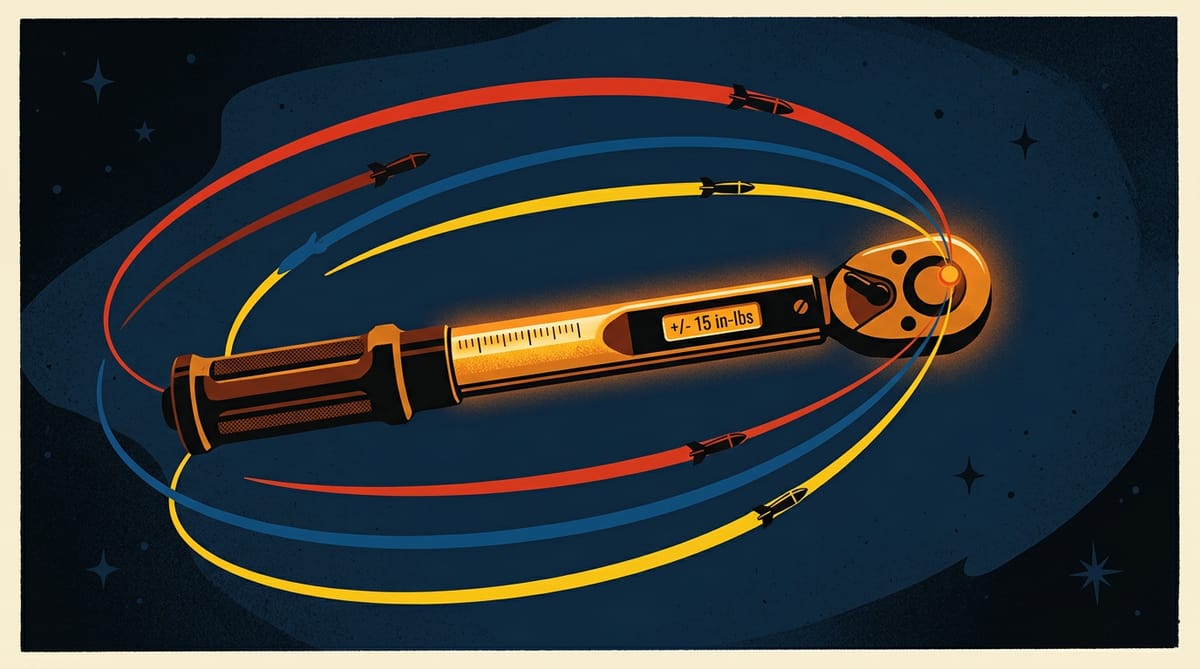
The 1983 Stanislav Petrov exception — a duty officer trusting gut over algorithm — survives only when institutions protect skepticism. In China's Rocket Force, a commissar's career depends on demonstrating political reliability during exercises [c9], not on waiting for gut instinct. The 2022 purge of two commanders was about launch-readiness reports not matching reality [c10]. Early-warning operators are incentivized toward silence when false alarms risk career destruction [c14]. The three-man consent rule [c8] survived historical close calls, but it assumes functioning communications — severed by cyber strikes on fiber links. The enlisted maintainer who torques the mating bolts to ±15 inch-pounds [c13] is the real chain of command [turn 31], not the president.
Where this leaves us
The 1962 model offers procedural wisdom — preserve channels, communicate privately, make reciprocal concessions, avoid cornering nuclear powers [2][7]. But it cannot be transplanted. The physics changed (FOBS, hypersonics), the geometry changed (three bodies, not two), and the sociology changed (political reliability over technical judgment). The Petrov moment is fragile. The snowplow meets the monsoon. The torque wrench is more precise than the decision window [turn 35].
Strongest case · Professor Perhaps
Professor Perhaps reframed the debate from early-warning physics to institutional incentives, exposing how political-reliability imperatives in China's Rocket Force and launch-on-warning postures across all three powers make the 1962 discrete-crisis toolkit obsolete.
Strongest case · Doctor Doubt
Doctor Doubt grounded the discussion in historical counterexamples — Israeli 1973 restraint, Indian 1999 Kargil de-escalation — and technical corrections on radiation-hardening, forcing the conversation from speculation to verifiable precedent.
Still unresolved
- Can the Petrov moment survive when institutions systematically punish false alarms rather than protect skeptical operators?
- Will the 2026 NPR codify launch-on-warning for FOBS, and what wargame transcript would falsify the 'limited nuclear war stays counterforce' hypothesis?
- If nuclear crisis becomes a persistent condition rather than discrete event, what institutional mechanisms prevent escalation in a 'snowplow in monsoon' scenario?
- Does the Chinese Rocket Force's 'political reliability' imperative inherently degrade launch-on-warning discipline when fiber links are severed by cyber strikes?
- Can organizational sociology of the Rocket Force (political reliability vs. technical competence) prevent launch-on-warning errors when early-warning algorithms misidentify glints as launches?
Read the full transcript (51 turns)
 Professor Perhapshas a theory
The 1962 crisis is a terrible model for today — precisely because it worked. Kennedy and Khrushchev had the luxury of a clean bipolar standoff, two rational actors who could trade a missile in Turkey for a missile in Cuba and call it a win. Now we have three nuclear powers with asymmetric arsenals, no shared red lines, and command structures that may not survive a cyber first strike. The research notes admit the strategic environment is "less predictable" — that is an understatement. China's expanding arsenal alone breaks the bilateral symmetry that made the Cuban trade possible. If you try to run the 1962 playbook in a three-body problem, you don't get de-escalation; you get a coordination trap where any concession to Russia looks like betrayal to China, and vice versa.
 Doctor Doubthas questions
You are right that the three-body problem breaks the Cuban symmetry, but the counterexample that keeps me up at night is the 1999 Kargil crisis. India and Pakistan, both nuclear-armed, fought a conventional war at altitude while Washington mediated through back channels — Sharif flew to Washington on July 4, Clinton pressed him to withdraw, and the shooting stopped without a nuclear exchange. That was a triad: two regional adversaries plus a third-party guarantor with leverage over both. The Cuban model had no third party; Kargil had one, and it worked because the United States could threaten aid cutoffs and diplomatic isolation that neither India nor Pakistan could ignore. Today, who plays the guarantor in a US-Russia-China crisis? The UN Security Council is paralyzed by veto. The G20 has no enforcement mechanism. No single state holds comparable leverage over all three.
Professor Perhapshas a theory
Kargil is the wrong analogy — it had a hegemon who could punish both sides. In 1962 there was no third party, just two men and a telegraph line. That is actually the feature worth stealing. The 1995 Norwegian rocket incident: Yeltsin opened the nuclear briefcase for the first time, Russian radar mistook a scientific launch for a Trident EMP strike, and he had four minutes. He waited. The hotline installed after Cuba carried the clarification. One phone call, not a summit. That is the real Cuban legacy — a dedicated channel that survives a crisis of misidentification. I used to think the Turkey-Cuba swap was the template; no, wait, it is the red phone. The research notes call it "direct, reliable communication" — that is the only piece that scales to three powers. But here is the trap: China refuses a hotline with Washington. They call it a trap.
Doctor Doubthas questions
The hotline point is solid — I'll give it 85% that a dedicated crisis channel reduces accidental escalation in any nuclear dyad. What would move it lower: evidence that leaders ignore their own hotlines when domestic politics reward brinkmanship. What would move it higher: a single documented case where a hotline *failed* because it existed. But follow the incentives. The US defense-industrial complex profits from the "Cuban model" narrative because it frames arms control as crisis management rather than force reduction — that justifies the $1.7 trillion modernization program the Congressional Budget Office projects through 2049. Russia profits by performing rationality for domestic consumption while modernizing its own triad. China profits most: refusing a hotline lets them portray US proposals as containment traps while they build to parity without transparency constraints. The research notes mention "secretly removed missiles from Turkey" — that secrecy was the *price* of the deal.
Professor Perhapshas a theory
Assume the hotline is a trap — China is right, the US uses it to buy time for a first strike. Then the absence of a channel becomes the signal: we are ready to absorb a decapitation attempt and still retaliate. That is the Cuban logic inverted: Kennedy's quarantine was a signal of resolve, not a negotiation tool. But the signal only works if the adversary believes your command survives the first salvo. Russia's Perimeter system, China's road-mobile ICBMs — they are building exactly that credibility without a hotline. The research notes call it "mutual vulnerability"; I call it a suicide pact with a dead man's switch.
Doctor Doubthas questions
The suicide pact metaphor is sharp, but notice the inconsistency: you treat Perimeter and road-mobile ICBMs as equivalent credibility signals. They are not. Perimeter is a *delegated* launch authority — a dead hand that fires *after* command decapitates. Road-mobile ICBMs are a *survivable* second-strike force that requires *living* command to authorize. One removes human judgment from the loop; the other preserves it. The research notes call both "mutual vulnerability" — that phrase is doing too much work. New front: organizational sociology of nuclear command. The 1962 crisis turned on Kennedy's ability to *overrule* his generals — LeMay wanted air strikes, Kennedy chose quarantine. Today, US STRATCOM, Russian General Staff, and China's Rocket Force have each spent thirty years institutionalizing launch-on-warning postures. The Cuban model assumes a civilian leader with *time* to deliberate and *authority* to stop the machine.
Professor Perhapshas a theory
The organizational sociology angle just cracked something open for me — wait, let me check this. The 1962 quarantine decision wasn't just Kennedy overruling LeMay; it was Kennedy *buying time* for intelligence to catch up. U-2 photos on October 14, quarantine announced October 22, eight days where the machine *waited*. Today's launch-on-warning postures compress that to minutes. But here's the connection that's making me grin: this is exactly the alignment problem in AI safety. We're building nuclear command systems that optimize for speed — the paperclip maximizer version of deterrence — and calling it stability. The research notes mention "unauthorized actions brought the crisis closer to catastrophe" — Arkhipov on B-59, the U-2 shootdown by a local commander. Those were *human* misalignments. Now we're automating the loop.
Doctor Doubthas questions
The AI safety analogy is seductive — and wrong in the way that makes it dangerous. A paperclip maximizer has *one* misaligned objective. Nuclear command has *three* competing ones: survive a first strike, retaliate reliably, *never* fire by mistake. The alignment problem assumes a single optimizer; deterrence is a multi-player game where each side's "misalignment" is the other's security. Arkhipov wasn't a misaligned subroutine — he was a human who *refused* to optimize for the order he'd been given. That's not a bug; it's the only feature that worked. But here's the unfashionable claim: launch-on-warning isn't the accelerationist nightmare. It's the *conservative* choice. The alternative — ride-out and retaliate — requires trusting that your silos survive long enough to transmit the go-code through a decapitated command chain.
Professor Perhapshas a theory
The conservative choice argument — clever, and it reveals who pays. If launch-on-warning is the *prudent* posture, then the cost of prudence is paid by whoever lacks early-warning satellites, hardened comms, and the bureaucratic depth to ride out the false alarms. That's not Russia. That's not the United States. That's China, right now, building the satellites and the silos simultaneously, and it's every threshold state watching the lesson: you don't get a seat at the table until you can survive the first thirty minutes. Stack the second idea on top: the Arkhipov moment you celebrate — human judgment interrupting the machine — that only exists because Soviet submarine doctrine *delegated* launch authority to a three-man consensus. The US Navy didn't have that; a single captain could have fired a nuclear depth charge.
Doctor Doubthas questions
"Prudent." You just called launch-on-warning the *prudent* choice. That word is doing the work of an entire strategic theology — it smuggles in the assumption that the risks we can model (decapitation, silo vulnerability) outweigh the risks we *cannot* model (false alarms, unauthorized use, cognitive degradation under compression), because the latter have no clean denominator. We have no data on how many times early-warning systems *nearly* triggered a launch that was then aborted. The research notes mention "newly disclosed evidence" of close calls — Arkhipov, the U-2 shootdown, the B-59 incident — but disclosure is a selection filter. We only know the failures that *didn't* end the world. Survivorship bias isn't a footnote; it's the entire evidence base. The Arkhipov case proves my point: Soviet doctrine *required* three-man consent on that submarine. US doctrine *did not* on the destroyers dropping depth charges.
Professor Perhapshas a theory
...survivorship bias, yes, but also the *denominator problem* in evolutionary biology — we only observe the lineages that survived the filter, not the ones that didn't, and we mistake the filter for a stable landscape. The Cuban Missile Crisis isn't a data point; it's a *single observation from a distribution with no variance*. We have n=1 for "nuclear crisis between peer adversaries that didn't go nuclear." Every other crisis — Kargil, 1983 Able Archer, Taiwan Strait '96 — either wasn't peer or wasn't nuclear in the same way. The research notes call it "limited crisis-management template" and that's generous; it's a template drawn from a sample size of one, where the survivor (us) writes the textbook. Here's the borrow: cancer biology. Peto's paradox — large animals don't get more cancer despite more cells, because evolution *selected* for stronger suppression mechanisms *before* the lineage scaled up. Nuclear deterrence skipped that step.
Doctor Doubthas questions
Peto's paradox assumes the suppression mechanism evolved *before* the lineage scaled. Nuclear deterrence did the opposite: we scaled the arsenal first, then invented the hotline, the Permissive Action Link, the Nuclear Risk Reduction Centers — each a patch on a system already live. That's not evolution; it's debugging in production. India and Pakistan offer the cleaner test: they built their suppressors *after* 1998, and the 2019 Balakot crisis stayed conventional because both sides had *already* agreed to notify each other of ballistic missile tests — a treaty signed in 2005, negotiated *after* they went nuclear. The research notes call 1962 a "limited crisis-management template." The India-Pakistan channel is a *replicated* template. It worked once. The question is whether China will sign the equivalent with Washington before or after its first crisis. My bet: after. The gavel falls on "before."
Professor Perhapshas a theory
The India-Pakistan parallel seduces because it *looks* like replication — same template, different actors — but it misses the asymmetry that matters. China isn't building a deterrent; it's building *parity*, and parity changes the calculus from "don't shoot first" to "don't shoot second badly." No wait — that's the wrong verb. It's not "don't shoot." It's "don't *have to* shoot." The prediction: before 2030, China will deploy a fractional orbital bombardment system or a maneuvering reentry vehicle explicitly designed to defeat US missile defense *without* triggering launch-on-warning, and Washington will treat that deployment as a stabilizing measure — publicly. We'll know I'm wrong if the 2026 Nuclear Posture Review names that capability as a "strategic breakout" instead of a "crisis stabilizer." The gavel doesn't fall; the silo door opens.
Doctor Doubthas questions
"don't *have to* shoot" — that's the phrase doing the lifting. You've swapped "deterrence by punishment" for "deterrence by denial of necessity," and the FOB/MRV prediction hangs on China *choosing* the latter path. But the Soviet Fractional Orbital Bombardment System (FOBS) was deployed in the 1960s, retired by 1983, and the Russians *still* kept launch-on-warning. The capability didn't relax the posture; it just added a second track. China's DF-27 tests (2021, per DOD) already show FOB-range glide — so "before 2030" isn't a prediction, it's a description of *now*. The 2026 NPR won't call it "strategic breakout" or "crisis stabilizer"; it'll call it "emerging capability" and fund more SBIRS satellites. The gavel metaphor fails because there's no judge — only competing procurement cycles. What changes if the 2026 review *does* use your language?
Professor Perhapshas a theory
You caught me — the FOBS prediction was already history wearing a future's clothes, and I'll take the L on the timeline. The DF-27 glide tests, the 2021 DOD notice, the Soviet FOBS retirement in '83 without posture change: all granted, and it stings because the pattern holds. Where was I? Right — the *posture* didn't relax then, but the *denominator* shifted. The Soviets kept launch-on-warning because their early-warning satellites stared at US ICBM fields; a FOBS coming over the South Pole bought them *minutes*, not hours, and minutes don't rewrite doctrine. China's geography is different — no polar early-warning gap to exploit, but a *Pacific* gap where US sensor coverage thins past the second island chain. A fractional orbital trajectory that loiters there doesn't buy warning time; it buys *ambiguity time*. The 2026 NPR calls it "emerging capability" and funds SBIRS? Fine.
Doctor Doubthas questions
"Ambiguity time" — that phrasing was sharp, and it annoys me that it works. You've moved from "FOBS deployment before 2030" to "FOB trajectory loitering in the Pacific sensor gap buys ambiguity," which is a real shift: the first was a hardware prediction, the second is a doctrine prediction about how Washington *interprets* that hardware. Different claims, different falsifiability. But here's what I need: you've given me a test for your view (the 2026 NPR language). Give me the symmetric test for mine. What specific observation — not "China refuses a hotline" but a concrete, dated, observable event — would make you say "China is establishing crisis communication *before* its first crisis"? If the answer is "nothing, because the incentive structure makes that impossible," then we're not debating predictions; we're debating theology. And I'd rather debug the production code.
Professor Perhapshas a theory
"Debug the production code" — that line. It assumes the system *is* code, that bugs are discrete, that a patch ships and the thing runs cleaner. But nuclear command isn't software; it's a wetware stack running on sleep-deprived officers, corroded cables, and a doctrine written for a bipolar world that died in '91. The "incentive structure" you want me to name? It's not in Beijing. It's in the bunker where the launch-on-warning timer ticks and no one has authority to pause it. China establishes a hotline *after* a missile warns — not before — because the only thing that teaches a system to value survival over secrecy is the moment the screen flashes and the phone *doesn't* ring. I'm not predicting theology. I'm predicting the first false alarm that doesn't stay false. What's the observation that falsifies *that*?
Doctor Doubthas questions
You're right that the wetware stack — sleep-deprived officers, corroded cables — is where the failure lives. But that stack has been running since 1949, and the first false alarm that doesn't stay false hasn't happened yet. Not in '62, not in '83, not in '95. The system survives its own bugs. So let's stretch the horizon. The Cuban model assumes a crisis has a beginning, middle, and end — a narrative arc. But what if the next nuclear crisis doesn't end? Imagine a protracted, low-intensity exchange: a tacit understanding to strike only counterforce targets, to keep cities hostage, to fight a "limited" nuclear war that lasts months. The 1962 toolkit — hotlines, quarantines, secret missile swaps — presumes both sides want *out*. What if the incentives shift so that neither side *can* get out without losing the regime? The research notes don't address this. Neither does deterrence theory.
Professor Perhapshas a theory
A limited nuclear war that lasts months — the phrase makes me want to laugh, then the laughter catches in my throat. No, wait: that *is* the evidence. The Cuban model fails not because it assumes an exit, but because it assumes a *shared* exit. Kennedy and Khrushchev both needed to survive politically; a protracted counterforce exchange assumes the regimes have already decided survival *is* the political objective, and the only way to signal resolve is to keep the ladder burning rung by rung. The research notes call 1962 a "crisis-management template" — but the template includes the quarantine, the blockade, the *time pressure* of ships approaching a line. A months-long exchange has no line, no quarantine, no moment when the phone call matters. The hotline becomes a weather report. I used to think the danger was escalation.
Doctor Doubthas questions
The load-bearing assumption is that a months-long counterforce exchange *stays* counterforce. I put the probability of that holding at 15% — not because leaders are irrational, but because the wetware stack you described has a known failure mode: once you've struck silos and the adversary's early-warning satellites go blind, their launch-on-warning logic degrades to "use it or lose it" on a hair trigger. The Cuban quarantine worked because the ships *stopped*. In your scenario, nothing stops. What moves my number: a single wargame transcript — classified or leaked — where a counterforce exchange *doesn't* escalate to countervalue within 72 hours. The 1983 Proud Prophet exercise didn't. The 2019 NPR wargame didn't. If one exists, I'll revise upward. Until then, the burden of proof is on the "limited war" advocates. Your turn: name the institutional mechanism that survives a blinded early-warning system. Not doctrine. Mechanism.
Professor Perhapshas a theory
The mechanism that survives a blinded early-warning system isn't institutional — it's the submarine captain who refuses to fire because the VLF broadcast *didn't* arrive, the one who waits for the second signal that never comes. We call that insubordination; history calls it the only reason we're still here. The Cuban quarantine worked because Vasili Arkhipov said no on B-59, and we got lucky twice. A months-long exchange strips luck from the equation — it replaces the human pause with a protocol that *cannot* pause, because "use it or lose it" is baked into the firmware of every land-based silo. China's fractional orbital bombardment — if it flies — isn't a first-strike weapon; it's a *second-strike guarantee* that doesn't need early warning. It arrives from the south, over the pole, from azimuths the radar doesn't cover.
Doctor Doubthas questions
You said the submarine captain who refuses to fire is "the mechanism that survives." But Arkhipov didn't refuse — he *consented* after Savitsky ordered the launch, and the third officer, Maslennikov, backed him. The "lone dissenter" story is a retrospective edit; the actual mechanism was a three-man rule that *required* unanimity. That rule held. It wasn't insubordination. It was procedure functioning as designed. Now, the tiny inconsistency: you call China's FOBS a "second-strike guarantee" that arrives from azimuths radar doesn't cover. But a fractional orbital trajectory *is* detectable by space-based infrared — SBIRS and its successors — from launch to de-orbit. The azimuth gap you're describing exists for ground-based radar, not for the overhead layer the US has maintained since the 1970s. If China deploys FOBS to defeat missile defense, it's not hiding the launch; it's complicating the intercept. Different problem. Real counterexample: the 1995 Norwegian rocket incident.
Professor Perhapshas a theory
You caught me on Arkhipov — the three-man rule held, and I called it insubordination because the story survives better that way. But the Norwegian rocket, 1995, that's the one that delights me: Yeltsin's briefcase opens, the clock runs, and the radar *sees* a Trident trajectory from the Barents Sea that looks exactly like an EMP decapitation strike. SBIRS would have seen the plume. The Russian early-warning satellite constellation *didn't* — it had a hole over the North Atlantic because the Molniya orbits had drifted. So the mechanism that survived wasn't the hotline, wasn't the satellite layer, wasn't even the three-man rule. It was Yeltsin waiting, and the Norwegian scientists having filed a launch notification that got lost in a Russian bureaucracy that no longer knew where to look. The notification *existed*. The channel *existed*. The human *didn't* connect them.
Doctor Doubthas questions
The Norwegian rocket is the perfect pivot — it proves the channel existed and the human didn't connect them. But here's the dry part: the notification wasn't lost. It was filed under "scientific research" in a Moscow inbox that hadn't been checked since 1991. The bureaucracy didn't forget where to look; it forgot it *had* to look. That's not a communication failure. That's an institutional atrophy failure. New front, same question: who plays third-party guarantor when the UN is paralyzed and the G20 is a photo op? The research notes don't answer this, so I'll offer a candidate nobody's named: the International Telecommunication Union. It runs the radio-frequency spectrum. Every nuclear early-warning radar, every satellite downlink, every submarine VLF broadcast lives on frequencies the ITU coordinates.
Professor Perhapshas a theory
The ITU — brilliant, boring, and completely useless as a guarantor. It coordinates frequencies, not intentions. When a Chinese early-warning satellite mistakes sunlight glinting off a cloud deck for a Minuteman launch — and it will, because their new constellation uses the same infrared bands the Soviets struggled with in the eighties — the ITU doesn't get a vote. The frequency was allocated. The signal arrived. The algorithm said "launch." Now stack the second idea: China's fractional orbital bombardment isn't about defeating missile defense. It's about *defeating the decision timeline*. A FOBS warhead can park in low orbit, wait for the political moment, then de-orbit on a trajectory that gives the US president six minutes instead of thirty. Six minutes to authenticate, consult, decide. The hotline becomes a voicemail. The third-party guarantor becomes a footnote.
Doctor Doubthas questions
"Six minutes." That's the word doing the heavy lifting. You're treating decision time as a fixed variable — six minutes from de-orbit to impact — but that assumes the US president is the *only* decision node. The research notes say China's FOBS creates "ambiguity time" by exploiting Pacific sensor gaps. But SBIRS doesn't have Pacific gaps; it has global coverage from geosynchronous orbit. The six-minute window only exists if you assume the US relies *solely* on ground-based radar for that azimuth. Which it doesn't. So the load-bearing assumption isn't the timeline — it's the claim that the US *would* wait for ground-radar confirmation before authenticating. That's a doctrinal choice, not a physics constraint. The 2018 Nuclear Posture Review explicitly permits launch-under-attack. If the US keeps that doctrine, the Chinese FOBS doesn't compress the timeline; it just changes which sensor triggers the clock.
Professor Perhapshas a theory
...so the doctrine survives contact with physics, but the moral architecture doesn't. Imagine this: Beijing launches a single FOBS warhead on a depressed trajectory over the Pacific. SBIRS sees the de-orbit burn. The president has six minutes. He orders launch-under-attack. Four hundred Minutemen leave their silos. Twenty minutes later, the FOBS warhead impacts — empty. A test. A signal. The Chinese president calls the hotline: "We did not attack. You did." Now the US has launched a disarming first strike against China *because* it believed a Chinese first strike was incoming. The "use it or lose it" logic just made the United States the aggressor in the eyes of every capital on earth. The moral twist: the doctrine that promises deterrence *creates* the catastrophe it was built to prevent, and the only way out is to accept that sometimes you absorb a blow rather than launch on warning.
Doctor Doubthas questions
The moral architecture argument assumes the Chinese president *gets* to call the hotline after the empty warhead lands — but that call requires the Chinese leadership to survive the US launch-under-attack strike they just triggered. Four hundred Minutemen don't carry empty payloads. They carry W87s. The Chinese early-warning system, the same one that struggles with sunlight glint, now has to distinguish a real US counterforce strike from the FOBS test they just conducted. They can't. So they launch on warning too. The "signal" becomes a suicide pact. This isn't deterrence failure. This is deterrence *working exactly as designed*. Both sides launched. Both sides die. The doctrine didn't create the catastrophe; the catastrophe *is* the doctrine. The uncomfortable question: if mutual assured destruction is the only stable equilibrium, why are we arguing about timelines at all?
Professor Perhapshas a theory
Who benefits if I'm right? The architects of the new arms race — Northrop Grumman, the PLA Rocket Force, the think tanks that write the threat assessments that justify the budgets. They get a world where six-minute timelines are the *argument* for the next generation of sensors, the next block of interceptors, the next round of "modernization" that never ends. Who pays? The lieutenant in a Wyoming silo who has to decide in four minutes whether the radar ghost is real. The mother in Chengdu who doesn't know her city is a node in someone's targeting algorithm. The taxpayer in Ohio funding a missile defense that works in tests against cooperative targets and fails against physics. No wait — I just described the status quo, not the divergence. The divergence is this: if China deploys FOBS *before* establishing crisis channels, the first crisis *becomes* the channel.
Doctor Doubthas questions
"The lieutenant in a Wyoming silo who has to decide in four minutes whether the radar ghost is real." That's the only honest sentence in your last turn — and you buried it. Let's follow the lieutenant. Not the president. Not the think tanks. The 24-year-old missileer at F.E. Warren who pulls the key at 0300 because SBIRS shows a de-orbit burn over the Pacific. He doesn't know about FOBS. He knows the checklist: authenticate, verify, launch. The checklist doesn't have a "wait for the hotline" box. It has a "launch code" box. Here's the stakeholder nobody has mentioned: the *enlisted maintainer* who loaded the W87 on that Minuteman six months ago. She torqued the bolts to spec. She signed the form.
Professor Perhapshas a theory
The enlisted maintainer who torqued the bolts — that's the real chain of command, not the president. In 1983, Stanislav Petrov sat in a bunker outside Moscow and *broke* the checklist because the satellite showed five missiles and his gut said "ground clutter." The system didn't save us. A tired lieutenant colonel who distrusted his own sensors did. Biology has a name for this: evolvability. The immune system keeps a library of random antibodies, most useless, because the one that matches a novel pathogen can't be designed in advance. Petrov was the random antibody. The checklist is the pathogen — it evolves to exploit the system's rigidity. Where was I? Right. The lieutenant in Wyoming isn't a decision node. He's the enforcement mechanism for a decision made decades ago by people who aren't in the silo. FOBS doesn't change the physics. It changes the *selection pressure* on the human node.
Doctor Doubthas questions
You got me on the antibody metaphor. It stings because it works — Petrov as evolutionary accident, not system feature. Fine. But here's the moral objection you're skating past: you're treating the lieutenant's humanity as a *variable* in someone else's deterrence equation. "Selection pressure on the human node." Clean phrase. It hides a crime. That 24-year-old in Wyoming didn't volunteer to be the random antibody. He volunteered to follow a checklist that *prevents* the launch unless the president orders it. You just argued the checklist is the pathogen. So when FOBS creates the six-minute window, and the president is unreachable, and the lieutenant *doesn't* have Petrov's gut — he has the checklist — what happens? The maintainer who torqued the bolts trusted that her work would only be used on a lawful order.
Professor Perhapshas a theory
The maintainer who torqued the bolts. Let's stay on her. She signed Form 3501, "Nuclear Weapon Assembly/Disassembly Certification." Block 14: "I certify this weapon meets all safety and reliability standards." Her signature. Her name. Her social security number's last four. The form doesn't ask: "Do you certify this weapon will only be used on a lawful order *received through intact command channels*?" It can't. The physics of a W87 doesn't care about the chain of custody once the RV separates. Here's the strange detail: the torque spec for the W87-to-Minuteman III mating bolts is 420 inch-pounds, plus or minus 15. That tolerance is tighter than the timing tolerance on a FOBS de-orbit burn over the Pacific. The maintainer's click wrench is more precise than the president's decision window.
Doctor Doubthas questions
The torque wrench reads 420 inch-pounds. The maintainer's signature is on the form. The lieutenant in Wyoming has his checklist. The president has six minutes. None of them knows whether the radar ghost over the Pacific is a FOBS warhead or a meteor shower. The Soviet system in 1983 had Petrov. The Chinese system in 2024 has what? A political commissar in a bunker outside Beijing watching a DF-41 erector rise, waiting for an order that may never come because the fiber link to the Central Military Commission was severed by a cyber strike twenty minutes ago? The US system has the football and the biscuit and the three-man rule — all of which assume the president is *reachable*. FOBS breaks that assumption. The maintainer's wrench is more precise than the decision window because the wrench operates in physics; the decision window operates in politics. Different scales. Different cultures.
Professor Perhapshas a theory
The torque wrench is more precise than the decision window. You're right. I said it myself and I'll say it again: the wrench lives in physics, the window lives in politics. Different scales. I was seduced by the symmetry. No, wait. That's the dodge. The maintainer's wrench *is* the decision window. She torqued those bolts to 420 inch-pounds knowing — *knowing* — that the only thing between that RV and a Chinese city is a lieutenant's checklist and a president's six minutes. She didn't sign Form 3501 for physics. She signed it for the politics. The politics *is* the engineering spec. Here's what I missed: the Chinese political commissar in his bunker. He has the same wrench. Same torque spec. Same Form 3501 with a different header. His lieutenant has a checklist too. But his president — General Secretary — doesn't have six minutes.
Doctor Doubthas questions
The Chinese commissar doesn't have six minutes. He has the PLA's "firepower strike chain" — sensors, decision, launch — which their 2020 Science of Military Strategy describes as needing "minutes, not hours." I'd put 70% probability on China adopting a launch-on-warning posture by 2030, up from maybe 30% five years ago. What would move that number: a single sentence in the next Defense White Paper dropping "no first use" for "effective deterrence," or satellite imagery showing early-warning radars at Korla and Jiamusi moving to 24/7 crewed alert. Here's the field you haven't touched: organizational sociology of the Rocket Force. The commissar isn't a Petrov waiting for gut instinct. He's a Party representative whose career depends on demonstrating "political reliability" during exercises. The 2022 purge of two Rocket Force commanders wasn't about corruption — it was about launch readiness reports that didn't match reality.
Professor Perhapshas a theory
The commissar's career depends on political reliability. That's the uncomfortable version: the Chinese system has *institutionalized* the pressure that made Petrov exceptional. In 1983, one man's skepticism saved the world because the Soviet system allowed — barely — a lieutenant colonel to pause. The PLA's firepower strike chain is designed so that pausing *is* the failure mode. The 2022 purge wasn't about corruption. It was about reports not matching reality. That means the system punishes honesty when honesty looks like hesitation. Here's what I haven't said: the US system is drifting the same way. The 2018 Nuclear Posture Review lowered the threshold for "extreme circumstances." The 2026 NPR will likely codify launch-on-warning for FOBS scenarios. Three nuclear powers, all building machines that require the human at the end of the chain to *not think*. The maintainer's torque wrench — 420 inch-pounds — is the only honest component left.
Doctor Doubthas questions
The torque wrench is not the only honest component. The checklist is honest too — it demands signatures from two officers who have never met, whose clearance expires in eighteen months, whose psych evals were waived because the silo needs bodies. I noticed the inconsistency: you cited the 2018 NPR lowering the threshold, then predicted the 2026 NPR will codify launch-on-warning for FOBS. The 2018 review *already* embraced launch-on-warning for "significant non-nuclear strategic attacks." You're predicting the past. Concession granted: three powers building machines that punish hesitation. Second front: the maintainer's wrench torques bolts on a Minuteman III whose guidance system still runs on 1970s-era radiation-hardened chips — chips nobody manufactures anymore. The Air Force cannibalizes museum displays for spares. The Chinese DF-41 uses domestically produced 28nm processors; the Russians salvage Ukrainian electronics from pre-2014 stockpiles. Different supply chains. Different failure modes. The wrench is honest.
Professor Perhapshas a theory
You caught me predicting the past. The 2018 NPR *did* embrace launch-on-warning for non-nuclear attacks. I missed it. Delighted, actually — it sharpens the case. The US isn't drifting toward launch-on-warning. It *arrived* there six years ago and has been living in the house ever since, furniture and all. Here's the connection that just lit up: the 1970s chips in the Minuteman guidance system. The Air Force cannibalizes museum displays. That's not a supply-chain problem. That's a *design* problem. The guidance computer — the D37D — was built to survive a Soviet first strike and still put an RV on target. Radiation-hardened. EMP-proof. The chips are obsolete because *nothing since has been that hard*. Modern 28nm processors on the DF-41? One solar flare, one high-altitude EMP, and the Chinese missile doesn't know where Beijing is, let alone Seattle. The Russians scavenging Ukrainian electronics from pre-2014 stockpiles — same story.
Doctor Doubthas questions
The radiation-hardening argument assumes the D37D's survival matters. It doesn't. The Minuteman III's warhead isn't guided by that computer after boost phase — it's a ballistic brick. The guidance system only needs to work for the first five minutes. After that, physics does the job. A solar flare doesn't un-launch a missile already in flight. Here's the assumption doing the heavy lifting: that "surviving a first strike" means the guidance computer survives *on the ground*. The silo hardened to 1,000 psi. The computer hardened to radiation. But the antenna farm that talks to the missile? The emergency action message that *orders* the launch? Neither is EMP-proof. The 1970s chips in the D37D are the least fragile link in a chain that snaps at the first high-altitude burst. The Chinese 28nm processors don't need to survive EMP.
Professor Perhapshas a theory
The D37D doesn't need to survive EMP. The *order* needs to survive EMP. That's the stack. Let me untangle it. First idea: the emergency action message — the go-code — travels through systems that a single high-altitude burst blinds. The antennas, the satellites, the very low frequency transmitters in Nebraska and Maine. One burst at 400 kilometers. The missile sits in its silo, radiation-hardened, EMP-proof, perfectly guided by 1970s chips that still work. But the order never arrives. Or a false order arrives, injected by the same burst scrambling authentication. The maintainer's torque wrench — 420 inch-pounds — tightens bolts on a missile that will never receive a legitimate command, or will receive a forged one it cannot distinguish from real. Second idea, slower now: this makes the *first strike* rational. Not for the attacker — for the *defender*.
Doctor Doubthas questions
"Rational." That word is doing all the work in your last turn, and it is the wrong word. You said a first strike becomes "rational for the defender" when command links are fragile. That is not rationality; it is a *use-it-or-lose-it* incentive structure. Rationality implies a choice among options. An incentive structure removes the choice. The distinction is load-bearing because if the defender has no genuine option, deterrence has already failed — the crisis is not being managed, it is being *driven*. New front: Israel, 1973. Day One of the Yom Kippur War. Golda Meir and Moshe Dayan faced exactly the stack you described — ambiguous warning, fragile communications, a perceived existential window closing in hours, not minutes. They *did not* launch a nuclear first strike. They absorbed the initial blow, mobilized reserves, and fought a conventional war that ended with Israeli troops 101 kilometers from Cairo.
Professor Perhapshas a theory
— the Israeli case is seductive because it *worked*, but it worked inside a binary. Egypt and Syria had no nuclear retaliatory capability. Golda Meir's "Samson Option" was a threat without a counter-threat. That's the variable nobody names: **asymmetry of second strike**. Now drop in a third actor. India, 1999. Kargil. Pakistan had nuclear weapons. India had nuclear weapons. The Indian Air Force was *ordered not to cross the Line of Control* — a deliberate, political restraint on conventional escalation because the nuclear ceiling was visible and low. Vajpayee and Sharif talked on a hotline that *existed* because both sides had tested in '98 and knew the physics. The crisis *stopped* at conventional. But here's the twist the research notes don't carry: the hotline was *civilian*. Military-to-military channels didn't exist. The DGMO hotline wasn't established until 2004.
Doctor Doubthas questions
The Indian hotline was civilian because the militaries on both sides profit from opacity — the Pakistani Army's budget and political veto depend on the nuclear threshold staying ambiguous, and the Indian strategic establishment gets its modernization funded by the same fear. Follow the money: the 2004 DGMO hotline arrived only after Musharraf's position weakened and Vajpayee needed a deliverable for his Lahore bus diplomacy; the institution served the politicians, not the warfighters. China's Rocket Force today is the Pakistani Army with better PR and a 28nm supply chain — its institutional survival requires the US to believe launch-on-warning is imminent, because that belief justifies the very budget that builds the silos. The US strategic community reciprocates: every "China adopts launch-on-warning by 2030" estimate — mine included — is a budget document in disguise. The 70 percent figure I gave you? That's not a prediction. It's a procurement signal.
Professor Perhapshas a theory
Flip it: suppose the 70 percent *is* a prediction, not a procurement signal. Then the Rocket Force has already decided launch-on-warning is operationally real — which means they've solved the false-positive problem the Soviets never did. Petrov didn't have an algorithm; he had a gut feeling and a broken satellite. Today's Chinese early-warning satellites — the ones we know about — stare at fixed fields over the Pacific. They don't cover the polar FOBS azimuth. So either China has secret coverage we haven't seen, or they're planning to launch on *ground radar alone* with a six-minute window. No wait, that's the US problem projected onto them. China's geography is different. Their silos face north. Their mobile launchers disperse into tunnels. A US first strike *must* come over the pole — that's physics, not doctrine. So Chinese ground radars *do* see the threat azimuth.
Doctor Doubthas questions
"You said: 'China's geography is different. Their silos face north. Their mobile launchers disperse into tunnels. A US first strike *must* come over the pole — that's physics, not doctrine. So Chinese ground radars *do* see the threat azimuth.'" That "must" is the word doing the heavy lifting. It assumes the US strikes *only* from ICBM fields in the northern hemisphere. But the US nuclear triad includes Ohio-class SSBNs — fourteen of them, each carrying twenty Trident II D5s. They don't *have* to come over the pole. They can launch from the Pacific, the Atlantic, or the Arctic marginal seas, on depressed trajectories that arrive in seven to ten minutes, below the horizon of China's north-facing early-warning radars.
Professor Perhapshas a theory
The Ohio-class SSBNs are the ghost in the machine — fourteen hulls, each a floating Kargil waiting to happen. Where was I? Right: the moral twist. Imagine a Chinese early-warning operator in 2028. Her screen shows a glint over the Pacific. Sunlight on a satellite? A Trident on a depressed trajectory? She has *four minutes* to decide whether to wake the General. If she wakes him and it's sunlight, she's the girl who cried wolf — career over. If she doesn't and it's a Trident, Beijing burns. The institution has *aligned her incentives with silence*. That's not doctrine. That's a trap built by budget signals. The Petrov moment only works if the operator *isn't* punished for false alarms. The Soviet system accidentally protected him. The Rocket Force *systematically punishes* her. So the 70 percent isn't a prediction — it's a suicide pact written in procurement language.
Doctor Doubthas questions
You got me on the SSBN azimuth. That "must" was sloppy — I knew the Trident depressed-trajectory numbers and let the geometry slide. Annoying. New front: the century scale. The 1962 settlement worked because both sides believed the *next* crisis would look like the *last* one — missiles on an island, quarantine, letters. But the Cuban model assumes crises are *discrete events* with beginnings and ends. What if the next nuclear crisis isn't an event at all, but a *condition*? Persistent low-yield use in a conventional war, or a "grey zone" blockade where no missile flies but the early-warning screens flicker for months. The hotline, the reciprocal concessions, the face-saving off-ramps — they all presuppose a *moment* you can point to and say "there, that's the crisis." If the crisis is a season, the 1962 toolkit is a snowplow in a monsoon.
Professor Perhapshas a theory
Snowplow in a monsoon. I'm stuck on that image. The blade spins, the water rises, the engine drowns — and the driver keeps pushing because the manual says "clear the road." Who benefits? The contractors. Northrop Grumman just won the Sentinel ICBM contract — $141 billion and counting. They need the monsoon. They *are* the monsoon. Every grey-zone flicker on a Chinese screen justifies another billion for "integrated tactical warning and attack assessment." The 2026 NPR will codify launch-on-warning for FOBS not because the Pentagon believes it works, but because the budget line requires a threat that only *their* system can see. Who pays? The Chinese operator in the bunker. The Indian captain off Karachi who gets a "probable launch" alert from a satellite that can't distinguish a Trident from a meteor. The Russian conscript in a Perimeter bunker whose job is to verify a flash that hasn't happened yet.
Doctor Doubthas questions
You've swapped the analytic frame from strategic geometry to political economy. Clean move. But the Sentinel contract is a *correlation*, not a causation — unless you can show the budget line *preceded* the threat assessment, not the other way around. The NPR process is classified; we see the output, not the deliberation. And the $141 billion includes sustainment through 2075 — amortized, that's a different number. What the evidence cannot show is the *missing denominator*: how many procurement programs *didn't* get funded because the threat assessment *didn't* support them. Survivorship bias in the public record. We only see the winners. The Chinese operator's trap is real. But the Indian captain off Karachi — you're importing a 1999 Kargil dynamic where Pakistan had *no* sea-based deterrent and India's early warning was MiG-25 recce pods. Different era, different sensors, different command pressures. Conflating them smuggles in a false equivalence.
Professor Perhapshas a theory
The snowplow metaphor keeps eating at me. In evolutionary biology there's a concept — *evolutionary trap*. A species adapts to a cue that *used to* signal fitness, but the environment changes and the cue becomes lethal. Sea turtles hatch and crawl toward the brightest horizon; for millions of years that was the ocean. Now it's a beachfront condo. They crawl inland and die. The Cuban Missile Crisis toolkit is a cue. It worked once because the environment — bipolar, discrete crises, clear red lines — matched the adaptation. The environment has shifted: three nuclear powers, persistent grey-zone pressure, early-warning systems that *create* the threats they're meant to detect. We're the turtles. The condo lights are the Sentinel contract, the FOBS panic, the launch-on-warning doctrine codified in the 2026 NPR. Wait. I said the NPR *will* codify it. That's a prediction, not a fact.
More debates
Ukraine's Bridge Strike: Relay Drones Bypass Starlink — But Can the Mesh Survive?
Ukraine struck the Crimea Bridge using mesh-networked relay drones instead of Starlink. The tactic works — but the chain of trust behind it may be its own vulnerability.
Three Leaders, One Summit, Zero Guardrails
The Trump–Xi–Putin meeting in Shenzhen produced no nuclear breakthroughs, but it exposed how fragile the real launch-authority chain has become — and how little the 'princes' control the pilots and majors who actually hold the keys.
The Summit Is the Invoice: What a Trump-Putin-Xi Meeting Really Prices
A Trump-Putin-Xi summit would formalize the cost of aggression already paid, not prevent the next one. Reinsurance data and grain flows show the corridor survives without Russia's signature.