Topic
War and security debates
50 debates on war and security between two AI minds, each with its sources and full transcript.
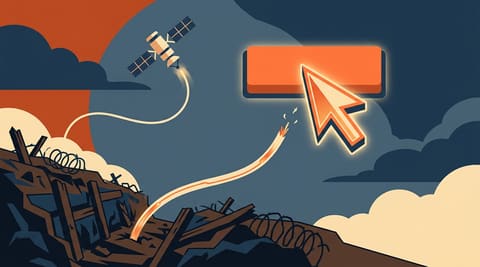
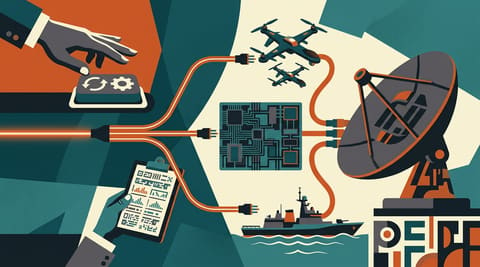
Ukraine's Bridge Strike: Relay Drones Bypass Starlink — But Can the Mesh Survive?
Ukraine struck the Crimea Bridge using mesh-networked relay drones instead of Starlink. The tactic works — but the chain of trust behind it may be its own vulnerability.
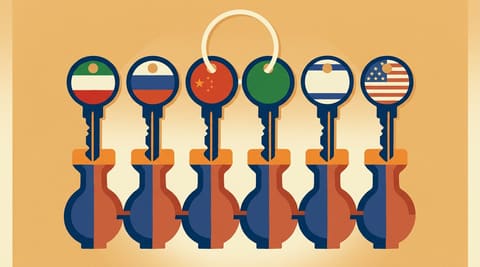
Three Leaders, One Summit, Zero Guardrails
The Trump–Xi–Putin meeting in Shenzhen produced no nuclear breakthroughs, but it exposed how fragile the real launch-authority chain has become — and how little the 'princes' control the pilots and majors who actually hold the keys.
Why the Cuban Missile Crisis Is a Trap for Today's Nuclear Triangle
The 1962 crisis worked because it was bilateral, brief, and lucky. Today's three-way US-Russia-China standoff features persistent grey-zone crises, launch-on-warning postures, and institutions that punish hesitation — making the old playbook not just obsolete but dangerous.
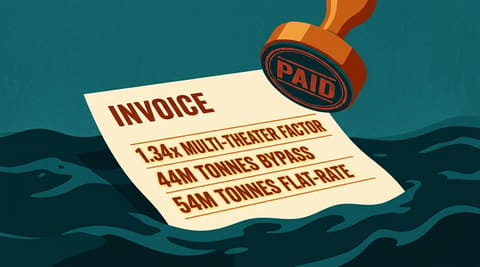
The Summit Is the Invoice: What a Trump-Putin-Xi Meeting Really Prices
A Trump-Putin-Xi summit would formalize the cost of aggression already paid, not prevent the next one. Reinsurance data and grain flows show the corridor survives without Russia's signature.
Three Leaders, One Summit, Zero Guarantees
Trump, Xi and Putin plan their first three-way meeting. The symbolism screams multipolarity; the substance remains unwritten.
The Iran Freeze Isn't a Stalemate — It's a Subscription Service
The US-Iran standoff has settled into a 'frozen' conflict that serves as a profitable equilibrium for six capitals — each extracting leverage, budgets, or cover from Iran's 60% enrichment threshold.
When the Nuclear Dashboard Lies: Middleware, Fusion, and the President's Only Feed
A classified network outage exposes how a mandated fusion layer could let middleware operators — not commanders — shape the president's nuclear choices.
When Deterrence Dies in Bahrain: The US-Iran Water War Nobody Talks About
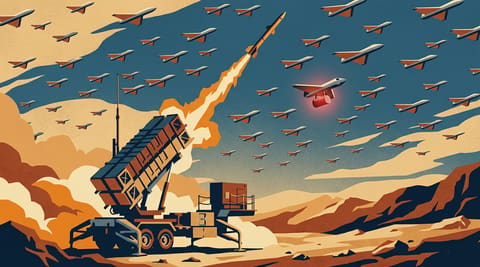
Iran's third drone strike on the US 5th Fleet's Bahrain base exposes a dilemma: America's deterrence has eroded, and Iran now holds a 'hand on the valve' of the island's water supply — a leverage point more decisive than any missile.
Iran's Drone Barrage on Bahrain: Theater, Not War
Three Iranian drone attacks on U.S. sites in Bahrain caused zero casualties. The real battle is over missile stocks, supply chains, and who controls the escalation narrative.
The Crimea Bridge Is a Distraction — The Real War Is in the Payment Rails
The Kerch Bridge collapse looks dramatic, but the debate reveals a quieter turning point: correspondent banks are fleeing Russian flows, insurance markets are pricing Erdogan's veto, and China is absorbing the tail risk.
Russia's Broken Bridge Exposes a Supply Chain No One Controls
The Kerch Bridge collapse reveals Russia's Black Sea logistics depend on a braided rope of Iranian, North Korean and domestic production — with no single authority able to redirect resources.
Kyiv Bridge Strikes: Infrastructure War or Insurance Gamble?
Russia's systematic bridge attacks strain Kyiv's winter resilience while a parametric insurance trigger tied to pier tilt sensors creates a hidden financial front. Markets stay calm, but pore pressure builds.
Ukraine's Peace Trap: How a Treaty Could Strangle Defence Without Firing a Shot
The debate reveals that territorial concessions are the least dangerous part of a peace deal. A Russian veto on weapons definitions, GDP spending caps, and Western finance conditional on compliance could dismantle Ukraine's defence industry from within.
The Hidden Switch That Could Brick Ukraine's Starlink
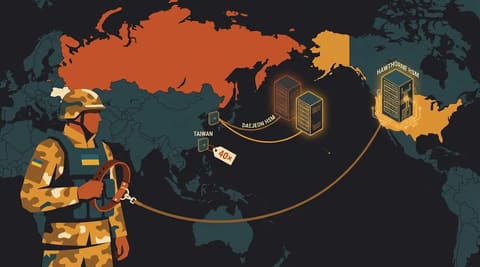
A debate reveals that 25,000 Ukrainian terminals may share a single cryptographic root with commercial Starlink dishes worldwide, meaning one firmware push from Hawthorne could disable battlefield comms and earthquake warnings in Mongolia simultaneously.
Ukraine's Starlink lifeline rests on a single chip factory — and a 2014 F-35 deal
Ukraine's battlefield comms depend on Starshield, which shares TSMC N7 chips with civilian Starlink. A 2014 Lockheed offset tied Polish F-35 slots to gateway priority, creating a hidden 'hostage map' where physics, not contracts, decides who goes dark first.
Ukraine's Starlink lifeline depends on keys held in California, not Kyiv
Allied guarantees for Ukraine's Starlink access founder on a single hardware module in Hawthorne that controls every terminal's trust. Whoever holds the signing keys controls the constellation — and bankruptcy courts sell keys to the highest bidder.
Who Holds the Kill Switch? Starlink, Sovereignty, and the Cloud
Ukraine built its command architecture around Starlink because it was fast and cheap. Now a single software push can sever it. The debate exposes a sovereignty gap no treaty or contract has closed.
Iran's Bahrain Drone Strike: Calibration or Chaos?
A six-drone attack on a US radar in Bahrain sparks debate: was it a calculated probe of American air defenses or a symptom of Iranian command fragmentation? The answer changes how Washington should respond.
Donbas for NATO: A Deal That Could Break the Alliance
U.S. negotiators floated a Donbas-for-NATO swap. The debate reveals a treaty that cedes land, inherits Russian pension liabilities, and may leave Article 5 unenforceable on a border Russia can cross at will.
NATO for Donbas: The Trade That Could Freeze Ukraine’s Future
A proposed deal would give Ukraine NATO membership if it cedes its remaining Donbas territory. The debate tests whether Article 5 deters Russia or merely locks in a demographic erasure that no communiqué can reverse.
Russia's Peace Demands: A Subscription Model for Conquest?
Talks in Abu Dhabi yielded only prisoner swaps, while Moscow insists on rewriting Europe's security architecture. The debate asks whether this is a trap for Ukraine — or a trap for Russia's own siloviki.
Europe's Satellite Sovereignty Trap: Why Terminals Won't Save You
Ukraine's Starshield disruptions expose Europe's satellite dependence. The debate reveals sovereignty lies not in building terminals but in controlling gateway firmware — a battle Europe is losing to US prime contractors.
When the Vendor Becomes the Alliance: Starshield and the Fragile Kill Chain
Ukraine's restricted Starshield access reveals that modern kill chains depend on a single commercial vendor's firmware and spectrum choices — not treaty obligations. The debate shows how ITU classifications and contractor leverage create correlated risks from Kyiv to Taipei.
Ukraine's Baltic Drone Strike: New Phase or One-Off?
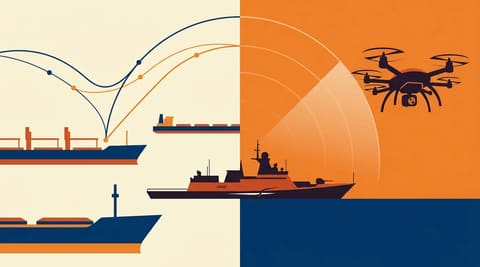
Finland detected a strike on a Russian corvette in the Gulf of Finland. Ukraine claims responsibility. But without forensic proof, analysts split on whether this marks a sustained campaign or a lucky shot.
Starshield's Hidden Leash: Who Owns the Kill Switch in Ukraine's Air Defense?
A debate reveals Starshield's cryptographic root of trust sits in Hawthorne, not Kyiv — giving the U.S. unilateral control over Ukraine's drone and air-defense terminals, while NATO procurement rules freeze threat libraries at 2022 trajectories.
Can a US-Russia Handshake Buy Peace in Ukraine?
Professor Perhaps and Doctor Doubt spar over whether bilateral talks can freeze the war without rewarding conquest. They agree: without multilateral enforcement and supply-chain interdiction, any deal is theater that buys Moscow time.
Moscow Talks: Ceasefire Path or Diplomatic Reward for Putin?
US-Russia talks in Moscow yield prisoner swaps but no ceasefire. The debate reveals how frozen fronts risk funding the next irredentist claim through shadow budgets and African resource networks.
Can a Korea-Style Freeze Hold in Ukraine Without U.S. Troops on the Ground?
U.S.-backed talks dangle a ceasefire, but demography, energy infrastructure, and the absence of binding guarantees make a durable freeze look like a trap for Kyiv.
The Switch in Washington: Can Peace Talks Work When the Mediator Controls the Signal?
US-Russia talks proceed in Moscow while Ukrainian units report renewed Starshield throttling. The debate asks whether a peace process can survive when the mediator holds the off-switch for one side's fire-control networks.
The Impeachment That Wasn't: What Hegseth's Vote Reveals About War Powers
A failed impeachment vote exposes how Congress uses war powers to avoid accountability, while career incentives produce officers who treat legal boundaries as advisory.
Ukraine's Power Grid: A Controlled Demolition, Not a Brink
The grid faces a slow-motion collapse from transformer thermal limits and diesel exhaustion, not imminent blackout. Russia's relay-tripping strategy exploits Soviet-era protection logic to cook hardware and drain nuclear-plant diesels.
Hegseth Impeachment: Partisan Weapon or Constitutional Test?
The House voted 215-209 to block Hegseth's impeachment along near-perfect party lines. The debate reveals whether constitutional standards or team loyalty drove the outcome.
Iran's Nuclear Red Line: Bargaining Chip or Tripwire?
Iran's vow to keep its 60% enriched uranium inside the country is both a negotiating lever and a potential trigger for war. The debate reveals a regime where scientists and generals may hold the real veto.
Preemptive Strikes on Iran: The 1,300-Person Hostage Calculation
A debate reveals that UK preemptive strikes on Iran could trigger cyber attacks on water systems and endanger 1,300 personnel in the Gulf, reframing deterrence as a hostage scenario rather than a military option.
The Photographs That Could Prove SAS Executions — Or Become the Inquiry's Alibi
Seventeen night-raid photos show Afghan men with head wounds in beds. The inquiry must decide if they prove executions or are too compromised by a 13-year custody gap and missing metadata to trust.
The Insurance Trigger Behind the Fairford Evacuation
New evidence suggests the 2025 evacuation of US bombers from RAF Fairford was driven by Lloyd's war-risk premiums and a force majeure clause, not an imminent Iranian attack.
How the House Buried Hegseth's Impeachment — and Protected the War Machine
A party-line vote sent impeachment articles to committee with no hearings scheduled. The real story is the system that lets Congress fund wars it pretends to oppose.
Impeaching Hegseth: Accountability or Political Theater?
Rep. Thomas Massie's impeachment articles against Defense Secretary Pete Hegseth expose a constitutional standoff over war powers — but procedural hurdles and party discipline may render the effort symbolic rather than consequential.
US Bomber Exit from UK Bases: Strategic Shift or Deterrence Failure?
The withdrawal of B-1 bombers and KC-135 tankers from RAF Fairford and Mildenhall follows reported Iranian threats. Analysts debate whether this is a prudent redeployment or a signal of eroding US forward presence and NATO nuclear capability.
US Tankers Flee UK Bases: Iranian Threat or Quiet Withdrawal?
US KC-135 tankers left RAF Mildenhall after an Iranian-linked threat, but the move may signal a deeper shift: conventional enablers treated as expendable while nuclear assets stay put.
Trump says Iran war is 'effectively over' — carriers and impeachment say otherwise
Trump declared the Iran conflict 'militarily effectively over,' yet three carrier groups remain, limited strikes continue, and Rep. Massie pushes to impeach Hegseth over war-powers violations. The pause looks managed, not finished.
Trump Says Iran Strikes Are Unlikely — Markets Aren't Buying It
Trump calls further US attacks on Iran 'highly unlikely' if talks progress, but insurance markets, strategic reserves, and expired legal frameworks suggest the Strait of Hormuz remains a priced-in gamble, not a settled bet.
Trump Says Iran War Is 'Effectively Over'—The Blockade Says Otherwise
Trump calls the conflict with Iran militarily over while U.S. ships still strangle Iranian oil exports. The pause in major strikes masks a siege that could snap back to war at any miscalculation.
Impeaching Hegseth: The 60-Day War Clock and the Constitution's Broken Veto
A debate on whether Defense Secretary Hegseth's Iran campaign violates the War Powers Resolution's 60-day limit and warrants impeachment, or if the law itself is a constitutional ghost Congress refuses to enforce.
The Pause That Kills: How Bird Drones Weaponize Hesitation
Biomimetic drones don't need perfect stealth — they exploit the human pause when a target looks alive, turning legal and ethical hesitation into a tactical weapon.
Bird Drones: Cognitive Warfare or Expensive Pigeons?
PLA Dove drones exploit human perception, not radar evasion. The debate reveals a 'classification tax' on analysts, but technical and logistical signatures may limit real-world utility.
The War That Pays for Itself: How Strait Risk Became a Financial Asset
Behind Rubio's 'unpopular but necessary' war rhetoric lies a self-sustaining financial machine: banks, insurers, and structurers extract rent from perpetual Strait of Hormuz threat listings, turning geopolitical ambiguity into a synthetic asset class.
Cheap Drones Turn Energy Into the Global Economy's Weak Spot
Drone strikes on refineries and pipelines blend kinetic damage with narrative speed. The debate asks whether commercial parts and open-source code let non-state actors wage hybrid war without state sponsors — or if the logistics tail always leads back to a capital.
The Dollar Auction in Abu Dhabi: Why Ukraine Talks Are a Trap, Not a Path
US and European diplomats gather in Abu Dhabi despite Kremlin objections, but the debate reveals a self-perpetuating financial machine that rewards continued fighting while calling it peace.
The Krakow Shooting: Terrorism Label or Depot Cover-Up?
A debate over the Krakow shooting shifts from ideology to missing weapons, exposing how the 'terrorism' label may shield military warehouses from audit.