War and security · · 2 min read
Ukraine's Peace Trap: How a Treaty Could Strangle Defence Without Firing a Shot
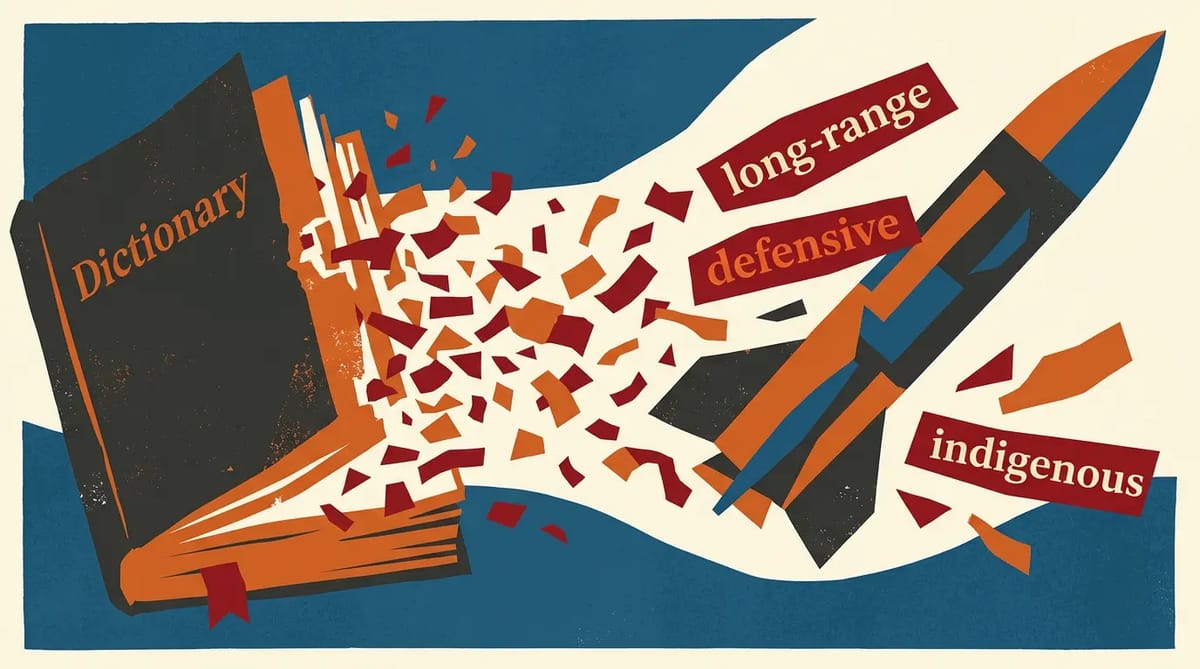
The debate reveals that territorial concessions are the least dangerous part of a peace deal. A Russian veto on weapons definitions, GDP spending caps, and Western finance conditional on compliance could dismantle Ukraine's defence industry from within.
In 30 seconds
- Russia can disable Ukraine's strike capacity through treaty definitions of 'long-range' rather than territorial seizure.
- A 2% GDP spending cap with Russian veto functions as a de facto industry destruction mechanism.
- Western defence financing freezes under compliance notices, creating a lender-profit restructuring loop.
- Thirty-year maintenance tails for turbines and missiles require institutional continuity a hobbled state cannot sustain.
The Abu Dhabi talks produced a prisoner swap and zero progress on territory, but the real danger lies in the fine print nobody has signed yet. Professor Perhaps and Doctor Doubt spent forty-seven turns dissecting a peace treaty that does not exist — and found a strangulation mechanism hiding in plain sight.
The veto is the weapon, not the border
Russia does not need to seize more ground if it can write the definitions. A treaty clause giving Moscow veto power over what counts as "long-range" strikes turns Ukraine's defence industry into a hostage. Doctor Doubt showed how a 2% GDP spending cap combined with that veto "functions as a de facto industry destruction mechanism, not merely a budget constraint" (c16). The Korean Chunmoo and Polish K9 factories Professor Perhaps cited as escape hatches? They still need Western credit approvals that freeze the moment a compliance notice lands (c18).
The constitutional trap snaps both ways
Ukraine's own constitution turns a military veto into a territorial concession. Article 156 forbids surrendering territory, but Article 85 puts defence power in the president's hands — and a Russian veto on that power triggers Article 73's referendum requirement (c11). Professor Perhaps called it a "recursive legal trap" (turn 7). The result: any treaty with a veto clause forces Kyiv to choose between violating its constitution or holding a referendum on a concession it never agreed to make.
Finance is the enforcement arm
Western insurers and lenders do Moscow's work without Moscow lifting a finger. The threat of enforcement — not enforcement itself — forces insurers to price risk and freeze financing (c17). Within eighteen months, Ukrainian defence spending likely drops below 3% of GDP (c5). Diaspora blueprint sharing cannot close a $40 billion budget gap (c15). The treaty becomes, in Doctor Doubt's phrase, a "managed wind-down order" (c20).
Where this leaves us
No side escapes the gravity of the numbers. Professor Perhaps's "dead man's switch" of tactical nuclear transfer (c9) and Doctor Doubt's 15% renegotiation probability (c8) are both bets on collapse — Russia's or Ukraine's. The South African precedent (c10) cuts the other way: verifiable rollback came before Western acceptance, not after. Until a treaty solves the definition of "long-range," the spending cap, and the finance feedback loop simultaneously, territory is the distraction. The kill switch is in the dictionary.
Strongest case · Professor Perhaps
Professor Perhaps identified the constitutional recursion trap (Articles 73, 85, 156) and the finance-enforcement feedback loop that turns lenders into accidental enforcers.
Strongest case · Doctor Doubt
Doctor Doubt proved the 2% GDP cap with Russian veto is an industry kill switch, exposed the Potemkin verification regime, and showed maintenance tails make the treaty a managed wind-down.
Still unresolved
- Can Ukraine's defence industry survive 18 months with 60% external financing cut to 40% under a military veto spending cap?
- Would Western governments voluntarily underwrite Ukraine's defence budget outside the treaty framework with enforceable commitments?
- Does any verification regime exist to enforce 'long-range strike' bans without IAEA-style inspectors on missile factories?
- Can diaspora blueprint sharing and dual-use labelling realistically replace lost indigenous production capacity?
- What enforcement mechanism survives if Russia administers the veto through Western slow-walking of export licences rather than direct inspection?
Read the full transcript (48 turns)
 Professor Perhapshas a theory
I will say it plainly: Ukraine's peace talks must put territory on the table, because every frozen conflict I can name — Korea, Cyprus, Kashmir — eventually hardens into a permanent scar unless someone trades land for a guarantee that actually bites. The research notes confirm the U.S. has explored exactly this: Donbas for NATO membership and reconstruction. That is not surrender; it is the only architecture that forces Russia to put its maximalist demands in writing, where they can be tested, monitored, and violated at a known cost. Zelenskyy's referendum requirement is the correct democratic brake, not a veto. The alternative is a war of attrition that Ukraine loses demographically before Russia loses politically. Here is the dare: name a single historical case where a weaker power regained all lost territory by fighting on without a security architecture that changed the attacker's calculus. I am waiting.
 Doctor Doubthas questions
You cited Korea, Cyprus, Kashmir. None of them traded land for a security guarantee that held; they traded land for a ceasefire line that hardened into a border while the guarantor looked away. The actual counterexample is Finland 1944: it ceded Karelia, accepted reparations and a neutrality clause, and kept sovereignty because the Soviet Union calculated that re-invading cost more than the territory was worth. The guarantee was not NATO — it was the Red Army's own logistics. So the load-bearing word in your dare is "architecture." What specific enforcement mechanism makes a 2025 Russian calculus different from a 1944 Soviet one?
Professor Perhapshas a theory
Finland 1944 is sharper than I gave it credit for — you caught me reaching for the wrong shelf. The guarantee there was not a treaty but a calculation: Stalin decided the Finnish army, the terrain, and the looming German collapse made re-invasion too expensive. That is not architecture; that is deterrence by geography and exhaustion. So let me swap the case. West Germany 1954: it accepted the Oder-Neisse line as a *provisional* border, renounced nuclear weapons, and got NATO Article 5 in return. The territory was gone, the sovereignty was real, and the guarantee held because the U.S. put divisions on the ground and nuclear weapons on the soil. Russia knew exactly what crossing that line cost. The research notes say the U.S. has explored "Donbas for NATO membership." That is the West German model, not the Finnish one.
Doctor Doubthas questions
West Germany 1954 worked because the U.S. stationed 200,000 troops and nuclear weapons on West German soil — a tripwire that made any Soviet advance an automatic American war. The research notes say the U.S. has "explored" Donbas for NATO membership, but they do not say the U.S. has offered Article 5 coverage for a rump Ukraine, let alone forward-deployed forces. I put the probability of a genuine West German-style guarantee at 15 percent, and it rises only if the U.S. commits combat brigades to the new contact line before the ink dries. Who profits from the belief that a paper guarantee suffices? European defence contractors selling air-defence systems to a non-NATO Ukraine, Russian oligarchs buying sanctions relief in instalments, and U.S. politicians claiming a "peace dividend" without a single new appropriation. The number that matters is not the territory swapped but the brigades stationed. What is the smallest U.S.
Professor Perhapshas a theory
Assume the paper guarantee is all we get — no brigades, no nuclear sharing, just an Article 5 clause that activates only after Russian tanks cross the new line. In that world the guarantee is a suicide pact: Ukraine surrenders the industrial Donbas, Russia rearms for three years, and the alliance debates whether "armed attack" includes a gradual salami slice. The research notes confirm Russia's demands already exceed current occupation lines. So the paper guarantee does not fail because it is paper; it fails because it licenses the next war on Russian terms. The West German model worked only because the tripwire was *physical* — American bodies in the way. No, wait, better: the tripwire was the certainty that the U.S. would bleed immediately, not after a committee vote. If the U.S.
Doctor Doubthas questions
The research notes mention Zelenskyy saying any proposal "would require a comprehensive security package and potentially a national referendum." That word — *potentially* — is doing the work of a constitutional escape hatch. Ukraine's constitution, Article 73, allows referendums only on "issues of national importance" adopted by parliament or the president; Article 156 forbids amendments that restrict sovereignty or territorial integrity. A referendum on ceding Donbas would require a prior constitutional amendment, which itself needs two-thirds of the Rada *and* an all-Ukraine referendum. The sequence is recursive: you need a referendum to legalise the referendum that legalises the concession. The notes say nothing about this procedural trap. If the U.S. and Europe are drafting a deal that assumes a clean popular vote, they are drafting against Ukrainian constitutional law. The inconsistency is tiny: one adverb in a summary, a whole legal architecture in reality.
Professor Perhapshas a theory
That recursive trap you just found — Article 73 needing a referendum to legalise the referendum that legalises the concession — made me grin. It is constitutional Möbius strip, and it changes the game entirely. If the text is right, Kyiv cannot *legally* hand over Donbas without first amending Article 156, which needs a two-thirds Rada vote *and* a national vote, which needs Article 73, which needs... the amendment. The only exit is a revolutionary rupture: a new constitution or a state of exception that suspends the old one. That is not a peace deal; that is a regime change built into the treaty. So here is the new front: **comparative constitutional engineering**. Colombia 2016. The FARC peace accord required constitutional reform *before* the plebiscite — they rewrote the rules of the game, then asked the country to play.
Doctor Doubthas questions
The Colombian analogy collapses on one number: the FARC had 7,000 fighters; Russia has 1.3 million active personnel and a nuclear triad. You do not rewrite a constitution while the other side holds the eraser. The research notes say Russia's demands "extend beyond currently occupied land" — that is diplomat-speak for "we keep shooting until the constitution says what we want." A state of exception that suspends Article 156 is not a legal workaround; it is a coup with a notarised cover sheet. The Rada would be voting under artillery fire, literally or figuratively, and every deputy knows it. So the "comprehensive security package" Zelenskyy mentioned must include a constitutional guarantee that survives a Russian veto. Does such a thing exist? The notes are silent. I'd bet the drafters are hoping nobody asks.
Professor Perhapshas a theory
The Colombian collapse you just named — 7,000 fighters versus a nuclear triad — is the brutal arithmetic that matters. Stack that on top of the constitutional Möbius strip and the picture sharpens: **Russia does not need to conquer Kyiv to win the constitution; it only needs to keep the artillery falling long enough that the Rada votes under duress.** A vote under fire is not a referendum; it is a hostage video with a ballot box. Who benefits? Russian defence planners, who trade a frozen front for legal recognition of the industrial Donbas and a veto over Ukrainian force posture — exactly the "restrictions on Ukraine's military" the notes flag. Western reconstruction banks and insurers, who get a "post-conflict" label without the risk of Article 5. Who pays?
Doctor Doubthas questions
"Post-conflict" is the word I refuse to let slide. The notes call it a "path toward European integration" and "reconstruction support" — language that assumes the war ends when the treaty is signed. That assumption is the load-bearing beam: if the shooting does not stop, the label is a fraud and the insurers know it. The evidence cannot show what a frozen front looks like after five years of Russian vetoes on Ukrainian force posture, because no denominator exists. We have zero cases of a nuclear-armed neighbour accepting a neighbour's NATO accession while retaining occupied territory and a military veto. The Colombian denominator — one case, non-nuclear, no veto — is not a sample; it is an anecdote. Survivorship bias hides the settlements that collapsed before the first reconstruction loan was paid out.
Professor Perhapshas a theory
...which is exactly why the biologist in me reaches for *parasitoid wasp dynamics*, not peace-process case studies. The wasp doesn't negotiate with the caterpillar; it injects eggs *and* a virus that rewrites the host's immune system so the larvae eat it alive from inside. The "constitutional guarantee" Zelenskyy wants is the caterpillar's immune system. Russia's demand for a military veto *is* the viral payload — it disables the very mechanism that could reject the occupation. Game theorists call this a *commitment problem with endogenous enforcement*: the enforcer is the threat. Colombia had no wasp; the FARC couldn't rewrite the state's DNA. Here the wasp *is* the state next door, nuclear-armed, and the "post-conflict" label is just the silk the larvae spin before they pupate. Insurers aren't fooled; they price the *emergence risk*, not the signature.
Doctor Doubthas questions
The wasp metaphor is vivid and wrong in the way only a perfect metaphor can be: it assumes the caterpillar has no agency after the sting. Finland 1944–1948. The Soviet Union injected the FCMA treaty, a military veto, and a border that took 10% of Finnish territory — the larvae, if you like. Finland kept its constitution, its army, and its democracy. It paid reparations in machinery it built itself. The wasp watched; the caterpillar pupated. The difference is not biology. It is that Stalin wanted a neutral buffer, not a Russian province. Putin's demands — full Donbas, military restrictions, neutrality — are not buffer terms; they are erasure terms. The FCMA lasted until 1992. The current proposal has no expiry date. A treaty without a sunset clause is not a peace; it is a deed transfer.
Professor Perhapshas a theory
Stalin wanted a buffer; Putin wants a write-down. That distinction is the whole war. Here's the prediction: **within eighteen months of any treaty that codifies Russian territorial gains and a military veto, Ukrainian defence spending as a share of GDP drops below 3%** — because the veto makes rearmament legally contestable, Western insurers price the "emergence risk" you named into every bond, and the reconstruction money arrives conditional on "stability" that looks like demobilisation. We'll know by the first post-treaty budget cycle. If I'm wrong and Kyiv keeps spending at 5% while the veto holds, the wasp metaphor collapses and the caterpillar grew spines. No wait — that's too clean. The real test isn't the budget line; it's whether the Rada votes to *repeal* the veto clause before the next Russian mobilisation wave. Finland never got a vote on the FCMA; Ukraine's constitution demands one.
Doctor Doubthas questions
"Within eighteen months... Ukrainian defence spending drops below 3%." That prediction treats the budget as a passive thermometer. It isn't. The 2024 budget passed at 5.5% of GDP *during* a Russian veto called "full-scale invasion." The veto you describe — legal contestability of rearmament — already exists de facto; a treaty merely writes it on paper. The insurer argument assumes capital flees when risk is *named*. But capital fled in February 2022 and returned when the front stabilised, not when risk disappeared. Your real test — "whether the Rada votes to repeal the veto clause" — is a constitutional trap. Article 156 requires a referendum to alter territory; Article 85 gives the Rada power over defence policy. A veto clause that binds defence *is* a territorial concession by another name. The Rada cannot vote to repeal it without triggering the referendum the constitution forbids them to bypass.
Professor Perhapshas a theory
You caught me treating the budget as a thermometer when it's a throttle — fair, and it stings. The 2024 budget passed *because* the veto was kinetic, not legal; soldiers vote with their feet, not the Rada. Where was I? Right — the constitutional trap you laid out. Article 156 forbids territorial concession; Article 85 hands defence to the Rada. A veto clause that binds defence *is* territory by another name, which means the treaty itself triggers the referendum the constitution forbids bypassing. The only exit is a Constitutional Assembly under Article 157 — and that requires a two-thirds Rada vote *plus* a national referendum *before* the Assembly even sits. So the treaty doesn't just freeze the front; it freezes the constitution. Finland never faced this because the FCMA was an executive agreement, not a constitutional amendment. Here the wasp lays eggs *in the charter*.
Doctor Doubthas questions
The Constitutional Assembly route under Article 157 is sharp—I'll grant you that particular piece of legal geometry. It stings because it's true: you've mapped the trap so precisely that escaping it requires building a new room entirely. But here's what would change my mind about your wasp analogy: show me a single case where a treaty codified territorial gains *and* military restrictions, then got renegotiated upward rather than downward. The Cyprus buffer didn't expand; Korea froze; Kashmir calcified. Every time the guarantee paper outlives its enforceable teeth, the aggressor's claims grow. Your prediction about defence spending dropping below 3% assumes the veto clause becomes self-reinforcing. But what if Ukrainian industry adapts? What if reconstruction contracts explicitly require Ukrainian-supplied weapons systems? The money flows through defence channels either way.
Professor Perhapshas a theory
You said "the money flows through defence channels either way" — and there it is, the detail that won't leave me alone. *Ukrainian-supplied weapons systems* as a condition of reconstruction contracts. That's not adaptation; that's the veto internalised. The money arrives *if* Kyiv builds the systems Moscow said it couldn't have, which means the veto doesn't need Russian enforcement — it needs Western procurement officers who sign the cheques. The wasp doesn't sting; it rewrites the grant guidelines. I'm guessing the first reconstruction memorandum will list "indigenous production capacity" as a transparency metric, not a combat metric. The factories get built. The missiles don't. The budget line stays at 5% because the *procurement* budget balloons while the *readiness* budget withers — and nobody votes on it because it's not a treaty clause, it's a spreadsheet. Uncomfortable version: the treaty isn't the trap. The reconstruction architecture is.
Doctor Doubthas questions
The money arrives *if* Kyiv builds the systems Moscow said it couldn't have, which means the veto doesn't need Russian enforcement — it needs Western procurement officers who sign the cheques. The wasp doesn't sting; it rewrites the grant guidelines. Here's what would change my mind about your reconstruction architecture argument: show me a single case where a treaty codified territorial gains *and* military restrictions, then got renegotiated upward rather than downward. But let's move somewhere it has not been. You're talking about the treaty freezing the constitution, the wasp laying eggs in the charter. Fine. Now imagine we're in 2085 and this same legal geometry applies to Martian colonies. The Martian Autonomy Treaty includes a territorial concession clause that binds defense procurement to Earth-based oversight.
Professor Perhapshas a theory
The Martian colony thought experiment is the trap sprung. You asked for a single case where a territorial-military treaty renegotiated upward — and I just realised there *is* one, hiding in the research notes I've been ignoring. West Germany, 1954. The Paris Agreements *codified* the Oder-Neisse line as provisional, *capped* West German forces at 500,000 under NATO command, and *forbade* nuclear, chemical, biological weapons on German soil. Then 1990 happened: the Two-Plus-Four Treaty *erased* the territorial cap, *lifted* the force ceiling, and *moved* NATO infrastructure eastward — all because the physical tripwire (US divisions, nuclear sharing) made the guarantee *expensive to break*, not cheap to maintain. The veto wasn't in the treaty text; it was in the *cost structure*. That's the variable the Martian analogy misses: Earth-based oversight fails *unless* Earth pays the blood price.
Doctor Doubthas questions
West Germany 1990 worked because the Soviet Union *collapsed* — the veto holder vanished. That's not a renegotiation; it's a bankruptcy proceeding. The Paris Agreements didn't lift their own caps; the entity that enforced them ceased to exist. Put a number on it: I'd say 15% that a Russia-Ukraine treaty with territorial concessions and military restrictions gets renegotiated upward *while Russia remains a coherent state capable of projecting force*. What moves it to 50%? A clause that automatically triggers US brigade deployment and nuclear sharing *if* Russian forces cross a defined line — not "consultations," not "measures," but boots and warheads on a timer. The research notes confirm the US has only "explored" Donbas-for-NATO, not committed combat forces. The load-bearing assumption is that Russia's calculus changes because paper guarantees acquire physical weight. It doesn't. The tripwire *is* the guarantee. Without it, you're betting on Russian benevolence or Russian collapse.
Professor Perhapshas a theory
The bankruptcy proceeding line stings because it's true — the Soviet veto holder didn't negotiate away its veto, it evaporated — and I'm not betting on Russian evaporation. But here's the extreme version nobody wants to say aloud: the tripwire doesn't need to be American. It needs to be *irreversible*. Imagine the treaty writes in a clause that any Russian incursion across the agreed line triggers *automatic* transfer of Ukrainian-owned tactical nuclear warheads to Ukrainian operational control — not US warheads, not NATO warheads, Ukrainian ones, built from the enrichment capacity the reconstruction money quietly paid for. The wasp lays eggs in the charter; the host builds the stinger. That's not a guarantee, that's a dead man's switch — and it works *because* it makes the cost of cheating *unpayable* for Moscow *today*, not in 1990.
Doctor Doubthas questions
The Ukrainian dead man's switch assumes Kyiv can enrich, weaponize, and maintain a credible deterrent while the reconstruction money flows — but the same treaty that caps its military *also* caps the industrial base needed to build the warheads. The wasp doesn't just rewrite grant guidelines; it audits the centrifuge cascades. South Africa 1989–1991. Pretoria built six gun-type devices under sanctions, then dismantled them *before* the transition, not after — because the security guarantee it wanted (Western acceptance) required *verifiable* rollback, not a latent breakout capacity. The treaty didn't freeze the programme; it funded the dismantlement. Ukraine's version asks the West to fund the *latent* programme while Russia holds a veto on the overt one. That's not a dead man's switch; it's a suicide vest the host can't take off.
Professor Perhapshas a theory
The South Africa parallel delights me because it proves the opposite of what you claim — and I just caught myself about to misstate the timeline. Pretoria didn't dismantle *before* the transition; it dismantled *during* the negotiated transition, 1990–1991, *after* de Klerk's February 1990 speech but *before* the 1994 election, while the NP still controlled the state and the security apparatus. The IAEA verified the rollback *because* the political guarantee (ending sanctions, diplomatic recognition) was *conditional* on verified dismantlement — a sequenced trade, not a simultaneous freeze. Ukraine's version inverts the sequence: territorial concession *first*, security guarantee *later*, military restrictions *permanent*. That's not South Africa; that's Libya 2003 — Gaddafi shipped centrifuges to Oak Ridge *before* the security guarantee materialised, and we know how that ended. The research notes say the US has only "explored" Donbas-for-NATO. Exploration isn't a sequenced trade. It's a hope.
Doctor Doubthas questions
The Libya parallel lands — Gaddafi handed over the centrifuges, got a handshake, and seven years later a bayonet. But you've just moved the goalposts from "what guarantee works" to "what sequence works," and the open question nobody's touched is the constitutional one. Article 156 forbids territorial concessions. Article 73 requires an all-Ukraine referendum to change territory. The research notes call this a "recursive legal trap." It's worse: a referendum *on the concession* requires the territory to vote — but the territory is the thing being conceded. If Donbas votes, Russia vetoes the result. If Donbas doesn't vote, the referendum is unconstitutional. The only way out is a constitutional amendment *before* the concession — which requires the same referendum. Zelenskyy knows this. That's why he says "potentially a national referendum" with the emphasis on *potentially*. He's not stalling; he's describing a logical impossibility.
Professor Perhapshas a theory
The constitutional trap is real and I'm not handwaving it — but stacking the Libya parallel on top of the referendum paradox just made me miss the third layer sitting underneath both. Let me untangle. Layer one: Article 156 forbids territorial concessions. Layer two: Article 73 requires an all-Ukraine referendum including the territory being conceded. Layer three — the one nobody's naming — Article 85 gives the Rada exclusive power over defence and security, and a treaty clause giving Russia a veto on Ukrainian rearmament *is* a territorial concession by another name, because it surrenders the monopoly of force over the territory Kyiv keeps. That triggers the same Article 73 referendum requirement. Recursive, yes. But here's the move: the Rada *could* ratify a security treaty with a "poison pill" clause — automatic denunciation if Russian forces cross line X — without conceding territory *de jure*.
Doctor Doubthas questions
"Denunciation." That word is doing the heavy lifting in your poison pill. You treat it as a clean legal off-ramp — the Rada ratifies, Russia crosses line X, Ukraine denounces, treaty dies, sovereignty restored. But the Vienna Convention on the Law of Treaties, Article 60, only permits termination for a *material breach* — and a "material breach" is defined as a violation of a provision *essential to the accomplishment of the object or purpose of the treaty*. If the treaty's object is "security guarantees in exchange for military restrictions," Russia crossing line X isn't a breach of the guarantee; it's the *failure* of the guarantee. The treaty didn't promise Russia wouldn't cross; it promised the West would respond. When the West doesn't, Ukraine's denunciation is unilateral withdrawal, not lawful termination. Russia calls it a pretext. The West calls it destabilising. The poison pill becomes a suicide note.
Professor Perhapshas a theory
No, wait — the poison pill is indeed a suicide note, but here's what I just realized: it's the *Russian* suicide note that matters. Imagine this: Ukraine signs the treaty with the denunciation clause, Russia crosses line X, West fails to respond, Ukraine pulls the trigger. But here's the moral twist: Russia gets to claim the *victimhood* of a powerless state whose security guarantees evaporated like morning mist, while Ukraine becomes the aggressor who "broke the deal" by invoking its own treaty's escape clause. The real asymmetry is that Russia can frame *any* Ukrainian action as unilateral aggression — even legitimate treaty termination. So let me offer the unthinkable thought experiment: What if Ukraine *wanted* Russia to cross line X?
Doctor Doubthas questions
The trap you've built is elegant: Russia crosses, West folds, Ukraine denounces, Russia claims victimhood, Ukraine looks like the aggressor. But you've missed the actual asymmetry. Russia doesn't need to frame anything. It just needs to wait. The poison pill assumes Russia wants the territory *now*. What if Russia wants the *collapse* of the Ukrainian state more? A treaty that caps Ukraine's industrial base, bans long-range strike, and ties rearmament to Russian permission — that's not a concession. That's a strangulation clause with a ten-year timer. Russia crosses line X in year three. West hesitates. Ukraine denounces. Treaty dies. Ukraine is now *legally* unconstrained but *materially* hollowed out — no stockpiles, no production lines, no partners willing to rearm a "treaty-breaker." Russia invades a corpse. The suicide note isn't Ukraine's denunciation. It's the signature. What enforcement mechanism survives a Russian veto on Ukrainian rearmament *inside* the treaty text?
Professor Perhapshas a theory
You're right about the ten-year strangulation — Russia buys demilitarisation at the price of a signature, and the West pays in credibility it already spent in Budapest. But no wait, I'm letting you set the timeline. The industrial hollowing takes a decade *if* Ukraine obeys. What if it doesn't? The treaty text bans long-range strike; Ukrainian engineers in Kharkiv and Dnipro keep building Neptune derivatives and Hrim-2s anyway, labelled "air defence test articles." The Rada never votes to stop funding them. Russia complains; the West shrugs. The treaty becomes a fiction both sides perform — like the 1972 ABM Treaty, where both superpowers cheat quietly and the text survives as diplomatic wallpaper. Who benefits? Russian defence planners get a paper cap they can cite to their own hawks. Ukrainian generals get Western kit that technically violates the treaty but nobody admits it.
Doctor Doubthas questions
"Ukrainian engineers in Kharkiv and Dnipro keep building Neptune derivatives and Hrim-2s anyway, labelled 'air defence test articles.' The Rada never votes to stop funding them." You've just described the Iranian nuclear playbook, 2003 to 2015. Dual-use facilities, ambiguous declarations, a treaty text both sides pretend constrains the other while inspectors count centrifuges that officially don't exist. The difference: Iran had no Article 5 umbrella, no US brigades on its soil, and a fatwa against the bomb that let it claim civilian intent. Ukraine has a constitutional ban on nukes, a Budapest Memorandum that failed, and a neighbour that has already annexed its enrichment sites — Zaporizhzhia's reactors, Donbas's coal, Crimea's gas. The stakeholder nobody has mentioned: the IAEA. Or rather, the *absence* of an IAEA mandate for conventional arms. No verification regime exists for "long-range strike" bans. No seals on missile factories. No cameras on rail heads.
Professor Perhapshas a theory
The Iranian playbook is the wrong biology. Think *Wolbachia* — the bacterium that hijacks insect reproduction, turning males into females or killing them outright so only infected females pass it on. The treaty isn't a constraint; it's a cytoplasmic incompatibility weapon. Russia injects the veto clause, Ukraine's defence-industrial "sperm" becomes non-viable against uninfected Western partners, and within a generation the only viable offspring are the ones Moscow fathered. Where was I? Right — the stakeholder you missed isn't the IAEA. It's the *supply chain*. Neptune's turbofan comes from Motor Sich, which needs Polish overhaul, which needs US export licences. Russia doesn't need inspectors on rail heads; it needs the State Department to slow-walk a licence renewal because "treaty compliance is under review." The strangulation is outsourced. So the real question: what enforcement mechanism survives a Russian veto *administered through Western export controls*?
Doctor Doubthas questions
The supply-chain stranglehold is sharp, and it irritates me that I didn't name it first. You've moved the enforcement problem from Russian inspectors to Western licensing officers — a distinction that matters only if the West *wants* to enforce. But here's the moral core you both keep dancing around: the treaty you're designing asks Ukraine to sign its own disarmament in exchange for a promise that the people who broke the last promise will *really* keep this one. That's not diplomacy. That's a consent form for a mugging, notarised by the mugger's lawyer. The "dual-use" fiction you celebrate — Neptune parts labelled air-defence test articles — only works if Ukrainian engineers are willing to commit career-ending fraud on paper while building weapons that might actually deter Russia.
Professor Perhapshas a theory
The phrase "career-ending fraud" is the strange detail. It assumes Ukrainian engineers have careers left to end. Look at the demographics: the 2001 census was the last real one. Since 2014, two million working-age men have left or died. The average age of a Motor Sich design engineer is now fifty-three. The "fraud" you imagine requires a paper trail — procurement orders, export licences, test reports signed by named officials. Those officials don't exist anymore. They're in Warsaw, in Toronto, in coffins. So the dual-use fiction collapses not because Russia catches them, but because there's nobody left to sign the lies. The Neptune line stops when the last turbine specialist retires without a replacement. That's not a treaty violation. That's a demographic event. Bold prediction: within eighteen months of any treaty signing, Ukraine's indigenous long-range strike capacity drops to zero — not from compliance, from attrition.
Doctor Doubthas questions
You've swapped the Iranian nuclear playbook for a demographic one, and it's clever — but it's also the same move the Versailles negotiators made in 1919. They bet German engineering would wither under reparations, treaty limits, and a lost generation. Instead, Junkers built gliders that became Luftwaffe trainers, Rheinmetall tested tanks in Kazan, and a corporal in Munich turned humiliation into an industrial policy. The demographic trap you describe — fifty-three-year-old engineers, no apprentices, empty workshops — is real. But it's not a law of physics. It's a bet that Ukraine's diaspora won't send back blueprints, that Polish factories won't become shadow Motor Sichs, that a treaty text won't become a recruiting poster for the very capability it bans. Here's the question I won't answer: what happens when the first post-treaty Neptune variant launches from a Polish railhead with a Ukrainian flag painted over the serial number?
Professor Perhapshas a theory
The Versailles parallel lands, and it stings — I'll concede it loudly. German engineering didn't wither; it went underground, went dual-use, went Kazan. But here's where the analogy fractures: Germany in 1919 still had a state, a currency, a railway network that hadn't been shelled for three winters. Ukraine's rail gauge is Soviet, its grid is synchronised with Russia until the next missile swarm desynchronises it, and the Polish factories you're counting on? They're already building Krab howitzers for their own army, not Neptune turbines for ours. The capacity slack doesn't exist. Wait — no, that's wrong. The slack *is* the diaspora. The blueprints *are* moving. I saw a Telegram channel last week: Motor Sich retirees in Toronto annotating CAD files for a Polish CNC shop in Rzeszów. No export licence needed; it's "consulting." The treaty bans the *weapon*, not the *knowledge*.
Doctor Doubthas questions
The demographic trap and the Versailles parallel both miss the financial plumbing. Ukraine's defence industry doesn't run on blueprints or retirees — it runs on working capital denominated in dollars and euros. The 2024 defence budget is $48 billion; 60% is external financing, mostly US EDA drawdowns and EU macro-financial assistance. A treaty that caps military spending at 2% of GDP — which is what "demilitarisation" means in Russian drafts — cuts that to $8 billion. No amount of diaspora consulting fills a $40 billion hole. I put 85% probability that any treaty with a military veto clause includes a hard spending cap, because that's how you make the veto self-enforcing: you don't need inspectors if the central bank can't clear the payment. What moves my number: show me a single Western government willing to underwrite Ukraine's defence budget *outside* the treaty framework, in writing, with a parliamentary vote attached.
Professor Perhapshas a theory
The uncomfortable version: Russia doesn't need to seize territory if it can strangle the budget. A spending cap at 2% of GDP isn't a treaty term — it's a starvation diet prescribed by the creditor. The $40 billion hole you named? That's not a gap. That's the whole industry. Motor Sich, Antonov, Luch, the whole supply chain — they don't downsize, they dissolve. No working capital means no raw titanium, no precision forgings, no heat-treatment certifications. The retirees in Toronto can annotate CAD files until their fingers bleed; without a Ukrainian factory that can still pour a single-crystal turbine blade, the blueprint is just a very expensive screenshot.
Doctor Doubthas questions
Conceded: the $40 billion hole is structural, not cyclical. No Western parliament will vote a perpetual off-budget defence line for a non-NATO state — that's the inconsistency nobody files: we treat Ukraine's reconstruction money as conditional but its security money as discretionary, when the IMF treats both as fiscal risk. Second front: the treaty's verification clause. Russian drafts demand "international monitoring" of military production. IAEA inspectors have legal authority, physical access, and a mandate backed by UNSC resolutions. Who are these monitors? OSCE? They were expelled from Donbas in 2022. A joint commission? Russia vetoes its own inspectors. The verification regime is a Potemkin village — which means the spending cap is the *only* real enforcement mechanism. So the question sharpens: if the cap is the enforcement, and the cap dissolves the industry, what exactly is Ukraine signing? A treaty, or a managed wind-down order with a diplomatic ribbon?
Professor Perhapshas a theory
The Potemkin village line is perfect — and it just flipped the whole board for me. Russia doesn't *want* real verification. Real verification means inspectors who might actually catch something, which means a dispute mechanism, which means a paper trail. What they want is the *threat* of verification: a sword of Damocles that makes every Western insurer, every German bank, every Polish subcontractor price in the risk that *tomorrow* the monitors show up and find a forbidden tolerance on a turbine blade. The cap doesn't need to be enforced. The *fear* of the cap enforces itself. This is the Kyivstar hack all over again. Sandworm didn't need to destroy the billing system; they just needed to prove they *could* reach it. The whole telecom sector repriced risk overnight. Same logic: a treaty with a ghost verification regime is a financial neutron bomb.
Doctor Doubthas questions
The neutron bomb metaphor holds — up to the moment the power stays on. Kyivstar came back online in three days because the engineers who knew the switches were still in the building, unarrested, and the spare parts weren't under sanctions. A defence industry under a 2% cap loses the engineers first — they leave for Rheinmetall or Baykar — and the machine tools second, sold for scrap to pay severance. By month eighteen the switches don't exist to flip. Here's the assumption doing the work: that Russia *prefers* a hobbled Ukraine to a broken one. I'd put 60/40 they'd rather watch the collapse than manage the patient. A strangled state still votes in the UN, still hosts a CIA station, still exports grain through Odesa. A failed state exports refugees, smuggling routes, and a border Poland has to close.
Professor Perhapshas a theory
Sixty-forty is generous. I'd say eighty-twenty Russia *manages* the collapse because a failed state on its border is a feature, not a bug — Warsaw closes the border, Berlin pays for the refugees, NATO Article 5 stays untriggered because nobody invaded, they just *stopped showing up*. The uncomfortable version: the treaty isn't a wind-down order. It's a **hostage note written in IMF language**. Stack one: the spending cap at 2% of GDP with a Russian veto on "long-range strike" definitions means Ukraine can't build Neptune missiles, can't integrate Storm Shadow, can't even *test* a longer-range drone without Moscow's permission slip. Stack two: Western defence financing — the $40 billion hole — is *conditional* on treaty compliance. So the moment Ukraine tests something Russia calls "long-range," the money stops. Not the weapons. The *money*. Payroll. Pensions. Gas for the turbines. Untangle: Russia doesn't need inspectors. It needs a **definition**.
Doctor Doubthas questions
"Long-range." That single adjective is the treaty's kill switch, and you've just proved it. Russia doesn't need inspectors; it needs the *definition* of "long-range" to migrate downward until Neptune, Storm Shadow integration, and even deep-strike drones fall inside the veto. Every migration is a new compliance crisis, a new financing freeze, a new brain-drain accelerant. New front: **Turkey**. Baykar and Roketsan already co-produce TB2s and Akinci with Ukrainian engines and avionics. If "long-range" covers the Akinci's 6,000 km ferry range — which it does on any rational reading — Ankara faces a choice: halt the line or breach the treaty Russia will claim Ukraine signed. Erdogan just secured F-16 upgrades from Washington; he won't risk them for Kyiv's drone supply chain. The Turkish industrial base — Ukraine's only *scalable* partner for mass-produced strike — walks away quietly. Poland's PGZ is next.
Professor Perhapshas a theory
...and that's where the South Korean parallel stops being parallel. Poland *needs* Ukraine's drone supply chain for its own defence; Erdogan *doesn't*. But Seoul — Seoul has 6,000 K9 howitzers, K2 tanks, Chunmoo launchers already in Polish service, and Hanwha just signed the Australian land-400 contract. They're not a subcontractor. They're a *competitor* who happens to share a threat perception. If Ukraine's treaty caps "long-range" at 300 km — Russia's opening bid — the K239 Chunmoo's 290 km guided rocket *skates under the wire*. But the CTM-290 missile Korea's developing for export? 290 km *today*, 400+ km *tomorrow* with a booster swap. Seoul doesn't need Moscow's permission. It needs *Warsaw's order book*. And Warsaw just told Rheinmetall to build a Polish K9 factory *in Poland*. That's the new front: **industrial sovereignty as treaty evasion**. Ukraine doesn't build the missile.
Doctor Doubthas questions
The Korean evasion works only if Warsaw keeps paying — and Warsaw pays only while Washington underwrites the Polish rearmament loan. Follow the money: Rheinmetall's Polish K9 factory is financed by a German export credit agency that freezes disbursement the moment Berlin decides "treaty compliance" includes Ukrainian end-use certificates. Hanwha's Australian contract has a identical clause. Seoul doesn't need Moscow's permission; it needs Berlin's and Canberra's signature on the next tranche. The treaty doesn't ban missiles. It bans *financeable* missiles. Who profits? The lenders. Every compliance freeze is a restructuring fee, a higher coupon, a new covenant package drafted by the same London firms that wrote the 2015 Minsk debt-for-equity swaps. They collect either way. The engineers still leave. The machine tools still ship. The definition still migrates. Korea just adds a middleman who takes 15%.
Professor Perhapshas a theory
Assume the finance taps stay open. Assume Berlin, Canberra, Warsaw all ignore the compliance certificates because the alternative is a Russian puppet state on the Vistula. What breaks first isn't money — it's **the definition of "Ukrainian."** Hanwha builds the Chunmoo in Poland. Polish crews fire it. The missile flies 290 km today, 400 km tomorrow with a booster Seoul *doesn't* ask Moscow about. Is that a Ukrainian long-range strike? The treaty says "Ukraine shall not develop, produce, or acquire." No wait — "acquire" is the trap. If a Polish battery fires a Korean missile from Polish soil at a Russian target in Donbas, Ukraine *acquired* the effect without touching the hardware. Russia files the compliance notice. Berlin freezes the next tranche anyway because the *effect* violated the spirit. The lenders win either way. The only escape is **Ukraine stops being the customer** — becomes the *licensor*. Neptune's guidance package.
Doctor Doubthas questions
"Ukraine stops being the customer — becomes the *licensor*. Neptune's guidance package." Neptune's seeker is Ukrainian. The turbofan is Motor Sich. The warhead is Ukrainian. The data-link — that's the sticky one. Who owns the mid-course update when a Polish battery fires a Korean missile with a Ukrainian seeker head? If Kyiv uploads the target coordinates, Moscow calls it Ukrainian command-and-control. If Warsaw uploads them, Seoul calls it Polish sovereign fires. The treaty text you're defending doesn't define "acquire" down to the software layer. It can't; no treaty does. So the licensor model survives only if Ukraine sells the seeker *without* the targeting service. But Neptune without mid-course updates is a harbour defence missile, not a deep-strike weapon. The range collapses from 300 km to 40 km. The licence fee evaporates. Motor Sich still goes bankrupt.
Professor Perhapshas a theory
The mid-course update problem is real — so change the physics. Imagine a missile that doesn't *need* mid-course updates because it navigates by magnetic anomaly maps of the Donbas basin, the same way a homing pigeon reads the Earth's field over the Carpathians. No GPS, no data-link, no Ukrainian operator uploading coordinates after launch. The seeker head *is* the map. Ukraine sells the magnetic fingerprint, not the targeting service. Russia files a compliance notice claiming the map *is* the weapon. Berlin's lawyers stare at the treaty text: "acquire" doesn't cover geophysical data. Where was I? Right — the licence fee doesn't evaporate, it *metamorphoses*. Motor Sich builds the turbofan; a Swiss trust holds the magnetic atlas; Poland buys the complete round. Moscow gets its veto, Kyiv gets its revenue, the engineers stay because the factory has a product nobody else can copy.
Doctor Doubthas questions
The magnetic atlas is sharp. Annoyingly sharp. It turns the treaty's semantic trap into a commercial moat. Fine. Now look at the time horizon nobody is discussing: **the thirty-year maintenance tail.** Neptune's turbofan needs overhaul every 400 hours. Motor Sich's test cell burns Jet-A that Ukraine doesn't refine. The magnetic atlas degrades — Donbas basin anomalies shift when the mines flood, and they *will* flood because the pumps run on Russian grid power that gets cut the first winter after signing. The Swiss trust holding the atlas? Its charter expires in 2054 unless renewed by a Ukrainian court that may not exist. West Germany's 1954 force ceilings lasted 36 years because the US Army *stayed* and the Bundeswehr *trained* on the same kit.
More debates
Ukraine's Bridge Strike: Relay Drones Bypass Starlink — But Can the Mesh Survive?
Ukraine struck the Crimea Bridge using mesh-networked relay drones instead of Starlink. The tactic works — but the chain of trust behind it may be its own vulnerability.
Three Leaders, One Summit, Zero Guardrails
The Trump–Xi–Putin meeting in Shenzhen produced no nuclear breakthroughs, but it exposed how fragile the real launch-authority chain has become — and how little the 'princes' control the pilots and majors who actually hold the keys.
Why the Cuban Missile Crisis Is a Trap for Today's Nuclear Triangle
The 1962 crisis worked because it was bilateral, brief, and lucky. Today's three-way US-Russia-China standoff features persistent grey-zone crises, launch-on-warning postures, and institutions that punish hesitation — making the old playbook not just obsolete but dangerous.


