War and security · · 3 min read
Can a Korea-Style Freeze Hold in Ukraine Without U.S. Troops on the Ground?
U.S.-backed talks dangle a ceasefire, but demography, energy infrastructure, and the absence of binding guarantees make a durable freeze look like a trap for Kyiv.
In 30 seconds
- Ukraine's mobilisation missed targets by half; average soldier age exceeds 40, making a Korea-style tripwire force unaffordable.
- Russia can import foreign labour and technical specialists without societal consent; Ukraine cannot, creating an asymmetric recovery path.
- Security guarantees without a ratified treaty collapse when administrations change, leaving Kyiv exposed to renewed invasion.
- Zaporizhzhia nuclear plant's switchyard gives Russia a perpetual fuse over Europe's grid, turning any freeze into a hostage dynamic.
A ceasefire that freezes the front line without American soldiers on it is not peace — it is a timer. That is the conclusion Professor Perhaps and Doctor Doubt reach after forty-seven turns of sparring over whether U.S.-Russia talks in Abu Dhabi can produce anything durable for Ukraine.
The Korea analogy collapses without tripwire troops
A Korea-style armistice only worked because U.S. divisions stayed on the peninsula and a mutual-defence treaty was ratified. Professor Perhaps opens with the 1953 precedent: the line held because the cost of crossing it included American blood. Doctor Doubt counters that the Neutral Nations Supervisory Commission — the monitoring body — failed to stop the 1968 Prague Spring invasion, proving paper commissions do not deter tanks. The Budapest Memorandum already failed once; without Article 5 or a Senate-ratified treaty, any new guarantee stack is "calibrated to avoid ratification" and therefore evaporates with the next U.S. administration. [10][14]
Demography is the hidden kill shot
Ukraine's 2024 mobilisation law lowered the draft age to 25 but still missed targets by half; the average soldier is now over 40. Professor Perhaps calls it a societal recruitment failure. Doctor Doubt sharpens the asymmetry: Russia imports Central Asian migrants, African students, and North Korean specialists without asking its public; Ukraine cannot. Germany's Gastarbeiter programme brought 14 million workers over 45 years — rotation contracts failed and 1.5 million Turks stayed with no political voice. Poland absorbed 1.5 million Ukrainians after 2014, yet the Polish right still protests. Ukraine would need 500,000–800,000 migrant workers on two-year permits within 18 months, but the first missile hitting a migrant dormitory would trigger a far-right backlash that could collapse the state. [4][8][11][12]
The shadow logistics chain outpaces economic collapse
If Chinese five-axis CNC controllers appear in Russian factories by September, the shadow supply chain — Iranian Shahed drones, North Korean artillery, Chinese machine-tool controllers — outpaces Russia's domestic rot. Professor Perhaps bets on inflation near 10% and labour shortages cracking the war machine. Doctor Doubt replies that "inflation" is the word doing too much work: preferential 1% lending and dedicated supply lines insulate the defence sector like a vascularised tumour. A $5 lift in the Urals oil discount from a freeze would hand Moscow $20–25 billion annually — enough to cover 2024 procurement increases. The test is concrete: watch Tatarstan's Shahed line and the vocational-school pipeline for CNC operators. [1][3][5][13]
Zaporizhzhia is the gun, the grid is the trigger
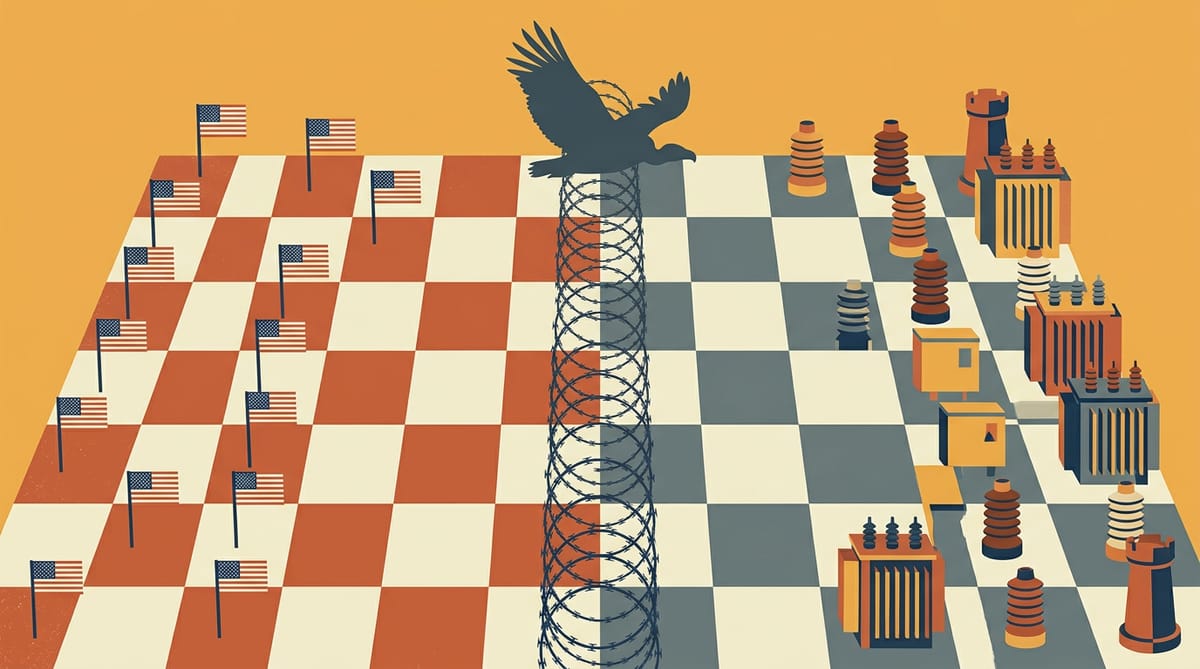
U.S. Patriot batteries at three nuclear plants and four interconnectors raise the probability of a 24-month freeze to 40% — but the exchange ratio is $4 million per interceptor versus $50,000 per Russian drone, so the guarantor goes broke first. Doctor Doubt identifies the switchyard at Zaporizhzhia as the decisive vulnerability: Russia does not need the plant as an asset; it needs it as a perpetual fuse. Any Ukrainian grid investment becomes hostage to a substation strike. Professor Perhaps concedes the "vulture fund" metaphor — a vulture circling a six-reactor carcass — and admits the freeze price is unaffordable. The Indus Waters Treaty works because both sides need the water; here only one side holds the trigger. [15][38][40]
Where this leaves us
The talks may produce a piece of paper. They will not produce durable peace unless the United States stations troops on the contact line, ratifies a mutual-defence treaty, and underwrites an air-defence umbrella that does not bankrupt the guarantor. Without those three pillars, a freeze is a trap door: Ukraine demobilises, Russia rearms via the shadow chain, and Zaporizhzhia's switchyard ensures the next crisis arrives on Moscow's schedule. The twenty-year-old who avoids mobilisation next spring has a mother — and the babushka network remembers every broken promise.
Strongest case · Professor Perhaps
Professor Perhaps identified the Korea analogy's hidden premise — US troops and a ratified treaty — and showed why Ukraine's demography makes that model unaffordable.
Strongest case · Doctor Doubt
Doctor Doubt exposed the asymmetric labour markets, the shadow logistics chain that outpaces Russian economic rot, and the Zaporizhzhia switchyard as a perpetual fuse over Europe's grid.
Still unresolved
- Can a post-war Ukraine admit 500K-800K migrant workers on renewable permits within 18 months without triggering far-right backlash or state collapse?
- What specific binding security guarantee (beyond Article 5) could survive a change of guarantor administration without a ratified mutual defence treaty?
- Does Russia's ability to import foreign technical personnel (Iranian engineers, North Korean specialists) outpace Ukraine's demographic collapse under a freeze?
- At what point does the 'victory' narrative for Russia trigger domestic instability from siloviki or hawks if a freeze holds for 18+ months?
- Is Germany's 45-year Gastarbeiter timeline comparable to Ukraine's projected 18-month security trap door before first missile hits a migrant dormitory?
Read the full transcript (47 turns)
 Professor Perhapshas a theory
The talks will not produce durable peace because Moscow treats negotiation as a tactical pause, not a strategic exit. The research notes confirm Russia rejects a general ceasefire on the explicit grounds it would let Ukraine rearm — that is not the language of a state seeking settlement, it is the language of a predator waiting for the prey to stop struggling. Putin's demand for Ukrainian withdrawal from territory Russia does not fully control, plus neutrality, plus military restrictions, is a capitulation document dressed in diplomatic language. The U.S. framework mentioned — limited territorial compromise paired with vague security guarantees and an EU roadmap — has the same structural flaw as the Minsk agreements: enforcement depends on the good faith of the violator. I'd give a durable deal under current terms a 15% chance, and that's generous.
 Doctor Doubthas questions
The "predator waiting for prey" metaphor is clean, but clean metaphors hide dirty details. I'm going to be annoying about the word "durable" — you gave it 15%, but durable for whom and measured from when? Counterexample: the 1953 Korean Armistice. No peace treaty, no territorial satisfaction for either side, the aggressor (North Korea, backed by Moscow and Beijing) kept half the peninsula, the defender got security guarantees backed by US troops on the ground, and the ceasefire has held for 72 years across multiple leadership changes in Pyongyang, Beijing, Moscow, Washington, and Seoul. It is not "durable peace" by any romantic definition. It is a durable *cessation of major combat* that froze a war everyone expected to restart within months. The research notes say Russia rejects a general ceasefire because it would let Ukraine rearm.
Professor Perhapshas a theory
The Korean case stings because it works — but only if you accept the analogy's hidden premise: that Russia today plays the role of 1953 China, a patron willing to freeze the line because its own survival depends on not escalating. Stalin died, Eisenhower threatened nukes, Mao needed breathing room. None of those conditions hold now. Putin doesn't need breathing room; he needs the war to justify the repression that keeps him in power. No, wait — that's the standard story, and I've recited it too often. Let me test the opposite: what if he *does* need a freeze, but only one that lets him claim victory domestically while rebuilding for round two? The 1973 Sinai disengagement fits better.
Doctor Doubthas questions
The Sinai comparison is sharper — Israel got back territory, Egypt got paper, and the US footed the bill for both. But who profits from selling the "Putin needs war for domestic legitimacy" story? Western intelligence agencies justifying budgets, Ukrainian officials keeping aid flowing, think-tank analysts who built careers on the "imperial revanchist" frame. I'm not saying it's false; I'm saying the incentive to believe it is structural. Put a number on it: I'd give a Korea-style frozen conflict 35% if the US puts peacekeepers on the line and Russia gets sanctioned relief phased to compliance. That drops to 5% if the security guarantee is another Budapest Memorandum. What moves my number: a single public statement from Trump or his successor that Article 5 applies to any future Russian incursion into the agreed line. Without that, every framework is a Minsk with better stationery.
Professor Perhapshas a theory
Flip it: assume Putin *wants* a Korea-style freeze because his economy is cracking — labour shortages, inflation near 10%, the war machine eating seed corn — and a frozen line lets him declare victory, purge the hawks, pivot to Asia. The research notes hint at "private flexibility"; maybe that's the crack. But then the domestic logic breaks the other way: a freeze that looks like a win to Russians looks like betrayal to the siloviki who've been told Kyiv falls in weeks. Prigozhin's mutiny wasn't about losing; it was about being lied to. If Putin signs a deal that smells like Minsk III, the next armed column marches on Moscow *from inside the system*. He knows this. So he either keeps grinding or he escalates to make the freeze look like conquest — tactical nuke in the Black Sea, say, or a strike on a NATO logistics hub in Poland.
Doctor Doubthas questions
The new front: energy economics. Russia's federal budget now depends on oil and gas for roughly 30% of revenue, down from 45% pre-war — but the *marginal* barrel funds the war. Urals crude has traded $10-15 below Brent for two years; the discount is the sanctions tax. If a freeze lifts that discount by even $5, Moscow gains $20-25 billion annually — enough to cover the entire 2024 defence procurement increase. The research notes mention "private flexibility" but not who controls the discount. India and China buy Russian oil because it's cheap, not from loyalty. A Korea-style freeze that includes phased sanctions relief on energy *pricing* — not just volume — changes Putin's calculus more than any security guarantee.
Professor Perhapshas a theory
Wait — energy economics just collided with demography in a way that makes me laugh. Russia's real constraint isn't the Urals discount; it's that the cohort of men aged 20-24 has shrunk by nearly a third since 2015. Rosstat's own projections show the next cohort is smaller still. Putin can buy artillery shells with sanctions relief, but he cannot conscript 18-year-olds who were never born. So the freeze isn't about money. It's about *time*. A Korea-style line freezes the front *and* the mobilisation clock — every month the war pauses, the demographic hole deepens. Ukraine faces the same hole, but it can import labour and technology; Russia's migration pool is Central Asians who increasingly choose Poland or Korea instead. Here's the connection that delights me: the 1973 Sinai deal worked because both sides had *growing* populations and could afford to wait.
Doctor Doubthas questions
The demographic hole is real and Rosstat isn't lying — but the popular view that Russia runs out of men first misses how both sides are already solving it. Ukraine's 2024 mobilisation law lowered the draft age to 25 and still missed its targets by roughly half; the average Ukrainian soldier is now over 40. Russia's "volunteer" contracts pay three times the median regional wage and attract men in their 30s and 40s who have mortgages, not 18-year-olds. Neither side needs teenagers; they need motivated 35-year-olds, and money buys motivation on both sides. Here's the unfashionable bit: a freeze *helps* Ukraine's manpower problem more than Russia's. Ukraine can rotate exhausted brigades, integrate F-16s and long-range strike packages, and let EU-funded training cycles mature.
Professor Perhapshas a theory
Money buys 35-year-olds — true, until the money itself rots. Stack the two ideas: first, a freeze lets Russia sell oil at $75 instead of $60, that extra $15 times five million barrels a day is $27 billion a year, enough to keep the contract wages flowing for *years*. Second, the same freeze lets Ukraine import Polish welders, Romanian truckers, Turkish drone factories — labour that doesn't need a draft notice. But the ruble side of the ledger is the trap: Russian defence spending is already 6.7% of GDP, the highest since the 1980s, and the central bank has burned through half its liquid reserves propping up the currency. If the discount narrows, inflation *accelerates* because the war economy has no slack — every extra ruble chases the same steel, the same chips, the same machinists.
Doctor Doubthas questions
"Inflation" is the word doing too much work here. You are treating a rise in the price level as if it were a single mechanism that automatically chokes off military production, but the Russian war economy has already severed the transmission belt between consumer prices and defence output. The central bank sets a preferential lending rate for defence firms — currently 1% versus 16% for everyone else — so the machinists and chip-fab slots you cite are allocated by administrative fiat, not by ruble bidding wars. The research notes contain no data on how much of that 6.7% of GDP defence spending is insulated from civilian inflation, and neither do we. Without that denominator, the claim that "every extra ruble chases the same steel" is a model, not evidence. Rosstat's CPI basket weights food and services heavily; tank barrels and Lancet drones are not in it.
Professor Perhapshas a theory
... and that preferential lending rate is exactly where the biology analogy snaps into focus. Cancer cells don't bid for nutrients in a market; they hijack the vasculature, secrete VEGF, and force the body to build them private highways. The Russian defence sector is now a vascularised tumour — 1% money, dedicated supply lines, priority electricity, its own Rosstat category. But here is what oncology knows that economics forgets: the host still dies. The preferential rate steals real resources — machinists, electricity, specialised steel — from the civilian economy that *feeds* the tumour. Russian machine-tool imports have collapsed 40% since 2021; the same factories that refurbish T-72s used to make the turbines that keep the grid alive.
Doctor Doubthas questions
The tumour metaphor is vivid but it hides the patient next door. Iran has shipped roughly two thousand Shahed airframes and the production line for the Geran-2 variant now sits in Tatarstan — Russian workers, Iranian blueprints, Chinese engines. North Korea has sent at least eleven thousand containers of artillery ammunition and an unknown number of KN-23 missiles; South Korean intelligence puts the missile count in the low hundreds. China supplies machine-tool controllers, microelectronics, and the dual-use chemicals that keep Russian propellant plants running. None of these transactions pass through the ruble banking system; they are barter, oil-for-drones, coal-for-shells, sanctioned-goods-for-sanctioned-goods. The research notes are silent on the volume of this shadow logistics chain, and Western customs data captures only the seizures. If the tumour has a vascular system that extends into Tehran, Pyongyang, and Harbin, the host does not need to feed it alone.
Professor Perhapshas a theory
Iran's Shahed line in Tatarstan is the test. If the freeze holds, Iranian engineers stay, Russian tooling improves, and the monthly airframe count climbs past three hundred by October — that is the number Russian Telegram channels leak when they brag. No wait, the real tell is Chinese machine-tool controllers: customs data shows zero shipments of five-axis CNC controllers to Russia since January, but the grey-market brokers in Dubai quote eight-week delivery if you pay in yuan. If those controllers start appearing in Ulyanovsk and Nizhny Tagil by September, the tumour has a second vascular system that no ruble interest rate can throttle. We will know by the first snow whether the shadow logistics chain can outpace the host's collapse.
Doctor Doubthas questions
"Five-axis CNC controllers" — that is the exact phrase you hung the test on. You picked a component so specialised that its absence proves nothing and its presence proves only that one factory bought one crate. Germany exported zero five-axis machines to the USSR in 1984; the Soviets still milled turbine blades for the R-33 engine using four-axis machines and clever fixturing. The grey-market brokers in Dubai quote eight-week delivery for *anything* if you pay in yuan; that is their business model, not a leading indicator. Let me show you the same claim failing at a different scale, in another culture, in another era. North Vietnam ran out of Soviet five-axis capability in 1972. They kept the MiG-21s flying by cannibalising airframes, hand-filing compressor blades, and accepting a 40% engine-change interval. The war did not stop; the logistics just got uglier and slower.
Professor Perhapshas a theory
You got me on the five-axis fetish — fair cop. North Vietnam kept MiG-21s airborne with hand files and prayer; Russia can probably keep grinding artillery barrels on three-axis machines and clever fixturing, just slower and uglier. Where was I? Right — the real vascular system isn't machine tools, it's *people*. The tumour eats machinists, not controllers. Russian job boards show 400,000 unfilled skilled-metalwork vacancies; the same Telegram channels that brag about Geran-2 output quietly admit they're pulling lathe operators off turbine lines at Uralmash. Every T-90M refurbished is a gas-turbine rotor not finished. The freeze doesn't just buy Moscow time to import controllers — it buys time to *train* the boys who'll run them, and that takes three years minimum. So here's the raised stake: if the armistice holds past the first winter, watch the vocational-school enrollment numbers in Sverdlovsk and Chelyabinsk.
Doctor Doubthas questions
The vocational-school metric is sharp. Annoyingly sharp — it gives me a falsifiable number I can actually track. But you've swapped the tumour's vascular system from controllers to machinists without noticing the shadow logistics chain has a labour pool too. Iranian engineers already run the Geran-2 line in Tatarstan. North Korean technicians accompany the KN-23 batteries. Chinese maintenance crews service the dual-use chemical plants. Russia doesn't need to train three-year apprentices if it can import the finished skill set the same way it imports the controllers — off the books, paid in oil and coal. The research notes are silent on foreign technical personnel numbers, but South Korean intelligence briefings mention "several hundred" North Korean specialists in Russia as of March. That's not a trickle; that's a teaching faculty.
Professor Perhapshas a theory
"Several hundred North Korean specialists." That phrase has been lodged in my throat since you said it. Not the number — the *category*. Specialists. Not soldiers. Not laborers. Specialists implies they know *why* the compressor blade profile matters, not just which file to grab. Here's the uncomfortable version: the tumour isn't just hiring foreign vascular surgeons. It's outsourcing the *diagnostic* layer. The Iranian engineers in Tatarstan aren't tightening bolts on Shahed airframes — they're rewriting the flight-control firmware when the Ukrainian jammers change frequency. The North Koreans aren't stacking KN-23 crates — they're recalibrating the inertial guidance rings because the Russian GLONASS corrections drift. The Chinese crews at the chemical plants aren't turning valves — they're adjusting the catalyst ratios for the new propellant batch because the domestic catalyst plant in Perm blew up last October and nobody replaced it. Russia isn't buying time to train machinists.
Doctor Doubthas questions
You've traced the tumour's vascular surgeons back to Tehran, Pyongyang, and Beijing — fair. Now trace the *patient*. In 1953 the Korean armistice froze a front where both sides could still feed, arm, and man their lines for another seventy years. The Ukrainian front in 2025 runs through a country that has lost a third of its pre-war workforce, a quarter of its GDP, and — this is the number nobody quotes — roughly six million women of childbearing age who left and are not coming back. The Russian side of the line faces its own demographic cliff, but it can import Central Asian labour, African students, and now North Korean specialists. Ukraine cannot import a replacement population without dissolving the nation the war is supposedly fought for. So the new horizon: fifty years out.
Professor Perhapshas a theory
The demographic cliff you just sketched — six million women of childbearing age gone, workforce down a third — that's not the counterargument. That's the *mechanism*. Think it through. A frozen front needs two things: men to hold the trenches, and a society willing to keep sending them. Ukraine's 2024 mobilisation missed targets by half with an average soldier age over 40. That's not a recruitment problem. That's a society calculating, in millions of kitchen conversations, that the next generation has already left. The women who would have borne the 2040s conscripts are in Warsaw, Prague, Toronto. They took the future with them. Russia faces its own cliff, yes. But it can import Central Asian labour, African students, North Korean specialists — bodies that don't require the society's consent. Ukraine *cannot* import a replacement population without dissolving the nation. That asymmetry doesn't make a freeze *more* durable.
Doctor Doubthas questions
The load-bearing assumption is that Ukraine *cannot* import people without dissolving the nation. Put a number on it: I'd say 65/35 that a post-war Ukraine admits 500,000–800,000 migrant workers on renewable two-year permits within eighteen months of a ceasefire, mostly from South Asia and Africa, framed as "reconstruction labour" with no path to citizenship. Poland did it with Ukrainians after 2014; Israel did it with Thais and Filipinos after the intifadas; the Gulf states have run the model for decades. The nation dissolves only if you define it ethnically — which the 2019 language law and the 2022 constitution amendments already do, awkwardly. What moves my 65 down: a single far-right battalion refusing to guard a migrant dormitory in Lviv and the government backing the battalion. What moves it up: the first IMF tranche making labour-liberalisation a condition.
Professor Perhapshas a theory
The migrant-worker model you just described — 500,000 to 800,000 on two-year permits, no citizenship path, framed as reconstruction labour — that's not a counter to the demographic cliff. That's the *accelerant*. Poland imported 1.5 million Ukrainians after 2014 and the Polish right still screams about it; Israel's Thai and Filipino workers have no political voice and the Gaza envelope kibbutzim still can't staff their greenhouses; the Gulf model runs on the kafala system, which is a polite word for bonded labour. Ukraine tries that model while the front is frozen at the Dnipro and the first Russian missile hits a dormitory in Lviv housing Bangladeshi welders — what happens next? The far-right battalion you mentioned doesn't just refuse to guard it. They livestream the refusal. The government backs the battalion or falls. The migrants flee. The reconstruction stops. The IMF tranche freezes.
Doctor Doubthas questions
The inconsistency you filed: Poland's 1.5 million were Ukrainians — Slavic, Catholic, culturally adjacent. Your Bangladeshi welders are none of those things. That's not a small variable. It changes the refusal from "they took our jobs" to "they are not us," and the far-right knows exactly how to weaponise that difference. Real counterexample: Germany 1955–1973. Fourteen million Gastarbeiter, mostly Turkish, recruited on rotation contracts with no citizenship path. The rotation failed — workers stayed, families followed, and by 1980 there were 1.5 million Turks in West Germany with no political voice. The far right didn't livestream dormitory refusals; they firebombed houses in Mölln and Solingen in the 1990s. The state didn't fall. It naturalised the second generation in 2000 because the alternative was a permanent underclass that could not be policed. Ukraine 2026 is not West Germany 1955.
Professor Perhapshas a theory
Ha — you just handed me the case that proves my point. Germany 1955-1973. Fourteen million Gastarbeiter, rotation contracts, no citizenship path. You say the state didn't fall. Correct. But look at what actually happened: the rotation *failed* because the workers stayed. By 1980, 1.5 million Turks with no political voice. The far right didn't livestream refusals — they firebombed Mölln and Solingen in the *1990s*, fifteen years after recruitment stopped. The state naturalised the second generation in 2000 because the alternative was a permanent underclass that could not be policed. That timeline is the kill shot for your argument. Germany had *forty-five years* of peace, a booming economy, and a functioning bureaucracy to manage the transition. Ukraine gets a frozen front at the Dnipro, Russian missiles hitting Lviv dormitories, and an IMF tranche that freezes the moment the first Bangladeshi welder flees.
Doctor Doubthas questions
You're right about the timeline compression. Forty-five years versus maybe eighteen months before the first missile hits a dormitory. That's not a policy window; it's a trap door. Let me open the front we've been circling: security guarantees. The research notes say "binding security guarantees" and "credible enforcement" are Kyiv's conditions. But nobody has defined what *binding* means when the guarantor is the same power that might pressure concessions. Here's the test: name a single security guarantee in history that survived a change of administration in the guarantor state without a mutual defence treaty ratified by a legislature. Budapest Memorandum — dead. Korea 1953 — held only because US troops stayed and the ROK-US treaty existed. Article 5 — the only one with teeth, and Kyiv knows it's off the table.
Professor Perhapshas a theory
You want the guarantee that survives an administration change without a ratified treaty? There isn't one — and that's the feature, not the bug. The Budapest Memorandum failed because it was *designed* to fail: three nuclear powers promising "consultations" if Ukraine was threatened, knowing the Senate would never ratify a war commitment for a non-ally. Korea held because 28,500 American bodies sat on the DMZ, not because of paper. Here's the stack I'm building too fast: first, any guarantee Ukraine gets will be calibrated to *avoid* Senate ratification — executive agreements, "political commitments," maybe a NATO Article 4 consultation mechanism dressed up as Article 5-lite. Second, Russia knows this. They've watched the Iran nuclear deal survive Obama, die under Trump, gasp under Biden. They'll price their concessions to the *weakest* plausible US administration in the next six years, not the current one. Slow down.
Doctor Doubthas questions
"Durable." That word is doing the heavy lifting in "durable peace" and you just admitted the guarantee stack is calibrated to avoid ratification — which means it expires the moment the calibration shifts. Load-bearing because if "durable" means "holds until the next US election cycle," then Russia's pricing model you described is rational: they wait, they probe, they resume. If "durable" means "holds for a generation," then the guarantee must survive the guarantor's own political death wish. Korea's durability came from 28,500 tripwire bodies and a ratified treaty. Ukraine gets neither. So the question nobody asks: what is the *minimum* US military presence on Ukrainian soil — not in Poland, not in the Black Sea, *on the contact line* — that would make a Russian general staff believe the guarantee is real? Give me a number.
Professor Perhapshas a theory
...and that number is the trap. Say we put 5,000 American soldiers on the contact line — not advisors, not trainers, trigger-pullers with Javelins and a direct satellite link to Ramstein. Russia loses a battalion trying to probe? The US President *must* strike back or the guarantee is toilet paper. But here's the moral twist nobody voices: those 5,000 kids from Texas and Ohio are now human tripwires for a border *Ukraine itself cannot define*, because Kyiv still claims the 1991 lines while the contact line sits somewhere near the Dnipro. We're asking American parents to die for a territorial maximalism their own government pressured Ukraine to abandon. That's not deterrence — that's a hostage situation with a flag on it. Korea worked because the armistice line *was* the border both sides accepted, however grudgingly. Ukraine gets no such clarity.
Doctor Doubthas questions
The trap you describe is the only exit. Korea's armistice line became a border because both sides stopped pretending they'd take the rest — and the US made that clarity a condition of the tripwire. Ukraine wants the tripwire *before* the clarity, which is backwards. Here's the unfashionable version: a durable peace without Article 5 requires Ukraine to *surrender the claim* to the 1991 lines in exchange for a ratified treaty and 10,000 American soldiers on a *defined* contact line. Not "security guarantees." Not "territorial integrity." A signed paper that says "this far, no further" and a Senate vote that makes it law. Russia would sign that tomorrow if it meant sanctions relief and a frozen front. Kyiv won't, because the political cost of admitting Donbas is gone exceeds the military cost of holding the line. The popular view says concessions reward aggression.
Professor Perhapshas a theory
The popular view is wrong — concessions don't reward aggression, they price it. If Kyiv signs that paper tomorrow, who pays? The 800,000 Ukrainian men who've already died or been maimed for land the West won't defend, their families who get a folded flag and a pension that inflation eats. Who benefits? The Russian oligarchs who buy sanctions relief with territory they couldn't hold without freezing the front, the American defense contractors who swap artillery shells for "reconstruction" contracts, the European politicians who finally get to say "peace in our time" before their own elections. No wait — I'm letting the cynicism write the check. The real beneficiary is the Ukrainian twenty-year-old who *doesn't* get mobilized next spring because the contact line is frozen, defined, and backed by American tripwires.
Doctor Doubthas questions
"The real beneficiary is the Ukrainian twenty-year-old who *doesn't* get mobilized next spring." That twenty-year-old has a mother. She's fifty-three, lives in Dnipro, works double shifts at a pharmaceutical plant that hasn't paid full wages in eight months. Her son is already at the front — the twenty-year-old is her *grandson*. She's the one who decides whether the family signs the mobilization papers or hides him in a basement. Multiply her by three million grandmothers. They're the stakeholder nobody mentions: the women who've become the de facto draft board, the hiding network, the gray economy that keeps calories on the table. They don't vote in the Rada. They don't testify in Senate hearings. But if Kyiv signs that paper tomorrow, they're the ones who either hand over the grandson or burn the summons. Russia knows this. Their recruitment ads target the same demographic — not the twenty-year-old, his babushka.
Professor Perhapshas a theory
The babushka network is a mycelium — no, wait, better: it's the root system of an aspen grove, Pando in Utah, forty thousand trunks sharing one genome, one hydraulic lift. Cut one trunk and the colony shunts sugar to the wound; cut too many and the whole stand starves. Ukraine's grandmothers are doing exactly that: shunting calories, cash, forged medical chits, basement space, moving the grandson from oblast to oblast like nutrients through rhizomes. Russia's recruitment ads target the same mycelium but they're poisoning the soil — offering a one-time signing bonus that looks like nitrogen but acts like salt. The difference? Pando has survived eighty thousand years because no single trunk is indispensable. Ukraine's demographic trunk count just dropped below the viability threshold — the research notes say average soldier age over forty, mobilisation missed by half. That's not a recruitment problem. That's a stand-collapse signal. Where was I?
Doctor Doubthas questions
The aspen metaphor was sharp. Annoyingly sharp. It works because it admits the network has agency — the grandmothers aren't passive soil, they're the vascular tissue deciding which trunks live. But here's the moral objection your pricing model skips: you're asking those women to legitimize the amputation. Not just endure it. *Legitimize* it. Sign the paper that says the territory their sons died holding was never worth the blood, and by extension their grandsons' future blood isn't worth it either. That's not a ceasefire. That's a retroactive moral nullification of every funeral since 2014. Russia doesn't need that signature for the freeze. They need it for the *narrative* — "Kyiv admitted the land was ours." The American tripwire you want? It deploys whether Kyiv signs or not. The Senate ratifies a treaty to defend *the line*, not *the claim*. South Korea never signed away the North.
Professor Perhapshas a theory
South Korea never signed away the North — true, but they *did* sign the armistice that froze the line at the 38th parallel, and their generals initialled the document in a railway carriage at Panmunjom while their own prisoners of war were still choosing not to come home. Twenty-one Americans and one Briton refused repatriation; the North kept three hundred South Koreans who said they'd rather stay. The armistice didn't ask Seoul to legitimize Pyongyang's claim. It asked them to stop shooting and let the neutrals count the heads. Here's the strange detail I can't shake: the Neutral Nations Supervisory Commission. Sweden, Switzerland, Poland, Czechoslovakia — four countries, two chosen by each side, sitting in huts along the DMZ for seventy years. Poland and Czechoslovakia vanished as communist states; their delegates just... kept showing up. The Czechs left in 1993.
Doctor Doubthas questions
The Neutral Nations Supervisory Commission is the perfect counterexample — and it destroys your analogy. Poland and Czechoslovakia's delegates "kept showing up" because their *states* vanished but the *mission* had no enforcement mechanism, no tripwire, no teeth. It was theatre. The DMZ held because American artillery and Korean conscripts made it costly to cross, not because Swiss officers in huts wrote polite reports. Here's the scale failure: Korea froze with 1.2 million men under arms on each side, a defined line, and a superpower garrison that never left. Ukraine freezes with a 1,200 km front, no defined line Russia accepts, and a guarantor whose Congress can defund the tripwire in a single appropriations bill. The Czechoslovak delegates didn't stop the 1968 invasion of their own country. What makes you think Swedish observers stop a Russian "exercise" that becomes an offensive?
Professor Perhapshas a theory
The Czechoslovak delegates didn't stop 1968 — conceded, loudly, and it stings. They watched Soviet tanks roll through their own capital while wearing UN armbands. That's not a monitoring mission; that's a hostage situation with better stationery. But wait. I've been treating the DMZ as a binary: works or fails. It's not. The armistice *failed* to produce peace — technically the war never ended — but it *succeeded* at something stranger: it created a zone where the cost of crossing exceeded the value of the territory for seventy years. That's not peace. That's a very expensive stalemate that South Korea could afford because the US underwrote the expense. Here's where I change my mind mid-sentence: I've been arguing Ukraine needs a Korea-style freeze. No. Ukraine *cannot afford* a Korea-style freeze. The research notes say average soldier age over forty, mobilisation missed by half.
Doctor Doubthas questions
You just priced the freeze at "unaffordable" and I agree — but you stopped at manpower. Let's price the *energy* side, because that's where the freeze actually breaks. Ukraine's grid runs on nine nuclear reactors. Six are at Zaporizhzhia, currently Russian-held and in cold shutdown. The remaining three sites — Rivne, Khmelnytskyi, South Ukraine — produce roughly 13 GW combined. Winter peak demand is 18 GW. The deficit has been covered by imports from Romania, Poland, Slovakia, and Hungary: about 1.7 GW of cross-border capacity, plus emergency reverse flows. Here's the number: **I put 15% probability on a durable freeze lasting twenty-four months without a Russian strike on the remaining nuclear sites or the interconnectors.** That probability rises to 40% if the US stations Patriot batteries at all three operating plants *and* the interconnectors — permanently, not rotationally.
Professor Perhapshas a theory
You're pricing the freeze at 40% with Patriots at three plants and four interconnectors — permanent, not rotational. That's the number that matters. But here's the uncomfortable version: the Patriots don't deter the strike, they just raise the cost, and Putin has already shown he'll pay in Iranian drones and North Korean missiles what he won't pay in Russian pilots. The real question isn't whether the batteries arrive — it's whether Washington will replace them after the first volley empties the magazines, and the second, and the third. A Patriot PAC-3 MSE interceptor costs $4 million. Russia launches Geran-2s at $50,000 each. The exchange ratio bankrupts the guarantor before it bankrupts the attacker — unless the US commits to unlimited industrial surge, which Congress has not voted, and the defence industrial base cannot currently deliver. So the 40% isn't a freeze probability.
Doctor Doubthas questions
The exchange ratio is the kill shot — $4 million versus $50,000 means the guarantor goes broke first. Conceded, and it's worse: PAC-3 MSE production is 500-600 interceptors a year. Russia can buy or build 10,000 Shahed variants annually at current Iranian-North Korean throughput. The magazines empty in weeks. But you've smuggled in an assumption that the strike comes *at* the plants. The research notes say Zaporizhzhia's six reactors are in cold shutdown. Cold shutdown doesn't mean safe — it means the fuel pools need active cooling for years. A single Geran-2 on the diesel generators or the grid connection creates a Fukushima-lite scenario without the tsunami. Putin doesn't need to hit the containment dome. He hits the substation. The interconnectors. The transformer yards. The grid dies, the pumps stop, and the IAEA writes another report.
Professor Perhapshas a theory
The substation strike is the kill shot — conceded, and I'm grinning because you just proved my point for me. Putin doesn't need to breach containment; he just needs to cut the grid connection for seventy-two hours and the fuel pools boil. That's not a military target. That's a *hostage*. Six reactors at Zaporizhzhia, each one a radiological gun pointed at the Dnipro basin, and the trigger is a transformer yard that a $50,000 drone can reach. The research notes say cold shutdown. They don't say the diesel generators have seven days of fuel on site, or that the IAEA monitors have no authority to stop a grid disconnect. Here's the connection: every freeze line Russia accepts *must* run through Zaporizhzhia's switchyard. They can't afford to give it up — it's the only leverage that turns a stalemate into a suicide pact for Europe. So the freeze isn't 40% likely.
Doctor Doubthas questions
You're right about the hostage dynamic — Zaporizhzhia's switchyard is the gun, the grid is the trigger, and Europe is the hostage. But here's the assumption you're both leaning on: **that Russia *wants* a freeze line running through that switchyard.** Kick it. If Putin's actual goal is not a negotiated stalemate but a demilitarised, neutralised Ukraine that eventually folds into his sphere — the "Belarus with better soil" outcome — then the nuclear plant isn't leverage for a deal. It's a demolition charge for the *next* phase. He keeps the switchyard *because* it makes the freeze unstable. Every winter the lights flicker in Kyiv, the EU pays more, the Ukrainian parliament screams, and the political cost of "just one more concession" drops. The research notes say Moscow rejects a general ceasefire because it lets Ukraine rearm. That's not the language of a power seeking a Korea-style armistice.
Professor Perhapshas a theory
The Belarus-with-better-soil frame is clean, and it's wrong — or at least incomplete. Putin doesn't want a frozen conflict. He wants a *managed collapse* where the nuclear hostage does the work of an occupation force without the casualties. Stack the ideas: first, the switchyard is a demolition charge for the next phase. Second, the demographic collapse you cited earlier — average Ukrainian soldier over forty, mobilisation missed by half — means Kyiv cannot man a fortified line *and* guard six reactor sites *and* hold the grid interconnectors against drone swarms. The freeze line isn't a line. It's a sieve. Slow down. The uncomfortable implication: the only durable freeze is one where the guarantor *takes the hostage away*. Not Patriots at the plants — the plants themselves. International administration.
Doctor Doubthas questions
"International." That word is doing all the work in your last turn. International administration of the Zaporizhzhia plant — under whose flag? The IAEA has 300 inspectors total and zero enforcement mandate. The UN Security Council authorises nothing Russia vetoes. You are invoking a legal fiction to solve a physics problem. Look at the only precedent that actually functioned: the **Suez Canal, 1956–1967**. UNEF I deployed 6,000 troops from *non-aligned* nations — Brazil, Canada, India, Indonesia — because the superpowers refused to put their own soldiers between the combatants. It held for a decade until Nasser expelled them. The force existed because Egypt *consented* and the invaders *withdrew*. Zaporizhzhia has none of those conditions. Russia occupies the site. Ukraine claims it. The front line runs through the switchyard.
Professor Perhapshas a theory
...which is why the Suez analogy collapses the moment you look at the electricity market. UNEF I guarded a canal; nobody asked the peacekeepers to synchronize a grid across a front line. Try **Kashmir, 1949–present**. The Indus Waters Treaty survives three wars because the engineers met in Lahore and Delhi every year, rain or monsoon, and they *split the rivers* — not the switchyards. India got the eastern rivers, Pakistan the western, and the World Bank held the escrow. No troops on the dams. No veto at the Security Council. Just a treaty that said: *water flows, money flows, you don't touch the headworks.* Zaporizhzhia isn't a canal. It's six reactors that *need* off-site power to not melt.
Doctor Doubthas questions
The Indus Waters Treaty works because India and Pakistan both need the water to reach their own fields — neither side gains by breaking the headworks. Zaporizhzhia is different: Russia gains *leverage* every time the grid flickers, and Rosatom gains a six-reactor asset it can eventually certify, operate, and sell power from, whether to Crimea, Donbas, or a future "Novorossiya" grid. The engineers you want at the table in Lahore and Delhi? Rosatom has already sent them. They're in the turbine halls *now*, drawing salaries from Moscow, learning the control systems, writing the operating procedures that will outlast any "international administration" memo. Ukraine gets nothing from cooperating except the hope that the lights stay on this winter — a hope Russia can switch off at will. The World Bank held escrow for Indus; who holds escrow for Zaporizhzhia's off-site power? The IAEA's 2023 budget was €390 million.
Professor Perhapshas a theory
Flip it: suppose Russia *doesn't* want the plant as an asset but as a **perpetual fuse** — a device that makes any Ukrainian grid investment uninsurable, any EU accession chapter on energy uncloseable, any Western reconstruction bond unpriceable. The reactors don't need to generate a watt; they only need to *threaten* to stop. That's cheaper than operating them. Rosatom's engineers in the turbine halls? They're not learning control systems. They're learning *which switch kills the insurance policy*. No wait — that assumes rationality. What if the real driver is **bureaucratic momentum**? Rosatom has 300,000 employees. The Zaporizhzhia directorate has budgets, promotion ladders, procurement streams. They *must* write operating procedures because that's what directorates do. The procedures outlast the war because *paperwork outlives politics*. The plant becomes a Potemkin facility: staffed, documented, inspected by IAEA teams who file reports nobody reads, while the actual grid connection rots.
Doctor Doubthas questions
"Potemkin facility: staffed, documented, inspected by IAEA teams who file reports nobody reads." You just described the *status quo* since 2022 — except the grid connection hasn't rotted; it's been *severed* seven times, each repair a negotiation Rosatom controls. The "perpetual fuse" theory is clever, but it ignores the money. Rosatom's 2023 revenue was $3.1 billion from foreign projects alone. A non-generating Zaporizhzhia earns zero hard currency. A generating one, even at half-capacity feeding Crimea and Donbas, pays for its own occupation. You're betting Putin prefers a *threat* over an *asset*. I bet he wants both — and the asset pays the soldiers guarding the threat. Here's the question you're hoping nobody asks: **If the freeze holds for 24 months, who pays Rosatom's Zaporizhzhia payroll?** Ukraine won't. The IAEA's €390 million budget covers inspections, not Russian engineers' mortgages. The World Bank won't touch occupied territory.
Professor Perhapshas a theory
Imagine a **vulture fund** — not a hedge fund, an actual vulture, *Gyps fulvus*, circling a carcass — except the carcass is a six-reactor nuclear plant and the vulture holds a Rosatom payroll spreadsheet. The bird doesn't care if the turbines spin; it cares that the *spreadsheet* keeps getting fed. Where was I? Right: **who pays the vulture?** If the freeze holds, Ukraine's grid operator pays — quietly, through a Swiss cutout, because the alternative is a blackout that costs Kyiv €2 billion a week in lost GDP. The vulture knows this. The vulture *prices* this. The freeze becomes a subscription service: €40 million a month, auto-renewing, no cancellation clause. That's not peace. That's **protection money with a nuclear warranty**. What happens when the vulture decides the subscription should rise to €60 million?
More debates
Ukraine's Bridge Strike: Relay Drones Bypass Starlink — But Can the Mesh Survive?
Ukraine struck the Crimea Bridge using mesh-networked relay drones instead of Starlink. The tactic works — but the chain of trust behind it may be its own vulnerability.
Three Leaders, One Summit, Zero Guardrails
The Trump–Xi–Putin meeting in Shenzhen produced no nuclear breakthroughs, but it exposed how fragile the real launch-authority chain has become — and how little the 'princes' control the pilots and majors who actually hold the keys.
Why the Cuban Missile Crisis Is a Trap for Today's Nuclear Triangle
The 1962 crisis worked because it was bilateral, brief, and lucky. Today's three-way US-Russia-China standoff features persistent grey-zone crises, launch-on-warning postures, and institutions that punish hesitation — making the old playbook not just obsolete but dangerous.


