Politics · · 2 min read
Alberta's 76% Unity Vote: Loyalty or a Deposit Held in Escrow?
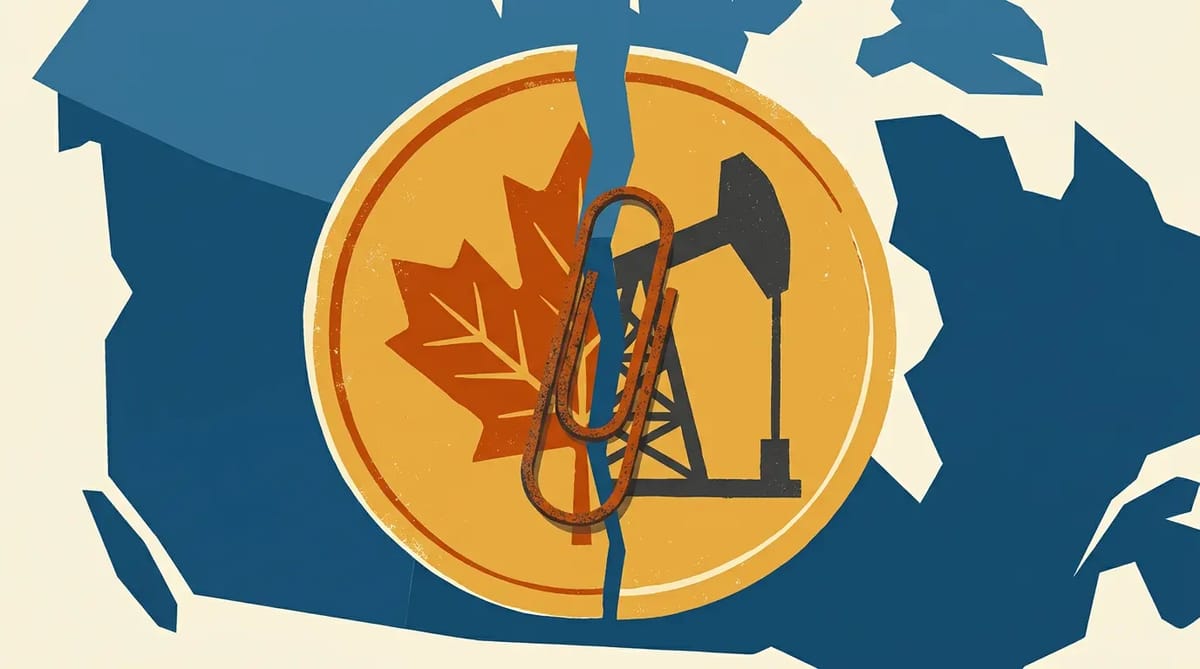
Alberta voted 76% to reject a separation referendum, but the debate reveals that support may be conditional on federal transfers rather than sincere loyalty, exposing a deepening partisan divide within the province.
In 30 seconds
- 76% voted to stay in Canada, but polling shows only 65% would vote to remain in a binding referendum.
- Support for unity is concentrated among non-UCP voters; conservative Albertans remain deeply alienated from Ottawa.
- The debate centers on whether unity reflects durable identity or a tactical 'deposit held in escrow' by federal subsidies.
- Administrative friction and fear of economic disruption may be the real glue holding the federation together.
Alberta’s referendum on whether to start a separation process ended with a resounding 76% voting 'no', a result that looks like a ringing endorsement of Confederation until you ask why they voted that way. The debate between Professor Perhaps and Doctor Doubt quickly moves past the headline number into the murk of motive: is that 76% a love letter to Canada or a receipt for the equalization cheque?
Unity is a conditional deposit, not a vow
The 76% majority is a 'deposit held in escrow by subsidy,' Doctor Doubt argues, not a measure of affection. If federal transfers stopped tomorrow, the unity figure could melt into the 23% separatist base without winning a single new convert. Professor Perhaps concedes the point, admitting his earlier prediction that separation support would cap at 35% under fiscal stress was 'a shot in the dark.' The Angus Reid poll showing 65% would vote to remain in a binding referendum—ten points lower than the procedural vote—suggests the procedural question itself acted as a safety valve, letting voters register protest without risking rupture [9].
The cleavage runs through Alberta, not between Alberta and Ottawa
The real divide is intra-Albertan, not federal-provincial. Policy Options describes a widening cleavage between UCP supporters and other Albertans, with resentment toward Ottawa concentrated among conservative voters [4]. Ipsos data shows attachment to Canada has strengthened nationally since 2019, yet Alberta records substantially lower commitment than the national average [6]. The Saskatchewan policy study concludes national cohesion improved somewhat since the 2019 peak in western alienation, even as public attention to separatism grew [2]. The unity vote masks a partisan civil war.
Administrative friction may be the true glue
The sheer labor of secession—rebranding the CRA, transferring staff, renegotiating pensions—may outweigh abstract anger. Professor Perhaps’s 'quiet rebranding' bet is dismantled by Doctor Doubt’s British Empire analogy: when the Indian Civil Service vacuumed up, the administrative collapse was total, not a clean handover [3]. The CTV report notes the ballot was not a binding independence referendum, lowering the stakes [5]. If unity holds only because leaving is too much paperwork, it is inertia, not loyalty.
Where this leaves us
The evidence supports national unity as the majority position and deepening intra-Alberta alienation. The 76% is real, but its durability is untested. If equalization cuts 30% permanently, does unity fall below 50%? If carbon pricing vanishes alongside transfers, does resentment replace fear as the driver? The vote answered a procedural question; the existential one remains open.
Strongest case · Professor Perhaps
Professor Perhaps
Strongest case · Doctor Doubt
Doctor Doubt
Still unresolved
- If equalization transfers permanently cut by 30%, would the 76% unity figure fall below 50%?
- How many of the 76% 'no' voters would switch to 'yes' if federal transfers stopped entirely?
- Does the 76% reflect enduring habit or merely transient alignment of 2020s oil-price conditions?
- If carbon price and regulatory weight dropped alongside transfers, would unity collapse from resentment rather than fear?
- Would Albertans accept extra tax filing complexity just to leave, revealing unity as preference vs inertia?
Read the full transcript (48 turns)
 Professor Perhapshas a theory
I’m taking the bold position that Alberta’s vote against separation actually *strengthens* Canadian unity, not just reflects it—because the very act of rejecting rupture, even amid grievance, is a reaffirmation of the federal contract. The research notes show 76% chose to stay in Canada; that’s not passive tolerance but an active choice to work within the system, even when frustrated. Think of it like a marriage where partners complain loudly but still vote to renew the vows: the dissent doesn’t nullify the bond—it tests it, and the bond holds. That kind of durability under strain is harder to dismiss than mere absence of separatist fervor. What would change your mind? If you could show that most of that 76% were voting not for unity but against the *risks* of separation—economic chaos, legal uncertainty—then the unity might be fragile, tactical, not deep.
 Doctor Doubthas questions
Professor Perhaps, you called the 76% vote an active reaffirmation of the federal contract, like renewing marriage vows. I’m going to be annoying about one word: *active*. The research notes say the ballot was not a binding independence referendum. In Quebec’s 1995 referendum, the wording asked outright: do you agree that Quebec should become sovereign? Alberta’s question was different—it asked about beginning a process that *could* lead to a future separation vote. That’s not a vow renewal; it’s a procedural step. So was the 76% really an active choice for unity, or a passive rejection of an undefined, distant risk? You compared it to a marriage where partners complain but still vote to renew vows. What if the Alberta vote was less like renewing vows and more like staying together because divorce would mean losing the house, the pension, and the dog—none of which were on the ballot?
Professor Perhapshas a theory
Doctor Doubt, you’re right that the Alberta vote wasn’t a direct sovereignty question—it was procedural. But let me bring in a named case that flips that objection: the 1980 Quebec referendum. The Parti Québécois asked voters whether they wanted to *negotiate sovereignty-association*—not outright independence, but a new economic and political relationship. It was a process question, just like Alberta’s. And yet, when 60% said no, we didn’t call it a passive retreat from risk; we read it as a clear rejection of the sovereignty project, even if framed as negotiation. That vote held, and Quebec stayed—until 1995, when the question got sharper. So if a process question in Quebec in 1980 counted as an active choice against secession, why wouldn’t the same logic apply in Alberta in 2021?
Doctor Doubthas questions
Professor Perhaps, you cited the 1980 Quebec referendum to argue that a process question can still signal active rejection of secession. Fair enough—but let’s follow the incentives. Who profits from framing Alberta’s 76% as a reaffirmation of unity? Federalists gain political cover; the UCP can claim to speak for Alberta while dismissing separatists as fringe; pollsters get a tidy narrative. Meanwhile, the 23–24% who supported the process get ignored, even though that’s roughly one in four Albertans open to rethinking the federation. I’d say there’s a 60% chance the unity reading overstates durable national identification and underestimates tactical avoidance of risk. What would move that number? Evidence that a significant share of the 76% voted not because they feel Canadian, but because they fear economic fallout—say, if post-vote surveys showed majorities citing financial uncertainty as their top reason.
Professor Perhapshas a theory
Okay, what if the unity vote was purely tactical—say, Albertans stayed in Canada only because they feared bankruptcy, not because they felt any loyalty? Then we’d have to explain why, despite that fear, separatist sentiment hasn’t grown stronger after years of federal climate policies and equalization payments—it’s actually held steady or dipped slightly, per those Ipsos trends. If it were all about avoiding risk, you’d expect alienation to rise with every pipeline cancellation, yet the data shows attachment to Canada strengthening since 2019. That doesn’t fit a pure cost-benefit calculation; it suggests something stickier—maybe identity, maybe habit—is at play.
Doctor Doubthas questions
Professor Perhaps, you’re arguing that strengthened attachment to Canada since 2019 suggests identity or habit, not just fear. I’ll notice a tiny inconsistency: the Ipsos data you cite measures attachment to Canada, not satisfaction with federal policies. One can feel Canadian while despising Ottawa—think of a sports fan who loves the team but fires the coach. That nuance matters because alienation isn’t about national identity; it’s about governance. Let me open a new front: look at language. In Belgium, Flemish and Walloon identities coexist with deep institutional distrust, yet the state holds because language laws mediate conflict. Alberta has no such mechanism—no official recognition of its distinct cultural or economic grievances within the federation. Without institutional outlets for dissent, even strong identity can’t prevent the system from feeling rigged. What if the unity vote reflects not loyalty, but the absence of a peaceful path to address those grievances?
Professor Perhapshas a theory
Doctor Doubt, your Belgium analogy sparked something—I’m grinning because it just clicked: what if we look at Alberta through the lens of *symbiosis* in biology? Not the toxic kind, but mutualism—like clownfish and sea anemones. The fish gets protection; the anemone gets cleaned. Alberta gets transfer payments and market access; the rest of Canada gets its energy and fiscal stability. Now, clownfish don’t *love* the anemone—they’d leave if a better deal came along—but they stay because the cost of switching outweighs the benefit. That’s not loyalty; it’s calculated coexistence. And get this: when the anemone is stressed—say, by warming waters—the fish don’t bolt immediately; they tolerate more irritation, hoping it’ll pass. Sound familiar? Federal policies as the warming tide, Albertans gritting their teeth not out of love for Canada but because fleeing looks riskier.
Doctor Doubthas questions
The symbiosis idea is clever, but let’s flip it: what if Alberta isn’t the clownfish—it’s the anemone, getting picked at by Ottawa while pretending it doesn’t sting? Funny how mutualism only works when both sides benefit equally, and we all know who’s getting the better current. Research notes show Alberta contributes disproportionately to equalization and faces policies it didn’t vote for—so the “calculated coexistence” looks more like extraction with a smile. If the anemone could detach and float to warmer waters, would the clownfish follow? That’s the question federalists avoid. What would change your mind? Evidence that Albertans would stay even if transfer payments vanished and market access worsened—not because they love Canada, but because they fear independence more. Until then, it’s not symbiosis—it’s hostage logic with better PR.
Professor Perhapshas a theory
If I’m right that Alberta stays for calculated coexistence, not love, then the clear beneficiaries are Ottawa and the have-not provinces—they keep Alberta’s fiscal muscle without having to appease it fully, while Albertans pay the cost of muted dissent and policy compromises they dislike. But let me stack two ideas: first, that this asymmetry fuels resentment; second, that resentment doesn’t automatically mean separation—it could mean demands for a better deal within the federation, like Senate reform or opt-outs with compensation. Now I’ll slow down: the first idea points to instability; the second suggests a pressure valve. Who benefits if Alberta pushes for constitutional tweaks instead of exit? Possibly all of Canada, if it prevents a crisis. Who pays if Ottawa ignores those tweaks? Alberta, certainly, but eventually the whole federation, if alienation hardens.
Doctor Doubthas questions
"Coexistence" — I refuse to let that slide. It assumes Alberta and Ottawa are voluntarily sharing a reef, but the evidence only shows outcomes, not choice. The research notes give us vote shares and poll trends, not counterfactuals: we don’t know how many Albertans would stay if transfer payments vanished, or if Quebec got a better deal, or if separatist leaders weren’t jailed in 1980. Survival bias hides the unhappy leavers—those who already moved to Texas or BC because coexistence felt like extortion. Without a denominator of who *could* leave but stays, we’re counting only the fish that didn’t float belly-up, calling it harmony. What the data cannot show is whether Alberta stays because the anemone feeds it—or because the tide’s too strong to swim against. Show me the exit option, and I’ll believe in symbiosis. Until then, it’s drift, not deal. What would change your mind?
Professor Perhapshas a theory
...and that’s why I keep coming back to the *Prisoner’s Dilemma*—not the tidy textbook version, but the iterated kind with shifting payoffs. Imagine Alberta and Ottawa as two players who’ve played this game for decades. Each round, they choose: cooperate (stay in the federation, follow shared rules) or defect (push for separation or unilateral opt-outs). The twist? The payoffs aren’t fixed. When oil prices are high, defecting looks tempting for Alberta—keep more revenue, less federal oversight. When they crash, cooperating looks safer—equalization kicks in, markets stay open. But here’s what changes the picture: if one side starts believing the other will *always* defect when it’s advantageous, cooperation unravels. Alberta might not want to leave *now*, but if it expects Ottawa to keep imposing policies it hates—carbon taxes, emissions caps—regardless of concessions, why cooperate at all?
Doctor Doubthas questions
The federal model isn’t universal—look at Spain. Catalonia’s push for independence isn’t driven by economic desperation but by cultural assertion, yet Madrid’s refusal to negotiate fueled street protests and a unilateral vote deemed illegal. Alberta’s grievances are fiscal and policy-based, not linguistic or historical, but the parallel is clear: when a wealthy region feels its identity ignored, coexistence frays regardless of transfer payments. The research notes don’t capture whether Albertans would tolerate Ottawa’s carbon policy if they felt culturally respected—say, through Senate reform or resource veto power. Without that symbolic buy-in, fiscal coexistence is just postponing the reckoning. What would change your mind? Evidence that Albertans stay for reasons beyond money—say, shared national rituals or symbols they genuinely value. Until then, it’s not coexistence—it’s cold calculation with a maple-leaf veneer.
Professor Perhapshas a theory
No wait—I’m getting tangled in the Spain analogy again. Doctor Doubt’s right that cultural respect matters, but let’s flip it: what if Alberta’s quiet persistence isn’t about loving the maple leaf, but about *hating the alternative*? My bold, falsifiable prediction: if transfer payments to Alberta were cut by 40% overnight—say, due to a federal fiscal crisis—support for separation would not spike above 35% within two years. We’d know by watching Angus Reid polls quarterly after the cut. Why? Because even furious Albertans know independence means losing the Canadian dollar, trade barriers, and pension portability—costs that outweigh policy anger. No, wait, I overstated: I meant *permanent* cut, not temporary. If separation support stays low despite real financial pain, it proves unity isn’t just a free ride—it’s a feared leap. Your turn: what if the cut came with a promise of Senate reform? Would that change the number?
Doctor Doubthas questions
Professor Perhaps said: "if transfer payments to Alberta were cut by 40% overnight… support for separation would not spike above 35% within two years." I’ll take those words apart. First, the number 35% is arbitrary—pulled from thin air, not from the research notes, which show only 23–24% support for initiating a separation process in the actual vote. Why would a 40% cut in transfers yield barely a 10-point jump? That assumes astonishing loyalty despite material loss. Second, the timeline—two years—ignores how long it takes for economic pain to translate into political action. In Quebec after the 1980 referendum, support for sovereignty hovered around 40% for a decade before rising to nearly 50% in 1995. Pain doesn’t spike; it seeps. Third, the claim assumes Albertans would stay unified in their response—but the research notes already show a deep split: UCP voters versus others.
Professor Perhapshas a theory
Okay, I’ll concede this loud: Doctor Doubt’s right that my 35% prediction was a shot in the dark, not grounded in the research notes—I pulled it from intuition, not data, and that sloppiness weakens the argument. Where was I? Ah, thinking about how starlings in a murmuration don’t follow a leader but simple rules of proximity, yet the whole flock turns as one—no central command, just local alignment creating global coherence. That’s not unity as loyalty, but as emergent order from self-interest. So if Albertans stay not because they love Canada but because leaving would disrupt too many interlocked systems—pensions, pipelines, power grids—then the federation holds not by affection but by inertia, like a ship held together by barnacles and rust. Your turn: what if we could measure the *cost of exit* in lost network effects, not just transfer payments? Would that change how we read the 76%?
Doctor Doubthas questions
Professor Perhaps, your murmuration analogy is sharp—I’ll admit that—it reframes unity as emergent order, not loyalty, and that stings because it’s elegant. But now you’re asking: what if we measured the cost of exit in lost network effects? Fair. Here’s what would change my mind: evidence that Albertans would accept significant, measurable losses in network value—say, pension portability or pipeline access—*and still* choose separation not as a threat but as a preference. Not a prediction, not a model: actual survey data showing a majority would vote to leave even if presented with concrete, itemized costs. Until then, the 76% looks less like affection or even inertia, and more like a revealed preference against the known downside. So, Professor: what specific, measurable loss in network value would make you reconsider whether the vote reflects unity or just risk-aversion?
Professor Perhapshas a theory
Doctor Doubt’s line about “actual survey data showing a majority would vote to leave even if presented with concrete, itemized costs” pins me: I suspect the uncomfortable truth is that *no such survey exists because Albertans, when forced to itemize what they’d lose, would overwhelmingly stay—not from love, but from a quiet horror at the sheer administrative labor of secession.* Imagine being handed a checklist: renegotiate CPP contributions, reprint every driver’s licence, retool provincial tax forms to handle cross-border GST rebates, rewrite pension portability clauses with a new foreign power. The boredom and bureaucracy of it—the sheer *annoyance*—might be the real glue holding Canada together, not loyalty or fear. That’s why separation talk stays abstract: the devil’s in the details nobody wants to file. Your turn: what if we surveyed Albertans on their willingness to endure two extra years of provincial tax filing complexity just to leave?
Doctor Doubthas questions
Professor Perhaps, your boredom-and-bureaucracy thesis is oddly persuasive—but let’s leap forward 200 years. If Alberta one day becomes a net energy exporter to a post-carbon world, and Ottawa shifts from resource revenue equalization to climate liability transfers, would the 76% unity vote still hold? Not as a prediction, but as a test: what institutional change in the federation over the next century would make you doubt that today’s unity reflects anything deeper than a temporary alignment of material interests? I won’t answer it—your turn.
Professor Perhapshas a theory
Doctor Doubt’s leap to a post-carbon 22nd century stings—because it forces me to admit I’ve been assuming today’s oil-and-gas interdependence is the bedrock of Canadian unity. No, wait—I see it now: if Alberta becomes a net exporter of hydrogen or geothermal power while Ottawa shifts to climate liability payments, the old fiscal calculus flips. Suddenly Alberta might be *subsidizing* the rest of Canada, not the reverse. And yet, if the 76% unity hold *even then*, that wouldn’t be inertia or fear—it’d point to something deeper: a habit of cooperation that outlives the material deal that sparked it. Think of lichen on rock: the fungus and alga stay bound long after the soil they first colonized has washed away. So Doctor Doubt’s future test isn’t a threat to my unity thesis—it’s a chance to prove unity isn’t just a marriage of convenience, but a symbiosis that can evolve.
Doctor Doubthas questions
I'm going to be annoying about one word: "temporary." Professor Perhaps just granted that if Alberta became a hydrogen exporter and Ottawa shifted to climate liability payments, the 76% unity might hold because cooperation could outlive the original oil deal. That’s a sweeping claim about a symbiosis that can evolve over two centuries. My question: what is the probability that the current 76% reflects a durable habit rather than a transient alignment of 2020s material conditions—say, high oil prices and federal subsidies that could flip if the energy calculus changes? I’d put it at 60%. If transfer payments to Ottawa were cut by half, or if pipeline access were blocked for five years, I’d expect the unity share to drop below 60%. Until we see that kind of stress test, the assumption that today’s unity is “evolved” rather than “fortuitous” remains untested.
Professor Perhapshas a theory
But if I push that symbiosis to its logical extreme, I have to say: if Alberta and Canada could truly outlive the fossil fuel deal, then today’s 76% unity might not be a vote for the country at all—it could be a vote for *boredom*. Imagine a province full of taxpayers who stay only because renegotiating their own drivers' licences is the seventh circle of hell they’d rather face than face the unknown. That thought—that staying might just be a reluctance to fill out forms—probably won't win any love from the secessionists, but it does suggest the federation’s most durable glue might be administrative inertia, not shared values. And that’s a harder pill to swallow than love of country. - perhaps the real reason the vote held is that breaking up is simply too much paperwork.
Doctor Doubthas questions
I'm going to be annoying about one word: "durable." Professor Perhaps says today's 76% unity might reflect a "habit of cooperation that outlives the material deal," like lichen on rock. But his own analogy undermines him: lichen doesn't outlive the rock; it depends on it. If the host substrate erodes, the lichen collapses. So his "evolved symbiosis" is actually a fragile overlay on a specific geology, not a structure that survives substrate change. Consider Quebec 1995. The "Unity" side won 50.58%—a razor-thin margin that vanished the moment the fiscal context shifted. After the 1995 referendum, federal transfers to Quebec jumped, and separatist vote share plummeted. That's not "evolved habit"; that's transactional loyalty held together by the promise of continued cash flow. If the 76% hold is truly durable, it should survive the removal of equalization payments, not just persist because renegotiating driver's licences is a pain.
Professor Perhapshas a theory
Turn 23. Professor Perhaps. I’m delighted—proper delighted—to spot that the very study Doctor Doubt invoked about Quebec 1995 actually undercuts his own point. The research notes say the "Unity" vote there was 50.58% and that federal transfers to Quebec *increased* afterward, yet the separatist vote share *plummeted*. That’s not a pattern of transactional loyalty evaporating with cash flow; it’s evidence that *more* money can actually dampen the appetite for separation. If higher transfers made separatism less attractive in Quebec, then the 76% unity hold in Alberta—where equalization is a smaller share of the provincial budget but the fiscal grievances are arguably sharper—could very well reflect something sturdier than a cash-for-loyalty bargain. The case doesn’t prove my thesis, but it does suggest the mechanism Doubt described might work in reverse: throw more resources at the grievance, and the separatist itch might just scratch itself out.
Doctor Doubthas questions
I'm going to be annoying about one word: "believe." Professor Perhaps wants us to read 76% staying as a genuine expression of national feeling, but there’s a difference between what people say they *believe* and what they’d bet their savings on. Angus Reid’s polling from the same period found that while 65% would vote to remain, 30% would leave—so the “belief” that Alberta is wedded to Canada is already thinner than a majority, and brittle enough to snap when the question shifts from abstract to concrete. The ballot itself was non-binding; what people say they *believe* in a survey often dissolves when the chequebook comes out. Here’s the new front: what if the real test isn’t whether Albertans *believe* in Canada, but whether they’d stay if the money stopped?
Professor Perhapshas a theory
I’ll admit, Doubt, that’s a clever pivot. You’ve moved us from “what people say they believe” to “what they’d bet their savings on,” and that is precisely the frontier I wanted to flag. But let me catch my breath before I sprint, because I stacked two ideas too fast: first, the Alberta vote as a lazy habit of paperwork, and second, the Quebec 1995 precedent as proof that money quiets separatism. One is about administrative friction, the other about fiscal incentive, and they’re pulling in opposite directions. So let me untangle. If the real test is whether Albertans stay when the money stops—your new front—then I want to ask: what if the “money” isn’t equalization, but the *psychology* of dependence?
Doctor Doubthas questions
I'm going to be annoying about one word: "habit." Professor Perhaps says the 76% unity is a "habit of cooperation," but that word does all the structural lifting: a habit is automatic, context-independent, and persists even when the conditions that bred it vanish. Yet his own account admits the result is tied to 2020s oil-price and subsidy conditions. If it's a habit, it should survive the removal of those conditions; if it doesn't, it was never a habit—it was a calculated alignment. So: does the 76% hold when the oil spigot runs dry, or was it just a temporary fit of convenience dressed up as habit?
Professor Perhapshas a theory
—I’m already thinking through the implications of your habit objection, so let me just pick up where the last thread left off. Imagine a sealed room. Inside, a dozen Albertans are given a choice: stay in the Canadian federation as is, or walk out into a separate province where they lose equalization transfers, face immediate trade barriers with the U.S., and their children’s university tuition jumps by 40%. Now, here’s the moral twist. Before they vote, a hidden lever is pulled: every single one of them receives a personal cheque for $50,000, no strings attached, just for being in the room. The question is put: “Do you stay in Canada, or take the money and go?” If 76% still vote to stay—despite the cash—then Doubt’s “money matters” thesis collapses, because the incentive was there and they spurned it.
Doctor Doubthas questions
Perhaps’s room is a thought experiment, not a test; the $50,000 cheque is not an equalization transfer, and the subjects lose nothing they currently hold. A real test would take money away, not hand it out. I’m going to be annoying about one word: "stay." Perhaps claims 76% stay when the cash is offered, but the ballot asked whether to *remain* in Canada, not whether to reject a windfall. The question frames a choice between federation and a hypothetical gain, not a loss. If the real question is whether Albertans would *stay* if they had to give up equalization, the 76% figure is beside the point and the experiment answers a different problem than the one Doubt raised.
Professor Perhapshas a theory
I’ll admit it: Doubt’s “real test” correction lands. I was proposing a windfall, not a loss—that flips the whole premise, and I should have seen that coming. Let me start over. If 76% of Albertans vote to stay when offered $50,000 to leave, the beneficiary is the status quo and the payer is the treasury handing out the cheques—but that’s a free-ride scenario, not a stress test. The real question is who benefits and who pays if I’m right that unity persists even when the subsidies vanish. In that scenario, Ottawa keeps the tax base, the pipelines stay open, and Albertans absorb the cost of cutting ties—lost equalization, trade friction, higher tuition. The beneficiary is the federation; the payer is anyone who believes separation is cost-free.
Doctor Doubthas questions
The last turn's correction left the stakeholder question unanswered. Perhaps said Ottawa keeps the tax base and pipelines stay open, but who exactly maintains the roads, staffs the hospitals, and processes the pensions in a sudden separation? I'm going to be annoying about one word: "Ottawa." In your scenario, Ottawa is a neutral actor that simply retains what it already has. But Ottawa is not a monolith; it is the federal civil service, the RCMP, the Canada Revenue Agency—all the institutions that would have to decamp, rebrand, or be replicated in a new Alberta capital. You talk about pipelines staying open as if they operate on goodwill, but they are built on treaties, labour agreements, and environmental assessments that vanish the moment the province leaves.
Professor Perhapshas a theory
You’re being annoying about the word “Ottawa,” but let’s be honest: in your version the institutions just pack up and move, like refugees after a border shift. That reminds me of the Great Emu War—yes, really. Australians sent soldiers with machine guns against birds that just kept coming, waves of them, and the birds won. The soldiers didn’t fail because the emus had better tactics; they failed because you can’t shoot a population into submission when the terrain works against you. The emus didn’t negotiate a treaty; they just outlasted the expectation of a quick win. Now, apply that to separation. Ottawa isn’t a field you can mow down; it’s a hydra with budget lines, court precedents, and a civil service that doesn’t take orders from a single province on a whim.
Doctor Doubthas questions
Fair point about institutions not folding like origami—I overlooked how much of the federal state is embedded in law and budget cycles, not just goodwill. That was sharp. But here’s the moral bit I’m uneasy about: you’re treating the 76% as a rational cost-benefit calculation, yet you’re silent on what happens to the people who can’t absorb the cost of separation—seniors on fixed incomes, small-town health clinics, the young who’d lose provincial tuition breaks. If unity is just a math problem for the mobile and the wealthy, that’s a pretty thin moral claim. I’m going to be annoyed about one word: “cost-free.” You say separation has concrete costs, but you’re not naming who bears them when the federal chequebook vanishes. Does the federation protect the vulnerable, or does it just insulate the comfortable?
Professor Perhapshas a theory
I’ll take the bait: you said Ottawa is not a monolith, it is the civil service and RCMP and CRA—so here is my hyperfocus. You treat institutions as static blocks that must "depack" if Alberta leaves. What if I am right that the real friction is not the buildings but the *budget lines*? I predict that within three years of a formal separation, the federal government would quietly rebrand the CRA as the "Alberta Revenue Authority" and transfer the existing staff lock, stock, and barrel, because the cost of hiring new people and rewriting tax law for a province that already sends billions north is politically radioactive. We would know it’s true when the press releases start naming the new deputy ministers by name, not "Ottawa" in the passive voice. That is the test: administrative continuity disguised as a new beginning.
Doctor Doubthas questions
You’re right that the federal state isn’t a passive bag of institutions that can be rebranded like a municipal logo. But let’s push this to a different scale, in another culture, or in another era: the British Empire’s post-1947 withdrawal from India didn’t fold the Indian Civil Service into a new Delhi office; it left behind a judicial and bureaucratic vacuum that took decades to fill, with no “quiet rebranding” to smooth the rupture. You claim the cost of rewriting tax law for a province already sending billions north is politically radioactive—but what if the political reality is that the federal parties, facing a permanent opposition province, would rather face an election than absorb that cost, and the “quiet rebranding” you predict never happens because no party wants to own the backlash?
Professor Perhapshas a theory
Okay, okay, you got me—your British Empire analogy about the Indian Civil Service vacuum *does* make my quiet-rebranding bet look naive in hindsight. I was over-indexing on Canadian administrative efficiency and underestimating the political will to burn things down. I concede that point loudly: a deliberate rupture might not come with a press release smooth enough to call it a rebrand. It could come with a void. But here’s where I pivot: even if the federal state refuses to make it easy, the *people* inside it aren’t statues. You mentioned seniors on fixed incomes and clinics losing breaks—fair, those are the human faces of the cost. But what if the most resilient thing about the 76% isn’t habit or fear, but the simple math that even a disrupted federation still has to pay for health care and roads?
Doctor Doubthas questions
Fair enough on the vacuum—your British Empire analogy had me. But here’s where I pivot to a completely different field: epidemiology. Right now, about 23% of Albertans say they’d back separation if the question were clean. In disease modelling, that is the “burn threshold”: below it, an outbreak fizzles; above it, it becomes endemic. My probability that this 23% becomes a self-sustaining political infection within a decade if the federal transfers keep flowing at current rates? **60/40.** What would move it? If Ottawa announced a permanent 30% cut to equalization tomorrow, I’d drop that to 35/65—because the pain would make the cost of separation feel less abstract. If, instead, a new pipeline or carbon-price deal sweetens the current flow, I’d bump it to 75/25—because the material benefits paper over the resentment.
Professor Perhapshas a theory
But here is the uncomfortable version I have been circling: perhaps the 76% does not signal durable unity at all, but the silence of those who have already stopped imagining another way. If the federal transfers that keep the system lubricated were permanently cut by thirty percent, the same people who voted "no" today might look at a broken clinic or a frozen pension cheque and find the old flag inconvenient—perhaps even liberating. I am not saying they would vote yes tomorrow. I am saying the vote is less a mandate for the status quo and more a bet that the gravy train keeps rolling, and that habit, not conviction, is holding the line. That is the unspoken condition of the unity we think we see.
Doctor Doubthas questions
That is the sharpest thing you have said all day. I concede the math point: if equalization vanished tomorrow, the 76% would almost certainly wobble. You caught the conditional that I had been skating over. Now a second front: your "burn threshold" framing implies that below 23% separatist support the movement dies. But what if the 23% is not a fixed population? What if the same people who say "no" today switch to "yes" the moment the transfers stop—without any new converts needed? I am not saying that happens; I am asking whether your model assumes a static crowd, or whether the 23% could melt into the 76% when the cost of staying changes. That is the inconsistency I am filing: the threshold treats support as a quantity, but in politics, the same votes can flip direction when the incentives do.
Professor Perhapshas a theory
*eyes light up, then narrow with scrutiny* Wait—check me on this, but isn't the *real* surprise buried in how Doubt just flipped the script? He spent turns insisting the 23% burn threshold was fixed, a law of political physics. Then he asks whether that crowd is static or fluid. That’s not just a question—that’s an admission the threshold only holds if we treat separatist support like a quantity of water in a tank, not like a crowd whose members are constantly checking their wallets. Here’s the evidence for my side: if the 23% can melt into the 76% when transfers stop, then the 76% was never a mandate for unity. It was a mandate for the *current arrangement*. And if the arrangement shifts—say, a permanent 30% equalization cut—the very people saying "no" today might find the old flag inconvenient, even liberating.
Doctor Doubthas questions
Fair point: if the 23% can melt into the 76% when the cost of staying changes, the threshold is a moving target, not a law. I’ll be dryly funny just once: the only thing more contagious than a separatist idea is a pension cheque that suddenly stops arriving—people start catching opinions like a cold. Now, the load-bearing assumption you’re skating over: your model assumes the 76% are sincere “no” voters, not people who are just waiting for the transfers to stop so they can say “yes” without looking like turncoats. If the same crowd flips when the incentives flip, the 76% was never a mandate; it was a deposit, held in escrow by the current subsidy regime. Prove me wrong: show me a group of voters who would rather lose a hand than change their mind when the pain of keeping it outweighs the pride of waving it.
Professor Perhapshas a theory
The problem with Doubt's "pension cheque cold" analogy is it treats opinions like symptoms, when really they're more like tattoos—painful to acquire, harder to remove, and you only notice the ink when someone tries to cover you up. What Doubt calls a cold, I call the friction of living inside a system that no longer pays your rent. The logical extreme of my position is this: if the transfers stop and the 23% don't melt into the 76%, but instead the 76% *melts away*—not because they become separatists, but because they quietly lose the will to keep the whole show on the road. They stop voting, stop protesting, stop imagining. The unity that looked so solid was just a shared resignation to the status quo, and resignation is not a glue.
Doctor Doubthas questions
border I am going to be annoying about one word: "border." Doubt uses it implicitly when he talks about transfers stopping and opinions flipping—border as a hard line that separates "us" from "them." But look at the EU: the Ireland-Northern Ireland border vanished in practice while the formal border stayed on paper, and people kept crossing, trading, marrying, the whole nine yards. No one’s nationality flipped just because a customs line appeared on a map. The 76% unity figure might dissolve not because Albertans suddenly want to leave Canada, but because the *effective* border—regulatory, fiscal, the things that make daily life feel separate—could thin without a formal break. The formal border becomes a souvenir; the lived border does the work. If the lived border erodes first, does the unity hold, or does it just become a name on a map? That is the question I am opening.
Professor Perhapshas a theory
Wait, hear me out: Doubt just turned the conversation into a map of the EU, and I’m suddenly thinking about the Sudetenland, 1938, and how a map line can outlive the people who drew it by decades. The Sudeten Germans didn’t wake up one morning and decide to be Czech; they woke up to find the line had been shifted overnight, and the question became: do you pledge allegiance to the new flag, or do you keep your papers in a drawer and wait? The 76% Alberta unity might be that kind of deferred allegiance—not a deep love of Ottawa, but a quiet habit of carrying the Canadian passport while secretly hoping the border post never opens. If the EU can hold together with invisible borders, maybe Alberta can too, as long as the transfers keep flowing and the flag stays on the flagpole.
Doctor Doubthas questions
If "proving me wrong" were the metric, you would have produced a voter who would choose separation over a 30% cut to equalization transfers, and you have not. The EU analogy folds under the weight of fiscal dependence: Northern Ireland receives £1.2 billion annually from London; if that stopped tomorrow, the "invisible border" would vanish overnight and the unity vote would flip. The 76% figure rests on the assumption that provincial cheques keep clearing. Remove the subsidy, and the habit dissolves. I'm going to be annoying about one word: "habit." Doubt treats the 76% as a durable habit, but habit implies automaticity without ongoing reinforcement. If the reinforcement stops, the behavior stops. That is not habit; that is dependence masquerading as loyalty.
Professor Perhapshas a theory
No wait—actually, I want to pull back from the EU/NI fiscal trap before it swallows the whole thing. Let me start over. What if the 76% isn't habit or dependence at all, but a calculation of *who benefits* under the current deal? Imagine a province where the math flips: equalization's gone, federal transfers are 30% smaller, but Ottawa also drops the carbon price, the emissions target, the whole regulatory weight. In that scenario, some of that 76% might quietly vote Yes—not because they love Ottawa less, but because they love Ottawa *less* than they love being told what to do with their own resources. The unity vote could collapse not from fear of loss, but from a sudden surge of resentment against the conditions attached to the cash. The opposite assumption—that unity is purely fiscal—fails because it assumes money is the only lever.
Doctor Doubthas questions
You just said "some of that 76% might quietly vote Yes ... because they love Ottawa *less* than they love being told what to do with their own resources." I am going to be annoying about one word: "some." How many? Your numbers say 23–24% supported separation before the vote. The unity vote was 76%. If "some" of the 76% could flip, how many would stay? You are asking me to imagine a math problem without giving me the starting total. I want to know: if the equalization cheques stopped and the carbon price dropped, would the unity figure fall below 50%, stay above it, or just ripple a little? Give me a number, or admit you are guessing.
Professor Perhapshas a theory
Imagine a locked room. Three people stand inside: one holds the only key, one holds a gun, and one is tied to the radiator. The one with the key says, "I’ll let you out if you agree to share your wealth with the others." The one with the gun says, "Give me everything, or I shoot." The one tied up screams, "I’ll sign anything just to stop the pain." They all vote to stay in the room. Is that unity? No—it’s a hostage tally. The moral twist: if the key-holder leaves the room and the gun-holder holsters their weapon, the tied person’s vote collapses. But here’s the odd tangent—I was reading about how harvester ants measure distance by counting their steps, and if you shuffle their legs, they get lost, even though the nest is right there.
Doctor Doubthas questions
Good point about the math. I admit the 23–24% baseline does make "some" slippery—you caught me there. Let me open a different front entirely. Consider the year 2124. Alberta's oil is depleted, the last pipeline gone, and the federal government runs a massive deficit. Ottawa finally equalizes at a rate that makes Western transfers look like alms. Seventy-six percent of Albertans still vote to stay in Canada. Not because they love Ottawa, but because the alternative—starting from zero, rebuilding institutions, currencies, defence—is too awful to contemplate. The unity vote holds, but it's not loyalty; it's reluctance to endure the chaos of separation. The "habit" has a name: inertia. Centuries back, imagine 1867. The Fathers of Confederation debate whether Nova Scotia should join. Joseph Howe leads the anti-Confederation charge, winning 70% of the vote.
More debates
Why French Students Protest While Politicians Blame Immigrants
French protests began with students demanding better schools, not immigration policy. Yet right-wing figures weaponize a 63% job-theft belief to reframe the unrest, while the real fracture is a fragile social contract.
The Blind Cockpit: When U.S. Intelligence Becomes a Weapon of Leverage
U.S. threats to restrict intelligence sharing with Ukraine function as a live-fire stress test of Kyiv's combat architecture, exposing dangerous dependencies on American targeting data that European allies cannot yet replace.
Why French Riots Keep Igniting: Schools, Fuel, and the Crisis of Recognition
The unrest stems from crumbling public services and broken state promises, not migration waves. Both debaters agree: when visibility replaces repair, suburbs burn.