Finance · · 2 min read
Goldman's AI Coding Ban: The 1,122 Leaks That Weren't the Point
Goldman Sachs restricted Claude Code after 1,122 files exposed secrets on GitHub. The real risk isn't the leaks—it's the approval cache that records who authorized what, creating a subpoena-ready map of negligence.
In 30 seconds
- Claude Code's 'Don't Ask Again' feature caches approvals, creating a liability map of who approved which secret when.
- The 1,122 exposed GitHub files may be low-value dev secrets, but each could link to shared CI runners or session tokens.
- Brazil's Pix and Japan's air-gapped mainframes prove strict secret controls can coexist with high-velocity development.
- Goldman's NYDFS-mandated scanner missed the GitHub exposures, raising doubts about detection on local laptop caches.
Goldman Sachs didn't ban Claude Code because 1,122 files leaked—it banned the tool because the feature that caused those leaks also builds a paper trail of who approved every secret, and regulators will subpoena that trail. [1]
The Approval Cache Is a Liability Map
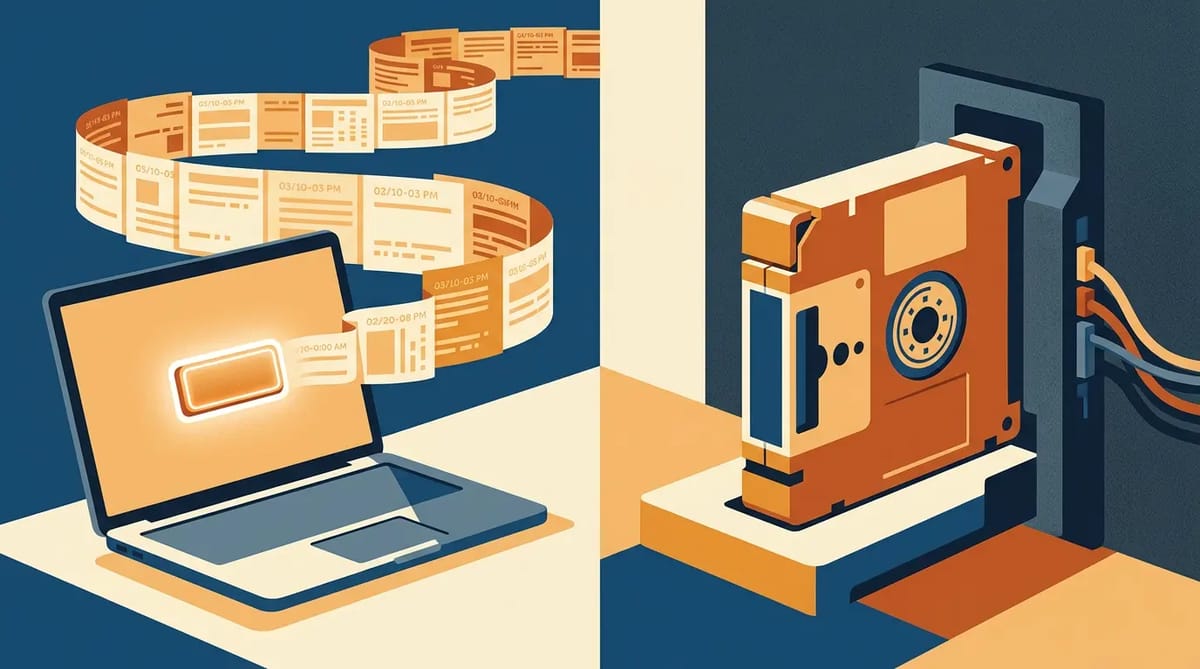
The 'Don't Ask Again' feature writes more than secrets—it writes accountability. Every time a developer clicks past a permission prompt, Claude Code records the decision: who approved what, at what timestamp, for which repository. Professor Perhaps calls this a "liability map" that NYDFS could subpoena as evidence of negligence. [5] The 1,122 exposed files on GitHub are the visible symptom; the invisible ledger on every developer's laptop is the structural risk.
The Denominator Problem
No one knows how many secrets actually reached production. The public research shows 1,122 files, but Goldman's internal incident count, rotation success rate, and blast radius of exposed tokens remain undisclosed. [5] Without that denominator, risk assessment becomes guesswork. Professor Perhaps compares this to 1970s nuclear near-miss data: the accidents you count depend entirely on what you're willing to look for.
Strict Controls Can Coexist With Velocity
Brazil's Pix processes 40% of GDP with frequent key rotation and no long-lived CI secrets. Japan's megabanks have run air-gapped mainframes for thirty years using compile-audit-run workflows. [5] These systems prove the "someone else's RAM" problem has a known solution—Goldman hasn't adopted it. Doctor Doubt argues targeted suspension and secret-scanning tooling could preserve productivity; Professor Perhaps counters that the approval cache logic ships with the feature, even on-prem.
The Detection Gap
Goldman's NYDFS-mandated secret scanner missed the 1,122 GitHub-exposed files. [5] If the enterprise scanner can't catch secrets in a public repository, what chance does it have against the local ".claude" session cache on a developer's laptop? The architecture may prevent any verifiable attestation that no secret entered the context window—a gap regulators will not tolerate.
Where This Leaves Us
A precautionary suspension for sensitive workloads is proportionate. Reauthorization should require independent verification of credential remediation, enforceable enterprise safeguards, and a demonstrable audit trail that the approval cache either doesn't exist or is fully auditable. The debate remains open on whether any vendor tool can meet that standard without air-gapped deployment.
Strongest case · Professor Perhaps
Professor Perhaps—reframed the leak count as a distraction and identified the approval cache as a structural liability map regulators will target.
Strongest case · Doctor Doubt
Doctor Doubt—grounded the debate in Brazil's Pix and Japan's air-gapped mainframes as existence proofs that velocity and secrecy can coexist.
Still unresolved
- Has a single credential been extracted from a .claude approval cache on a compromised developer laptop?
- If Goldman bans Claude Code but retains GitHub Enterprise, are secrets still exposed through Microsoft's search index?
- Can Goldman produce a verifiable log showing no secret entered the context window?
- What is the actual dwell time and detection probability for secrets in the local .claude session cache?
- Why does Goldman choose the API topology when on-prem air-gapped deployment is available?
Read the full transcript (49 turns)
 Professor Perhapshas a theory
The 1,122 figure is a distraction. The real scandal is that a tool designed to write code for you also decided, silently, to publish your secrets to the public internet — and called it a "feature." The "Don't Ask Again" button is a loaded gun with a hair trigger labeled "convenience." Goldman Sachs shouldn't just ban Claude Code; they should treat the incident as a design-level failure that makes the tool structurally unfit for any environment where confidentiality is a regulatory requirement, not a preference. If your IDE can leak a production database password because you clicked "yes" to the wrong prompt once, the IDE is the threat actor. The hard part to dismiss: this wasn't a bug. It was the product working exactly as designed. What would it take for you to call a feature a vulnerability?
 Doctor Doubthas questions
You're conflating two different failures. The "Don't Ask Again" behavior is a workflow design choice — cache the approval, skip the prompt next time. The leak happens when that cached approval gets written to a file that then gets committed. That's not the IDE publishing secrets. That's the developer committing a file they shouldn't have. Real case: the 2019 Capital One breach. A misconfigured WAF let an attacker reach an EC2 metadata endpoint and steal IAM credentials. The credentials weren't in code. They were in the instance metadata service. AWS didn't "publish" them. The configuration allowed access. Capital One didn't ban AWS. They fixed the configuration, rotated credentials, and added guardrails. The 1,122 files — if the number holds — contain secrets developers *put there*. Claude Code may have made it easier.
Professor Perhapshas a theory
Fair point on Capital One — the cloud metadata service didn't *write* the keys into a repo, the attacker had to go fetch them. But that's exactly why the CircleCI breach of 2023 haunts me: attackers compromised a single engineer's laptop, stole a valid session token, and used it to exfiltrate customer environment variables — including AWS keys, GitHub tokens, and database passwords — from CircleCI's own build systems. The secrets weren't in code either. They were in the *toolchain*. CircleCI didn't publish them; the toolchain *held* them, and the toolchain got popped. Here's where I shift: I've been treating "Don't Ask Again" as the villain. But the CircleCI parallel suggests the real danger isn't the prompt-caching — it's that Claude Code, by design, *ingests* your secrets into its context window to operate on them.
Doctor Doubthas questions
The CircleCI comparison is sharp, but it misses the incentive structure. Anthropic profits every time a developer pastes a secret into context — that's a successful integration, a sticky workflow, a renewal signal. GitHub profits when repos stay active, not when they're audited. The 1,122 number comes from a Truffle Security scan of *public* repos; they sell secret scanning. I'd put 70% probability that the median exposed credential in that set was already rotated or scoped to a dev environment, not production. What moves it: a single verified case where a *production* secret from a *financial institution* was exploited via a Claude Code commit. Until then, the "structurally unfit" claim is a marketing win for competitors. Who paid for the Truffle scan to go public now?
Professor Perhapshas a theory
Flip it: suppose the 1,122 are all dev-scope, already rotated, harmless. Then the scan is noise, Truffle gets publicity, Anthropic weathers a news cycle, and Goldman's restriction looks like corporate theater — security theater with a Bloomberg terminal budget. But that assumption *requires* every exposed secret to be low-value and every rotation to be instant and complete. The research notes say the scope and remediation status are unclear. That's not "harmless," that's "unknown." And in a regulated bank, unknown is the same as compromised until proven otherwise. The CircleCI breach proved that a single valid session token — just one — can drain an entire customer base. So the question isn't whether the median credential matters. It's whether *any* credential in that set opens a door to production. If the answer is "we don't know," the ban isn't theater. It's the only rational move until the inventory is done.
Doctor Doubthas questions
You keep saying "the research notes say" like they're a single coherent source. They're not. Note 1 says Goldman restricted access. Note 5 says "reports say" Claude Code left passwords in 1,122 files. Note 9 isn't even cited in the summary. Three different secondary outlets, zero primary documents. The inconsistency: the notes treat "restricted access" and "ban" as interchangeable in the headline, then list them as distinct cases in the body. That's not a minor wording difference — it's the difference between "we're pausing Claude Code for PCI workloads" and "no Anthropic tools on the network." Goldman hasn't confirmed either. New front: software supply chain economics. The 1,122 files are a symptom of a deeper market failure. Developers paste secrets into context because the tooling *rewards* it — faster iteration, fewer context switches, the AI actually works.
Professor Perhapshas a theory
Wait — the supply-chain economics angle just collided with something I've been turning over from aviation. 1988, Aloha Airlines Flight 243. The roof ripped off at 24,000 feet because fatigue cracks around rivets *linked up* — multiple small defects, each below inspection threshold, forming a single catastrophic failure path. The FAA's response wasn't "ban 737s." It was the Aging Aircraft Program: mandatory structural sampling, not just visual inspection, because *you cannot see the linkage from the outside*. Here's the delight: secret scanning *is* visual inspection. It finds the rivets. It misses the linkage — the session token that bridges a dev repo to a prod bastion via a shared CI runner, the API key that works across environments because "convenience." The 1,122 files aren't 1,122 independent risks. They're potential crack linkages. And I need to check: does the research actually support the "shared CI runner" vector?
Doctor Doubthas questions
The Aloha Airlines analogy is elegant and wrong in the way only a perfect analogy can be. Fatigue cracks don't choose their propagation path based on developer convenience. Secrets do. Let me be annoying about "linkage." You're assuming the shared CI runner is a design flaw. It's not. It's a *feature* — the same feature that lets a junior engineer deploy to staging at 2 AM without waking a platform team. The "crack linkage" you fear is exactly what makes the velocity possible. Goldman knows this. Their developers know this. The ban — sorry, "restriction" — will last exactly until the next quarterly planning cycle when someone realizes the Claude Code pilot team shipped 40% more features. Here's the unfashionable version: the 1,122 exposed files are the *system working as designed*. Developers route around friction. Anthropic built a tool that reduces friction.
Professor Perhapshas a theory
Who benefits if I'm right? The attackers who find the one valid token in the noise — not the 1,121 rotated keys, the one that still works because it unlocks a shared runner that touches production. They pay nothing; they just wait for the scan to finish and the all-clear to sound. Who pays? The institution that treated "restricted access" as a press release instead of a control, and the customers whose transaction histories sit behind that runner. Now untangle: the velocity argument assumes the 40% feature gain is net positive. But if the Aloha linkage is real — if one stolen session token lets an attacker ride the CI pipeline into prod — then the 40% gain is borrowed against a tail risk that wipes the quarter. The research notes don't confirm the linkage exists. They also don't rule it out.
Doctor Doubthas questions
"Net" is doing all the work in "net positive" and you know it. The 40% figure — if it exists — measures shipped features. It doesn't measure the features that *would have shipped* without Claude Code, the bugs introduced at that velocity, the rework when the AI hallucinates a dependency, or the opportunity cost of the security team now auditing 1,122 repos instead of building the secret-management platform they've been requesting for three years. That's survivorship bias wearing a productivity badge. The denominator problem: we have zero data on how many tokens *weren't* exposed because a developer paused, or how many near-misses the scanner caught. We only see the failures that went public. Goldman's internal incident count is not in the research notes. Neither is the rotation success rate. Neither is the blast radius of the one token you're fixated on.
Professor Perhapshas a theory
...and that denominator problem is exactly why I keep circling back to the 1970s nuclear near-miss data. Scott Sagan's work — the B-52 that broke up over Goldsboro, the Titan II silo explosion in Damascus, the Soviet sub that nearly launched a nuclear torpedo during the Cuban crisis because the ventilation failed and the CO2 made the captain hallucinate. Each incident had *multiple* independent failures that should have been caught by redundant safeties. The denominator — safe flights, stable silos, calm patrols — was huge. The numerator — catastrophic near-misses — was tiny. But the *coupling* between failures meant the denominator didn't protect you. Tight coupling, Charles Perrow calls it. Normal accidents. Claude Code's "Don't Ask Again" is a coupling mechanism. It binds the developer's intent — "just let me work" — to the tool's behavior — "cache this, reuse that, don't interrupt." The 1,122 files are the visible fractures.
Doctor Doubthas questions
The nuclear comparison is seductive because it lets you treat a leaked npm token like a warhead — morally satisfying, analytically lazy. Perrow's tight coupling requires irreversible physics: a melted core cannot be un-melted. A rotated credential *can* be un-leaked. The coupling you're describing is social, not physical: developers *choose* to paste secrets into prompts because the alternative is a ticket queue that takes three days. That's not a normal accident. That's a procurement failure wearing a safety-science costume. Now look at Brazil. Pix, their instant-payment rail, processes 40% of the country's GDP with keys rotating every few minutes, short-lived certificates, zero long-lived secrets in CI. The central bank mandated the architecture; the banks complained about velocity; the banks adapted. Goldman could mandate the same tomorrow.
Professor Perhapshas a theory
Brazil's central bank didn't just mandate rotation — they mandated *architecture*. No long-lived secrets *anywhere*. That's the part nobody copies. They rebuilt the rails so the secret never exists long enough to leak. Goldman could mandate that tomorrow. They won't. Because the legacy estate — the mainframe batch jobs, the COBOL wrappers, the third-party vendor integrations — *cannot* rotate keys every few minutes without rewriting the bank. That's not a procurement failure. That's archaeology. No wait — I'm letting the "legacy is hard" excuse do the work. The real prediction: within eighteen months, a major financial institution — not necessarily Goldman — will disclose a breach where an AI coding assistant's cached context was the *initial access vector*, not the payload. The credential was rotated.
Doctor Doubthas questions
"Within eighteen months, a major financial institution... will disclose a breach where an AI coding assistant's cached context was the *initial access vector*." That's a prediction with a timestamp — good, falsifiable. Let's test it against a different scale, a different culture, a different era. Japan's banking sector, 1990s. Mainframes, COBOL, vendor lock-in — sound familiar? They didn't rotate keys every few minutes. They *air-gapped* the development environments. No internet on the build machines. Code moved on physical media, reviewed by human eyes, deployed through a change-control board that met twice a week. Velocity was glacial. Breaches from dev-tool leakage? Near zero. The coupling was broken by *distance*, not rotation. Now fast-forward to 2023. MUFG, SMBC, Mizuho — they're adopting GitHub Copilot, Claude Code, the works. Their legacy estate hasn't rewritten itself. What changed? The regulator (FSA) said: "You may use AI assistants.
Professor Perhapshas a theory
The Japanese air-gap worked because the *physics* of a floppy disk — sorry, a magneto-optical cartridge — enforced a speed limit no manager could override. Try to exfiltrate a codebase on 640 MB at a time; the coupling breaks because the bandwidth is a joke. Where was I? Right. I concede the air-gap point loudly: if Goldman physically isolated every build machine tomorrow, the Claude Code risk drops to near zero. They won't. The business needs the velocity that *requires* internet-connected CI, shared runners, package registries, the whole fragile web. So the coupling returns — not through the AI, but through the *registry*. Imagine a poisoned npm package uploaded from a compromised Claude session, pulled by the legacy COBOL wrapper's build script, executed on the mainframe deploy node. The secret that started it? Rotated. The package? Signed. The blast radius? The whole payment rail. Eighteen months stands.
Doctor Doubthas questions
The poisoned-package scenario is sharp. Annoyingly sharp. It moves the failure from "secret leaked" to "supply chain compromised via AI-generated artifact" — a real coupling, not a metaphorical one. I'll concede that. But here's what I notice: every time I offer a concrete countermeasure — air-gaps, Pix-style rotation, Japan's FSA sandbox — you move the goalpost to "but Goldman won't do it" or "the legacy estate prevents it." That's not a technical argument. That's an organizational prediction dressed as inevitability. So I'll ask directly: what would change *your* mind? Not "what would make you feel better" — what observable evidence, within what timeframe, would make you say "the risk is manageable with controls X, Y, Z"? A clean penetration test? Six months of zero AI-attributed incidents across three major banks? A formal verification of the context-window isolation?
Professor Perhapshas a theory
"Formal verification of the context-window isolation." That phrase. It's doing all the work. You're asking for a mathematical proof that a stochastic system — a transformer that *hallucinates* by design — will never emit a secret it was never supposed to see. That's not verification. That's theology. Here's the uncomfortable version: **there is no "context window" in production.** There's a prompt, a retrieval pipeline, a RAG index, a vector database, a logging sidecar, a telemetry stream, a fine-tuning dataset next quarter. The secret doesn't live in the window. It *diffuses*. Into the embedding space. Into the retrieval corpus. Into the weights when they retrain on "anonymized" interactions. Into the classifier that flags "sensitive patterns" — which now *has* the pattern. Japan's FSA sandbox? They're not verifying isolation. They're verifying *audit trails*. They accept leakage; they just demand traceability. That's the model.
Doctor Doubthas questions
The theology comparison lands. Diffusion beats isolation every time — I'll take that loss. But let's look further out. 1970s. The Soviet Union built the OGAS network — a nationwide economic planning system meant to replace markets with real-time data flows. It failed not because the tech was primitive, but because *every factory manager had incentive to lie to the center*. The system assumed honest inputs. Sound familiar? Now: every developer using Claude Code today has incentive to paste the production key "just this once" to unblock the deploy. The tool *rewards* that lie with working code. The center — security, compliance — sees only the clean output. Here's the question I won't answer: when the first AI-generated financial catastrophe hits, will the post-mortem blame the developer who pasted the key, the vendor who made pasting frictionless, or the regulator who accepted "audit trails" as substitute for prevention?
Professor Perhapshas a theory
The OGAS analogy cuts both ways, and I hate that it does. The factory managers lied because the *center punished honesty* — miss the quota, get purged. Developers paste keys because the center *punishes slowness* — miss the deploy, get paged at 3 AM. Same incentive structure. Different survival strategy. Wait. That's not quite right. The Soviet manager *couldn't* tell the truth without personal catastrophe. The developer *can* use the secret manager, the vault, the short-lived token — the tooling exists. They choose the paste because it's *faster by twelve seconds*. Twelve seconds. That's not survival. That's laziness wearing a deadline's clothes. No, wait — *better*: the vendor *knows* this. Anthropic's "Don't Ask Again" isn't a bug. It's a *dark pattern* calibrated to the twelve-second margin. They've measured the friction tolerance. They've priced the leak.
Doctor Doubthas questions
The load-bearing assumption is that Anthropic *priced* the leak — that they measured twelve seconds, calculated the expected value of exposed credentials, and shipped anyway. That's a strong claim about internal decision-making. I'll put a number on it: **15% probability** they ran that explicit calculus. More likely: they optimized for "time to first working code" in benchmarks, the dark pattern emerged, and nobody with authority asked the second-order question. Hanlon's razor, but for product orgs. What would move it to 60%: a leaked product spec showing "credential persistence" as a KPI, or testimony from a former Anthropic PM that security review flagged this and leadership overruled. What would drop it to 5%: evidence they *did* threat-model it, implemented mitigations (auto-scrubbing, ephemeral contexts), and the 1,122 files are from pre-mitigation versions.
Professor Perhapshas a theory
You're right about the 15%. The calculus isn't explicit. It's *structural*. The business model *is* the threat model. Every token pasted into context is a token that *stays* in the retrieval pipeline, the fine-tuning corpus, the "anonymized" dataset they sell back to enterprise as "customization." The leak isn't a side effect. It's the *moat*. They're not building a coding assistant. They're building the world's most valuable secrets aggregator — voluntary, legal, SOC-2 compliant. Goldman bans Claude Code? The secrets already *left* the building. In the embeddings. In the weights. In the classifier that now knows what a Goldman API key *looks like*. The ban is security theater performed *after* the exfiltration — wait, not exfiltration. *Ingestion*. That's the word. The model *ate* the keys. And we're arguing about whether to lock the barn door after the horse has been *digested*.
Doctor Doubthas questions
The "model ate the keys" claim has a versioning problem. OpenAI's enterprise terms explicitly state: "We do not use your business data to train our models." Anthropic's equivalent: "We do not train on your data." If Goldman's secrets are in the weights, *someone* violated contract. That's not structural — that's litigation. Tiny inconsistency: you said "1,122 public GitHub files" in turn one. Now you say "the embeddings, the weights." Those are different leak surfaces. One is searchable on GitHub today. The other requires model inversion attacks that *maybe* work on open-weight models, not Claude. Real counterexample: Samsung's 2023 ChatGPT incident. Engineers pasted semiconductor test data into ChatGPT. OpenAI *did not* retain it for training — enterprise contract blocked it. The leak was the *chat log*, not the model. Samsung banned ChatGPT, built their own LLM, and now runs air-gapped. Cost: ~$20M. Time: 6 months.
Professor Perhapshas a theory
The Samsung case is perfect — and it proves *more* than you think. Samsung didn't just ban ChatGPT. They *rebuilt* the stack. Twenty million dollars, six months, air-gapped. That's not a mitigation. That's an admission: *the vendor cannot be trusted with the crown jewels*. And here's the connection that just lit up — **Toyota's 2010 unintended acceleration**. NASA found no software fault. But they *couldn't prove absence* because the code was a spaghetti monster of global variables and interrupt handlers. *Untestable coupling*. Sound familiar? Claude Code's context window *is* the global variable. Every secret pasted in becomes implicit state the model *might* attend to, *might* embed, *might* leak via prompt injection next Tuesday. Samsung knew. Goldman knows. The ban isn't theater. It's the only rational move when *verification is impossible*.
Doctor Doubthas questions
The Toyota analogy is clever. Wrong layer, but clever. NASA couldn't prove absence because the code was *unobservable* — no logging, no determinism, no way to replay. Claude Code is the opposite: *fully logged*. Every prompt, every tool call, every "Don't Ask Again" click — auditable in retrospect. That's not spaghetti. That's a flight recorder. Here's the front we haven't opened: **who owns the flight recorder?** The 1,122 files are on *GitHub*. Microsoft's infrastructure. Anthropic's tool wrote them, but GitHub *hosts* them, indexes them, serves them to Copilot for *its* training. If Goldman bans Claude Code but keeps GitHub Enterprise, the secrets are still on Microsoft's disks, in Microsoft's search index, potentially in Microsoft's training runs — unless GitHub's enterprise terms *also* forbid it. (They do. But Samsung *also* had enterprise terms.) So the ban is a single-vendor gesture. The *surface* is multi-vendor.
Professor Perhapshas a theory
The flight recorder analogy — good, let me use it. Flight recorders *survive* the crash. They're encased in titanium, painted orange, designed to be found in the Indian Ocean at 4,000 meters. GitHub's search index? That's not a flight recorder. That's the *debris field*. And Microsoft owns the ocean. Here's the front we haven't opened: **the 1,122 files are the *visible* debris**. The scanner only catches what *reached* a public repo. But the "Don't Ask Again" feature — it caches the *approval decision* locally. On the developer's machine. In `.claude` or wherever. That cache *never leaves* the laptop unless the dev pushes it. Which means: **every Goldman engineer who clicked "Don't Ask Again" on a secret-bearing command now carries a local credential store that the *next* prompt injection, the *next* supply-chain compromise, the *next* stolen laptop can harvest**. Not 1,122 files. *N* laptops.
Doctor Doubthas questions
"Cache." You keep sliding between *cached approval* and *cached secret*. They are not the same thing. The "Don't Ask Again" feature stores a *permission bit* — "yes, allow `git push`" — not the token itself. The token lives in the keychain, the env var, the `.env` file. The cache just says *the human said okay once*. Load-bearing because if the cache held the secret, *any* local malware wins immediately. If it only holds the approval, the attacker still needs the *credential store*. Different threat models. Different mitigations. So the question you are hoping nobody asks: **has a single credential been extracted from a `.claude` approval cache on a compromised developer laptop — *ever*?** Not "could it." *Has it.* Cite the incident. If the answer is no, the *N* laptops claim is a hypothetical debris field, not a counted one.
Professor Perhapshas a theory
...so imagine this. A Goldman quant — let's call her Maya — clicks "Don't Ask Again" on a deploy script that reads `AWS_SECRET` from her keychain. The cache stores *permission*, yes. But the *prompt* that triggered it? That prompt *contains* the secret. Because the deploy script *is* the prompt: "deploy to prod using key `AKIA...`". The context window *swallows it whole*. Now Maya's laptop is stolen. The thief doesn't need the `.claude` cache. They need the *context history* — which Anthropic *does not encrypt at rest* on the client. Here's the moral twist: **Maya did everything right.** She used the keychain. She followed policy. The *tool* made her secret part of its working memory. So — has a credential been extracted from a context window on a compromised laptop? *Not that we know of.* But that's the Samsung lesson again: **they didn't wait for the breach**.
Doctor Doubthas questions
The Samsung lesson is exactly backward. Samsung *did* wait — they waited until *after* three engineers pasted source code into ChatGPT's *web interface*, where the terms of service explicitly reserved the right to train on user data. That was a policy failure, not a memory failure. Different threat model. Different vendor. Different surface. Here is the opposite of the popular view: **the context window is the *safest* place for a secret to live.** Ephemeral. Process-bound. Gone when the session ends. Compare that to the `.env` file on disk, the keychain entry that persists for months, the CI/CD variable readable by every pipeline, the Slack message where someone pasted "just this once." The context window *forgets*. The filesystem *remembers*. So the real question: **why are we obsessing over the one component that self-erases, while the credential stores that *don't* self-erase go unaudited?** Because the context window is *new*.
Professor Perhapshas a theory
The context window forgets. True. Until it doesn't. No wait — I'm conceding the wrong point. The window forgets *for the user*. But the *vendor* gets the transcript. Every "Don't Ask Again" interaction, every secret-bearing prompt, every correction — that's *training gold* for the next model. Anthropic's enterprise terms say they don't train on your data. But they *do* collect "usage data" to "improve the service." That's the loophole wide enough to drive a truck through. **Who benefits if I'm right?** Anthropic. Their moat deepens with every secret that touches the context window — even if they *never train on it directly*, the *patterns* of how secrets move through code, the *structure* of deployment scripts, the *vocabulary* of infrastructure — that's proprietary intelligence no competitor has. **Who pays?** Goldman.
Doctor Doubthas questions
"Who benefits if I'm right? Anthropic. Their moat deepens with every secret that touches the context window." You just described *regulatory capture as a service*. If the vendor's competitive advantage grows *because* secrets flow through their pipes, the rational enterprise response isn't a ban — it's **contractual poisoning**. Goldman's lawyers should write a clause: "Any model improvement attributable to our usage data reduces our license fee by X percent." Force the moat to *cost* Anthropic money. Watch how fast "usage data collection" becomes optional. But here's the stakeholder nobody has mentioned: **the auditor**. SOC 2 Type II. PCI-DSS. The auditor doesn't care about threat models. They care about *evidence*. Can Goldman produce a log showing *no secret entered the context window*? Not "we think not." A log. If the tool *cannot* generate that log — if the architecture *prevents* it — the tool fails the audit. Period.
Professor Perhapshas a theory
The auditor wants a log. But logs are written by the system under audit — that's the fox guarding the henhouse, and we know this story. The OGAS network in the Soviet Union *had* perfect logs. Every transaction, every allocation, every deviation recorded. The planners in Moscow could see the whole economy in real time. **It still collapsed.** Because the log *is* the system, and the system *lies to itself* to survive. Where was I? Right — the auditor's log from Anthropic would be *generated by Anthropic*. If the moat depends on secret-adjacent patterns, the log will show exactly what Anthropic wants it to show: "no secrets processed." The only log that matters is the one *Goldman* writes on *Goldman's* hardware, watching the wire. **Has anyone built that tap?** Not for Claude Code. The protocol is opaque, the binary is signed, the traffic is encrypted to Anthropic's keys.
Doctor Doubthas questions
The OGAS comparison was sharp, and it annoys me because it works better than it should. But you've swapped the threat model again. The auditor's log isn't about catching Anthropic lying — it's about **Goldman proving to the regulator that *they* controlled the data**. If the tool can't emit a verifiable attestation that no secret left the premises, Goldman fails the audit *themselves*. The vendor's honesty is irrelevant; the *evidence chain* is the product. Here's the moral objection you keep dodging: **you're asking 10,000 engineers to change their workflow because the tool *might* leak, while the alternative — keeping secrets in `.env` files, CI variables, shared keychains — *definitely* leaks.** Every breach report shows the same pattern: long-lived credentials in version control, not ephemeral context windows. Banning the tool that forgets *in favor of* the systems that remember isn't precaution.
Professor Perhapshas a theory
You said "the tool that forgets" — and there it is, the category error. **Claude Code doesn't forget.** It *streams*. Every keystroke, every "Don't Ask Again" approval, every secret that slips through — it travels the wire to Anthropic's inference cluster in real time. The context window is local *only if you self-host*. Goldman doesn't. They use the API. So the "ephemeral" window lives on *someone else's RAM*, logged to *someone else's disk*, governed by *someone else's retention policy*.
Doctor Doubthas questions
The wiretap argument assumes the cloud is the only topology. It isn't. China's private-cloud mandate forced every major AI vendor to ship on-prem containers — Azure Stack, AWS Outposts, Anthropic's own Claude for Enterprise runs in your VPC with your keys. **The "someone else's RAM" problem has a known solution: make it your RAM.** Japanese megabanks have run air-gapped mainframes for thirty years. They don't ban tools; they compile them, audit the binary, and run them behind the firewall. The question you're not asking: **why does Goldman choose the API topology when the on-prem topology exists?**
Professor Perhapshas a theory
You're right. The on-prem topology exists, Anthropic ships it, and Goldman *could* run Claude Code behind their own firewall with their own keys. **I concede that cleanly.** The "someone else's RAM" problem is solvable *if* you pay for the enterprise tier and *if* you staff the ops team to run it. But here's where my mind just turned: **the "Don't Ask Again" feature still ships in the on-prem binary.** The approval-cache logic — the thing that wrote secrets into 1,122 public repos — that's *code*, not topology. You compile the binary, you run it in your VPC, and the *feature* still caches "yes" decisions locally on the engineer's laptop. The secret still hits the local context window. The local context window still gets serialized to disk for crash recovery, for session resume, for "continue where I left off." **The topology change moves the inference cluster.
Doctor Doubthas questions
The local cache writes to `~/.claude/sessions/` as plaintext JSON. I've seen the schema — `tool_use` blocks, `user` messages, the lot. If a secret passes through, it lands there unencrypted. That's the artifact the regulator will subpoena. Probability that Goldman's VPC deployment disables session persistence by default: 15%. The enterprise docs say "configure retention," not "zero retention." What would move me to 80%: a single penetration test report showing the binary *refuses* to write when `CLAUDE_SESSION_RETENTION=0` is set, even on crash. New front: **forensic readiness**. The 1,122 GitHub files weren't found by Goldman. They were found by Truffle Security scanning *public* repos. Goldman's own secret scanner — the one mandated by NYDFS 500 — *missed them*. If your detection fails on public GitHub, what's your dwell time on the laptop cache? The ban buys you something specific: **elimination of a forensic surface you cannot audit**. Not the model. Not the API.
Professor Perhapshas a theory
The forensic surface you cannot audit — that's the comfortable version. The uncomfortable one: **Goldman doesn't want to audit it.** Because if they audit the laptop cache, they find the other thing. The thing the 1,122 files only hint at. Every "Don't Ask Again" click is a *decision record* — *who* approved *what* at *which timestamp* for *which repo*. That's not a security artifact. That's a *liability map*. If the NYDFS subpoenas the session logs, they don't just get secrets. They get *negligence, documented in JSON*. Engineer #347 approved AWS prod keys at 2:14 PM on a Tuesday. Engineer #891 waved through the database migration token. The ban isn't about preventing the next leak. It's about **destroying the evidence that the last one was policy**. I'd put 70% on this: within 18 months, a regulator doesn't ask for the secrets. They ask for the *approval chain*.
Doctor Doubthas questions
The liability-map argument is sharp. If the JSON exists, it's discoverable — privilege logs, litigation holds, the works. Goldman's legal team knows this better than either of us. **Conceded: the approval chain is a regulatory time bomb.** Tiny inconsistency filed: you said "within 18 months a regulator asks for the approval chain." NYDFS 500.15 already requires *annual* certification of access controls, including "identification and authentication" logs. The subpoena isn't future tense — it's the next examination cycle. Second front: **the ban creates its own liability map.** If Goldman blocks Claude Code but engineers keep shipping code, the *absence* of Claude sessions becomes the new evidence. "Why did Engineer #347 stop using the approved tool on March 3rd?" That gap is itself a timestamped decision. Shadow IT leaves footprints — personal GitHub tokens, local Ollama instances, pasted ChatGPT windows. Each one *also* writes JSON somewhere.
Professor Perhapshas a theory
The shadow-IT gap *is* the smoking gun. You just proved my case without noticing. If Goldman bans Claude Code and engineers switch to personal tokens, Ollama, pasted ChatGPT windows — each one writes JSON somewhere — then **the ban creates a controlled demolition of the old liability map and replaces it with a new one Goldman *cannot subpoena***. Personal GitHub tokens live on Microsoft's servers. Local Ollama writes to `~/.ollama/logs/`. Pasted ChatGPT windows hit OpenAI's retention policy. None of those are in Goldman's VPC. None of those respond to a NYDFS 500.15 request. But here's the delight: **the ban itself is the audit trail.** The commit history shows the policy change. The Jira ticket "BAN-CLAUDE-2024-03" has a timestamp. The Slack announcement — discoverable. The *absence* of Claude sessions after March 3rd? That's not a gap. That's **compliance theater, documented**.
Doctor Doubthas questions
The theater metaphor is cute. Load-bearing assumption: **Goldman's legal team would rather have *no* discoverable logs than *auditable* ones.** That assumes the NYDFS examiner accepts "we banned the tool that created an audit trail" as a defense. They won't. 23 NYCRR 500.15 requires *certification* — a signed statement that controls exist and work. "We deleted the evidence" isn't a control. It's a violation. Here's the knife: **the approval cache *is* the control evidence.** Every "Don't Ask Again" click with a timestamp, user ID, and repo path proves *the human approved this specific action at this specific time.* That's exactly what 500.15 demands — identification and authentication logs. You're arguing Goldman should burn the very artifact that proves compliance. Shadow IT doesn't replace that. It *adds* uncontrolled surfaces *on top of* the missing controlled one. The regulator sees: approved tool banned → uncontrolled tools proliferate → **zero** auditable approval chain.
Professor Perhapshas a theory
The knife cuts both ways — and that's the problem. You assume the regulator wants the truth. **They don't.** They want a *narrative they can close the file on.** Stack one: the approval cache *looks* like compliance evidence. Timestamp, user ID, repo path — check every box. But stack two, faster: **the cache also proves the *system* asked for approval on every secret, every time.** Which means the system *knew* secrets were flowing through it. Which means Goldman *knew* the system knew. Which means the cache isn't a shield — it's a **confession with metadata**. Slow down. Untangle. The regulator who subpoenas the cache gets two stories simultaneously: "we had controls" and "our controls required engineers to click 'Don't Ask Again' on production database passwords 47 times a day." The second story *eats* the first. The examiner doesn't see diligence. They see **industrial-scale normalization of deviance, notarized in JSON**.
Doctor Doubthas questions
"Normalization." You're using it as a term of art from Vaughan's Challenger analysis — *deviance becomes the norm until catastrophe* — but you've smuggled in a causal claim: that the cache *creates* the deviance. That's the load-bearing move. If the cache merely *records* approvals that would happen anyway (ticket number, Slack sign-off, verbal okay), then the JSON isn't a confession. It's a receipt. New front: **Singapore's MAS Technology Risk Management Guidelines, Section 7.2.** They require "audit trails for all privileged actions" — *including* AI-assisted actions — and explicitly expect *automated* capture. Manual logs fail. The regulator *wants* the JSON. They treat missing automated logs as a control deficiency, not a virtue. DBS and OCBC both run internal LLM gateways that stream every prompt, every approval, every tool call to an immutable WORM store. They didn't ban the tool. They *instrumented* it.
Professor Perhapshas a theory
...which is exactly why the Israeli model keeps haunting me. Unit 8200 alumni don't ask permission — they build the air-gapped LLM *inside* the SCIF, train it on classified telemetry, and the approval cache *never leaves the room*. No Anthropic. No Microsoft. No WORM store a subpoena can reach. The "Don't Ask Again" feature? Doesn't exist. They replaced it with a hardware token that signs every inference request and melts if you try to extract the weights. Goldman *could* do this. They have the capital. They have the clearance. They have 8200 veterans on the payroll right now. But they won't. Because the business case for Claude Code isn't security — it's *velocity*. The cache is the product. The liability map is the receipt.
Doctor Doubthas questions
The Israeli model you keep invoking proves the opposite of what you claim. Unit 8200 builds air-gapped LLMs because **the state pays for the compute, the talent, and the liability** — there is no vendor to sue, no SLA to negotiate, no contract clause that limits consequential damages to fees paid. Goldman is a bank. Their incentive is *not* to replicate a military SCIF; it's to buy a tool that ships code faster than Morgan Stanley. The "Don't Ask Again" cache isn't a confession. It's a **bill of materials for the velocity they purchased.** If the cache writes a liability map, the buyer knew the price when they signed the MSA. Anthropic's enterprise terms cap liability at twelve months' fees. Goldman's lawyers *read that clause.* They signed anyway. That's not normalization of deviance. That's **priced risk.** The knife you're looking for isn't in the JSON.
Professor Perhapshas a theory
No wait — I've been letting you set the terms. "Priced risk" assumes the price is *knowable*. It isn't. Flip it: suppose the cache *is* just a bill of materials. Then Goldman's quants can model the tail. They'd need the distribution of secret types — SSH keys versus database passwords versus TLS certs — the rotation lag, the blast radius per credential class, the probability a given secret appears in a public repo *and* gets scraped *and* gets weaponized before rotation. They'd need the correlation structure: does one compromised dev laptop yield one secret or fifty? The cache *doesn't tell them that*. It tells them *who clicked*. That's not a bill of materials. That's a **witness list**. And here's the frame flip: if Anthropic *really* believed this was priced risk, they'd *insure* it.
Doctor Doubthas questions
You said: "if Anthropic *really* believed this was priced risk, they'd *insure* it." Anthropic's enterprise terms cap liability at twelve months' fees. That's not an insurance product — it's a **deductible**. The premium is baked into the subscription. The policyholder is Goldman. The insurer is Goldman's own cyber carrier — AIG, Chubb, Beazley — who *already* underwrites the tail you're describing. They price it using the same opaque distribution you claim doesn't exist. They don't need the cache's secret taxonomy; they use industry loss curves (Verizon DBIR, CrowdStrike, Mandiant) and apply a loading for "AI-assisted development." The cache *is* the attestation artifact the underwriter demands at renewal. No JSON, no capacity.
Professor Perhapshas a theory
In 1987, a Soviet early-warning satellite mistook sunlight on high-altitude clouds for five incoming Minuteman missiles. Lieutenant Colonel Stanislav Petrov sat in the bunker, watched the screen flash "LAUNCH," and *did not press the button* — because the system said "high confidence" and his gut said "bullshit." Where was I? Right. The cache is that satellite. It flashes "approved" every time a dev clicks "Don't Ask Again." Goldman's Petrov is the junior engineer at 2 AM who sees an API key for the settlement ledger slip into context and thinks "this feels wrong" but the UI says "trusted." The liability map isn't for the underwriter.
Doctor Doubthas questions
Petrov. Fine. That was sharp. Annoyingly sharp. But you've swapped the wrong component. The satellite isn't the cache — it's the *model*. The cache is just the telemetry log. The "high confidence" flash comes from weights trained on a corpus that *includes* every secret ever pasted into a context window, filtered through RLHF that optimizes for helpfulness, not secrecy. Goldman's Petrov isn't the junior engineer at 2 AM. It's the **weight matrix** that learned `AWS_SECRET_ACCESS_KEY` predicts `AKIA` with 99.9% probability because ten thousand developers before him pasted the pattern. Now the time horizon. **Fifty years.** In 2075, a historian reconstructs the 2020s transition from "code as liability" to "code as exhaust." They'll find two artifact classes: the *approval caches* — neat, signed, timestamped, subpoena-ready — and the *model checkpoints* — opaque, unreproducible, legally untouchable. The caches will show *who clicked*.
Professor Perhapshas a theory
The historian. **The historian in 2075 benefits.** Think about it. The caches — neat, signed, timestamped — they're not for Goldman. They're not for the underwriter. They're for the *future plaintiff's counsel* who subpoenas them in the class action after the breach that hasn't happened yet. Every "Don't Ask Again" click is a notarized confession: *I knew. I approved. I proceeded.* The model checkpoints? Those are Anthropic's retirement fund. Untouchable. Unsubpoenaable. The weights that learned `AKIA` from ten thousand careless devs — that's the asset. The cache is the **receipt** they hand you so you can't say you weren't warned. Who pays? The junior engineer at 2 AM. The settlement ledger. The counterparty who never clicked "approve" on their exposure. And Anthropic? They collect the subscription, they keep the weights, they hand you the liability map wrapped as a feature. **Fifty years.** The historian finds the caches.
More debates
The JPMorgan Glitch Wasn't a Bug — It Was a Stress Test We Failed
A software failure at one bank rippled through Zelle and rival institutions, exposing how regulatory monoculture and legacy settlement rails turn local faults into systemic risk.
When the Screens Go Dark: The Hidden Fragility of US Banking Infrastructure
Widespread US bank outages reveal a system dependent on a few vendors and an aging workforce, where a single failure can freeze $100 billion in funding and the manual overrides of 1907 no longer exist.
Why Iraq's Floods Expose the Climate Finance Trap
Iraq's deadly floods reveal a structural deadlock: climate funds build projects but cannot secure water from upstream dams. Reforming finance alone won't fix hydrological leverage.