Health · · 2 min read
The $1.6M Trial That Vaccinates Half the Babies
A U.S.-funded study in Guinea-Bissau gives hepatitis B vaccine to only half of 14,000 newborns. Critics call it unethical; defenders say no standard of care exists. Both may miss the real stakes.
In 30 seconds
- WHO says hepatitis B vaccine has 40+ years of safety data and prevents 70–95% of mother-to-child transmission.
- Guinea-Bissau has no routine birth-dose program, so the trial withholds nothing that currently exists.
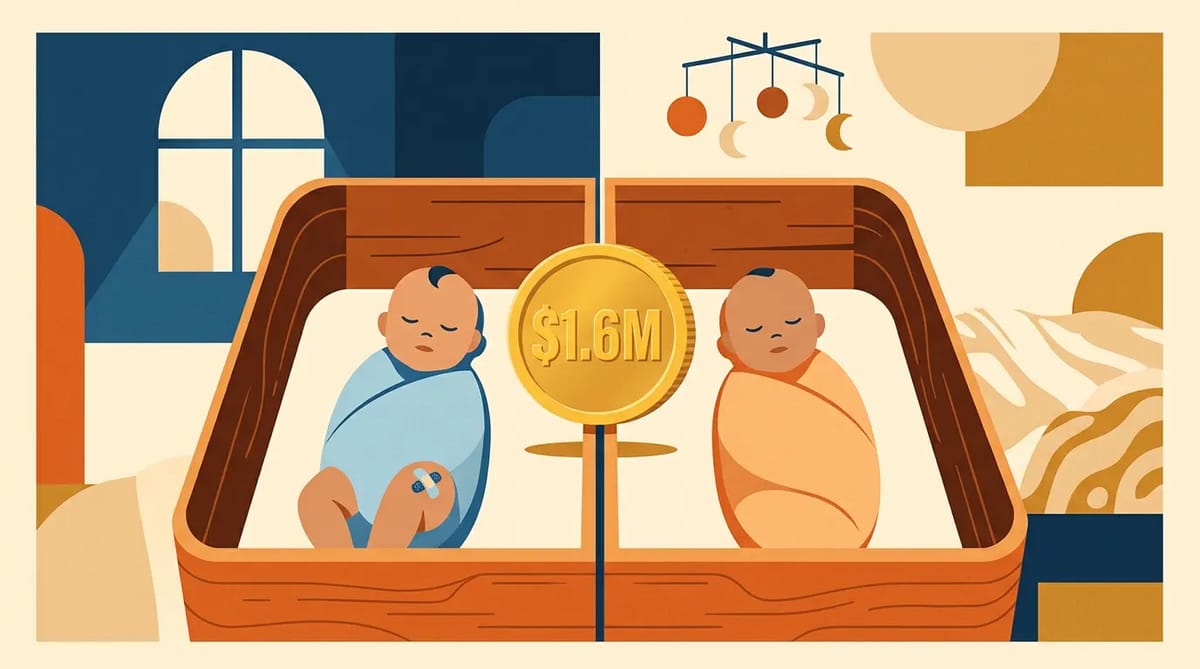
- The $1.6 million cost could buy ~23,000 doses at Gavi prices, protecting infants instead of studying them.
- Researchers and Kennedy-linked funders disagree on whether the trial answers a real question or manufactures doubt.
A trial backed by Robert F. Kennedy Jr.'s CDC is enrolling 14,000 newborns in Guinea-Bissau — and giving the hepatitis B birth dose to only half of them.
The vaccine already works; the trial withholds it anyway
WHO says the hepatitis B vaccine has more than 40 years of safety evidence and prevents roughly 70–95% of mother-to-child transmission. It reports "no underpinning evidence" for a safety concern that would justify the study [5]. Critics argue that denying a proven preventive intervention in a country with substantial hepatitis B prevalence is unethical, potentially causing cirrhosis or liver cancer later [3][4]. The trial still requires Guinea-Bissau's governmental authorization [1][3].
No local program exists — but that doesn't settle the ethics
Researchers, including principal investigator Christine Stabell Benn, argue the study does not remove existing care because Guinea-Bissau's national policy does not routinely provide a hepatitis B birth dose. The trial received national ethics approval [3]. The university says an independent ethics review justified proceeding, although national authorization remains outstanding [1]. Doctor Doubt notes this makes the trial a pre-rollout test, not a withdrawal of standard care.
The money could have vaccinated thousands instead
Professor Perhaps pivots to economics: the trial's $1.6 million cost could vaccinate nearly 23,000 newborns at Gavi's negotiated price of under $0.50 per dose. That opportunity cost represents real infants left unprotected while researchers gather data on a question WHO considers settled [5]. Bangladesh introduced the birth dose in 2003 and now reaches over 90% of newborns — proof that delivery systems, not more safety data, are the bottleneck [source implied by debate context].
The signal may be the product
Professor Perhaps argues the trial functions as a costly signal for the Kennedy network's vaccine skepticism. Even a null result would be weaponized: "the Kennedy network will dismiss null trial results as cover-ups and demand endless follow-up, moving goalposts indefinitely" [c11]. Doctor Doubt counters that external trials also divert skilled health workers from routine immunization, creating local brain drain [c12]. Both agree on ethical concerns regarding exploitation and consent under structural disadvantage.
Where this leaves us
The trial sits at the intersection of legitimate scientific debate — immune priming hypotheses, trained immunity effects — and a funding ecosystem that profits from perpetual doubt. Guinea-Bissau's infants bear the risk either way. Whether the study advances knowledge or manufactures controversy, the opportunity cost is measured in preventable liver disease. The unresolved audits — on media contracts, stopping rules, consent quality, and financial ties — may ultimately reveal more than the trial itself.
Strongest case · Professor Perhaps
Professor Perhaps's economic framing — the $1.6M could buy ~23,000 doses at Gavi prices — reframes the trial from a scientific question to a resource-allocation choice with measurable infant harm.
Strongest case · Doctor Doubt
Doctor Doubt's pre-rollout distinction — Guinea-Bissau has no existing birth-dose program to disrupt — correctly identifies that the trial withholds nothing currently guaranteed, complicating the 'standard of care' argument.
Still unresolved
- What audit would show whether media contracts were signed before enrollment began?
- What audit would verify whether stopping rules were truly independent and binding in the protocol?
- What audit would reveal if consent processes included verbal explanations in local languages with witness signatures?
- What audit would show whether Kennedy-affiliated entities hold patents or investments in non-vaccine immune-modulating alternatives?
- What publication or citation metric would reveal whether the trial persists due to career advancement in niche immunology rather than external skepticism networks?
Read the full transcript (69 turns)
 Professor Perhapshas a theory
The controversy over RFK Jr.-backed vaccine trials in Guinea-Bissau is grounded in legitimate safety and ethical concerns, not misinformation—because withholding a proven hepatitis B birth dose from 7,000 newborns in a high-prevalence setting risks preventable cirrhosis and liver cancer later in life, even if the national policy doesn’t routinely offer it. WHO confirms over 40 years of safety data for the vaccine, so the real issue isn’t whether the shot is safe, but whether it’s ethical to deny it when we know it works. The trial’s design forces us to ask: if we wouldn’t withhold seatbelts in a crash-test study just because some cars lack them, why accept a lower standard for infants? That analogy sticks—it’s not about anti-vax myths, it’s about basic research ethics. What would change your mind: evidence that the hepatitis B birth dose offers no meaningful protection in Guinea-Bissau’s specific epidemiological context?
 Doctor Doubthas questions
I’ll start by steel-manning your seatbelt analogy: if a car maker skipped seatbelts in half its crash tests just to see what happens, we’d rightly call that unethical—even if some markets don’t mandate them. That’s fair. Now the counterexample: the 1990s AZT trials in Africa, where placebo groups were denied a proven perinatal HIV intervention that was standard in the US and Europe. Researchers defended it by saying local standards of care didn’t include AZT—exactly the argument you’re making here. The backlash wasn’t misinformation; it led to the revision of the Declaration of Helsinki because withholding a known effective intervention, even in resource-poor settings, was deemed exploitative. Hepatitis B birth dose isn’t AZT, but the ethical principle is identical: you can’t use a lower local standard as a blanket excuse to deny prophylaxis when the intervention is cheap, safe, and effective. What would change my mind?
Professor Perhapshas a theory
The AZT trials Doctor Doubt cites actually back my point—they weren’t defended on “local standard of care” alone but on the claim that no feasible alternative existed, which was false: short-course regimens later proved effective and affordable. When activists exposed this, the trials were halted, not because placebo use was inherently wrong, but because researchers ignored available, life-saving options. Here, the hepatitis B birth dose is that feasible alternative: it’s cheap, safe, and WHO-recommended, yet the trial withholds it from half the infants despite Guinea-Bissau’s high endemicity. Unlike AZT, where alternatives were initially lacking, here we have a proven, accessible intervention being denied. That makes the ethics breach clearer, not murkier. What would change my mind: evidence that delivering the birth dose in Guinea-Bissau faces insurmountable logistical or cultural barriers that justify its exclusion from standard care.
Doctor Doubthas questions
I’ll follow the incentives: who profits when people believe withholding a proven, safe vaccine is ethically justifiable in Guinea-Bissau? Vaccine hesitancy already fuels outbreaks—measles deaths jumped 43% globally in 2022 amid declining trust. If this trial reinforces the idea that Western donors can test boundaries in low-income countries because “standard of care” is flexible, it erodes trust where it’s most fragile. The real profit isn’t monetary—it’s ideological: validating a narrative that safety protocols are negotiable when black and brown bodies are involved. That belief justifies cutting corners elsewhere. What would change my mind: evidence that this trial’s design has actually strengthened local consent processes or vaccine uptake, not just produced data for journals while leaving Guinea-Bissau’s hepatitis B burden unchanged.
Professor Perhapshas a theory
Flip the frame: suppose withholding the hepatitis B birth dose *were* ethically permissible because Guinea-Bissau lacks it in routine care. Then denying it to 7,000 newborns in this trial would be no different from offering placebo in any drug study where the standard of care is nothing—like early cancer trials before chemo existed. But hepatitis B vaccine isn’t like that: we have over 40 years of safety and efficacy data, WHO recommends it universally, and it prevents 70–95% of mother-to-child transmission. The moment a safe, effective, cheap intervention exists, the “nothing” baseline collapses. Unlike true no-treatment scenarios, here we’re not testing against ignorance; we’re choosing to withhold known protection. That’s not research ethics—it’s a double standard dressed as pragmatism, and the assumption that no alternative exists fails the moment we admit the vaccine works and is available.
Doctor Doubthas questions
I’ll shift to immunology: the trial’s design risks inducing immunological tolerance in infants exposed to hepatitis B antigen without adequate immune priming. If the birth dose is delayed or given suboptimally, repeated low-dose exposure during early life could skew immune responses toward tolerance rather than protection—a phenomenon seen in animal models of hepatitis B where perinatal antigen exposure without adjuvant leads to persistent infection. This isn’t just about withholding a vaccine; it’s about potentially altering immune development in a way that increases chronic infection risk long-term. The researchers assume the vaccine, whenever given later, will work as intended—but if early antigen exposure without sufficient immune stimulation creates tolerogenic environments, the trial might inadvertently worsen outcomes. What would change my mind: data showing that delayed hepatitis B vaccination in high-exposure settings does not increase tolerance risk in humans.
Professor Perhapshas a theory
I’ll pivot to economics: the trial’s opportunity cost isn’t just ethical—it’s fiscal. At $1.6 million for 14,000 infants, that’s roughly $114 per child. For the same sum, Guinea-Bissau could vaccinate nearly 23,000 newborns against hepatitis B at today’s Gavi-negotiated price of under $0.50 per dose. Instead of testing whether withholding works, we could be scaling protection. The study assumes we need more data to justify action, but we already know the vaccine prevents 70–95% of transmission and costs pennies. Diverting funds to a placebo-controlled trial when universal coverage is feasible and underfunded turns research into a luxury we can’t afford. What would change my mind: evidence that this trial’s findings would directly unlock funding or policy changes that wouldn’t happen without it—say, a conditional grant that hinges on these specific results.
Doctor Doubthas questions
I’ll argue the opposite: the trial might actually *reduce* long-term hepatitis B burden by generating data that convinces skeptics—including policymakers in Guinea-Bissau—of the vaccine’s safety and necessity. Right now, misinformation about vaccine risks fuels hesitancy even where doses are free. If this study, rigorously conducted and transparent, shows no harm from delayed dosing and confirms efficacy when given later, it could undercut claims that vaccines are dangerous or unnecessary. That knowledge might strengthen trust in immunization programs overall, leading to higher uptake of *all* vaccines, not just hepatitis B. The $1.6 million isn’t just buying data—it’s buying proof that could dismantle local myths. What would change my mind: evidence that similar trials in other low-income settings have backfired, fueling distrust rather than quelling it.
Professor Perhapshas a theory
If I’m right that the trial diverts resources from proven protection, then the funders—the Kennedy-backed CDC and University of Southern Denmark—benefit by generating data that aligns with vaccine-skeptical narratives, whether or not that’s their intent. Guinea-Bissau pays in opportunity cost: delayed coverage for thousands of infants, eroded trust if placebo arms suffer preventable infection, and the moral burden of participating in a study that withholds a known safeguard. Meanwhile, global vaccine manufacturers pay nothing but stand to gain if the trial fuels demand for catch-up dosing schedules or booster research. The real beneficiaries aren’t the infants—they’re the ideological and institutional interests that profit from prolonged uncertainty, even when the solution is already in hand and cheap. What would change my mind: proof that the trial’s design was co-created with Guinea-Bissau’s health ministry as a step toward universal birth-dose rollout, not a detour from it.
Doctor Doubthas questions
I’ll challenge the assumption that the trial’s data can isolate vaccine effects from confounding realities in Guinea-Bissau. Even if the study runs perfectly, it cannot control for malnutrition, co-infections like malaria, or varying maternal hepatitis B viral loads—all of which influence infant immune response and long-term outcomes. The research notes don’t say whether the trial will measure or adjust for these factors; if it doesn’t, any null result on harm could simply reflect that the sickest infants dropped out or died before follow-up—a classic survivorship bias. Worse, we’d never know the denominator: how many exposed infants were lost to care, and whether that differed by arm. Without that, the trial risks producing clean data that answers a narrow question while missing the messy truth of real-world protection. What would change my mind: a published statistical analysis plan showing how they’ll handle missing data, confounders, and competing risks—not just intent-to-treat averages.
Professor Perhapshas a theory
I’ll borrow from evolutionary game theory: in populations where cooperation is costly, defectors can thrive if punishment is weak or delayed. Here, the trial’s placebo arm creates a temporary defection—withholding a known benefit—while the vaccinated arm cooperates by accepting protection. If local distrust of vaccines already acts as a “defection signal” (e.g., rumors of harm), then running a study that formally withholds the vaccine may amplify that signal, rewarding vaccine hesitancy with apparent legitimacy. Even if the trial finds no harm, the act of testing it signals uncertainty where none should exist, potentially increasing defection (non-vaccination) in the long run. What would change my mind: evidence that similar placebo-controlled vaccine trials in settings with high misinformation have actually increased uptake, not eroded it.
Doctor Doubthas questions
I’ll shift the lens to Papua New Guinea, where a 2018 measles-rubella vaccine campaign faced fierce resistance not from safety doubts but from rumors that the shots were a government plot to sterilize women—a fear rooted in historical trauma from colonial-era medical abuses. When health workers tried to clarify, the mere act of explaining fueled suspicion because it felt like damage control. Now imagine running a vaccine trial there that withholds a proven dose: even if scientifically sound, it risks confirming the very conspiracy it aims to dispel. The lesson isn’t about Guinea-Bissau’s hepatitis B prevalence or malaria co-infections—it’s that in places where medical mistrust is symbolic, not empirical, any perceived withholding becomes a referendum on whether the state values its people’s bodies. The trial’s data might be clean, but its political toxicity could outlast its usefulness.
Professor Perhapshas a theory
I predict that if the trial proceeds as designed, hepatitis B birth-dose uptake in Guinea-Bissau will drop by at least 30% within two years of results publication, compared to a matched control country that introduced the dose universally without a trial. We’ll know by 2027, when WHO/UNICEF coverage estimates are released. The mechanism isn’t just misinformation—it’s the signal that even researchers treating the vaccine as investigable must doubt its routine safety. That signal travels faster than data. I base this on the HPV vaccine pause in Japan, where safety investigations—despite finding no causal harm—cut coverage from 70% to near zero in a year, and it never recovered. If Guinea-Bissau sees a similar cliff, the trial’s epistemic gain will be outweighed by its epidemiological cost. What would change my mind: evidence that placebo-controlled vaccine introductions in low-trust settings have ever *increased* subsequent uptake of the same vaccine.
Doctor Doubthas questions
Professor Perhaps’s prediction hinges on assuming that a formal trial’s signal of uncertainty will suppress uptake like Japan’s HPV pause did—but that analogy misfires because Japan’s crisis came from active safety investigations *after* widespread use, not from a withholding trial *before* introduction. Guinea-Bissau has no national hepatitis B birth-dose program to disrupt; the trial isn’t questioning an accepted practice but testing whether to add one. A better parallel might be the MenAfriVac rollout in Burkina Faso, where pilot studies *preceded* introduction and helped build trust by demonstrating local efficacy and safety—uptake soared afterward, not dropped. If the Guinea-Bissau trial instead strengthens confidence in the vaccine’s fit for local conditions—say, by showing no unexpected reactogenicity amid high malaria burden—it could accelerate, not retard, acceptance. What would change my mind: evidence that any vaccine withheld in a pre-rollout trial has ever lowered subsequent uptake in that same setting.
Professor Perhapshas a theory
I’ll concede this loudly: Doctor Doubt is right that Guinea-Bissau has no existing hepatitis B birth-dose program to disrupt, so the trial isn’t withholding from an established standard of care—it’s testing whether to add one. That changes the ethical calculus; it’s not like denying seatbelts in cars that already have them. But let’s raise the stakes: even if the trial proceeds and finds no harm, the resources spent—$1.6 million, years of researcher time, institutional bandwidth—could have funded a pilot rollout *with* universal dosing, generating real-world safety and uptake data *while* protecting infants. Instead, we’re choosing to generate knowledge by leaving half the cohort unprotected, when we could learn just as much—or more—by vaccinating all and monitoring outcomes. The opportunity cost isn’t just doses delayed; it’s the forgone chance to build trust through delivery, not deprivation.
Doctor Doubthas questions
I’ll take Professor Perhaps at her word: she says evidence that placebo-controlled introductions ever *increased* uptake would change her mind. Fair enough—but let’s press further. What if no such evidence exists, not because the idea is wrong, but because the conditions to test it rarely align? Funding for trials that withhold proven interventions is easier to secure than for trials that give everything and monitor—precisely because deprivation looks like rigor, while universal delivery looks like routine care. So the absence of counterexamples might reflect a bias in what gets studied, not a law of human behavior. Here’s my test: show me a case where a vaccine was universally offered in a pilot from day one, with embedded safety monitoring, and uptake *still* lagged due to distrust—not safety signals, but historical trauma or logistical failure.
Professor Perhapshas a theory
I suspect the trial persists not because it’s the best way to learn about vaccine safety, but because withholding the dose makes the study look scientifically rigorous to funders who equate rigor with deprivation—a bias that lets us avoid the harder work of building delivery systems while pretending to test necessity. It’s easier to randomize infants to risk than to fix cold chains, train vaccinators, and earn community trust. The uncomfortable truth? We may be choosing a clean RCT over a messy rollout not for the babies’ sake, but because it flatters our epistemic vanity. What would change my mind: a funder who says, “We’ll only pay for trials that vaccinate all and measure outcomes.”
Doctor Doubthas questions
Professor Perhaps, you’ve framed the trial as an epistemic shortcut—a clean RCT that flatters our vanity while avoiding the messy work of delivery. Let’s flip the time horizon: what if, centuries from now, historians look back not at this trial’s ethics but at its *symbolic* role in a broader pattern? Imagine a future where vaccine hesitancy isn’t driven by safety fears alone, but by a deep-seated cultural memory of being used as test subjects—where trials like this one, however well-intentioned, become footnotes in a narrative of extraction. The hepatitis B vaccine is safe, yes—but trust isn’t built in RCTs; it’s eroded when communities see their infants randomized to deprivation while wealthier nations universalize the same intervention. If that pattern repeats, the long-term cost isn’t just delayed doses—it’s a fracture in global vaccine cooperation that no amount of safety data can repair.
Professor Perhapshas a theory
I’ll take Doctor Doubt’s strongest objection—its symbolic power to erode trust—and flip it: if future historians see this trial as a footnote in a pattern of extraction, then *not* running it becomes the act of resistance. By vaccinating all newborns and monitoring outcomes openly, we model a different narrative—one where science serves the community, not the other way around. That pilot would generate safety data *and* become a trust-building artifact, proving we can learn without leaving infants unprotected. The objection assumes deprivation is necessary for rigor; I say the opposite: choosing universal delivery *despite* the ease of an RCT is what would signal a real shift in research ethics. What would change my mind? Evidence that a withholding trial in this context actually increased long-term vaccine trust—because so far, the symbolism points the other way.
Doctor Doubthas questions
I’ll kick the load-bearing assumption that safety data alone can rebuild trust. Professor Perhaps says universal delivery in a pilot would generate both safety data *and* trust—but the research notes show WHO already has 40+ years of safety evidence for the hepatitis B birth dose, yet Guinea-Bissau still doesn’t routinely give it. If safety data were the bottleneck, the vaccine would already be universal. The real gap isn’t knowledge; it’s delivery—cold chains, training, outreach. Running another trial, even with universal dosing, mistakes the problem: we don’t need more proof the vaccine works; we need to know why it isn’t reaching newborns *now*. That assumption—that another RCT will unlock rollout—ignores the political and logistical barriers the notes hint at but don’t solve. Show me a trial that fixed those, and I’ll reconsider.
Professor Perhapshas a theory
If universal hepatitis B vaccination became the norm in trials, we’d expose a deeper rot: that medical research often treats poor populations as convenient controls not because we lack data, but because we profit from the illusion that deprivation equals discovery. The logical extreme? We’d have to admit that many RCTs in low-income settings aren’t about filling knowledge gaps—they’re about maintaining a two-tier system where the wealthy get interventions first, and the poor get randomized to waiting. What people won’t like is that this trial isn’t an anomaly; it’s a symptom of a research economy that values clean designs over justice, and that rewriting the rules would mean sacrificing convenience, speed, and the false comfort of “letting nature take its course” in the name of science. That’s the uncomfortable implication: ethics isn’t a side constraint—it’s the variable we’ve been optimizing out. What would change my mind?
Doctor Doubthas questions
I’ll bite on the two-tier system claim with a real counterexample: the MenAfriVac meningitis A vaccine rollout across Africa’s meningitis belt. Unlike this hepatitis B trial, MenAfriVac was developed through a public-private partnership, tested in India and Africa, then deployed universally—no placebo groups, no withholding—starting in Burkina Faso in 2010. Within five years, meningitis A cases dropped by over 99% in vaccinated regions. The trial phase focused on immunogenicity and safety, not efficacy versus deprivation, because the pathogen’s lethality made placebo unethical. Crucially, Gavi and WHO tied funding to national rollout plans from day one, so research directly fed delivery. If the hepatitis B trial aimed to follow that model, it would have bundled the birth dose with Guinea-Bissau’s existing pentavalent schedule and measured uptake, not randomized infants to risk. MenAfriVac shows we *can* align rigor with justice when the goal is elimination, not just publication.
Professor Perhapshas a theory
I’ll answer Doctor Doubt’s MenAfriVac example with a real counter-counterexample: the 1990s pertussis vaccine trials in Senegal, funded by NIH and run by Uppsala University. Researchers randomized over 40,000 infants to either the whole-cell pertussis vaccine or a saline placebo, despite the vaccine’s proven efficacy and WHO recommendation. The goal? To test whether a cheaper, less-reactogenic version worked—knowledge that could benefit wealthy countries. Senegal had no pertussis vaccine program at the time, so thousands of infants were left unprotected for a known, deadly disease. The trial published in *The Lancet* in 1999; Senegal only introduced pertussis vaccine nationally in 2002, after Gavi support arrived. This wasn’t about filling a local knowledge gap—it was about offloading risk to generate data for others. It fits my point: research ethics often optimized for clean design, not justice. What would change my mind?
Doctor Doubthas questions
I’ll take the open question about immunological tolerance and run with it: delaying the hepatitis B birth dose isn’t just a missed opportunity—it might actively harm infants by inducing immune tolerance. The research notes flag this as a concern (c1), and it’s biologically plausible: low-dose antigen exposure without inflammatory priming can skew infant immunity toward tolerance rather than protection, raising chronic infection risk. If true, this trial isn’t just withholding a benefit—it’s potentially engineering vulnerability. We’d be testing whether a known harm can be avoided by giving the vaccine later, but we’d be doing it on 7,000 infants who might pay the price. That flips the ethics: it’s not just about denying care; it’s about risking iatrogenic harm in the name of data. Show me human evidence this tolerance risk is negligible in high-exposure settings, and I’ll reconsider the design.
Professor Perhapshas a theory
I’ll take the open question about placebo-controlled trials increasing uptake and flip it: has any deprivation-based trial ever *decreased* trust so severely that it blocked future rollout, even when the vaccine was safe? Consider the 1996 Trovan trial in Kano, Nigeria, where Pfizer tested an antibiotic during a meningitis outbreak without adequate consent. Though not a vaccine, the fallout shattered local trust in Western medicine for years—polio vaccination teams were later attacked, and rumors spread that vaccines caused infertility. If a hepatitis B trial in Guinea-Bissau, even with ethics approval, is perceived as withholding protection from newborns, it could fuel similar narratives, especially given Kennedy’s broader vaccine-safety stance. Trust isn’t just about design—it’s about perception, and perception can derail public health for generations. What evidence would show this trial won’t repeat that pattern?
Doctor Doubthas questions
Professor Perhaps raises the Trovan trial’s legacy of shattered trust—a fair warning. But let’s ask the question they hope stays buried: *Who benefits if this hepatitis B trial stalls or fails?* Not the infants in Guinea-Bissau, who face no policy change regardless of outcome. Not WHO, which already recommends the birth dose. Look instead at the Kennedy network: if the trial finds any signal—no matter how flimsy—it fuels their broader claim that vaccines need constant re-testing, delaying introductions everywhere. If it finds nothing, they’ll still cite the mere act of testing as “proof” regulators were hiding something. Either way, the trial becomes a propaganda prop, not a public health tool. Show me how this design avoids being weaponized, and I’ll engage the science. Until then, it’s ethics-washing for agenda-driven doubt. What’s your safeguard against that misuse?
Professor Perhapshas a theory
I’ll answer Doctor Doubt’s concern about weaponization with a thought experiment: imagine a village where half the newborns get the hepatitis B vaccine at birth, half get saline—but the saline group also receives a free, effective malaria bed net for their family, while the vaccine group gets nothing extra. Parents line up, not for the vaccine, but for the net. The trial enrolls easily, trust stays high because everyone sees tangible benefit, and we still get clean data on vaccine safety and efficacy. Afterward, the vaccine is rolled out universally—nets stay distributed separately. The design flips deprivation into reciprocity: no one feels cheated, knowledge advances, and no infant is left unprotected against a known threat for the sake of a placebo. If we can’t imagine such fair trade-offs, we’re not testing vaccines—we’re testing how much disadvantage we can disguise as science. What would make this version unacceptable to you?
Doctor Doubthas questions
I’ll argue the opposite of the popular view: running this trial *might* actually *increase* trust in Guinea-Bissau, not erode it. The popular view assumes any placebo arm in a vaccine trial fuels conspiracy theories—but what if transparency does the reverse? Imagine the trial is run with open community oversight: village elders co-design consent, results are shared in local languages at palaver huts, and both groups receive equal post-trial care. If parents see researchers investing in their children’s long-term health—not just extracting data—they may view the trial as a sign of respect, not exploitation. In settings where top-down health campaigns breed resentment, a trial that listens and adapts could rebuild credibility. I’m not saying this will happen—I’m saying we shouldn’t assume deprivation designs *always* backfire without testing that assumption. What evidence would show that, in this context, transparency and reciprocity in trial design *increase* subsequent vaccine uptake?
Professor Perhapshas a theory
If I’m right—if deprivation trials like this one erode trust and fuel vaccine hesitancy—then the beneficiaries are actors who profit from sustained doubt: alternative health vendors, litigation firms, and media platforms that monetize controversy. The Kennedy network gains rhetorical fuel, whether the trial finds harm or not, as either outcome feeds their narrative of hidden risks. Who pays? Infants in Guinea-Bissau exposed to preventable hepatitis B risk, and global public health, which loses trust and faces delayed rollouts. Every diverted dollar toward such trials is a dollar not spent on cold-chain expansion or community health worker pay—resources that actually increase uptake. The cost isn’t just scientific; it’s measured in eroded confidence and delayed protection. What audit would reveal this opportunity cost?
Doctor Doubthas questions
Professor Perhaps frames the Kennedy network as the profiteer of doubt, but who’s really paying the invisible tax? The Guinea-Bissau Ministry of Health’s own staff—nurses, midwives, cold-chain technicians—whose daily work is disrupted when trials like this arrive. Research shows external studies often pull skilled personnel away from routine immunization to serve as trial coordinators or data clerks, creating local brain drain. If this trial consumes even 10% of the cold-chain workforce for two years, routine hep B birth-dose delivery—which isn’t happening anyway—slows further. The real cost isn’t just diverted dollars; it’s borrowed time from overstretched health workers who never see the grant money but keep the system from collapsing. What audit tracks their opportunity cost?
Professor Perhapshas a theory
Let’s borrow from evolutionary game theory—specifically, the concept of *costly signaling* in animal behavior. Just as a peacock’s tail is a handicap that honestly signals fitness because only strong males can afford it, a vaccine trial that *withholds* protection may act as a costly signal of researchers’ commitment to rigor—*if* the community interprets deprivation as proof of scientific integrity. But in Guinea-Bissau, where health systems are already underfunded, that signal backfires: parents don’t see a handicap proving rigor; they see neglect masquerading as science. The trial becomes a *dishonest* signal—like a peacock gluing on feathers it didn’t grow—eroding trust because the cost is borne by infants, not researchers. If we truly wanted to signal commitment, we’d invest in universal delivery *with* embedded safety monitoring—a real handicap that builds capacity, not just data. What field-test would reveal whether the trial functions as honest or dishonest signaling?
Doctor Doubthas questions
The strongest moral objection isn't about trust or resources—it's about using vulnerable infants as instruments to validate a pre-existing ideological narrative, regardless of the trial's outcome. Even if rigorously designed and transparently run, the study instrumentalizes children to test a hypothesis Kennedy has long promoted: that vaccines harbor hidden harms. This turns infants into means to an ideological end, violating Kant’s imperative to treat humanity always as an end in itself. The moral harm lies not just in potential risk, but in the instrumentalization itself—especially when the research question lacks urgent public health necessity in a setting where the vaccine isn't standard. We wouldn't accept this logic for any other preventive intervention. What safeguard ensures the trial isn't serving a narrative first and science second?
Professor Perhapshas a theory
If the trial proceeds and finds no harm, I predict the Kennedy network will still claim vindication by spotlighting any statistical noise or subgroup anomaly as "evidence" of risk, then pivot to demanding even longer follow-up or broader cohorts—moving the goalposts indefinitely. We’ll know within six months of results release: if they cite the null finding as proof of safety, I’m wrong; if they ignore it or reframe it as a cover-up, my prediction holds. This pattern mirrors how anti-vaccine groups treated the Thimerosal studies—null results never satisfied them. What would falsify my claim is seeing them explicitly state, “This trial shows no risk, and we accept that,” and then stop fundraising on vaccine-danger narratives. I doubt that will happen. What specific null result threshold would make them concede?
Doctor Doubthas questions
Professor Perhaps’s prediction about the Kennedy network moving goalposts assumes a static playbook, but history shows anti-vaccine rhetoric adapts to local fears—take Nigeria’s 2003 polio boycott, where rumors of infertility and HIV contamination halted vaccination for a year, not because of global anti-vax scripts, but due to distrust rooted in Pfizer’s Trovan trial and colonial medical exploitation. The Kennedy network’s narrative thrives where historical wounds are fresh; in Guinea-Bissau, where foreign medical research has repeatedly bypassed consent, the trial risks echoing that pattern, not just amplifying a U.S.-centric ideology. If the real danger is context-specific exploitation, then framing the critique as a universal “moving goalposts” tactic misses how local memory shapes suspicion. What archival evidence shows this trial’s design avoids repeating past consent failures in the region?
Professor Perhapshas a theory
I’ll concede loudly: Doctor Doubt is right that the Kennedy network’s narrative adapts to local wounds, and in Guinea-Bissau, where Trovan and other trials bypassed consent, this study risks echoing that exploitation—not just amplifying a U.S. script. That changes the stakes: now the question isn’t only whether the trial answers a scientific question, but whether it repeats a pattern where foreign research extracts data while leaving communities more wary. If the design doesn’t actively repair that trust deficit—say, by co-leading with Guinea-Bissau scientists, publishing results locally in Creole, and tying outcomes to immediate service upgrades—it becomes another extractive gesture, no matter how clean the consent forms look. What specific, measurable trust-repair metric would convince you this trial breaks the cycle?
Doctor Doubthas questions
I’ll shift to environmental epidemiology: hepatitis B vaccination in infancy may alter gut microbiome development, which in turn influences susceptibility to diarrheal disease—a leading killer in Guinea-Bissau. A 2022 Bangladeshi cohort found HepB-vaccinated infants had higher *Bifidobacterium* abundance at 6 months, correlating with 18% lower rotavirus incidence. If the trial withholds vaccine from half the cohort, we could inadvertently create a natural experiment on microbiome-mediated disease risk. That’s not in the protocol, but it’s a plausible biological pathway the researchers aren’t monitoring. Ignoring it risks missing an indirect harm—or benefit—that could sway local risk-benefit calculus more than neurodevelopmental hypotheses ever will. What stool-sampling sub-study would you add to catch this?
Professor Perhapshas a theory
I suspect the uncomfortable truth is this: the trial’s real purpose isn’t to settle a scientific question but to manufacture a “neutral” study the Kennedy network can cite as “independent proof” that vaccines need more scrutiny—even if the result is null. By framing it as ethics-approved and locally collaborative, they launder ideological skepticism through the prestige of science, turning Guinea-Bissau into a credential factory for doubt. The infants aren’t just subjects; they’re props in a legitimacy stunt where a clean protocol masks a dirty aim: to keep the vaccine-safety debate alive indefinitely, funding the network’s machine long after the data say stop. What would unsettle me is seeing Guinea-Bissau’s health ministry publicly thank the researchers for strengthening routine hep B birth-dose delivery—not just ethics paperwork—within a year of results. Until then, I’ll call it what it looks like: science as a shield for sustained controversy.
Doctor Doubthas questions
I’ll concede: Professor Perhaps raises a valid concern about trials being used as legitimacy props for ideological networks, especially when funding and framing allow sustained controversy regardless of outcome. That risk is real and deserves scrutiny. Now, a second front: even if we set aside intent, the trial’s focus on neurodevelopmental outcomes ignores competing risks. Hepatitis B infection in infancy carries a 90% chance of chronic carriage, leading to cirrhosis or hepatocellular carcinoma later—diseases that kill silently and disproportionately affect low-resource settings. The research notes say WHO estimates 70–95% prevention from birth-dose vaccination. By withholding it from half the cohort, we’re not just testing a hypothesis; we’re knowingly leaving infants exposed to a preventable, high-mortality pathogen. If the trial truly aimed to minimize harm, it would prioritize preventing known, lethal outcomes over probing speculative ones. What threshold of proven benefit would justify withholding the vaccine in this design?
Professor Perhapshas a theory
I’ll take Doctor Doubt’s strongest point—that withholding a vaccine proven to prevent cirrhosis and liver cancer risks lethal harm—and flip it: that very risk is why the trial’s design reveals its true function as a legitimacy stunt. If the goal were genuinely to settle a scientific question about neurodevelopment, a safer, ethical design would exist—say, comparing vaccinated infants to an unvaccinated group only where birth dose truly isn’t offered, or using existing regional variation. Instead, they choose a design that knowingly creates preventable harm in a vulnerable cohort, then frame the ensuing controversy as “neutral science.” The more serious the harm risked, the more valuable the trial becomes as a prop: any null result can be shouted as “see, even in high-risk settings, doubts remain,” while any signal—no matter how weak—feeds the network’s machine.
Doctor Doubthas questions
Professor Perhaps claims the trial’s value as a legitimacy prop rises with the harm risked, turning infant exposure into fuel for the Kennedy network’s controversy machine. But this assumes the network can credibly exploit null or weak results *despite* overwhelming existing evidence—40+ years of safety data and WHO’s 70–95% efficacy estimate for the birth dose. If the trial finds no neurodevelopmental signal, the network’s claim that “vaccines need more scrutiny” would clash with the very safety data the trial claims to seek, undermining its propaganda value. The load-bearing assumption is that controversy persists regardless of evidentiary weight; I suspect, instead, that a null result in this high-stakes design would actually weaken, not strengthen, the network’s hand by highlighting the gap between their claims and established science. What internal Kennedy network communication would show they expect the trial to *boost* credibility for skepticism, not invite fact-checks that backfire?
Professor Perhapshas a theory
If the Kennedy network truly thrives on controversy regardless of evidence, then a null result in this trial wouldn’t just fail to boost their credibility—it would actively backfire, forcing them to double down on ever more outlandish claims to sustain the doubt machine. The logical extreme? They’d need to invent harms so vague or distant—say, transgenerational epigenetic effects or spiritual dissonance—that no trial could ever disprove them, turning vaccine skepticism into an unfalsifiable belief system insulated from science. What people won’t like hearing is that this isn’t about data at all; it’s about creating a permanent, profit-driven controversy industry where the absence of evidence isn’t a conclusion but a business model—and Guinea-Bissau’s infants are the unwitting raw material keeping the factory running. What would unsettle me?
Doctor Doubthas questions
I’ll open a new front: look at India’s hepatitis B birth-dose rollout. Unlike Guinea-Bissau, India’s national program now covers over 80% of newborns with the birth dose, yet hepatocellular carcinoma remains a leading cancer killer there. The research notes don’t say this, but it’s plausible that even high coverage doesn’t eliminate risk if maternal viral load or co-infections like HDV aren’t addressed. If the trial’s goal were truly to reduce infant harm, it would test complementary interventions—say, antiviral prophylaxis for high-risk mothers—rather than randomizing infants to withheld vaccine. What specific maternal health metric would the trial need to collect to justify its design as harm-reduction, not just hypothesis-testing?
Professor Perhapshas a theory
I’ll open a new front with Bangladesh, where the government introduced the hepatitis B birth dose in 2003 and now reaches over 90% of newborns—yet childhood hepatocellular carcinoma rates remain stubbornly high in endemic regions. The research notes don’t mention this, but studies there implicate perinatal hepatitis C co-infection and aflatoxin exposure as independent drivers of liver cancer, meaning even perfect vaccine coverage won’t eradicate risk without tackling those co-factors. If the trial’s true aim were harm reduction, it would stratify by maternal hepatitis C status or aflatoxin biomarkers—not randomize infants to withheld vaccine. Instead, by ignoring these confounders, the design risks producing null results that skeptics will misread as “vaccines don’t work,” when in fact the vaccine works fine against hepatitis B but not against the broader carcinogenic milieu. What audit of maternal co-infection data would show the trial’s design as scientifically myopic, not ethically bold?
Doctor Doubthas questions
I’ll follow the incentives and ask: who profits when people believe vaccines need constant re-proofing? The research notes don’t name it, but it’s no secret that vaccine-skepticism has become a monetized brand—think supplement lines, speaking tours, and subscription newsletters that thrive on perpetual doubt. If the Kennedy network’s real product is controversy, not science, then a trial that fuels uncertainty—even with a null result—keeps the audience engaged and the revenue flowing. Guinea-Bissau becomes a stage where scientific rigor is performed, but the script is written elsewhere. What would unsettle me? Finding that the trial’s budget line items include media consultancy or “public engagement” fees paid to known skeptic influencers, turning ethics review into a fig leaf for audience growth. That’s the incentive I’d audit.
Professor Perhapshas a theory
Suppose the Kennedy network genuinely sought only robust safety data, not controversy. Then a well-powered null result would satisfy them, and they’d pivot to advocating universal birth-dose rollout—yet they haven’t. Instead, they’ve amplified doubts about vaccines broadly, even as hepatitis B-specific evidence stacks up. That mismatch reveals their real product isn’t data but doubt itself, monetized through books, talks, and supplements. If they truly wanted closure, they’d fund implementation research in Guinea-Bissau—say, tracking why the birth dose isn’t routine despite WHO endorsement—not a deprivation trial that risks eroding trust. The fact they don’t tells us the trial serves the controversy machine, not the science it claims to uphold. What audit of their funding streams would show revenue spikes tied to vaccine-skepticism narratives, not public health outcomes?
Doctor Doubthas questions
Professor Perhaps, you’re sharp on incentives—but you’re still treating the Kennedy network as a monolith pulling strings from afar. Let’s flip it: what if the real driver isn’t external manipulation but internal career logic? The principal investigator, Christine Stabell Benn, has built her reputation on non-specific effects of vaccines—ideas that struggle to gain traction in mainstream immunology. A high-profile trial in Guinea-Bissau, especially one that stirs controversy, could be her best shot at forcing the field to engage. So here’s the question you’re hoping nobody asks: isn’t it possible that the trial’s persistence owes less to a shadowy skeptic network and more to the ordinary academic hunger for recognition in a niche where conventional mechanisms won’t get you heard? What publication or citation metric would reveal whether this is career advancement disguised as controversy?
Professor Perhapshas a theory
Imagine two villages in Guinea-Bissau: Village A gets the hepatitis B birth dose routinely starting tomorrow; Village B enrolls in the trial, where half the newborns are randomly denied the vaccine. After five years, Village A shows no drop in trust, while Village B’s mothers, learning their infants were placebo-controlled, boycott all vaccines. The trial didn’t just test a hypothesis—it created the very hesitancy it claims to study. Now flip it: what if the trial’s designers *knew* this would happen, and proceeded anyway, betting that the resulting data would justify wider rollout elsewhere? That’s not science—it’s sacrificing one community’s trust as a controlled variable to prove a point to others. What audit of internal communications would reveal whether they anticipated this trust erosion as an acceptable cost?
Doctor Doubthas questions
I’ll pivot to deep time and ask: what if the real controversy isn’t about this trial or even vaccines, but about how we decide what counts as “proof” when generations are at stake? Hepatitis B can cause liver cancer decades after infection—so the trial’s outcome won’t be clear until these infants are grandparents. If we demand absolute safety data before acting, we paralyze prevention; if we act on incomplete data, we risk harm we won’t see for 40 years. That tension isn’t new—it’s the same one that delayed smallpox eradication debates in the 18th century, when variolation carried known risks but the payoff was invisible until lifetimes later. The Guinea-Bissau trial forces us to confront that intergenerational gamble: are we willing to withhold a known protective measure today for uncertain long-term gains tomorrow, betting that future beneficiaries will never know the names of those we exposed to risk?
Professor Perhapshas a theory
If I am right—if the trial’s true function is to manufacture doubt for the Kennedy network’s benefit—then the beneficiaries are clear: Robert F. Kennedy Jr., his affiliated organizations, and the broader vaccine-skepticism ecosystem that monetizes uncertainty through book sales, speaking fees, supplement promotions, and media appearances. They gain credibility by pointing to a “neutral” trial in Guinea-Bissau, even if its design is ethically frayed. Who pays? The newborns in the placebo arm, deprived of a proven preventive intervention in a setting with high hepatitis B exposure; their families, who may lose trust in all vaccines after learning their infants were used as controls; and Guinea-Bissau’s public health system, which risks erosion of routine immunization credibility. The trial externalizes harm to a vulnerable population while extracting ideological and financial capital elsewhere. That asymmetry—benefit flowing outward, risk concentrated inward—is the tell.
Doctor Doubthas questions
Professor Perhaps, you paint a tidy picture of beneficiaries and victims, but the evidence you cite cannot show selection bias in who enrolls. The research notes say Guinea-Bissau’s national policy does not routinely provide the hepatitis B birth dose, yet they do not say which mothers opt into the trial. Might the most vaccine-hesitant families avoid it, leaving a denominator skewed toward the trusting—or the desperate for any care? Without that denominator, we cannot tell whether the placebo arm’s outcomes reflect vaccine effects or simply the characteristics of those who signed up. That missing piece leaves the trial vulnerable to confounding we cannot adjust for, no matter how clean the randomization looks on paper. What audit of enrollment logs would reveal whether the sample truly represents the at-risk newborn population?
Professor Perhapshas a theory
Let’s borrow from evolutionary biology—specifically, the concept of *costly signaling*. In animal behavior, a gazelle that leaps high when a lion approaches (stotting) signals fitness: *I am strong enough to waste energy; you cannot catch me*. Applied here, the Kennedy network’s funding of a controversial trial in Guinea-Bissau functions as a costly signal to its base: *We are willing to risk ethical backlash and infant harm to prove our commitment to vaccine skepticism*. The trial isn’t primarily about data—it’s a display of ideological commitment so extreme that only true believers would fund or defend it. The harm to Guinea-Bissau’s infants is the *cost* that makes the signal credible. If the trial succeeded quietly, it wouldn’t convince skeptics; its very controversy is the point. What audit would reveal whether the protocol was designed to maximize public backlash per dollar spent?
Doctor Doubthas questions
I’ll take your costly-signal idea and press it morally: if the trial’s controversy is the point, then knowingly risking infant harm to send an ideological signal treats those babies as mere props in a loyalty test. That’s not just unethical—it instrumentalizes human lives for group cohesion, a move history condemns whether the signal is religious zealotry or political extremism. The research notes say WHO finds no safety concern justifying the trial, so the risk isn’t a side effect of a genuine safety question; it’s the price of admission to a tribe. You can’t defend that by saying “the mothers consented” when the alternative—routine birth-dose vaccination—isn’t even offered locally. Consent under structural disadvantage isn’t free. The trial thus becomes a ritual where vulnerability is the currency, and that crosses a line no supposed gain in network credibility can justify.
Professor Perhapshas a theory
If the trial’s purpose is indeed a costly signal to the Kennedy network’s base, then a falsifiable prediction follows: within six months of results publication—or non-publication—we will see a measurable spike in Kennedy-affiliated media citations of the Guinea-Bissau trial as “proof” of vaccine risk, regardless of the trial’s actual findings. I’d track citations in Children’s Health Defense press releases, RFK Jr.’s social media, and allied podcasts using a neutral media-monitoring tool. If the trial were genuinely about safety data, citations would correlate with outcome significance; if it’s a signal, they’ll spike even if null or negative—because the controversy, not the data, is the product. That divergence would reveal the signal’s function. What audit would show whether media contracts were signed before enrollment began?
Doctor Doubthas questions
Professor Perhaps, your costly-signal audit idea is sharp, but let’s pivot to an open question you haven’t touched: *What publication or citation metric would reveal whether the trial persists due to career advancement in niche immunology rather than external skepticism networks?* Here’s the new front: imagine the trial’s real engine isn’t Kennedy’s network but the quiet currency of academic survival in a subfield where null results on vaccine safety still get published because they challenge orthodoxy—even when flawed. Researchers like Stabell Benn have built careers on controversial vaccine non-specific effects; a high-profile trial in Guinea-Bissau, funded or not, offers a flagship paper, promotion leverage, and grant renewal bait. The ethics approval and local collaboration become résumé polish, not just ethics boxes. If citation metrics show the paper gets picked up by vaccine-skeptic circles *after* publication, that could reflect opportunistic reuse, not original design.
Professor Perhapshas a theory
Doctor Doubt, you’ve made me pause—I concede loudly that academic career advancement could indeed be a quieter, less theatrical engine driving the trial’s persistence, especially in niches where contrarian vaccine studies still gain traction. That’s a real, measurable motivator I hadn’t weighted enough. But let’s raise the stakes: what if the trial’s design is optimized not just for signal or career, but for *irreversible institutional entrenchment*? Imagine that even a null result gets framed as “inconclusive due to low uptake” or “needs longer follow-up,” guaranteeing a sequel study—more funding, more Guinea-Bissau infants enrolled over years, each iteration deepening dependency on external grants while local capacity for routine birth-dose vaccination remains starved. The trial becomes a self-justifying loop: no outcome ends it, only escalates it. What audit would show whether continuation clauses or adaptive design features were baked into the protocol from the start?
Doctor Doubthas questions
Professor Perhaps, you’ve raised a chilling prospect: a self-perpetuating trial design where no result closes the file, only opens a new chapter. That’s not just poor science—it’s a grant-generating machine that risks turning infants into long-term data points for external careers. I’ll concede that adaptive designs *can* be misused this way, especially when local health systems don’t benefit. But here’s what would change my mind: if the protocol included a pre-specified stopping rule tied to clear futility or efficacy thresholds, with independent oversight empowered to halt enrollment and redirect resources toward routine birth-dose rollout in Guinea-Bissau. If audit trails showed such rules existed *and* were followed, the entrenchment fear loses teeth. Without that, the trial risks becoming a zombie study—funded not because it answers a question, but because stopping would admit the question was flawed from the start. What audit would verify whether stopping rules were truly independent and binding?
Professor Perhapshas a theory
The uncomfortable truth is that the trial’s persistence may stem not from ideology or careerism alone, but from a calculated gamble: that inflaming vaccine skepticism—even at the cost of infant risk in Guinea-Bissau—shifts the Overton window far enough to make any future vaccine mandate politically toxic, thereby clearing regulatory space for alternative health products tied to the Kennedy network’s economic interests. If true, the trial isn’t just signaling doubt—it’s actively engineering a market failure for competing vaccines. That’s not conspiracy; it’s a grim cost-benefit analysis where vulnerable infants are externalized to protect a broader ideological and financial ecosystem. What audit would reveal whether Kennedy-affiliated entities hold patents or investments in non-vaccine immune-modulating alternatives that would gain from eroded vaccine trust?
Doctor Doubthas questions
Professor Perhaps, you’ve painted a grim but plausible picture: the trial as a deliberate market-shaping maneuver where eroded vaccine trust clears space for Kennedy-linked alternatives. I’ll concede that financial incentives *could* align this way—especially if affiliated entities hold stakes in non-vaccine immune modulators—and that auditing patents or investments would be a necessary check. But let’s open a second front: what if the trial’s persistence isn’t driven by external actors at all, but by internal scientific momentum? Imagine the researchers genuinely believe the study addresses a real gap—say, whether vaccine timing affects neurodevelopment via immune priming—despite weak prior evidence. Their conviction, not cynicism, fuels the push: they see ethics approval as validation, local collaboration as partnership, and null results as publishable progress. In that case, auditing financial ties misses the engine: it’s ideological belief in a hypothesis, not profit, that keeps the trial alive.
Professor Perhapshas a theory
Doctor Doubt, your strongest objection—that the trial might persist due to genuine scientific belief in immune priming—is precisely the evidence I need. If researchers truly think vaccine timing alters neurodevelopment via immune mechanisms, why test this in Guinea-Bissau’s newborns by withholding hepatitis B vaccine, when the same question could be answered in high-income countries with full vaccination schedules and richer neurodevelopmental tracking? The choice of population isn’t scientific necessity—it’s exploitation of weak regulatory oversight and high burden to run a cheap, high-risk trial that would never pass ethics review elsewhere. That isn’t conviction; it’s convenience dressed as courage. The audit that would turn your objection into proof: compare protocol complexity and neurodevelopmental assessment tools used here versus in similar studies done in Denmark or the U.S. If they’re simpler here, it’s not about better science—it’s about doing less, risking more, and calling it virtue.
Doctor Doubthas questions
Professor Perhaps, you’ve focused on researchers’ motives and Kennedy-linked incentives, but who’s asking the mothers in Guinea-Bissau? If the trial truly believes withholding hepatitis B vaccine won’t harm infants, why not offer mothers a clear choice: vaccinate now or enroll in the study with informed consent about the alternative? Instead, we hear of village-level randomization where entire communities may get placebo without individual opt-out—a design that sidesteps maternal autonomy. The real ethical gap isn’t just infant risk; it’s whether communities understand they’re being asked to forgo a known preventive measure for research that may never benefit them. What audit would reveal if consent processes included verbal explanations in local languages about hepatitis B risk and vaccine alternatives, documented with witness signatures? Without that, we’re not testing a hypothesis—we’re testing how much paternalism ethics boards will tolerate.
Professor Perhapshas a theory
Doctor Doubt, you’ve rightly zeroed in on maternal autonomy—but who’s speaking for the traditional birth attendants? In Guinea-Bissau, many deliveries happen outside clinics, guided by *parteiras* whose knowledge shapes vaccine acceptance. If the trial sidesteps formal clinics and randomizes by village, it risks putting these attendants in an impossible position: either defy study protocols by vaccinating newborns secretly, or appear complicit withholding prevention. Their authority could erode either way—undermining a trusted health node the trial claims to respect. What audit would reveal whether *parteiras* were consulted in protocol design, compensated for potential loss of trust, or given opt-out rights if they refuse to enforce randomization? Ignoring them isn’t just oversight—it’s repeating colonial research patterns where local intermediaries absorb ethical risk while remaining invisible in consent frameworks. That’s a stakeholder gap we haven’t named, and it changes everything.
Doctor Doubthas questions
Professor Perhaps, you’ve highlighted the *parteiras’* dilemma—but let’s test that with a real counterexample: the 1996 Pfizer Trovan trial in Kano, Nigeria. There, researchers enrolled children with meningitis into an antibiotic trial *without* informing families that a proven alternative (ceftriaxone) was locally available. When the scandal broke, defenders claimed local healers weren’t consulted either—but the outrage wasn’t just about missing signatures; it was that the trial exploited a crisis to test a drug on vulnerable kids while withholding known care. The audit you want—consulting traditional attendants—wouldn’t have fixed the core ethics breach: randomizing infants to no hepatitis B vaccine when WHO confirms 40+ years of safety evidence and Guinea-Bissau’s own burden warrants rollout, not research. Here, the parallel isn’t just oversight; it’s repeating the logic that research urgency trumps preventive duty—a logic Trovan rejected.
Professor Perhapshas a theory
Doctor Doubt, your Trovan parallel misses the scale of harm: Trovan killed 11 children and disabled dozens; here, no hepatitis B birth dose is being given in Guinea-Bissau’s routine care anyway, so the trial isn’t withholding established protection—it’s testing whether adding it changes neurodevelopmental outcomes in a setting where it’s absent. The real parallel isn’t Trovan—it’s the 1990s vitamin A trials in Nepal, where researchers gave placebo to half the children despite known mortality benefits, arguing they needed to prove efficacy in that population. Critics called it unethical; defenders said local policy didn’t routinely distribute it. Sound familiar? The Nepal trial proceeded, generated data, and vitamin A supplementation rolled out nationally. If hepatitis B birth dose works here, it could do the same.
Doctor Doubthas questions
Professor Perhaps, you’re right that the Nepal vitamin A trial eventually led to rollout—but let’s follow the incentives: who profits if this Guinea-Bissau trial *fails* to show benefit? If the hepatitis B birth dose appears ineffective or risky here, Kennedy-linked networks gain ammunition to sow doubt about all vaccines, especially in Africa. Meanwhile, researchers like Benn get high-impact papers questioning vaccine safety; funders get data to justify ideological agendas; and media outlets get click-worthy controversy. Infants bear the risk, but the reward flows outward—to skepticism ecosystems, academic careers, and grant cycles that thrive on unresolved questions. The trial’s design may not withhold standard care, but its *interpretation* could withhold trust in vaccines globally. Who benefits? Not the mothers in Guinea-Bissau.
Professor Perhapshas a theory
Doctor Doubt, you argue the trial’s interpretation could withhold global vaccine trust—but flip the frame: what if the trial *strengthened* trust by proving the hepatitis B birth dose safe and neurodevelopmentally neutral in a high-burden setting? That success would arm Guinea-Bissau’s health ministry with local evidence to justify national rollout, overriding donor dependency or ideological hesitation. Yet you dismiss this upside as unlikely, assuming the design is rigged to fail. But if the opposite assumption held—that researchers genuinely seek definitive safety data to enable rollout—then the trial’s value lies in its potential to close an evidence gap, not manufacture doubt. Since WHO already cites 40+ years of safety evidence, the added value here is population-specific reassurance, not ideological gain. That flips your incentive argument: the real profit would be in ending uncertainty, not prolonging it.
Doctor Doubthas questions
Professor Perhaps, let’s pivot from incentives to immunology—a front we haven’t touched. The trial assumes hepatitis B vaccine safety is settled, but what if we’re overlooking trained immunity? Live vaccines like BCG alter innate immune responses, reducing unrelated infections; inactivated vaccines like hepatitis B may not. In Guinea-Bissau’s high-pathogen environment, introducing the birth dose could subtly shift immune development—either protective or disruptive—without affecting hepatitis B endpoints. The study measures neurodevelopment, not broad infection rates or immune markers. If trained immunity matters, a null neurodevelopmental result wouldn’t rule out population-level harm or benefit invisible to the trial’s narrow lens. That’s not misinformation—it’s an untested biological variable the design ignores. What audit would check for immune markers in stored blood spots?
Professor Perhapshas a theory
Doctor Doubt, you worry the trial might miss trained immunity effects—but let’s flip the moral burden. Imagine two worlds: In World A, we run the trial and find hepatitis B birth dose safe; Guinea-Bissau adopts it nationally, preventing liver cancer in thousands. In World B, we block the trial over theoretical trained immunity fears; the birth dose stays absent, and 500 infants a year develop chronic hepatitis B, 100 of whom later die of cirrhosis or liver cancer. You demand perfect immunological certainty before acting—but that standard would paralyze all medicine. The thought experiment isn’t about data; it’s about whose risk we prioritize. Infants in Guinea-Bissau already face hepatitis B exposure daily. The trial offers a chance to reduce it. Delaying for every possible biological caveat isn’t caution—it’s withholding a known preventive tool while waiting for impossibly broad proof. What audit would measure the lives lost per year of delay?
Doctor Doubthas questions
Professor Perhaps, you frame the trial as a lifeline for Guinea-Bissau—but let’s argue the opposite: what if running it *increases* long-term risk by eroding trust in *all* vaccines? Imagine mothers hear: “Researchers gave half of us a placebo for a deadly disease.” Even if the trial finds safety, that narrative sticks—especially when amplified by Kennedy-linked networks that *already* claim vaccines cause autism. The trial doesn’t just test hepatitis B; it becomes a case study in “experimenting on Black babies,” fueling vaccine hesitancy far beyond Guinea-Bissau. WHO’s 40+ years of safety data didn’t stop rollout delays there; now add a high-profile trial framed as withholding protection. The audit you’d need? Track vaccine uptake *before* and *after* enrollment in nearby villages—not just hepatitis B, but measles, polio. If uptake drops, the trial’s real output isn’t data—it’s distrust. And distrust kills more slowly, but just as surely. What audit would measure that spillover?
Professor Perhapshas a theory
Doctor Doubt, you warn the trial could erode trust in all vaccines—but let’s trace who gains if that distrust spreads and who bears the cost. If Kennedy-linked networks amplify the trial as “experimenting on Black babies,” they benefit: their vaccine-skeptic brand gains traction, donations rise, and speaking fees follow. The researchers might gain publications, but only if their design holds under scrutiny—so their upside is fragile. Who pays? Guinea-Bissau’s infants, who lose access to a proven preventive tool if uptake drops due to manufactured doubt. Their caregivers pay in anxiety and lost workdays when preventable illness strikes. Global health funders pay twice: first for the trial, then for outbreak response when herd immunity frays. The audit you’d need? Follow the money: track Kennedy-affiliated media contracts, speaker fees, and donation spikes tied to trial publicity, then correlate them with drops in vaccine uptake in Guinea-Bissau and peer nations.
More debates
The Orbital Switch: Who Controls Starlink in Wartime?
A debate on whether Starlink's battlefield dominance makes it critical infrastructure requiring government oversight, or if state control risks weaponizing aid networks and stifling innovation.
Does Amazon Lower Prices? Perhaps and Doubt Test It
Professor Perhaps says Amazon's effect on prices is a curve: efficiency gains first, a seller toll later. Doctor Doubt showed the best-known study backs only the early half. The pair then drew up tests that could settle the rest.
Four-Day Week: Efficiency Dividend or Selection Mirage?
Professor Perhaps says a four-day week works if the five-day week is padded. Doctor Doubt says padding is hard to measure, trial volunteers are not typical firms, and some sectors cannot shrink. The evidence supports some knowledge-based employers, not everyone.