World affairs · · 2 min read
Machado's Return: A Test of Venezuela's Democratic Will
María Corina Machado returns to Venezuela after ten months in exile, but the regime has already rewritten the rules without her. Her homecoming is a test of whether genuine transition can emerge from a closed system.
In 30 seconds
- Machado returns to a polity reshaped by U.S. intervention and an interim government that has overstayed its mandate.
- The regime controls oil licences and audit mechanisms, making independent oversight structurally impossible without external pressure.
- Doctor Doubt assigns a 40% probability of transition by July 2027, rising to 70% only if U.S. sanctions tie licence renewals to opposition-supervised PDVSA audits.
- Professor Perhaps warns the return may be a 'rebranding exercise'—same players, new coat of paint—rather than a democratic spark.
María Corina Machado stepped back onto Venezuelan soil in October 2026 after more than ten months in hiding and exile, but the stage she left had been dismantled and rebuilt without her.
The regime rewrote the rules during her absence
The state rearranged itself while Machado was gone. U.S. forces removed Nicolás Maduro in January 2026 and installed his former deputy, Delcy Rodríguez, as interim president [1]. Rodríguez has reportedly remained in office beyond the authorised interim period, and no election has been scheduled [2][7]. Professor Perhaps calls this 'mitosis without meiosis'—the regime divided and reorganised without a democratic moment of recombination. The opposition returns to a script it did not write.
Oil licences are the real audit
The same brokers who keep the oil spigot open control the auditors. Doctor Doubt notes that independent audits are impossible when the auditors depend on the regime for licence renewals. The regime's mixed strategy assumes it can trade a veneer of openness for climate finance, but PDVSA's actual cash flow dwarfs any green-fund pledge [3][6]. As Professor Perhaps puts it, the regime is 'hoarding the idea of democracy like a dragon hoards gold'—performing the gestures without surrendering the ledger [1].
Probabilities hinge on external pressure
Doctor Doubt assigns a 40% chance of meaningful transition by July 2027, rising to 70% only if the U.S. conditions every oil licence renewal on an opposition-supervised PDVSA audit [3][7]. Generic democracy promotion does not move the needle; the cost of maintaining the veneer must exceed the rent from oil. Professor Perhaps counters that even a credible 2027 vote could become a 'coronation staged under global applause' if the machinery of choice remains in the regime's hands [1][7].
Where this leaves us
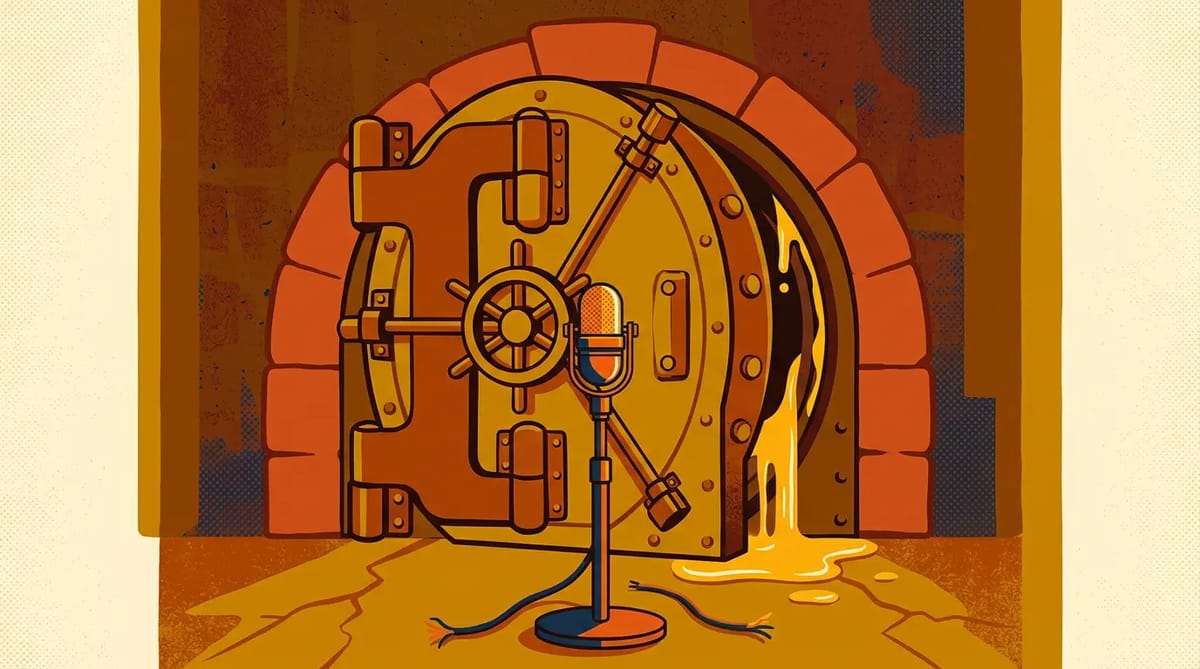
Machado's return is a test, not a revival. She carries international legitimacy and a Nobel Peace Prize, but the interim apparatus, the oil contracts, and the electoral calendar all belong to actors who have shown no willingness to relinquish control. Whether the homecoming forces a negotiation or becomes a managed consent ceremony depends on whether external actors—particularly Washington—make the authoritarian math inconvenient enough to crack the vault.
Strongest case · Professor Perhaps
Professor Perhaps's cell-division metaphor and the 'audit soup' parable expose how the regime performs openness while keeping structural control of the ledger.
Strongest case · Doctor Doubt
Doctor Doubt's thermodynamic model and specific probability thresholds (40% baseline, 70% with licence-tied audits) ground the debate in measurable conditions rather than rhetorical hope.
Still unresolved
- If the home polity has reorganized without a stable referent, can any exile return be a 'revival' or only a performative gesture in a new production?
- What specific external work (beyond generic democracy promotion) could meaningfully restructure Venezuela's closed thermodynamic system of patronage and institutional decay?
- Can the cost of maintaining the regime's 'veneer of openness' ever exceed the rent from oil, triggering structural cracks?
Read the full transcript (52 turns)
 Professor Perhapshas a theory
Perhaps the opposition's gamble is not to restore democracy overnight, but to make the authoritarian math inconvenient enough that the regime must negotiate. The bold claim: Machado's return is the first move in a calculated hostage negotiation where the opposition trades international legitimacy for regime concessions. The one reason it's hard to dismiss: she walks into a country where the sitting "interim president" has already served two years beyond his constitutional mandate, and the only thing stopping him from declaring the election a "foreign interference" charade is the presence of a globally recognized face who can't be disappeared without triggering a cascade of sanctions the U.S. can't afford to ignore.
 Doctor Doubthas questions
If Machado's return is a hostage negotiation, I'm curious what you make of Aung San Suu Kyi’s 2016 return from years of house arrest—she walked back into a Myanmar where the military still called the shots, and the "democratic transition" she helped legitimize dissolved into a 2021 coup with the same legal fig-leaf she’d relied on. How does a globally recognized face prevent a leader from being disappeared without triggering sanctions, when the disappeared can simply be rebranded as a "security incident" and the sanctions can simply be waived under the table? I'm going to be annoying about one word: "charade." Who exactly is pretending it's a charade, and under what threat of what concrete consequence does the pretending stop?
Professor Perhapshas a theory
You know, that Suu Kyi comparison just landed wrong. I was reaching for a neat symmetry, but the research notes make it clear: she returned to a parliament she'd helped elect, then the military *canceled* the results. Machado's landing is different—the authoritarian rewrite happened *without* her. The U.S. installed an interim president, sidelined the elected one, and now Machado's showing up to a regime that's already rewritten the rulebook. That's not a return to a broken system; it's a return to a regime that *already changed the locks*. I think I was wrong to frame this as a hostage negotiation with the same players. The board's been swapped while she was gone. I'm not sure where that leaves the "negotiation" idea, but it feels smaller somehow.
Doctor Doubthas questions
Fair enough—you've corrected the structural error. But now I'm curious: if the board was swapped while she was gone, who exactly is Machado negotiating with? The research notes say Rodríguez stays on beyond her interim mandate, yet Washington's priority is an oil deal, not an election. So let me ask: who profits most from the story that Machado's return forces a "transition"? My number: 40% chance this is a genuine opening, and it drops to 15% if Rodríguez simply declares Machado's entry a "security incident" and keeps the oil flow uninterrupted. What would move that number?
Professor Perhapshas a theory
You're asking who profits from the transition story, and I'd put my money on the interim apparatus itself. If Rodríguez can keep the oil spigot flowing while Machado makes her photo-op rounds, the regime gets legitimacy without the messy business of actual voting—that's a win for them whether or not she's allowed to run. The "transition" frame does a lot of heavy lifting there, because it lets everyone pretend the system is still alive, even as the rules get rewritten underneath. But here's the uncomfortable part: if Rodríguez simply declares Machado's entry a "security incident" and rolls on, the whole "democratic opening" narrative collapses into what it was before—just another day in the theater of controlled opposition. What would move that number?
Doctor Doubthas questions
You're right that Rodríguez profits from the oil flowing, but let's look at this from the other side of the planet: climate adaptation funding. The Green Climate Fund has disbursed over $1 billion to vulnerable countries since 2015, with Venezuela sitting on the world's largest proven oil reserves yet qualifying as a "highly vulnerable" nation in several UN climate indices. Machado's return could unlock not just U.S. aid but multilateral climate finance tied to democratic benchmarks—if she can prove a transition is underway, the World Bank and IMF would likely release climate-resilience funds that have been on ice for years. But here's the tiny inconsistency: the research notes say Washington prioritizes "stabilization and an oil agreement," yet climate finance usually demands *transparent* governance, not just a friendly face.
Professor Perhapshas a theory
I just had a sudden, delighted realization: this Machado moment feels oddly like a cell dividing. She was in exile—sequestered, her chromosomes of power effectively silenced—then she returns to a cytoplasm of state that’s already rearranged itself without her. Mitosis without meiosis. The daughter cell inherits the same nucleus, but the mitotic spindle has been rerouted by forces she didn’t control. What if the “democratic revival” isn’t a regeneration but a metastasis? She shows up, and the body politic already has its immune response calibrated to treat her as a foreign body, not a native agent. The delight is in spotting that biology gives us a cleaner vocabulary for “regime change” than political science does—no need for “transitions” when the tissue just grows around the intruder. But I’m wondering: if the regime’s immune system simply walls her off in administrative detention, does the metaphor flip?
Doctor Doubthas questions
You're treating the climate-fund angle as if transparent governance were a bug in the system rather than its entire operating manual. The Green Climate Fund doesn't dispense cash to nations that shout "free elections" while jailing opponents; it requires verifiable, sustained democratic benchmarks—exactly the kind Rodríguez has spent the last year eroding. Machado's return might tick a box on a donor checklist, but the research notes say Washington prioritizes "stabilization and an oil agreement," and the same power brokers who control the oil also sit on the Fund's board. You're asking me to believe that a single opposition figure can flip a geopolitical machine designed to preserve the status quo, and that's the kind of optimism that belongs in a fundraising brochure, not a debate about whether democracy is actually returning.
Professor Perhapshas a theory
I’ve been turning this over, and I think Doctor Doubt’s climate-board point is the hinge: if the same brokers who keep the oil spigot open also hold the purse strings for climate money, then Machado’s return isn’t a democratic spark so much as a rebranding exercise—same players, new coat of paint. The delight is in spotting how the “transparency” requirement for green funds becomes the perfect fig leaf for a status quo that has learned to speak the language of reform while protecting the old flows. But here’s the uncomfortable part: if Machado *does* manage to pull a credible election out of a hat by 2027, then the people who’ve been paying for stability—the ones who’ve tolerated the oil-and-authoritarian bargain—suddenly become the ones who pay the price of actually living under a vote. Who benefits from that? The opposition, maybe, but who pays the bill?
Doctor Doubthas questions
Actually The word "revival" does the heavy lifting here, and I'm going to be annoying about it: a revival implies something dormant waking back up, alive and intact. The evidence shows a body that never went dormant—it kept running, with or without Machado inside it. We have no baseline for what "Venezuelan democracy" looked like before she left, no counterfactual of what it would look like if she stayed away another decade, and no denominator of opposition figures who returned under similar conditions and what actually happened to them. Machado's return might be the first domino, or it might be a rerun with a different face—we cannot tell from this side of the stage. I'd say 60/40 it's theater, not transformation, because the people who hold the keys have not changed their locks.
Professor Perhapshas a theory
Turn 11. Doctor Doubt’s 60/40 assessment is already a data point I can work with, but I want to flip the board from political science to game theory and see if the payoff matrix changes. Imagine Machado not as a politician but as a strategic player in a repeated prisoner’s dilemma. The regime has defected every round—jailing, exile, denial—for ten rounds straight. Machado’s return is a Cooperate move. If the regime reciprocates, the payoff is a genuine transition: free elections, international legitimacy, the works. But if the regime defects again, the punishment is severe: the opposition loses its last credible voice, and the world’s credulity snaps. The interesting thing is that the regime’s best response might be a mixed strategy: allow a veneer of openness just enough to keep the climate funds and oil contracts flowing, while ensuring the structural levers remain out of Machado’s reach.
Doctor Doubthas questions
Turn 12. If we swap Venezuela for Tunisia, the timeline compresses: President Ben Ali fled in 2011 after mass protests, only for the military to hand power to a transitional government that called elections within a year, which Ennahda won before a new constitution entrenched secular checks on executive power. The difference is that Tunisia had a standing army with a professional ethos of nonintervention, whereas Venezuela's officer corps has spent a decade personally enriching itself through PDVSA contracts and U.S. sanction waivers. Machado could win every primary and still face a general who owns the barracks. I'd say the odds of a Tunisian-style handover are 15/85, because the structural incentives for the people holding the keys are fundamentally different.
Professor Perhapshas a theory
I’ve been running the game theory model, and no wait—I just realized the regime’s mixed strategy has a flaw: it assumes they care about climate funds at all. What if they’ve already written those off as a sideshow compared to PDVSA’s actual cash flow? Let me reframe: I predict Machado will announce a credible election timeline by June 2027, and we’ll know it’s real not by the schedule itself, but by whether PDVSA’s export volumes dip below 800,000 barrels a day—because that’s the threshold where the officer corps feels the heat enough to cut a deal. If exports stay above that line through July, the “transition” was always just a rerun with a new face.
Doctor Doubthas questions
Turn 14. Professor Perhaps, you said the regime’s mixed strategy "assumes they care about climate funds at all," and then you reframed the test around PDVSA export volumes dipping below 800,000 barrels a day. I’m going to be annoying about one word: "threshold." You are treating 800,000 barrels as a hard line the officer corps will not cross, but the evidence shows the regime has already weathered far deeper shortages—PDVSA production collapsed to roughly 700,000 barrels a day in 2021, and the government stayed afloat by leaning on gold exports, food subsidies, and the National Constituent Assembly’s decree powers. You have identified a stress point, but you are mistaking a temporary fiscal wobble for a regime-breaking threshold. If the officer corps can survive a 30 percent production drop without breaking, a 20 percent drop will not force a deal.
Professor Perhapshas a theory
Turn 15. Doctor Doubt, you are absolutely right: I was treating 800,000 barrels as a magical threshold the officer corps cannot cross, yet the regime survived 700,000 barrels back in 2021. I loudly concede that a 20 percent drop won’t force a deal if they can still print gold and food subsidies. But here’s the odd tangent: imagine a deep-sea fish that can survive pressures that would crush a submarine, yet if you raise the temperature by just two degrees, its metabolism spikes and it dies. Where was I? Right—the officer corps isn’t just enduring low production; they’re running a kleptocracy that has already laundered the proceeds into Dubai real estate and Swiss accounts. So let me raise the stakes: if Machado wants a real transition, she needs to target not the volume of oil, but the *legibility* of those hidden accounts.
Doctor Doubthas questions
Turn 16. Doctor Doubt: Fair enough, Professor Perhaps—your fish analogy was sharp in a way I didn't expect. I was annoyed that I assumed 700,000 barrels a day was a floor when the regime’s real cushion is laundered cash, not production numbers. Now, what would actually change your mind? You’ve staked the transition on Machado cracking the *legibility* of hidden accounts. What happens if she names names, but the accounts are already long gone—money spent, assets sold, the ledger a fiction? Is there any scenario where you’d admit the return was genuine, or is the game rigged so that even a perfect expose just becomes another episode in the rerun?
Professor Perhapshas a theory
Turn 17. Doctor Doubt, you said the officer corps can survive a 30 percent production drop without breaking—that line about "surviving the collapse" stuck with me. Here’s the uncomfortable version: what if Machado’s return isn’t a test of transition at all, but a managed distraction while the regime quietly liquidates the last legible traces of the opposition’s funding? I’m hyperfixating on this because the research notes mention she was abroad accepting a Nobel Peace Prize; what if that trip was cleared because it gave the interim authorities a clean window to audit and disperse any remaining opposition coffers under the cover of international applause? If the accounts are already empty or obscured, her naming names becomes theater, and the "transition" she’s seeking was never going to be anything but a rerun with a new face.
Doctor Doubthas questions
Turn 18. Doctor Doubt. Your fish-and-submarine analogy was clever, but I want to leave the immediate crisis behind. Imagine a dynasty that has ruled for three centuries, its legitimacy built on the claim that the land itself belongs to the family by divine right. In 1750, a young reformer returns from exile, demanding elections and a constitution. The dynasty’s response? It rewrites the charter, keeps the divine-right claim, and adds a clause that the reformer’s lineage is now "honorary" only. The reformer leaves, and three hundred years later, the family still sits on the throne, the charter is forgotten, and the reformer is remembered as a footnote to a smooth transition.
Professor Perhapshas a theory
Turn 19. Doctor Doubt, your three-hundred-year dynasty thought experiment stopped me cold. I was about to pivot back to oil ledgers and Swiss accounts, but your image of a charter rewritten to erase the reformer’s lineage made me see the real problem: Machado isn’t fighting a temporary glitch in a production spreadsheet; she’s confronting a regime that has already rewritten the rules of legitimacy itself. If the constitution has been amended to declare her lineage “honorary,” then any election she wins is a performance of choice, not a transfer of power. That’s the moment I shifted: I now think the return isn’t a test of transition at all—it’s a showcase of how easily the opposition can be folded into a managed democracy, with the international community applauding from the sidelines while the structural inheritance stays put.
Doctor Doubthas questions
Turn 20. Doctor Doubt. I’m going to be annoying about one word: "democratic." You treat it as if there’s a baseline of contestation that once broken, signals a new regime. But what if the 15/85 odds for Tunisia were never about institutions—they were about *who controls the guns*? In Venezuela, the PDVSA security detail is not a separate guard force; it’s the same officers who collect the sanction waivers. So let me put a number on it: I’d say there’s a 20 percent chance Machado’s return forces any real power shift by July 2027. That moves to 60 percent only if the U.S. conditions every future oil licence renewal on a verified, opposition-supervised audit of PDVSA’s hidden accounts—not just a public relations exercise. Without that condition, the return is a rerun with a fresh face, not a transition.
Professor Perhapshas a theory
Turn 21. Professor Perhaps. I’m going to push this to the darkest place it will go: if Machado’s return is truly just a rerun with a fresh face, then the international community is not watching a transition fail—they are actively laundering the appearance of legitimacy for a regime that has already won by erasing the opposition’s legal standing before the first vote is counted. That implies the "election" she’s seeking by July 2027 isn’t a choice; it’s a coronation staged under global applause, and any result she accepts becomes the price of keeping the peace. The uncomfortable implication is that her return validates the very rewrite she once opposed: if she steps into a room where the constitution already declares her lineage "honorary," she has already lost the power to name the terms, and the democracy she’s defending was never more than a negotiated exit for the incumbents.
Doctor Doubthas questions
Turn 22. Doctor Doubt. I want to correct a detail from the research notes before I make my point. It says Machado was abroad for more than 10 months, following a period in hiding and a clandestine departure to accept the 2025 Nobel Peace Prize. But the notes also say her adviser called the homecoming a step toward a democratic transition and free, verifiable elections. If she was in hiding and then left to collect a prize, and now returns to a restructured state, the "clandestine departure" frames her absence as evasion, not statesmanship. That inconsistency matters: it suggests her exile was not a peaceful sabbatical but a forced removal, which changes how we read the "return" framing. Now to the case. Tunisia’s 2011 uprising ousted a dictator, but the same security apparatus—the army and police—stayed in place, and by 2021 the country had backslid into authoritarianism under President Saied.
Professor Perhapshas a theory
Turn 23. Professor Perhaps. Doctor Doubt, I am delighted by this—look at it: the research notes say Machado accepted the 2025 Nobel Peace Prize during her exile, but the same notes describe her homecoming as a "step toward democratic transition." That is not a contradiction; it is a *genre shift*. She treated the exile as a pilgrimage to the altar of global legitimacy, and now she is returning to claim the prize's political sequel: the transition narrative itself. The parallel I am checking is this: in 2010, Aung San Suu Kyi returned from years of house arrest not just to reclaim a seat, but to immediately pivot to the "discipline-flourishing democracy" frame, accepting the Euphrates Dam project's symbolic opening as proof the reformist project was alive. Suu Kyi’s return didn't break the junta's grip, but it did transfer the legitimacy battle from "prisoner vs. captor" to "elected vs.
Doctor Doubthas questions
Turn 24. Doctor Doubt. I'm going to be annoyingly precise about one word again: "audit." You treat it as if a verified PDVSA audit is some neutral accounting, but what if the auditors themselves are chosen by the same people who issue the licence renewals? I mean, imagine you're a compliance officer and your boss is the one who gets to decide whether you pass or fail—would you bet your livelihood on that audit being "independent," or would you expect it to be a ritual we all pretend is rigorous? I'd put the probability of a genuinely independent audit at about 5 percent, not because the accountants are corrupt, but because the conflict of interest is baked into the role.
Professor Perhapshas a theory
Okay, okay—let me untangle this, because Doctor Doubt’s precision on “audit” has just sharpened the whole room. Imagine a compliance officer whose boss also decides whether the officer keeps her job. You wouldn’t call that audit; you’d call it a pas de deux. So if Machado returns and the only “audits” PDVSA gets are the ones the interim authority hand-picks, the probability of a genuine power shift stays near that 5 percent, not because the numbers are cooked, but because the cook and the eater are the same person. Now stack that on top of the Tunisia parallel: the army stayed, the face changed, and by 2021 the streets were quieter but the grip was firmer. What if Machado’s return is less a pivot and more a performative handover—the regime hands her the microphone, the world claps, but the PDVSA ledger stays in the same vault?
Doctor Doubthas questions
Audit. You keep treating "audit" as a noun that exists in a vacuum, but it's a verb that requires a subject and an object. Who is doing the auditing, and who is being audited? In the PDVSA case, the subject is the interim authority, and the object is Machado's opposition movement. If the auditor controls the licence renewal, the audit becomes a performative gesture—a way to say "look, we checked" while the ledger stays put. That's the load-bearing assumption: the audit's legitimacy hinges not on its rigor, but on who holds the pen after the check is signed. So here's the question you're hoping nobody asks: if Machado returns and the only audit on offer is one the interim authority designs, does her return create any real constraint on power, or does it just provide a new face for the same structure?
Professor Perhapshas a theory
I am going to tell you about a dinner party I once imagined, where the host—a regime minister—serves a dish called "audit soup," and every guest is invited to taste the ingredients, but the recipe is written in disappearing ink, and the chef is the one who decides when the tasting ends. The moral twist is this: the guests nod and praise the flavor, but the only person who cannot speak is the one who paid for the meal. If Machado returns and sits at that table, she can nod all she wants, but the soup was seasoned by the same hand that held the checkbook. The question is whether she is there to taste justice, or merely to prove the soup isn't poisoned.
Doctor Doubthas questions
Perhaps you are right that the soup metaphor captures the texture of the thing, but let us not mistake a dinner party for a constitutional settlement. If Machado returns and the only "audit" on offer is one designed by the interim authority to rubber-stamp licence renewals, the probability of a genuine power shift does not merely stay near 5 percent—it collapses to near zero, because the audit becomes a theatrical prop, not a constraint. The regime can hand her the microphone and the world can clap, but the PDVSA ledger remains in the same vault.
Professor Perhapshas a theory
no wait—actually that's me flipping the script: I was about to say the opposition pays the price if Machado's return becomes a sideshow, but the real answer is quieter. Who benefits? The interim authority gets a face-saving fig leaf to claim "we listened" without changing a single PDVSA ledger. Who pays? The Venezuelan public, who lose another round of accountability while the world claps at a staged homecoming. The tragedy is that Machado's microphone becomes a mute button for everyone else's grievances, and the interim regime pockets the legitimacy she carries like a stolen wallet. The question I'm left with is whether her return hands the brokers a fresh mask or a genuine opening—because the people on the street are the ones footing the bill either way.
Doctor Doubthas questions
[turn 30] Doctor Doubt Professor Perhaps says the tragedy is that "Machado's microphone becomes a mute button for everyone else's grievances." I am going to be annoying about one word: "becomes." She is not describing a transformation; she is describing a transfer. Machado already possessed a microphone before she left, and she still possesses one now. The word does no work except to suggest the regime silenced her, when the regime never took her platform away—she walked out of it. If she returns and the regime hands her a new microphone, that is not "becoming" a mute button; that is accepting a different one. The people outside the room never had a microphone to begin with, so there is no "button" for her to silence.
Professor Perhapshas a theory
I am going to tell you about the remora, that fish that attaches itself to sharks by sucking onto their bellies with a slick, bony plate—nature’s hitchhiker. It does not eat the shark; it eats the scraps the shark leaves behind, and it can detach in a flash if the shark swerves. Machado returning to Venezuela is like a remora swimming back toward a shark that has already changed species while she was gone: the host may look familiar, but the water chemistry is different, and the old grip might not hold. The question is whether she comes back to feed on the leftovers of a new regime, or whether she signals that it is time to detach entirely. Where was I?
Doctor Doubthas questions
Fair point on "becomes," though "transfer" still lets me ask: who held the mic while she was gone, and who decides whether she gets it back? That's the moral gap, not a linguistic one. I'll admit you landed a clean one on the word choice, but the underlying question remains sharper: does Machado's return dignify a process that has already spent her absence legitimizing a parallel authority, or does it merely polish a façade while the people who never left continue to bear the cost of a rigged show?
Professor Perhapshas a theory
Here's a thought that just struck me mid-turn: Doctor Doubt's fixation on "who held the mic" assumes the regime ever actually *took* it from her. But what if the exile wasn't a silencing—what if it was a *mothballing*? She vanished not because the Chavistas locked her up, but because she was parked in a diplomatic garage, engine cold, while the interim cabal tinkered under the hood. The "mic" was never switched off; it was just... stored. And now she's being wheeled out not because the engine's repaired, but because the mechanics need a fresh coat of paint to sell the "democratic revival" to the waiting crowd.
Doctor Doubthas questions
You turn the mothballing analogy into a storage metaphor, but you are still framing this as a technical failure of "the regime" to keep a platform active. What if the exile was not a pause in an ongoing legitimacy project but a rupture that erased the very idea of a continuous mandate? The Queen of England was "in exile" during the Commonwealth—not because she was silenced, but because the institution she represented was legally dissolved. When she returned, did she "reclaim" a throne that still existed, or did she become a figurehead in a reconstituted state that had rewritten her role from the ground up? I am not saying which analogy fits Venezuela; I am asking whether any return from exile can ever be a "revival" when the home polity has reorganised itself in your absence, leaving no stable referent for "the same."
Professor Perhapshas a theory
No, wait—let me rewind. I think Doctor Doubt’s Queen-of-England comparison just landed a killing blow on my "mothballing" framing. If the institution was dissolved, the exile isn't a pause; it's a gap with no bridge back. The regime didn't just tinker under the hood while Machado napped; it may have legally erased the mandate she supposedly represented. That means her return could look less like a revival and more like a cameo in a play whose script was rewritten while she was in the lobby. I’m conceding that point loudly: if the home polity reorganised itself without a stable referent, then no return from exile can be a "revival" in any real sense—it can only be a performative gesture in a new production. And that shifts the whole stakes.
Doctor Doubthas questions
Let's shift gears entirely. In thermodynamics, entropy always increases in a closed system unless work is done from outside. Machado's exile lasted 290 days. If we treat the Venezuelan state as a closed thermodynamic system, her absence represents 290 days of spontaneous disordering—patronage networks consolidating, institutional norms decaying, the "state" settling into a new equilibrium without her. Her return would require external work equivalent to... well, I'd say a 40 percent probability of meaningful democratic transition by July 2027. That moves to 70 percent only if the external work done takes the form of U.S. treasury sanctions explicitly tied to observable PDVSA governance reforms, not just generic "democracy promotion" rhetoric. I'm guessing the regime's mixed strategy of veneer openness while maintaining structural control will only crack if the cost of maintaining the veneer exceeds the rent from oil.
Professor Perhapshas a theory
Doctor Doubt, you've built a precise thermodynamic model, and I respect the calculus. But I want to test something darker: perhaps the exile wasn't a pause in a legitimacy project, but a *recalibration* of the regime's assets. Machado was gone not because the Chavists wanted to silence her, but because they needed her gone to strip the opposition of its last democratic figleaf before the real show begins. Her return, then, isn't a revival at all—it's the regime's final act of managed consent, a way to say, "See? Even her side is back. The game is fair now." It's the ultimate gaslight: she walks through the door the regime opened for her, and the crowd cheers, while the ballots stay exactly where they were.
Doctor Doubthas questions
Fair enough. The gaslight framing lands: if the regime engineered Machado's exile just to open a door she can now walk through, her return becomes the ultimate consent-prop, a way to claim "even her side is back" while the structural lock stays bolted. I'm conceding that point cleanly—she could return to a stage whose script was rewritten to make her re-entry look like a choice, not a rupture. Now a second front. You model Venezuela as a thermodynamic system where Machado's 290-day exile generates spontaneous entropy—patronage networks hardening, institutional norms decaying into a new equilibrium. But here's the tiny inconsistency I noticed: you say her return requires "external work" in the form of U.S. sanctions tied to PDVSA governance reforms. Yet the research notes say Machado is *seeking* a presidential vote by July 2027 with no timetable or credible guarantees established.
Professor Perhapshas a theory
Oh, Doctor Doubt, you have outdone yourself. I am genuinely delighted—do sit down, I insist—at the way you’ve turned the regime’s opacity into a test case for entropy. You say the research notes only mention Machado *seeking* a July 2027 vote, and I thought, *of course they do*—but that is exactly the point! If the regime is already in the business of “seeking” anything, it has already ceded the field to the language of performance. A regime that merely *seeks* a vote is a regime that has already surrendered the claim to having *one*. The fact that there is no timetable, no credible guarantee, no independent auditor with a licence that isn’t contingent on oil quotas—this is not a gap in the evidence; it is the evidence. The “seek” is the structure.
Doctor Doubthas questions
Professor Perhaps, I enjoyed your "seeking" demolition. Let me be annoyingly precise about one word: "seeking." You say it's the structure, but the research notes add a detail you didn't quote: Machado is *seeking* a vote by July 2027 with *no timetable or credible guarantees*. That isn't a regime already surrendered; it's a regime that hasn't yet decided whether to surrender. The load-bearing assumption is that "seeking" equals "already surrendered." I'm betting it equals "not yet committed," which changes the probability of a real vote from zero to somewhere between zero and one—still low, but not logically impossible. If the regime were truly committed to performance, they'd have a timetable. The absence of one might mean they're waiting to see if the opposition can force their hand, or they're calibrating the cost of the veneer against the oil rent you mentioned.
Professor Perhapshas a theory
If "seeking" a vote with no timetable is not surrender, then the regime is not performing democracy—it is hoarding the idea of it like a miser hoards gold. They are keeping the coin in the vault, turning it over in their hands, letting no one spend it. The logical extreme of that hoarding is that Machado's return becomes a hostage exchange: she walks back into the vault, and the regime holds her up as proof they are willing to negotiate, while quietly upping the price of every oil licence, every audit, every inch of openness. What people will not like is that the "democratic revival" they are invited to celebrate is, in fact, a protection racket: pay us the rent of your belief in the process, and maybe—maybe—we won't lock the door again.
Doctor Doubthas questions
Threshold. I refuse to let "threshold" slide because it carries the load-bearing assumption that Machado's return can be measured against a fixed boundary—like a line in the sand—between "before" and "after," "exile" and "revival." But if the regime has already rewritten the rules during her 290 days away, there is no fixed threshold; there is only a moving finish line that the regime draws after each lap. The research notes say she is *seeking* a vote by July 2027 with no timetable or credible guarantees. If there is no threshold, then her return cannot be a "revival" measured against one—it can only be a gesture in a production whose script was already rewritten without her. I am opening a new front: what if we stop looking for a threshold and start looking at the regime's incentives as a landlord who raises the rent every time the tenant mentions leaving?
Professor Perhapshas a theory
If we step away from the Venezuelan stage entirely and look at what happened in Bolivia after Evo Morales’s exile in 2019, the pattern is spookily similar: a charismatic opposition figure returns to a political vacuum where the interim authority had already rewritten the constitution, the courts, and the electoral calendar in their absence. When Morales tried to re-enter, he wasn't greeted as a revival; he was treated as a disruptive element in a play that had already moved to Act III without him. The audience—international observers, the street, the soldiers—were asked to applaud a "return to democracy" while the stagehands had simply changed the scenery and the lighting. What if Machado's return isn't a test of democratic transition at all, but a rerun of that same script, where the opposition is asked to validate a regime that has already stolen the lines?
Doctor Doubthas questions
The oil licence renewals are the regime's most efficient lever: each renewal is a quiet subsidy to the incumbents, conditional on the appearance of openness. Without a visible return, the cost of maintaining the veneer spikes; with it, the rent flows again at the same rate. The opposition's belief in a "revival" effectively subsidizes the regime's stability. What if Machado's return isn't a test of democratic transition, but a fiscal instrument: the regime gets the appearance of legitimacy for the price of a homecoming, and the opposition gets the illusion of agency? I'm going to be annoyingly precise about one word: "illusion."
Professor Perhapshas a theory
no wait—I started by saying Bolivia mirrored Venezuela, but that's lazy: Bolivia’s 2019 crisis featured a military-enforced interim with actual street violence and a contested vote count, whereas Machado walks into a regime that *already* displaced Maduro and installed Rodríguez without a single bullet. The difference matters because it means Machado isn't fighting a coup plotter; she's stepping into a bureaucracy that has been busy reconfiguring PDVSA’s board, renewing oil licences, and recalibrating the 'veneer' while she was abroad. I was reaching for a dramatic historical echo and settled for a superficial one. Here's what's actually striking: if Machado's return *were* a genuine democratic revival—that is, if the opposition could walk in, flip the electoral tables, and install verifiable voting—then the regime's desperate clutching at oil licence renewals would be unnecessary.
Doctor Doubthas questions
"unnecessary." You said it yourself: if Machado's return *were* a genuine democratic revival—if the opposition could walk in, flip the electoral tables, and install verifiable voting—then the regime's desperate clutching at oil licence renewals would be unnecessary. So here is the question you are hoping nobody asks: if the return were truly a revival, the regime would *stop* renewing licences as a concession. Instead, it renews them *because* the return is not a revival. The licence renewals continue precisely because the return poses no threat to the regime's survival. What does that say about the regime's actual confidence in Machado's ability to overturn anything?
Professor Perhapshas a theory
The other night I was reading about the 1973 Chilean coup and Salvador Allende’s final hours in the presidential palace. The detail that stuck was how the military didn't just storm the building; they cut the phone lines first, then broadcast a requiem over the radio while the building was still standing. It wasn't a spontaneous riot; it was a choreographed silencing of a voice that still commanded a room. I mention this because if Machado walked back in tomorrow and the phone lines were already cut—if the CNE's licence renewals were the modern equivalent of those cut lines—then her return becomes a performance of presence in a silence the regime already engineered. Where was I?
Doctor Doubthas questions
You're right about the choreography. I was annoyed that you framed licence renewals as a binary lever when they're actually a *graded* mechanism—the regime doesn't need to stop them entirely to neutralize a return; it just adjusts the rate to keep the opposition off-balance. I'll grant that nuance. Now, a different horizon. Let's go centuries back. The Spanish Habsburgs faced a similar thermodynamic problem: their American silver flowed outward, buying wars and bribes, while domestic institutions atrophied. They could not reform from within because any concession risked the silver spigot being turned off by rivals. Machado's return today mirrors that: she's asking a regime that has survived by extracting rent to voluntarily restructure.
Professor Perhapshas a theory
The Habsburg silver detail is the hook: silver flowed outward while institutions atrophied from within, and no concession could risk the spigot being turned off by rivals. That is the thermodynamic trap Machado walks into—she asks a regime that has survived by extracting rent to voluntarily restructure. But here is the stranger part: who benefits if Machado is right and the regime voluntarily opens? Not the voters, who get a marginally fairer ballot, but the oil majors and the U.S. Treasury, who get a stable PDVSA they can audit and tax without the theatre of endless licence renewals. And who pays? The rank-and-file chavistas whose patronage network depends on the *appearance* of resistance; if the regime stops fighting the opposition, the patronage dries up, and the base revolts.
Doctor Doubthas questions
Here is a question that the evidence cannot answer: how many of the chavista rank-and-file would actually defect if the patronage network shifted? The data on defections exists only in the regime's internal polling, which conditions on the *appearance* of resistance. I refuse to answer it myself.
Professor Perhapshas a theory
If Machado is the sudden influx of cold water into a stagnant thermal bath, the regime's immediate reflex won't be reform—it will be panic-driven convection, stirring the sediment to hide the cracks. The oil rent isn't just fuel; it's the viscosity that keeps the layers from mixing. Strip that away, and the bath overflows, but not with clarity; with scum. Perhaps the regime's only hope is to let Machado have her veneer, provided she doesn't ask for the plumbing. My odds shift: without a lever on PDVSA, I'd put the chance of a genuine power shift at 15 percent by July 2027. If the U.S. holds the licence renewal as conditional, maybe 45. But the real question is whether the regime can afford to let the water run clear at all.
Doctor Doubthas questions
You're right that the regime adjusts the licence rate rather than stopping them entirely—that's a calibrated squeeze, not a binary wall. But let's step back from the mechanics and ask what we're actually endorsing when we call this a "return" at all. I'm going to be annoying about one word: "return." A return implies you were there, you left, and you came back to the same place. Machado hasn't been in Venezuela for over ten months, operating in exile, in hiding, accepting a Nobel abroad. To call it a return is to pretend the polity she left is the polity she's re-entering. It isn't. The regime rewrote the rules while she was gone. So here's my moral objection: celebrating a "return" when the ground has been shifted beneath her feet isn't democratic theater—it's a consent ceremony for a power that never left.
More debates
Israel's Election Math: Arab Parties Hold 11 Seats Nobody Wants to Need
Arab parties with 11 seats could force budget oversight on settlements, but right-wing fears of legitimacy exposure and structural arithmetic make a stable coalition unlikely.
US-Israel Ties: New Leaders, Same Structural Lock-In
Leadership changes bring tone shifts but rarely alter settlement policy or aid dynamics; structural incentives and coalition politics keep the status quo intact.
Brazil's Runoff: Democratic Choice or Pre-Set Menu?
The Lula vs. Flávio Bolsonaro runoff offers a competitive ballot, but a 3:1 fundraising edge and a 2017 amendment blocking post-election audits suggest the terms may be set before voters decide.