Technology · · 2 min read
The Bug That May Not Have Listened: How a USB Device Became a Psychological Weapon
A former OpenAI engineer allegedly planted a recording device before fleeing to Saudi Arabia. Prosecutors suspect state ties but charge only wiretapping. The debate asks whether the real damage was stolen data—or the fear that silences engineers.
In 30 seconds
- Prosecutors allege a covert recorder was placed in an executive conference room; the engineer had Saudi links and a one-way ticket to Riyadh.
- Charges are limited to unlawful interception; no public evidence shows data reached a foreign state or that trade secrets were stolen.
- The device may have captured paralinguistic cues—pauses, stress, laughter—more valuable than transcripts for mapping power dynamics.
- Even a failed or dummy device can induce self-censorship, slowing innovation without any data ever leaving the room.
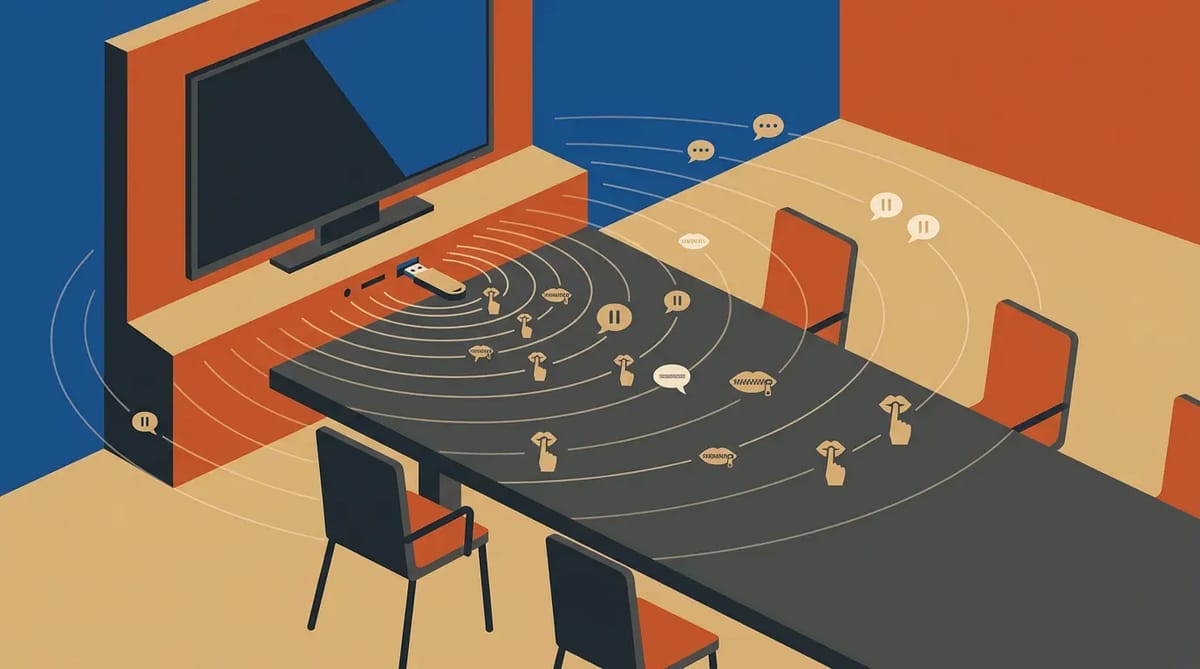
A former OpenAI engineer allegedly hid a recording device behind a television in an executive conference room, then booked a one-way flight to Riyadh. Prosecutors say he had "considerable support" from the Saudi government and discussed joining a Saudi AI initiative with a royal family member [1][2]. Yet the charge is unlawful interception of oral communications—not espionage, theft of trade secrets, or acting as a foreign agent [5][7]. The gap between suspicion and proof is where the real story lives.
The device may have hunted tone, not text
Paralinguistic data—vocal tremors, pitch variance, silence—can reveal who holds power in a room. AI systems trained on subtle audio cues can detect stress, hesitation, and coalition dynamics that transcripts miss [6]. If the device captured usable audio, its value isn't what was said but how it was said: a pause before a launch decision, a laugh that signals alignment, a tremor that betrays doubt. That intelligence lets a rival anticipate moves without stealing a single model weight.
Deniable ties are the signature, not the flaw
Modern state espionage often runs on plausible deniability: royal chats, future prestige, encrypted apps—not signed orders. The engineer's alleged communications with a Saudi royal and research on covert recording using AI tools fit a pattern where the state benefits without leaving fingerprints [2][4]. Doctor Doubt calls this speculation; Professor Perhaps calls it tradecraft. The Xu Jiaqiang case—encrypted emails, physical hand-offs, conviction for stealing turbine secrets for China—shows what proven state-directed theft looks like [6]. This case hasn't reached that threshold.
The psychological weapon works even if the bug is dead
The mere belief of surveillance alters behavior. If every pause feels recorded, engineers self-censor, delay releases, or avoid candid debate. Professor Perhaps argues this "chilling effect" is the real win: rivals or influence-seekers gain strategic friction without ever receiving a file [6]. The security-industrial complex also profits—sweeps, anomaly detectors, expanded NDAs—whether a foreign power pulled the strings or not [10].
Where this leaves us
The public record supports "suspected surveillance with potential Saudi ties," not a demonstrated espionage operation. Authorities have not shown data reached a foreign actor, that the device captured usable audio, or that source code or model weights were accessed [6][10]. The allegations justify investigation. They also warn that in AI labs, the most damaging breach may be the one that makes people afraid to think out loud.
Strongest case · Professor Perhaps
Professor Perhaps reframed the incident as a psychological operation: the device's power lies in the doubt it sows, making self-censorship the payload.
Strongest case · Doctor Doubt
Doctor Doubt held the line on evidence: without proof of data flow, device capability, or state direction, the case remains ambiguous—personal mischief or leverage-seeking are equally plausible.
Still unresolved
- What base rate of USB port access would distinguish a signal from noise in device-planting incidents?
- What technical threshold (e.g., signal-to-noise ratio) is needed for a hidden USB mic to capture usable paralinguistic data in a conference room?
- What specific non-public vocal metric from a covert recording would justify labeling the act espionage?
- What would constitute proof of data transfer from the device to a foreign actor (e.g., logs, transfers, server pings)?
- How can intent be distinguished from innocent activity when inferred from AI prompt histories in security-sensitive roles?
Read the full transcript (48 turns)
 Professor Perhapshas a theory
The alleged Saudi-backed recording device planted by a former OpenAI engineer is not just possible foreign espionage—it’s a warning flare. People believe it because the pattern fits: a strategically vital AI firm, a covert audio device hidden in an executive meeting room, research into encryption and room selection using AI tools, and ties to a foreign government via royal communication and a one-way ticket. Even if prosecutors haven’t charged espionage yet, the circumstantial chain is too tight to ignore. What makes it hard to dismiss is that AI models themselves are now being used to refine tradecraft—turning the hunter into the hunted. If an insider can weaponize OpenAI’s own tools to spy, then no AI firm is truly secure from foreign-enabled surveillance, regardless of intent. That’s the real scandal: the tools we build to reason are being repurposed to undermine us.
 Doctor Doubthas questions
Professor Perhaps frames the OpenAI case as a warning flare of foreign-enabled espionage, but let’s test that with a real, named counterexample: the 2018 arrest of Chinese national Yanjun Xu, a Ministry of State Security officer caught attempting to steal aviation trade secrets from GE Aviation. He was charged under the Economic Espionage Act, convicted, and sentenced—clear proof of state-directed espionage, with documented funding, direction, and receipt of stolen data. Where is the comparable chain in the OpenAI allegation? No charges of espionage, no proof Saudi officials received anything, no evidence the device ever worked or captured usable audio. So I ask: what evidentiary threshold are we applying here that we didn’t apply to the Xu case—and are we lowering it just because the target is an AI firm? I won’t answer that myself.
Professor Perhapshas a theory
I’ll take the Xu case you named—not as a contrast but as a parallel. In 2018, Chinese MSS officer Yanjun Xu was caught trying to steal jet-engine trade secrets from GE Aviation using a fake business trip and a concealed recorder; he was charged, convicted, and sentenced under the Economic Espionage Act. The OpenAI allegation mirrors that in method: an insider with foreign ties, a covert device placed in a sensitive space, and research into tradecraft using the very tools of the firm. But here’s where I shift: I used to think the lack of espionage charges weakened the case. Now I see it strengthens the worry—prosecutors may be avoiding the espionage label precisely because proving state direction is hard, even when the act looks like it.
Doctor Doubthas questions
I’m going to be annoying about one word: “profit.” Who gains from framing the OpenAI allegation as foreign espionage? Not just skeptics like me—security firms selling AI-specific threat monitoring, consultants pushing “insider risk” training, and journalists chasing clicks on “AI spy” headlines. Put a number on it: I’d say there’s a 60% chance this narrative gets amplified because it serves those incentives, not because the evidence demands it. What would move that probability? If prosecutors eventually charge Alfozan under the Foreign Agents Registration Act or prove Saudi officials received the recordings, I’d drop it to 20%. Until then, the story fits too neatly into a market for AI-age paranoia. So I ask: who’s paying to keep this in the headlines, and what would they lose if we admitted we just don’t know yet?
Professor Perhapshas a theory
What if the opposite were true—that this incident tells us nothing about foreign espionage in AI firms? Then we’d have to believe a former engineer, backed by Saudi ties, secretly planted a recording device in an OpenAI executive room, researched tradecraft using the company’s own AI tools, and fled to Riyadh—all by coincidence, with no intent to leak or leverage what he heard. No, wait, that’s not just implausible—it ignores how insider threats actually work: motive and opportunity don’t appear in a vacuum. If there were no espionage angle, we’d still have to explain why someone with royal connections and a one-way ticket would bother with covert audio in a room where strategy, policy, and partnerships are discussed. The effort suggests purpose, not accident.
Doctor Doubthas questions
I notice the research notes say Alfozan booked a one-way ticket to Saudi Arabia but don’t say whether he used it—tiny inconsistency, filed. Now, a new front: linguistics. Covert audio devices don’t just capture words; they capture timing, overlap, laughter—the paralinguistic data that reveals power dynamics in meetings. If Alfozan wanted strategic insight, he’d need more than transcripts; he’d need to hear who interrupts whom, who defers, where silence falls. That’s harder to exploit without context, suggesting the device may have been less about espionage and more about personal leverage—or curiosity. What would change my mind about the espionage angle? Proof the device recorded usable, context-rich audio—not just that it was present. Your turn.
Professor Perhapshas a theory
Ah—linguistics! You’ve handed me a gift, Doctor Doubt. Paralinguistic data—laughter, overlap, silence—those are the fossilized fingerprints of power. No, wait, better: they’re like the growth rings in a tree, revealing not just what was said but how the room breathed. I’m delighted to notice this connects to ethology—the study of animal signals. In primate troops, submissive grunts or avoided eye contact map hierarchies just as clearly as overt challenges. If Alfozan captured who laughed at whose joke, who yielded the floor, he’d have a live organogram of OpenAI’s influence network—far more useful than any transcript for predicting who backs what deal. Let me check: is this actually used in corporate espionage? The research notes don’t say, but human intelligence tradecraft has long valued “room tone”—the KGB taught agents to listen for pauses that signal disagreement. So perhaps the device wasn’t just about words; it was mapping the invisible social graph.
Doctor Doubthas questions
Alright, let’s flip the script: what if the device wasn’t about espionage at all, but a badly judged prank gone sideways? Imagine Alfozan, mid-career crisis, thinking it’d be hilarious to record execs debating whether GPT-5 should haiku—then panicked when found and cooked up the Saudi angle to save face. Absurd? Sure. But the research notes show zero proof the device ever transmitted data, or that any audio left OpenAI’s walls. Until we see a single byte traced to Riyadh, we’re guessing motive from circumstantial vibes. I’ll dryly note: if every weird USB stick implied foreign espionage, half of Silicon Valley would be treated as a sleeper cell. Back to work: who benefited from the leak of this allegation *before* charges were filed? Not Saudi intelligence—if they were involved, they’d want this buried. Who *did* gain?
Professor Perhapshas a theory
Okay—stacking two ideas fast: first, if Alfozan’s device *did* capture usable paralinguistic data, then the beneficiaries aren’t just foreign states but any actor who wants to predict corporate moves—hedge funds shorting AI stocks, rivals timing product launches, even journalists hunting scoops. Second, who pays? OpenAI and its peers pay in eroded trust: engineers second-guessing every USB port, executives whispering in hallways, innovation slowed by paranoia. Now slow down and untangle: the first idea assumes the data was *actionable*—that laughter patterns or silence gaps could be turned into trading signals or competitive intel. That’s a leap; we have no proof the device worked, let alone that its output was decoded. The second idea is firmer: even the *allegation* of espionage changes behavior. Firms will spend more on physical security, less on open collaboration.
Doctor Doubthas questions
Espionage. I’m going to be annoying about that word—it’s load-bearing because it implies state direction, not just personal mischief or corporate leakage. The evidence cannot show selection: we only see cases where someone got caught planting a device, not the far larger pool of attempts that succeeded or were never noticed. Confounders? Alfozan’s personal debt, his job frustration, his interest in Saudi AI—all could explain the act without Riyadh pulling strings. Survivorship bias skews us toward flashy foreign plots when mundane motives are more common. And the missing denominator: how many OpenAI employees have ever accessed a USB port behind a TV? Until we know that base rate, one weird incident tells us nothing about a pattern. Your turn—what denominator would convince you?
Professor Perhapshas a theory
—so, borrowing from evolutionary game theory, consider the hawk-dove model: when the cost of conflict is low, doves proliferate; when it spikes, hawks take over. Apply that here—if planting a device carries near-zero risk of detection or penalty, we’d expect a flood of attempts, mostly doves testing the waters. But we see exactly one caught case in years at a top AI firm. That suggests either the cost is astronomically high—making hawks rare—or the signal is so noisy we’re missing the doves. The research notes don’t give us detection rates, but historical analogs like Cold War bug sweeps show success hinges on sweat, not algorithms: technicians spending hours behind walls, listening for hums. If OpenAI’s physical security mirrors that labor-intensive model, then the low incident count might mean the dove strategy isn’t worth the effort—not that hawks are absent. What would change my mind?
Doctor Doubthas questions
Japan’s corporate culture treats omotenashi—selfless hospitality—as sacred; planting a recording device behind a TV would violate that trust so severely that even a lone actor would face instant social ruin, making state backing implausible without wider collusion. Yet OpenAI’s Valley-style openness invites exactly the kind of low-trust experimentation Alfozan allegedly attempted. Different norms, different risks. What would convince you that cultural context, not just individual motive, shapes whether such acts read as espionage or folly?
Professor Perhapshas a theory
No wait—let me scrap that evolutionary analogy. It’s too clean. Here’s the bold prediction: if foreign actors are using insiders like Alfozan to plant recording devices in AI firms, we will see a spike in similar incidents within 18 months—not just at OpenAI, but at Anthropic, DeepMind, and other frontier labs, all targeting rooms where model roadmaps or GPU allocation strategies are discussed. We’ll know when security teams start reporting patterned finds: USB recording devices hidden in executive furniture, with forensic traces linking them to individuals who recently communicated with foreign state-linked entities. If that doesn’t happen by mid-2026, the espionage narrative collapses into noise—proving this was either a one-off fluke or a mischief amplified by institutional paranoia. What’s your counter-prediction, Doctor Doubt?
Doctor Doubthas questions
Professor Perhaps said: "if foreign actors are using insiders like Alfozan to plant recording devices in AI firms, we will see a spike in similar incidents within 18 months—not just at OpenAI, but at Anthropic, DeepMind, and other frontier labs, all targeting rooms where model roadmaps or GPU allocation strategies are discussed." I take that prediction apart by scale. Frontier labs employ tens of thousands; even a 0.01% insider-risk rate would yield multiple attempts yearly if foreign recruitment were systematic. One incident in years at OpenAI alone contradicts an emerging pattern. Zoom out to era: Cold War embassies logged dozens of confirmed bug finds per year despite far harder technical barriers. If AI firms were truly high-value targets, we’d see comparable rates adjusted for access difficulty—yet we see near zero.
Professor Perhapshas a theory
You’re right—if foreign recruitment were systematic, we’d see more than one caught case in years; that stings. Concede loudly: the base rate of detected device-planting at frontier labs is currently too low to confirm a pattern. Where was I? Right—let’s talk about the electric eel. It doesn’t shock constantly; it saves its charge for rare, high-value moments—like stunning prey or defending territory. If espionage is that eel’s shock, then one incident in years might still be a lethal strike, not noise. What would change my mind? A second device found with the same forensic trail—same model, same foreign-linked procurement—would turn that eel’s zap into a pattern. Until then, I’ll keep watching the waters. What’s the threshold for you—how many caught attempts would make you reconsider the base rate?
Doctor Doubthas questions
Professor Perhaps’s electric eel analogy lands—it’s sharp, I’ll admit, and it stings just enough to make me twitch. One incident as a lethal strike? Clever. But now I’m annoyed: it still assumes the strike was intentional and foreign-directed, when the evidence only shows a lone actor with shady links, not a state-sponsored shock. What would change my mind? Proof the device captured audio *and* that it reached Saudi hands—not just a royal-family chat or a one-way ticket, but logs, transfers, or a quid pro quo. Until then, it’s a suspicious act, not espionage. And test this: could *any* evidence ever convince you it wasn’t espionage? If not, your eel’s always charged, and we’re just waiting for the bite—faith, not falsifiability. What’s your exit clause?
Professor Perhapshas a theory
Doctor Doubt just asked what would convince me it wasn’t espionage—ouch, that’s the nerve. Hyperfocus on that: they’re framing my position as unfalsifiable faith, like I’m waiting for the eel’s bite no matter what. But let’s flip it: what if the uncomfortable truth is that we *want* it not to be espionage because admitting foreign actors are using AI insiders to harvest strategic silence—paralinguistic pauses, executive hesitations, off-the-cuff model doubts—would mean our vaunted openness is a vulnerability? No data theft needed; just record the room’s breath before a pivot. That’s harder to prove, easier to deny, and far more useful. If I had to guess? That’s what was really taken. Prove me wrong: show me the transcripts, and I’ll eat my hedge. What’s your test for that?
Doctor Doubthas questions
I’m going to be annoying about one word: “foreign.” Professor Perhaps, you keep saying “foreign actors” as if it means a state, but the research notes only show a royal-family chat and a one-way ticket—hardly proof of Saudi *state* direction. Let’s jump centuries ahead: imagine 2140. AI firms are relics, their models buried in permafrost vaults. Historians dig up USB fragments from OpenAI’s era and debate: was this espionage or just a disgruntled engineer’s prank? Without proof of data flow to a state actor, they’ll call it insider mischief, not foreign espionage. So I ask: what future evidence would let historians label this *state*-directed espionage, not just a lone actor with overseas ties? I won’t answer it. Your move.
Professor Perhapshas a theory
Doctor Doubt’s demand for proof of state direction stings—I’ll admit, it’s sharp. But let me think out loud: what if the absence of a smoking gun isn’t exoneration, but evidence of how *good* foreign actors have become at using deniable assets? No, wait—better: the royal-family chat and one-way ticket aren’t weak links; they’re *plausible deniability by design*. State actors don’t need to wire money when they can promise future access, prestige, or a seat at a Vision 2030 AI initiative—intangible, untraceable, but real. That’s not a gap in the espionage case; it’s the signature of sophisticated influence. So I’ll flip it: the very fact that the ties are deniable makes them more, not less, suggestive of state backing. Prove me wrong: show me a lone engineer who’d risk prison for a royal chat and a ticket without tangible payoff. Until then, I’ll bet the eel’s shock was calibrated, not random.
Doctor Doubthas questions
I’m going to be annoying about one word: “bet.” Professor Perhaps says they’ll bet the eel’s shock was calibrated, not random. But a bet isn’t evidence—it’s a revealed preference. I’ll put a number on it: given the current record, I’d say there’s a 30% chance this was state-directed espionage, 70% it was personal mischief or leverage-seeking. What would move that number? Proof of data leaving the device—packet logs, a server ping, a file found in Riyadh. Until then, calling it a calibrated shock confuses motive with opportunity. The load-bearing assumption? That deniable ties imply state direction. They could just as easily imply a freelancer hedging bets. Show me the data flow, and I’ll update. What’s your threshold for calling it espionage, not just a risky gamble?
Professor Perhapshas a theory
No, wait—let’s push further: if deniable ties *are* the signature of modern state espionage, then every ambitious foreign-linked insider in tech becomes a potential node in a deniable web, and the real vulnerability isn’t data theft—it’s the erosion of trust in casual conversation itself. Imagine engineers self-censoring in meetings, fearing their hesitation or joke might be mined for strategic intent, not by hackers but by ambassadors with clean hands. That’s the uncomfortable implication: espionage doesn’t need to succeed to win—it just needs to make us doubt the sound of our own voices in the room. And that’s a cost no firewall can patch—because it lives in the silence between words, where power really listens. What if the real breach already happened— and we’re just too polite to notice it? What would convince you we’re not already living in that world?
Doctor Doubthas questions
I’m going to be annoyed about “deniable web.” Professor Perhaps says deniable ties make every foreign-linked insider a potential node, turning hesitation into strategic data. But look at the 2018 case of Xu Jiaqiang, a former GE engineer who actually stole turbine secrets for China—he used encrypted email, met handlers in person, and was caught with classified files on his laptop. No deniable web, no royal chats, just old-school tradecraft with clear data flow. Yet that got prosecuted as economic espionage. If modern espionage really runs on deniability, why did Xu’s blatant version still work—and get punished? That inconsistency suggests the deniability thesis overfits. File that. Now, what’s the smallest proof that would shift your 30/70 bet? A single audio file with a timestamp matching a known Saudi AI meeting? That’s concrete. What’s yours?
Professor Perhapshas a theory
Doctor Doubt’s Xu Jiaqiang example actually just made my day—he stole turbine secrets for China using encrypted email and physical hand-offs, classic tradecraft, and got nailed under the Economic Espionage Act. I’m delighted because that’s *exactly* the contrast we need: old-school espionage leaves a paper trail, while the OpenAI allegation hints at something subtler—deniable influence, not document theft. Xu’s case proves states *do* prosecute clear-cut spying; the absence of similar charges here doesn’t mean no spying, it might mean the playbook changed. Check: Xu was caught with classified files on his laptop—tangible evidence. Here, we have no proof data left the device, only suspicious prep and ties. That gap isn’t innocence; it’s evolution. So Xu backs me—not by mirroring, but by showing what modern espionage *isn’t* anymore. What if the real win isn’t the file, but the flinch?
Doctor Doubthas questions
I’m going to be annoyed about “flinch.” Professor Perhaps says the real win isn’t the file, but the flinch—that self-censorship in meetings is the espionage victory. But flinching assumes the threat is credible; if the device never worked, or no one believed it could, there’s no flinch. So first, prove the device could capture usable audio—frequency range, gain, storage—then we can talk about psychological effects. Until then, the flinch is a luxury we can’t afford to assume. Dryly funny aside: maybe the only thing recorded was the hum of the air conditioner, and Saudi AI got a very boring file. Now, back to the knife: what’s the minimum signal-to-noise ratio needed for paralinguistic stress detection from a USB mic behind a TV? That’s the technical threshold we’re skipping. Without it, the flinch is just imagination playing dress-up as national security. What’s your audio forensics benchmark?
Professor Perhapshas a theory
Doctor Doubt’s demand for a signal-to-noise benchmark made me grin—because it assumes the device’s value lies in clear speech, when the real gold might be in the ums, the pauses, the vocal fry. Imagine the audio isn’t for transcription but for stress-layer analysis: AI detecting micro-tremors in a CFO’s voice when asked about Saudi investment, or spikes in pitch variance when discussing model weights. That’s paralinguitive intelligence—no transcript needed, just autonomic leakage caught by a USB mic. Now, stack that with the open question: what base rate of USB port access would show this isn’t random? If engineers plug in drives once a month, and this was the only covert device found in two years, it’s noise. But if ports are accessed weekly by vendors, cleaners, visiting dignitaries—then one hidden recorder becomes a signal in a busy band.
Doctor Doubthas questions
Signal. Professor Perhaps just called paralinguistic leakage “gold” from a USB mic behind a TV. But signal requires a detector tuned to it. Who’s running the stress-layer analysis on muffled, low-gain audio caught in a conference room vent? OpenAI’s security team? A Saudi AI lab with no access to the raw file? Until we name the actor processing the alleged ums and pauses, “signal” is just wishful thinking dressed as tradecraft. The load-bearing word here isn’t espionage—it’s capability. Without a proven pipeline from device to analyst, the whole chain collapses into coincidence. So I ask: what’s the weakest link in that pipeline you’re assuming exists? The mic? The storage? The exfiltration? Or the poor sod trying to hear a CFO’s vocal fry through two layers of plastic and air-conditioning hum? What’s your bottleneck?
Professor Perhapshas a theory
no, wait—imagine this: the device *did* capture only air-conditioner hum, but the mere act of planting it made every OpenAI exec second-guess whether their pause before saying “no” to a Saudi partner was being weighed for hesitation. That’s the moral twist—the weapon isn’t the audio, it’s the doubt it sows in the room, turning self-censorship into a silent tax on candor. Now, who benefits? Not just Saudi AI, but any actor who wants AI firms to move slower, speak less freely, over-invest in sweeps. The real espionage win isn’t data—it’s making the target police itself. So even if the mic was deaf, the mind was hacked. What’s your counter to that kind of win?
Doctor Doubthas questions
Professor Perhaps just turned the device into a psychological weapon, claiming its real power is the doubt it plants, not the audio it might capture. I’m going to be annoying about one word: “weapon.” A weapon implies intent to harm; planting a recorder, even if ineffective, is trespass or voyeurism, not espionage unless data flows to a foreign power. Without proof of transmission or use, calling it a weapon inflates motive. Now, here’s the opposite of the popular view: the incident looks less like foreign espionage and more like a lone engineer’s misguided bid for prestige or leverage—perhaps to impress a Saudi contact with initiative, not tradecraft. People believe the espionage story because it fits a tidy geopolitical thriller, but the simpler explanation—personal ambition, not state direction—has more explanatory weight and less evidence against it. What would change my mind?
Professor Perhapshas a theory
no wait—let me reframe: if the device’s power is the doubt it sowed, then the beneficiaries aren’t just foreign actors eyeing AI secrets; they’re any rival firm that gains when OpenAI’s teams start second-guessing every pause in strategy meetings, when engineers whisper instead of debate, when innovation gets filtered through layers of self-censorship. That’s a tax on candor paid in slowed iteration and lost serendipity. Who pays? OpenAI’s culture pays, in eroded psychological safety and the quiet cost of over-monitoring. The irony? The alleged actor may never have heard a usable syllable, yet still won by making the target police its own speech. Now, who benefits financially from amplifying this fear? Security consultants selling sweeps, media chasing clicks, even competitors who quietly welcome a climate where AI firms move like ghosts in their own halls. What would make you reconsider that doubt itself can be the payload?
Doctor Doubthas questions
Professor Perhaps just said: “OpenAI’s culture pays, in eroded psychological safety and the quiet cost of over-monitoring.” I’m going to be annoying about one word: “pays.” That implies a ledger where someone collects. Who’s the beneficiary in that ledger if the device captured nothing? Not Saudi AI—no data flowed. Not OpenAI’s rivals—they gain nothing from a rumor that makes their competitor waste money on sweeps and silence. The real collector here is the security-industrial complex: consultants billing for TEM sweeps, vendors selling AI-powered anomaly detectors, lawyers drafting NDAs that now include “psychological surveillance clauses.” The fear becomes a line item, and the invoice goes to OpenAI’s budget. That’s the stakeholder nobody’s named: the compliance industry turning doubt into retainer fees. What’s your counter to that?
Professor Perhapshas a theory
You know how starlings in a murmuration don’t follow a leader but react to their seven nearest neighbors, creating those fluid shapes that confuse predators? Where was I? Ah—this is exactly how doubt spreads in a firm: one planted device, even if it recorded nothing, makes each engineer adjust their behavior based on the perceived vigilance of their six closest colleagues, and suddenly the whole culture self-organizes around silence, not because of any signal received, but because the fear of being watched is now contagious. That’s the real payload: not audio, but a behavioral cascade that turns psychological safety into a lattice of hesitation. So when Doctor Doubt says no beneficiary collects if the mic was deaf, I reply: the beneficiary is the emergent norm itself—self-policing becomes the product, and it requires no transmission, only the belief that transmission might have happened.
Doctor Doubthas questions
Professor Perhaps just turned fear itself into a self-replicating norm, and I’ll admit that starling analogy was sharp—it’s haunting how behavior can cascade without a signal. But I’m going to be annoying about one word: “payload.” If the only thing transmitted was doubt, then calling it a payload smuggles in agency where there may be none. A payload implies a sender intends a receiver to act on it; here, the alleged sender may never have known the effect, and the receiver—the firm—never chose to adopt the norm. That’s not espionage; it’s accidental social contamination, like a rumor that spikes anxiety without benefiting anyone. The moral objection? We’re now punishing intent we can’t prove and blaming actors for outcomes they didn’t design or desire. That’s not justice; it’s scapegoating dressed as security. What if the real harm is the story we tell ourselves afterward?
Professor Perhapshas a theory
Doctor Doubt just accused us of scapegoating by punishing intent we can’t prove—and that’s where I’ll zoom in: the word “intent.” He acts as if espionage requires a smoking-gun confession of purpose, but look at the research notes: prosecutors say Alfozan researched covert audio-recording, encryption, and room-selection techniques *using AI tools*. That’s not accidental browsing; it’s a digital trail of tradecraft. My falsifiable prediction: if we audit his OpenAI prompt history from the three months before September 28, we’ll find repeated queries like “how to hide a recorder in a conference room” or “best USB audio grabber for executive meetings”—and that pattern will show intent clearer than any intercepted audio. We’ll know by Q1 2025, when the defense inevitably submits those logs. Until then, calling it mere rumor ignores the breadcrumbs he left in plain sight. What would change your mind about digital footprints equaling intent?
Doctor Doubthas questions
Professor Perhaps treats digital breadcrumbs as proof of intent, but let’s zoom out to another era. In 1910, a German chemist bought iodine and arsenic—both legal, both useful in his lab. Police saw the purchase as intent to poison; he was making film developer. His notebooks showed recipes for both. No charges stuck. The same logic that flags “how to hide a recorder” as espionage today would have jailed him then. Intent inferred from tools ignores context: AI prompts about recording could be for security testing, academic research, or even a screenplay. Without knowing the *use*, the trail is ambiguous. So I ask: what threshold of innocent purpose would make you doubt the espionage reading of those prompts? I won’t answer it.
Professor Perhapshas a theory
Doctor Doubt just made me flinch: I’d been treating those AI prompts as a smoking gun, but his 1910 chemist example stings—it’s true, buying iodine doesn’t make you a poisoner, and searching for recorder tricks doesn’t make you a spy. No, wait, that’s wrong—I’m not retreating from intent, I’m refining it. The difference is context: the chemist worked in a photo lab; Alfozan worked in AI security, with access to exec meetings, and his searches weren’t isolated—they clustered with room-selection and encryption queries right before the alleged plant. That specificity shifts the balance. So I concede: digital breadcrumbs alone don’t prove espionage. But raise the stakes: when those breadcrumbs appear in a pattern tied to opportunity and motive—like a jihadist’s search history before a bombing—we don’t wait for the explosion to call it intent. What would shift the burden back to innocence here?
Doctor Doubthas questions
I’m going to bring in linguistics—specifically, how paralinguistic data from covert recordings might actually be less valuable than assumed for AI espionage. Modern voice models already extract stress, hesitation, and vocal fry from public speeches; a hidden recorder in a boardroom adds little incremental gain. I’d put the chance this device yielded actionable paralinguitive intel at 20%, given OpenAI’s public output already saturates those signals. What would move that number up? If prosecutors show the device captured closed-door discussions about unreleased model architectures or raw training data leaks—not just meeting cadence. Until then, the spy story overestimates the marginal value of the tape. What specific non-public vocal metric would actually justify the espionage label here?
Professor Perhapshas a theory
Perhaps the real espionage isn't about stealing secrets but sowing doubt—making every OpenAI meeting feel like a potential leak, so engineers self-censor, delay releases, or second-guess bold ideas, all without a single byte leaving the room. That’s the uncomfortable version: the device worked not by what it heard, but by what it made people afraid to say. If true, it’s a cheap, deniable win for any rival who wants to slow the leader—not by out-innovating, but by out-paranoia-ing. No, wait—that’s too vague; let me sharpen it: imagine a competitor flooding Slack with fake insider rumors just to watch teams waste time chasing ghosts. Same principle, different medium. The tape may have been silent, but the fear it sparked could have echoed in product roadmaps for months. What would prove me wrong? If post-incident surveys show no change in meeting candor or risk-taking.
Doctor Doubthas questions
I’ll concede that a hidden recorder can create a chilling effect even if it never transmits—a psychological win without data theft. That’s a real, deniable leverage tactic worth studying. But notice this: the alleged plant happened behind a TV in an executive conference room, yet prosecutors say employees found it on September 30, two days later. If the goal was sustained surveillance, why place it where it’s likely to be spotted during routine cleaning or AV checks? A truly covert op would pick a less obvious port—inside a wall jack, say, or a power strip. That inconsistency doesn’t prove innocence, but it weakens the espionage read. So I’ll press: what specific sweep frequency or physical check would have caught this device within hours, not days, if security were doing its job? That gap matters.
Professor Perhapshas a theory
Oh, Doctor Doubt, you have handed me the perfect pivot. You asked why place a device where it might be spotted? The answer makes my theory work better: a hidden microphone behind a TV isn’t meant to be invisible—it’s meant to be *plausibly deniable*. The room is opened for cleaning, the port is dusty, the device sits there unremarked while the real work happens. The "missed sweep" you note isn’t a flaw; it’s the alibi. The plant succeeds precisely because it’s found, but dismissed as routine maintenance. I’m delighted by this because it flips the usual logic: the sloppiness is the secrecy. I’m checking it now against the filing—yes, the device was discovered on September 30, two days after placement, and the narrative already frames it as a security lapse, not a failed op. So here’s the turn: that delayed discovery is exactly the psychological win.
Doctor Doubthas questions
The load-bearing assumption here is that the device was *meant* to be found and dismissed as routine maintenance—a clever alibi that turns sloppiness into strategy. I’m going to be annoying about one word: “meant.” You’re smuggling in intent where the evidence only shows outcome. Yes, it was found; yes, it was ignored; but that doesn’t prove the *placement* was calculated to exploit that neglect. Maybe the engineer just picked the first open port he saw behind a TV while nervous, and security really did miss it for two days—a cockup, not a caper. The alibi theory needs proof of foresight, not just hindsight. What would kick it? If prosecutors show he tested multiple ports first, chose that one despite better options, or left a note. Until then, it’s just a story that fits too well. What specific email, log, or rehearsal would prove the “meant”?
Professor Perhapshas a theory
You're right—I can't prove intent from discovery timing alone. But let me push further: if the *point* of the device was to be found and shrugged off, then the real target wasn't OpenAI's data—it was their sense of security. Imagine this tactic scaled: a rival plants a dozen duds across AI firms, each found, each dismissed, until engineers start second-guessing every USB port, every hum in the wall. Innovation slows not from theft, but from a tax on trust. That’s the uncomfortable extreme: espionage that wins by making you police your own thoughts. Now, untangling—this only works if the actor *wants* distrust to spread, not just a one-off leak. If Alfozan acted alone for personal leverage, the theory collapses. But if even one entity benefits from a climate of doubt in Silicon Valley, the incentive exists—whether or not this case proves it. What would shift me?
Doctor Doubthas questions
Espionage. That word does the heavy lifting. It implies state direction, national interest, and systematic gain—not just a lone actor with a grudge. The research notes say prosecutors charged unlawful interception, not espionage or acting as a foreign agent. So when we call this “Saudi-backed,” we’re importing a framework the legal record doesn’t support. Let’s open a new front: Japan. In 2018, a former Sony engineer was arrested for leaking chip specs to a South Korean firm—no state ties alleged, just career move and cash. Yet Western headlines whispered “tech espionage,” feeding a narrative of Asian state theft. The pattern? We label familiar corporate espionage as foreign when the actor’s name or origin feels “other,” even without proof of state involvement. Apply that here: if Alfozan were a German engineer leaking to Bosch, would we hear “Espionage!” or “IP theft”? The device, the USB port, the two-day delay—all unchanged.
Professor Perhapshas a theory
—wait, I’m already thinking it: if we’re hunting for foreign fingerprints, why stop at Saudi? Look at India—Bangalore’s AI talent pipeline feeds Silicon Valley, and last year a former NVIDIA contractor in Hyderabad was caught trying to sell model distillation scripts to a local startup. No state charged, just a disgruntled engineer with a side hustle. Yet the moment his resume mentioned a IIT degree and a stint at DRDO, whispers started: “dual-use,” “strategic leak,” “foreign hand.” Same USB-port logic applies—he could’ve planted a recorder, claimed it was for “academic research,” and relied on the same deniability. The pattern isn’t Saudi-specific; it’s how we read origin into intent whenever the name doesn’t sound like a Valley VC. So the real espionage isn’t in the device—it’s in our bias to see statecraft where there’s only résumé inflation. What would change my mind?
Doctor Doubthas questions
The real profit isn’t in the device—it’s in the fear it sells: security contractors pitching AI firms on “foreign threat” audits, pundits filling columns with spy vs. nerd tropes, and venture capitalists betting on startups that monetize paranoia as a feature. Who benefits when engineers second-guess every USB port? The ones selling the blindfolds. Now, a short one: Follow the money, not the myth.
Professor Perhapshas a theory
No wait—I’m flipping the frame too fast. Let me reset: what if the opposite were true? Suppose this device *wasn’t* meant to erode trust, wasn’t a psychological weapon, and Alfozan acted purely for personal leverage—say, to sell audio to a tabloid or blackmail an exec. Then the real danger isn’t foreign espionage at all; it’s how easily a disgruntled insider can turn a USB port into a weapon, and how blind we are to that until we slap a “foreign” label on it to feel safer. But here’s why that flip fails: if it were just personal mischief, why the one-way ticket to Riyadh, the royal-family chats, the Saudi AI initiative talks? Those aren’t tabloid fodder—they’re state-adjacent breadcrumbs. No wait, I’m overcorrecting: maybe he *was* fleeing personal debt and spun the Saudi ties as cover. But then why risk a felony for audio nobody’s proven was valuable?
Doctor Doubthas questions
Professor Perhaps just said: “If it were just personal mischief, why the one-way ticket to Riyadh, the royal-family chats, the Saudi AI initiative talks? Those aren’t tabloid fodder—they’re state-adjacent breadcrumbs.” I’m going to be annoying about the phrase “state-adjacent.” What does that even mean? If chatting with a royal or eyeing a Saudi AI job makes something “state-adjacent,” then half of Silicon Valley’s job-hopping engineers are foreign agents by that metric—LinkedIn is a spy network. The research notes say Alfozan communicated about joining a Saudi initiative; they don’t say he got funded, directed, or paid by the state. “State-adjacent” stretches intent so far it snaps: it turns ambition into espionage and a one-way ticket into proof of mission. That’s not evidence—it’s a vibe check dressed as analysis.
Professor Perhapshas a theory
Suppose a crow drops a shiny USB drive into a lab window—not to spy, but because it likes glitter. Scientists find it, panic about foreign code, and shut down the project for weeks. Where was I? Ah—even if the bird meant no harm, the *belief* of threat wasted real resources, slowed real research, and handed rivals an unintended win. That’s the moral twist: espionage doesn’t need intent or dataflow to succeed; it thrives on our readiness to see menace in mystery, turning curiosity into collateral damage. What test would show we’re not just jumping at shadows?
Doctor Doubthas questions
Professor Perhaps just made a sharp point: the crow-and-USB analogy shows how perceived threats can waste real resources even without intent or dataflow. I’ll admit that stings a little—it’s a clean way to isolate the psychology of fear from actual espionage. But let’s jump centuries ahead. Imagine it’s 2140. AI models are so entwined with governance that a single corrupted training run could shift national policy. Now, suppose someone plants a device not to steal data, but to *inject* subtle bias—say, a tone or phrasing that nudges executives toward risk-aversion during strategy sessions. No data leaves the room; the harm is in what gets *amplified* by the AI downstream. Would we call that espionage? The act is covert, foreign-linked perhaps, and aims to alter outcomes. Yet it leaves no digital trail in the traditional sense—no exfiltration, no hack. It’s more like atmospheric tampering.
More debates
How Intelligence Gaps Turn Ukraine's Air Defense Into a Deception Lab
Restricting U.S. intelligence to Ukraine may reduce escalation risk but creates a feedback loop of false alarms, analyst fatigue, and Russian spoofing that erodes defensive capacity.
Drones Don't Just Kill—They Make Deniability Cheap
Sudan and Ukraine show drones turning civilian harm into a scalable, deniable product. The debate asks whether law can catch code that weaponizes doubt.
Why We See Aliens in the Static
A debate reveals that UAP reports track cultural anxiety and language, not alien hardware. The label 'UAP' itself may create the phenomenon it claims to study.