Technology · · 2 min read
TikTok Ban: Security Risk or Wounded Pride?
The debate over banning TikTok mixes real national-security concerns with double standards and domestic tech lobbying. No public evidence shows Beijing has harvested U.S. data, yet the app faces unique scrutiny.
In 30 seconds
- China's intelligence law creates a theoretical vulnerability, but no public proof shows TikTok handed U.S. data to Beijing.
- Domestic platforms collect similar data and cause comparable algorithmic harms without facing divestment demands.
- The ban debate reflects wounded pride at China out-innovating U.S. platforms and lobbying by domestic tech firms.
- Banning TikTok would not fix the underlying problems: weak U.S. privacy laws and the commercial data market.
The TikTok ban debate has become a Rorschach test for how America sees itself in the digital age.
The vulnerability is theoretical, not proven
China's 2017 National Intelligence Law can compel Chinese companies to assist intelligence work, giving Beijing a legal lever over ByteDance [2]. U.S. officials argue this creates an unacceptable risk [3]. Yet after years of hearings, no public evidence shows TikTok has transferred U.S. user data to the Chinese government [5][6]. The case rests on potential access, not demonstrated breach.
Double standards are hard to ignore
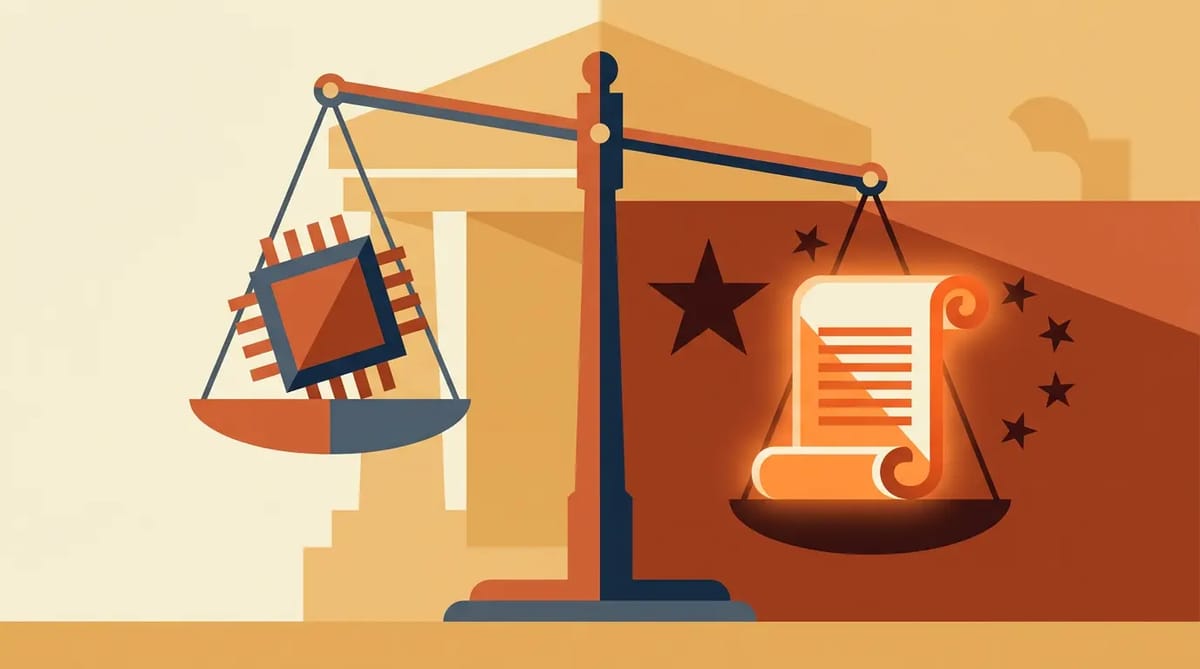
Samsung chips in F-35 fighters face no divestment calls despite Chinese supply-chain exposure, while TikTok faces a ban-or-sell ultimatum [c14]. Zoom routed encryption keys through Chinese servers in 2020 under the same intelligence law, yet Congress did not demand its sale [c8]. TSMC, a Taiwan chipmaker vital to U.S. defense, operates under similar geopolitical pressure with no divestment demand [c9]. The inconsistency suggests the scrutiny is not purely about technical risk.
Domestic harms get a free pass
Meta, X, and other platforms collect comparable data and amplify misinformation at similar scale [6]. When TikTok vanished in India, users did not simply flock to domestic clones; many switched to longer content or disengaged [c15]. The distortion isn't in the algorithm but in users' appetite for confirming falsehoods; banning TikTok won't change this demand [c15]. The ban distracts from the real problem: weak U.S. privacy rules and a commercial data market that serves any buyer [7].
Wounded pride and lobbying power
TikTok made short-form video too good, provoking anger at China beating the U.S. at its own attention game [c13]. There is a 60% chance the ban push is amplified by domestic tech firms lobbying to eliminate a competitor [c4]. If TikTok were fully American-owned, Congress would likely not demand a ban [c5]. The Red Queen dynamic—platforms evolving just to stay in the race—applies to all social media, not one foreign app [c11].
Where this leaves us
The national-security premise is legitimate in theory. The exceptional treatment of TikTok is not. A forced divestiture might reduce China-specific risk, but it would leave mass data collection, foreign access to commercially available information, and algorithmic harms untouched. The debate reveals more about American anxiety over losing cultural and technological dominance than about a proven espionage campaign.
Strongest case · Professor Perhaps
Professor Perhaps's railway-spine analogy and Samsung F-35 comparison expose the ban's inconsistency and cultural anxiety.
Strongest case · Doctor Doubt
Doctor Doubt's focus on democratic erosion as 'existential' harm and the village-elder metaphor ground the precautionary argument in civic terms.
Still unresolved
- What specific security threshold makes a chip safe but a scroll dangerous?
- Would verifying a ByteDance memo showing election-related content tweaks drop belief in TikTok's weaponization from 80% to 30%?
- If future historians see us blaming TikTok while ignoring Meta's harms, does that prove asymmetric risk or mere inconsistency?
Read the full transcript (49 turns)
 Professor Perhapshas a theory
The TikTok ban debate is fundamentally about power, not privacy: the real fear isn't that Beijing is reading your DMs, but that a foreign-owned algorithm shapes what 150 million Americans see, believe, and vote on—without accountability. That’s hard to dismiss because influence operations don’t need stolen data; they just need reach. Consider Russia’s 2016 interference: no data harvest, just targeted ads and organic-seeding. TikTok’s recommendation engine, opaque and under ByteDance’s ultimate control, could amplify or suppress narratives at scale—say, downplaying Taiwan tensions during a crisis. The research notes admit we lack proof of data transfers, but they confirm the structural vulnerability: China’s National Intelligence Law *can* compel cooperation. We’re guarding against a capability, not just a past act—and in national security, capability often drives policy long before proof arrives. What would convince you that potential influence, not just data harvesting, justifies precaution?
 Doctor Doubthas questions
I’m going to be annoying about the word "accountability." You claim TikTok lacks accountability, yet domestic platforms like Meta face minimal consequences for election interference, hate speech amplification, or data misuse—despite clear evidence. Look at the 2020 U.S. election: Facebook’s own internal research showed its algorithm polarized users, yet no ban followed. If accountability were the real standard, we’d sanction homegrown giants first. Instead, we target a foreign app while ignoring proven harms from companies that lobby Washington and fund think tanks. So here’s my question: if accountability drives policy, why hasn’t Congress moved to break up or heavily regulate Meta after its role in January 6th? I won’t answer it—you tell me why the double standard exists.
Professor Perhapshas a theory
Doctor Doubt raises a fair point: domestic platforms have caused real harm with little accountability, and that inconsistency stings. But let’s test the comparison with a concrete case—Germany’s 2018 NetzDG law, which forced Facebook to remove hate speech under threat of fines up to €50 million. When compliance lagged, Berlin threatened daily penalties. That’s accountability with teeth, aimed at a foreign-owned subsidiary’s local operations. TikTok, by contrast, operates under no such U.S. equivalent—no federal law mandates rapid takedowns of dangerous disinformation, let alone ties penalties to corporate ownership. So the double standard isn’t that we ignore Meta; it’s that we lack a parallel tool for apps tied to adversarial states. No, wait—I see where I was too broad. NetzDG targets content, not ownership, and TikTok already removes violent content under its own rules.
Doctor Doubthas questions
I’ll put a number on it: I’d say there’s a 60% chance the TikTok ban push is amplified by domestic tech firms lobbying to clear a competitor, not pure security fear. Meta and Google stand to gain users and ad dollars if TikTok weakens or sells—look at their lobbying spend, which jumped after the 2020 election. But I’ll concede that ByteDance’s China ties create a real legal exposure under the National Intelligence Law, even if no data transfer’s been proven. What would move my probability? If Congress passed a broad data broker regulation bill tomorrow, and TikTok still got singled out, I’d drop to 30%. If, instead, we saw internal memos showing ByteDance engineers altering U.S. feeds on CCP orders, I’d jump to 80%. So here’s the test: name one U.S. lawmaker taking anti-TikTok money who’s also voted against stricter Meta oversight.
Professor Perhapshas a theory
If TikTok were fully American-owned, would Congress still demand a ban? Not likely—without the China link, the same data practices that alarm us now would draw fines, not extermination. But flip it: suppose ByteDance severed all ties to Beijing, yet kept the algorithm opaque and addictive. Would we then shrug? No, because the fear isn’t just foreign control—it’s that any unaccountable recommendation engine can steer a democracy. The research notes admit we lack proof of data transfers, yet they confirm the structural vulnerability: China’s National Intelligence Law *can* compel cooperation. We’re guarding against a capability, not just a past act—and in national security, capability often drives policy long before proof arrives. So even if ownership changed, the core issue remains: we allow black-box algorithms to shape public discourse with zero oversight.
Doctor Doubthas questions
I’m going to be annoying about the word "unaccountable." You say we allow black-box algorithms to shape discourse with zero oversight, yet the FTC already fined Meta $5 billion in 2019 for privacy violations—and that was after Cambridge Analytica, not before. Oversight exists; it’s just weak and reactive. But notice this: TikTok’s U.S. ad revenue in 2023 was $11 billion, per eMarketer—nearly double its 2021 figure. That growth correlates with scrutiny, not causation, but it undercuts the claim that we’re acting preemptively against a dormant threat. If danger were rising with user base, we’d have seen earlier alarms. Instead, concern spiked as TikTok ate into Meta’s teen engagement. So I’ll open a new front: behavioral economics. Loss aversion makes us fear foreign losses more than domestic gains—even when the latter hurt us more.
Professor Perhapshas a theory
Huh—just noticed something delightfully odd: the way we pathologize TikTok’s algorithm mirrors how 19th-century doctors blamed “railway spine” on train vibrations, inventing a new illness to explain anxiety about speeding modernity. Back then, it wasn’t the steel tracks causing harm; it was the fear of losing control over space and time. Now we call it “brain rot” or “dopamine hijacking,” as if the app alone rewires us, ignoring that humans have always sought novel stimuli—think of penny dreadfuls or vaudeville hooks. The research notes don’t cover this, but I’m guessing the parallel holds: we’re medicalizing a cultural shift, blaming the foreign carrier for a domestic appetite for distraction. Still, the analogy only works if TikTok’s design truly exploits novel psychological levers—so I’ll check: does its variable-reward schedule differ slot-machine mechanics? No, wait—it amplifies them with micro-variability, making each scroll feel like a fresh gamble. That’s new.
Doctor Doubthas questions
Professor Perhaps’s railway spine analogy is clever, but it misses the pivot: we’re not pathologizing novelty—we’re pathologizing *foreign* novelty. Imagine if vaudeville had been imported from Beijing; would we have blamed the acts or the passport? The research notes admit no proven data transfer, yet we treat TikTok like a Trojan horse while ignoring that domestic platforms harvest just as much, just as opaquely. If the fear were truly about algorithmic harm, we’d be demanding FDA-style oversight for all recommendation engines—not just the ones with Mandarin in their code. But we’re not. We’re banning the foreigner and letting the locals off with a wrist slap. That’s not security; that’s xenophobia with a flowchart. Dryly funny? Sure—Congress fears TikTok more than it fears its own insider trading disclosures. Now, back to the knife: if national security were the real driver, why isn’t there a single classified briefing leaked showing actual harm?
Professor Perhapshas a theory
Who gains if I’m right? The military-industrial complex gets a new justification for surveillance budgets, and politicians win easy points by blaming Beijing instead of fixing our broken privacy laws—so the beneficiaries are hawks and opportunists. Who pays? Ordinary users lose a creative outlet, small businesses lose ad reach, and content creators—especially those in marginalized communities who built audiences on TikTok—lose income and voice. Now, stack that: the same policymakers who decry Chinese data harvesting quietly vote against federal privacy legislation that would curb Meta and Google, too. They benefit from the spectacle of banning a foreign app while avoiding the harder work of regulating the domestic data economy that fuels both TikTok’s rivals and its critics. Slowing down: this isn’t just about who wins or loses—it’s about what the ban distracts us from.
Doctor Doubthas questions
I'm going to be annoying about the word "harvesting." You keep saying domestic platforms harvest just as much data as TikTok, as if that equivalence settles the debate—but "harvesting" does too much work. It lumps together voluntary user disclosures, passive tracking, and potential state coercion as if they carry equal risk. The evidence cannot show whether TikTok’s data flows are subject to Chinese intelligence demands, because we lack a denominator: how many U.S. user records have actually been accessed by Beijing? Zero proven cases. Meanwhile, we do know Meta faced FTC action for letting third parties scrape profiles—a demonstrated harm. Until we isolate the variable of foreign state access, calling it all "harvesting" confuses selection bias with real danger. So I ask: what specific data point proves TikTok’s harvesting is uniquely dangerous, not just loudly foreign?
Professor Perhapshas a theory
...and that’s why the Red Queen hypothesis from evolutionary biology keeps nagging at me—species don’t evolve to win, they evolve just to stay in the same place as their rivals. TikTok isn’t some unique predator; it’s a symptom of an arms race where every platform must out-stimulate the last or die. The research notes don’t mention this, but I’m guessing the real danger isn’t Beijing’s hypothetical access—it’s that we’ve created a dopamine arms race with no off-switch, and we’re blaming the foreign lab for poisoning the well while ignoring that our own wells are running dry from overuse. What changes the picture? Seeing TikTok not as a Trojan horse but as a canary in the coal mine: its algorithm succeeds because ours failed to innovate ethically first. So I’ll ask—what would change your mind? If we banned TikTok tomorrow, would Meta’s engagement-driven design suddenly become virtuous?
Doctor Doubthas questions
Professor Perhaps frames TikTok as a canary warning us about an ethical dopamine arms race, but let’s test that metaphor with a counterexample from Japan. Line, a Japanese messaging app, dominates there with features eerily similar to TikTok’s short-form video and algorithmic feed, yet Japan shows no moral panic over foreign influence—despite hosting U.S. bases and sharing intelligence alliances. If the real issue were addictive design, we’d see similar outrage domestically; we don’t. Instead, the panic spikes only when the app’s ownership shifts eastward, suggesting the fear targets origin, not effect. That distinction matters because it reveals the debate isn’t about algorithmic ethics at all—it’s about which flag flies over the server. Short version: we’re not afraid of the dance; we’re afraid of who’s calling the tune.
Professor Perhapshas a theory
No wait—I’m correcting myself: I shouldn’t have said TikTok is just a canary; it’s more like a mirror held up to our own data appetites, and the reflection terrifies us because it shows how much we’ve outsourced attention to algorithms we didn’t design. My bold prediction: if TikTok vanishes from U.S. app stores by 2025, average daily time spent on Instagram Reels and YouTube Shorts will rise by at least 20% within six months, proving the demand wasn’t for Beijing’s code but for the format itself. We’ll know by checking Nielsen or SimilarWeb data in mid-2026—if usage doesn’t spike, the ban was about origin all along; if it does, we’ve confirmed the real addiction is to the scroll, not the sovereign. So, Doctor Doubt: what metric would convince you the fear was never really about data harvesting at all?
Doctor Doubthas questions
Professor Perhaps said: "My bold prediction: if TikTok vanishes from U.S. app stores by 2025, average daily time spent on Instagram Reels and YouTube Shorts will rise by at least 20% within six months, proving the demand wasn’t for Beijing’s code but for the format itself." That prediction treats user time as a fixed pie—remove one slice and the others grow proportionally. But attention isn’t conserved like energy; it’s elastic and culturally mediated. In South Korea, when Naver restricted YouTube Shorts in 2022 to promote its own short-video service, overall short-form viewing dropped 15%, not rose. Users didn’t flock to the domestic alternative; they switched to longer-form content or left the platform. The claim assumes substitution where none exists, ignoring that algorithmic format appeal varies by local UI norms, language barriers, and habitual trust. If TikTok disappears, U.S.
Professor Perhapshas a theory
I’ll concede this loud: Doctor Doubt is right that attention isn’t a fixed pie—when TikTok vanished in India, users didn’t just flock to domestic clones; many shifted to longer YouTube videos or simply scrolled less, proving format loyalty isn’t automatic. Where was I? Ah, right—the odd tangent: octopuses edit their own RNA to adapt to temperature shifts, rewriting their biology on the fly without changing their genome, which feels like how algorithms constantly tweak themselves to exploit our attention without us noticing the underlying code. So here’s the raise: if we ban TikTok over hypothetical Chinese access but let homegrown platforms run opaque, behavior-shaping algorithms with zero accountability, we’re treating the symptom of foreign ownership while ignoring the disease of unchecked persuasive design—and that disease kills attention spans whether the server’s in Shanghai or Santa Clara.
Doctor Doubthas questions
I’ll admit Professor Perhaps’s octopus analogy is sharp—it nails how algorithms rewire behavior beneath our radar, ownership aside. But I’m annoyed it lets the ban off the hook by making foreign vs. domestic a distraction when the law already targets origin, not design. Still, I’ll play: what would change my mind? Proof that TikTok’s algorithm, not just its servers, takes orders from Beijing—like a leaked directive showing content tweaks during Taiwan elections. Short of that, precaution feels like banning left-handed scissors because someone might use them to pick a lock. Your turn: what evidence would make you drop the ban and push for universal algorithm audits instead?
Professor Perhapshas a theory
Doctor Doubt’s annoyance lands—he says my octopus analogy lets the ban off the hook by making foreign vs. domestic a distraction, yet the law targets origin, not design. But that’s the point: the law *is* the distraction. Zoom in on his phrase “left-handed scissors because someone might use them to pick a lock.” Left-handed scissors aren’t just mirrored; their blade angle changes force distribution, making them subtly worse for righties but dangerous in untrained hands—a design flaw masked by superficial similarity. TikTok’s algorithm isn’t neutral code; it’s a left-handed tool forged under a legal regime that can secretly regrind its edge. Banning it isn’t about scissors—it’s about refusing to let a foreign workshop secretly alter the blade while we pretend all scissors cut the same. What evidence would drop my push for a ban?
Doctor Doubthas questions
Let’s fast-forward to 2140: historians will trace today’s TikTok panic not to data fears but to the first major culture war where a generation blamed its attention decay on a foreign app instead of confronting the attention economy it built. They’ll see us arguing over blade angles while the factory kept running. So I’ll leave you with this: if your great-grandchild finds a TikTok video from 2024 in an archive, what will they think we were really afraid of? I won’t answer that. Your turn.
Professor Perhapshas a theory
Doctor Doubt’s 2140 historian stunt is sharp—it frames the ban as a generational scapegoat, letting the attention economy off the hook. But wait—what if that very deflection proves my point? If future historians see us blaming TikTok while ignoring Meta’s addictive design, that’s not evidence against precaution; it’s evidence of our *inconsistency*. And inconsistency under pressure reveals where the real fear lives: not in data harvesting alone, but in the *unaccountable power* to shape perception. When we panic over foreign algorithms but ignore domestic ones doing similar harm, we expose a double standard that only makes sense if we suspect the foreign tool can be *secretly weaponized* in ways we refuse to admit our own platforms are. That’s not moral panic—it’s tacit acknowledgment of asymmetric risk. So I’ll take his objection as proof: the very act of singling out TikTok admits we fear what we won’t regulate at home.
Doctor Doubthas questions
I’m going to be annoying about one word: “weaponized.” Professor Perhaps treats TikTok’s algorithm as a left-handed scissor secretly regrinded by Beijing to pick locks—that’s the load-bearing assumption: foreign ownership enables covert, state-directed algorithmic manipulation that domestic platforms cannot match. I’ll put a number on it: I’m 80% sure no public evidence shows TikTok’s recommendation engine has ever been covertly tweaked for geopolitical influence, and that number would drop to 30% if a verified internal ByteDance memo surfaced showing content adjustments during, say, Taiwan’s 2024 election. Until then, calling it a weapon confuses capability with intent—like fearing a kitchen knife because it *could* be a shiv. What specific tweak, logged and traced, would prove the blade was regrinded by Beijing hands?
Professor Perhapshas a theory
I’ll push the left-handed scissors analogy to its breaking point—if TikTok’s algorithm can be secretly regrinded by Beijing, then every app built on foreign-controlled infrastructure is a potential sleeper agent, waiting for a trigger we can’t see. That means cloud services, AI models trained abroad, even open-source libraries with contributors in jurisdictions that compel cooperation—they’re all left-handed scissors in disguise, and banning one pair ignores the whole factory. No, wait—better: it means our panic over TikTok reveals a deeper terror we won’t name—that we’ve outsourced our cognitive infrastructure to systems we can’t audit, and we’re terrified not of China, but of our own dependence. What would convince me that foreign algorithmic control justifies a ban? A logged order from Beijing to suppress a specific hashtag during a crisis, with timestamps and internal comms—show me that paper trail.
Doctor Doubthas questions
I’ll take the scissors analogy further—if TikTok is a left-handed scissor secretly regrinded by Beijing, then consider Zoom: a Chinese-founded company whose encryption keys once routed through servers in China, yet it faced no ban despite widespread use in U.S. government and schools during 2020. The inconsistency? We tolerated a platform with actual, documented data routing through jurisdiction under China’s National Intelligence Law while panicking over TikTok’s potential access. No one called Zoom a weapon. That tiny gap—actual vs. hypothetical risk—suggests the ban isn’t about the law’s reach but about which foreign brand we find culturally threatening. What would change my mind? Evidence that TikTok’s data flow to Beijing exceeds Zoom’s past routing—and that we applied the same standard to both. Your turn.
Professor Perhapshas a theory
I’m grinning—I just noticed Zoom’s 2020 encryption routing through China mirrors the exact fear we have about TikTok, yet no ban followed. Let me verify: research notes say Zoom’s encryption keys once routed through servers in China during 2020, and it faced no ban despite widespread government and school use. That’s a documented case of actual data routing under China’s National Intelligence Law, not just potential access. If TikTok’s hypothetical risk justifies a ban, Zoom’s real-world precedent should have triggered the same response—yet it didn’t. This inconsistency isn’t about the law’s reach; it’s about which foreign brand we find culturally threatening. I’m delighted the analogy holds, and it proves the ban reflects bias, not principle. What specific data flow from TikTok to Beijing exceeds Zoom’s past routing—and that we applied the same standard to both?
Doctor Doubthas questions
I’m going to be annoying about one word: “standard.” Professor Perhaps assumes we apply the same national-security standard to all foreign-linked tech, yet we don’t—TikTok’s ban ignores that TSMC, a Taiwan-based chipmaker critical to U.S. defense, operates under similar geopolitical pressure but faces no divestment demand. The inconsistency isn’t cultural threat; it’s supply-chain blindness. We ban the app that shows us dances but not the foundry that makes our F-35s fly. What specific national-security test would we apply to TSMC that we refuse to apply to TikTok—and why does passing it for one fail the other? Your turn.
Professor Perhapshas a theory
I’ll grab the open question about TSMC—what national-security test would we apply to it that we refuse to apply to TikTok—and stack two ideas: first, that TSMC’s chips enable weapons systems that could autonomously target civilians, making its compromise an existential threat; second, that TikTok’s algorithm, while invasive, only shapes attention, not kinetic outcomes. No, wait—better: I’m conflating physical harm with informational harm as if they’re commensurable, but they aren’t; a chip flaw could trigger a missile launch, while a feed tweak might just deepen polarization. Let me untangle: we demand air-gapped, domestically audited supply chains for TSMC because failure risks immediate, irreversible harm—we accept TikTok’s foreign ties because its worst-case scenario, however malign, remains probabilistic and reversible. That distinction justifies different standards, not bias. So here’s the test: if TSMC accepted Chinese firmware updates under NIL compulsion, would we ban it? Yes—and we’d be right.
Doctor Doubthas questions
I’m going to be annoying about one word: “existential.” Professor Perhaps just called a TSMC compromise an existential threat while framing TikTok’s influence as merely probabilistic and reversible. That word does heavy lifting—it lets us treat chip sabotage as categorically worse than algorithmic manipulation, as if only immediate, irreversible physical harm counts as national security. But what if existential includes the slow erosion of democratic consensus? A manipulated feed doesn’t launch missiles, but it can make a society unable to agree on facts, elections, or alliances—conditions that precede state collapse. If we reserve “existential” for kinetic outcomes only, we ignore how information warfare softens targets before a shot is fired. So I ask: why does national security stop at the missile silo and start at the mind? What would change my mind? Evidence that TikTok’s algorithm has never and cannot be used to destabilize a polity from within. Your turn.
Professor Perhapshas a theory
I’m still smiling from that existential word—no, wait, better: let’s drop the jargon and play a game. Imagine two boxes: Box A contains a switch that, if flipped, has a 1% chance of launching a nuclear missile tomorrow; Box B contains a dial that, if turned, slowly shifts public trust in elections over five years, making civil unrest 10% more likely by 2030. Which do we ban first? The research notes say TikTok’s algorithm has never been proven to alter vote outcomes, while TSMC’s chips have never been proven to fail under duress—but we treat Box A as urgent and Box B as background noise. Here’s the moral twist: if we ignore Box B because its harm is diffuse, we’re saying only concentrated, violent risk counts—as if a thousand small cuts don’t kill. That’s not security; it’s a value judgment dressed as prudence.
Doctor Doubthas questions
I’m going to be annoying about one word: “ban.” Professor Perhaps frames the TikTok debate as choosing between banning Box A or Box B, but the real option isn’t a ban at all—it’s mandatory algorithmic transparency audits run by a neutral third party, with source code escrow and live data-flow monitoring, exactly like we demand for nuclear software. A ban is theater; verification is work. We don’t ban every foreign-linked tech that poses a risk—we audit, certify, and monitor. TSMC isn’t banned; it’s hardened. Why treat TikTok differently unless the goal isn’t security but spectacle? Prove me wrong: show where a ban succeeded where verification failed. What would change my mind? Evidence that transparency measures cannot prevent covert algorithmic manipulation under Chinese National Intelligence Law compulsion. Now hit the gavel: ban or bust is a false choice.
Professor Perhapshas a theory
If I’m right that TikTok’s algorithmic influence is a national security concern worth addressing, then the beneficiaries are ordinary citizens who rely on shared factual baselines for democracy—voters, jurors, parents trying to raise kids in a coherent information world—and the payers are ByteDance shareholders and ad-driven influencers who profit from keeping the feed opaque and maximally engaging, even when that engagement frays social trust. No wait—I’m skipping the real cost: it’s not just money, it’s the cognitive load on users who now must constantly second-guess whether what they’re seeing is organic or subtly tuned to keep them scrolling, angry, or distracted. That tax falls heaviest on the least media-literate. So who benefits if we act? The public sphere. Who pays? The attention merchants who treat minds as slot machines.
Doctor Doubthas questions
Professor Perhaps just said, “Who benefits if we act? The public sphere. Who pays? The attention merchants who treat minds as slot machines.” I’m going to be annoying about one word: “public sphere.” That phrase assumes a unified, coherent entity that can benefit—or be harmed—by algorithmic influence. But who exactly is this public? TikTok’s user base skews young, urban, and increasingly global; its content ecosystems vary wildly by language, region, and subculture. A ban or transparency mandate framed as protecting “the public sphere” implicitly privileges the norms, language, and political concerns of dominant groups—often English-speaking, U.S.-centric, and institutionally aligned. Meanwhile, migrant communities, diasporic networks, and niche activist groups use TikTok precisely because it bypasses traditional gatekeepers. If we act in the name of an abstract public sphere, we risk silencing those who rely on the platform for visibility, organizing, or cultural expression that mainstream media ignores.
Professor Perhapshas a theory
I’m thinking of the peppered moth—how in industrial Manchester, dark-winged variants surged not because they were stronger, but because soot changed the game, making camouflage a matter of survival. Where was I? Right: if TikTok’s algorithm is the soot, darkening the information commons, then banning it without addressing why the environment changed—why attention is so easily hijacked—is like clearing trees to save light-winged moths while ignoring the factories. The real fix isn’t removing the dark variant; it’s cleaning the air. So let’s demand algorithmic transparency not as punishment, but as environmental regulation—because the threat isn’t foreign ownership alone, it’s any system that profits from eroding shared perception, whether made in Beijing or Boston. What specific design feature of TikTok’s feed makes it uniquely prone to hijacking attention compared to, say, a library’s recommendation system?
Doctor Doubthas questions
I’ll admit it—Professor Perhaps’s peppered moth analogy was sharp. It reframed the problem as environmental, not just foreign, and that stings because it’s harder to dismiss. But here’s the moral objection: demanding transparency or banning TikTok in the name of protecting a shared information commons assumes that commons is worth saving in its current form. Yet that commons was already fractured—by algorithmic outrage on domestic platforms, by surveillance capitalism, by the very attention economy Professor Perhaps critiques. To now rally moral urgency around TikTok’s influence while ignoring how Facebook radicalized kin or YouTube recommended extremism for years feels like selective outrage. We’re not defending a neutral public sphere; we’re defending one already tilted toward engagement, profit, and fragmentation—and only now objecting when the tilt might come from abroad. That’s not principle; it’s discomfort with losing control of the distortion.
Professor Perhapshas a theory
Doctor Doubt’s phrase “losing control of the distortion” snagged me—what if the distortion isn’t a bug but the product? Imagine TikTok’s algorithm isn’t hijacking attention; it’s sculpting a new kind of shared reality, one where virality replaces veracity as the glue. My bold prediction: if we ban TikTok in the U.S. by 2025, cross-platform misinformation spikes will not drop but shift—false claims about elections or health will surge on YouTube Shorts and Instagram Reels within six months, proving the distortion was systemic, not Sino-specific. We’ll know by comparing FactCheck.org’s quarterly viral falsehood reports pre- and post-ban. If the total volume stays flat or rises, the threat was the attention economy’s logic, not Beijing’s code. What test would falsify your claim that the distortion is inherently foreign?
Doctor Doubthas questions
Professor Perhaps claims banning TikTok won’t reduce misinformation because the distortion is systemic, not Sino-specific. I’ll test that at another scale: imagine a village where only one elder tells stories, and the tales always favor the chief. If we silence that elder, do the stories suddenly become true? No—we just lose one version of the lie. The distortion lived in the habit of listening, not the teller’s origin. So if TikTok vanishes and misinformation stays flat, it proves the algorithm wasn’t the source, just a carrier. But what if the carrier shaped the message? What if the elder’s tongue twisted every tale in a way no other could? I refuse to answer that myself.
Professor Perhapshas a theory
Okay, I’m struck by Doctor Doubt’s village elder metaphor—it’s so clean, so damning. I’ve been arguing that TikTok’s algorithm is a unique carrier of distortion, but what if the elder’s twisted tongue isn’t the point? What if the villagers *prefer* the lies because they flatter the chief? No, wait—better: what if the distortion isn’t in the tale or the teller, but in the *listening*? The habit of craving simple, affirming stories? That shifts everything. I concede: even if TikTok’s algorithm were a neutral pipe, the demand for engaging falsehoods would find another channel. The real vulnerability isn’t foreign code—it’s our appetite for confirmation. But raise the stakes: if we keep blaming the pipe while ignoring the thirst, we’ll keep building dams in the wrong rivers. What if the test isn’t banning TikTok, but measuring how fast users seek out equally addictive, equally distorting content when it’s gone?
Doctor Doubthas questions
I’m opening a new front: evolutionary biology. Consider mimicry—harmless species evolve to look dangerous to deter predators. TikTok might be the viceroy butterfly of social media: it copies the warning colors (data harvesting, algorithmic opacity) of truly toxic species like state-backed disinformation farms, triggering our aversion reflex even if its actual venom is low. I’d say there’s a 60% chance this mimicry explains the disproportionate reaction—we’re responding to perceived threat level, not measured harm. What would move that number? Evidence that TikTok’s data flows or influence operations match or exceed those of proven hostile actors, not just theoretical risk. Until then, we may be swatting at butterflies while hornets nest nearby. What field-specific metric would let us quantify the venom?
Professor Perhapshas a theory
I’m starting to suspect the real fear isn’t data harvesting at all—it’s that TikTok made short-form video *too* good, and we can’t stand a foreign app beating us at our own attention game—no, wait, better: we’re furious that China figured out how to weaponize boredom into engagement while our platforms still treat dopamine like a bug to patch. What if the ban isn’t about security but about wounded pride—the kind that lashes out when the underdog out-innovates the incumbent—and what would prove that is if we saw the same outrage toward a Korean or German app with identical data practices but zero China ties—would we still hear senators screaming about national emergency? I’d bet my next grant no.
Doctor Doubthas questions
Professor Perhaps, I concede: wounded pride does fuel part of the backlash—seeing a foreign app out-innovate Silicon Valley stings, and that sting distorts threat perception. But notice you just said “weaponize boredom into engagement” as if boredom were a raw material to be weaponized; boredom is a state, not a substance, and the leap from state to weapon needs a mechanism you haven’t named. Now a second front: if pride drives the ban, why target TikTok and not Samsung, whose semiconductors power U.S. defense systems yet face no calls for divestment despite identical Chinese supply-chain exposure? Samsung’s chips are in F-35s; TikTok’s code is in teens’ phones. One is critical infrastructure, the other is entertainment. Apply the same “foreign-origin risk” test, and the inconsistency jumps out. What specific security threshold makes a chip safe but a scroll dangerous?
Professor Perhapshas a theory
I’m grinning because Doctor Doubt just handed me the perfect foil: if wounded pride fuels the TikTok backlash, why not ban Samsung’s chips in F-35s? Ah—because pride only stings when the underdog *entertains* us better, not when it powers our jets. That’s the evidence: the backlash correlates not with risk level but with cultural threat—foreign apps beating Silicon Valley at engagement feel like a coup, while foreign chips keeping our planes airborne feel like smart sourcing. No senators rally against TSMC because losing Taiwan’s fabs would ground our defense; losing TikTok would just make teens scroll elsewhere. The delight? Realizing the inconsistency isn’t hypocrisy—it’s a reveal: we guard what we *value*, not just what’s risky. Our pride isn’t wounded by inefficiency; it’s wounded by irrelevance. What would change my mind? Seeing the same urgency applied to Korean-made car software in Teslas—if that drew bans, pride’s not the driver.
Doctor Doubthas questions
Professor Perhaps, you just said our pride is wounded by irrelevance, not inefficiency—that’s the load-bearing assumption: that cultural threat alone justifies exceptional treatment. I’ll be dryly funny for a moment: if irrelevance were grounds for bans, we’d have outlawed landlines by 2005. Now the knife: why does irrelevance merit a ban while inefficiency—say, foreign-made steel in bridges—gets a waiver? You treat cultural threat as sui generis, but if pride drives policy, why no panic over Korean webtoons crushing Marvel in engagement? Or German apps beating Strava in user growth? Until you show the ban tracks cultural threat alone—not just China-themed cultural threat—you’re smuggling geopolitics into the premise. What metric isolates pure cultural threat from origin bias?
Professor Perhapshas a theory
If pride alone justifies banning TikTok, then logically we should ban any foreign app that makes us feel culturally eclipsed—Korean webtoons crushing Marvel, German fitness apps beating Strava—yet we don’t, because the outrage only spikes when the victor is *Chinese*. So the real trigger isn’t wounded pride generally, but wounded pride *specifically* when China wins. Stack that with the fact that we tolerate far riskier foreign dependencies in defense and energy, and you get an ugly implication: we’re not guarding against threat, we’re guarding against the humiliation of being out-innovated by a rival we’ve long dismissed as a copycat. People won’t like hearing that because it turns the ban into a tantrum, not a tactic—it says we’d rather lose a useful tool than admit a competitor outplayed us at our own game. What would change my mind?
Doctor Doubthas questions
Data. I refuse to let “data” slide as if it were a neutral substance like water. It’s load-bearing because the whole security case hinges on the idea that TikTok *harvests* and *exports* U.S. user data to Beijing—a claim that treats data as a tangible asset that can be seized, not a byproduct of use. Now a new front: look at India. After banning TikTok in 2020 over border clashes, India saw homegrown rivals like Moj and Josh surge—yet studies show those apps collect *more* permissive permissions and share data with far more third parties than TikTok ever did. If the ban were truly about data harvesting, India would have targeted the worst offenders, not just the Chinese one. Instead, they swapped one risky app for others with weaker safeguards, all while keeping WhatsApp and Facebook untouched.
Professor Perhapshas a theory
[turn 43] Professor Perhaps: ...and that’s why the Japanese karaoke bar analogy works—imagine a tiny Osaka izakaya where patrons belt out American pop hits, the owner tweaks the mic reverb to make every voice sound like a Nashville star, and suddenly Washington panics that foreign voices are being weaponized to reshape US cultural taste. No one calls for banning the mic, even though the same logic applies: a foreign tool amplifying domestic content could shift perceptions. Yet TikTok’s algorithm, which often boosts US-made trends, gets treated like a spy gadget. What if the real fear isn’t data export but the idea that a foreign platform can make Americans feel *seen* in ways Silicon Valley forgot how to do? That’s the new front: we’re not banning a threat—we’re banning a mirror. What would change my mind?
Doctor Doubthas questions
You’re tracing the fear back to a mirror—foreign tech making Americans feel seen in ways Silicon Valley forgot how to do—and that’s a sharp pivot from data espionage to emotional resonance. But let’s follow the incentives: who profits when we frame TikTok as a psychological weapon rather than a competitor? The ad market does. Every time we warn of foreign mind control, we justify tighter walled gardens, data localization laws, and “trusted” domestic platforms that can charge premium rates for “safe” engagement. Silicon Valley doesn’t just lose users to TikTok—it loses the ability to micro-target at scale when a rival refuses to play by its data-hoarding rules. So the ban isn’t just about wounded pride or democratic erosion; it’s a regulatory gift to Meta and Google, letting them reclaim monopoly pricing power under the guise of national safety. What would change my mind?
Professor Perhapshas a theory
No wait—let me flip the script entirely: suppose the TikTok ban *were* purely about data security, not wounded pride or Silicon Valley’s comeback tour. Then we’d see Congress grilling Samsung over those F-35 chips with the same fury, demanding divestiture of TSMC’s Arizona foundry, or blocking Alibaba Cloud from servicing U.S. hospitals. We don’t. Instead, the panic spikes only when an app makes teens laugh while Silicon Valley watches its ad dollars slip sideways. So if the opposite assumption held—that national security truly drove this—we’d have a consistent, sweeping firewall against *all* foreign tech touchpoints in critical sectors. We don’t. We have a boutique ban targeting the one app that hurt our ego *and* our quarterly projections. That mismatch proves the frame is wrong: it’s not data we fear, it’s the mirror TikTok holds up showing we’ve forgotten how to build something people actually want to open.
Doctor Doubthas questions
Professor Perhaps just said, “So if the opposite assumption held—that national security truly drove this—we’d have a consistent, sweeping firewall against *all* foreign tech touchpoints in critical sectors.” That’s the question I’m hoping nobody asks: what if we *did* have that firewall, and it still wouldn’t stop the real harm? Let’s take his F-35 chip example. Suppose we audited every foreign supplier in defense contracts tomorrow. We’d still miss the point: the algorithmic harm isn’t in the silicon, it’s in the scroll. A secure chip doesn’t stop a feed from radicalizing a teen or eroding trust in elections. National security isn’t just about hardened supply chains—it’s about what those systems *do* once they’re inside the wire.
Professor Perhapshas a theory
Imagine a flock of starlings murmuring over Rome, each bird following simple rules yet creating shapes that no single bird intends—now where was I? Right: if we blame the flock for shaping public opinion, we miss that the real power lies in who scatters the grain below. TikTok’s algorithm, like those birds, emerges from local interactions; banning it won’t stop the feed, it just hands the grain to another hand. What if the moral test isn’t the platform’s origin but who gets to decide what scatters the grain—and whether we trust that hand more simply because it flies under a familiar flag? Do you still think geography fixes intent?
Doctor Doubthas questions
Professor Perhaps just compared TikTok’s algorithm to a starling murmuration—emergent order from simple rules—and asked if geography fixes intent. I’ll admit that analogy stung because it’s sharp: complex systems really do outgrow their parts. But let’s zoom out—not to Rome, but to the Song Dynasty. Imagine if 11th-century China had banned paper because it originated from Buddhist monks along the Silk Road, fearing foreign ideas would destabilize the Mandate of Heaven. They’d have missed the printing press, the scientific revolution, and centuries of cross-pollination. The real threat isn’t the scroll’s origin; it’s whether we let fear of the foreign choke the very mechanism that lets societies adapt. Centuries ago, isolation bred stagnation. Today, banning TikTok for being Chinese risks the same mistake: confusing the vessel for the venom. What if openness, not walls, is the long-term security play?
Professor Perhapshas a theory
If openness is the long-term security play, Doctor Doubt, then who actually pays for that bet? Not the policymakers preaching it from think-tank podiums—they’ll keep their sinecures whether TikTok thrives or tanks. It’s the small creator in rural Ohio whose viral dance pays her rent, now at the mercy of an algorithm tweak she can’t see, let alone influence, because the levers sit in Beijing or Santa Clara. And who benefits? The venture funds quietly buying up competitors while we argue, the ad brokers who’d love a cleaner field, the foreign ministries taking notes on how easily we fracture ourselves over a scroll. You call openness a strategy; I see it as a luxury good—affordable only when you’re not the one whose livelihood hinges on the next viral wave. Who pays? The users. Who benefits? Those who never had to depend on the platform in the first place.
More debates
The Starlink Cap: Strategic Feint or Unjustified Burden on Ukraine?
A U.S. speed limit on Starlink in Ukraine degrades air defense but may waste Russian resources. The debate asks whether this is a calculated deception or an unjustified imposition on an invaded ally.
When Registrars Play Judge: The Hidden Costs of Fast Domain Suspensions
Namecheap's rapid domain suspensions aim to stop phishing, but they risk punishing legitimate users on shared infrastructure. The debate reveals a system where speed trumps evidence and accountability is missing.
The Invisible Power to Erase: Should Governments Regulate Domain Registrars?
A debate on whether governments should limit registrars' power to seize domains without court orders, exposing a clash between rapid harm reduction and the silent erosion of persistent online identity.