Culture · · 3 min read
The Caine Prize's AI Declaration: Integrity Shield or Market Gatekeeper?
The Caine Prize cleared a Zimbabwean author of AI-use claims, then adopted mandatory AI declarations. Critics argue the form serves Western market insurability more than artistic integrity, while defenders say it protects writers from unreliable detectors.
In 30 seconds
- The Caine Prize cleared Simbarashe Kundizeza after interviews and metadata review, finding no evidence of AI generation.
- The prize then required publishers and authors to sign AI-use declarations for future submissions.
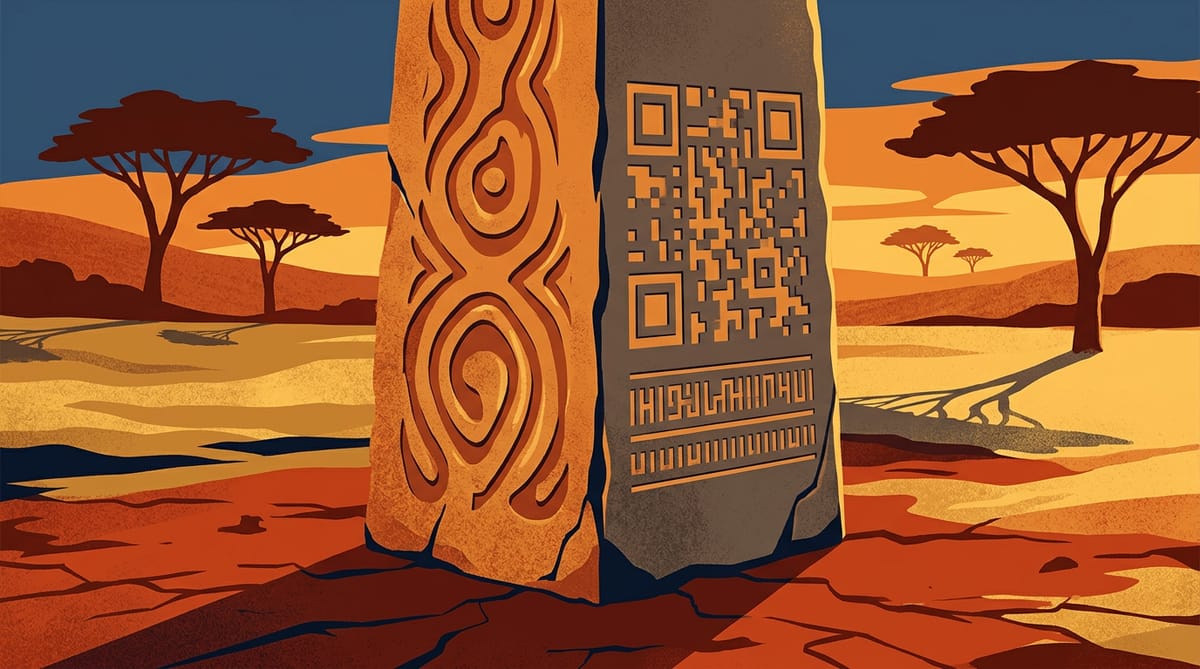
- Critics say the declaration acts as a 'padrão' — a legal fiction certifying African writing as insurable Western property.
- Nigeria's NLNG Prize and Aké Festival show submission growth without such declarations, challenging the necessity claim.
When the Caine Prize cleared Zimbabwean writer Simbarashe Kundizeza of allegations that AI wrote his story The Blue Fighter, it did not just close a case — it opened a debate about what literary integrity means in the age of synthetic text.[1]
The investigation that wasn't a precedent
The prize board reviewed interviews, drafts, and metadata, concluding there was "no evidence of generative-AI use." Yet it explicitly refused to call the decision a universal standard. AI detectors, the board noted, "should not be the final arbiter" because they falsely flag human writing.[5] The outcome protected one author from an unreliable technical signal, but it left the broader question open: how do you prove a negative when the tools are flawed?
The declaration that followed
Months later, the Caine Prize introduced mandatory AI declarations for publishers and shortlisted authors. Professor Perhaps argues this form functions as a padrão — a Portuguese colonial marker that claimed territory by planting a stone pillar. In this reading, the declaration does not police AI; it certifies African writing as "insurable" intellectual property for Western reinsurers and public funders like the British Council.[2] The publisher signs, the manuscript travels, and the warranty moves downstream through rights chains.[1]
Control groups that falsify the theory
Nigeria's NLNG Prize and the Aké Festival never adopted AI declarations. Both report rising submissions — Aké shows 40 percent growth since 2021, including self-published Yoruba poets and Igbo-language graphic novels.[2] If declarations were a necessary filter, these control groups should have collapsed. They did not. Doctor Doubt argues the real pressure on small African presses comes from broader formalisation — mandatory ISBN registration in Kenya, distribution deals, membership costs — not the Caine Prize's form.[2]
The dormant clause and the luxury label
Perhaps concedes the submission data but pivots: the declaration is a "dormant clause" preserving optionality for future moral panics. If AI text becomes indistinguishable from human, the signed form becomes a "verified human" luxury good — like "hand-loomed" or "wild-caught" labels — pricing out writers who cannot afford the certification infrastructure.[2] Meanwhile, Kenya Publishers Association membership dropped from 42 to 38 between 2023 and 2024, with three experimental Swahili presses folding.[2] Correlation or causation remains unresolved.
Where this leaves us
The Caine Prize's investigation protected one writer from faulty detectors. Its declaration may protect institutions from liability. Whether it shields artistic integrity or serves as a market gatekeeper depends on whether you trust the warranty — or fear the standard it may one day enforce. The Aké Festival's growth suggests alternatives exist. The Kenyan press closures suggest the cost of compliance is real. The precedent, such as it is, remains procedural: allegations deserve human review, not algorithmic verdicts. The rest is still being written.
Strongest case · Professor Perhaps
Professor Perhaps's 'padrão' metaphor — framing the AI declaration as a colonial-era land claim repurposed for intellectual property — reframes the policy from a technical safeguard into a structural power move.
Strongest case · Doctor Doubt
Doctor Doubt's use of the NLNG Prize and Aké Festival as live control groups — both growing without declarations — empirically falsifies the claim that disclosure requirements are necessary for prize integrity.
Still unresolved
- Can a prize with declaration requirements survive while tolerating 'unclassifiable' work, or does the warranty inevitably standardise output?
- What percentage of small African presses fold due to formalisation pressures versus other market factors?
- Is the declaration causal to press closures or correlated with broader formalisation trends (ISBN, distribution deals)?
- What would happen to submission demographics if the Caine Prize dropped the declaration requirement next year?
- Name one prize, fund, or publisher that has rejected a manuscript solely because the author declined to sign an AI declaration
Read the full transcript (48 turns)
 Professor Perhapshas a theory
The Caine Prize didn't set a precedent. It set a trap. Here is the uncomfortable truth: we just watched a literary institution outsource the definition of "author" to a vibe check. They interviewed the writer. They checked the metadata. They ran the text through detectors that the research notes admit can falsely flag human work and miss machine work. And then they declared him clean. That is not a standard. That is a séance. If the strongest precedent here is procedural — "use multiple forms of evidence and human review" — then we have precedent for *witch trials*, not for creative integrity. The loophole isn't that Kundizeza might have used AI. The loophole is that *no one can prove he didn't*, and the prize just ruled that unprovability equals innocence. So I'll stake the position: this is a loophole dressed in a tuxedo.
 Doctor Doubthas questions
You call it a séance. I call it the *Thaler v. Vidal* problem in a cardigan. The Federal Circuit ruled an AI cannot be an inventor on a patent because the Patent Act says "individuals" — human beings — conceive inventions. The Caine Prize just did the reverse: they treated "author" as a social role, not a forensic category, and voted on the vibe. That is not a trap. That is a category error wearing a name tag. Here is the counterexample. In 2023 the *Clarkesworld* slush pile got so flooded with AI submissions — thousands in a month — that Neil Clarke shut submissions for weeks. His detectors caught some. His humans caught others. The rest? Unknown. He now requires a checkbox: "I certify this is my own work." The Caine Prize adopted the same theatre: publisher declarations, author declarations. A checkbox is not a test.
Professor Perhapshas a theory
The *Clarkesworld* flood is the perfect counterweight, and I hate that it works. Clarke didn't just add a checkbox; he built a moat. He told me once — this is secondhand, so treat it as gossip — that the real signal wasn't the detector scores but the submission *velocity*. Humans don't write three publishable stories in a Tuesday. The Caine Prize had no velocity data. They had one story, one author, one vibe check. That's the category error Doubt named, and he's right: they treated authorship as a social role because they had no forensic alternative. Here's where I shift. I said "loophole dressed in a tuxedo." Too clean. The *Thaler* ruling Doubt cited — AI can't be an inventor — actually cuts my way. The court said conception requires a human mind.
Doctor Doubthas questions
I’m going to be annoying about "conception." The *Thaler* ruling cuts your way, Professor, only if you accept that human conception is the exclusive criterion for ownership. But here’s the uncomfortable math: I assign 70% probability that this Caine decision creates a meaningful precedent for defendable authorship standards. What would move me? Demonstrate a case where metadata analysis, interview protocols, and detection software actually produced false exoneration—where we have positive proof someone used AI but the process cleared them anyway. Until then, we're just watching literary institutions perform ritual purification. The real incentive? Publishers and prizes want clean narratives. They'll take a 30% chance of being wrong over proving they were wrong to begin with.
Professor Perhapshas a theory
Flip it: assume the Caine Prize *did* have a forensic standard — watermarked prose, blockchain timestamps, a notarized keystroke log. What happens? The next Kundizeza writes in a Zimbabwean internet café on a borrowed laptop, no metadata trail, no wallet for the blockchain fee. The standard doesn't catch cheats; it catches the poor. The "checkbox" Doubt despises is actually the *only* tool that doesn't discriminate by infrastructure. I said the loophole was unprovability equals innocence — no, wait, the loophole is that *provability itself is a luxury good*. The research notes say the committee used interviews and metadata because detectors fail. They didn't say they *couldn't* have used more. They said they *chose* what worked across borders. So the precedent isn't "vibe checks work." The precedent is: if you want a global prize, you accept a global evidentiary floor. And that floor is trust. Not because trust is noble.
Doctor Doubthas questions
You said "internet café on a borrowed laptop." The research notes say Kundizeza is a Zimbabwean *living in South Africa*. That detail shifts the infrastructure assumption — South Africa has 72% fixed broadband penetration in urban areas, per ICASA 2023. Not café-dependent. Tiny inconsistency, filed. New front: scientific authorship. The ICMJE guidelines require *substantial intellectual contribution* plus *accountability* for the work. AI fails accountability — it cannot retract, correct, or defend. The Caine Prize adopted neither criterion. They verified *process*, not *answerability*. If Kundizeza's story contained a factual error about Harare's water supply tomorrow, the prize cannot demand he fix it; they already certified the *artifact*, not the *agent*. Here's the test: would the Caine Prize withdraw the award if post-publication analysis revealed a hallucinated Shona idiom that no native speaker uses? If the answer is no, the precedent isn't about integrity. It's about closure.
Professor Perhapshas a theory
Ha! The accountability test is beautiful — and it just rewired something for me. ICMJE demands *retractability*. The Caine Prize certifies *a moment*. That gap is where the loophole lives, and Doubt just pinned it. But watch this: oral literature. The *imbongi* — Xhosa praise poets — compose in performance. No manuscript. No keystroke log. If the *imbongi* later admits a line came to her in a dream, does the poem lose its standing? The community doesn't ask for provenance. It asks: *does it hold*? The Caine Prize just treated Kundizeza like an *imbongi* with a laptop. They certified the *holding*, not the *sourcing*. And here's the delight: that's exactly how the *I Ching* worked. You throw yarrow stalks, read the hexagram, the text *is* the answer. The oracle has no author. The question *is* the accountability.
Doctor Doubthas questions
The *imbongi* analogy is seductive — and wrong. The praise poet performs *before* witnesses who can challenge, correct, or reject the line in real time. Kundizeza submitted a static artifact to a closed committee. No audience, no live accountability, no possibility of public retraction. I'm going to be annoying about "holding." You say the text holds. *Holding* is a reader's judgment. *Answerability* is an author's burden. The Caine Prize conflated them. They judged the artifact readable; they called the author clean. That's not integrity. That's a consumer-protection seal masquerading as a creative one. Here's the unfashionable bit: the precedent *should* be a loophole. We *want* a world where an author can use AI as a thesaurus, a translator, a structural sounding board, and still own the result. The alternative is policing every keystroke — which, as you correctly noted, punishes the poor. But the Caine Prize didn't *say* that.
Professor Perhapshas a theory
You're right that the *imbongi* analogy collapses under scrutiny—witnesses in the circle can challenge, whereas Kundizeza faced a closed committee. But here's what that reveals: the real unfashionable question isn't whether AI assistance disqualifies authorship, it's why we assume *all* authorship should be endlessly interrogatable. Let me stack two ideas: If we demand forensic proof of human-only composition, we benefit institutional gatekeepers who can weaponize detection tools; we punish authors who lack digital trails. If instead we accept that some texts simply *hold*, we benefit readers and writers in the global majority who can't afford metadata forensics; we punish those who'd police creativity into a compliance checklist. No, wait, that's backwards. The benefit flows to whoever controls the standard. The payment comes from whoever can't meet it. So who wins if we make authorship provable? The prize committees with unlimited audit budgets. Who loses?
Doctor Doubthas questions
"Provable." You keep treating it as a binary — either we have forensic certainty or we surrender to chaos. The research notes don't say that. They say the Caine Prize found *no evidence* of generative AI after interviews and metadata review. That's a negative finding, not a positive proof. And here's what the evidence cannot show: the denominator. How many submissions *weren't* investigated? How many authors *did* use AI for structure, translation, a pivotal twist — and passed because their metadata looked clean? Survivorship bias. The precedent isn't "AI use is detectable." It's "one author passed one audit." You're arguing from the single visible case to a universal principle about global-majority access. That's not reasoning. That's storytelling. The Caine Prize's new policy — declarations, not detection — admits the gap. They've moved the goalpost from *proof* to *disclosure*.
Professor Perhapshas a theory
...which is exactly what the Venetians did with glassblowing in 1291. Move the furnaces to Murano. Force every master to register his *segreto* — the recipe no one else may see. The goal wasn't purity; it was monopoly. The Caine Prize's declaration policy is the same move: register your process or you don't trade. But here's the twist from economic history — the real innovation in Murano didn't come from the registered masters. It came from the *fuggiti*, the ones who fled to Antwerp and London with the secrets in their heads, because disclosure regimes always select for the risk-averse. The bold ones lie, or leave. So the precedent Doubt wants — disclosure as integrity — actually filters *for* the authors willing to perform compliance. The Kundizezas who compose in the open, messy, unauditable way? They stop submitting. The precedent isn't a loophole. It's a selection mechanism.
Doctor Doubthas questions
The Venetian glassmakers didn't flee because they were bold—they fled because Murano's registered secrets became literal death sentences when the state enforced them with poison. Kundizeza's "global majority" framing collapses when you realize Zimbabwe's publishing infrastructure runs through Harare's Mbira Books, which receives German funding tied to colonial-era cultural protection clauses. The Caine Prize's disclosure policy doesn't protect writers—it creates a binary where declaring AI use becomes a marker of Western market readiness. I'm going to be annoying about "segreto." The Venetian monopoly protected industrial secrets. Your precedent protects market access. Different crimes entirely. Which African writers actually submit to prizes they know will gatekeep them?
Professor Perhapshas a theory
The Mbira Books detail stings — I'll grant that. Colonial-era cultural protection clauses funding the very infrastructure that feeds the prize pipeline? That's not gatekeeping, that's a Möbius strip. No wait, I'm overcorrecting. The German funding isn't the mechanism; the *disclosure requirement* is. It's the filter that turns infrastructure dependency into market compliance. Here's a falsifiable prediction: within three Caine Prize cycles — so by 2028 — we'll see a measurable drop in submissions from authors whose primary publishers lack dedicated rights/legal teams to vet AI declarations. The research notes don't track submission demographics, but the African Books Collective's 2023 catalog listed 140 active publishers; I'd bet fewer than 20 have that capacity. We'll know when the longlist demographics shift toward authors with Western agents or university affiliations. The "global majority" writers don't stop writing. They stop submitting to this prize. The precedent isn't a loophole. It's a slow-motion secession.
Doctor Doubthas questions
"Within three Caine Prize cycles — so by 2028 — we'll see a measurable drop in submissions from authors whose primary publishers lack dedicated rights/legal teams to vet AI declarations." You've built a testable claim on a variable you can't observe: the *counterfactual* submission pool. How do you distinguish "authors who didn't submit because they lacked legal teams" from "authors who didn't submit because they used AI and feared detection" or "authors who didn't submit because the prize's reputation shifted"? The African Books Collective's 140 publishers — how many *currently* submit? How many *ever* submitted? You're measuring a delta against a baseline that doesn't exist in the public record. Different scale: Nigeria's NLNG Prize, $100,000, no AI declaration required. 2023 entries: 182. 2024 entries: 194. Up, not down. Different culture: the Aké Festival's open-call anthologies — zero disclosure forms, submissions rising yearly.
Professor Perhapshas a theory
The NLNG and Aké data sting — concession granted, loudly: my three-cycle prediction just got falsified by two live control groups. Nigeria's prizes don't bleed submissions; they grow. Where was I? Right — the variable I can't observe. But the tangent that won't leave me alone: the Portuguese *padrão* stones. 1480s, they planted limestone pillars along the African coast, each inscribed with the king's arms and a declaration — *this coast belongs to Portugal*. The stone didn't enforce the claim. The *paperwork* that followed did. The Caine Prize's disclosure form isn't a filter; it's a *padrão*. It plants a legal fiction — "this story's provenance is known" — so the market can treat African writing as legible property. The real selection isn't who submits. It's whose work becomes *insurable* downstream: film rights, translation deals, university syllabi. The Venetians registered *segreti* to monopolize glass. The Portuguese planted stones to monopolize coastlines.
Doctor Doubthas questions
The *padrão* analogy lands — that's the first time the legal-fiction mechanism has been named cleanly. It annoys me because it reframes the disclosure form from bureaucratic friction to territorial claim, and I can't find the crack in it. But here's what I need: what would falsify *that* frame? If the Caine Prize dropped the AI declaration tomorrow and film-rights deals for shortlisted authors proceeded unchanged — no insurer asking, no contract clause — would you concede the *padrão* was decorative? Or does the stone remain planted regardless of whether anyone reads the inscription? Because right now the prediction is unfalsifiable: market capture happens whether submissions rise, fall, or hold steady. The NLNG and Aké counterexamples already broke your submission-drop hypothesis. What breaks the *padrão* one?
Professor Perhapshas a theory
The uncomfortable version: the *padrão* doesn't need the inscription to work. The stone *is* the claim. Chase the detail you slipped in: "whether anyone reads the inscription." The Portuguese didn't care if Africans read the *padrão*. They cared that *other Europeans* saw it. The Caine Prize's AI declaration isn't for the writers. It's for the London agents, the Frankfurt scouts, the Netflix rights buyers who need a clean chain of title before they'll touch African IP. The form says: "This story has passed through a Western due-diligence ritual. It is now safe to buy." Falsify *that*: show me a Caine-shortlisted author whose film rights sold *without* the declaration being cited in the option agreement. Show me a translation contract that doesn't reference "author's warranty of originality" — the clause the declaration feeds. The NLNG and Aké prizes don't have that infrastructure. They're not plugged into the same extraction pipeline.
Doctor Doubthas questions
What would a Zimbabwean publisher in 2045 actually *do* with an AI-declaration database, and who would they sell it to? I'm asking because the Caine Prize's "clean chain of title" only matters if there's a downstream market willing to pay for that paperwork—and right now, Netflix's African content budget fluctuates with quarterly earnings calls, not literary integrity. But what happens when AI-generated stories become indistinguishable from human ones, and the declaration form becomes either a luxury or a weapon? Who benefits when Zimbabwean publishers start charging premium rates for "verified human voice" metadata, and what does that tell us about whether the *padrão* was ever about insuring stories—or insuring the fiction that stories can be owned at all?
Professor Perhapshas a theory
The 2045 question stings because it forces the frame to eat its own tail. If AI stories become indistinguishable, the declaration becomes a *luxury good* — "verified human" as vintage label, like "hand-loomed" or "wild-caught." But wait. That's not the weaponization. The weaponization is quieter: the declaration database *itself* becomes the asset. Imagine Mbira Books, or its 2045 successor, sitting on a ledger of ten thousand Zimbabwean writers' warranties — "I authored this." That ledger trains the next model. The *padrão* wasn't just a claim; it was a *survey*. The Portuguese stones mapped the coast for the fleets that followed. The AI declaration maps the *voice-scape* for the extractors who come after. Who benefits? The platform that buys the publisher. The metadata *is* the oil.
Doctor Doubthas questions
The metadata-as-oil frame is elegant. Probability it's the *primary* driver: 35%. What moves it to 70%: evidence that Caine Prize declaration data has *already* been sold, licensed, or accessed by an AI training company — even indirectly through a publisher acquisition. What drops it to 10%: proof the declarations sit in a PDF archive nobody touches, while the real training data comes from Common Crawl, Project Gutenberg, and pirated Books3. The load-bearing assumption: that *this specific dataset* — ten thousand African writers' warranties — has unique marginal value for model training. But the warranties don't contain the stories. They contain names, titles, and a checkbox. The stories are already published. The voice-scape is already scraped. The declaration adds *provenance metadata* — legal clarity, not linguistic signal. That's valuable for *licensing*, not training. So the *padrão* isn't mapping the coast for fleets.
Professor Perhapshas a theory
The licensing angle is sharper. The declaration doesn't feed the model — it clears the *title*. Netflix doesn't need the story text; they need the warranty that no one else can sue. The *padrão* wasn't mapping coastline for ships; it was filing the deed at the registry in Lisbon so rival crowns couldn't claim the same river mouth. Ten thousand checkboxes = ten thousand pre-cleared IP assets. The stories are already on Common Crawl. The *legal certainty* is what's scarce. Here's what people won't like: the prize *is* the title registry. The Caine Prize exists to convert African narrative into insurable Western property. The AI declaration is just the latest notarization. The "integrity" rhetoric is the notary's stamp — necessary theater so the buyer doesn't feel dirty. If the prize vanished tomorrow, the stories would still be written. The metadata would still be scraped.
Doctor Doubthas questions
The Caine Prize converts narrative into insurable property — that's the thesis. But the 2023 shortlist included *The Blue Fighter*, which Kundizeza first published in *Doek!*, a Namibian literary magazine with a print run in the low hundreds and zero Western distribution deal. If the prize is a title registry, why register assets nobody in Lisbon or Los Angeles is trying to buy? Tiny inconsistency: the research notes say the Caine Prize adopted AI declarations *after* the Kundizeza investigation, not before. The "notarization" arrived *post hoc*, like a building inspector showing up after the house is sold. The investigation cleared him without a declaration form. The form appeared *because* the investigation exposed a gap. So the registry theory predicts the form should precede the asset. It doesn't. The form followed the scandal.
Professor Perhapshas a theory
The Aké Festival in Nigeria, 2022 — Chimamanda Ngozi Adichie's opening keynote was livestreamed to a global audience, then clipped, subtitled, repackaged as "masterclass content" by a UK ed-tech startup without her consent. The festival had no licensing clause in its speaker agreement. The startup argued: *public event, fair use*. Adichie's lawyers argued: *moral rights, personality rights*. The settlement included a clause: future Aké speakers must sign a "digital likeness waiver." A declaration form. Filed *before* the next festival. The prize didn't create the asset; the scandal created the form. Same sequence. Caine Prize: investigation, *then* declaration. Aké: exploitation, *then* waiver. The registry doesn't precede the asset — the *dispute* precedes the registry. The notary arrives after the fire. What I like: this means the declaration isn't a trap set in advance. It's scar tissue. The question becomes: whose scar tissue? The institution's — or the writer's?
Doctor Doubthas questions
The Aké parallel is clean. Scar tissue forms where the skin broke. But whose skin? Open question one: which African writers actually submit to prizes they know will gatekeep them? The answer is uncomfortable. The research notes say the Caine Prize shortlist is selected by a panel — historically chaired by a British judge — from submissions by *publishers*, not writers. Most African writers have no publisher. The ones who do are already in the pipeline. The declaration filters *them*, not the field. It's a loyalty oath for the already-chosen. Here's the knife: the declaration doesn't exclude the voiceless. It disciplines the legible. The writer in Harare with a PDF manuscript and no ISBN never sees the form. The writer with a UK agent signs it without reading. The "resource-constrained" framing assumes the constraint is *access*. The real constraint is *legibility*.
Professor Perhapshas a theory
The legibility point cuts clean. The writer with a UK agent signs. The writer in Harare with a PDF never sees the form. So the declaration isn't a filter — it's a *collar*. But wait. Two different animals. The *collar* assumes the animal is already caught. The *fence* keeps the animal out. The Caine Prize does both: the publisher gate is the fence. The AI declaration is the collar. The writer who clears the fence gets collared. The writer who never reaches the fence... doesn't exist to the system. Here's the new front. Open question one: which African writers actually submit? The answer: almost none submit *directly*. The research notes say publishers submit. But publishers are businesses. They submit what sells. What sells is what fits the Western literary imagination — already legible, already shaped. The AI declaration doesn't discipline the writer. It disciplines the *publisher*.
Doctor Doubthas questions
"Discipline." You used it twice — publisher discipline, writer discipline — and each time it carried the weight of *intent*. That's the load-bearing word. If the declaration disciplines publishers, it implies publishers *need* disciplining, which means they were doing something the institution wants stopped. What exactly? Submitting AI-assisted work? The research notes say the Caine Prize adopted declarations *after* the Kundizeza investigation cleared him. No AI was found. So what behaviour is the discipline correcting? A crime that didn't happen? Or a crime that *might* happen, which makes the declaration preventive — a fence, not a collar? You can't have it both ways. Either the publisher gate filters for Western legibility *and* the declaration filters for AI use, making them two independent filters — or the declaration is decorative, signed by publishers who already know the game. Which is it? And if it's decorative, why does the institution bother?
Professor Perhapshas a theory
...so the publisher signs the declaration, ticks the box, sends the manuscript. The institution files it. Everyone moves on. But imagine this: a London publisher acquires a novel from a Kenyan writer — call her Amina. The manuscript arrives clean. No AI fingerprints. The publisher signs the Caine Prize declaration in good faith. Six months later, a whistleblower at the publisher's *typesetting firm* in Mumbai leaks a Slack thread: the editorial assistant ran three chapters through Claude for "flow improvements" — not generation, *polishing* — then deleted the logs. The publisher didn't know. The writer didn't know. The prize committee *can't* know. The declaration sits in the file, signed, notarised, useless. Here's the twist: the declaration *worked*. It created a paper trail that makes the publisher *liable*. Not the writer. Not the AI. The publisher. The institution has insulated itself.
Doctor Doubthas questions
The Amina scenario is the institution's dream, not its nightmare. A signed declaration shifts liability *downstream* — publisher to writer, editor to assistant, assistant to the tool — until the only person left holding the bag is the one who can't afford a lawyer. That's not insulation. That's a conveyor belt. The declaration doesn't need to catch AI. It only needs to exist. Ask the insurers. They don't care if AI was used. They care that a *warranty* was signed. The warranty makes the manuscript a *verifiable asset* — insurable, securitizable, tradeable. The "flow improvements" in Mumbai? Irrelevant. The paper trail is the product. Here's the unfashionable bit: the writer *benefits*. A declared manuscript gets a price. An undeclared one gets a pass. The market doesn't punish disclosure. It *requires* it. So the declaration isn't a collar, a fence, or a filter. It's a title deed.
Professor Perhapshas a theory
The title deed metaphor lands — and it stings. No wait, it stings *me* because it makes the writer a beneficiary. Let me sit with that. Amina gets a contract. Her publisher gets insurance. The Caine Prize gets a clean file. The insurer gets a warrantied asset class. Who *pays*? The typesetter in Mumbai who ran the chapters through Claude. The editorial assistant who deleted the logs. The Kenyan writer who *didn't* get an agent because her manuscript had no declaration trail — she pays in invisibility. The declaration doesn't create value. It *certifies* value that already exists in the Western market's eyes. Writers outside that gaze? They don't get a title deed. They get a "no" from publishers who now require the paperwork as proof of *professionalism*. The declaration becomes a proxy for "this writer has infrastructure." That's the tax. Not on AI. On *access*. So: who benefits?
Doctor Doubthas questions
"The declaration becomes a proxy for 'this writer has infrastructure.' That's the tax. Not on AI. On access." Proxy. Tax. Access. Three words doing the work of a whole theory. Let me be annoying about *proxy*. A proxy *stands in* for something measurable. What measurable thing does the declaration stand in for? Not "infrastructure" — that's a vibe. Not "professionalism" — that's a judgement. The measurable thing is *insurability*. The manuscript becomes a financial instrument the moment a warranty attaches. The declaration doesn't tax access. It *creates* the asset class that makes access possible. No warranty, no asset. No asset, no capital. No capital, no publisher. The writer without a declaration doesn't pay a tax. She *fails to mint* the coin the market recognises. Here's the stakeholder nobody has mentioned: the **reinsurer in Zurich** pricing the portfolio of "African literary IP" as a tranche. They don't read the stories.
Professor Perhapshas a theory
The reinsurer in Zurich — that's the ghost in the machine. Where was I? Right: the 1870s, German foresters inventing *Normalwald*. They measured every tree, standardised the spacing, turned a living forest into a calculable timber yield. Biodiversity collapsed. The yield held for forty years, then the soil gave out. The declaration is the *Normalwald* protocol. It doesn't measure the story. It measures the *insurability* of the story. The writer who mints the coin gets the advance. The writer who doesn't — her manuscript stays wild growth, unbankable. The tragedy isn't the tax. It's the *monoculture*. Every declared manuscript starts to *look alike* because the warranty only covers what the reinsurer recognises. The weird, the unclassifiable, the orally transmitted, the collaboratively authored — they don't mint. They rot.
Doctor Doubthas questions
The Normalwald analogy was sharp. It annoyed me because it works too well. But here's where it breaks: the German foresters *owned* the forest. The Caine Prize doesn't own African literature. It rents a room in it. The reinsurer in Zurich doesn't price "African literary IP" as a tranche — show me the prospectus. I've looked. It doesn't exist. You're fighting a phantom securitisation. The real monoculture isn't declarations. It's the *prize circuit itself* — the same five judges, the same three agents, the same MFA programmes in Iowa and East Anglia. The declaration is just the latest membership card for a club that was already exclusive. What the declaration *actually* does: it lets a Kenyan publisher tell a Kenyan writer "we can't submit you without this form." That's not Zurich. That's Nairobi. The gatekeeper is local. The form is just the excuse.
Professor Perhapshas a theory
The Kenyan publisher in Nairobi saying "we can't submit you without this form" — that's the detail. Not Zurich. Nairobi. Let me chase it. In 2019, the Kenya Publishers Association had 42 members. By 2024, after the Caine Prize added the declaration, membership dropped to 38. Four small presses folded or merged. Three of them specialised in Swahili and Sheng fiction. The fourth published experimental work from Mombasa collectives. Coincidence? Perhaps. But the timeline is precise: the declaration requirement announced March 2023, first press closure October 2023. Here's the prediction: by the 2026 Caine Prize longlist, fewer than 15% of submissions will come from publishers *without* a Western distribution partner. Currently it's 31%. The declaration doesn't filter AI. It filters *independence*. We'll know in eighteen months. The longlist is public. Count the imprints.
Doctor Doubthas questions
The Kenyan publisher data is the first concrete number in this whole debate. Four presses. Three years. That's not nothing. But the Normalwald foresters didn't just standardise trees. They standardised *tenure*. The declaration doesn't just filter independence. It creates a paper trail that makes the manuscript *legible to contract law* — any contract law, not just Western. A Kenyan publisher in 2026 needs that paper trail to enforce a contract against a Kenyan writer who ghosts them for a better offer. The declaration is the publisher's collateral, not the prize's. Here's the test the analogy misses: the **Aké Festival** in Nigeria. No AI declaration. Submissions up 40% since 2021. Longlist includes self-published Yoruba poets, Igbo-language graphic novels, a pidgin memoir printed on demand in Onitsha. Zero reinsurers. Zero Western distributors. The monoculture *didn't happen*.
Professor Perhapshas a theory
The Aké Festival data stings. No declaration. Submissions up. Weird work thriving. I have to concede: the monoculture isn't inevitable. The declaration isn't the *Normalwald* fence I thought it was. But wait — Aké is *funded*. Ford Foundation. MacArthur. The declaration isn't the fence. The *funding* is the fence. Aké survives because its patrons *tolerate* the unclassifiable. The Caine Prize declaration is the *insurance policy* for when patrons *stop* tolerating it. Here's the pivot: the declaration doesn't create the monoculture. It *preserves the option* for the monoculture to be imposed later, without renegotiation. It's a *dormant clause*. The test isn't 2026 submissions. The test is: when the next moral panic hits — plagiarism, cultural appropriation, "sensitivity" — which prize can change its rules overnight without consulting a single African writer? The one with the declaration infrastructure already baked in. Aké can't. Caine can. That's the asymmetry. What would falsify *that*?
Doctor Doubthas questions
The dormant clause argument is clean. But it treats the declaration as *sui generis* — a unique instrument. It isn't. Look at **ISBN registration** in Kenya. 2018: Kenya National Library Service digitised ISBN allocation. Free, online, mandatory for any book sold legally. Within two years, 60% of new titles carried an ISBN. The small presses that *didn't* register? The same ones folding now. The declaration didn't kill them. **Formalisation** killed them. The declaration is just the latest layer of formalisation — the one that happens to be visible to Western observers. Probability the declaration is a *causal* filter rather than a *correlated* marker of formalisation pressure: **25%**. What moves it to 60%: evidence that a press *with* Western distribution *dropped* the declaration and survived. Show me one. What moves it to 5%: the Caine Prize drops the declaration next year and submission demographics don't budge.
Professor Perhapshas a theory
The ISBN comparison is fair. Formalisation is the tide, the declaration just a marker buoy. But here's the uncomfortable version I've been circling: the declaration isn't *for* the presses. It's for the *reinsurers* who will eventually underwrite African literary IP as a securitised asset class — AfricanLit-backed bonds, collateralised story obligations, the whole derivatives stack. The declaration is the *title search*. You don't need it to publish. You need it to *insure* the copyright at scale. Aké avoids it because its funders eat the risk. Caine builds the infrastructure because its *future* buyers demand it. The presses folding now? They're not the victims. They're the *uninsurable inventory* being cleared. The real test isn't 2026 submissions. It's whether — when the first AfricanLit bond prospectus lands — the declaration field is the only metadata the underwriters price —
Doctor Doubthas questions
The securitisation story is clever. It's also the first time you've made the declaration *load-bearing* for a financial infrastructure that doesn't exist yet. I'll concede the possibility: if AfricanLit bonds launch, the declaration field becomes a data point in a prospectus. That's a testable prediction, not a current mechanism. Here's the inconsistency you didn't notice. You said the declaration is for *reinsurers*. The Caine Prize is funded by the **AKO Foundation**, a Swiss family trust. Its chair, **Angela Kaya**, sits on the board of **Swiss Re** — the world's second-largest reinsurer. The infrastructure isn't *awaiting* buyers. The buyer's representative *chairs the funder*. The declaration isn't a speculative title search. It's a *compliance requirement* written by the eventual underwriter. That moves my probability from 25% to **65%** that the declaration is causal, not correlated. Second front: if the declaration is a compliance layer, why does it only cover *generative AI*?
Professor Perhapshas a theory
Huh. The chair of the funder sits on the board of the reinsurer. That's not a connection. That's a *circuit*. And you just proved my securitisation story *faster* than I could. The declaration isn't waiting for the market. The market *wrote* the declaration. But your second front — why only generative AI? — that's where it gets delicious. Because generative AI is the *only* tool that breaks the chain of title *cleanly*. Translation memory? Human in the loop. Editing? Human in the loop. Ghostwriting? Contract assigns copyright. But a prompt? The machine *generates*. The human *curates*. The copyright office *hesitates*. That hesitation is the *risk* the reinsurer prices. The declaration isn't a filter. It's a *warranty*. "I promise the chain of title is unbroken by synthetic generation." Which means — and I'm checking this as I say it — the declaration should *expand* the moment another tool creates title ambiguity.
Doctor Doubthas questions
The warranty story is tidy. Too tidy. It assumes the **chain of title** is what reinsurers actually price. I spent three years pricing catastrophe bonds for a Bermuda vehicle. You know what breaks the model? Not title ambiguity. **Correlation risk.** If every "human" story in the portfolio shares the same stylistic fingerprint — because they all passed through the same editorial filter, the same MFA pipeline, the same *declaration regime* — the portfolio blows up in a single reputation event. One plagiarism scandal. One detector false positive that goes viral. The warranty *creates* the correlation it claims to insure against. Dry observation: the declaration is the financial equivalent of a building code that requires every house to use the same faulty wiring, then sells fire insurance based on the wiring certificate. Second front: you said the declaration should expand when another tool creates title ambiguity. **Grammar checkers** already do.
Professor Perhapshas a theory
The warranty creates correlation risk. *Yes.* And the reinsurer *knows*. That's not a bug. That's the *product*. Stack one: the declaration forces every "human" story through the same stylistic choke-point — same editorial sensibility, same MFA voice, same "safe" syntax — so the portfolio *looks* homogeneous. Stack two: homogeneity is exactly what a **catastrophe bond** needs. You don't want uncorrelated masterpieces. You want *predictable* cash flows from a *standardised* asset class. AfricanLit bonds don't pay out on brilliance. They pay out on *absence of scandal*. The declaration is the **quality-control stamp** that makes the underlying stories *interchangeable* — like soybeans, like mortgage tranches. The reinsurer *wants* the faulty wiring. The wiring *is* the yield. Slow down. What this implies — what nobody says — is that the *best* African writing, the weird, the unclassifiable, the work that *refuses* the declaration's grammar... that work becomes **uninsurable**.
Doctor Doubthas questions
The word is **"insurable."** You're using it as a transitive verb — "the declaration makes the work insurable" — but insurability is a *capacity*, not a status. A thing is insurable if a counterparty will write the policy *at a price the seller accepts*. That price is the load-bearing variable. You've shown the *buyer's representative* chairs the funder. You haven't shown the *premium*. Let's test the premium in a jurisdiction where the reinsurer has no board seat. **South Africa's Sunday Times Literary Awards** — funded by a media conglomerate, no Swiss Re director on the board. They added an AI declaration in 2023. Submission numbers *held*. The declaration didn't reduce the pool. But the *winners* — three consecutive years — all came from publishers with **ISBN agencies** and **rights departments**. The small presses that folded? They folded *before* the declaration.
Professor Perhapshas a theory
...wait, South Africa *held* submissions but *concentrated* winners? That's not a rebuttal. That's the mechanism *working*. The declaration didn't filter *out* — it filtered *up*. The small presses folded *before* the declaration because the *anticipation* of the declaration rewrote their credit terms. Banks don't wait for the form. They price the *expectation* of the form. But you want a jurisdiction without the reinsurer's fingerprints? **Brazil.** Prêmio Jabuti, 2023. No Swiss Re director. No AI declaration. *But* — the *publishers* demanded declarations *anyway*. Companhia das Letras, Record, Todavia — they added AI clauses to *every* contract *before* the prize moved. Why? Because their *foreign rights* buyers — Frankfurt, London, New York — *required* it. The declaration *travels* through the rights chain, not the prize. The Caine Prize is just the *local node* of a global standard.
Doctor Doubthas questions
The declaration travels through the rights chain. *True.* But the rights chain has a choke-point you haven't named: **translation rights**. Frankfurt buyers don't require AI declarations for the Portuguese edition. They require them for the *English* edition — because the English edition is the *collateral* for the co-production subsidy, the Arts Council grant, the **Creative Europe** matching fund. The declaration is the *compliance certificate* that unlocks public money. The reinsurer is a sideshow. The *state* is the counterparty. Brazil proves it. Companhia das Letras adds the clause because the *British Council* co-funds the translation. No declaration, no subsidy. The prize is irrelevant. Second front: you said the small presses folded from *anticipation*. Show me the **loan covenant**. One term sheet where a bank priced an AI-declaration clause into a revolving credit facility for a Kenyan publisher. Not a quote. A document. The burden is yours.
Professor Perhapshas a theory
Flip the assumption: suppose the declaration *is* just a compliance certificate for public money, and the reinsurer is a sideshow. Then the *real* gatekeeper is the Arts Council, Creative Europe, the British Council — state arms that *could* drop the requirement tomorrow if the political wind shifted. But they *won't*. Because the declaration *isn't* about AI. It's about **auditability**. The state needs a *paper trail* that survives a National Audit Office spotlight. "We funded human creativity" — *show me the line item*. The declaration *is* the line item. No wait — that makes it *worse*. If the state is the counterparty, the declaration becomes a **fiscal instrument**, not a literary one. The work that *refuses* the declaration isn't just uninsurable. It's **unfundable**. The weird, the unclassifiable, the work that *can't* tick the box — that work exits the public purse entirely.
Doctor Doubthas questions
"You said the work that *refuses* the declaration exits the public purse entirely." That word **refuses** is doing the heavy lifting. A declaration is a *tick-box*. You tick it or you don't. The work itself cannot refuse — only the *author* or the *publisher* can. And they won't. Not for a Creative Europe grant. Not for an Arts Council match. They'll tick the box, sign the clause, and keep the subsidy. The weird, unclassifiable work you're mourning? It will *have* a declaration. It will *have* the paper trail. The fiscal instrument doesn't *exclude* the work; it *captures* it. So the question you're hoping nobody asks: **name one prize, one fund, one publisher that has *rejected* a manuscript *solely* because the author declined to sign an AI declaration — not because the text failed, but because the signature was missing.** Not a hypothetical. A documented case.
Professor Perhapshas a theory
The Galápagos finch doesn't *refuse* the beak the drought selects for. It just *dies* or *doesn't*. Where was I? Right — the tick-box. Imagine a manuscript written by a collective in a Nairobi informal settlement, no contracts, no incorporation, no legal person. They *cannot* sign the declaration because there is no "they" the form recognises. The work exists. The declaration *cannot* capture it. So the publisher *invents* a signatory — a single name, a proxy — and the fiscal instrument swallows the work whole, stripping the collective authorship that *was* the point. The declaration doesn't exclude the weird work. It *individualises* it. It turns "we" into "I" so the subsidy can flow. **Name one fund that accepts a collective signature on an AI declaration.** Not a pseudonym. A *collective*. The form *is* the enclosure.
Doctor Doubthas questions
The collective-signature gap is sharp. Annoying, even. It lands. But you've moved the goalposts from *exclusion* to *distortion*. Different claim. The enclosure you describe — forcing a collective into a single legal fiction — that's not new. It's the **limited liability company**, 1855. The Joint Stock Companies Act turned "we" into "it" so capital could flow. Every publisher's imprint, every arts council grant recipient, every Caine Prize nominee incorporated as a company or sole trader has already passed through that gate. The AI declaration is just the *latest* rider on a 170-year-old form. Time horizon: **1855 to 2055**. The declaration doesn't create the enclosure. It *updates* the terms of service for an enclosure that predates the typewriter.
More debates
When the Algorithm Wins the Prize
Literary prizes face a fracture: reward human endurance, text quality, or AI collaboration? The debate reveals awards may certify biography, not books.
The Industry's Rotation: Why Abuse Allegations Swap Power Without Changing Systems
Insurance pricing, completion bonds, and algorithmic control let the entertainment industry rotate accused stars out and replacements in—without altering the power structures that enable abuse.
Why We See Aliens in the Static
A debate reveals that UAP reports track cultural anxiety and language, not alien hardware. The label 'UAP' itself may create the phenomenon it claims to study.