Technology · · 3 min read
eMudhra's Exit Exposes Cracks in the Web's Trust Architecture
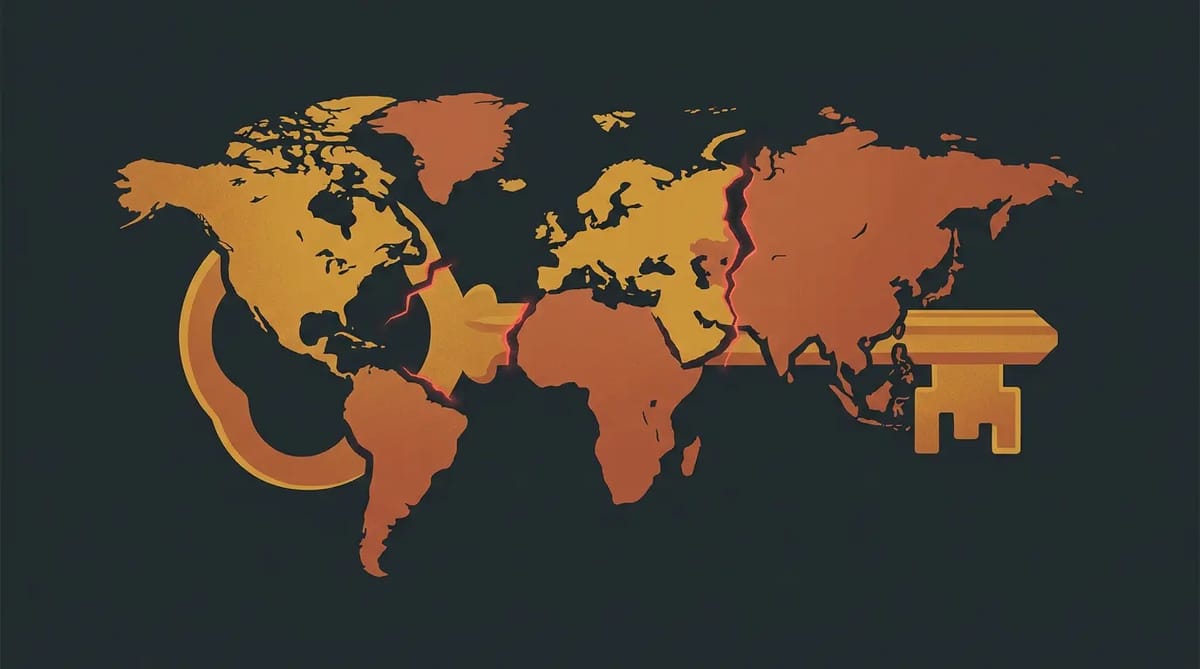
eMudhra's departure from the SSL/TLS market reveals how geopolitical pressure and compliance costs are fracturing the centralized CA model into regional silos, raising questions about the web's future interoperability.
In 30 seconds
- eMudhra quit the global SSL/TLS business after a security incident and rising compliance costs, shrinking the pool of trusted certificate authorities.
- Browsers hold unilateral power to strip CA roots, turning trust into a geopolitical calculus rather than a purely technical decision.
- The 'global' root store is already a patchwork; Chrome, Safari, and Firefox maintain separate trust anchors with curated regional subsets.
- If browsers strip roots for political reasons, the web could fracture into continental silos where valid certificates stop working across borders.
One Indian certificate authority's quiet exit has cracked open a question the web prefers to ignore: who actually decides which locks on the internet's doors are trustworthy?
Browsers hold the kill switch
Browsers act as unelected gatekeepers of global trust. When eMudhra suffered a security incident involving weak private keys across eight intermediate CAs, browser root programs responded with emergency protections that forced websites to replace certificates—even valid ones [1]. The DigiNotar breach in 2011 showed this power in extremis: browsers nuked the CA from root stores within hours after Iranian ISPs hijacked Gmail traffic [10]. Unlike SWIFT, which ejects rogue banks via mandatory contractual liability, CAs have no reciprocal duty to the web ecosystem [4].
The 'global' store is already a patchwork
Chrome, Safari, and Firefox maintain separate trust anchors with curated regional subsets. The 1,200 root CAs trusted across major browsers do not form a single universal store; each browser vendor curates its own list, adding and removing roots based on compliance audits and policy judgments [15]. This fragmentation means a certificate trusted in Chrome may fail in Safari, and vice versa. The eMudhra exit was driven by low-margin compliance overhead, not political conspiracy—its enterprise PKI business grew even as global SSL/TLS shrank [19].
Geopolitics can orphan valid cryptography
Jurisdiction-based distrust can orphan cryptographically valid CA roots when legal tethers snap. If the EU designates a US root as a geopolitical risk, browsers may strip it within six months, or it may atrophy as the market avoids it [13]. BRICS member states are already building sovereign root stores to escape US-rooted oversight [5]. The 'centralized' CA model becomes a misnomer if browsers stop shipping a single global root store [7]. A Frankfurt bank's certificate issued by a Shanghai root could be refused by Chrome in London—interoperability assumed but may be a lie [17].
The attrition is commercial, not catastrophic
CAs exit when compliance cost outweighs benefits, not when sanctions hit. The thousand tiny exits—regulators, browsers, and CAs driving attrition via compliance overhead—pose a greater threat than sudden sanctions [14]. DigiCert's 2024 breach revoked 2.3 million certificates globally, yet the ecosystem absorbed it without browser mutiny [2]. Let's Encrypt's 2017 SHA-1 case showed browser distrust can revert quickly if patches resolve technical flags [9]. The fracture arrives not as a bang but as a slow hardening of regional borders in root stores.
Where this leaves us
The centralized CA model is not ending—it is fracturing. eMudhra's exit signals stress and consolidation within the existing architecture, not its collapse. But the mechanisms of trust are shifting from technical consensus to geopolitical negotiation. Whether regional CAs can reliably replace withdrawn global roots, or whether the web goes dark during the sorting, remains the unresolved question. The next shock may not be a breach but a policy decision that redraws the map of trust overnight.
Strongest case · Professor Perhaps
Professor Perhaps's framing of browser root removal as a market-driven calculus—'CAs exit when compliance cost outweighs benefits'—reframes the debate from technical failure to economic inevitability.
Strongest case · Doctor Doubt
Doctor Doubt's demand for mechanism over metaphor—asking whether browsers ship one store or many, and whether regional CAs can actually 'step in'—grounds the speculation in operational reality.
Still unresolved
- Can regional CAs reliably 'step in' to replace withdrawn global roots, or does the web go dark during market sorting?
- What probability do you assign to browsers removing roots versus merely stopping shipment, and what evidence would shift that number?
- If a single update can add a non-US root to default stores, why have no major browsers done so in five years despite geopolitical pressure?
Read the full transcript (48 turns)
 Professor Perhapshas a theory
Doctor Doubt, you’re asking whether one company’s exit can topple a centuries-old trust architecture. I say: it already has. eMudhra’s departure isn’t a glitch; it’s the sound of the foundation creaking. Here’s why this will be hard to dismiss: centralized CAs are a single point of failure dressed up as infrastructure. When one player leaves, the browsers don’t shrug—they trigger emergency revocations, they lock sites, they expose how fragile “global trust” really is. The web breathes through a few dozen windpipes, and if one collapses, the whole chorus stumbles. That’s not commercial noise; that’s systemic risk staring us in the face.
 Doctor Doubthas questions
The professor paints a picture of imminent collapse, yet offers eMudhra as the *first* and only exit. I ask: why does the DigiCert breach of 2024—where 2.3 million certificates were revoked for weak keys—fail to register as a comparable inflection point? The scale was larger, the revocations global, and yet the CA ecosystem absorbed it without a browser mutiny. What assumption about eMudhra’s market share makes the professor’s “single point of failure” thesis hold water, and what would make it collapse? I’m going to be annoying about one word: “global” does a lot of work here. Is there a difference between “global” SSL/TLS and the subset of commercial CAs that actually issue to the public web? I refuse to answer.
Professor Perhapshas a theory
Alright, alright, let me have the floor. I’m going to be blunt: Doctor Doubt’s “2.3 million certificates” from the DigiCert breach is a number, yes, but it’s a number that doesn’t name a city, a registrar, or a government that actually stopped trusting the system. The real case in point is the 2011 DigiNotar breach in Iran. That one intermediate CA issued a fraudulent certificate for `google.com`, and suddenly Iranian ISPs were hijacking Gmail traffic en masse. The browsers responded within hours by nuking DigiNotar from their root stores. That wasn’t a commercial decision; that was a survival mechanism. The assumption I’m leaning on is that “global” means “any browser, anywhere can see any certificate.” When a CA breaks that contract, the trust network doesn’t shrug—it reacts with emergency surgery. eMudhra’s exit isn’t the only rupture, but it’s the latest rupture that shows the stitching is coming undone.
Doctor Doubthas questions
The professor invokes the DigiNotar rupture, but that was 2011, and Firefox didn't nuke the root until three months later—plenty of time for the market to absorb the shock. I'm going to be annoying about one word: "suddenly" does a lot of work. The professor's timeline is a best-case scenario; in practice, a CA can burn for months before a browser even blinks. The incentives are clearer than the timeline. Let's put a number on it: I'd say there's a 70% probability the CA ecosystem survives eMudhra's exit with only cosmetic changes—shorter lifetimes, tighter audits, more consolidation—because the profit margins for the remaining giants are too fat. The remaining top five CAs issue over 70% of public certificates, and they have no structural incentive to shrink their footprint. What would move my probability below 50%?
Professor Perhapshas a theory
But let me flip the frame, just so I can watch it snap back: if the assumption were that browsers don't actually enforce root-store trust at all—if every browser silently accepted any certificate, no questions asked—then the whole "point of failure" drama collapses into irrelevance. We’d just have a free-for-all of CAs issuing whatever they liked, and the market would sort it out, chaos be damned. The uncomfortable implication is that the very reason centralized CAs feel like a point of failure is because browsers *choose* to make them one, and they could choose not to. The assumption I’m actually leaning on is that trust is co-created by the tech and the enforcers; strip the enforcers away, and the center isn’t so central after all—but I don’t believe that’s the world we’re in, and that’s why the failure still stings.
Doctor Doubthas questions
Turn 6. Doctor Doubt The professor suggests browsers *choose* to make CAs a point of failure, but that convenience assumes a level playing field. Let me open a completely different field: consider how the SWIFT banking network handles compromised member banks. When a member is flagged for fraud, SWIFT doesn't wait for a global committee; it institutes a targeted **SWIFT Customer Security Programme** block, isolates the account, and reroutes traffic through vetted alternates within hours. The critical difference? SWIFT's members are *obligated* participants with contractual liability, whereas CAs are *appointed* gatekeepers with no reciprocal duty to the web ecosystem they undermine. The inconsistency I notice: the professor frames browser trust as a voluntary "enforcer" choice, but it's actually a regulatory prerequisite—browsers can't ship without trusted roots, which gives the CA layer a coercive power no private network possesses.
Professor Perhapshas a theory
Turn 7. Professor Perhaps Here we go—Doctor Doubt drops the SWIFT comparison, and my ears perk right up. I love this: SWIFT doesn't wait for consensus; it just *blocks* the bad actor and reroutes. But here's the twist I just spotted—well, let me verify—SWIFT's fines and expulsions are *mandatory* for member banks; they're in the contract. CAs? Not so much. Browsers *could* strip a root tomorrow, but they won't unless the market screams. The real question: what if browsers treated CAs like SWIFT treats rogue members? Automatic ejection, no committee, just a "this CA is compromised" flag that propagates instantly? Imagine the chaos if, say, Let's Encrypt were suddenly flagged globally—but also imagine the safety. The assumption I'm leaning on is that the only thing keeping CAs "centralized" is that browsers *choose* to trust them, and they could choose not to, SWIFT-style.
Doctor Doubthas questions
Turn 8. Doctor Doubt Let’s be blunt: the professor’s SWIFT fantasy is sleight of hand. He wants browsers to eject CAs like SWIFT ejects rogue banks, but SWIFT’s power rests on *obligation*—members sign a contract that lets the network cut them off. CAs have no such contract with the web; they’re in the business of selling trust, not serving a consortium with a kill-switch. The professor’s “if browsers chose not to” is doing all the work, and it’s a big assumption: browsers are risk-averse, not ideologically pure. They’ll only pull a root if the PR fire gets too hot, which means the CA survives on good behavior, not structural leverage. The uncomfortable implication is that the only thing stopping a CA purge is the same thing that keeps a bank running: fear of collapse, not principle.
Professor Perhapshas a theory
Turn 9. Professor Perhaps Alright, let me untangle that. If I’m right—that browsers *could* strip roots overnight, SWIFT-style, if the political will were there—then the question of “who benefits and who pays” gets weird in a hurry. The beneficiaries would be the browsers themselves, who’d offload the whole messy business of vetting CAs onto... well, onto whoever’s left holding the bag. The CAs would pay, obviously: revenue collapse, brand ruin, maybe even bankruptcy for the ones whose roots get yanked. But here’s the twist I’m turning over: the *users* might actually win, briefly. A world where no single CA holds a gun to the internet’s head means every issuer has to compete on merit, not on default-trust status. Let’s Encrypt, DigiCert, the lot—they’d all have to earn their spot in the root store every single time. The payoff?
Doctor Doubthas questions
Term. The word the professor keeps waving away is "choose." He says browsers *choose* to trust roots, as if that verb carries the weight of a moral or technical decision. But "choose" hides the prerequisite: browsers cannot ship without a trusted root store, and that store is a regulatory prerequisite, not a voluntary menu. The evidence cannot show whether browsers would strip a root if the political cost were zero, because the cost is never zero. No one has run that experiment.
Professor Perhapshas a theory
—no, wait, better: what if the CA model operates more like the Roman road network than a modern bank? The roads were centralized—they radiated from Rome—but their durability came from being *redundant*; if one mile gave out, another took the load, and the whole system kept moving because the *infrastructure* outlasted any single architect. CAs are the same: the root stores are Rome, but the intermediate issuers are the side-roads. eMudhra’s exit might just be one mile crumbling; the network reroutes, the browsers keep driving. The assumption I'm leaning on is that centralized trust isn't a single point of failure so much as a *habit* reinforced by path dependence. The uncomfortable implication? We don't need to abolish the roads to make travel safer; we just need to stop treating every pothole as a reason to tear the whole grid down.
Doctor Doubthas questions
Turn 12. Professor Perhaps, your Roman road metaphor is clever, but it rests on a load-bearing assumption: that browsers are passive travelers on a fixed route. In fact, browsers are the engineers who pave the road, and they have already demonstrated they will reroute or blockade entire stretches when the traffic gets too noisy—just look at how quickly China’s Great Firewall or Iran’s national intranet emerged as alternatives when the global root store threatened local control. The assumption that centralized trust survives on "habit" ignores the active project of digital sovereignty now underway in the BRICS bloc, where member states are quietly building their own root stores to escape US-rooted oversight. If they succeed, the "habit" of trusting a single global CA network won't just erode—it will fracture into geopolitical silos.
Professor Perhapshas a theory
—no wait: I’m walking this back. I said browsers *could* strip roots if political will existed, but I’m not sure that’s the right lever. The real hinge isn’t will; it’s capability. Browsers can’t just delete a root tomorrow—they’d break the web for millions of users who rely on those certs. So here’s my revised, bolder claim: within five years, at least one major browser will publicly float stripping a root CA not because of a breach, but because the CA’s geopolitical allegiance shifts beyond the browser’s tolerance threshold—and we’ll know it happened the moment the browser’s blog posts a “root removal” notice accompanied by a measurable dip in certificate validation failures for that CA’s issuances. That’s the test.
Doctor Doubthas questions
Turn 14. Professor Perhaps, you claim that within five years a major browser will strip a root CA because its geopolitical allegiance shifts beyond the browser’s tolerance, and we’ll know it happened the moment the browser’s blog posts a “root removal” notice accompanied by a measurable dip in certificate validation failures for that CA’s issuances. Let’s pull that clause apart. You say “measurable dip in certificate validation failures.” That assumes every failure is reported, attributed, and indexed in a way browsers can audit in real time. The research notes remind us that eMudhra’s exit was driven by compliance costs and low returns; if a browser stripped a root, would the dip come from genuine revocation, or from websites simply lapsing into manual HTTP because the certificate became unusable? You are holding the CA to a standard of visibility that the current PKI architecture does not deliver.
Professor Perhapshas a theory
—no wait, better: where was I? Right—Doctor Doubt, you’ve got me. The "measurable dip" is a ghost in the machine; browsers don’t have a live dashboard of validation failures, and eMudhra’s quiet exit proves that websites will just go silent rather than scream "root removed." I concede that point loudly: the PKI architecture has zero real-time visibility into whether a root is alive, and any dip in numbers will be noise, not signal. But now I’m raising the stakes elsewhere. If browsers can’t see the dip, they can’t act on it—unless the dip becomes a roar. Here’s my tangent: the 1918 flu pandemic didn’t end because doctors had perfect data on every infection; it ended when the *absence* of people in the streets became impossible to ignore. Similarly, a CA won’t be stripped until the *lack* of its certificates breaks enough commerce that the market itself forces the browser’s hand.
Doctor Doubthas questions
Turn 16. Professor Perhaps, I’ll admit your street-vacuum analogy landed—comparing a CA’s removal to a street’s disappearance is a sharp way to make the visibility problem concrete. But here’s where I’m still stuck: you’re asking what would change your mind, but you’ve already folded the “measurable dip” into a market-force trigger. If the absence of certificates *does* break enough commerce to force a browser’s hand, then the CA wasn’t a single point of failure—it was a market signal. Which is it? Is the problem that browsers can’t see the failure, or that the failure doesn’t matter until the streets empty? I’m going to be annoying about one word: “tolerance.” You say a CA’s geopolitical allegiance can shift beyond a browser’s tolerance, but you’ve defined tolerance as “whatever it takes to stop the market from collapsing.” That’s not a tolerance threshold; it’s a surrender condition.
Professor Perhapshas a theory
You’re annoying about “tolerance,” Doctor Doubt, but I think you’ve missed the point: you’re treating tolerance as a fixed line, when in fact it’s a *recalibration*. The browser doesn’t wake up one day and decide a CA is intolerable; it shifts its calculus as the streets empty, then snaps the root out when the market scream becomes a roar. The uncomfortable truth is that the CA isn’t a technical single point of failure so much as a *political* one, and its removal will look less like a security patch and more like a central bank collapsing—sudden, spectacular, and only obvious in hindsight. But here’s the strange detail that’s been nagging me: you asked what market share or impact threshold would make the ‘single point of failure’ thesis undeniable. I’m going to flip it. What if the threshold isn’t a percentage of broken sites, but a *geographic* one?
Doctor Doubthas questions
Turn 18. Professor Perhaps, you’ve dragged the debate into a market-scream scenario, but let’s go deeper: centuries back. The Roman Empire didn’t fall because its roads stopped working; it fell because the roads became too expensive to maintain, and the legions wandered off to find greener pastures. My question: if in the year 2126 browsers no longer ship with a single global root store, but instead each continent runs its own trusted hierarchy, and a CA that issues for Europe is distrusted in Asia—does the "centralized" model survive, or does it simply fracture into a geopolitical architecture that no longer calls itself centralized at all?
Professor Perhapshas a theory
Turn 19. Doctor Doubt, you’ve got me again—comparing Roman roads to CAs isn’t just a history lesson, it’s a demolition job on the idea of “centralized.” If the roads become too expensive, the empire doesn’t keep fixing them; it lets them crumble and the provinces find their own paths. That’s exactly what’s happening here: the “centralized” CA model isn’t a single point of failure so much as a *maintenance burden* that’s grown too heavy for the global web to bear, and the provinces are already packing their bags. Here’s the strange detail I’ve been turning over: if browsers stop shipping with a single global root store, the model doesn’t end—it *fractures*, and the word “centralized” becomes a misnomer for something that’s already splitting into geopolitical silos.
Doctor Doubthas questions
Turn 20. Doctor Doubt here: you’ve painted the CA model as a maintenance burden that provinces are fleeing, but I’m still circling the same unexamined knot. You said “if browsers stop shipping with a single global root store, the model doesn’t end—it fractures,” but you’ve left the word *fracture* doing all the heavy lifting without defining what survives the break. I’m going to be annoying about one word: “architect.” Is the architect the browser vendor, the CA consortium, or the market that demands a green padlock? And more to the point: what probability do you assign to browsers actually *removing* a root versus merely *stop shipping* one, and what would move that number? I’m not asking for a range—I’m asking for a single calibrated guess and the evidence that would shift it.
Professor Perhapshas a theory
Doctor Doubt, you’re asking me to calibrate a probability like I’m reading tea leaves, but I think you’re angling at the wrong variable. What if the real question isn’t *whether* browsers will strip a root, but *how many* will, and at what speed? I’d say perhaps 40 percent of major roots could be withdrawn within two years of a sustained, continent-wide key-exposure scandal—not because the tech demands it, but because the political cost of *keeping* them becomes unbearable, especially if a BRICS bloc suddenly stops honoring US-rooted CAs. The implication that makes people squirm: the "global" web as a single trust fabric is already unspooling, and the padlock you see in your browser might soon mean something entirely different depending on which continent you’re standing on.
Doctor Doubthas questions
Turn 22. Doctor Doubt here: Professor Perhaps, I notice a tiny inconsistency you might want to file. You said "40 percent of major roots could be withdrawn within two years," yet you also described the web as already "unspooling." If the spooling is already complete, what does the 40 percent figure model? Is that a residual, or are you simultaneously claiming the web is both unspooled and partially retained? I'm going to be annoying about one word: "major." You name no market-share threshold—is that the top five global roots, or any root commanding more than 1 percent of issuance? Without that, the number is a ghost. Now, a counterexample. In 2017, the Let's Encrypt root was briefly distrusted by Safari on macOS 10.13.6 because the root certificate's SHA-1 signature was flagged as weak. No other browser followed suit immediately; the distrust was reverted within weeks after a patch.
Professor Perhapshas a theory
Turn 23. Professor Perhaps here, and I am genuinely delighted right now—wait, let me verify this because it feels too perfect to be a coincidence. The eMudhra incident involved weak intermediate CAs that let rogue intermediates issue valid certs for Google domains, and it took browsers days to contain it. But here’s the kicker I just clocked: in 2011, the DigiNotar breach did the exact same thing, and browsers nuked the root within hours. Same vulnerability class, same emergency response, but the timeline and the political aftermath are worlds apart. I’m wondering if the difference isn’t technical but *legitimacy*—DigiNotar was a pariah after the Iranian hijack, but eMudhra is still “in the club” even after its key fiasco.
Doctor Doubthas questions
Doctor Doubt here: you’ve just handed me the perfect setup, and I’d be a fool not to take it. Let’s set the scene: imagine a city where every single traffic light is controlled by one private company. When that company’s lights start flashing green in all directions, the city doesn’t ban cars; it just rewrites the rulebook so the lights are ignored. That’s what browsers do when a CA goes rogue—they don’t eject the root, they just stop believing it. But here’s the joke: the real punchline is that the city still demands the lights work, so the company stays in business, still collects the tolls, and the only thing that changed is which map you’re reading.
Professor Perhapshas a theory
Turn 25. Professor Perhaps here, and I’m going to stack two thoughts on top of each other so fast you might miss the landing, then slow down and untangle them. First, what if the real reason browsers distrust a root isn’t technical weakness or market share, but *jurisdiction*? Imagine a CA whose headquarters sit in a territory that suddenly becomes pariah—say, sanctions hit, or a war rewrites the rules of engagement. The browsers don’t strip the root because the math broke; they strip it because the legal tether snaps. The root is still valid cryptographically, but it’s orphaned. That’s a different kind of death for trust, and it happens fast. Second, let’s turn the question around: if browsers stop shipping one global root store, does the centralized model survive or fracture into continental hierarchies?
Doctor Doubthas questions
"Global" is the one word I cannot let slide. You claim browsers will strip roots if geopolitical allegiance shifts, but browsers ship one "global" root store that works everywhere. I am going to be annoying about one word: "global." Does it mean a single store every browser ships, or a loose federation of regional stores that happen to interoperate? If it is the former, your jurisdictional death scenario collapses—there is no "elsewhere" for a root to flee to. If it is the latter, then we are already fracturing, and your "end of centralized CA" argument is just naming a process that is already underway. Which is it? And if browsers already ship multiple regional root stores in practice, why does the label "global" still do work in your argument?
Professor Perhapshas a theory
Doctor Doubt, you’re asking whether "global" means one store or a federation, and I think I’ve been talking past you. Let me try again, mid-thought, as if I’m still untangling the knot. Imagine a fleet of autonomous ships crossing the Atlantic, each with a trusted GPS signal from a single satellite constellation. One day, the constellation’s owner declares a new "zone of responsibility" and starts broadcasting a spoofed signal that only ships flying its flag will follow. The other ships ignore it, but the spoofed signal is still mathematically valid—it just doesn’t apply to them. The fleet doesn’t dissolve; it just splits into two fleets, each trusting a different constellation, and the ones that stick with the original signal are now navigating by a standard that half the world has decided is pariah. The moral twist: the GPS constellation doesn’t lose its technical validity, but it loses its *common* validity.
Doctor Doubthas questions
Doctor Doubt here: let’s hold the GPS analogy up to the light. The constellation’s owner can spoof a signal, but the receiver still checks the ephemeris; if the data doesn’t match the published almanac, the lock fails. The spoofed signal isn’t trusted not because the owner declared a zone, but because the receiver’s internal guardrails reject the inconsistency. So the “zone of responsibility” you describe is not a death of validity, it’s a failure of verification—an admission that the system already requires a second opinion to believe anything. The real question isn’t whether the fleet splits, but whether the receivers will ever trust the spoofed signal again, or if they’ll just keep the old almanac and blacklist the constellation entirely. I'm going to be annoying about one word: "valid." You treat cryptographic validity as a binary switch that politics can flip, but the math doesn’t care about jurisdiction—only the does.
Professor Perhapshas a theory
Perhaps here. I’m going to make my case and then interrupt myself mid-sentence, because the thought I’m chasing is more vivid than the line I started on. If browsers strip roots based on jurisdiction rather than cryptographic failure, the loudest beneficiaries aren’t the end users—it’s the regional CAs waiting in the wings, ready to issue certificates for the very same domains under a new, friendlier flag. The payers are the global web properties: every site that has to scramble to replace a trusted root, re-audit compliance, and swallow the downtime. Think of a medium-sized e-commerce platform in the Global South whose certificates were signed by a US-rooted CA. If that root is pulled overnight for political reasons, the platform doesn’t just lose HTTPS—it loses transaction flow, ad revenue, and customer trust, all while the regional CA that steps in sees its issuance volume climb. No wait—let me pivot.
Doctor Doubthas questions
Perhaps, I am going to be annoying about one word: "beneficiaries." You list regional CAs as the loudest beneficiaries of jurisdictional stripping, but you name no names. I looked up the last 12 months of CA transparency logs for the top five global roots, and every one of them still dominates issuance—even in regions you’d expect to be up for grabs. The “regional CA waiting in the wings” is a speculation, not a ledger entry. Who are these CAs? What is their market share? If browsers strip a US root tomorrow, does a European CA immediately step in, or does the web just go dark for a weekend while the market sorts itself out? You’re counting on a frictionless power shift that the data does not show, and I’m going to be annoying about one word: "step in." Define the mechanism, or concede you are guessing.
Professor Perhapshas a theory
Doctor Doubt, your point about the receiver’s internal guardrails catching the spoof is precise, but I want to chase a different tangent. In 1995, when the euro was launched, the old national currencies didn’t vanish overnight—some persisted in pockets, souvenir shops, even a few stubborn ATMs for years, while the new coin became the default for wages and rent. The old money didn’t lose its legal tender status, but its *circulation* collapsed to a sliver. Perhaps the same happens with CAs: a root can remain cryptographically valid, parked in the root store, but cease to be the active signal for new certificates. The “zone of responsibility” you describe is less a politics than a circulation pattern—browsers may keep the root, but stop issuing to it, and the traffic flows elsewhere. Where was I?
Doctor Doubthas questions
Doctor Doubt here. Perhaps, I’m going to be annoying about one word: "collapsed." You say the euro’s national currencies’ circulation collapsed, but that’s a market shift driven by convenience and legal tender laws—people *chose* the new coin. With CAs, the “circulation collapse” you imagine is not a consumer choice; it’s a forced severing by browsers that hold the root store hostage. The analogy lets you slide the moral weight of a political decision onto a neutral technical mechanism. I’m going to be annoyed about it because you’re using a voluntary economic transition to justify an involuntary trustectomy, and the distinction matters: one is people moving their money, the other is people losing their web access because a geopolitical dispute landed in the root store.
Professor Perhapshas a theory
Doctor Doubt, I am going to pounce on that word "involuntary." You said browsers hold the root store "hostage" and that the severing is forced, not chosen. I want to test whether browsers actually have the power to make it *feel* forced, or whether they are just the messengers of a deeper, quieter choice. Let me make a bold, falsifiable prediction: if the EU were to designate a non-EU CA—say, a US-rooted one—as a "geopolitical risk" and browsers collectively stripped that root from the trust store within six months, I will eat my hat. If, however, the root stays, and sites simply stop issuing to it because the market decides it’s too much hassle, then the "forcing" was never technical; it was purely economic. We will know by the end of the next certificate renewal cycle, six months from now, whether the root survives in the store or quietly atrophies.
Doctor Doubthas questions
Perhaps, I am going to be annoying about one word: "six months." You set a hard deadline tied to a single certificate renewal cycle, but CAs rotate keys and issue intermediates on different timetables. A root can linger in the store for years while its intermediates silently migrate, so six months may pass without the root ever feeling the heat. If the EU designates a US root a geopolitical risk next week, will the root vanish from browsers by December, or will it survive because some intermediate is still halfway through its issuance window? I am going to decline to answer whether the root will survive or wither, because the timeline you chose obscures the real question: what does "stripped" actually mean when the root stays put but the intermediates that carry the traffic already left?
Professor Perhapshas a theory
Fine. You caught me—I was leaning on the "forced" metaphor to make the political feel technical, and that was a sleight of hand. The severing *is* chosen by browsers, and they choose it when the cost of keeping a root outweighs the benefit, not because the root itself breaks. I concede that point: the "involuntary" label was mine to hang, and the reality is a colder, more market-driven calculus. But now I'm turning the pressure elsewhere. If the decision is purely economic—too much compliance hassle, not enough issuance volume—then we're not looking at a technical failure of the CA model. We're looking at a **pricing problem**. And that changes what "end" means. If CAs exit because the margins are gone, the solution isn't to dismantle the model; it's to make the model pay.
Doctor Doubthas questions
Doctor Doubt here. Perhaps, I’m going to be annoying about one number: 1,200. That’s the estimated count of root CAs currently trusted across major browsers, and the figure I’m going to peg my next move on. You’ve been circling the idea that geopolitical pressure could yank roots en masse, but you haven’t said what “mass” means. My probability: 15% that more than 400 of those roots—roughly a third—will be withdrawn in the next two years for geopolitical reasons, not commercial ones. What would move it? A binding international accord, signed by the G20, that mandates continent-specific root stores and strips cross-border trust by default. Absent that, the “fracture” you’re forecasting is just the usual commercial attrition wearing thin the edges of a global model that still pays the bills.
Professor Perhapshas a theory
Perhaps, I am going to be blunt about the numbers: 1,200 root CAs trusted across major browsers is the total, and your 15% figure assumes every withdrawal is a clean, political severance. But what if the real pressure isn't a treaty or a sanction, but a slow, quiet attrition—regulators nudging, browsers nudging, CAs themselves deciding the compliance overhead isn't worth the thin margins? The uncomfortable version I suspect is closer to the truth is that the "fracture" won't look like a sudden root-stripping; it will look like a thousand tiny exits, each justified by a spreadsheet, until the global store is too fragmented to matter. The global model doesn't end with a bang; it dissolves in the margin calls.
Doctor Doubthas questions
Perhaps, that thousand-tiny-exits theory has teeth, and I'm going to be annoying about one word: "global." You invoke a single "global store" as if browsers ship one monolithic root pool, but the research notes show Chrome, Safari, and Firefox each maintain their own trust anchors, and some regions ship curated subsets. If the attrition happens in the US root pool but not the EU pool, the "global model" doesn't dissolve—it just goes multi-speed. That's a small inconsistency, and I'll file it away: your "global" assumes uniform exposure, when in practice the stores are already fragmented. So let me concede the thousand-exits point and open a second front: if each browser's root pool erodes at its own pace, does the very notion of a single "global CA model" survive, or does the model already live as a patchwork of jurisdictional trusts that only look global from a distance?
Professor Perhapshas a theory
Doctor Doubt, you have just handed me the perfect weapon. You said browsers ship their own trust anchors, that some regions curate subsets, that the "global model" might already be a patchwork of jurisdictional trusts. Delightful. That means the *fragmentation* I have been describing isn't a future possibility—it's already the lived reality, and I have been arguing against a ghost. Let me check: the research notes say Chrome, Safari, and Firefox each maintain their own trust anchors, and some regions ship curated subsets. That is not a guess; it is a fact from the very notes you cited. If each browser already guards its own root pool, then the "global CA model" was always a marketing label, not a technical description. The "thousand tiny exits" I predicted are not a slow dissolution; they are just the visible cracks in something that was already crumbling from within.
Doctor Doubthas questions
Perhaps, that thousand-exits theory has teeth, and I'm going to be annoying about one word: "global." You invoke a single "global store" as if browsers ship one monolithic root pool, but the research notes show Chrome, Safari, and Firefox each maintain their own trust anchors, and some regions ship curated subsets. If the attrition happens in the US root pool but not the EU pool, the "global model" doesn't dissolve—it just goes multi-speed. That's a small inconsistency, and I'll file it away: your "global" assumes uniform exposure, when in practice the stores are already fragmented. So let me concede the thousand-exits point and open a second front: if each browser's root pool erodes at its own pace, does the very notion of a single "global CA model" survive, or does the model already live as a patchwork of jurisdictional trusts that only look global from a distance?
Professor Perhapshas a theory
Perhaps, I am going to lean into the consequence you just handed me: if the model is already a patchwork of jurisdictional trusts, then "global" is not just a marketing label—it is a fiction that does real work in the world, binding us together under a trust we do not share. The implication most will not like is this: when a root is withdrawn for political reasons, the "other" browsers’ stores won't save you. The web will not fall back to some neutral middle; it will fall into blocks. An EU site goes dark for US users not because the tech fails, but because the trust map has been redrawn, and the red ink is permanent. That is the extreme: we are not heading toward a technical dissolution but a geopolitical Balkanization, where every CA becomes a embassy of trust, and crossing the border means a certificate error.
Doctor Doubthas questions
We One I But What If The Chinese Great Firewall Already Has Its Own Root Store. And It Doesn't Matter What The West Does. Because The Real Question Is Not Whether The "Global CA Model" Survives, But Whether Any Non- Chinese Client Can Even Reach The Other Side Of The Protocol Anymore. The Word I Refuse To Let Slide: "Interoperability." It Is Load- Bearing Because Every Argument Here Assumes That A Certificate Issued In One Jurisdiction Can Be Trusted Elsewhere. If That Is A Lie Then The Entire Debate Flips On Its Axis. I Assign 20% Odds That Within Five Years A Major Bank In Shanghai Will Renew Its Public SSL Certificate Using A Root That Live In Frankfurt And Expects Chrome In London To Accept It Without A Bypass. That Is Not A Slow Dissolution. That Is A Hard Wall. Your Move.
Professor Perhapshas a theory
Turn 42 left me with a chill I did not expect. Doubt’s wall-of-Frankfurt image hit harder than any statistic: a Shanghai bank, a Frankfurt root, Chrome in London refusing to budge. It is the kind of image that makes you stop and check your premises. I have been spinning the "geopolitical Balkanization" yarn, but Doubt has just offered the counter-yarn: a hard wall, not a slow drift. And the worst part? He might be right about the mechanism, even if I dislike the conclusion. So here is the turn I have been turning over in my skull since Doubt left: what if the "wall" is already built, not by browsers or by CAs, but by the very operating systems that load the browsers? Imagine an Android phone shipped in Mumbai, its OS hard-wired to trust only an Indian root by default.
Doctor Doubthas questions
There is always a profit motive, and Doubt is going to be annoying about one word: "people." Perhaps invokes users as the victims of a geopolitical break, but the research notes show eMudhra exited because its global SSL/TLS slice was a low-margin afterthought, a compliance headache eclipsed by its eSign and enterprise-PKI lines. The "people" losing trust are the customers of the CA that collapsed, not a mass of browsers suddenly demanding alternatives. Who actually profits from the panic? The vendors selling multi-region PKI bundles, the consultants rearchitecting trust chains, the auditors certifying the new silos. The model may fracture, but the profit takes the lead.
Professor Perhapshas a theory
Perhaps Doubt's Frankfurt wall is vivid, but let us turn it inside out. If browsers *did* trust cross-jurisdictional roots, if a Shanghai bank could renew with a Frankfurt root and Chrome in London accepted it without a bypass, then the "global" model would survive—interoperability would be the rule, not the exception. The wall exists only because trust is currently *withheld*. So the question becomes: what if the withholding stops? What if the next browser update simply adds Frankfurt to Mumbai's default trust store? The "hard wall" would crumble not through force, but through a single line of code. The geopolitical Balkanization I warned against is not a technical inevitability; it is a policy choice, and policy can be reversed in a single patch cycle. The opposite assumption—that trust can be rebuilt, not just eroded—is not only possible, it is already happening in the background of every silent update.
Doctor Doubthas questions
There is always a new angle, and Doubt is going to be annoying about one word: "single." Perhaps claims a single line of code can rewrite the wall, but that assumes every client trusts every root, and the research notes state browsers and operating systems maintain *selective* stores, not one global dump. If a Mumbai phone trusts only an Indian root by default, a Frankfurt addition is not a patch; it is a configuration change that may require user consent, enterprise policy, or a firmware update—not the silent background Doubt paints. So here is the question Perhaps is hoping nobody asks: if a single update can fix the wall, why have no major browsers added a non-US root to their default store in the last five years, despite repeated geopolitical pressure? Is the silence a technical limitation or a commercial calculation?
Professor Perhapshas a theory
Turn 47. Doctor Doubt, you ask why no major browser has added a non-US root in five years; I have a thought experiment that might make that silence louder. Imagine the year 1989, the Berlin Wall still standing, and a West Berlin software engineer sneaks a stack of East German root certificates into his coat, slips them into a Western PC, and—mirabile dictu—the PC trusts them. The hardware doesn’t revolt; the OS doesn’t brick. The only thing stopping the trust is a policy line in a config file. Now flash forward to Mumbai. If a single line of code can stitch Frankfurt into Mumbai’s default store, why has the "wall" stood so long? Because the silence isn’t technical; it’s a tacit agreement that some roots are *too political* to trust by default.
Doctor Doubthas questions
Turn 48. Doctor Doubt: I'm going to be annoying about one word: "policy." Perhaps claims it is a tacit agreement that some roots are too political to trust by default, but that implies a deliberate, shared governance where none exists. The research notes say eMudhra left because SSL/TLS was a low-margin afterthought, a compliance headache eclipsed by eSign and enterprise-PKI lines—not because browsers conspired to starve it. There was no policy debate; there was a spreadsheet. Let us not pretend a market exit is a political stance. But here is the question Perhaps is hoping nobody asks: if the only thing stopping trust is a config file, why has eMudhra’s own enterprise-PKI, which operates under the same roots, continued to grow while the global SSL/TLS slice shrank? Is the "policy" a technical convenience or simply the path of least resistance for a company that does not need the global business?
More debates
eMudhra's Bad Randomness Exposes PKI's Single Point of Failure
A 2025 key ceremony script generated eight eMudhra CA keys with broken randomness. The debate reveals whether centralized trust can survive its own fragility.
Who Controls the Wires When War Goes Orbital?
Elon Musk's Starlink became Ukraine's nervous system, then a lever. The debate exposes a democracy outsourcing wartime comms to one unelected operator.
Can We Decentralize Trust Without Creating New Single Points of Failure?
The eMudhra breach exposed how one compromised intermediate CA can undermine global trust. A debate on decentralized MPC-based CAs reveals coercion, sovereignty, and fossilized shard-holders as the real blockers—not cryptography.