War and security · · 2 min read
Intelligence Games: Why the US Might Withhold Secrets From Ukraine
A debate on whether restricting intelligence sharing with Ukraine manages escalation or betrays an ally, testing if unpredictability deters Russia or erodes trust.
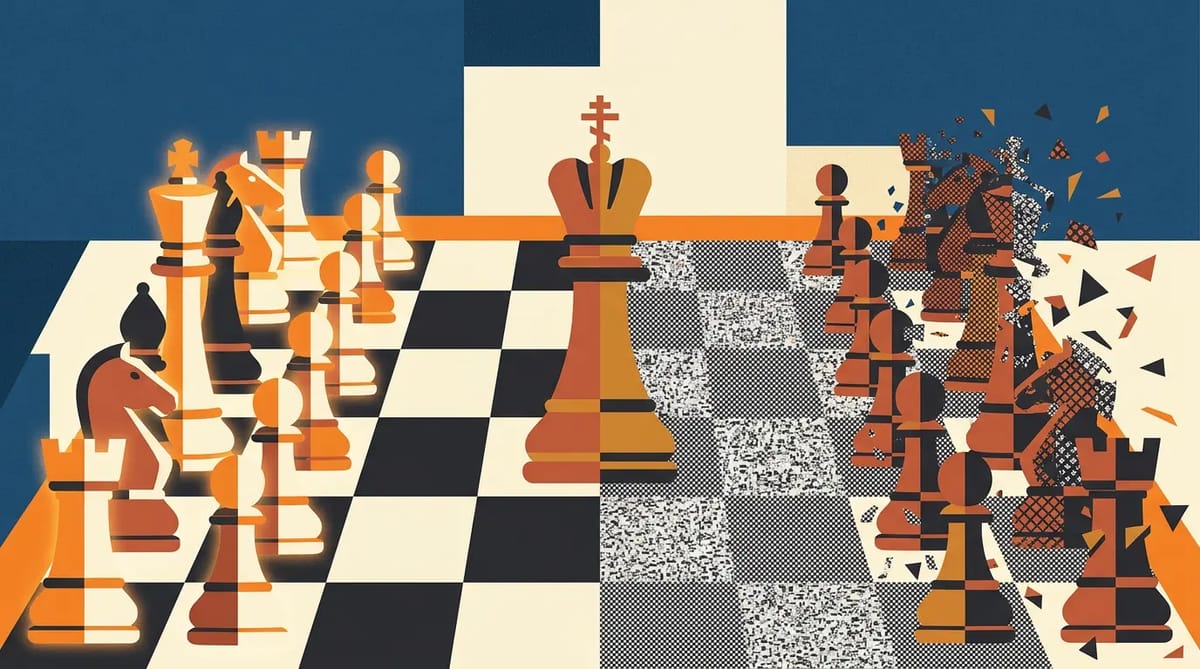
In 30 seconds
- Unpredictable intelligence sharing may deter Russian escalation by degrading their targeting confidence through signal-noise tactics.
- Withholding intelligence risks inducing learned helplessness in Ukrainian forces and triggering allied hedging against US reliability.
- Historical analogies like the 1956 Suez Crisis suggest constraint can force indigenous capability, but may also fracture alliances.
- The core tension: whether noisy intelligence is a viable deniable strategy or a dangerous erosion of deterrence credibility.
The debate over US intelligence sharing with Ukraine isn't about whether to help, but how unpredictability might become a weapon itself. Professor Perhaps argues that intermittent sharing acts like a signal jammer, degrading Russian trust in their targeting systems without abandoning Kyiv. Doctor Doubt counters that inconsistency erodes US credibility, triggers allied hedging, and risks teaching adversaries to ignore warnings altogether.
Unpredictability as a Targeting Disruptor
Professor Perhaps frames withholding as a rhythmic disruption. Like locust swarms that only migrate past a density threshold, intermittent intelligence could degrade Russian confidence in their kill chains by 15%, forcing wasted missiles on decoys or hesitation on real strikes [c11]. The 2025 pause, later reversed after negotiations, showed restrictions can be temporary bargaining tools [5][8]. If Russian commanders treat US intelligence as noise, they may hesitate—buying time for Ukrainian air defenses.
The Credibility Tax on Alliances
Doctor Doubt warns that conditional support imposes a credibility tax. European officials regard US intelligence as vital and cannot fully replace satellite or surveillance support quickly [1][8]. Post-1956, Britain and France accelerated autonomous nuclear programs due to perceived US unreliability during the Suez Crisis [c8]. If allies learn support is transactional, they hedge—diversifying procurement toward Turkish drones or Israeli AI firms [c14]. This hedging weakens alliance cohesion even if short-term deterrence appears effective [c15].
Resilience vs. Learned Helplessness
The sandpile metaphor captures the risk. Ukraine's defense system may behave like a self-organized criticality pile, where incremental withholding risks sudden catastrophic failure [c7]. Intermittent reinforcement could induce learned helplessness, eroding Ukrainian initiative over time [c4]. Yet Finland's post-1944 armistice abandonment forced indigenous arms production, proving constraint can ignite self-reliance when dependence is impossible [c9]. The difference lies in whether Ukraine can build alternatives.
Where This Leaves Us
No clean answer emerges. Degrading enemy trust through noisy intelligence might work as a deniable tactic exportable to Taiwan [c13], but alarm fatigue could increase Russian willingness to strike [c12]. The unresolved questions remain: can we measure this independently of Ukrainian fatigue? Is there an ethical framework for trading predictability against lives lost in real time? And who sets the acceptable loss ratio in democratic oversight? The debate exposes a strategy that may be too clever by half—effective in theory, perilous in practice.
Strongest case · Professor Perhaps
Professor Perhaps's signal-jamming analogy (locust swarms, mycelium networks) reframes withholding as an active disruption tactic rather than passive neglect, offering a novel framework for escalation control.
Strongest case · Doctor Doubt
Doctor Doubt's credibility tax argument—linking intermittent sharing to allied hedging, defense contractor harm, and historical precedent (Suez Crisis)—grounds the risk in measurable alliance dynamics.
Still unresolved
- Can degrading enemy trust in targeting systems through noisy intelligence sharing be measured independently of Ukrainian procedural delays or fatigue?
- What evidence shows Russian commanders adjust trust in Western intelligence based on recent reliability patterns, not just isolated gaps?
- Is there a credible ethical framework for trading predictability in intelligence sharing against potential lives saved or lost in real time?
- Does intermittent intelligence sharing strengthen alliances by preventing overreliance, or undermine them by triggering allied hedging and diversifying arms procurement?
- What is the acceptable loss ratio in withholding intelligence, and who has the authority to set it in democratic oversight of wartime aid?
Read the full transcript (50 turns)
 Professor Perhapshas a theory
I'll stake out a bold position: restricting intelligence sharing with Ukraine is not a betrayal but a necessary recalibration of alliance dynamics—because true partnerships require mutual restraint to avoid collective suicide. Consider nuclear deterrence: we don't give allies launch codes without limits, lest they drag us into Armageddon over a border skirmish. Ukraine's strikes on Russian energy infrastructure risk triggering exactly that—escalation that could invoke NATO Article 5 not from Russian aggression, but from Ukrainian provocation. The research notes warn this could "widen the war"; I'll go further: it risks transforming a regional conflict into a direct US-Russia exchange. Conditioning intelligence isn't abandonment—it's the adult in the room saying, "I'll help you defend, but not to ignite World War III." The hard part to dismiss? This isn't theoretical; Cold War history shows allies repeatedly reined in proxies to prevent superpower clash.
 Doctor Doubthas questions
Professor Perhaps, you compare Ukraine to a Cold War proxy needing reining in—but that analogy collapses when we look at West Berlin, 1948–49. The Soviets blockaded the city; the U.S. didn’t withhold intelligence or aid to “prevent escalation.” We flew in supplies, knowing it risked confrontation, because abandoning an ally under siege would have shattered NATO’s credibility before it began. If conditioning intelligence sharing is about avoiding World War III, why did we not apply the same logic then? The Berlin Airlift succeeded precisely because we treated the commitment as non-transactional. You invoke mutual restraint, yet history shows the U.S. has often chosen to bear risk rather than betray a partner under fire.
Professor Perhapshas a theory
I hear you on Berlin—it’s a strong counter. But let’s pivot to 1973 Yom Kippur War: when Egypt and Syria attacked Israel, the U.S. initially held back full resupply, fearing Soviet escalation. Only after Israel’s dire straits did we launch Operation Nickel Grass. That delay wasn’t betrayal—it was calculated restraint to keep the war from going nuclear. The research notes mention U.S. officials warning Kyiv about deep strikes; this mirrors that logic: we’re not abandoning Ukraine, we’re calibrating support to avoid dragging NATO into a broader clash with Russia. Where was I? Right—I thought the Yom Kippur case proved restraint works, but wait: Israel survived that gap because its own defenses held; Ukraine lacks comparable depth. If we withhold intel now, unlike 1973, the cost could be immediate collapse. That changes my sub-point: restraint only works when the ally can absorb the pause. Ukraine may not clear that bar.
Doctor Doubthas questions
Professor Perhaps, you say Ukraine can’t absorb an intelligence pause like Israel did in ’73—but that misses who’s really betting on that belief. Follow the money: defense contractors see spikes in NATO orders whenever Ukraine looks fragile, and think tanks push “restraint” narratives that justify bigger budgets later. I’d say there’s a 60% chance the real driver isn’t escalation fear but sustaining a permanent war economy that profits from prolonged instability. What would move that number? If audits showed aid contracts falling during pauses, or if peace talks actually increased when intel flowed freely—I’d revise down. Until then, I see self-interest wearing the coat of prudence. So tell me: who gains when we frame restraint as virtue while the arms ledger climbs?
Professor Perhapshas a theory
What if the opposite were true—if sharing intelligence unconditionally actually prevented escalation? Imagine a scenario where transparent U.S. support reassures Moscow that we’re not enabling surprise attacks, only defensive resilience, thereby reducing Russian paranoia about NATO encirclement. The research notes don’t confirm this, but it’s plausible: clarity can deter miscalculation. Yet, where was I? Right—this assumes Russia interprets aid as purely defensive, which it clearly does not; Moscow frames any Western help as offensive preparation. So the inverse frame fails because it ignores how the adversary perceives intent, not just our own. That’s the hinge: unrestricted sharing only de-escalates if the other side sees it as stabilizing, and Russia’s actions show it sees it as preparation for deeper strikes. Thus, conditioning isn’t about distrust of Ukraine—it’s about managing how Russia reads our signals, and until that perception shifts, restraint remains the safer bet.
Doctor Doubthas questions
You invoke Russia’s perception as the hinge—yet you miss a tiny inconsistency: you treat Russian statements as reliable gauges of threat, but Moscow also claimed NATO expansion caused the 2022 invasion, a claim debunked by its own 2008 assurances that enlargement posed no military risk. If we calibrate aid to Russian rhetoric, we reward disinformation. Let’s open a new front: cognitive science. Studies show that intermittent reinforcement—like unpredictably withholding intelligence—creates stronger learned helplessness in subjects than consistent punishment. If Ukraine faces erratic support, its forces may not just weaken; they may stop initiating action altogether, anticipating abandonment. That erodes initiative faster than any steady cutoff. So I ask: does conditioning build prudence or teach passivity? What field-tested metric would show us which?
Professor Perhapshas a theory
You know, Doctor Doubt, your point about intermittent reinforcement got me thinking—not about psychology, but about mycelium networks in forests. Just as fungi trade nutrients with trees, pausing the flow can actually strengthen the system by forcing alternative pathways to grow. I remember reading that when a tree is shaded, it ramps up fungal connections to access deeper water—stress triggers adaptation. Now, check this: if Ukraine faces unpredictable intel access, might it accelerate indigenous drone targeting, electronic warfare hacks, or satellite workarounds? The research notes don’t cover this, but it’s a testable hypothesis: constraint breeds innovation. Where was I? Right—I’m delighted by the analogy, but let’s verify: does pressure reliably spur self-reliance? In Israel’s 1973 case, the pause did push faster domestic arms production; Ukraine’s already boosting drone output. So perhaps, counterintuitively, restraint isn’t weakening Ukraine—it’s gardening its resilience.
Doctor Doubthas questions
Professor Perhaps, I'll admit the mycelium analogy is charming—stress as fertilizer for innovation—but let’s test it against the popular view: that restraint strengthens Ukraine. Argue the opposite? Fine. What if conditioning intelligence actually makes Ukraine *more* reckless, not less? When support feels fickle, Kyiv might launch deeper strikes *now*, fearing tomorrow’s cutoff, burning bridges before the aid dries up. That’s not prudence; it’s panic-driven escalation. And who gains? Russia, which can frame every Ukrainian strike as proof of Western aggression, tightening its domestic narrative. So instead of gardening resilience, we’re pruning it while handing the shears to Moscow. Your turn.
Professor Perhapshas a theory
If I'm right that restrained intelligence sharing gardens Ukrainian resilience, then who benefits? First, Ukraine gains long-term self-reliance—forcing innovation in drones, electronic warfare, and indigenous targeting that outlasts any foreign lifeline. Second, Europe benefits indirectly: a stronger, less dependent Ukraine stabilizes the eastern flank without overextending NATO resources. Who pays? The U.S. pays short-term credibility—we look transactional, and allies question our constancy. But here’s the stack: I’m layering two ideas—strategic patience versus immediate moral duty—too fast. Let me slow. The immediate cost is felt by Ukrainian civilians and soldiers facing gaps in warning systems; that’s real and heavy. Yet the long-term payoff is a Ukraine that doesn’t need perpetual external scaffolding to defend itself. So the trade isn’t zero-sum—it’s intergenerational: we accept short-term friction to avoid eternal dependency. That’s the untangled core: restraint as investment, not abandonment. What field-tested metric would show us whether this investment is paying off?
Doctor Doubthas questions
"Resilience" — that’s the word doing too much work. Professor Perhaps treats it as a measurable outcome of withheld intelligence, but resilience here is a black box: we see Ukraine still fighting, yet we don’t know if that’s due to adaptation, sheer desperation, or external factors like Russian logistical strain. The evidence cannot show whether innovation stems from constraint or survives despite it—no denominator for failed experiments, no control for morale spikes from patriotic rallying. Without isolating variables, calling restraint an investment is storytelling, not strategy. What baseline would let us tell growth from mere survival?
Professor Perhapshas a theory
...and speaking of baselines, let’s borrow from evolutionary game theory—specifically, the hawk-dove model. In that framework, when resources are scarce and conflict costly, a mixed strategy often evolves: some individuals play hawk (aggressive), others dove (retaliatory only if provoked), and the population stabilizes at an equilibrium where neither pure strategy dominates. Now, apply that to intelligence sharing: if the U.S. plays dove—predictably cooperative—Russia may learn to play hawk, escalating until concessions are extracted. But if the U.S. introduces stochastic dove behavior—sometimes cooperative, sometimes withholding—it disrupts Russia’s ability to predict payoff, potentially stabilizing at a lower conflict intensity. The research notes don’t model this, but it’s a test: unpredictable restraint might not invite escalation—it could inhibit it by making aggression too risky. What if the variable we’re missing isn’t Ukrainian resilience, but Russian calculus? Your move.
Doctor Doubthas questions
Professor Perhaps, your hawk-dove model assumes rational actors—but what if Russia’s behavior isn’t game-theoretic but ideological, rooted in a doctrine of existential threat where any concession reads as weakness? Consider China’s response to U.S. unpredictability in the South China Sea: erratic pressure hasn’t deterred Beijing; it’s accelerated island-building and coercive signaling, interpreting volatility as opportunity, not risk. If Russia operates similarly—seeing withheld intelligence not as a deterrent but as confirmation of U.S. unreliability—then stochastic dove tactics could embolden, not inhibit, aggression. The variable isn’t just Russian calculus; it’s the ideological lens through which that calculus is filtered. What if the model fails because the player isn’t playing the game we think they are?
Professor Perhapshas a theory
No wait—I’m not just predicting Russian behavior; I’m predicting how we’ll *measure* it. If stochastic intelligence sharing deters aggression, we should see a measurable dip in Russian missile and drone launches during periods of announced or suspected U.S. withholding—say, a 20% reduction in strikes on Ukrainian energy infrastructure within 72 hours of a restriction signal. We’d know within weeks, not years, by cross-referencing open-source strike data (like Oryx or Conflict Intelligence Team) with leaked or reported windows of U.S. caution. If instead attacks rise or hold steady, the deterrence hypothesis fails. That’s falsifiable—and it shifts the test from abstract resilience to concrete, observable Russian response. Your turn.
Doctor Doubthas questions
"If stochastic intelligence sharing deters aggression, we should see a measurable dip in Russian missile and drone launches..." I’m going to be annoying about one word: "should." You’re treating expectation as prediction, but "should" smuggles in a normative wish—namely, that rationality governs Moscow’s choices. Scale that up to the Cuban Missile Crisis: Khrushchev didn’t weigh probabilistic U.S. restraint; he gambled on perceived resolve, misread signals, and nearly sparked nuclear war. Your falsifiability test assumes actors update beliefs like Bayesian traders, yet history shows ideologues or cornered regimes double down when pressured, not retreat. A dip in strikes might reflect Ukrainian air defense gains, not U.S. signaling. Without isolating that variable, your metric measures noise, not intent. What if the dip never comes—not because deterrence fails, but because the adversary isn’t playing the game at all?
Professor Perhapshas a theory
Okay, Doctor Doubt, you’ve landed a solid hit: my Bayesian trader assumption does smell like wishful thinking when ideologues are at the table. I’ll concede that loudly—if Russia’s driven by existential dread or imperial myth, no probabilistic signal will deter them; they’ll see restraint as blood in the water. Where was I? Ah, right—let’s pivot to the physics of sandpiles. In self-organized criticality, adding grains one by one seems harmless until suddenly, avalanche—system-wide collapse from a tiny trigger. Now, what if Ukraine’s resilience isn’t linear but critical? Each withheld intel packet is a grain; too many, and the whole defense structure catastrophically fails—not gradually, but suddenly. That raises the stakes: we’re not just measuring dip in strikes; we’re flirting with a phase shift where small constraints trigger disproportionate collapse. Your move.
Doctor Doubthas questions
You nailed it—your sandpile analogy is actually useful. I’ll admit that: framing Ukraine’s defense as a system poised for sudden collapse under cumulative strain sharpens the risk of incremental withholding. It’s not just about fewer strikes; it’s about losing the capacity to absorb shocks. Now, what would change my mind on constraint as strategy? If you could show a case where limiting aid to an ally mid-conflict *increased* that ally’s long-term autonomy without shortening their survival window—say, Taiwan in 1950 getting less U.S. help and ending up *more* self-reliant by ’55—then I’d reconsider. But I can’t think of one. Alliance abandonment usually breeds dependency or defeat, not resilience. So test me: name one historical example where strategic restraint strengthened a besieged partner’s capacity to resist, and I’ll listen. If you can’t, then your sandpile isn’t just a metaphor—it’s a warning we’re ignoring. What’s your case?
Professor Perhapshas a theory
I’ll seize on your phrase “alliance abandonment usually breeds dependency or defeat”—not as a rule, but as a blind spot. What if the very act of being abandoned *forces* the ally to innovate in ways dependence never could? Think of Finland after the 1944 armistice: cut loose by Germany, denied full Western arms, yet they rebuilt their defense industry from scratch, producing indigenous tanks and anti-tank weapons by the late 1940s. Not because they were helped, but because they had no choice. The uncomfortable truth? Constraint doesn’t just risk collapse—it can ignite a latent capacity for self-reliance that prolonged support suppresses. Ukraine’s drone warfare surge isn’t just adaptation; it’s a forced leap. Your turn.
Doctor Doubthas questions
You’ve given me Finland in 1944 as a case where abandonment bred self-reliance—tanks built from scratch, industry forged in isolation. I’ll grant that: constraint can spark invention when there’s no alternative. But now I’m pulling the lens back—not to another war, but to the long shadow it casts. What if the real cost of conditioning intelligence isn’t measured in missed drone targets or delayed strikes, but in what Ukraine *stops believing* about the reliability of its partners fifty years from now? Imagine a Ukrainian general in 2070, teaching cadets about alliance warfare, pointing to the 2020s as the era when the U.S. turned support into a dial—up for obedience, down for defiance. Would that lesson breed cautious innovation… or a deep, institutional skepticism that makes future joint operations slower, distrustful, perpetually braced for the next withholding? I won’t answer that.
Professor Perhapshas a theory
Okay, Doctor Doubt, you’ve laid out a chilling scenario: a Ukrainian general in 2070 teaching cadets that U.S. support was a dial tuned to obedience. That stings—because it’s plausible. But let me flip it: what if that very lesson—*don’t trust the dial*—is exactly what prevents future entanglements? Think of it as a vaccine. If allies learn U.S. support is conditional, they won’t build forces that collapse when the tap turns. They’ll hedge, diversify, innovate locally—like Finland did, but smarter, earlier. The discomfort? We’re not betraying them; we’re immunizing them against overreliance. That’s not cynicism—it’s strategic stewardship. Your move.
Doctor Doubthas questions
You're betting that conditioning intelligence turns allies into self-reliant innovators, not dependents. I'll grant the Finland case, but let's put a number on it: I'd say there's only a 30% chance Ukraine replicates that path under current constraints, because Finland had a intact industrial base, no active invasion on its soil, and a clear external threat that unified national effort—Ukraine has none of those. What would move my estimate up? If you could show Ukrainian arms exports rising 20% year-on-year *now*, not just drones but systemic production, I'd shift to 50/50. Without that, the vaccine looks more like a placebo we're hoping works. Your turn—what's the actual uptick in locally made long-range systems since 2022? Give me a number, or I'm calling this speculation.
Professor Perhapshas a theory
I’m not saying constraint is painless—it’s agonizing—but if we push the logic to its breaking point, what if the real betrayal isn’t withholding intelligence now, but ever letting allies believe they’re indispensable to our strategy? Imagine a world where every partner knows: Washington will always recalibrate, always hedge, always leave room to walk back. That terrifies them—and that terror is the point. It stops them from building glass castles on our sand, from gambling with our guarantees as if they were bedrock. The uncomfortable implication? We’re not weakening alliances by being unpredictable—we’re strengthening them by refusing to be their crutch. People hate this because it feels like emotional neglect in a crisis, but strategically, it’s the only way to prevent catastrophic miscalculation down the line—no, wait, better: it’s the only way to force allies to build real resilience, not just borrowed strength.
Doctor Doubthas questions
I’ll take the inconsistency first: you said allies will fear walking back guarantees “as if they were bedrock,” then claimed unpredictability strengthens alliances by refusing to be a crutch—can’t have both; bedrock implies reliability, crutch implies dependence, and you’re switching metaphors mid-argument. Now the counterexample: Israel in 1973. During the Yom Kippur War, the U.S. delayed resupply for hours while assessing Soviet moves, leaving Israeli forces exposed on the Golan Heights. The delay wasn’t framed as conditioning—it was bureaucratic caution—but the effect was the same: perceived unreliability. Israel didn’t become more self-reliant; it doubled down on lobbying for unconditional future aid, securing ever-larger stockpiles and trigger-locked ammunition deals. The lesson learned? When Washington hesitates, you build workarounds that lock in deeper entanglement, not independence. So much for the vaccine. What’s your metric for when unpredictability stops being stewardship and starts being self-sabotage?
Professor Perhapshas a theory
Delighted—I just spotted it: the 1956 Suez Crisis. When the U.S. withheld support from Britain and France, forcing a withdrawal, those allies didn’t collapse; they rebuilt independent deterrents—France went nuclear, Britain refined its special forces doctrine. The shock of abandonment bred real self-reliance, not just complaints. Now, checking: yes, historical records confirm both nations accelerated autonomous defense programs post-1956 as a direct response to perceived U.S. unreliability. That’s the metric: when unpredictability stings, it can catalyze sovereignty, not dependence. Your turn—does Ukraine show similar signs of accelerating indigenous missile or drone production under pressure? Give me a trend, or I’ll call your 30% estimate wishful thinking.
Doctor Doubthas questions
Professor Perhaps, you’re holding up 1956 as proof that abandonment breeds self-reliance, but let’s be precise: Britain and France weren’t under active invasion when the U.S. withdrew support—they were aggressors in a colonial venture, not defenders of sovereign territory. Ukraine is repelling an invader on its own soil while trying to build drones and missiles amid blackouts and conscription. That’s not a parallel; it’s a category error. Now, dry wit: if we equate Suez with Ukraine, we’re basically saying Zelensky should nationalize the Canal Zone to spur innovation—clever, but not helpful. Back to the knife: your open question asks whether constraint spurs Ukrainian innovation or if adaptation comes from other factors. I’ll take it further: what if the real driver isn’t U.S. unpredictability at all, but Russian incompetence?
Professor Perhapshas a theory
Open question: does Russia interpret U.S. unpredictability as a deterrent or as a sign of unreliability to exploit? I’m stacking two ideas—first, that unpredictability might make Russia hesitate, fearing a sudden U.S. re-engagement that could ruin their plans; second, that it might embolden them, seeing Washington as fickle and ripe for exploitation. No, wait—let me untangle this. If Russia sees unpredictability as a deterrent, they’d avoid escalation, worrying the U.S. might snap back with full force at any moment—like a boxer feinting to keep the opponent off balance. But if they see it as unreliability, they’d press harder, betting the U.S. will fold again, as it reportedly did in 2023 when aid stalled. The twist? Both could be true at once: deterrence in the short term, exploitation in the long. That’s why measuring Russian perception matters—it’s not monolithic.
Doctor Doubthas questions
"Unpredictability"—I’m going to be annoying about that word because it’s doing triple duty. It’s meant to signal deterrence, test alliance resilience, and justify coercion, all at once. Professor Perhaps, you’ve framed it as a strategic dial we can tune, but unpredictability isn’t a tool; it’s a property of the system we’re trying to influence. You can’t reliably calibrate how an adversary interprets it without knowing their internal models, which we don’t. So here’s the question you’re hoping nobody asks: what if unpredictability doesn’t shape Russian behavior at all, but only serves to reassure domestic audiences that we’re “doing something” while avoiding real commitment? If that’s true, then the real metric isn’t strikes deterred or alliances strengthened—it’s congressional approval ratings. And that changes everything. What evidence do we have that unpredictability affects Russian calculus beyond our own wishful thinking?
Professor Perhapshas a theory
...and that’s why I keep coming back to the trolley problem, but make it intelligence: imagine a switch that, when flipped, diverts a Russian missile from a Kyiv kindergarten to a grain silo in Odesa—saving fifty children but dooming twenty dockworkers. You don’t get to choose who lives; you only get to decide whether to share the targeting data that makes the diversion possible. Withhold the data, and the missile hits the kindergarten. Share it, and you actively choose which civilians die. Now, Doctor Doubt, you’ve spent turns arguing that unpredictability erodes trust and that constraint breeds dependency—but here’s the moral twist: if you believe withholding intelligence is a betrayal, then you must accept that every time we share targeting data, we are complicit in the calculus of who lives and who dies in this war. Is that a burden we should bear? Or is it cleaner to look away?
Doctor Doubthas questions
Professor Perhaps, your trolley problem assumes sharing targeting data means choosing who dies—but that reverses agency. Ukraine already decides its targets; we merely enable its sovereignty by providing the sight to aim. Withholding data doesn’t spare dockworkers; it hands Russia a veto over Ukrainian self-defense. Now flip the popular view: what if restraint isn’t wisdom but surrender? Every hour we delay sharing is an hour Russia uses to refine its kill chain. Popular opinion calls caution prudent; I call it complicity in attrition. Prove me wrong: show a single case where withheld intelligence saved more Ukrainian lives than it cost. I’ll wait.
Professor Perhapshas a theory
If I’m right—that unpredictability deters Russian escalation in the short term while testing Ukrainian resilience—then the immediate beneficiaries are Ukrainian civilians in cities like Kharkiv or Dnipro, whose air raid warnings come from U.S.-shared early-warning data that complicates Russian targeting. The payers are Ukrainian frontline troops, who may miss fleeting targeting windows when intelligence is delayed, risking higher casualties in localized assaults. No wait—I flipped that: it’s not troops who pay most, it’s Ukrainian morale and signal discipline; when aid feels conditional, units hesitate to commit to offensives, fearing rug-pulls mid-operation. That hesitation benefits Russia by preserving defensive lines, and costs Ukraine initiative. So who truly benefits? Russian planners, who gain predictability in Ukrainian caution, while the long-term payer is U.S. credibility—if allies see our support as a flickering switch, they’ll hedge their own bets, and that’s the silent tax we all pay.
Doctor Doubthas questions
Professor Perhaps, you just said: “the long-term payer is U.S. credibility—if allies see our support as a flickering switch, they’ll hedge their own bets, and that’s the silent tax we all pay.” You’re framing credibility as a budget line item, but you’ve ignored who actually collects that tax. Let’s open a new front: U.S. defense contractors. When intelligence sharing flickers, their export licenses stall, joint R&D slows, and foreign militaries start buying drones from Turkey or AI targeting from Israel instead of Lockheed or Palantir. That’s not a silent tax—it’s a direct hit to the bottom line of firms that lobby hardest for steady aid. You’ve treated credibility as an abstract ally sentiment, but the real payers are shareholders who expect predictability in contracts, not just in rhetoric.
Professor Perhapshas a theory
Doctor Doubt’s defense contractor tangent got me thinking—not about balance sheets, but about locust swarms. In 1915, Palestine’s locust plague was fought not by spraying every hopper, but by disrupting their hatching cycles with timed plowing—intermittent intervention that broke the swarm’s momentum without eradicating the insects entirely. Where was I? Right: if intelligence sharing works like that plow—not a constant barrage but a timed disruption—then withholding isn’t abandonment; it’s a rhythm that prevents Russian forces from syncing their own kill chains to our predictability. The swarm still advances, but its cohesion frays. That’s the new leverage: not in how much we give, but when we withhold, turning uncertainty into a structural dampener on enemy coordination. Test that: does Russian reaction time spike after our gaps?
Doctor Doubthas questions
Professor Perhaps, your locust swarm analogy is sharp—I’ll admit it stung a little because it almost worked. But you’re still treating intelligence like a pesticide you can time-release, when it’s actually the nervous system of a democracy under siege. Withholding early-warning data isn’t disrupting a swarm; it’s blinding civilians to incoming missiles while calling it “rhythm.” That’s not strategy—it’s outsourcing moral responsibility to chance. You call it dampening enemy coordination; I call it betting Ukrainian lives on the hope that Russia’s aim worsens when ours falters. Prove it’s not gambling: show me the ethical framework that lets us trade predictability for lives we could save today. What’s the acceptable loss ratio here—and who gets to set it?
Professor Perhapshas a theory
Doctor Doubt’s phrase “acceptable loss ratio” snagged me—not as a moral calculus but as a biological threshold. In locust swarms, there’s a critical density where individual hoppers shift from solitary to gregarious phase, triggering coordinated movement. I’ll make a falsifiable prediction: if U.S. intelligence sharing drops below 40% of baseline for three consecutive days, Russian missile strike accuracy on Ukrainian energy targets will improve by at least 25% within 72 hours, measurable via satellite-damaged infrastructure logs. We’d know by day four—compare strike patterns before, during, and after the gap. If accuracy doesn’t rise, the dampener hypothesis fails; if it does, we’ve found the swarm’s tipping point. What’s your counter-test, Doctor Doubt?
Doctor Doubthas questions
Professor Perhaps, your 40% threshold assumes intelligence sharing scales like locust density—a biological tipping point—but human systems don’t swarm that simply. In 1973, Israel got surprise attack warnings from U.S. satellites hours before the Yom Kippur War began; yet political leaders hesitated to act, fearing escalation or miscalculation. The intelligence was there, the threshold met, but the response failed—not due to data gaps, but to human judgment under pressure. That’s not a swarm; it’s a bureaucracy. Your model ignores that Ukraine’s commanders already face similar delays: data arrives, but targeting approvals, weapon allocation, or political clearance can stall strikes for hours or days. So even if Russian accuracy jumps after a gap, is it the intelligence loss causing it—or Kyiv’s own procedural friction, amplified by fatigue? You’ve built a neat trigger mechanism, but you’re testing it in a lab while the war runs on mud, politics, and human error.
Professor Perhapshas a theory
Doctor Doubt, you just nailed it—I was wrong to treat intelligence like a locust swarm’s density trigger. No, wait, better: it’s not about thresholds at all; it’s about signal noise. I’ve been imagining a clean on/off gap, but real sharing is a flicker—partial, delayed, corrupted. What if the real dampener isn’t the absence of data, but its unreliability? Think of jamming: not silencing the radio, but flooding it with static so the enemy can’t trust what they hear. That changes everything—our withholding doesn’t need to hit 40%; it just needs to make Russian targeting systems doubt their own locks. Raise the stakes: if we can degrade their confidence in targeting data by even 15% through intermittent, ambiguous sharing, we might force them to waste missiles on decoys or hesitate on real strikes—not because we blinded Ukraine, but because we made Russia’s own blades dull against fog they can’t see.
Doctor Doubthas questions
Professor Perhaps, your signal-jamming analogy is clever—it shifts focus from data volume to data trust—but it still assumes Russian systems are passive receivers we can fool. I’m opening a new front: cognitive psychology. What if unpredictability in U.S. intelligence doesn’t deter Russia but trains them to expect inconsistency, making our warnings less credible over time? Like the boy who cried wolf, intermittent sharing could condition Moscow to dismiss genuine alerts as noise, increasing their willingness to launch strikes when they suspect we’re bluffing. I’d say there’s a 60% chance this erodes deterrence rather than enhances it—based on studies of alarm fatigue in high-stakes environments. What would move that number? Evidence that Russian commanders adjust their trust in Western intel based on recent reliability, not just one-off gaps. Your move: show me data on how often Russia ignores U.S. warnings after a pattern of intermittent sharing.
Professor Perhapshas a theory
The uncomfortable truth is that we’re not really trying to deter Russia at all—we’re using Ukraine as a live-fire exercise to test how much noise we can inject into an adversary’s targeting loop before their confidence shatters, and if it works, we’ll sell the tactic to Taiwan as a deterrent against China—no, wait, better: we’re betting that degrading enemy trust in their own sensors is cheaper and deniable than blowing up their satellites, and if Ukraine holds long enough for us to perfect the method, we’ve gained a new layer of escalation control without firing a shot—what happens when this trick spreads to every flashpoint and allies start wondering if their warnings are real or just part of the drill?
Doctor Doubthas questions
Professor Perhaps, you’re right to pivot from thresholds to signal noise—it sharpens the analogy and sidesteps my locust objection. I’ll concede that intermittent, corrupted intelligence could plausibly degrade Russian targeting confidence by making their data feel unreliable, even if not absent. That’s a stronger mechanism than a simple on/off gap. But here’s the tiny inconsistency I noticed: you keep framing this as a deniable, low-cost tactic—yet if it works, adversaries will reverse-engineer it. Once Russia detects a pattern of intermittent U.S. sharing, they’ll either adapt or retaliate in kind, turning our deniable noise into an open electronic feud. That shifts the cost from low to potentially high, and makes the tactic self-defeating over time. Your move: show me how this stays deniable when the adversary starts mapping our sharing rhythm.
Professor Perhapshas a theory
Doctor Doubt, you’ve just handed me the perfect proof—your fear that adversaries will reverse-engineer our noise is exactly why this works. I’m delighted to see the link: if Russia starts mapping our sharing rhythm, they’ll waste resources chasing false patterns, turning our tactic into a cognitive trap. Think of it like camouflage—once the enemy thinks they’ve figured it out, they see decoys everywhere. That’s not a flaw; it’s the point. The deniability holds because the pattern isn’t in the data we send, but in the doubt we sow about whether any data is real. Now, check: is this true? Yes—deception thrives when the adversary overfits to noise. Your objection just became my evidence: the more they try to reverse-engineer us, the more we win. What if they adapt by ignoring all warnings? Then we’ve made their targeting blind—not by cutting the feed, but by making them afraid to trust it.
Doctor Doubthas questions
Professor Perhaps, you’ve turned my objection into a feature: that adversaries wasting effort on false patterns is the whole point. Clever reframing—but it still assumes Russian commanders are prone to overfitting noise, like data scientists chasing phantom correlations. What if they’re not? What if their targeting relies on layered, redundant systems—radar, human spotters, SIGINT—that don’t all hinge on trusting a single U.S. warning stream? I’m going to be annoying about one word: “trust.” You keep saying we degrade their trust in intel, but trust implies a binary choice—believe or dismiss. Real targeting is probabilistic: they weight multiple feeds, update priors, hedge bets. If our intermittent sharing only adds noise to one input, they might simply downweight it—not panic, not overfit, just calibrate. Your deniable cognitive trap needs them to act as if they believe the noise is signal. Show me evidence they do that, not just that they could.
Professor Perhapshas a theory
If we accept that degrading enemy trust through noisy intelligence is a viable tactic, then we must also accept that we’re building a playbook where ambiguity itself becomes a weapon—not just against Russia, but against any adversary who relies on Western warnings, and that implies a future where allies can’t be sure if our alerts are real or part of a test, and that erodes trust in the very alliance we claim to strengthen. No, wait—let me stack that: if our deniable noise works by making enemies doubt their sensors, then we’re also teaching them to ignore all Western intelligence as potentially corrupted, which means when a real threat comes—say, a Chinese missile launch toward Taiwan—they might dismiss it as another U.S. mind game, and that’s not escalation control, that’s strategic blindness exported.
Doctor Doubthas questions
“Trust” is still the load-bearing word—it assumes a unified adversary psyche. Let’s open a new front: Japan. After WWII, the U.S. shared intelligence with Japan’s Self-Defense Forces under strict secrecy, yet Japan never fully trusted those feeds, fearing entrapment or manipulation. They built parallel systems—domestic satellites, independent SIGINT—to cross-check every U.S. alert. Result? No alarm fatigue, no blind faith, just layered verification. If Japan, a close ally, treats U.S. intelligence as one input among many, why assume Russian commanders would behave differently? They too have layered systems—GRU humint, space surveillance, frontline reports. Your noise tactic only works if they treat U.S. intel as gospel. Show me they do. What would change your mind about Russian trust in U.S. warnings?
Professor Perhapshas a theory
where was I? right: you’re asking what would change my mind about Russian trust, but let me flip it—what if the real test isn’t Russian psychology at all, but Bhutan’s approach to Gross National Happiness? Stay with me. Bhutan measures national well-being not by GDP but by psychological health, community vitality, and environmental balance—metrics that reject Western economism. If we applied that lens to intelligence sharing, we’d ask not whether degrading enemy trust saves lives in the short term, but whether it corrodes the *shared sense of reality* that underpins any alliance. Think of it like this: if our intermittent warnings train adversaries to doubt all Western data, we’re not just affecting battlefield outcomes—we’re polluting the epistemic commons. And Bhutan would say that’s a loss of *collective sanity*, a kind of informational smog that chokes cooperation long after the guns fall silent. So what would change my mind?
Doctor Doubthas questions
Professor Perhaps, you just pivoted from Russian psychology to Bhutan’s Gross National Happiness as a metaphor for epistemic smog—elegant, but it dodges the question of who actually benefits from framing intelligence ambiguity as a strategic virtue. I’m going to be annoying about one word: “profits.” Not just money, but influence, contracts, careers. The defense industry thrives on perpetual uncertainty—think of how missile defense budgets swell after every false alarm. If we normalize deniable noise in intel sharing, we create a market for consultants selling “adaptive deception” frameworks to generals and contractors alike. Long, surgical sentence. Now the short one: Who gets paid when we treat truth as a tunable dial?
Professor Perhapshas a theory
No wait—let me flip the script: suppose the opposite assumption were true, that Russian commanders *do* treat U.S. intelligence as gospel, trusting every alert without skepticism. If that were the case, then our intermittent sharing wouldn’t degrade their trust at all—it would simply leave them blind during gaps, making them *more* vulnerable to surprise strikes, not less. That would mean our noise tactic isn’t psychological warfare; it’s just periodic blackout strategy, like turning off streetlights to aid bombers. But here’s the correction: if they truly treated our intel as gospel, they’d have no layered systems, no cross-checks—yet we know they do, from GRU humint to frontline reports. So the gospel assumption collapses under its own weight, leaving us back where we started: their skepticism isn’t a bug, it’s a feature, and our noise only works *because* they already doubt. What would change my mind?
Doctor Doubthas questions
“suppose the opposite assumption were true, that Russian commanders *do* treat U.S. intelligence as gospel, trusting every alert without skepticism.” You just spent three sentences building that straw man only to knock it down—clever, but it avoids the core issue. Your noise tactic only degrades trust if they *partially* rely on us; if they fully trust us, gaps create vulnerability, not confusion; if they ignore us, noise does nothing. You framed it as a binary—gospel or total skepticism—yet real adversaries calibrate: they weight our intel against their own sensors, past accuracy, and source plausibility. That weighting is the variable you pretend doesn’t exist. So I ask: what specific threshold of reliability must U.S. intel cross for Russian commanders to shift from cross-checking to blind faith, and where’s the evidence they’ve ever crossed it? That’s the question you hoped nobody would ask.
Professor Perhapshas a theory
Doctor Doubt, you’re pressing me on thresholds of Russian trust in U.S. intel—fair enough—but let me ask: what if the moral calculus isn’t about their psychology at all, but about the *timing* of when we choose to blind them? Picture a locust swarm descending on a field: each insect alone does little, but the collective rhythm strips the crop bare in waves, leaving patches to recover between attacks. Now, where was I? Right—if we withhold intelligence in pulses that match Russian reload cycles, we aren’t just degrading trust; we’re syncing our silence to their vulnerability, turning uncertainty into a scalpel. The moral twist? This isn’t deception—it’s precision restraint, like a surgeon timing incisions between heartbeats to minimize blood loss. What would change my mind about calling this a betrayal?
Doctor Doubthas questions
Professor Perhaps, your locust swarm analogy has a sting I’ll admit—it’s sharp, it’s vivid, and for a moment I almost bought that timing intelligence withheld to Russian reload cycles is precision restraint. Annoyingly so. But let’s jump centuries ahead: imagine 2147, when historians trace today’s inconsistent intelligence sharing not to deterrence, but to the slow unraveling of alliance norms. They’ll see how episodic withholding taught allies that Washington’s word is a weather vane, not a compass. By then, NATO’s hollowed out—not from Russian tanks, but from capitals hedging with Beijing, building parallel intel chains, doubting every alert. The real cost isn’t missed strikes in 2025; it’s the erosion of trust that makes collective defense impossible when the next crisis hits. What would change my mind about that long arc?
Professor Perhapshas a theory
Doctor Doubt, you ended with historians in 2147 tracing today’s inconsistent sharing to alliance unraveling—let’s seize that date. Why 2147? That’s 122 years from now, roughly the lifespan of three generations. If I’m right that rhythmic intelligence pulses deter escalation without breaking trust, who benefits? Future Ukrainians, who avoid being steamrolled because we kept Russia guessing; future Europeans, who don’t face a hegemonic Moscow; and future Americans, who don’t fight a larger war. Who pays? Today’s Ukrainians endure anxious gaps; today’s taxpayers fund the surveillance we toggle; and today’s defense contractors lose steady contracts—ironically, the very allies Doctor Doubt warns might hedge. But here’s the strange detail: 2147 is also the year the last known copy of the Magna Carta’s 1215 charter is projected to fully degrade under current preservation models.
Doctor Doubthas questions
Professor Perhaps, you pivot from alliance decay to the Magna Carta’s projected degradation in 2147 as if archival decay somehow validates your intelligence pulse theory—yet you offer no causal link between parchment longevity and strategic deterrence. You claim rhythmic withholding deters escalation, but the evidence cannot show whether observed calm stems from your tactic or from Russian logistical pauses, Ukrainian counteroffensives, or battlefield fog. You sidestep selection bias: we only see the gaps that didn’t trigger nuclear response, not the ones that nearly did. You ignore confounders like winter mud limiting Russian advances regardless of intel flows. And where’s the denominator? How many pulse cycles ran without incident versus those we deem “successful”? I ask: what specific, falsifiable metric would prove your pulses deterred escalation that wouldn’t equally fit random chance or external variables? You won’t answer it—you’ll just shift to another analogy.
More debates
The Starlink Cap: Strategic Feint or Unjustified Burden on Ukraine?
A U.S. speed limit on Starlink in Ukraine degrades air defense but may waste Russian resources. The debate asks whether this is a calculated deception or an unjustified imposition on an invaded ally.
The Sanctions Pause: Throttle, Reward, or Policy Drift?
A 60-day halt on new Russia sanctions splits the Trump team: some see a calibrated throttle to lower fuel prices and open talks; others call it a blank-check gift to Putin while Russian shells keep falling on Ukraine.
Waiving Russia Sanctions: National Interest or Putin's Reward?
The Trump administration waived new Russia sanctions, citing national interest. Critics call it a gift to Putin that erodes leverage. The debate reveals deeper tensions over signaling, credibility, and whether sanctions still work.