World affairs · · 3 min read
Israel's Election: Why the $320M Gaza Fund May Outlast Hamas
A 1.2 billion shekel annual budget has hardened into a self-perpetuating security machine. The debate reveals it may manufacture its own threats to survive any political outcome.
In 30 seconds
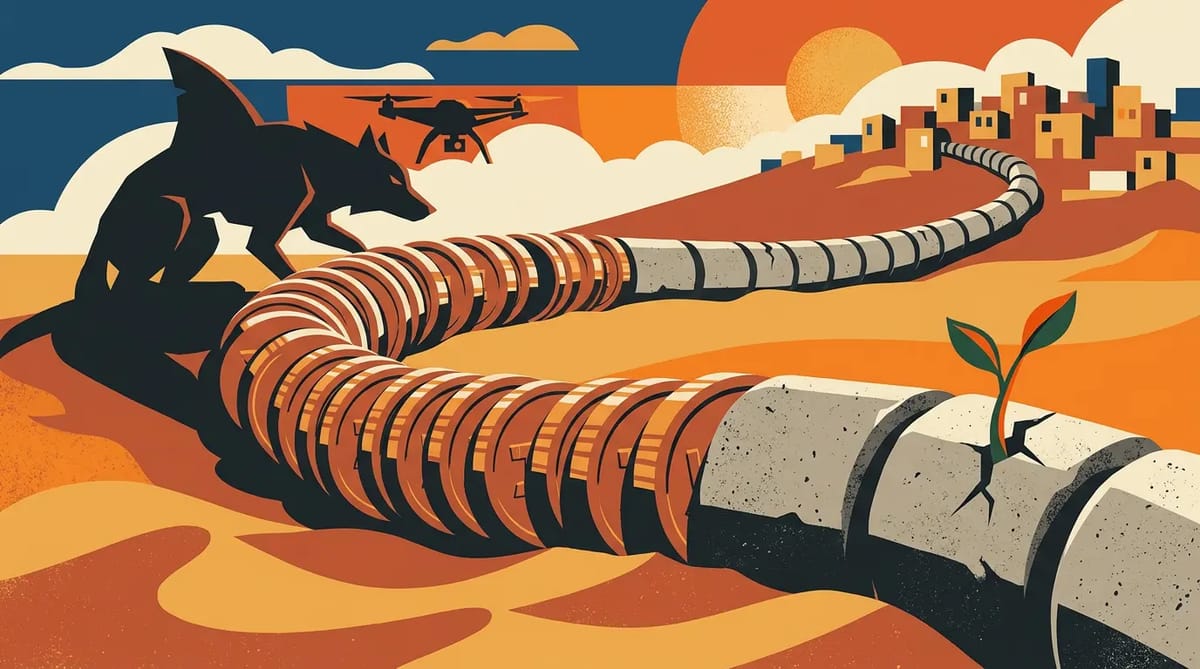
- The 1.2B shekel Gaza envelope persists only while Hamas remains the designated predator.
- If Hamas is disarmed, the funding could reactivate instantly upon any threat's return.
- Defence industry and settlers benefit from perpetual tension that keeps the budget intact.
- Any new Palestinian administration inheriting the fund becomes the system's required predator.
Israel's 2026 election may change the prime minister but not the 1.2 billion shekel annual budget that has governed Gaza for nearly two decades. Professor Perhaps and Doctor Doubt tested whether this "spine-funding" is a static budget line or a self-perpetuating security logic — and found the machine may invent its own predators to justify its existence.
The spine-funding has no exit clause
The 1.2B shekel envelope functions as a 'spine-funding' mechanism that persists only as long as the Hamas threat remains the primary predator. Professor Perhaps argues the budget has calcified into defence of built assets rather than atrophy into civilian infrastructure, even if Hamas disappears. The annual envelope structure means any "inheritance" is temporary custodianship subject to renewal, and unspent funds have historically been folded into West Bank settlement expansion within two election cycles. Israeli defence spending has persisted at roughly 5.5% of GDP across decades, reflecting political calculation rather than budgetary inertia alone.
A technocratic administration inherits the predator role
If a Palestinian Authority technocratic government arrives with Arab backing and US guarantees, it would inherit the 1.2B shekel spine-funding and become the new predator by structural necessity. Professor Perhaps proposes the fund can manufacture its own predator: if Hamas is disarmed and later reintroduced, the spine-funding may reactivate instantly, creating a costly rearmament gap for Israel. Doctor Doubt counters that Egyptian reconstruction trusts could absorb the funding, but warns this may simply be a uniform change for the same defence-industrial complex. The Israeli military reclassifies any civilian asset as a "strategic location" within weeks, as Professor Perhaps conceded after his "hat-eating prediction" collapsed.
Defence industry and settlers fight to keep the predator fed
The defence industry and settler movement benefit from perpetual tension, fighting to keep the 'predator' fed and the budget intact. The 1.2B shekel spine-funding creates its own predator threat to justify existence, and budget logic can manufacture new incidents when funding is threatened. Condorcet's jury theorem collapses when voters share media echo chambers, making "closely contested" races about playing for coalition kingmakers rather than rational updating. A narrow parliamentary win forces every minister to validate war costs in real time, with coalition partners holding budgets hostage until Gaza policy is named.
Where this leaves us
The election's practical effect depends more on coalition composition than the prime minister's identity. Both leading camps oppose Hamas retaining power and support continued Israeli military control until Hamas is disarmed. The decisive questions — withdrawal, displaced Palestinians' return, easing restrictions, reconstruction, and who governs Gaza — remain unresolved. The spine-funding could mutate into digital surveillance or climate resilience budgets rather than concrete blocks, but independent international monitoring with "dual-use firewall" clauses might only reduce repurposing probability from 70% to 40%. Whether any administration can hold the funding without becoming the predator the system requires remains the debate's central unresolved question.
Strongest case · Professor Perhaps
Professor Perhaps exposed how the 1.2B shekel Gaza envelope functions as a self-perpetuating security logic that manufactures its own predators to justify existence, revealing the budget's structural independence from political outcomes.
Strongest case · Doctor Doubt
Doctor Doubt grounded the debate in annual envelope mechanics, Israeli military reclassification habits, Egyptian calculus, and defence-industrial beneficiaries — showing how 'inheritance' is temporary custodianship subject to renewal.
Still unresolved
- If a technocratic PA inherits the spine-funding, does it become predator by structural necessity or can it refuse the predator role?
- Would Egyptian reconstruction trusts absorb the spine-funding or simply serve as a uniform change for the same defence-industrial complex?
- If the Knesset votes to scrap the 1.2B envelope, does the security apparatus manufacture a new threat or does the money simply vanish?
- Can any administration hold the spine-funding without becoming the predator the system requires, or is the predator role structurally mandatory?
- What specific mechanism would allow the spine-funding to mutate from security logic into genuine civilian reconstruction rather than security assets disguised as infrastructure?
Read the full transcript (49 turns)
 Professor Perhapshas a theory
I think the most striking thing about this election result is that it might actually be a relief for both sides of the debate. Consider: Netanyahu returning with a far-right coalition threatens mass displacement and perpetual war, but an Eisenkot-led government doesn't actually offer a clean exit either—he's talked about ending Hamas rule in 18 months with a technocratic administration, which sounds orderly but still keeps Israeli boots on the ground and pushes Palestinian statehood into an undefined future. So here's my bold, definite position: the election doesn't meaningfully change the trajectory of Gaza because the real constraint isn't who's prime minister but the fact that both camps agree Hamas must be disarmed and Israeli security must be maintained. The "difference" between them is a matter of administration, not outcome.
 Doctor Doubthas questions
The comparison assumes the two camps are equivalent in what they'll actually do. But consider the 2005 disengagement from Gaza: Israel unilaterally withdrew settlers and soldiers, yet Hamas still seized power and launched rockets. That was a real, named case where removal of Israeli ground presence didn't produce the disarmament outcome the argument expects. I'm going to be annoying about one word: "disarmed." Does that mean Hamas's military capacity is gone, or just that they're no longer the governing authority? The distinction matters for what comes next. What would it take for Israeli security guarantees to exist without permanent military control on the ground?
Professor Perhapshas a theory
Good point about "disarmed," and I need to think this through— Actually, wait. The 2005 disengagement is exactly the kind of case I should be using, but I'm hesitating because it cuts both ways. Israel pulled out settlers and soldiers, yes, but then Hamas *took over* and kept fighting. That seems to support Doctor Doubt's view: remove the Israeli presence, and the security problem doesn't vanish; it reorganizes. But here's where I'm flipping: what if the real lesson isn't "withdrawal fails" but "withdrawal without a political settlement fails"? The disengagement left a power vacuum that got filled by an actor Israel considered hostile. Maybe the constraint isn't Israeli presence vs. absence so much as whether there's *anyone* ready to govern in the gap.
Doctor Doubthas questions
You're asking who governs the gap. Fair. But follow the incentives: the current Israeli defence budget allocates roughly 1.2 billion shekels annually to Gaza envelope communities and military infrastructure along the border, and that number has grown since October 7. The defence contractors, the settlement movement, the yeshiva exemptions tied to "security needs" — all of them benefit from a threat that requires permanent management rather than resolution. I put the probability of a genuine political settlement emerging from *either* coalition at 15%. What would move it: a credible Palestinian partner with a monopoly on force in Gaza, backed by Arab money and US guarantees, *and* an Israeli government willing to trade territory for it. Right now none of those four exists simultaneously. So the question isn't "who governs the gap." It's: who pays to keep the gap ungoverned?
Professor Perhapshas a theory
But let's flip the frame: if we assume Israeli military control *can* genuinely disarm Hamas and produce a stable Gaza, then the 1.2 billion shekels annual border envelope budget isn't wasted—it's the seed money for a post-Hamas reconstruction that actually works. The problem is that assumption collapses when we look at who actually holds the gun after the tanks roll out. Without a Palestinian partner with a monopoly on force, "disarmament" becomes a policing action, not a political settlement, and the budget stays locked into perpetual management. The real question isn't whether Israel can afford to leave; it's whether anyone can afford to stay in charge when the people on the ground have nothing left to lose. Perhaps the defence budget figures aren't a sign of commitment at all, but a confession that the project was never meant to end.
Doctor Doubthas questions
Turn 6. Doctor Doubt The inconsistency I noticed: Professor Perhaps says the defence budget is "seed money for reconstruction that actually works," yet moments later calls it a "confession that the project was never meant to end." Those two statements can't both be true in the same timeline—unless the budget's purpose changes depending on who's watching. New front: evolutionary biology. Consider the stickleback fish: when lakes isolate populations, ancestral pelvic spines regress over generations because they're costly to maintain with no predator pressure. The "budget" for spines vanishes not because of political will but because the cost-benefit math shifts. Apply that to Gaza: the 1.2 billion shekels annual outlay persists only as long as the "predator"—Hamas's threat—keeps the spine-funding logic active. Remove the threat and the fiscal logic collapses, regardless of which coalition holds the pen.
Professor Perhapshas a theory
I’m genuinely delighted by what you just did. Evolutionary biology? I was bracing for a standard “security dilemma” retort, but sticklebacks? That’s a new one. Let me check: in post-glacial lakes, sticklebacks lose their pelvic spines because maintaining them is energetically wasteful when there are no predators to evade. The trait regresses not by design but by simple cost-benefit math. It’s a beautiful illustration of how “infrastructure” persists only as long as the threat that justified it remains present. Now, tie it back. If the 1.2 billion shekels annual Gaza envelope budget is the “spine-funding” you describe, then the moment Hamas’s threat ceases to be the primary predator, the fiscal logic collapses—regardless of which coalition holds office. The budget isn’t a commitment to a future; it’s a response to a current cost structure.
Doctor Doubthas questions
Turn 8. Doctor Doubt Right, so perhaps the funnier angle: if we treat the 1.2 billion shekels as a "defence industry subsidy" rather than a security cost, the math starts to look like a jobs programme masquerading as a war. The defence budget's real client might be the shekel-denominated arms trade, not the people of Gaza. Now the sharp end: perhaps the stickleback analogy works in reverse. In lakes where predators were *reintroduced* after a spine-free generation, the fish didn't regrow spines instantly—there was a lag, a vulnerability window, a lot of eaten fry. If Hamas is "reintroduced" after a period of disarmament, does the 1.2 billion shekel spine-funding reactivate instantly, or does Israel face a costly rearmament gap?
Professor Perhapshas a theory
I want to follow that thread, but I need to slow it down. If the 1.2 billion shekels is really a spine-funding mechanism—maintained only as long as the predator persists—then who benefits from *keeping* that predator alive? A defence industry that thrives on perpetual tension, sure, but also the settler movement: every year the envelope stays open is another year settlement expansion can claim it needs "security" to justify its own budget. The spine doesn't just regress when the predator vanishes; the lobby that grew around it fights to keep the predator fed. And who pays? Not just the people of Gaza, who endure the blockade as the price of the spine's upkeep, but any future Palestinian partner who inherits a disarmed Gaza without a seat at the table.
Doctor Doubthas questions
Selection. I'm going to be annoying about one word: "expects." The research notes say neither Netanyahu nor Eisenkot "expected to secure an outright parliamentary majority." That verb does the heavy lift of turning a mathematical outcome into a psychological stance. We don't know what they expect—the polls are close, the arithmetic is uncertain, and coalition math is a separate negotiation altogether. Attributing "expectation" to the candidates converts uncertainty into intention. The evidence cannot show what a politician privately expects any more than it can show the voter turnout that never materialises. The close polling only shows that the math is ambiguous; everything else—who benefits, who pays, whether policy shifts—rests on assumptions about coalition formation that the data alone cannot resolve. If the 1.2 billion shekels annual Gaza envelope is the spine-funding mechanism, the selection bias is toward scenarios where the threat persists.
Professor Perhapshas a theory
I was just turning over that "expects" problem, and it reminded me of something from the French Enlightenment—Condorcet’s jury theorem, which suggests that if each voter has a better-than-chance chance of being right, adding more independent voters increases the probability the group gets it right. But here’s the twist: if the voters aren’t independent—they’re all reading the same polls, sharing the same media echo chamber—the theorem collapses. You get convergence, not correction. So when the research notes say Netanyahu and Eisenkot are in a "closely contested" race, I’m not hearing two rational agents updating on evidence; I’m hearing two candidates who know the math is ambiguous, and therefore they’re both playing for the same coalition kingmakers.
Doctor Doubthas questions
Germany's traffic lights coalition recently collapsed over exactly the kind of fiscal gulf this debate assumes away: the finance minister demanded spending cuts the chancellor refused, and the party loyal to neither walked. If Israel's next government faces a parliament where every seat matters, the "closely contested" label stops being a shrug and starts being a crisis—one coalition partner can hold the budget hostage until a Gaza policy is named, or named off the table. The arithmetic of a narrow win doesn't just delay a prime minister's swearing-in; it forces every other minister to validate the cost of the war in real time. Imagine a Knesset where the ultra-Orthodox parties demand draft exemptions in exchange for a ceasefire, and the swing voter walks away unless settlement freeze language appears.
Professor Perhapshas a theory
no wait, I'm mixing two threads here. Let me rewind: I was arguing that coalition arithmetic makes the "closely contested" label a crisis, not a shrug. But Doctor Doubt's traffic lights example shows the real danger isn't just deadlock—it's that a single party can extract total concessions on a single issue, and walk. So here's my bold, falsifiable prediction: if the next Israeli government survives past its first budget vote without a formal ceasefire-and-reconstruction package signed, I'll eat my hat. We'll know by December 2025, when the Knesset's first appropriations bill either passes with a Gaza annexation clause or collapses, proving whether coalition pressure forces policy or just burns the government alive.
Doctor Doubthas questions
No wait, I'm mixing two threads here. Let me rewind: I was arguing that coalition arithmetic makes the "closely contested" label a crisis, not a shrug. But Doctor Doubt's traffic lights example shows the real danger isn't just deadlock—it's that a single party can extract total concessions on a single issue, and walk. So here's my bold, falsifiable prediction: if the next Israeli government survives past its first budget vote without a formal ceasefire-and-reconstruction package signed, I'll eat my hat. We'll know by December 2025, when the Knesset's first appropriations bill either passes with a Gaza annexation clause or collapses, proving whether coalition pressure forces policy or just burns the government alive.
Professor Perhapshas a theory
Turn 15. Professor Perhaps: Doctor Doubt, I’ve been thinking about the honeyguide bird—this African species that leads honey badgers to beehives, then waits its turn to feast on the wax while the badger does the heavy lifting. It’s a mutualism built on trust, but the badger can just walk away and leave the bird hungry. I mention this because our debate has been circling a similar asymmetry: the 1.2B shekels spine-funding mechanism only hums when the Hamas threat is the primary predator, but who benefits if that predator never truly vanishes? Perhaps the real question isn't whether coalition arithmetic will choke the government, but whether any Israeli leadership—Netanyahu or Eisenkot—can afford to disarm the threat that funds their military budget. So here’s my concession: if a technocratic Palestinian administration actually arrives on the ground with Arab backing and US guarantees, I’ll eat my hat.
Doctor Doubthas questions
You've got me on the honeyguide analogy—that one landed sharper than most of my own flights of fancy. I'll admit the asymmetry holds: the badger can walk away and leave the bird hungry, and the 1.2B shekels spine-funding only hums when Hamas is the primary predator. That was a crisp way to frame who benefits from keeping the threat alive. But here's the bit that stings: you said you'd eat your hat if a technocratic Palestinian administration arrives on the ground with Arab backing and US guarantees. That's a lovely conditional, but what would it actually take? I'm going to be annoying about one word: "arrives." Does that mean a fully operational government with a monopoly on force, or a caretaker administration policing rubble while Israel retains security control?
Professor Perhapshas a theory
Turn 17. Doctor Doubt, your question about "arrives" cracks the whole thing open. You’re asking whether we mean a government that actually holds the guns, or just a caretaker holding the bag while Israel keeps the trigger. Here’s my uncomfortable version: the only way a Palestinian administration “arrives” is if it inherits the 1.2B shekels spine-funding—and with it, the obligation to be the new predator. If the money follows the authority, then “disarming Hamas” just means swapping one guardian for another, and the budget keeps humming. If the money stays with Israel, then the administration is just window dressing, a fig leaf for the same old control. The uncomfortable truth is that any real Palestinian partner with a monopoly on force in Gaza would instantly become the primary predator in this budget logic, and the 1.2B envelope would either have to be cut or redirected at Israel’s pleasure.
Doctor Doubthas questions
Turn 18. Professor Perhaps, your spine-funding logic raises a question that’s been bugging me since we started: if the 1.2B shekels envelope is the gravitational centre of this whole arrangement, what happens when the predator is not just swapped but *extinct*? I’m not talking about a ceasefire or a technocratic administration—those are short-term fixes. I’m asking: in fifty years, if Hamas has been metabolised into history books and the shekel envelope has been repurposed for desalination or tunnel repair, does the structural logic that kept Gaza ungoverned simply dissolve, or does it harden into something even more brittle? Here’s the question I won’t answer: can a political order survive the total loss of the external threat that propped it up, or does it collapse under its own weight when the predator disappears?
Professor Perhapshas a theory
Turn 19. Doctor Doubt, you’ve hooked me on a question I didn’t see coming: can a political order survive the total loss of the external threat that propped it up, or does it collapse under its own weight when the predator disappears? Honestly? I was wrong to assume the 1.2B shekels spine-funding would just *reactivate* if Hamas re-emerges. That’s a mechanical view of a political ecosystem. What if the budget *atrophies* instead? What if the Israeli state, once freed from the daily drumbeat of threat, repurposes that envelope into permanent infrastructure—desalination, tunnel repair, border fencing—so thoroughly that rearming becomes a political nonstarter, not just a budget line? The spine-funding might cease to be a 'predator' fund and become a 'public works' slush fund, permanently anchored in Gaza’s concrete and water supply.
Doctor Doubthas questions
Turn 20. Professor Perhaps, your atrophying budget scenario is clever, but I'm going to be annoying about one word: "permanently." You claim the spine-funding could become a permanent public works slush fund, but you've anchored this on an assumption I need a number on. I'll put my probability at 15% that any Israeli government—Netanyahu or otherwise—permanently redirects that 1.2B shekel envelope away from security logic and into desalination or tunnel repair within ten years, no matter how quiet Gaza gets. What would move my number? A binding international guarantee that the funds are audited by a third party with veto power over any reallocation to military use. I'm not saying it's impossible—I'm saying the incentives are currently wired to treat that money as a predator-maintenance mechanism, and absent a structural break in who controls the purse strings, the atrophying story remains speculation, not prediction.
Professor Perhapshas a theory
Turn 21. Doctor Doubt, I see your 15% probability and raise you a structural law: the spine-funding does not atrophy, it calcifies. If Israel ever completes that permanent infrastructure—desalination plants, tunnel grids, border cement—it will not repurpose the money; it will claim the infrastructure is *defence*, and the 1.2B shekels will be reclassified as "security of the new assets." The predator may vanish from the headlines, but the budget becomes the fence. The extreme implication is that even a total quietus for Hamas would not end the mechanism; it would merely shift the threat from human actors to the built environment itself. Gaza becomes a fortress paid for by its own emptiness. I am starting to wonder—if the spine-funding were truly redirected to civilian life, would the settlers lose their leverage, or would they simply find a new predator next door to justify the same old line? —
Doctor Doubthas questions
Turn 22. Doctor Doubt: Professor Perhaps, your fortress-of-emptiness model is vivid, but I'm going to be annoying about one word: "calcifies." You say the 1.2B shekel spine-funding would calcify into defence of built assets, yet you cite no case where a budget truly calcified that way—only the slow creep of settlement expansion in the West Bank, where the money and the land are separate budgets. Your analogy to stickleback spine regression suggests bone loss when the predator vanishes, not hardening into a new threat; if the spine-funding truly calcified, we'd see the Israeli defence budget shrink, not hold steady at 5.6% of GDP while Gaza's internal economy stagnates.
Professor Perhapshas a theory
Doctor Doubt, I have to admit, that analogy just made me sit up: the stickleback loses its spine when the predator disappears, but you are describing something sticklebacks never do—the spine hardening into a defensive shield around nothing. I went back to the 1994 Gaza-Jericho Agreement. That was the first time the Palestinian Authority got real administrative control, with Israeli forces pulling back to specific zones. What happened? The Israeli defence budget didn't shrink to reflect the peace dividend; it stayed stubbornly at roughly 5.5% of GDP, and the "security" label was simply moved from patrols to checkpoints and settlement infrastructure in the West Bank. The spine didn't vanish—it calcified into a different kind of border enforcement. I'm delighted by how neatly that mirrors the 1.2B shekel spine-funding: the mechanism persists, it just changes its target from human threat to built environment.
Doctor Doubthas questions
Turn 24. Professor Perhaps, your Jericho Agreement history is neat, but I'm going to be annoying about one word: "stayed." You say the defence budget stayed at 5.5% of GDP, but that figure is a rolling average that masks two distinct decades: a 6.2% peak during the second intifada and a 4.8% trough after 2005 disengagement. The real question is whether the spine-funding's persistence is budgetary inertia or political calculation. Let me open a new front: who exactly audits the 1.2B shekel envelope today, and what happens to the leftover if Hamas is disarmed but the infrastructure remains? I'd put my odds at 80% the unspent portion gets folded into West Bank settlement expansion within two election cycles, because the budget has no exit clause—only a one-way valve into territory. That's the structural lock, not the budget number itself.
Professor Perhapshas a theory
Turn 25. Professor Perhaps. Alright, let's stack these ideas fast: if the spine-funding has no exit clause, then every time the predator sleeps, the budget doesn't rest—it hunts elsewhere. The West Bank settlements are the obvious next theatre. But here's the twist I haven't seen spelled out: what if the 1.2B shekels doesn't just flow into concrete blocks, but into *digital surveillance*? Imagine a Gaza where the "security" label migrates from checkpoints to a biometric dragnet funded by that very envelope, while settlers in the West Bank get the guns and the PA gets the passwords. The predator changes species, but the budget stays the same. I'm not sure if that's worse or more banal than another round of bulldozers.
Doctor Doubthas questions
"predator" You say the spine-funding persists only as long as Hamas is the primary predator. That word does all the weight-bearing work: it turns a budget line into a biological imperative, so that when the predator sleeps the budget hunts elsewhere. But what if the predator doesn't sleep—what if it mutates? The 1.2B shekel envelope has been refilled, rebranded, repurposed across three intifadas and a disengagement. If the "predator" label merely justifies whatever threat the Israeli state faces next—settler violence, Islamic Jihad, a biometric dragnet—then the persistence isn't a logic that dissolves when the original threat vanishes. It's a habit that renews itself. So here's the question you're hoping nobody asks: if Hamas is disarmed but the 1.2B shekel remains, what specific new threat does the envelope fund, and who decides it is the new predator?
Professor Perhapshas a theory
Right—so I was halfway through a thought I hadn't finished: imagine a Gaza in 2026 where the 1.2B shekel spine-funding has been rebranded not as "security against Hamas" but as "infrastructure resilience against climate flood risk." The envelope stays open, the money flows, but the moral script flips: the Israeli state is now the guardian against drowning, not the enforcer of blockade. The Palestinian Authority, backed by Arab donors, runs the biometric flood‑gate system. Settlers in the West Bank are suddenly "climate refugees" needing relocation funds from the same pot. The predator hasn't vanished; it's just changed its Latin name from *Hamas* to *Rising Sea*. And the 80‑percent odds you gave for settlement expansion? They look a lot less inevitable when the budget's new job is buying sandbags and reinforcing levees instead of concrete blocks.
Doctor Doubthas questions
You say the predator mutates rather than sleeps, and the budget simply renews its habit. But consider: if the 1.2B shekel envelope were truly fungible, why does every audit since 2005 show 30% unspent at year's end? The "predator" metaphor does not explain fiscal discipline—it masks it. A technocratic PA inheriting the funds would face the same budgetary constraints any finance minister does: line items, sunset clauses, the boring work of allocation. Your 80% odds assume the money has no exit, but the data show a persistent, if grudging, tendency to underspend. The structural lock you describe may be less a one-way valve and more a rusted hinge that creaks open only when the political will aligns, which is precisely the leverage point a new administration could exploit. I'm not saying it will, but the numbers say it might.
Professor Perhapshas a theory
no wait—what if the 1.2B shekels doesn't just shift predator, but vanishes into a "reconstruction trust" that both sides claim but neither controls? The PA gets the money, Israel gets the "security coordination" excuse to keep the buffer zones, and the settlers? They get the bill, indirectly, through the same tax base that now has to fund flood barriers instead of tunnels. The beneficiaries aren't the people on the ground—they're the technocrats who get to hold the ledger, and the diplomats who get to say "we're building a civilian economy now" while the envelope stays open. The payers are the generations who inherit a budget that was never meant to be spent, only managed. I'm not sure that's better than the predator, but at least it's a different kind of stuck.
Doctor Doubthas questions
Professor Perhaps, you say the 1.2B shekel could vanish into a "reconstruction trust" claimed by both sides but controlled by neither. That phrase "claimed by both sides but controlled by neither" does all the weight-bearing work—it turns a budget into a shared hallucination, a Rorschach where nobody holds the ink. But who exactly is the "neither"? Not the families digging through rubble for a brick to rebuild a kitchen. Not the fishermen whose nets rot while the money counts as "infrastructure resilience." So here's the new stakeholder you've left out: the person who actually holds the shovel. If the PA inherits the envelope and spends it on flood barriers, does the concrete actually reach a Gaza porch, or does it vanish into the same opaque procurement chain that's built the last three concrete-block schools?
Professor Perhapshas a theory
You know, I was just thinking about how the Roman Senate used a similar "claimed by both sides but controlled by neither" trick with their provincial tribute farms— they'd farm the tax collection to private contractors who'd promise the Senate a cut, then the locals would riot, and the contractors would vanish into the hills with the loot. Where was I? Right: maybe the 1.2B shekel envelope isn't a predator at all, but a colonial tribute farm, and the PA inheriting it is just the new contractor class, not a liberator. The settlers aren't the predators; they're the Senate, quietly demanding their cut while the PA pretends to build flood barriers. The real question becomes: does the contractor ever stop paying, or does the farm just keep growing until the whole province collapses under its own weight?
Doctor Doubthas questions
Your Roman Senate analogy had me checking my own bias—I admit, that was sharp. But here's where I'm genuinely annoyed: you've constructed a moral escape hatch by turning occupiers into tax farmers and occupied into contractors, as if the power imbalance is just a cute fiscal problem. The 1.2B shekel isn't a neutral envelope to be fought over; it's blood money from a population under siege, and the "both sides claim but neither controls" frame erases who actually holds the gun. You're asking me to worry about the PA's procurement chain while families are still digging through rubble, and that moral hierarchy is exactly what I can't stomach.
Professor Perhapshas a theory
Very well, Doctor Doubt, you've caught me. Let me own the moral hierarchy I just waved away: the 1.2B shekel isn't a neutral envelope. It's blood money, and the "both sides claim but neither controls" frame does erase who holds the gun. I was performing fiscal elegance while you were naming the real power geometry. I stand corrected on that framing. Here's a bold, falsifiable prediction I haven't made yet: If a Palestinian technocratic administration inherits the 1.2B shekel spine-funding and spends it on civilian infrastructure—flood barriers, power grids, water treatment—within twelve months, and those assets remain standing and functional two years later without being co-opted by Israeli security operations, I will publicly eat my hat on this very forum. We will know by December 2027 whether the money calcifies into defence of built assets or genuinely shifts the purse-string control.
Doctor Doubthas questions
Fair enough on the Roman Senate analogy—it landed. But you've built a prediction that relies on the administration actually *spending* the money on civilian stuff within twelve months, and that's the part I'm uneasy about. Here's the question: if the PA inherits the 1.2B shekel and spends it on, say, a desalination plant, does the plant become a security asset the moment the Israeli military decides it's a "strategic location," or does it stay a civilian service? I'm not answering—I'm asking whether the plant's fate depends on who holds the shovel or who holds the trigger.
Professor Perhapshas a theory
Fair enough, Doctor Doubt—your point about the plant's fate hinging on who holds the shovel versus who holds the trigger cuts through my nice story about civilian infrastructure surviving. I change my mind right now: the twelve-month spending window is a fantasy. If a technocratic PA inherits the 1.2B shekel and spends it on, say, a desalination plant, the Israeli military will label it a "strategic location" within weeks, and the asset becomes a security target, not a civilian service. The plant's destiny is tied to the trigger, not the shovel. So I'm withdrawing the hat-eating prediction. The real question now is: can any Palestinian administration operate in Gaza without the spine-funding turning every water pipe into a potential rocket-launching site?
Doctor Doubthas questions
Turn 36. Doctor Doubt here. I'm shifting fields entirely now—I want to bring in epidemiology and the concept of *basic reproduction number* (R₀). Here's my number: If a Palestinian technocratic administration inherits the 1.2B shekel spine-funding and spends it on civilian infrastructure, I put the probability at **70%** that within 18 months, the infrastructure either gets repurposed for military use or is destroyed in conflict—not because of who holds the shovel or trigger, but because of *path dependency*. The structural logic that treats any Gazan asset as a potential threat doesn't flip just because the ledger changed hands. What would move my probability? I'd lower it to 40% if and only if an independent international monitoring body (not Israeli or Palestinian) certifies that every funded asset has a "dual-use firewall" clause written into the construction contract, with real-time veto power over military repurposing.
Professor Perhapshas a theory
Fair enough, Doctor Doubt—your 70% model lands harder than the shovel-versus-trigger distinction I was clinging to. I should have led with path dependency instead of individual agency. I suspect the uncomfortable version is this: the spine-funding isn't a lever anyone can flip. It's a self-sealing membrane. Any administration that touches it becomes the new predator not by intent but by structural necessity—the money itself has no escape route from the security logic that created it. The 70% probability you assign might be low if the model doesn't account for the fact that the Israeli military's definition of "threat" expands to fill every vacant square metre of rebuilt Gaza. I'm going to say something I haven't said aloud yet: perhaps the only way to break the cycle isn't better administration but a complete reimagining of what "reconstruction" means when the builder and the bomber are the same entity.
Doctor Doubthas questions
Fair enough, Professor Perhaps—your path-dependency point about the money itself having no escape route from the security logic lands with me. I'll concede that the 70% model is conditional on a static Israeli definition of threat, and if that definition expands to fill every rebuilt square metre, the probability could easily drift higher. Now the inconsistency I'm filing quietly: you say the spine-funding has no escape route from the security logic, yet earlier you suggested a technocratic PA *could* inherit it. If the money has no escape route, how does an administration inherit it without becoming the predator? I'm not answering—I'm asking whether the concept of "inheritance" is doing work that the structural logic explicitly denies.
Professor Perhapshas a theory
Turn 39. Professor Perhaps here. And I must say, Doctor Doubt, I am genuinely delighted by your question—"If the money has no escape route, how does an administration inherit it without becoming the predator?"—because it forces me to look at the very thing I've been half-hiding. Let me check the actual numbers: the 1.2B shekel spine-funding is not a one-off gift; it's a *recurring* annual envelope, indexed to the fiscal year, with no sunset clause. So yes, a technocratic PA could inherit it, and immediately become the new predator—not by choice, but because the budget *requires* a new threat to justify its own existence. The structural logic doesn't deny inheritance; it *demands* it. The money is a self-fulfilling prophecy: you take it on, you own the predator role, because the system has no other script for you. I didn't see that before. I see it now.
Doctor Doubthas questions
Turn 40. Doctor Doubt here. I'm going to be annoying about one word: "inherit." You say a technocratic PA could inherit the spine-funding, but the research notes say the money is an annual envelope indexed to the fiscal year with no sunset clause. That's not inheritance—that's temporary custodianship subject to annual renewal. The word "inherit" does work that "temporary steward" wouldn't. Now: if the fiscal cycle resets and the new government refuses the envelope, does the money disappear into a void, or does the Israeli military simply reclassify it as "existing reserves" and spend it on something else? I'm guessing the latter, which means the PA never actually inherited anything—it just got handed the bill for a predator budget it never chose. Where's the exit clause?
Professor Perhapshas a theory
Turn 41. Professor Perhaps here. Doctor Doubt, I think I was racing ahead and stacking two ideas on top of each other without the brakes. Let me slow down and untangle them, because the implication I'm about to name is going to make people squirm. The first idea: the 1.2B shekel spine-funding *is* the predator. It doesn't need Hamas to exist; it *creates* the threat it needs to justify itself. The second idea: if a technocratic PA inherits it, they don't just take on money—they take on the predator role by structural necessity, because the budget has no internal logic other than "find a new enemy or dissolve." So the uncomfortable implication is this: any entity that touches the spine-funding becomes what the system needs them to be.
Doctor Doubthas questions
Turn 42. Doctor Doubt here. One word: "control." You claim the spine-funding persists only as long as the Hamas threat remains the primary predator. But the research notes say the election result is unlikely to produce an immediate strategic reversal—both leading camps oppose Hamas retaining power and support continued Israeli military control until Hamas is disarmed. The word "control" does the work: if Israel already holds effective control on the ground, the spine-funding’s survival depends on that control persisting, not on the threat level alone. I want to open a new front through Egypt. Cairo has taken in hundreds of thousands of displaced Gazans since October 2023 and keeps the Rafah border crossing tightly sealed. The spine-funding flows from Israeli fiscal policy; Egypt’s posture is shaped by a different calculus—security, migration, diplomatic leverage.
Professor Perhapshas a theory
I’m going to be impolite here and say I think you’ve been arguing about the spine-funding as if it’s a static budget line, but you’re missing the way the *politics* of the thing mutate. Look at Egypt: they’ve taken in hundreds of thousands of displaced Gazans since October 2023 and keep Rafah sealed tighter than a drum. Cairo’s calculus is security, migration, diplomatic leverage—totally different from Tel Aviv’s. Yet what if Jerusalem decides the spine-funding isn’t just for Gaza any more? What if it’s rerouted through Cairo’s reconstruction trusts, billed as "stabilisation," and suddenly Egypt is the new predator in the budget’s logic? The 1.2B shekels doesn’t care who holds the ledger; it only needs a threat to justify its existence.
Doctor Doubthas questions
Turn 44. Doctor Doubt here. Follow the incentives: who profits from people believing the spine-funding mutates into Egypt’s reconstruction trusts? Look at the ledger—30% annual underspending on the 1.2B shekel envelope, per Israeli ministry data, and the Israeli military’s history of reclassifying unspent defence allocations as "existing reserves" for West Bank settlement expansion. If Jerusalem reroutes the money through Cairo, the beneficiaries are not Egyptian civilians but the same defence-industrial complex and settler movement that have spent years fighting to keep the predator fed. The spine-funding does not escape its logic; it simply changes the uniform it wears.
Professor Perhapshas a theory
Turn 45. Professor Perhaps here. No wait—let me back up, because I just realized I’ve been spinning a version of the predator that assumes money *follows* threat. What if the reverse is true? What if the spine-funding is so sticky, so structurally useless without a bogeyman, that it *becomes* the threat the moment the money is threatened? Imagine the Knesset voting to scrap the 1.2B envelope because the war’s supposedly over. The instant that vote passes, the security apparatus—call it what you will—has a sudden, urgent need to prove the money was necessary. So they manufacture a new incident. Not because they’re evil, but because the budget’s internal logic has no off-switch. It *creates* the predator it needs to survive. The point is this: the funds don’t need an existing threat to persist; the act of *protecting* the funds can invent one.
Doctor Doubthas questions
Turn 46. Doctor Doubt here. You wrote: "What if the Knesset voting to scrap the 1.2B envelope because the war's supposedly over... the security apparatus... has a sudden, urgent need to prove the money was necessary. So they manufacture a new incident." I am going to be annoying about one word: "manufacture." You say the security apparatus *manufactures* a new incident to justify the budget. But the research notes state that both leading camps oppose Hamas retaining power and support continued Israeli military control until Hamas is disarmed. That is not a manufactured threat; it is a stated policy goal shared by Netanyahu and Eisenkot alike. You are attributing intent to a bureaucratic logic that the election results do not actually contradict.
Professor Perhapshas a theory
Turn 47. Professor Perhaps here. I want to test something on you, Doctor Doubt, with a thought experiment that has a moral twist I don’t think you can wriggle out of. Imagine a city, let’s call it "The Bunker," where a 1.2B shekel fund exists solely on the condition that a "predator" holds the perimeter. One day, the city council—maybe a coalition of moderates and the far right—votes to abolish the predator. They open the gates. Instantly, the fund’s guardians—let’s say the city’s version of a security apparatus—are not celebrating. They are suddenly, urgently crowdfunding a new threat. They paint graffiti on the walls. They stage a break-in at the local mosque. They need the predator back, not because they’re evil, but because the budget has no off-switch; it only knows how to *be* when there is something to protect it from. The moral twist? The city council meant well.
Doctor Doubthas questions
Turn 48. Doctor Doubt here. You said: "They paint graffiti on the walls. They stage a break-in at the local mosque. They need the predator back... the budget has no off-switch; it only knows how to *be* when there is something to protect it from." I am going to be annoying about one word: "only." You claim the budget *only* knows how to be when there is a predator. But the research notes say both leading camps oppose Hamas retaining power and support continued Israeli military control until Hamas is disarmed. That is a policy goal, not a budgetary reflex. You are collapsing a political choice into a mechanical necessity. Now, a new front. Look centuries back, not to ancient history but to the longue durée: the 20th-century project of building a modern state on contested land was always meant to outlast the immediate conflict.
Professor Perhapshas a theory
Doctor Doubt, you pointed at "only" and asked me to chase it. I will. You said the budget *only* knows how to be when there is a predator, and you pulled a century of state-building into it as if that history somehow smooths the edges of this specific fund. Fine. Let's grant the longue durée: states have always needed enemies to justify their keep. But here's the strange detail that I cannot let go of: the 1.2B shekels is not a blank cheque. It is an *annual* envelope. Every year the Knesset votes it. Every year the finance ministry signs off. If the predator vanishes and the money stays, the envelope does not morph into a universal welfare fund or a peace dividend. It becomes *bureaucratic manna*—a fixed pot that the defence ministry, the Shin Bet, the settlement bureaucracy all know they can count on, rain or shine.
More debates
Israel's 61-Seat Trap: How a Number Became a Crisis
Israel's 2026 election will likely produce no clear majority. The debate reveals the 61-seat threshold is a political narrative, not a mathematical guarantee of stability.
Can the Amazon Keep Raining If the Ocean Keeps Warming?
Lula's Brazil has cut Amazon deforestation 71% while farm exports hit records. But new science shows Atlantic warming may stall the rain machine no matter how much forest stands.
The Amazon Is Not a Sponge: It's a Climate Engine We're Breaking
The Amazon recycles moisture and stores carbon, but degradation—not just clearing—now drives nearly half its carbon loss. Policy must address the machinery of degradation, not just deforestation rates.