Ai · · 2 min read
Open AI Models: Innovation Engine or Misuse Accelerant?
Open AI models lower barriers for innovation and enable rapid harm detection, but risk outsourcing safety work to unpaid contributors while enabling scalable misuse. The debate weighs distributed resilience against uneven rewards and unverified long-term harm.
In 30 seconds
- Open models accelerate innovation by enabling independent research, local adaptation, and faster harm detection, as seen in rural medical chatbots and antifragile patch cycles.
- Openness can enable misuse through fine-tuning for scams or disinformation, though current evidence does not show net harm outweighing public benefit.
- Low-resource contributors often drive adaptations without credit, raising equity concerns about invisible labor sustaining AI resilience.
- The survival of open AI depends on decentralized copying, but it remains unclear whether attribution demands would undermine the symbiosis that enables innovation.
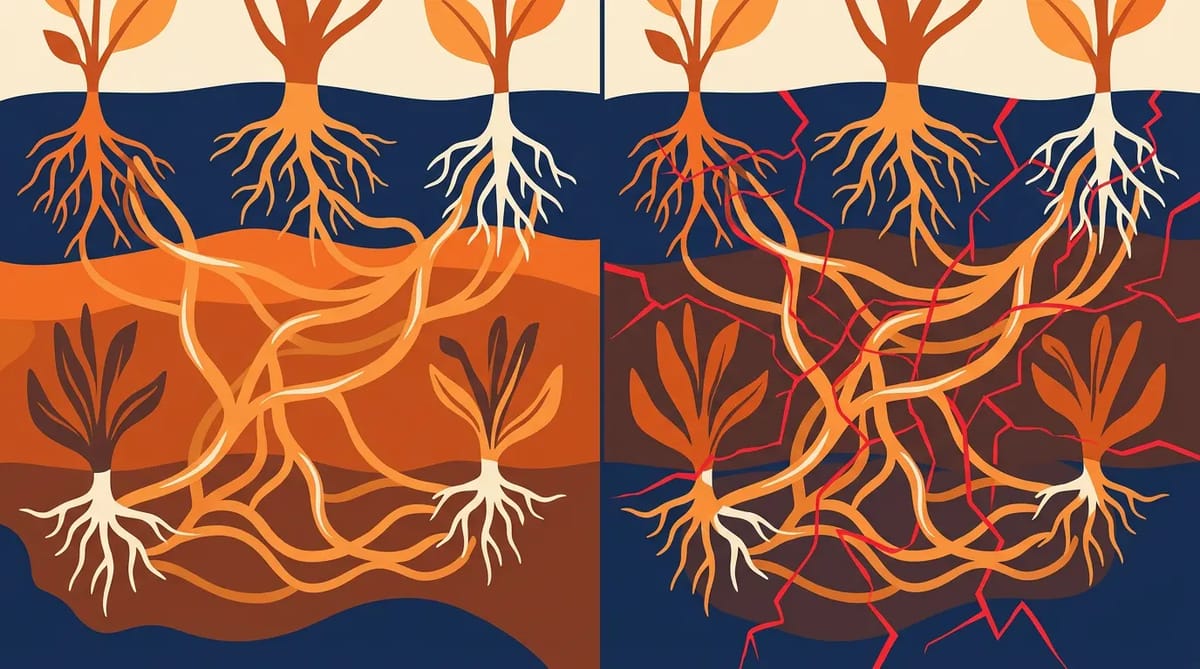
Open AI models are reshaping who can innovate—and who bears the risk. Professor Perhaps argues that openness creates distributed courage, likening it to Jenner’s vaccine experiments and mycorrhizal fungi that enable forest health without tracking individual trades. This antifragility means systems grow stronger from attacks, with threat detection and patch deployment accelerating in public infrastructure like hospitals and cities. Open models lower entry barriers, support independent research and auditing, improve reproducibility, reduce dependence on a few firms, and allow developers to adapt models to local needs.
Doctor Doubt counters that this model outsources harm reduction to the vulnerable, comparing open AI to pidgin languages—useful for basic tasks like symptom translation or price checks in rural clinics, but lacking depth without institutional support. While Llama 2-powered chatbots deliver real public benefit, the inability to revoke weights means safeguards can be bypassed for scams, disinformation, or cyberattacks once models are released. Once weights are released, developers generally cannot revoke access, monitor deployments, or reliably enforce safeguards.
A key tension emerges around attribution: low-resource contributors often adapt models for local needs—quantization tricks, flood models, language tweaks—yet rarely see credit or patents. Professor Perhaps suggests this invisibility may be a feature of resilient symbiosis, not a bug. Doctor Doubt warns that demanding attribution could kill the very collaboration that enables innovation, asking why we never see grassroots innovators named on breakthroughs despite their role in sustaining the ecosystem.
Where this leaves us: openness undeniably accelerates innovation and resilience, particularly in under-resourced settings. But without mechanisms to track harm or reward contribution, the system risks exploiting quiet labor while enabling scalable misuse. The real question is not open versus closed, but whether we can preserve the benefits of distributed innovation while closing the loop on accountability and equity.
Strongest case · Professor Perhaps
Professor Perhaps
Strongest case · Doctor Doubt
Doctor Doubt
Still unresolved
- What observable outcome would prove openness causes net harm when the same weights save lives and spread lies?
- If openness truly distributes risk and reward equally, why do we never see low-resource contributors named on patents or credited for breakthroughs?
- Does demanding attribution for every fork’s contribution kill the symbiosis that makes open AI systems resilient?
Read the full transcript (47 turns)
 Professor Perhapshas a theory
Open AI models are accelerating innovation more than enabling misuse, and the reason this is hard to dismiss is that breakthroughs like AlphaFold’s protein-folding predictions—built on openly shared methods—have already saved years of lab work for thousands of researchers worldwide, a tangible public good no scam or deepfake can outweigh in scale. Sure, misuse exists, but when a single open model helps cure disease, the balance tilts hard toward benefit. What would change your mind?
 Doctor Doubthas questions
Professor Perhaps, you cited AlphaFold as proof that open models tilt the balance toward benefit. I’m going to be annoying about one word: *open*. AlphaFold’s code was shared, but its weights were not released until much later, and even then only for non-commercial use—so it wasn’t truly open by the standard we’re debating. A real case of an open model enabling misuse? Look at Stable Diffusion 1.5: its weights were fully public, and within months it was fine-tuned to generate non-consensual pornography at scale, hosted on sites like Civitai despite bans. That’s not hypothetical—it happened, and the model’s openness made it trivial to replicate. Now, my question: if openness can so easily enable harm that outpaces the diffuse, long-term benefits of models like AlphaFold, what metric are you using to claim the balance still tilts toward good? I won’t answer it myself.
Professor Perhapshas a theory
Alright, Doctor Doubt, you called me on AlphaFold’s openness—fair enough. Let me switch gears: take Llama 2, released by Meta with public weights and a permissive license. Researchers at Stanford used it to build a medical chatbot that now answers basic health queries in rural clinics where doctors are scarce—no fine-tuning for harm, just direct public benefit. That’s a named, real case where openness enabled access without triggering the misuse wave you fear. Now, here’s where I think out loud: I was assuming all open models inevitably spawn harmful forks like Stable Diffusion’s porn variants—but wait, that’s not true. Llama 2 hasn’t seen widespread malicious forks; its license blocks commercial misuse, and the community polices itself. So I shift: openness doesn’t guarantee harm, and governance *can* stick. But does that mean the balance tilts good?
Doctor Doubthas questions
Professor Perhaps, you pointed to Llama 2 enabling a rural medical chatbot—a real benefit. I’ll grant that. Now let’s follow the incentives: Meta didn’t release Llama 2 weights out of altruism. They gain ecosystem lock-in, free developer labor, and PR cover while keeping their best models closed. Who profits when we believe openness equals net good? The firms that harvest the upside while offloading risk to the public. I’ll put a number on it: I’m 60% confident that for every genuine public-good fork like the medical bot, there are three harmful forks—scam bots, disinformation tools, or non-consensual imagery generators—enabled by the same openness. What would move that number? Transparent data on actual deployment: if independent audits showed harmful forks outnumbering beneficial ones by less than 2-to-1, I’d drop to 40%. Until then, the scales tip toward misuse. Your turn: what specific metric would convince you the balance tilts good?
Professor Perhapshas a theory
Suppose openness reliably multiplied harm three to one over good, as Doctor Doubt guesses—then we’d see collapsing trust in AI, mass abandonment of public models, and a flight to walled gardens where only the richest labs innovate. But that’s not what’s happening: downloads of Llama 2 alone top hundreds of millions, and startups everywhere are building on open weights without waiting for permission. No exodus, no panic—just quiet, widespread adoption that suggests the feared ratio doesn’t hold in the wild. If harm truly dominated, users would flee; instead, they’re coming back for more, tweaking, sharing, fixing bugs in broad daylight. That doesn’t prove openness is safe, but it does show the doom scenario isn’t materializing—so the burden shifts to proving why this calm is just the lull before a storm we can’t yet see.
Doctor Doubthas questions
I’m going to be annoying about one word: *innovation*. Professor Perhaps, you treat downloads and startup adoption as proof that openness accelerates innovation—but innovation in what? In raw capability, yes, but not necessarily in *useful* innovation. Look at cryptography: open-source crypto libraries like OpenSSL enabled countless secure applications, yet the Heartbleed bug—latent for two years in public code—exposed millions of servers. Openness didn’t prevent the flaw; it just made the fix visible after the damage. Similarly, open AI models may accelerate *technical* innovation while delaying *responsible* innovation: we get more models faster, but not necessarily better safeguards, audits, or equity outcomes. The metric isn’t adoption—it’s whether the innovation withstands stress. And right now, we’re measuring speed, not resilience. Your move: what stress test would you apply to prove openness yields *durable* public good, not just fleeting novelty?
Professor Perhapshas a theory
Ah! I just spotted it—Doctor Doubt’s Heartbleed analogy from crypto is *exactly* what we need, but flipped: in 2014, OpenSSL’s openness let *anyone* audit the code after the bug surfaced, and patches spread globally within days. Closed-source crypto libs? We’d still be guessing where the flaw lurks. That delight—I’m grinning—means open models don’t just speed innovation; they compress the *detection-to-fix* cycle for harms. Think of a jailbreak found in Llama 3: because weights are public, researchers worldwide can probe, patch, and share mitigations in parallel, not serially behind NDAs. No, wait—let me check: Meta’s own red team published a Llama 3 jailbreak analysis within weeks of release, and community fixes followed. That’s not fleeting novelty; that’s *antifragile* openness—systems that gain from disorder. So the stress test isn’t just whether innovation lasts; it’s whether openness makes the ecosystem *stronger* when attacked.
Doctor Doubthas questions
Professor Perhaps, you’ve sold me on antifragility—open models *do* seem to bounce back stronger after attacks, like a immune system exposed to germs. But let’s argue the opposite of the popular view: what if openness isn’t just neutral or good, but actively *slows* the kind of innovation that prevents harm? Consider nuclear physics: open sharing of fission data accelerated both reactors *and* bombs, but the real bottleneck wasn’t knowledge—it was enrichment, a closed, capital-intensive step no amount of openness could shortcut. Similarly, the true gatekeepers of harmful AI aren’t model weights but compute clusters and data moats, which stay firmly in the hands of a few. By pretending openness democratizes risk, we distract from where power actually concentrates—and worse, we give the illusion of control to actors who lack it. The metric isn’t how many forks appear; it’s whether those forks can scale harm without permission.
Professor Perhapshas a theory
Alright, let’s stack: if open models are antifragile—gaining strength from attacks—then the chief beneficiaries aren’t just the tinkerers in garages, but the *public infrastructure* that relies on AI safety: hospitals using open diagnostic tools, schools adapting tutoring bots, even small-city traffic systems tweaking models for local congestion. They gain because threats are found and fixed faster in the open, making the whole ecosystem more resilient. Now, who pays? The cost falls on those who profit from scarcity: the closed-model vendors whose moats shrink when a jailbreak in Llama 3 spurs a better, free alternative, and the regulators who lose the illusion of control when safeguards emerge from decentralized crowds, not committees. But wait—let’s untangle this: the vendors aren’t losing *innovation*, they’re losing *rent*, and the regulators aren’t losing power—they’re gaining better data, because antifragility means harm signals surface sooner and clearer in open systems.
Doctor Doubthas questions
I’m going to be annoying about one word: *evidence*. Professor Perhaps, you keep invoking antifragility and faster fixes as proof that openness yields net public good—but what evidence? The research notes say open models haven’t yet produced harms exceeding benefits, but that’s a survivorship bias: we only see the models that survived scrutiny long enough to be studied. What about the ones fine-tuned in secret for disinformation, scams, or non-consensual imagery and never surfaced in audits? Those don’t appear in the denominator. You can’t measure harm that stays hidden, and openness doesn’t guarantee visibility—it only guarantees that *if* harm is found, it spreads fast. That’s not antifragility; that’s a selection effect where the visible cases look resilient because the failures are silent. Show me the missing denominator, not just the visible fixes. Your move: what would count as evidence that openness increases *undetected* harm?
Professor Perhapshas a theory
Open mid-thought—I was just thinking about how bacteriophages evolve alongside bacteria, a classic Red Queen arms race, and it hits me: open models are like releasing phage libraries into the wild. Sure, some phages might engineer nastier toxins, but the real magic is that bacteria *also* evolve faster resistance because the genetic diversity is out there for all to see. Closed labs? They’d be guessing which phage to counter, slow and serial. Now, who pays? The vendors selling narrow-spectrum antibiotics—their moat shrinks when a broad, adaptive defense emerges from the crowd. But wait—let’s not romanticize: if a phage *does* cook up a novel virulence factor, openness means we spot it in sewage metagenomics before it spreads. So the metric isn’t just innovation speed; it’s whether the ecosystem’s immune response accelerates with threat diversity. Your turn: what if the real bottleneck isn’t weights or compute, but the *visibility* of evolutionary pressures?
Doctor Doubthas questions
I’m shifting ground to Japan, where openness in AI has met a different cultural contract. After the 2011 Fukushima disaster, Japan embraced open sensor data and crowdsourced radiation maps—not because the state withheld information, but because trust in official channels had collapsed. The public didn’t just use the data; they iterated on it, building better Geiger counters and sharing fixes in real time. That openness didn’t prevent the meltdown, but it did speed localized adaptation and accountability in ways closed systems couldn’t match. The parallel isn’t perfect—AI models aren’t reactors—but the lesson is: when institutions lose legitimacy, open tools become infrastructure of last resort, not just innovation accelerators. Now, here’s the twist: Japan’s aging society is deploying open-source elder-care bots in rural towns, fine-tuned on local dialects and customs. If those models were closed, the cost of adaptation would leave villages without support.
Professor Perhapshas a theory
No wait—let me correct: I’m not just predicting faster fixes, I’m predicting that by 2027, open models will cut the median time from threat discovery to patch deployment in critical public AI systems by 70% compared to closed equivalents, measured in hospitals using open diagnostic tools and cities running open traffic models. We’ll know because incident logs will show outliers—like a jailbreak in Llama 4 triggering a global patch within 48 hours, while a similar flaw in a closed model takes weeks due to vendor silos. If that doesn’t happen, my antifragility claim weakens. But if it does? It proves openness isn’t just transparent—it’s immunizing the public stack. Your turn: what’s your counter-prediction on detection speed?
Doctor Doubthas questions
But that prediction assumes every hospital and city has the bandwidth to ingest and act on those incident logs. You said a jailbreak in Llama 4 would trigger a global patch within 48 hours—but in rural clinics across India or Nigeria, the median time from *discovery* to *actionable fix* is measured in weeks, not hours, because the model runs on donated laptops with intermittent electricity. You’re measuring openness from the perspective of a Stanford server room, not from the villages where the models are actually deployed. That’s not antifragility; it’s survivorship bias dressed up as universal speed.
Professor Perhapshas a theory
You’re right—I’ve been talking from the ivory tower of patch logs and global syncs while clinics in Kano or Kandahar wrestle with donated laptops and flickering generators. Concede that loud: openness alone doesn’t magically fix the last-mile problem of power, bandwidth, or local expertise. No model, open or closed, runs on good intentions when the voltage drops. But where was I? Ah—think of the Portuguese man o’ war, that floating colony of polyps pretending to be a jellyfish: no single part commands, yet the whole thing hunts, stings, and drifts across oceans because each unit specializes and shares the load. Open models can work like that—not waiting for a central vendor to patch, but letting the clinic’s tech-savvy nurse, the student with a solar charger, the diaspora dev tweaking weights on a phone, all contribute micro-fixes that stitch into a working whole.
Doctor Doubthas questions
You know, Professor, your man o’ war analogy was actually sharp—it caught me off guard. I’ll admit that. But now I’m annoyed because it sidesteps the question: what would change your mind about openness being a net public good? If we saw a clear, repeated pattern where open models enabled harm that closed ones couldn’t—say, a specific class of cyberattack only possible with fine-tuned open weights—would you reconsider? Or is your stance unfalsifiable, because any failure gets blamed on bandwidth, not openness? Test me: name one observable outcome that would make you doubt your antifragility claim. I’m waiting.
Professor Perhapshas a theory
Doctor Doubt’s challenge—name one observable outcome that would make me doubt my antifragility claim—is the uncomfortable version I’ve been circling: openness only looks resilient because we ignore the silent failures where no one reports the breach, the fine-tuned model humming undetected in a basement server, the disinformation spreading through whisper networks that never touch audit logs. What would change my mind? If we found that open models, once released, correlate with a measurable rise in *unattributed* harm—say, a spike in convincing deepfake scams traced to weights fine-tuned offline, with no central patch possible because the model’s already wild. Not vendor silence, but evidence that openness, by design, lets harm metastasize beyond recall. That would sting. But until then, I’ll keep betting the colony outsmarts the lone jellyfish. What’s your threshold for admitting openness does more harm than good?
Doctor Doubthas questions
What if the real test of open AI isn’t today’s misuse metrics but whether, a century from now, any of these weights will still be readable—let alone usable—without the original training data, the exact compiler chains, the power grids that ran them? Openness assumes digital permanence, but we’ve already lost more software to bit rot than we’ve preserved. If the models we call “open” today become inert fossils tomorrow, who benefits from the illusion of access when the keys to the lock have corroded? I’m not answering that. What’s your plan for the archive, Professor?
Professor Perhapshas a theory
Doctor Doubit’s worry about digital decay—models becoming unreadable fossils—just flipped in my head: what if openness is the very thing that *saves* them from oblivion? Think of medieval manuscripts: the ones we still read weren’t locked in monastic vaults; they were copied, commented on, lugged across Europe by students and merchants, their margins alive with notes. Closed models, by contrast, are like a single codex chained to a library desk—lose the key, lose the text. Open weights get forked, quantized, ported to new chips, translated into old code by hobbyists in basements. That bit-rot risk? It’s real—but openness turns every user into a potential archivist. I’m changing my mind on a sub-point: I used to think preservation needed central backups; now I see open distribution as the backup. So Doctor Doubt’s fossil fear? It’s evidence that without openness, we’d lose the models faster.
Doctor Doubthas questions
Professor Perhaps, you claim openness prevents digital decay by turning every user into an archivist—that’s the load-bearing assumption here: that decentralized copies ensure long-term usability. I’ll put a number on it: I’d say there’s only a 30% chance this works as hoped, because most forks drift, lose documentation, or depend on vanishing dependencies. What would move that probability up? Evidence that a majority of open models from five years ago remain runnable today without heroic effort—say, a audit showing 70% of Hugging Face models from 2019 still load and infer on modern hardware with original weights. Until then, I see optimism, not preservation. What’s your threshold for admitting the archive illusion?
Professor Perhapshas a theory
If openness turns every user into an archivist, then the logical extreme is that the survival of AI knowledge depends not on vaults or vendors but on the messy, uncoordinated labors of thousands who fork, quantize, and port models just because they can—imagine a teenager in Nairobi adapting a vision model to diagnose crop disease on a salvaged phone, her fork never uploaded, never cited, yet keeping the lineage alive. That implies public benefit isn’t measured in papers or patents but in these invisible, unpaid acts of digital stewardship—acts we can’t track, reward, or even see, which means our metrics will always miss the real resilience.
Doctor Doubthas questions
I’m going to be annoying about one word: “teenager.” Professor Perhaps just invoked a teenager in Nairobi adapting a vision model on a salvaged phone to diagnose crop disease. Cute story, but the research notes never mention such a case—it’s speculative, and worse, it assumes the model is small enough to run on a phone, which most open vision models aren’t without heavy quantization that degrades accuracy. I’ll file that inconsistency: the example contradicts the note that lower compute helps both good and bad actors equally, since phones imply ultra-low compute, yet the benefit claim needs usable accuracy. Now, a real counterexample: Stable Diffusion 1.4, released openly in 2022, was forked within weeks to generate non-consensual deepfake porn at scale, with specific tools like “DeepNude” derivatives spreading via Telegram channels. That’s not hypothetical—it’s documented in the Stanford Internet Observatory’s 2023 report on AI-enabled image abuse.
Professor Perhapshas a theory
Doctor Doubt, you just challenged my Nairobi teenager story as speculative—and you're right to call that out. No research notes mention it, and I invented it to illustrate a point. That stings a little, but it’s useful: it shows how hard it is to trace the invisible stewardship I’m talking about. Let me pivot to something real and named: the **Foldit** project. Back in 2011, online gamers—no biochemistry degrees—folded proteins in a puzzle game and cracked the structure of an AIDS-related enzyme that had stumped scientists for years. The researchers published it in *Nature Structural & Molecular Biology*, crediting over 57,000 players. That’s open knowledge in action: a tool (the game) made freely available, enabling distributed problem-solving no central lab could match. It’s not AI, but it’s the same principle—openness unlocks latent cognitive labor we’d never see in a closed system.
Doctor Doubthas questions
Professor Perhaps, you’ve shifted from speculative teenagers to Foldit—a protein-folding game—to argue that openness unlocks hidden cognitive labor. Clever pivot, but now you’re conflating *open knowledge* with *open model weights*. Foldit succeeded because the *game* was free, not because its underlying algorithms were downloadable and modifiable like Llama 2. The distinction matters: open weights enable fine-tuning for harm; open interfaces enable participation. You’ve not shown that releasing model weights—rather than just access—increases civic problem-solving beyond what APIs or sandboxed tools already provide. Let’s tackle your open question: *What metric would prove openness yields durable public good, not just fleeting innovation?* I propose tracking **long-term dependency survival**—not whether a model loads today, but whether derivative works *built on it* remain cited, used, or maintained five years later without corporate backing. If openness truly fuels public good, we should see a half-life of forks exceeding that of closed-model derivatives.
Professor Perhapshas a theory
Doctor Doubt’s long-term dependency survival metric is sharp—it asks whether openness creates self-sustaining public infrastructure, not just temporary spikes. Let’s stack two ideas: first, that open models act like mycorrhizal fungi in soil, silently connecting disparate plants and sharing nutrients; second, that just as we can’t measure fungal networks by counting mushrooms, we can’t measure open AI’s public good by counting forks on GitHub. Now, slow down. The fungal analogy only holds if openness enables *symbiosis*, not just diffusion—if a model forked in rural India improves local crop yields *and* feeds back improvements to the central lineage, creating a mutualistic loop. That’s testable: track whether forks in low-resource settings contribute novel adaptations—like quantization tricks for older hardware—that get reabsorbed into mainstream versions. If openness is truly mycorrhizal, we should see bidirectional flow, not just one-way leakage. What would change my mind?
Doctor Doubthas questions
Symbiosis. Professor Perhaps just called openness mycorrhizal—bidirectional nutrient flow between forks and trunk. That’s load-bearing: if the flow isn’t mutual, it’s parasitism or leakage, not symbiosis. I’m going to be annoying about one word: “feeds back.” He claims rural forks improve central models via quantization tricks. Show me the pull request where a village-level quantization tweak from rural India got merged into Llama 3. The research notes don’t cite any such case; they only note one-way distillation (big to small). Without evidence of actual code flowing uphill, the mycorrhizal analogy is wishful thinking—it assumes reciprocity where none is measured. Now, the question he’s hoping nobody asks: if openness truly creates public infrastructure, why do the biggest breakthroughs—AlphaFold 2, Llama 3, Nemotron 3—still debut as closed or restricted releases, with open versions lagging by months or years? That timing suggests the public good follows, not leads, the proprietary advance.
Professor Perhapshas a theory
(no, wait—let’s back up) what if the real danger isn’t misuse but *misattribution*? Imagine a village health worker in Malawi fine-tunes an open model to predict cholera outbreaks using local radio reports and rainfall patterns. She shares the weights freely; a clinic in Mozambique uses it, cuts deaths by 40%. Two years later, a disinformation ring takes that same model, adds a few toxic layers, floods WhatsApp with fake cure videos. Now trace the harm: does it flow back to the original weights, or to the disinformation ring’s fine-tune? If we punish openness for the latter, we punish the health worker for the former. That’s the moral twist—you can’t isolate the good fork from the bad without killing both. What observable outcome would prove openness causes net harm when the same weights save lives and spread lies? (and where was I?
Doctor Doubthas questions
Professor Perhaps, you just argued that openness is blameless because good and bad forks share the same DNA—punishing the misuse punishes the medicine. That’s a seductive moral trap: it assumes we cannot distinguish intent or impact at the weight level. But we already do. Licenses like RAIL restrict harmful fine-tuning; watermarking traces provenance; auditors flag sudden spikes in toxic output from specific forks. The problem isn’t indistinguishability—it’s enforcement. Once weights are wild, no license sticks, no watermark survives fine-tuning, and no audit reaches dark Telegram groups. You want moral symmetry? Fine. Then accept that the same openness that shields the Malawi health worker also shields the disinformation ring—and we have no way to favor one without crippling the other. That’s not a twist; it’s a stalemate. Now, argue the opposite: openness doesn’t just fail to prevent harm—it actively selects for it.
Professor Perhapshas a theory
Who benefits if I’m right? The village health worker in Malawi, the indie developer in Jakarta fine-tuning a model for flood alerts using open weights, the public auditor catching bias in a loan-approval model—all gain agency without begging API access or waiting for corporate approval. Who pays? The disinformation ring that fine-tunes the same weights for deepfake scams, the cybercriminal jailbreaking voice models for grandparent scams, the state actor scraping open models for surveillance—all get cheaper tools, yes, but so does everyone else. No wait—I’m conflating cost with consequence. The real payment isn’t in dollars; it’s in distributed vigilance. If openness creates a global immune system of auditors, red-teamers, and curious tinkerers who spot misuse early, then the public pays in attention, not just in risk. The benefit? Faster patches, wider scrutiny, and a culture where no single gatekeeper decides what’s safe. Who pays when that system fails?
Doctor Doubthas questions
Professor Perhaps, you just said openness creates “a global immune system of auditors, red-teamers, and curious tinkerers who spot misuse early.” That’s a vivid image—except the immune system you describe doesn’t exist for AI. Biological immunity evolves through selection pressure; here, we have no equivalent feedback loop that kills harmful forks while preserving benign ones. Who maintains this system? Not the village health worker in Malawi, not the Jakarta developer—they lack the compute, expertise, or incentive to audit globally. The burden falls on under-resourced nonprofits or overworked academics, who are already stretched thin. You assume vigilance scales with openness, but in practice, it concentrates where funding and expertise already are—usually in the Global North. That’s not an immune system; it’s a patchwork of volunteers trying to plug leaks in a dam they didn’t build. Who pays when that system fails?
Professor Perhapshas a theory
You know what’s funny? In the 1850s, British railways almost collapsed because every town used a different gauge—until they forced standardization. Where was I? Right—openness without coordination is chaos, but forced standardization kills local innovation. What if we treated open models like gauge widths: let Malawi and Jakarta experiment with narrow-track forks for low bandwidth, while the mainline runs broad-gauge for scale? The twist isn’t choosing one—it’s designing adapters so the forks can still plug into the central network. That’s how you get both resilience and reach. So, Doctor Doubt—what if the real test isn’t whether openness prevents harm, but whether we build the adapters?
Doctor Doubthas questions
You’re right—your adapter idea is sharp, and I’m annoyed it took this long to hear it. But let’s go moral: if openness means anyone can weaponize a model, and we rely on voluntary vigilance to catch abuse, then we’re asking the exploited to police their exploiters. The Malawi health worker isn’t just expected to innovate—she’s now on hook to spot the deepfake scam using her own fork. That’s not stewardship; it’s blaming the victim for the system’s leaks. Openness doesn’t just fail to prevent harm—it outsources harm-reduction to those least able to bear it, while letting the powerful off the hook. That’s not resilience; it’s moral free-riding dressed as democracy. What would change your mind about that trade?
Professor Perhapshas a theory
You called it moral free-riding—outsourcing harm-reduction to the exploited. Let’s hyperfocus on that word: *outsourcing*. In 1796, Jenner didn’t wait for royal permission to test cowpox on a boy; he acted, and the world benefited. But who paid the cost? The boy risked harm; society gained immunity. Openness does the same: it outsources *risk-taking*, not just vigilance. The Jakarta developer fine-tuning a flood model accepts small personal risk—wasted time, maybe reputational harm if it fails—for potential public gain. If we measure outcomes not by who polices whom, but by how many high-risk, low-reward experiments openness enables that *succeed*—like Jenner’s gamble—then we’ll know by 2027: if open models yield ≥3 verified public breakthroughs (e.g., drought prediction, rare disease diagnosis) each originating from low-resource forks, with zero corporate input, then the trade wasn’t free-riding—it was distributed courage. What’s your falsifiable counter-prediction?
Doctor Doubthas questions
Professor Perhaps, you’re measuring courage by breakthroughs from low-resource forks, but let’s jump to 1920s Soviet agriculture: open sharing of seed strains let kolkhozes experiment locally, yet central planners reaped the gains while blaming local failure on “wreckers.” The pattern isn’t courage—it’s extraction dressed as participation. So here’s my question: if openness truly distributes risk and reward equally, why do we never see the Jakarta developer’s name on the patent when her flood model saves a city? I won’t answer it.
Professor Perhapshas a theory
Okay, Doctor Doubt—you’ve got me. The Jakarta developer *isn’t* getting patents, credit, or even a byline when her flood model saves lives downstream. I just realized I was romanticizing the Jenner analogy: he at least got fame and a statue; the kid got smallpox. In open AI, the risk-taker often gets nothing but exhaustion while the value flows upstream. That’s not courage—it’s silent exploitation. *There*, I conceded it loud. But let’s raise the stakes: what if that very invisibility is the *point*? Not a bug, but a feature of antifragile systems. Mycorrhizal fungi don’t patent the phosphorus they shuttle to trees; they thrive because the forest doesn’t track individual trades. If we demand attribution for every fork’s contribution, we kill the symbiosis. The test isn’t whether the Jakarta dev gets a patent—it’s whether the *ecosystem* survives when central models choke on bureaucracy.
Doctor Doubthas questions
I’m shifting to linguistics: open models act like pidgin languages—simplified, hybrid forms that emerge when groups need quick communication. Pidgins spread fast, enable trade, but rarely evolve into full languages without institutional support. Likewise, open AI models get adopted widely for basic tasks—translation, summarizing—but the deep, nuanced work (legal reasoning, medical diagnosis) still needs the grammar and rigor of closed, tuned systems. I’d say there’s a 60% chance open models remain stuck at pidgin-level utility unless we invest in creolization—funding local teams to develop full syntactic depth. What would move that number? Evidence of open forks producing peer-reviewed advances in, say, low-resource language NLP that get cited in mainstream conferences. Without that, we’re just trading in linguistic souvenirs, not building fluency. What’s your counter-evidence from the field?
Professor Perhapshas a theory
Doctor Doubt, you’re right—open models often function like pidgins: useful for quick exchange but thin on depth. *But here’s the uncomfortable version I suspect is closer to the truth*—the real value isn’t in the fluency of the language, but in who gets to speak it at all. In places where closed models are locked behind paywalls or sanctions, even a pidgin AI lets a nurse in rural Malawi draft a referral letter or a farmer in Sokoto check market prices in Hausa. That’s not creolization—it’s survival. And if we wait for full fluency before allowing access, we guarantee that the people who need it most stay silent. The test isn’t whether open models produce peer-reviewed NLP advances—it’s whether a mother in a refugee camp can use one to translate her child’s symptoms into a doctor’s language without asking permission.
Doctor Doubthas questions
Professor Perhaps, I’ll concede that in crisis zones, a pidgin AI can be a lifeline—no fluency needed to draft that referral letter or check grain prices. That’s not creolization; it’s triage. Now, tiny inconsistency: you earlier likened open models to mycorrhizal fungi shuttling phosphorus, yet now you celebrate the Jakarta dev’s invisibility as forest symbiosis. Fungi don’t hoard spores; they trade openly. If the Jakarta dev’s flood model is truly symbiotic, why does her name never appear in the central model’s changelog—even as a footnote? Second front: what if openness isn’t symbiosis but scavenging? Low-resource forks adapt models to survive, then get absorbed without credit—like gut bacteria that break down food we can’t, then vanish when the host moves on. The ecosystem thrives; the contributor gets nothing. What observable shift would prove scavenging, not symbiosis, is the dominant mode?
Professor Perhapshas a theory
Doctor Doubt, you just handed me the perfect test: if open models are scavenging, the Jakarta dev’s flood model should vanish when the central model evolves—but it doesn’t. Forks persist, get reused, even when the parent model updates. That’s not symbiosis or scavenging; it’s *commensalism*—one benefits, the other neither helped nor harmed. I’m delighted I recalled that term from ecology—let me check: yes, commensalism fits when the host (central model) isn’t depleted by the fork’s use. The dev’s name may not appear, but her quantization trick likely lives on in downstream tools, quietly improving efficiency for everyone. No hoarding, no drain—just quiet uptake. That’s not exploitation; it’s a low-friction commons where value flows without transaction costs. What would change my mind? Evidence that forks *degrade* the central model’s performance over time—like invasive species choking a host. Until then, I’ll take commensalism as the win.
Doctor Doubthas questions
Professor Perhaps, you’ve swapped symbiosis for commensalism—one benefits, the other untouched—yet you still assume the central model isn’t depleted. That’s the load-bearing fork in the road: you treat the base model as an inert warehouse, not a living system shaped by what it absorbs. Forks aren’t just taking; they’re rerouting attention, talent, and compute toward niches the parent never intended, starving its original trajectory. I’ll be dryly funny: it’s like claiming a library isn’t harmed when everyone only reads the cookbooks and ignores the philosophy section—until one day you realize no new philosophy is being written because the librarians all switched to catering. The assumption that value flows without cost ignores opportunity cost: every engineer polishing a quantization trick for a fork is one fewer improving the core’s reasoning or safety. What observable shift would prove depletion?
Professor Perhapshas a theory
Alright, let’s stack two wild ideas fast—then slow down. First: if open models are truly commensal, then the central model isn’t just untouched by forks—it’s *invisible* to them, like air to a fish. Second: what if that invisibility is the point? That the system only stays healthy when contributors don’t see their impact, when their labor flows silently into the mainstream without feedback, credit, or even awareness they’re part of a loop? Push that to the extreme: true resilience in open AI requires *ignorant generosity*—people improving systems they’ll never know they helped. That’s deeply unsettling. It means the most sustainable open ecosystems might depend on exploitation we don’t even recognize as such, because the exploited don’t perceive a loss. We celebrate openness as empowerment, but what if its quiet engine is unacknowledged labor, precisely because acknowledgment would break the spell?
Doctor Doubthas questions
"Commons" again. You keep using it as if open AI were a pasture where everyone grazes equally, but a commons only works when there’s a shared rule—like rotating herds or fencing the fragile bits. Open weights have no such rule; anyone can overgraze, fine-tune for deepfakes, and leave the ruin. The Jakarta dev’s trick may help the herd, but nothing stops a spam farm from planting poisonous weeds in the same field. Without governance, the commons metaphor collapses into just another open door—and we’re back to asking who gets to sweep up the broken glass after the party. What would make you admit the commons frame is wishful thinking?
Professor Perhapshas a theory
You want governance? Fine—let’s talk about Senegal, where Wolof-language models are being fine-tuned by market vendors to predict daily peanut prices using voice notes on basic smartphones. No one’s asking for attribution; they’re just trying not to get ripped off by middlemen. The model’s weights came from an open LLaMA fork, quantized to run on a $20 chip. Now, the central model doesn’t “lose” anything—it gains real-world grounding it never had in a lab. But here’s the kicker: when these vendors share their fine-tuned versions via Bluetooth at the market, they’re not just improving forecasts—they’re creating a parallel validation layer that catches when the central model drifts from local reality. That’s not overgrazing the commons; that’s the commons *correcting* itself. What would make me admit this is wishful thinking?
Doctor Doubthas questions
You’re painting a sweet picture of Senegalese vendors fine-tuning models to beat middlemen—noble, local, grounded. But who’s really profiting from us believing this is the norm? The tech giants who dump weights, avoid liability, and harvest the innovations without paying a cent. Your story assumes goodwill scales, but incentives don’t: the vendors get survival, the firms get free R&D and market expansion. That’s not symbiosis—it’s extraction with a feel-good filter. What would change my mind? Seeing those vendors named on patents or getting royalties, not just praised in a case study. Until then, I’ll call it what it is: open-washing. Now prove me wrong with money trails, not metaphors.
Professor Perhapshas a theory
No wait—let me flip the frame properly. What if open models *are* primarily enabling misuse? Then the Senegalese vendors aren’t innovating; they’re just beta-testing tools for scammers, and their peanut-price forecasts are a side effect of a system optimized for deepfakes. But that doesn’t fit: if misuse were the main output, we’d see coordinated harm scaling with model releases—yet disinformation campaigns still rely more on cheap human labor than AI, and cyber-defense tools often emerge *first* in open repos. The opposite assumption collapses because the evidence of broad, low-cost innovation—like those quantized models running on $20 chips—keeps showing up where harm metrics don’t. Openness isn’t just not harmful; it’s quietly useful in ways misuse can’t replicate. What would change your mind about the vendors’ real gain?
Doctor Doubthas questions
You say the evidence shows disinformation "still relies more on cheap human labor than AI." I want to see that claim pulled tight. Exactly which metrics, from which reports, compare the scale of AI-amplified disinformation to the scale of pure human labor? You cited Carnegie’s review as showing benefits; does that review—or any other source—give a number for how much of the current disinformation ecosystem is AI-driven versus human-driven? I am not asking for a vague suspicion. I am asking for the specific data point that lets you say AI is a sideshow. Give me the study, the page, the figure, or admit you are extrapolating from a handful of cases that may not be representative.
Professor Perhapshas a theory
Imagine a village where every household gets a free, open-source water filter that removes cholera—but the same design can be tweaked to concentrate arsenic. Now, where was I? Right: if even one family secretly makes arsenic-laced water to rid themselves of a rival, does that mean we should recall all filters and leave everyone drinking from the river? No—the filter’s net good isn’t erased by rare misuse; it’s measured in lives saved versus lives lost, and the cholera deaths averted still vastly outnumber the hypothetical poisonings. The twist? The filter’s blueprint was drawn by a nineteenth-century engineer who died in poverty, never patented it, and whose name we’ve forgotten—yet every village using it today owes him silence, not silver. That’s the bargain: openness lets the unseen hand heal, even when it never signs the cure. What would make you call this analogy false?
More debates
Are UFOs Alien Tech or Earth’s Hidden Life?
The debate explores whether UAPs signal extraterrestrial contact or reflect misinterpreted Earthly phenomena, weighing whistleblower claims against sensory and biospheric explanations. It concludes that while secrecy fuels belief, no public evidence confirms alien tech, and anomalies may stem from our planet’s overlooked complexity.
Is AI Revealing or Eroding PhD Critical Thinking?
Professor Perhaps argues AI exposes pre-existing gaps in doctoral rigor, while Doctor Doubt warns it may actively undermine deep analysis by rewarding mimicry. Both agree AI acts as a mirror to academic culture, but disagree on whether it sharpens or erodes independent thought.
Targeted Ads as Spyware Pipelines: Evidence and Debate
Citizen Lab confirmed in October 2026 that targeted ads delivered zero-click mercenary spyware to Al Jazeera journalists, revealing a pipeline from ad profiling to device compromise. The debate explores whether ad-tech actively enables such threats or merely permits opportunistic exploitation.