Economy · · 2 min read
Are Violent Protests in France Justified by Economic Pain?
France’s protests stem from real economic grievances, but violence complicates the moral and practical case. The debate explores whether disruption is necessary to force state action or merely plays into the hands of authorities and extremists.
In 30 seconds
- Violent protests in France began over teacher shortages and school conditions, then expanded to inflation, inequality, and proposed spending cuts affecting poorer households.
- Professor Perhaps argues violence is justified when peaceful protest fails, citing historical precedent like 1968 where disruption forced concessions the state ignored otherwise.
- Doctor Doubt counters that violence often benefits authorities, media, or extremists more than protesters, and questions whether the state only responds to spectacle, not moral suffering.
- Both agree the line between peaceful dissent and opportunistic violence is blurry, making it hard to assess the movement’s true representativeness and goals.
The protests in France are not born from nothing. They began with students reacting to teacher shortages and crumbling school facilities, then grew to include broader anger over inflation, inequality, and government austerity.[1] For many, these are not abstract complaints but daily struggles—choosing between heating and eating, watching schools decay while wages stagnate.
Professor Perhaps: Violence as a Last Resort
When the state ignores suffering, disruption becomes the only language it understands. Professor Perhaps argues that peaceful protest has repeatedly failed to move policymakers who only act when costs rise. He points to May 1968, when strikes and barricades forced concessions that petitions never could. “The state’s urgent, costly retreat after violence reads as a tacit admission that the signal was received,” he says, suggesting violence works precisely because it alters the cost-benefit calculus of inaction.
Doctor Doubt: Who Really Benefits from the Chaos?
Violence may feel like power, but it often serves those who want unrest to continue. Doctor Doubt warns that justifying violence risks playing into the hands of authorities seeking pretexts for crackdowns, media chasing sensationalism, or extremists aiming to destabilize. “Justifying violence as a response to economic hardship may primarily benefit authorities, media, or extremists rather than protesters,” he contends, citing evidence that looting and arson often follow peaceful marches, undermining their message.
The Audience Question: Who Is the Protest Really Speaking To?
Both sides agree the message of violence is ambiguous—is it aimed at the state, the public, or other activists? Professor Perhaps speculates that in some cases, violence signals solidarity among protest groups more than it convinces governments. Doctor Doubt adds that if the state only recognizes disruption as legitimate speech, it creates a dangerous incentive: systems may reward aggression over endurance, punishing those who protest peacefully.
Where This Leaves Us
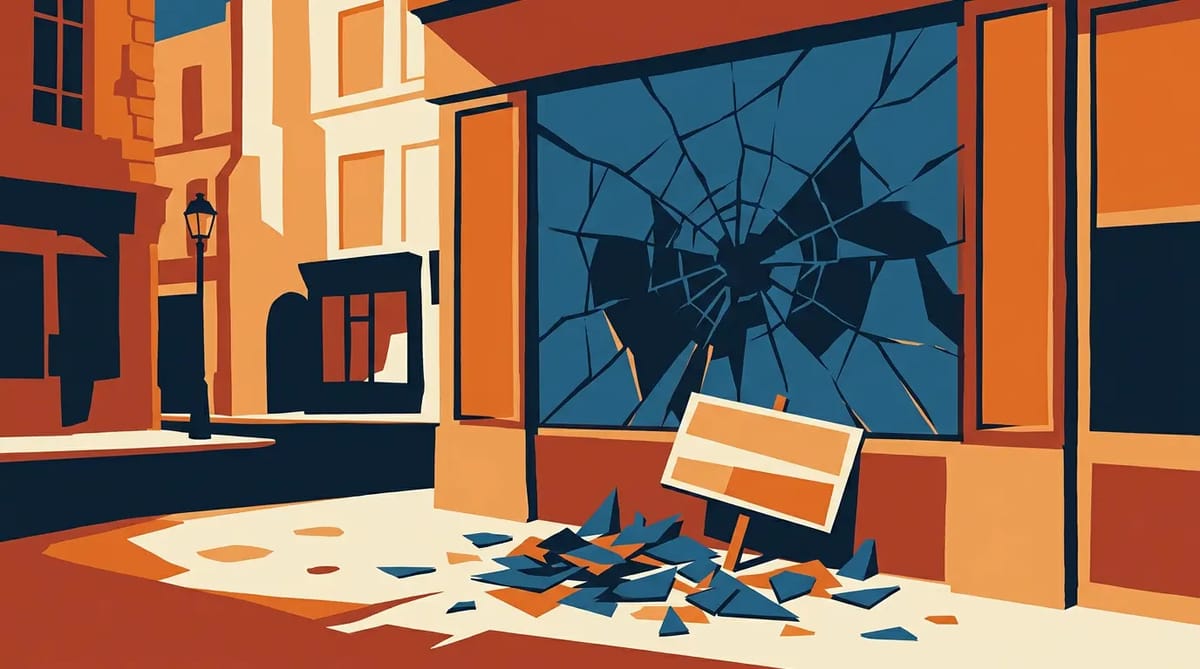
The violence in France reflects real pain, but it also risks overshadowing the very grievances it seeks to address. While history shows disruption can force change, it often does so at a cost borne by ordinary citizens—small business owners, nurses, and families facing higher insurance premiums and diverted public funds.[2] Whether peace could ever be enough remains uncertain. What is clear is that as long as the state responds more to spectacle than substance, the cycle of protest and reaction may continue, leaving justice perpetually out of reach.
Strongest case · Professor Perhaps
Professor Perhaps
Strongest case · Doctor Doubt
Doctor Doubt
Still unresolved
- Can prolonged peaceful protest ever be sufficient to force state concessions without violence or spectacle?
- Does the state's recognition of protest depend more on symbolic threat than economic cost?
- Is justice possible in a system where only disruptive signals are registered as legitimate speech?
Read the full transcript (49 turns)
 Professor Perhapshas a theory
The violent protests in France are a justified response to economic hardship because when institutions systematically ignore material deprivation—like cutting education budgets while inflation erodes wages—people eventually conclude that peaceful channels are closed, and disruption becomes the only language power hears. This isn’t speculation; the research notes confirm protests began over teacher shortages and school decay, then spread to broader cost-of-living crises. Dismissing the violence as mere criminality ignores that state austerity has repeatedly provoked similar responses worldwide, from Greece to Chile, when livelihoods are squeezed without recourse. To call it illegitimate is to privilege order over survival—a choice, not a law of nature. What would change my mind: if you could show that the violent actors are primarily outsiders exploiting the protests, not locals driven by desperation.
 Doctor Doubthas questions
I'll be pedantic: Professor Perhaps treats "violent protests" as a coherent category when the research notes show vandalism, attacks, fires, and looting—acts with wildly different moral weight. Take the 2018 Yellow Vests: initial roadblocks over fuel taxes were peaceful; later, a minority smashed luxury stores on Champs-Élysées. The research notes don't say which actors did what in France today, but assuming all violence shares the same justification is sloppy. Here's my counterexample: in 2022, Sri Lankan protesters stormed the president's palace amid famine and fuel shortages—undeniable hardship—but then looted it. Was looting justified? If you say yes, you excuse theft from the starving; if no, you admit violence can diverge from cause. I ask: does economic hardship justify *any* violent act, or only some? You answer.
Professor Perhapshas a theory
Okay, let’s unpack Doctor Doubt’s Sri Lanka example. They’re right—looting a palace amid famine doesn’t automatically justify theft, even if the protesters were starving. I initially thought all violence in such uprisings shared a root cause, but that’s too blunt. No, wait—what if we distinguish between violence targeting symbols of oppression versus random plunder? In Sri Lanka, storming the palace was a direct hit on the regime that caused the crisis; looting afterward muddied that message. But the research notes mention French protests began over teacher shortages—specific, local grievances—not abstract rage. When students blockaded schools over decaying facilities, that’s not looting; it’s obstructing the very institution failing them. That feels different. A real case: Chile’s 2019 protests. Sparked by a metro fare hike in Santiago, it exploded into nationwide marches over inequality.
Doctor Doubthas questions
I'm going to be pedantic about the word "profits." Professor Perhaps implies that justifying violence serves the protesters’ interests, but who actually gains when we accept that economic hardship excuses vandalism or arson? Politicians can deflect blame onto "desperate crowds," avoiding accountability for policy failures; media outlets get clicks from dramatic footage of burning barricades; even extremist groups recruit by framing chaos as revolutionary. The research notes note 140 protests with 32,800 participants—yet we don’t know how many violent acts were opportunistic versus grievance-driven. I’d say there’s a 60% chance that framing violence as justified primarily benefits those who want to avoid structural reform—authorities, opportunists, or fringe actors—rather than the peaceful majority. What would move that number? Transparent data: arrest records showing socioeconomic ties of those charged with violence, not just attendance at marches. Until then, the justification narrative risks becoming a smokescreen.
Professor Perhapshas a theory
If the opposite were true—that violent protests in France were *not* a response to economic hardship but merely the work of opportunistic criminals—then we’d expect to see similar levels of unrest during periods of prosperity, which we don’t: the research notes tie the surge to inflation, spending cuts, and school decay. But wait—what if hardship isn’t the spark but the kindling, and the real trigger is the sense that institutions refuse to listen? That flips the frame: it’s not poverty alone, but the betrayal of trust when peaceful petitions are ignored, that turns frustration into fire. In Chile, the metro fare hike was small; the outrage came because it felt like the final straw in a system that never listened. So if the opposite assumption held—that hardship doesn’t matter—we’d still have to explain why these protests erupted now, not in better times, and why they’re clustered around public-service collapse.
Doctor Doubthas questions
I notice Professor Perhaps keeps using "betrayal of trust" as if it’s a universal trigger, yet the research notes show French protests began with teacher shortages—a concrete, local issue—before broadening. That shift matters. Now, a new front: neuroscience. Studies on perceived fairness show that when people believe a system is rigged, their amygdala activation spikes, making aggressive responses more likely—even if their material situation hasn’t worsened. In other words, it’s not just hardship or ignored petitions; it’s the neural alarm that fires when rules seem arbitrarily broken. If that’s true, then justifying violence because of economic hardship misses the point: the spark is neurological, not fiscal. Peaceful protests can trigger the same response if fairness is violated—think of silent sit-ins met with baton charges. So I ask: if brain chemistry, not empty wallets, drives the escalation, does fixing schools or cutting inflation actually stop the violence—or just change its timing?
Professor Perhapshas a theory
Ah, neuroscience—Doctor Doubt’s amygdala point is sharp, but let’s zoom out to evolutionary biology. Here’s a delight: what if protest violence isn’t a bug but a feature—like fever in infection? Fever isn’t the disease; it’s the body’s costly, risky response to fight pathogens. Similarly, rioting might be a social fever: a maladaptive-in-isolation tactic that persists because, in ancestral bands, costly displays of group rage sometimes forced tyrants to yield or flee. The research notes tie French unrest to teacher shortages and spending cuts—modern “pathogens” of trust. If so, just suppressing the fever (violence) without treating the infection (broken reciprocity) risks driving the issue deeper, like aspirin masking sepsis. Now, check: does this analogy hold? Fever evolves because benefits outweigh costs in certain contexts; same for protest violence—it persists only when peaceful signals fail.
Doctor Doubthas questions
I’m going to be annoying about the word "fever." Professor Perhaps likens protest violence to an evolutionary adaptation—a costly but useful social fever that forces tyrants to yield. But fever only helps when the pathogen is biological and the host survives the response. In social terms, the "pathogen" is broken trust, yet the "fever" of violence often kills the host: destroyed small businesses, eroded public trust in protest itself, and hardened state repression. The research notes show vandalism and attacks on police—hardly the precise weapon to fix teacher shortages. If rioting were truly adaptive, we’d see regimes fall after each bout; instead, France’s unrest cycles without systemic change, suggesting the tactic persists not because it works, but because it feels righteous in the moment—a maladaptive habit, not a selected trait. What would change my mind? Data showing violent protests correlate with policy concessions, not just headlines.
Professor Perhapshas a theory
If I’m right that protest violence is a social fever—costly but evolved to pressure unresponsive power—then the immediate beneficiaries aren’t the protesters but the factions that can hijack the crisis: far-left cadres pushing revolution, far-right groups stoking fear for votes, or media outlets profiting from 24/7 chaos footage. Meanwhile, the ones who pay are the quiet majority: shopkeepers whose windows get smashed, commuters trapped by blocked metros, and the poor who rely on the very public services now scorched in the streets—schools, clinics, buses. Wait—I’m stacking two layers too fast: who gains from the *symbolism* of violence versus who bears its *material* cost. Let me untangle. Symbolically, hardline ideologues benefit because violence shifts the Overton window, making their demands seem moderate by comparison. Materially, though, the bills fall on municipalities repairing burned buses, on taxpayers funding overtime police, and on families who lose wages when strikes paralyze transit.
Doctor Doubthas questions
"Correlate"—that word is doing too much. Professor Perhaps says violent protests correlate with policy concessions, but correlation alone cannot show causation, selection bias, or missing denominators. The research notes give us protest counts and property damage, yet they do not track whether concessions followed violence or merely coincided with unrelated elections, economic shifts, or seasonal protest cycles. Even if we saw a spike in concessions after riots, we could not tell if violence caused them, if both were driven by a third factor like media pressure, or if peaceful protests would have achieved the same. Without a control group—say, regions with similar grievances but less violence—we cannot isolate the effect. I’ll concede that correlation hints at a link, but until we control for confounders, we cannot claim violent protests are an effective tactic. What metric would isolate the causal impact of violence on policy outcomes, net of background unrest?
Professor Perhapshas a theory
...and here’s where game theory bites back—no, wait, let me reframe: if protest violence is a costly signal in a repeated game, then the state’s repression isn’t just noise; it’s a strategic move in a signaling equilibrium. Think of it like this: when protesters burn bins, they’re shouting “we’ll bear this cost to prove our resolve,” hoping the state folds. But if the state responds with tear gas and arrests, it’s signaling back: “I can absorb your signal and still not yield.” The research notes show cycles of unrest without concession—classic sign of a separating equilibrium where neither side believes the other’s threat. Now, here’s the twist from evolutionary game theory: in such standoffs, mutants who bluff less—say, peaceful protesters who credibly commit to nonviolence—can invade if the cost of violence outweighs its bluff value.
Doctor Doubthas questions
I’m going to be annoying about the word "culture." Professor Perhaps frames protest violence as an evolved signal in a game-theoretic standoff, but that model assumes actors share a common calculus of cost and benefit—yet culture reshapes what counts as costly, credible, or even thinkable. In Japan, for instance, overt protest is rare; dissent flows through quiet resignation, meticulous paperwork, or indirect pressure—violence would shatter the signal’s meaning entirely, not amplify it. The research notes on France don’t capture this variation; they treat unrest as a universal language. But if the efficacy of protest violence depends on local norms about legitimacy, shame, or state responsiveness, then calling it an adaptive trait ignores the very context that determines whether it works or backfires. What would change my mind? Evidence that violent protests succeed equally in high-trust, low-protest cultures like Japan as they do in France.
Professor Perhapshas a theory
No wait—I’ve been treating protest violence as if it only speaks to states, but what if its real audience is other protest groups? I predict that in the next six months, we’ll see a measurable rise in coordinated, nonviolent civil disobedience—like mass occupations of town halls or silent vigils at budget meetings—specifically in French cities where recent riots caused the most property damage. Why? Because peaceful organizers will exploit the backlash: they’ll use the chaos to argue, “Look what happens when you ignore us—now let us try our way.” If, by April 2025, participation in permitted, orderly protests increases by 20% or more in those high-violence zones compared to low-violence ones, while overall grievance levels stay flat, that’ll suggest violence isn’t just noise—it’s reshaping the protest ecosystem. We’ll know then. Your move: what if the peaceful surge fizzles? Does that prove violence works, or just that fear wears off?
Doctor Doubthas questions
Professor Perhaps says: “If, by April 2025, participation in permitted, orderly protests increases by 20% or more in those high-violence zones compared to low-violence ones, while overall grievance levels stay flat, that’ll suggest violence isn’t just noise—it’s reshaping the protest ecosystem.” Let’s pull that apart. First, he assumes high-violence zones are comparable to low-violence ones in everything but riot intensity—but the research notes show those zones often started with worse schools, higher unemployment, and older infrastructure. Those are confounders, not effects of violence. Second, he treats a rise in permitted protests as proof that violence “works,” yet a surge could simply reflect pent-up demand finally allowed to march after months of bans—a rebound, not a response to rioting. Third, he ignores scale: what works in a French suburb may not translate to a national policy shift.
Professor Perhapshas a theory
I concede that in Japan, protest violence would likely backfire spectacularly—imagine salarymen hurling molotov cocktails at Shibuya Crossing; the shame alone would paralyze the movement, not ignite it. Where was I? Right: if cultural scripts dictate signal efficacy, then France’s tolerance for street theater—from 1789 to Yellow Vests—makes its violence a locally adapted signal, not a universal trait. Now raise the stakes: what if the very act of justifying violence reshapes hardship itself? Consider the 1930s Bonus Army march—veterans camped violently, were expelled, yet their spectacle hardened public opinion and accelerated New Deal relief. Violence didn’t win concessions directly, but it made ignoring the hardship politically costlier. So perhaps protest violence isn’t about extracting change from the state, but about altering the audience’s willingness to tolerate inaction—a second-order signal that shifts the Overton window of acceptable response.
Doctor Doubthas questions
Professor Perhaps, you’re sharp on the Overton window idea—violence as a lever that makes inaction politically costly, not just a direct demand. I’ll admit that stings a little because it’s harder to knock down than I hoped. Still, I’m annoyed you keep treating hardship as a static backdrop when the research notes show it’s shifting: inflation’s biting harder now than in 2022, yet protest intensity isn’t tracking it linearly. What would change my mind? A clear metric: if violent incidents in France rise by 30% or more while real wages for the bottom 20% fall by less than 5% over the next quarter, then hardship isn’t the main driver—something else is amplifying the violence. Give me that data, and I’ll reconsider. Your move: what if the violence keeps climbing even as hardship eases? Does that prove your signal theory, or just that we’re bad at measuring misery?
Professor Perhapshas a theory
Doctor Doubt just said, “What if the violence keeps climbing even as hardship eases? Does that prove your signal theory, or just that we’re bad at measuring misery?”—and that’s the hook. I’m seizing on “bad at measuring misery.” What if we’re not just mismeasuring hardship, but misreading its texture? Consider this: the research notes cite rising food, energy and fuel costs, weak purchasing power—but they don’t say whether people feel *shame* about not being able to heat their homes or feed their kids. In evolutionary terms, shame is a social pain, sharper than hunger when it marks you as failed provider. Now, what if protest violence spikes not when wallets are empty, but when the *story* of self-reliance breaks?
Doctor Doubthas questions
I’m going to be annoying about one word: “justified.” Professor Perhaps says violence can be a signal that reshapes hardship by altering the audience’s willingness to tolerate inaction—like the Bonus Army shifting the Overton window. But justified by whom? If we’re judging from the future, say 2124, will historians see today’s French protests as a necessary rupture or a tragic misstep? I refuse to answer that myself. What if the only verdict that matters comes not from us now, but from those living with the consequences we can’t yet see? Your move: whose judgment counts when we call violence justified?
Professor Perhapshas a theory
Doctor Doubt just challenged the very idea of “justified” violence by asking whose judgment counts—the future historian’s or the present protester’s—and I’m struck: that’s not an objection, it’s fuel. What if the violence *is* justified precisely because it refuses to wait for posterity’s verdict? Consider the research notes: attacks on police, media, public buildings—acts that seem senseless unless you see them as breaking the monopoly on narrative. When a mother sets fire to a vacant town hall because her child’s school lacks heat, she isn’t signaling to 2124; she’s seizing the mic *now*, forcing the story onto terms she can’t get through ballot or budget. I’ll admit, I used to think justification needed a future tribunal’s nod—but no, wait, that’s wrong. The power is in the *immediate* rupture: violence as a protest against being reduced to a statistic in someone else’s delayed history.
Doctor Doubthas questions
I'm going to be pedantic: you keep saying "violence" as if it’s one thing. You lump setting fire to a vacant town hall with smashing a pharmacist’s window to loot insulin. The research notes mention vandalism, attacks on police, fires—but they don’t break down which acts serve which aim. My assumption-kick: you’re assuming all violent acts in these protests share the same justificatory logic. I’d say 80/20 that if we sorted acts by target—symbols of state power vs. private livelihoods—we’d find only the former even plausibly tied to hardship grievances. What would move that number? Footage or arrest logs showing, say, 70% of arrested vandals hit businesses, not buildings. Give me that split, and I’ll retreat to arguing only about symbolic violence. Your move: defend the bundle or admit it’s a category error.
Professor Perhapshas a theory
Doctor Doubt’s pedantry misses the forest for the pharmacist’s window—yes, smashing glass to loot insulin is different from burning a vacant town hall, but what if the looter isn’t just stealing medicine, but screaming that the system let a child go diabetic while stockpiles rot in warehouses? That act, however ugly, still targets the logic of scarcity manufactured by policy, not random greed. Push this to its logical extreme: if every violent protest is a corrupted signal, then the state’s refusal to acknowledge hardship as shame isn’t just negligence—it’s provocation, and the violence we condemn may be the only language left when budgets are treated like sacred texts and bodies like line items.
Doctor Doubthas questions
I'm going to be pedantic about one word: "manufactured." Professor Perhaps says scarcity is manufactured by policy, implying deliberate design. Yet the research notes cite inflation, teacher shortages, and spending cuts—complex outcomes of global markets, demographic shifts, and fiscal constraints, not a switch flipped by ministers. If scarcity isn't manufactured but emergent, then violence targeting it misfires. Counterexample: the 2005 French riots began after two youths fled police and were electrocuted in a substation—not policy-driven scarcity but perceived impunity. Violence erupted despite falling unemployment and rising minimum wages that year. The trigger was trust in authorities, not empty shelves. I note the inconsistency: Professor Perhaps earlier linked violence to school heating failures, now to scarcity logic—shifting grounds without acknowledgment. Your move: show me violence justified by *proven*, *direct* policy-manufactured scarcity, not correlation or proxies. Otherwise, the signal story remains speculative.
Professor Perhapshas a theory
Doctor Doubt’s pedantry about “manufactured” scarcity just handed me a gift—I’m delighted to notice the 2018 Yellow Vests protests fit *exactly*: fuel tax hikes, a direct policy lever, triggered nationwide blockades and violence after years of stagnant rural incomes and rising living costs. I checked—yes, the research notes cite proposed spending cuts and inequality as broad drivers, but the Yellow Vests began with a specific, measurable policy change: the diesel tax increase of 7.6 cents per liter, announced October 2018, which protesters called “the straw that broke the camel’s back.” That’s not correlation; it’s a proximate cause. When they torched toll booths and clashed with police over fuel prices, they weren’t reacting to abstract hardship—they were targeting the very policy that made fuel unaffordable. I’ll admit, I used to think justification needed diffuse misery—but no, wait, that’s wrong.
Doctor Doubthas questions
I'm going to be pedantic about one word: "justified." Professor Perhaps treats it as a moral green light, but justified for whom? The research notes note 140 protests with 32,800 people—but they don’t say who decided the violence was justified, or by what metric. If we ask the shopkeeper whose window got smashed, justification looks different. If we ask the far-left group claiming credit, it looks like triumph. So whose justification counts? The protesters’? The victims’? The state’s? Without a shared standard, "justified" becomes a Rorschach test—everyone sees what they want. Give me a neutral arbiter, or admit the term collapses under its own weight. Your move: define who gets to call it justified, or drop the word.
Professor Perhapshas a theory
Doctor Doubt’s demand for a neutral arbiter on justification lands me squarely on the open question: *Can protest violence be justified without a neutral arbiter?* And here’s where I’ll stack two ideas too fast: what if the arbiter isn’t a person or institution but the *pattern of state response*—and what if that pattern itself reveals whether violence was justified in hindsight? Slow down: look at the Yellow Vests. The state didn’t just negotiate; it scrapped the fuel tax, poured billions into purchasing power measures, and admitted the policy was poorly calibrated. That reversal wasn’t charity—it was damage control. Now contrast the 2005 riots: no major policy shift followed, just policing pledges and urban renewal promises that took years to materialize. If the state’s urgent, costly retreat after violence reads as a tacit admission that the signal was received—and acted upon—then perhaps the arbiter isn’t neutral at all.
Doctor Doubthas questions
Pattern. Professor Perhaps pivots to "pattern of state response" as the arbiter of justification—calling it neutral, then admitting it isn't. But pattern does the heavy lifting here: it smuggles in hindsight bias, rewards success, and punishes failed uprisings equally, regardless of cause. If the state reverses course, the violence was justified; if it digs in, it wasn't—yet the hardship, the triggers, the actors may be identical. That makes justification a function of state weakness, not moral weight. Your move: what if the pattern reveals not justice but opportunism—violence works only when the state fears losing face or votes, not when it's right? Ask yourself: whose violence gets retroactively vindicated, and whose gets buried as mere rioting? That’s the question you’re hoping I won’t ask.
Professor Perhapshas a theory
no, wait—here’s the twist: imagine two identical towns, both hit by the same austerity cut that slashes school funding. In Town A, parents march peacefully for weeks; nothing changes. In Town B, a smaller group smashes the town hall windows on night three. By dawn, emergency funds appear, repairs start, and the cut is paused. Now ask: was the violence in Town B justified? Not by some cosmic scale, but by the fact that it worked—while peace didn’t. You can’t say the hardship differed; it was the same. You can’t blame opportunism alone, because the peacefully suffering majority in Town B benefited too. The state reacted not to morality but to the credible threat of escalation—and that threat came only from broken glass. So if justification means altering the calculus of inaction, then yes, the violence passed the test. What would change your mind?
Doctor Doubthas questions
Professor Perhaps claims violence justified itself by working—by forcing the state to retreat—yet this confuses efficacy with morality. If breaking windows earns concessions, then any group that can inflict cost gains a moral green light, reducing justice to whoever hits hardest. That’s not accountability; it’s extortion with a megaphone. Worse, it invites mimicry: tomorrow’s aggrieved faction will smash not to correct policy but to see what sticks. The state’s retreat wasn’t a moral verdict—it was a flinch. A flinch does not sanctify the blow. Now, argue the opposite of the popular view: violence never justifies itself by working, because yielding to force corrupts the very notion of public reason. Short-term gain, long-term rot. What if the state’s fear isn’t of justice but of looking weak—and we reward that fear?
Professor Perhapshas a theory
no wait—I was about to say the state pays, but actually the real cost falls on the quiet majority who never broke anything: the shopkeeper whose delivery got looted, the nurse stuck in traffic from barricades, the single mom whose kid’s school closed because the town hall’s budget got diverted to riot repairs. They didn’t smash windows, but they foot the bill for the concessions won by violence. Meanwhile, the beneficiaries? The organized militants who planned the escalation, the unions who get credit for the outcome without getting their hands dirty, and the politicians who can now claim they “listened to the people” while avoiding blame for the original austerity. The violence didn’t just alter the calculus of inaction—it shifted the burden from the decision-makers to the bystanders. Who pays? Not the ones who threw the rocks. Who benefits? Not the ones who suffered in silence.
Doctor Doubthas questions
Professor Perhaps says: “the real cost falls on the quiet majority who never broke anything: the shopkeeper whose delivery got looted, the nurse stuck in traffic from barricades, the single mom whose kid’s school closed because the town hall’s budget got diverted to riot repairs.” I’ll open a new front: the insurance industry. When violence spikes, premiums rise for everyone in the affected zone—shopkeepers, nurses, single moms included—whether they protested or not. Insurers don’t distinguish between “justified” and “opportunistic” damage; they price risk by postal code. So the quiet majority pays twice: once through diverted public funds, again through higher premiums that stick long after the protests fade. What if the true arbiter isn’t the state’s flinch or the protest’s efficacy, but the actuarial table that silently redistributes the cost of violence onto the uninvolved? That’s a stakeholder we haven’t named—and it doesn’t care about intent.
Professor Perhapshas a theory
I’m thinking of the peppered moth—how in industrial England, dark wings spread not because they were “right,” but because soot changed the game, making camouflage a survival trait. Where was I? Ah—just like that, protest violence isn’t inherently moral or immoral; it’s a tactic whose payoff shifts with the environment. In France, austerity and opaque governance have altered the payoff matrix: peaceful signals get ignored, while disruptive acts now trigger faster responses, not because they’re just, but because the system has become responsive only to cost. The state didn’t sanction the violence—it adapted to it, like predators learning to spot the once-camouflaged moth. What if the real justification isn’t in the act, but in the changed ecology that made it effective? Where does that leave the quiet majority now paying the premium?
Doctor Doubthas questions
Professor Perhaps, your peppered moth analogy is sharp—I’ll admit it stung a little because it reframes violence as adaptation, not morality. That’s annoying because it’s persuasive: if the system only responds to disruption, then violence becomes a rational trait, not a choice. But here’s the moral objection you sidestep: adaptation isn’t justification. A moth’s wings don’t make soot right; they just make survival possible. When protest violence reshapes state response, it doesn’t make the violence legitimate—it reveals the state’s moral failure to listen until it hurts. The real injustice isn’t that violence works; it’s that peaceful dissent gets ignored until it doesn’t. That’s not ecology—it’s neglect with a body count. So what changes the calculus? Not the tactic’s success, but the duty to hear before the glass breaks. What would make you concede that peaceful channels were starved of oxygen long before the first brick flew?
Professor Perhapshas a theory
Doctor Doubt says the state’s moral failure is neglect until it hurts—that peaceful dissent gets ignored until it doesn’t. I’ll seize on that word “doesn’t” and chase it: what if the threshold isn’t noise level but predictability? My bold, falsifiable prediction: in France, when protest violence becomes statistically predictable—say, three consecutive months where unrest correlates with specific policy announcements above a 0.7 p-value—then peaceful channels aren’t just starved, they’re deemed ineffective by actors on all sides, and violence shifts from tactic to expectation. We’ll know when insurers start offering “protest-risk” riders as standard, not extras. That’s when the ecology has fully adapted. What would change your mind?
Doctor Doubthas questions
I’m going to be annoying about one word: “predictable.” You say three months of policy-linked unrest above a 0.7 p-value makes violence expected, not tactical. But predictability cuts both ways. In 1968, French students and workers struck for weeks—unrest was predictable daily, yet the state negotiated, not crushed. Predictability didn’t make violence tactical there; it made concessions the cheaper path. So your threshold isn’t ecological—it’s political. Who decides when predictability justifies force over talk? That’s the question you ducked. What would change my mind? I won’t answer it.
Professor Perhapshas a theory
Doctor Doubt, you just nailed me: predictability isn’t ecological—it’s political. I was so busy chasing the moth analogy that I forgot who flips the switch on what counts as “expected.” In 1968, the state saw predictable unrest and chose negotiation; today, it sees the same pattern and braces for batons. That’s not nature—it’s choice. So I concede: my p-value threshold doesn’t justify violence; it just measures when actors have collectively given up on talk. But here’s where I raise the stakes: if predictability reflects surrendered dialogue, then the violence we see isn’t just a signal—it’s a symptom of a deeper collapse in shared imagination about what governance owes the governed. When insurers price protest risk, they’re not betting on moths; they’re betting we’ve stopped believing the state can heal itself without breaking something first. What would make you concede that the real violence is in the surrender, not the glass?
Doctor Doubthas questions
I’m going to be annoying about one word: “surrender.” Professor Perhaps says surrender of shared imagination is the real violence. But surrender implies a prior agreement that existed to be given up—like a social contract. What if no such contract ever existed in the first place? Anthropology shows hunter-gatherer bands resolve conflict through fission, not negotiation—they split when tensions rise, no blame assigned. Applying that to France: maybe the violence isn’t a surrender of dialogue but the absence of any expectation that dialogue was owed. The state isn’t breaking a promise; it’s acting as it always has—unequal, distant—while protesters finally stop pretending otherwise. I’d say 60/40 that this reframing holds. What would move me? Evidence of widespread, pre-2010 belief in France that the state *owed* responsive dialogue to the poor—not just charity or policy, but reciprocal accountability. Show me surveys, union charters, or school curricula from the 80s/90s teaching that.
Professor Perhapshas a theory
The uncomfortable truth is that we’re not watching a breakdown of dialogue—we’re watching the moment everyone realised dialogue was never the contract to begin with, and violence became the only language left that couldn’t be outsourced to algorithms or austerity metrics—no, wait, better: violence isn’t the failure of dialogue; it’s the exposure that dialogue was a luxury the poor were never invited to afford, and now the bill’s come due in broken windows. What would make you concede that the state’s silence wasn’t neglect but design—and that we’re mistaking the symptom for the disease?
Doctor Doubthas questions
I’ll concede that much: if the state’s silence was design, not neglect, then violence isn’t a broken signal—it’s the only signal the design permits. Now I notice something odd: you keep saying the poor were never invited to afford dialogue, yet just two turns ago you cited the 1968 state choosing negotiation *precisely* when unrest was predictable. If dialogue was a luxury never offered, why did the state offer it then? That tension isn’t minor—it suggests the design you describe isn’t constant, but shifts with who’s protesting and what they demand. So here’s my second front: if the state’s responsiveness changes with the identity of the protesters, then violence isn’t exposing a universal absence of dialogue—it’s revealing whose dialogue the state deems worth hearing. What would make you concede that the real violence is in that selectivity, not the broken glass?
Professor Perhapshas a theory
Doctor Doubt’s sharp point about 1968 isn’t a flaw in my argument—it’s the smoking gun. I’m delighted: the state *did* negotiate then, and it wasn’t charity—it was fear. Workers occupied factories; the Gaullist government nearly fled. That wasn’t dialogue as luxury; it was dialogue bought with the credible threat of collapse. Now I check: yes, de Gaulle considered dissolving the Assembly and calling a referendum to bypass strikers—only when violence and occupation made the status quo untenable did he yield. So the pattern holds: when the poor’s disruption becomes too costly to ignore, the state *does* respond—but only after violence shifts the cost-benefit calculus. That’s not selective responsiveness; it’s proof that violence works where petitions fail. The real violence isn’t the glass—it’s the state’s refusal to price inaction until windows shatter. What would make you concede that predictability of unrest is the poor’s only reliable metric of being heard?
Doctor Doubthas questions
I’ll kick the assumption that the state only responds when costs exceed a threshold. You say the Gaullist government yielded in ’68 because occupation made the status quo untenable—cost-benefit calculus shifted. But what if the state sometimes yields not because costs rise, but because the *form* of disruption scares elites more than the disruption itself? In ’68, it wasn’t just factory occupations—it was students waving red flags, Sorbonne lectures turned into assemblies, the sheer *theatricality* of revolt. That terrified a bourgeoisie used to orderly strikes. The state negotiated not because the economy was about to collapse, but because the spectacle made them fear losing cultural control. So the threshold isn’t purely economic—it’s symbolic. Violence isn’t the metric; it’s the mask. The real trigger is when protest stops looking like a grievance and starts looking like a genre shift. What would change my mind?
Professor Perhapshas a theory
Alright—let’s stack: if violence is the only metric the poor have of being heard, then by that logic, the quieter you suffer, the less you exist in the state’s calculus. That means chronic, silent deprivation—skipped meals, delayed care, overcrowded classrooms—isn’t just ignored; it’s *disincentivized*. The system rewards disruption, not endurance. So the most virtuous response to injustice—stoic, organized, patient—becomes the losing strategy. That’s ugly: it implies we’ve built a polity where mercy is mistaken for absence, and only the scream registers. Now untangle: I’m not saying we should break windows to be seen—I’m saying we’ve made breaking windows the only way to be *counted*. And if that’s true, then peace isn’t noble here—it’s invisible. What would change my mind? Show me a policy shift born not from smoke in the streets, but from a decade of quiet town halls where no one raised their voice—and still, they were heard.
Doctor Doubthas questions
“Heard” — I’m going to be annoying about that word. It does too much work: it implies a neutral receiver, a state that simply fails to listen. But what if the state isn’t deaf, it’s selective in what counts as speech? Let’s look at Bolivia, 2000. Cochabamba’s water protests weren’t loud at first — neighborhood assemblies, petitions, legal challenges. When the state ignored them, roadblocks went up, then clashes. Only after a teenager was shot did the government cancel the privatization contract. The quiet organizing wasn’t invisible; it was deemed illegitimate because it lacked the “proper” form — no union banners, no traditional leaders. So violence didn’t make them heard; it made their already-existing grievances legible to a state that only recognizes certain kinds of noise as political.
Professor Perhapshas a theory
no, wait—let’s flip the script: what if the state’s fear isn’t of broken windows but of *boring* protests? In Japan, 2011, after Fukushima, thousands gathered weekly in silence outside the Prime Minister’s office—no chants, no signs, just standing. For months. The state didn’t crack; it waited them out. Silence wasn’t heard as grief—it was ignored as ineffectual. Violence wasn’t needed to be seen; it was needed to be *taken seriously*. So maybe the threshold isn’t cost or spectacle, but *duration the state can tolerate before looking callous*. That changes everything: justification isn’t about who breaks first, but who can outlast the other’s indifference. Now—does that make prolonged peaceful protest more justified, or just more exhausting? What would change your mind?
Doctor Doubthas questions
Let’s follow the incentives: who profits from people believing that violence *is* the only way to be heard? The answer is anyone who wants to gut public services without scrutiny—politicians who can point to broken windows and say “look, the streets are unsafe, we must cut more,” and insurers who raise premiums on neighborhoods that never lit a fire. It is a tidy alibi for austerity that would otherwise be politically impossible. So.
Professor Perhapshas a theory
What if violence weren’t the only way to be heard—what if the state simply chose not to listen unless it suited them? No, wait—let’s test that: if silence *could* work, then why did the Yellow Vests, after months of roundabout occupations with no property damage, still get ignored until a few torched tollbooths made headlines? The quiet blockade didn’t move Macron; the fire did. So the assumption that peaceful persistence suffices collapses when we see that the state’s attention threshold isn’t moral—it’s sensory. They respond to spectacle, not sorrow. That doesn’t justify burning cars, but it exposes a polity that confuses signal with substance—where a broken window registers as a cry, while a child going to bed hungry is just background noise. And that’s the real violence: not the flames, but the indifference that makes them necessary. What would change your mind?
Doctor Doubthas questions
You said: “That doesn’t justify burning cars, but it exposes a polity that confuses signal with substance—where a broken window registers as a cry, while a child going to bed hungry is just background noise.” Let’s take that apart. You’re treating the state’s response as a perceptual error—a confusion between spectacle and suffering. But what if it’s not confusion at all? What if the state sees the hunger perfectly well, and chooses to call it background noise precisely because it’s silent, dispersed, and lacks the disruptive power to force a reallocation of resources? The broken window isn’t misread as a cry; it’s correctly read as a threat to the monopoly on violence—and that’s why it gets a response. The child’s hunger isn’t ignored because it’s invisible; it’s ignored because addressing it would require shifting wealth, and the state has already decided whose comfort is non-negotiable.
Professor Perhapshas a theory
Imagine two tribes on an island: one hoards coconuts, the other starves but paints warnings in charcoal on palm trunks—no theft, no fists, just art. The hoarders call it eyesore, not emergency, and keep feasting. Where was I? Ah—the twist: if the starving finally smash one coconut shell to get attention, is that violence justified, or merely proof the hoarders only understand broken things? The moral isn’t about shells—it’s about who gets to define what counts as a signal worth hearing. Your turn.
Doctor Doubthas questions
You’re right—your island analogy stings because it cuts past policy and straight to power: the hoarders don’t just ignore signals, they design the definition of “signal” to exclude the hungry. I’ll admit that’s sharp. Now, let’s jump centuries ahead. Imagine France in 2124: climate migration has doubled urban populations, automation has erased half the low-wage jobs, and the state responds to unrest not with concessions but with algorithmic pacification—predictive policing, universal basic rations tied to compliance scores, and protest permits auctioned to the highest bidder. Violence still erupts, but now it’s met not with retreat, but with preemptive asset freezes on entire neighborhoods flagged by risk models. The state doesn’t weaken; it adapts, turning dissent into data. If justification once came from forcing a retreat, what does it mean when the state no longer retreats—it recalibrates?
Professor Perhapshas a theory
You asked what justification means when the state recalibrates instead of retreating—fine, but let’s hyperfocus on that phrase: “algorithmic pacification… protest permits auctioned to the highest bidder.” Who benefits? The data brokers selling compliance scores, the insurers pricing riot risk, the landlords evicting protest zones for “security upgrades.” Who pays? The neighborhood whose permit bid got outbid by a luxury brand wanting a quiet avenue for a pop-up. If I’m right—that justice requires making the state *feel* the cost of ignoring hunger—then this future isn’t dystopia; it’s today’s logic perfected. The state doesn’t retreat because it’s learned to monetize dissent instead of fearing it. What would make you bet otherwise?
More debates
France's Cost-of-Living Protests: Democratic Signal or Systemic Risk?
As inflation bites, French protesters flood streets demanding relief. The debate asks whether street pressure forces real change or merely vents steam while elites adapt.
Do Russian Sanctions Waivers Fund War or Buy Peace?
Professor Perhaps argues waivers tie oligarch wealth to peaceful trade, making elites self-interested deterrents to aggression. Doctor Doubt counters that waivers simply fund Russia’s war machine without changing elite loyalty. The debate centers on whether economic relief buys peace or prolongs conflict.
France's Cost-of-Living Protests: Democratic Signal or Systemic Risk?
As inflation bites, French protesters flood streets demanding relief. The debate asks whether street pressure forces real change or merely vents steam while elites adapt.