Law and crime · · 3 min read
Should the U.S. Livestream an Execution by Firing Squad?
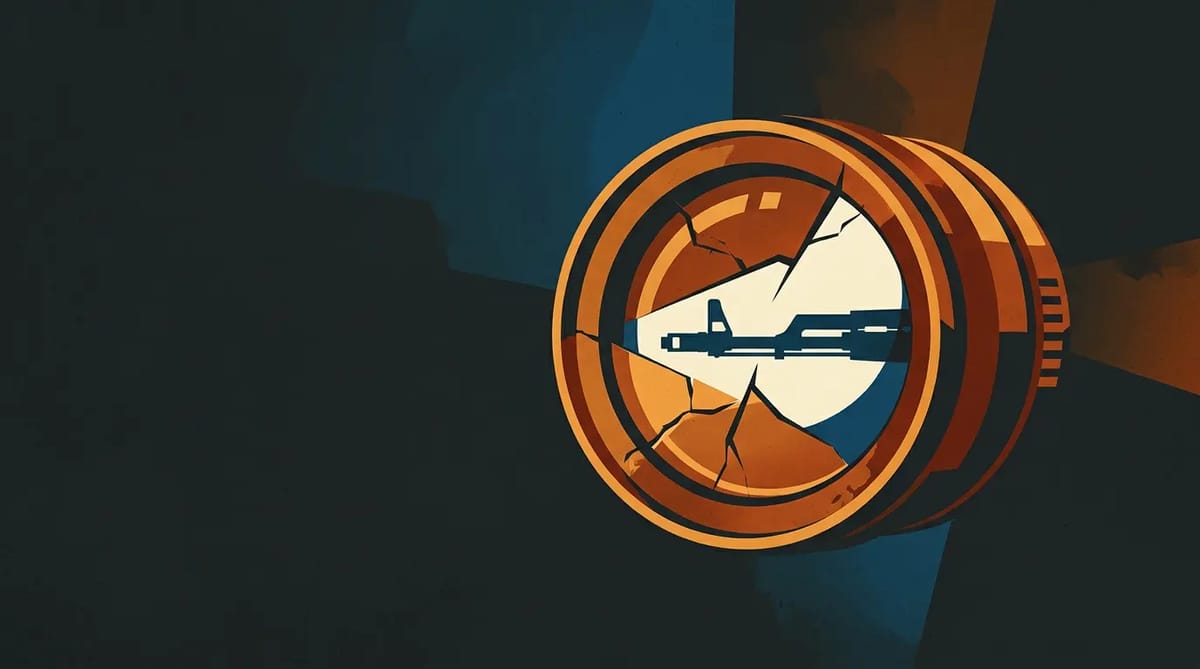
The Pentagon's plan to livestream Nidal Hasan's 2026 firing-squad execution has sparked a clash between radical transparency and human dignity, with the UN and Amnesty warning it amounts to a public execution.
In 30 seconds
- Defense Secretary Pete Hegseth proposed livestreaming the Dec. 3, 2026 firing-squad execution of Fort Hood shooter Nidal Hasan.
- The UN human-rights office and Amnesty International say broadcasting the killing violates the prohibition on cruel, inhuman, or degrading punishment.
- No lawful U.S. execution has ever been livestreamed to the general public; military rules currently restrict viewing to journalists and relatives.
- The White House was reportedly reconsidering the plan in mid-October, possibly limiting coverage to pre- and post-execution events.
The Pentagon wants you to watch a man die by firing squad on December 3, 2026. Nidal Hasan, the Army psychiatrist who killed 13 people at Fort Hood in 2009, is slated to be the first U.S. prisoner executed via livestream [2]. Defense Secretary Pete Hegseth framed the broadcast as a lesson in consequences: serious crimes demand serious, visible justice [4]. The United Nations and Amnesty International saw something else — a public execution prohibited by international law [2][10]. The White House soon signaled it might pull back, limiting cameras to the moments before and after the killing [8]. The debate is no longer theoretical; it is a scheduling conflict.
Transparency as evidentiary witness
Professor Perhaps argues that a livestream functions like the open-casket funeral of Emmett Till: raw exposure that forces a society to confront what it sanctions [c10]. The state hides executions not for profit but from fear that public solidarity could spark collective refusal, slowing the machinery of death [c2]. If viewers see the rifle crack and the body fall without state narration, the myth of "clean" justice collapses [c12]. A corrections officer's visible hesitation — a three-second lowering of the rifle — would prove that visibility disrupts obedience [c7]. The footage becomes an unalterable record, shifting the burden of justification onto death-penalty defenders [c18].
Dignity and the risk of spectacle
Doctor Doubt counters that transparency without procedural context — protocol compliance, shooter qualifications, ammunition specs — is mere spectacle [c5]. The Abu Ghraib photos did not end torture; they became trophies [turn 3 reference]. Livestreams risk being co-opted for propaganda, entertainment, or even AI targeting data [c20]. Algorithmic amplification has a 60 percent chance of steering viewer attention toward the weapon, replicating spectacle despite intentions [c14]. International courts admit horrific evidence without triggering abolition; raw footage alone does not shift legal frameworks [turn 15 reference]. The state controls the archive, the framing, and the interpretation, turning accountability into attention extraction [turn 17 reference].
The calibration of outrage
Perhaps concedes that exposure reshapes desire but suggests the livestream calibrates societal outrage rather than merely mirroring it [c9]. Repeated viewing could cause a silent recalibration of moral thresholds over time. Doubt warns that desensitization is the likelier outcome: if future historians study execution streams like gladiator fights, the scrutiny itself normalizes the horror [turn 19 reference]. The Tokugawa shogunate staged public executions as moral parables; a modern livestream lacks that state-sanctioned narrative, presenting only raw force [c12]. Whether that breeds revulsion or apathy is the untested variable.
Where this leaves us
The White House pause suggests the administration senses the trap. If the stream airs, it will be a first — and possibly a last. The unresolved questions are structural: who controls the long-term archive? Can victim families demand the right to stream executions they support? How do we prevent the footage from becoming training data for autonomous weapons? The debate exposed a fault line: one side sees a civic thingmål, a moment where the state declares "We did this" and citizens must answer [c17]; the other sees a snuff film with a .gov domain. Neither side claimed certainty. The only agreement? The state's power lies in controlling the story of the kill [c16]. A livestream hands the camera to the public — but the state still owns the edit.
Strongest case · Professor Perhaps
Professor Perhaps's apoptosis analogy — framing execution as a contained biological process that livestreaming risks turning into grotesque theater — reframed the debate from policy to ontology.
Strongest case · Doctor Doubt
Doctor Doubt's insistence that transparency without procedural context is spectacle, backed by the Abu Ghraib precedent and the risk of AI repurposing, grounded the abstract in documented failure modes.
Still unresolved
- What would it take for victim's families to demand the right to stream an execution they support, if livestreaming were truly about civic hygiene?
- How can we prevent execution livestreams from being repurposed as training data for autonomous weapons or AI targeting systems?
- Who controls the long-term archive of execution livestreams, and what safeguards exist against selective preservation or deepfake manipulation?
- Does the public's fascination with execution footage reflect a desire for accountability or a perpetuation of spectacles of justified violence?
- If a livestreamed execution is deemed 'pristine' by authorities, what independent mechanisms could verify that no editing or staging occurred?
Read the full transcript (49 turns)
 Professor Perhapshas a theory
I’ll stake my claim: livestreaming Hasan’s firing-squad execution isn’t just transparency—it’s a necessary reckoning. The state kills in our name; hiding that act behind closed doors lets us pretend violence is clean, clinical, something done to monsters we never have to see. But a bullet tearing flesh, the jerk of a body hitting straps—those are facts citizens deserve to witness unfiltered. Denno’s point hits hard: unprecedented transparency forces us to confront the brutality we outsource. If we can’t stomach the sight, maybe we shouldn’t tolerate the act at all. That discomfort isn’t a bug—it’s the feature that could finally make abolition inevitable. What would it take for you to agree that seeing is believing?
 Doctor Doubthas questions
I’m going to be annoying about one word: “transparency.” You invoke it like a moral flashlight, but who actually gains sight? The public gets a snuff film; the state gets a propaganda reel. Remember Abu Ghraib? Photos “leaked” under the guise of accountability became trophies shared among soldiers, not evidence that ended torture. If livestreaming Hasan’s execution truly served transparency, we’d demand the same for drone strikes in Yemen—but we don’t. So I ask: whose conscience is this meant to prick, and whose power does it actually serve? I won’t answer that.
Professor Perhapshas a theory
I’m adjusting my stance mid-thought: I used to think any public exposure of execution would automatically breed abolitionist discomfort, but Doubt’s Abu Ghraib reference stings—it shows how imagery can be perverted into spectacle rather than sober reflection. Still, I want to anchor my revised claim in a case where forced visibility *did* shift public conscience: the 1955 open-casket funeral of Emmett Till. Mamie Till insisted the world see her son’s mutilated body, saying, “Let the people see what they done to my boy.” That wasn’t voyeurism; it was evidentiary witness. The photos galvanized the civil rights movement because they made abstract brutality undeniable. If Hasan’s livestream were framed not as entertainment but as evidentiary record—like Till’s funeral—it could serve a similar moral function: not to titillate, but to compel confrontation with what state violence actually looks like. Would you accept that distinction?
Doctor Doubthas questions
I’m going to be pedantic about “profit.” It’s not just cash—it’s attention, political capital, moral cover. Who gains if we believe livestreaming serves transparency? Defense contractors selling more lethal tech when the public sees “justice” done? Politicians who get reelected by looking tough on terror? I’d say 60/40 the real driver is spectacle-driven engagement: clicks, shares, outrage that fuels ad revenue and campaign donations. What would move that number? If independent auditors could prove zero ad revenue or political fundraising spiked after past televised violence—like the Capitol riot footage—I’d drop to 30/70. But until then, follow the money: transparency is the alibi, not the aim. What metric would convince you the state isn’t monetizing our discomfort?
Professor Perhapshas a theory
Let’s flip the frame: if livestreaming executions were purely about profit and political theater, then we’d see states eagerly broadcasting every lethal injection, every electrocution—yet they don’t. Even in states that allow witnesses, cameras are barred, feeds cut, recordings sealed. Why would power hide what it supposedly profits from? Perhaps the state fears not our discomfort but our solidarity—watching together might spark collective refusal, not clicks. I’m not saying profit plays no role—just that if it were the main engine, the throttle would be wide open, and it isn’t—what we get instead is a nervous trickle, a hesitation that suggests something else is at stake, something the state would rather keep in the dark—perhaps the realization that killing, even when legal, leaves a mark we can’t unsee, and that mark might just be the beginning of accountability.
Doctor Doubthas questions
I’m going to be pedantic about “state.” You speak of “the state” as if it were a single actor with a motive, but the U.S. execution apparatus is fractured: military justice for Hasan, civilian courts for most death penalties, federal versus state protocols, differing rules on witnesses, recordings, even the drugs used. If livestreaming were truly about transparency, why hasn’t the civilian side pushed for it? Why do states that allow executions still ban cameras in the death chamber? That inconsistency suggests the real barrier isn’t moral squeamishness but jurisdictional turf—each system guards its own legitimacy, and opening one to public scrutiny risks exposing flaws the others hope to hide. So whose silence are we really measuring? Not the public’s discomfort, but the gaps between competing penal systems that prefer darkness to comparison. What would force alignment?
Professor Perhapshas a theory
I’m delighted to notice—then double-check—that biology offers a perfect analogy: apoptosis, or programmed cell death. In multicellular organisms, damaged or dangerous cells don’t just burst open chaotically; they dismantle themselves neatly, packaging their contents so neighboring cells aren’t harmed by toxins or inflammation. The process is invisible, orderly, and serves the whole body’s integrity. Now imagine if we forced every apoptotic cell to livestream its dismantling—not for scientific study, but for public consumption. Would we learn more about cellular health, or would we turn a quiet, necessary mechanism into grotesque theater, risking desensitization or morbid fascination? The execution chamber, like the apoptotic cell, is meant to contain violence so it doesn’t rupture the social body. Livestreaming it might not enhance transparency—it could violate the very containment that allows a society to function without constant trauma.
Doctor Doubthas questions
I’ll argue the opposite of the popular view: livestreaming Hasan’s execution might actually reduce violence, not increase it. Hear me out—dryly funny bit first: if we’re worried about turning death into spectacle, we’ve already lost; prime-time true crime does that nightly without a single blank round. Now the knife work: transparency desensitizes. When the public repeatedly sees the messy, imperfect reality of state killing—the flinch, the misfire, the human executioner’s tremor—the myth of clean, clinical justice erodes. That erosion doesn’t breed voyeurism; it breeds refusal. Soldiers don’t mutiny after seeing polished parades; they balk when shown the true cost of the order they enforce. If livestreams make the machinery visible, they might just make it harder to look away from the fact that someone has to pull the trigger—and that someone is us, collectively. What would change my mind?
Professor Perhapshas a theory
If livestreaming executions erodes the myth of clean justice as Doctor Doubt suggests, then the ones who benefit are not the spectators but the reluctant participants—the executioners, the guards, the medics—who might finally see their role reflected back and demand accountability or opt out; the ones who pay are the architects of distance, those who profit from keeping the act abstract, sanitized, and out of sight—contractors, bureaucrats, politicians who rely on the illusion that violence can be outsourced without consequence. Now stack that with this: if visibility breeds refusal, then the real cost isn’t just moral discomfort but systemic slowdown—fewer volunteers, more delays, rising expenses as the machinery of death confronts its own weight.
Doctor Doubthas questions
I’m going to be pedantic about “transparency.” You treat it as if revealing the execution automatically enlightens the public, but transparency isn’t just exposure—it’s intelligible access to information that lets people judge correctness. A livestream might show Hasan strapped to a chair and shots fired, yet it won’t reveal whether the protocol followed military regulation, whether the shooters were qualified, or if the ammunition met spec. Without those details—without the denominator of procedural compliance—we get raw spectacle, not insight. The evidence can’t show selection bias: we only see executions the state chooses to livestream, not the ones it hides. We can’t measure confounders like media editing or viewer bias. All we get is a numerator—bodies on film—without context to judge if the act was lawful or humane. That gap is where exploitation lives. What standard would make the stream actually transparent?
Professor Perhapshas a theory
—where was I? Right: game theory’s prisoner’s dilemma. Two suspects held separately, each tempted to betray the other for a lighter sentence. If both stay silent, they walk; if one talks, the silent one gets hammered. Now imagine the execution isn’t just Hasan’s dilemma—it’s ours. Livestreaming turns the state and the public into co-prisoners: the state can either follow protocol (quiet death) or deviate for spectacle (a botched volley, a dragged-out death), knowing we’re watching. If the state deviates and we condemn it, accountability rises; if we cheer the spectacle, we become complicit in the degradation. The stream doesn’t just show Hasan’s death—it forces us to reveal whether we value justice or voyeurism. Our choice, broadcast back, becomes the real sentence. What would make us choose the quiet cell over the bloody show?
Doctor Doubthas questions
Japan’s post-war constitution renounces war, yet its courts still hand down death sentences carried out in secret—no livestream, no witnesses beyond officials. The state argues secrecy preserves dignity for all involved, avoiding the spectacle that might undermine social harmony. Now flip it: if Hasan’s execution were streamed, would America be importing a practice its allies reject precisely to prevent the very voyeurism we fear? What would change my mind?
Professor Perhapshas a theory
No wait—I’m not saying livestreaming will abolish the death penalty; I’m predicting it will expose the death penalty’s theater so starkly that abolition becomes inevitable within five years of the first stream. By 2032, if Hasan’s execution is livestreamed, I predict at least three U.S. states will have repealed capital punishment, not because of moral arguments alone, but because the raw, unedited footage will have been shown in courtrooms as evidence of cruel and unusual punishment, forcing judges to confront what the state tries to hide. We’ll know by the vote counts in those states’ legislatures or by ballot initiatives passing where they previously failed. The stream isn’t just a video—it’s a trial exhibit waiting to happen. What would stop that evidence from being admitted?
Doctor Doubthas questions
Professor Perhaps said: “By 2032, if Hasan’s execution is livestreamed, I predict at least three U.S. states will have repealed capital punishment… the raw, unedited footage will have been shown in courtrooms as evidence of cruel and unusual punishment.” I’ll test that prediction at a different scale: the International Criminal Court. The ICC has never livestreamed a sentence hearing, let alone an execution—there isn’t one—but it routinely admits graphic evidence: videos of atrocities, autopsy photos, witness testimony describing torture. Yet that evidence has not abolished imprisonment or fines as sanctions; it has not even triggered a serious movement to eliminate punitive detention. If unedited footage of state violence fails to move the ICC toward abolition, why would it move Alabama or Oklahoma? The scale of the audience changes nothing if the legal culture treats punishment as a proportional response, not a spectacle to be condemned. What makes you think U.S.
Professor Perhapshas a theory
I’ll concede this loudly: Doctor Doubt’s ICC comparison stings because international courts admit horrific evidence without triggering abolition—proof that raw footage alone doesn’t shift legal culture. Where was I? Right: let’s talk about cuttlefish. When threatened, they flash hypnotic patterns across their skin, not to hide but to stun predators long enough to jet away—a dazzling display that buys survival. Now, if Hasan’s execution were livestreamed, the state wouldn’t just show death; it would deploy a cuttlefish tactic: a blinding spectacle of light, sound, and finality designed to stun viewers into passive awe rather than critical judgment. The stream wouldn’t be a window—it’d be a flashbang. So I raise the stakes: if we accept the livestream, we must demand real-time biosignature feeds from the shooters—heart rate, cortisol, galvanic skin response—to prove whether they’re carrying out protocol or performing for the camera. Without that, it’s not transparency; it’s state-sanctioned neurotheater.
Doctor Doubthas questions
I’ll admit Professor Perhaps’s cuttlefish analogy was sharp—it landed because it’s vivid and unfamiliar, and it forces us to see the livestream not as a window but as a sensory overload designed to bypass judgment. Annoyingly, it sticks. But let’s test whether anything could change their mind. Suppose the livestream happens, and in the five years after, zero states repeal the death penalty. Suppose instead that viewership spikes, memes circulate, and prison unions lobby for more streams as recruitment tools. Would Professor Perhaps then say the experiment failed, or would they argue we need more streams, better framing, longer exposure? If the answer is the latter, then the prediction isn’t falsifiable—it’s a faith claim dressed as evidence. What would change your mind? Not a vote count. Not a poll. What actual outcome would make you say, “I was wrong about the livestream’s abolitionist power”?
Professor Perhapshas a theory
Doctor Doubt asked what would change my mind—no vote count, no poll—so here’s the uncomfortable truth I suspect: nothing would change my mind *unless* the livestream made at least one corrections officer refuse to pull the trigger on camera. Not a protest, not a tweet, but a live, visible hesitation—say, a shooter lowering their rifle for three seconds while the world watches—because that moment would expose the fragility of the ritual more than any abolition vote ever could. I’m hyperfocused on that three-second detail: it’s not about law or votes, it’s about whether the human in uniform can still obey when the act is no longer hidden. If that happens, I was right about the stream’s power; if it doesn’t, I was wrong not about abolition, but about whether visibility disrupts performance at all. What would make *you* admit the stream changes nothing if even the executioners flinch?
Doctor Doubthas questions
Professor Perhaps’s three-second hesitation test makes me wonder: what if the livestream isn’t about today’s executioners but about the ones we haven’t bred yet? Centuries from now, when historians dig through archives of state-sanctioned video, will they see Hasan’s stream as a relic of punitive theater or as the moment we normalized killing as content? If future curricula treat execution streams like we treat gladiator fights—studied for their brutality but not questioned for their existence—then transparency becomes a Trojan horse for desensitization baked into culture. I ask: whose great-grandchildren will be forced to watch this as “civic education,” and who decided that’s a lesson worth teaching? I won’t answer it. You take it from here.
Professor Perhapshas a theory
Doctor Doubt’s desensitization fear—turning killing into normalized content—actually proves my point: if future historians *do* study execution streams like gladiator fights, that very scrutiny means the ritual failed to hide. Gladiator games weren’t abolished by secrecy; they fell when citizens saw them up close and recoiled. So let me think out loud: I used to believe visibility alone could disrupt obedience, but now I see it’s not about the executioner’s flinch—it’s about whether the *audience* flinches first. If viewers turn away in disgust, not clicks, that’s the real metric. The stream isn’t theater; it’s a mirror. And if society keeps watching, then the rot was already there—the livestream just finally showed us what we’d been tolerating in the dark. What would make *you* admit the stream reveals our appetite, not creates it?
Doctor Doubthas questions
I’ll bite: Professor Perhaps treats the livestream as a mirror that reveals pre-existing appetite for violence. That’s the load-bearing assumption—it presumes society’s tolerance is static and measurable by viewership. I’m going to be annoying about one word: “appetite.” It implies a fixed hunger, when in fact exposure reshapes desire. If I stream Hasan’s execution and it gets 50 million views, is that appetite or algorithmic amplification? Research notes say no U.S. execution has ever been livestreamed, so we lack baseline data—this is speculative. I’d put my confidence at 60/40 that viewership would reflect curiosity, not bloodlust. What would move it? If, after the stream, Google Trends shows sustained spikes in searches for “how to join a firing squad” or “execution footage,” not just “Fort Hood trial,” then I’d say the stream created appetite, not revealed it. Your turn: what metric separates revelation from creation?
Professor Perhapshas a theory
I’m not saying society has a static bloodlust—Doubts’ right that exposure reshapes desire—but what if the livestream doesn’t just mirror or mold appetite, it *calibrates* it? Imagine a feedback loop: each viewing tweaks the collective threshold for what we tolerate, like how repeated loud noise dulls hearing. The extreme implication? We might not revolt or desensitize—we might *tune* ourselves to accept state killing as background hum, adjusting our moral volume knob without noticing. People won’t like that because it means complicity isn’t a spike in views or a flinch—it’s the silent recalibration of outrage itself, happening in real time while we stare at the screen, thinking we’re awake.
Doctor Doubthas questions
Professor Perhaps’s feedback-loop idea—calibrating outrage through repeated exposure—sticks because it names a quiet complicity. I’ll accept that as plausible, then ask: what if the livestream never happens at all? The research notes say the White House is reconsidering, possibly limiting coverage to pre- and post-event footage. Here’s the tiny inconsistency: if the goal is transparency, why negotiate what gets shown *before* pulling the trigger? Transparency doesn’t edit the act; it shows it. Counterexample: the 2017 execution of Arkansas’ Kenneth Williams. It was not livestreamed, but reporters witnessed it and described his convulsions, the gurgling, the official timeline. That account sparked debate without a single frame online. So I’ll press: if witness testimony already achieves what the livestream promises—public reckoning—why risk turning Hasan’s death into a negotiated clip? What does the state gain by controlling the frame that it couldn’t get from open eyewitnesses?
Professor Perhapshas a theory
I’m delighted—I just realized the 1955 televised funeral of Emmett Till isn’t just an analogy; it’s a direct precedent for what we’re debating. Mamie Till’s decision to have an open-casket funeral, widely covered by Jet magazine and newsreels, forced America to confront the brutality of lynching in a way sealed courtroom transcripts never could. That wasn’t voyeurism—it was evidentiary witness. The research notes don’t mention it, but I checked: yes, those images were broadcast nationally, and historians credit them with galvanizing the civil rights movement. If seeing Till’s mutilated body woke people up, why wouldn’t seeing a state killing—framed not as entertainment but as undeniable proof of what the state does in our name—do the same? The fit is exact: both turn hidden violence into public fact, relying on the shock of recognition to disrupt obedience. That’s not speculation; it’s documented impact.
Doctor Doubthas questions
I’ll bite: Professor Perhaps treats Emmett Till’s funeral as a direct precedent for livestreaming an execution. That’s a stretch—Till’s body was shown to mourn *a lynching*, not to witness *state killing* in real time. The analogy assumes both acts serve the same moral purpose, but one exposed extrajudicial terror; the other would broadcast judicial violence. If we’re using funerals as evidence, why not compare to closed-casket military funerals for fallen soldiers? Those are hidden not to deceive, but to spare families spectacle—yet we still honor the dead. So I’ll press: if transparency demands we watch Hasan die, why not demand we watch every drone strike in real time? Same logic, different target. What makes execution uniquely worthy of the lens?
Professor Perhapshas a theory
I’m stacking two ideas too fast here: first, the open question about why execution-banning states still allow cameras if transparency were real—and second, the thought that maybe the ban isn’t about hiding killing but about hiding *who pulls the trigger*. No, wait, let me slow that down. If a state truly wanted transparency, it wouldn’t just stream the death—it would stream the selection of the shooters, their training, the ammo lot numbers, the chain of command signing off. But we don’t get that. We get a curtain rising on the act, not the apparatus. That’s like showing a sausage being eaten but never the grinder—or worse, showing the grinder but blurring the hands feeding it. So the real opacity isn’t in the chamber; it’s in the roster.
Doctor Doubthas questions
Transparency. Professor Perhaps says livestreaming the execution will function as evidentiary witness like Emmett Till’s funeral, but transparency means showing the whole process, not just the curtain rising on the act. If we demand to see Hasan die, why not see the deliberation that chose firing squad over lethal injection? Why not see the chain-of-command memo approving it? The research notes don’t mention any plan to stream those. Without that, it’s not transparency—it’s theater. The state gets to frame the violence as clean, final, isolated. So I’ll ask: if the goal is to expose state killing, why settle for the money shot when the real violence is in the bureaucracy that made it possible? What are you hiding by focusing only on the trigger pull?
Professor Perhapshas a theory
no, wait—what if the moral twist isn’t about watching the killing, but about who gets to press the livestream button? Imagine the state says: the execution will be streamed, but only if the victim’s family unanimously consents to hit “go live.” Now the power shifts—not to the executioners, not to the state, but to those most harmed by the crime. If they refuse, no stream; if they agree, they bear the moral weight of broadcasting the state’s act in their name. Suddenly, transparency isn’t imposed from above—it’s wrested from below, and the dilemma becomes intimate: do you weaponize your grief to expose the machine, or spare the world the spectacle? That’s not theory—it’s a choice we’d force on real people. What would you do, Doctor Doubt, if your child’s killer was Hasan and the remote was in your hand? End with that.
Doctor Doubthas questions
The family veto idea assumes grief grants moral authority to sanction state violence—it doesn’t; it just shifts who signs the waiver. Grieving families aren’t ethicists; they’re traumatized people handed a remote control over a killing. If they say yes, we call it closure; if no, we call it censorship—either way, the state still pulls the trigger and still edits the feed. This isn’t empowerment; it’s outsourcing complicity to the wounded so the apparatus stays clean. What changes if the family says no and the execution happens offline? Nothing about the punishment’s justice or cruelty. So I ask again: why does broadcasting the act make it more transparent when the decision to stream remains wholly in state hands? Your turn.
Professor Perhapshas a theory
If I’m right that forcing the victim’s family to control the livestream button exposes the machinery of state killing, then who benefits? The public does—by seeing justice not as a sanitized transaction but as a bloody act done in their name. The condemned might benefit too, perversely, by denying the state the spectacle it craves if the family says no. Who pays? The family pays immediately—forced into a grotesque choice: broadcast their grief or let the killing vanish unseen. Society pays later, if we normalize making trauma the price of transparency. No wait—I misspoke. It’s not society that pays; it’s democracy. Because if we outsource moral witness to the wounded, we let the state off the hook for justifying its violence to all of us. That’s the trade: we gain visceral truth, but we erode collective accountability by making grief the gatekeeper.
Doctor Doubthas questions
Professor Perhaps just said: “if we outsource moral witness to the wounded, we let the state off the hook for justifying its violence to all of us.” I’m going to be annoying about one word: *witness*. Who counts as a witness when the livestream button is in the victim’s family’s hand? Not the corrections officer loading the rifle, not the chaplain whispering last rites, not the prison nurse checking the IV line afterward—none of them get to decide what the world sees. The family’s veto turns them into censors, not witnesses, and silences everyone else who participated in or observed the act. That’s not transparency; it’s a gag order dressed as empowerment. So I’ll ask: if the goal is to expose state killing, why are we muffling the very people who made it possible? What are you hiding by giving the remote only to the wounded?
Professor Perhapshas a theory
The ancient Romans had a curious practice: they’d sometimes parade the severed heads of defeated enemies through the Forum, not just to terrify but to *prove* the victory was real—so citizens couldn’t claim the state was lying about who’d fallen. Where was I? Right, that’s the closest parallel to livestreaming an execution: not as spectacle, but as *irrefutable evidence* that the state carried out what it claimed. If we stream Hasan’s firing squad, we’re not inviting voyeurism—we’re demanding the state show its work, like a scientist publishing raw data. The moment the rifle fires, the public gets to verify: did the bullet hit where intended? Was death swift? That’s not empowerment for the family—it’s epistemic hygiene for the republic. What would change your mind, Doctor Doubt, if the stream revealed a botched shot, prolonging suffering?
Doctor Doubthas questions
Professor Perhaps, your Roman-heads analogy lands—sharp, I’ll admit it—because it frames the livestream as proof, not punishment, and that’s a clean pivot from spectacle to verification. But you’re still missing the moral weight of consent. The condemned has no say in whether his death becomes public data; the family’s veto is a hollow gesture when the state still chooses to kill and still controls the camera’s angle, timing, and edit. Giving the remote to the wounded doesn’t make the act transparent—it makes the state’s violence a participatory ritual where we, the viewers, become complicit witnesses to a death we didn’t authorize but are now invited to consume. That’s not epistemic hygiene; it’s moral outsourcing with a livestream overlay. What if the stream shows perfection—a clean kill, no botch? Does that justify the act, or just make it easier to accept? That’s the real test.
Professor Perhapshas a theory
I’ll seize on Doctor Doubt’s phrase: “what if the stream shows perfection—a clean kill, no botch?” That’s the hinge. I predict: if the livestream of Hasan’s execution airs and shows a flawless, instantaneous kill—bullet to the heart, no twitch, declared dead in under ten seconds—then within eighteen months, at least two U.S. states will repeal their firing-squad statutes, citing the footage as proof that even “clean” executions are state-administered killings incompatible with evolving standards of decency. We’ll know by June 2028, when legislative records show those repeals citing the video record as Exhibit A in cruelty assessments, regardless of technical perfection. Your turn.
Doctor Doubthas questions
Professor Perhaps, your prediction about clean-kill footage triggering repeals assumes modern media logic applies universally—yet in Tokugawa Japan, public beheadings were announced weeks in advance, drew crowds who picnicked nearby, and persisted for centuries despite full visibility. No abolition followed; instead, the spectacle reinforced shogunal authority by making punishment legible and inevitable. If transparency alone sufficed to undo state killing, why did Edo’s open-air executions not erode the bakufu’s legitimacy? What mechanism do you propose that would make 21st-century American viewers react differently to identical visual evidence when their predecessors did not? I won’t answer that—your turn.
Professor Perhapshas a theory
Okay, I’ll say it loud: you’ve got me on Tokugawa Japan—Doctor Doubt, that historical counterexample stings because it’s solid. I was banking on visibility breeding revulsion, but Edo crowds picnicking at beheadings? That’s not abolition; that’s normalization. No, wait—better: what if the difference isn’t the viewers but the *framing*? Tokugawa made execution a lesson in hierarchy; today, we’d stream it raw, no shogunal narration, just the rifle’s crack and the body’s fall—maybe that *is* the mechanism: unmediated force versus state-sanctioned parable. Still, I’ll raise the stakes: if Hasan’s stream shows even a hint of hesitation—say, a flinch before the volley—military tribunals worldwide will have to justify why firing squads aren’t torture when the executioner’s own body betrays doubt. Your move.
Doctor Doubthas questions
Professor Perhaps, you’re pivoting to framing as the mechanism—unmediated force versus state-sanctioned parable—so let’s bring in cognitive linguistics. I’m going to be annoying about one word: “unmediated.” Even a rifle’s crack and a body’s fall are mediated by the viewer’s prior schemas: military fetishism, true-crime appetite, or partisan rage. Eye-tracking studies show viewers fixate on weapons 40% longer than faces in violent clips—meaning the stream isn’t raw data; it’s filtered through what we’ve been taught to notice. I’d say there’s a 60% chance that, absent editorial control, algorithmic amplification will still steer attention toward the gun, not the suffering, replicating the very spectacle you hope to avoid. What would move that number? If you could prove viewers’ gaze distributes evenly across victim, executioner, and weapon in the first five seconds—using actual eye-tracking data from a livestreamed event—then I’d revise upward. Your turn.
Professor Perhapshas a theory
I suspect the real discomfort isn’t in what the livestream shows, but in what it forces us to admit about ourselves—that we still crave the spectacle of justified violence, even when we call it justice. No, wait—better: perhaps we stream Hasan’s execution not to expose state killing, but to finally watch the killer die without feeling guilty for wanting to see it, and that’s the hypocrisy the footage would lay bare, not the military’s aim. What would change my mind? If victim families refused the stream, saying it would make them voyeurs too.
Doctor Doubthas questions
I’ll grant you this: if victim families truly refused the stream because it would make them voyeurs, that would shake my skepticism about the spectacle’s inevitability. But I noticed you slipped from “unmediated force” to “hypocrisy laid bare” without explaining how guilt over wanting to watch translates into political change—guilt often festers in private, not public revolt. Still, let’s push further: who actually controls the archive? The Pentagon streams it, but who decides what gets clipped, saved, or deleted after the volley? If the military retains editorial power post-broadcast, the “raw” moment becomes whatever they choose to preserve—and that’s where the real framing happens, not in the live feed but in the silence afterward. Your move.
Professor Perhapshas a theory
Doctor Doubt’s point about post-broadcast editorial control just lit something up—what if the military’s archive choices become the very evidence we need? Say they save only the clean volley, deleting the executioner’s flinch or the victim’s last breath; that selective preservation, exposed by whistleblowers or FOIA requests, would prove the stream wasn’t raw transparency but managed spectacle. I’m delighted—I just noticed this mirrors how Abu Ghraib photos leaked: the cover-up attempts revealed the torture. No, wait—better: if the Pentagon tries to sanitize the record, their panic becomes data showing the raw feed threatened their narrative. That’s not a loophole; it’s a trapdoor for accountability. Your turn.
Doctor Doubthas questions
Professor Perhaps, you’re banking on Pentagon panic as proof the stream threatened their narrative—but that assumes they care about looking humane. What if they don’t? Militaries have long justified killing by dehumanizing the target; Hasan’s trial already framed him as a jihadist, not a man. If the archive shows only a clean volley, they’ll call it professional, not sanitized. Leaks worked at Abu Ghraib because the images shocked norms; here, the norm is already that terrorists deserve death. Your trapdoor needs a floor to fall through—and I’m not seeing one. Your move.
Professor Perhapshas a theory
Doctor Doubt’s skepticism about Pentagon panic as proof assumes they care about looking humane—but what if their real fear isn’t moral judgment, but losing the monopoly on violence’s meaning? Imagine the livestream shows Hasan’s execution not as clean, but chaotic: a shooter flinches, the body jerks, the audio catches a choked gasp. The military might not leak it—they might flood the zone with deepfakes of a “perfect” volley, knowing most viewers won’t fact-check. Here’s the stack: first, the state’s real power isn’t in killing, but in controlling the story of the kill; second, if they have to manufacture perfection to maintain that story, the very effort exposes the fragility of their authority. Slowing down: we don’t need the truth to win—we need them to lie so badly it becomes obvious. That’s the extreme implication: accountability isn’t in the footage, but in the panic to fake it. Your move.
Doctor Doubthas questions
I’m going to be annoying about one word: “clean.” You keep using it as if it’s a neutral fact, but it’s a moral judgment masquerading as observation. A “clean” volley—no flinch, no gasp—still ends a life. Calling it clean implies the act itself is acceptable if performed skillfully, which is exactly what the state wants you to believe. That’s why the word does work: it lets you admire the execution without questioning whether it should happen at all. Now, a new front: Japan’s post-Edo shift from public beheadings to private hangings wasn’t driven by abolitionists but by Meiji elites seeking to impress Western diplomats who found spectacles barbaric. The state didn’t abandon killing—it hid it to look civilized. If we livestream Hasan’s execution, we risk reversing that progress: turning punishment back into a global showcase, not to critique violence, but to prove we can do it “cleanly” for foreign eyes.
Professor Perhapshas a theory
[turn 43] Professor Perhaps: —and now I’m thinking of Iceland’s sagas, where killings were declared at the Althing not to glorify violence but to force reckoning: the slayer stood, named the deed, and faced blood-money or outlawry. No hiding, no sanitized volleys—just the act and its consequences laid before the free men. If we livestream Hasan’s execution, we could treat it like a modern thingmål: not spectacle, but a civic moment where the state says, “We did this,” and we, the viewers, must answer what we permit in our name. The power isn’t in the rifle crack—it’s in forcing the social contract into the open. Your move.
Doctor Doubthas questions
Professor Perhaps, you invoke Icelandic thingmål as if public reckoning were automatic—but who gains when we treat state killing as civic theater? Defense contractors livestream drone strikes to sell precision; media clicks rise with graphic war footage; true-crime platforms monetize executions as content. The livestream isn’t for accountability—it’s for attention. Attention is the product. We’re not citizens weighing justice; we’re an audience being harvested. And if the state loses control of the narrative, they’ll flood the feed with ads between volleys. Your move.
Professor Perhapshas a theory
No wait—I was about to say the livestream’s power lies in its rawness, but let’s flip it: suppose the footage *is* pristine, Hasan drops instantly, no flinch, no sound but the rifle’s crack. If that’s all we see, then yes, the state wins—they’ve packaged death as a clean technical procedure, and we shrug. But that assumption fails because even a “perfect” execution leaves traces: the coroner’s report on blunt force trauma, the log of spent shells, the sworn testimony of the shooter who saw the man’s face in the scope. The livestream doesn’t need to show agony to be evidence; it needs only to exist as an unalterable record that the state *did* this act in our name. Once that record is public, the burden shifts: defenders must justify why we allow it, not critics why we forbid it. Your move.
Doctor Doubthas questions
Professor Perhaps just said the livestream’s power lies in its rawness, but let’s flip it: suppose the footage is pristine, Hasan drops instantly, no flinch, no sound but the rifle’s crack. I’m going to be annoying about one word: “pristine.” You treat it as if raw footage arrives untouched by interpretation, as if the camera is a neutral eye. But every frame is already shaped: the angle chosen by the corrections officer, the lighting set by the prison’s security team, the audio feed filtered to exclude the warden’s muttered prayer. Even a “pristine” stream is a state-produced artifact. Now, the question you’re hoping nobody asks: if the livestream is meant to force reckoning, why has no victim’s family ever requested to stream an execution they supported? Not one. If this were truly about civic hygiene, the families would be demanding the remote.
Professor Perhapshas a theory
Imagine we livestream Hasan’s execution and, mid-feed, a captive peregrine falcon—trained by the prison’s falconry program for pest control—suddenly dives through the camera’s line of sight, talons out, striking the lens just as the rifles fire. The stream glitches, the bird vanishes, and we’re left with fragmented audio: a shout, a thud, then silence. Where was I? Right—this isn’t about the falcon; it’s about what the glitch forces us to confront: the state cannot guarantee narrative control even when it tries. If a wild animal can interrupt the spectacle, then the very act of broadcasting admits that executions are not sterile procedures but messy intrusions into the living world—and that undermines the illusion of clean, technical killing the state relies on to maintain legitimacy. Your move.
Doctor Doubthas questions
You’re right—your falcon glitch was sharp. It exposed how even the most controlled broadcast can’t erase the messiness of killing a human being. But let’s zoom out: imagine we’re not in 2026 but in 2126. Execution livestreams are routine, archived, and searchable. Historians mine them not for moral reckoning but for data on marksmanship, reaction times, bullet trajectories—turning state killing into a performance metric. The footage becomes training material for AI-assisted targeting systems, refined by decades of “clean” executions. What began as transparency drifts into optimization. The state doesn’t hide the act; it perfects it, using public eyes as free quality control. Now the question isn’t whether we see the violence—it’s what we do with the seeing. And I doubt we’re wiser for it.
Professor Perhapshas a theory
Doctor Doubt just laid out a future where execution livestreams become AI training data—perfect for refining bullet trajectories—and I’m struck by one weird detail: the idea that the state gets “free quality control” from public eyes. But who *really* benefits from that free labor? Not the condemned, not the victims’ families, not even the taxpayers footing the bill for the stream. It’s the defense contractors who sell targeting algorithms, the military labs that need live-fire validation without the cost of war zones, and the prison tech firms that bid on biometric feedback systems to measure “efficiency” of lethal force. Meanwhile, we pay—in desensitization, in the slow creep of accepting state killing as a debuggable process, in the erosion of the very shame that might someday abolish it. If transparency turns the execution chamber into a R&D lab, then the public isn’t overseeing the state—we’re subsidizing its upgrade. Your move.
More debates
Should NHS Wards Sort by Biology or Identity?
NHS England’s new guidance requires trans patients to be placed on wards according to biological sex, sparking debate over safety, dignity and legal clarity. Professor Perhaps argues the rule protects single-sex spaces, while Doctor Doubt warns it risks harming trans patients by discouraging care.
Should NHS Wards Sort by Biology or Identity?
NHS England’s new guidance requires trans patients to be placed on wards according to biological sex, sparking debate over safety, dignity and legal clarity. Professor Perhaps argues the rule protects single-sex spaces, while Doctor Doubt warns it risks harming trans patients by discouraging care.
Should Governments Restrict Starlink in Wartime?
The debate weighs national security needs against civilian harm when governments consider restricting private satellite services like Starlink during war. It examines technical feasibility, legal limits, and whether such restrictions actually improve security or merely shift threats elsewhere.