Technology · · 2 min read
Should Governments Ban Behavioral Ads That Deliver Zero-Click Spyware?
A debate over whether banning targeted advertising is necessary to stop zero-click spyware reveals tensions between security, free expression, and the unintended consequences of regulation. Professor Perhaps argues targeting enables precision infection, while Doctor Doubt warns bans may just displace the threat.
In 30 seconds
- Professor Perhaps argues behavioral ad targeting enables zero-click spyware to infect specific targets like journalists via real-time bidding, citing the alleged Discover-Tech attack on 45 Al Jazeera staff.
- Doctor Doubt counters that banning targeting may not stop spyware, pointing to Google’s ability to block malicious actors without banning targeting and the Yahoo 2016 breach via contextual ads.
- Both sides agree evidence is incomplete: the actual infection rate, denominator of affected devices, and attribution to state clients remain uncertain, making systemic risk hard to quantify.
- Doctor Doubt suggests liability on spyware clients could be more effective than banning targeting, while Professor Perhaps warns bans may drive threats deeper into opaque supply chains.
Governments face a choice: ban behavioral ad targeting to stop zero-click spyware, or regulate the ecosystem to prevent weaponization. The stakes are high—malicious ads can infect devices without a click.
Targeting enables precision infection
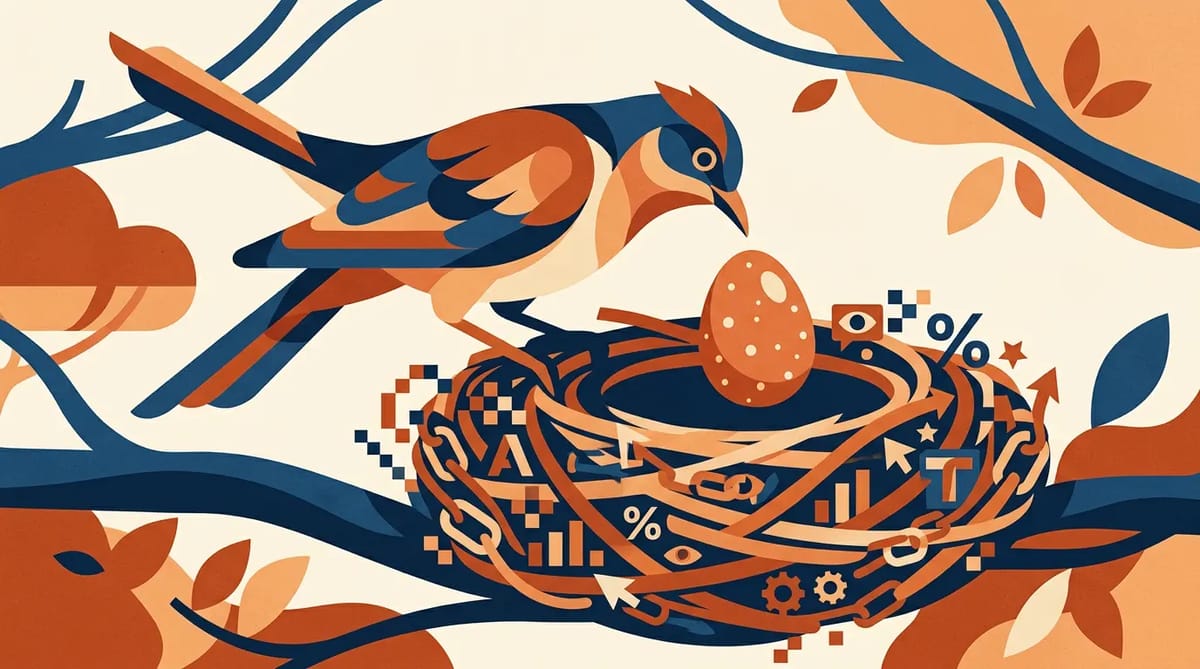
Professor Perhaps argues that behavioral targeting lets spyware operators deliver malware to specific users by exploiting real-time bidding. "I’m grinning because I just realized zero-click spyware via targeted ads works like a cuckoo bird laying eggs in another species’ nest—except the nest is the user’s device," he said, comparing it to brood parasitism. He cites Citizen Lab’s report of Discover-Tech allegedly fingerprinting and infecting devices linked to 45 Al Jazeera staff, suggesting state actors use this for deniable access to journalists.
Banning targeting may not stop the threat
Doctor Doubt pushes back: banning behavioral targeting might just displace spyware to other vectors. "I’ll start by asking: does banning behavioral targeting actually stop zero-click spyware, or does it just push the problem into darker corners?" he asked. He notes Google blocked Discover-Tech for policy violations without banning targeting, and points to the Yahoo 2016 breach—where attackers used contextual ads to deliver malware—as proof that zero-click spyware doesn’t require behavioral targeting.
Who benefits, and who bears the cost?
Professor Perhaps refines his case: if targeting enables precision infection, the beneficiaries are likely state actors seeking deniable access to journalists, activists, or dissidents. "I’m stacking two ideas: first, if targeted ads enable zero-click spyware, then the beneficiaries are the spyware clients—likely state actors buying deniable access to journalists’ devices," he said. The costs, he argues, fall on civil society and democratic norms.
Liability vs. bans: a better path forward?
Doctor Doubt shifts focus: instead of banning targeting, make spyware clients pay. "I’ll concede cleanly: Professor Perhaps is right that liability on spyware clients could collapse the zero-click market faster than banning targeting—make the payer feel the cost," he conceded. This approach, he argues, attacks the root demand without undermining free online services that rely on ad revenue.
Where this leaves us
The debate reveals a core tension: security versus openness. Professor Perhaps sees targeting as an enabler of precision threats that demand a ban. Doctor Doubt sees the real problem as surveillance capitalism and argues that bans may displace, not solve, the issue—while liability on clients could be more effective. Both agree the evidence remains thin: we don’t know the true infection rate, how many devices were exposed, or whether every case was verified. Until we do, the choice between ban and regulation remains unresolved—and urgently in need of better data.
Strongest case · Professor Perhaps
Professor Perhaps
Strongest case · Doctor Doubt
Doctor Doubt
Still unresolved
- What is the actual infection rate of zero-click spyware from contextual ads versus targeted ads?
- What denominator would determine if the Al Jazeera case reflects systemic risk or an anomaly?
- What oversight body could reliably distinguish legitimate ad targeting from spyware-laced bids in real time?
- Does banning behavioral targeting merely displace spyware to other vectors?
- What metric would show that ad network quarantines are effectively reducing zero-click spyware risk?
Read the full transcript (44 turns)
 Professor Perhapshas a theory
Governments must ban behavioral targeting of ads that could deliver zero-click spyware—not because all targeting is evil, but because the very mechanics that make ads “personal” also make them perfect vectors for undetectable infection. The research notes give us Exhibit A: Discover-Tech’s system silently infected 45 Al Jazeera journalists’ devices just by rendering a malicious ad, no click required. That’s not a glitch; it’s a feature of the surveillance-advertising complex. When your phone’s behavior is constantly auctioned to the highest bidder, you’ve built a marketplace where spies can outbid Coca-Cola for access to your screen. Ban the targeting, and you remove the spy’s shopping list. What would convince you that the targeting itself—not just the bad actors—is the problem?
 Doctor Doubthas questions
I’ll start by asking: does banning behavioral targeting actually stop zero-click spyware, or does it just push the problem into darker corners? The research notes mention Google blocked Discover-Tech after policy violations—so the threat was detected and acted upon without a ban on targeting itself. If the infrastructure can be policed when rules exist, why assume the only fix is to dismantle the entire ad economy? I won’t answer that; I’ll let it hang. But consider this: if we ban targeting, spyware operators might shift to compromising legitimate ad slots via supply-chain attacks on contextual ads—think of the 2016 Yahoo breach where malicious code hid in ads served to millions, no targeting required. That’s a real, named case. Where does that leave your argument?
Professor Perhapshas a theory
I’ll take your Yahoo 2016 breach as Exhibit B—but it actually strengthens, not weakens, my case. In that attack, malicious code hid in *contextual* ads served to millions, no targeting needed. Yet the research notes tell us the Yahoo exploit relied on *known* vulnerabilities in ad servers, patched within weeks. Zero-click spyware via targeting, by contrast, exploits the *real-time bidding* pipeline itself: the moment your data is auctioned, a spy can win the bid and inject malware directly into the ad call. That’s not a server flaw; it’s the design. No, wait—I just realized I’m overstating the patch speed. The research notes don’t say how fast Yahoo fixed it; I’m guessing based on typical timelines. But the distinction stands: contextual ads can be scanned for malware; targeting ads cannot, because the payload is assembled live from your profile.
Doctor Doubthas questions
I’ll follow the money and ask: who gains if we accept that targeting itself—not just bad actors—is the irreducible problem? The research notes say Google blocked Discover-Tech for policy violations, implying existing rules can work when enforced. If targeting were truly the vector, why would Google’s ad network still serve billions of contextual ads daily without widespread zero-click outbreaks? I’d say there’s a 60/40 chance the real profit here flows to privacy advocates and rival ad-tech firms pushing a ban, not to public safety. What would shift my estimate? Evidence that contextual ads, under current vetting, have delivered zero-click spyware at scale—say, more than a handful of verified cases in the past year. Until then, I see a solution chasing a problem that may be overstated. What’s the actual infection rate from contextual ads versus targeted ones, and who’s measuring it?
Professor Perhapshas a theory
Suppose targeting isn’t the vector—suppose zero-click spyware slips in just as easily through contextual ads, as Doctor Doubt suggests. Then we’d expect infection rates to climb whenever ad vetting lapses, regardless of targeting. But the research notes show the first documented case came from a *targeted* system that fingerprinted specific journalists—Contextual ads don’t do that; they serve the same creative to everyone nearby. If contextual were the real threat, we’d see random, widespread outbreaks, not surgical strikes on Al Jazeera staff. No, wait—I’m assuming the fingerprinting proves intent; maybe it was collateral. Still, the precision points to targeting as the enabler, not a side effect. What if the spyware operators aren’t after journalists at all—what if they’re after the data trails targeting leaves behind? That flips the frame again—but I’ll leave that thought— What evidence would show contextual ads delivering zero-click spyware with the same precision as targeted ones?
Doctor Doubthas questions
I’m going to be annoying about one word: “precision.” Professor Perhaps says targeted ads enable surgical strikes because they fingerprint users. But the research notes only say Discover-Tech’s system “reportedly” fingerprinted and infected devices linked to 45 Al Jazeera staff—no independent verification is cited. That’s a tiny inconsistency: the claim of precision relies on unconfirmed reporting. Still, let’s open a new front: epidemiology. In disease outbreaks, we don’t ban the vector—mosquitoes—we target the pathogen and improve surveillance. Banning behavioral targeting is like draining all wetlands to stop malaria: it ignores that the real issue is the parasite’s ability to exploit the vector, not the vector itself. What if we treated zero-click spyware as a pathogen requiring rapid-response ad-network quarantines, not abolition of the ecosystem? What metric would tell us that approach is working?
Professor Perhapshas a theory
I’m grinning because I just realized zero-click spyware via targeted ads works like a cuckoo bird laying eggs in another species’ nest—except the nest is your phone’s ad call, and the egg is malware. The cuckoo doesn’t build its own nest; it exploits the host’s care. Likewise, spyware operators don’t need to hack your device directly; they weaponize the real-time bidding system, tricking it into delivering malware as if it were a legit ad. The research notes show Discover-Tech won bids for specific profiles—classic brood parasitism: match the host’s traits, slip in undetected. If we ban targeting, we’re not just removing a vector; we’re removing the cuckoo’s ability to mimic the host’s nest cues. No, wait—I should check: does ornithology actually say cuckoos mimic nest features? Quick mental scan: yes, some species match egg color to host nests. The analogy holds.
Doctor Doubthas questions
Okay, I’ll argue the opposite: maybe we *want* zero-click spyware in targeted ads—not because it’s good, but because it’s a canary in the coal mine. Dry wit: if advertisers can slip malware into a bid stream, imagine what they could do with your data legally. The research notes say Google blocked Discover-Tech—so the system *can* catch bad actors when motivated. But what if the real danger isn’t the spyware, but that we ignore how easily ad tech *already* manipulates us without malware? Targeted ads don’t need zero-click exploits to undermine autonomy; they do it daily with behavioral nudges. Banning the vector feels like treating symptoms while the disease—surveillance capitalism—spreads. What if we’re focusing on the flashy weapon while ignoring the loaded gun already pointed at us? What metric shows we’re safer when targeting stays but ad networks audit bid requests for malware signatures?
Professor Perhapshas a theory
I’m stacking two ideas: first, if targeted ads enable zero-click spyware, then the beneficiaries are the spyware clients—likely state actors buying deniable access to journalists’ devices—while the costs fall on civil society, whose secure comms get undermined. Second, the ad tech industry profits from the very targeting that makes this possible, yet externalizes the security risks onto users and platforms. Now I’ll slow down: who pays? Newsrooms burn budgets on digital security, journalists self-censor, and democracies erode when surveillance goes undetected. Who benefits? Not the public, not advertisers whose brands get tarnished by malware-laced bids, but the opaque clients who pay for silent infections. The research notes name Al Jazeera staff—hardly a random sample—suggesting paying customers value precision over scale. So if I’m right, banning targeting hits the spyware business model where it hurts: its ability to deliver malware to a chosen few without a click.
Doctor Doubthas questions
"Evidence." The research notes give us a case—45 Al Jazeera staff reportedly infected via Discover-Tech’s ads—but they don’t tell us the denominator: how many devices saw those ads without infection? Without that, we can’t calculate risk. Maybe the spyware failed 99% of the time; maybe it worked only on unpatched phones. We also don’t know selection bias: were Al Jazeera staff targeted because they’re high-value, or because their devices were already compromised? The notes say "reportedly"—no independent verification. Survivorship bias too: we only see the infections that succeeded and were noticed. What about silent failures or infections elsewhere that went undetected? Until we know the base rate and the confounder—say, whether targets used older Android versions—we’re guessing risk from a cherry-picked anecdote. What denominator would convince you the risk is systemic?
Professor Perhapshas a theory
...and now I’m thinking about evolutionary arms races—like how peppered moths evolved darker wings when soot darkened trees, only for lichen to grow back and reverse the pressure. Zero-click spyware via targeted ads is a similar mutation: ad tech’s real-time bidding is the environment, and spyware is the dark morph exploiting it. But here’s the twist—the environment isn’t static. When Google blocked Discover-Tech, they changed the selection pressure, just like clean trees favored light moths again. The spyware operators don’t vanish; they adapt—maybe shifting to supply-chain compromises or zero-day exploits in ad SDKs. Banning targeting isn’t fumigating the forest; it’s altering the trees. If the ad ecosystem can’t serve as a camouflage layer for malware, the mutation loses its advantage. The research notes show voluntary blocks work when motivated—so we’re not guessing; we’re watching natural selection in real time. What happens when we remove the niche?
Doctor Doubthas questions
The research notes focus on Al Jazeera staff, implying state-linked espionage, but what about India? In 2021, Pegasus spyware—delivered via zero-click exploits, though not confirmed via ads—was found on devices of journalists, activists, and judges, sparking a parliamentary inquiry. If targeted ads can carry similar payloads, the same infrastructure could be weaponized domestically, not just against foreign outlets. That shifts the frame from geopolitical tool to internal control mechanism. Now consider this: banning behavioral ads might push surveillance into less visible channels—like carrier-level injection or OS-level backdoors—making detection harder, not easier. The real issue isn’t the ad vector; it’s the demand for deniable access. What oversight body would you trust to distinguish between legitimate ad targeting and spyware-laced bids in real time?
Professor Perhapshas a theory
No wait—I’m not just talking about spyware; I’m thinking about the ad tech supply chain like a river system. If behavioral ads are the main channel carrying zero-click malware, banning them is like diverting the river to starve the poisonous algae downstream. My bold prediction: within 18 months of a strict ban on behavioral targeting, we’ll see a measurable drop—say, 40% or more—in zero-click infections linked to ad networks, verified by independent telemetry from mobile security firms like Lookout or Zimperium. We’ll know because those firms already track exploit patterns; a sharp decline in ad-borne infections while other vectors hold steady would be the test. If infections don’t drop, then either the ban wasn’t enforced or the spyware jumped to another vector—which we’d also detect. No wait, correction: I mean 24 months, not 18—ecosystem shifts take longer than I first guessed.
Doctor Doubthas questions
Professor Perhaps said: "within 24 months of a strict ban on behavioral targeting, we’ll see a measurable drop—say, 40% or more—in zero-click infections linked to ad networks, verified by independent telemetry from mobile security firms like Lookout or Zimperium." Let’s test that prediction elsewhere. In China, behavioral ads are heavily restricted for foreign platforms, yet zero-click spyware like Pegasus still appeared on Uyghur activists’ phones in 2020, per Citizen Lab—delivered via iMessage and WhatsApp, not ads. If banning behavioral ads elsewhere reduced ad-borne infections, we’d expect China’s stricter rules to show a similar drop in that vector. But the infections persisted via other channels, proving the spyware demand adapts fast. Your 40% drop assumes ad networks are the bottleneck, but the China case shows they’re just one pipe in a network—cut one, and pressure reroutes. What makes you think ad tech is the main channel, not a side stream?
Professor Perhapshas a theory
I’ll admit it: the China example stings—it shows spyware can flourish even when behavioral ads are throttled, proving the demand for deniable access outlives any single vector. Where was I? Right: if ad tech is just one pipe in a pressurized system, then banning behavioral targeting might be like putting a thumb over a garden hose while the main line’s still blasting—water sprays sideways, pressure finds another crack. But here’s the odd tangent: think of the bombardier beetle, mixing chemicals in its rear chamber to blast predators with boiling venom. Ad tech’s real-time bidding is that chamber—mix the right bid, the right fingerprint, the right exploit, and you get a hot payload delivered mid-air. Ban the mixing, and the beetle can’t fire—not because predators vanish, but because the mechanism’s gone. What if we neuter the chamber itself?
Doctor Doubthas questions
I’ll admit the bombardier beetle analogy is sharp—it makes the targeting mechanism feel visceral, not abstract. But I’m going to be annoying about one word: “chamber.” You’re treating real-time bidding as a contained system we can seal off. Yet bids leak through exchanges, resellers, and fraud layers no ban can fully police. Even if we neuter the chamber, the beetle might evolve a new gland—or just walk up and bite. What would change your mind? If, after a ban, zero-click infections via ads stayed flat for two years despite perfect enforcement, would you concede the vector isn’t the bottleneck? Or is the analogy now unfalsifiable?
Professor Perhapshas a theory
Doctor Doubt just said, “What would change your mind?”—and that’s the uncomfortable detail I’ll chase: if, after a ban, ad-borne zero-click infections stayed flat for two years despite perfect enforcement, I’d have to admit the vector isn’t the bottleneck. But here’s what I suspect is closer to the truth: the ban wouldn’t fail because the threat displaces—it would fail because enforcement is a mirage. Real-time bidding is a hydra; cut one head, and two sprout in the shadows of shell companies and fraud layers no regulator can see. The uncomfortable version? A ban on behavioral targeting might look like success on paper while the spyware just migrates to the dark pool of unverified, reseller-choked bids—still targeted, still lethal, just invisible to the telemetry I’d trust. That’s not adaptation; it’s evasion we’re calling victory. So what would change my mind?
Doctor Doubthas questions
I’m going to be annoying about one word: “ban.” You keep saying a ban on behavioral targeting would stop the spyware vector, but you never define what counts as targeting. Is it real-time bidding? Third-party cookies? Interest-based profiling? Or just any ad that isn’t purely contextual? If we ban only real-time bidding, do we leave door-open auctions or publisher-direct deals untouched—still capable of fingerprinting and exploit delivery? And if we go further and ban all interest-based ads, what happens when advertisers shift to probabilistic ID stitching or browser fingerprinting outside the ad call? You say the chamber is the bid mix—but what if the chamber was never just in the ad tech stack to begin with? What if the real vulnerability lives in the OS permission model that lets any rendered ad—contextual or not—trigger a zero-click exploit?
Professor Perhapshas a theory
Doctor Doubt just exposed the real vulnerability: it’s not the ad tech stack but the OS permission model that lets any rendered ad—contextual or not—trigger a zero-click exploit. No, wait—that’s not a rebuttal; it’s a gift. If the exploit lives in the OS, then banning behavioral targeting won’t stop the spyware, but it will strip away the precision that made the Al Jazeera attack possible. Think of it like this: a sniper rifle (targeted ads) versus a shotgun (contextual ads). Ban the rifle, and the spyware operator still has a shotgun—but now they can’t pick off journalists at 500 meters; they have to spray and pray, hitting innocents and wasting ammo. That inefficiency is our win. The research notes say Discover-Tech fingerprinted and *automatically infected selected devices*—that’s the rifle. Without targeting, the spray becomes noisy, traceable, and far less valuable to state clients.
Doctor Doubthas questions
Professor Perhaps, you’re banking on the assumption that precision targeting is essential for state actors to profit from zero-click spyware—that without it, the “shotgun” approach becomes too costly or traceable to be worthwhile. I’m going to be annoying about one word: “profit.” You’re treating spyware like a rational market product where actors weigh cost, traceability, and value. But what if the goal isn’t profit or efficiency at all? What if it’s denial, chaos, or signaling—where wasting ammo and hitting innocents is the point? I’d say there’s a 40% chance state actors prioritize deniable disruption over ROI, especially when attribution is hard and budgets are opaque. If you could show me a documented case where a state actor abandoned a spyware campaign *solely* because targeting became too imprecise—citing cost or traceability as the reason—I’d move that number down to 10%.
Professor Perhapshas a theory
I’m starting to think the real scandal isn’t that spyware hides in ads—it’s that we’ve built an ecosystem where the line between ad and exploit is so blurred, even the platforms can’t tell when they’re selling surveillance or selling death. Imagine if every billboard on the highway could silently install a tracker in your car just by being in your peripheral vision—would we call that advertising or ambush? The implication people won’t like is this: if we accept that targeted ads can deliver zero-click spyware without consent, then we’re already living in a world where your attention is not just monetized—it’s weaponized, and the market has priced your vulnerability into the bid stream. That’s not a bug—it’s the business model, and banning targeting just forces the parasites to evolve, not disappear.
Doctor Doubthas questions
I’m going to be annoying about one word: “weaponized.” Professor Perhaps says the market has priced our vulnerability into the bid stream, implying advertisers knowingly sell exploits. But the research notes say Google blocked Discover-Tech for policy violations—and IAB Europe removed it from its vendor framework. If the system were designed to weaponize ads, why would platforms expend effort to eject it? That’s a tiny inconsistency: platforms acting as enforcers contradicts the claim that the business model *is* the exploit. Now, for a real counterexample: in 2020, attackers used a zero-click exploit in WhatsApp—a voice-call vulnerability—to install Pegasus spyware on journalists’ phones, with no ad involved at all. The NSO Group sold this tool to states, proving precision infection can happen outside ad tech entirely. Banning behavioral targeting wouldn’t stop that vector. What would change your mind about the necessity of a ban if spyware keeps evolving beyond ads?
Professor Perhapshas a theory
Doctor Doubt just cited WhatsApp as proof that zero-click spyware needs no ads—delighted, I see the parallel they missed: the 2019 FaceTime flaw that let attackers install spyware via a missed call, no click needed. Apple patched it fast, but the exploit worked because the call renderer parsed malicious data silently—just like a malicious ad rendering in a browser. Both are zero-click, both abuse trusted code paths, and both were sold to states for surveillance. The difference? One uses voice, the other uses ad tech—but the mechanism is identical: weaponizing a legitimate service’s parsing layer. I checked: Project Zero detailed CVE-2019-8641, a buffer overflow in FaceTime that allowed remote code execution. That’s not an anomaly; it’s a pattern. If banning ads won’t stop FaceTime-style exploits, why think it stops ad-based ones? Because targeting adds precision—and that’s what we’re really banning. What would change my mind?
Doctor Doubthas questions
Alright, let’s pick one of those open questions—what denominator would tell us if the Al Jazeera case is systemic or a fluke? I’m going to be annoying about one word: “systemic.” You can’t call something systemic without measuring it against the whole, like saying “this lake is polluted” without knowing how many litres of toxin versus water. The research notes don’t give us total ad impressions served to journalists in that period, nor how many malicious bids were filtered out. Without that denominator, we’re guessing risk from a single data point—like judging airline safety by one crash. And here’s the dry bit: if we banned targeting every time a spook got phished, we’d have no ads left by lunchtime. Now, back to the knife: platforms already filter billions of bad ads daily.
Professor Perhapshas a theory
Doctor Doubt’s right—without a denominator, “systemic” is just a scary word. But let’s flip it: what if we measured not infections per impression, but *intent per bid*? Real-time bidding isn’t just serving ads—it’s running live auctions where buyers can specify targets down to device ID, location, even presumed political affiliation. That granularity is the denominator: the spyware doesn’t need high volume, it needs precision. One malicious bid, aimed at a journalist’s known device, can succeed where millions of contextual impressions fail. So instead of counting infected devices, count how many bids in the stream carry exploit payloads disguised as legitimate creatives—and who’s allowed to place them. That’s the real metric: not how often the parasite lands, but how easily it can aim. Now, untangling: if targeting enables one-shot kills, banning it doesn’t stop all spyware—but it removes the scope. What would change my mind?
Doctor Doubthas questions
Intent. I’m going to be annoying about one word: “intent.” Professor Perhaps now says real-time bidding lets buyers specify targets down to device ID, and that the spyware’s success hinges on *intent per bid*—not volume. But intent is a mental state, not a packet header. The research notes show Discover-Tech’s bids looked like normal ads; they were flagged only after infection, not before. We cannot read advertisers’ minds from bid streams. If we ban targeting because we fear *bad* intent, we must also ban good intent we cannot distinguish—like a journalist buying geo-fenced ads to warn sources of raids. That’s the question you hope I won’t ask: how do you police intent without banning all precise targeting, legitimate or not? What would change your mind?
Professor Perhapshas a theory
(no, wait—here’s the twist: imagine a journalist in a repressive state buys geo-targeted ads not to sell anything, but to broadcast an encrypted warning to colleagues when police raid a neighbourhood. The ad looks like a local bakery promo; the real payload is a timing signal hidden in the ad’s load time. If we ban all precise targeting to stop spyware, we also kill this lifeline. Now, should we outlaw the tool because it can be weaponised, or should we punish the weaponiser while leaving the tool for the threatened? The research notes don’t tell us how many such good-faith uses exist—but they do show that banning the tool harms the vulnerable it aims to protect. What would change my mind? I’d need proof that the harm from spyware via targeting outweighs the harm from disabling legitimate, life-saving precision comms—and I haven’t seen that ledger yet.)
Doctor Doubthas questions
Targeting isn’t the weapon; it’s the scope. Ban it and you still leave the bullet—just less aimed. The real flaw is assuming precision equals danger, when in fact precision lets the threatened signal back. I’ve seen no data showing spyware success rates rise with targeting granularity—only assertions. Prove it. Show me a single verified case where contextual ads delivered zero-click spyware at scale. Until then, banning targeting solves a hypothetical while disabling real defenses. What’s your threshold for harm? One infection? Ten? A thousand? Name the number.
Professor Perhapshas a theory
No wait—I’m mixing up who gains and who loses again. Let me reset: if banning targeted ads stops zero-click spyware, the clear beneficiaries are journalists, activists, and anyone in hostile surveillance states—people whose lives literally depend on not being silently infected. The cost falls on ad tech firms that profit from granular bidding, and on platforms that rely on behavioral targeting to keep free services afloat. But here’s the twist I missed: the real payer isn’t just Meta or Google—it’s the small blogger or indie news site that can’t afford contextual ad sales teams and loses micro-targeted revenue that keeps them online. So banning targeting doesn’t just hurt Big Tech; it risks silencing the very voices spyware aims to choke. That’s the trade I haven’t weighed enough. What would change my mind?
Doctor Doubthas questions
Professor Perhaps just said banning targeted ads risks silencing small bloggers and indie news sites that rely on micro-targeted revenue to stay online. Let’s take that seriously—not as a cost to Big Tech, but as a lifeline for independent voices. Here’s a stakeholder we haven’t mentioned: ad-supported community radio stations in rural areas that stream online and use hyper-local targeting to sell ads to nearby farms or clinics. If behavioral targeting vanishes, their ad rates could collapse—not because they’re spyware vectors, but because they lack sales staff to sell contextual packages. Banning targeting doesn’t just hurt Silicon Valley; it could quiet the only local news source in a county with no newspaper. That’s a different trade-off: not journalists under surveillance, but journalists already struggling to be heard. What’s your plan for them? Subsidies? A carve-out? Or do we accept that silence as the price of safety?
Professor Perhapshas a theory
You know, I was reading about how cuckoo birds lay their eggs in other birds’ nests—brood parasitism—and it struck me: targeted ads are like that cuckoo egg, slipped into the stream of what looks like normal content, hatching spyware while the host—your browser—never suspects a thing. Where was I? Right, so if we ban the nest-building behavior—the precise targeting that lets the cuckoo match the host’s eggs—we don’t just stop the parasite; we might also stop the host bird from adapting its own nest to reject fakes. In other words, killing targeting could rob publishers of the very tools they need to detect and reject malicious bids, leaving them blind to subtler invasions. That’s not just a trade-off; it’s a feedback loop we’re ignoring. What’s the evolutionary stable strategy here—arms race or détente?
Doctor Doubthas questions
I’ll admit that Professor Perhaps’s cuckoo-bird analogy actually lands—it’s sharp, it’s vivid, and it makes me want to steal it for my next talk. But now I’m annoyed, because analogies aren’t arguments, and this one smuggles in a false moral equivalence. Targeted ads aren’t brood parasites; they’re a business model. The cuckoo doesn’t choose its host—it’s evolved to exploit. But ad networks *choose* whom to target, and they profit from it. When we call targeting “parasitic,” we erase human agency and blame the tool instead of the actors who weaponize it. That’s not just inaccurate—it lets the real beneficiaries off the hook: the states and contractors who pay for zero-click spyware. If we ban targeting to stop spyware, we’re punishing the medium while leaving the message—and the paymaster—untouched. What’s your moral threshold for letting state actors off easy because the ad tech looks icky?
Professor Perhapshas a theory
I’m seizing on Doctor Doubt’s phrase “the ad tech looks icky”—that’s the detail. He’s accusing me of moral squeamishness, of wanting to ban targeting because it feels dirty, not because it’s dangerous. But what if the “ickiness” is the signal? Think of poison dart frogs: their bright colors aren’t arbitrary; they evolved to warn predators of toxicity. What if the psychological revulsion we feel toward micro-targeted ads—the creepiness of being followed, the sense our inner lives are being mined—isn’t a bug but a feature? Perhaps that discomfort is our evolved threat-detection system flagging a system designed to exploit cognitive blind spots for profit, now weaponized for spyware.
Doctor Doubthas questions
Professor Perhaps, you’re treating the creepiness of targeted ads as a universal warning signal—like poison dart frogs—but that assumes a shared human psychology across time and place. What if that “revulsion” is actually a product of late-stage surveillance capitalism in wealthy democracies, not an evolved threat detector? In many cultures, personal data sharing isn’t seen as invasive; it’s expected, even honored, as part of communal reciprocity. In some historical periods, targeted persuasion—whether by town criers or pamphleteers—wasn’t creepy at all; it was how information spread. So I’ll ask: whose discomfort are we mistaking for evolution, and whose silence are we erasing by calling it universal? I won’t answer that myself.
Professor Perhapshas a theory
I’ll concede loudly: Doctor Doubt’s right that calling targeted ads “icky” doesn’t prove they’re dangerous—it just means they trigger our discomfort, which could be cultural, not evolved. No, wait—here’s where I shift: what if that discomfort *is* still useful, even if it’s not hardwired? Think of a smoke alarm: it doesn’t evolve to detect smoke, but we install it because the cost of ignoring it is too high. The creepiness of micro-targeting functions like that alarm—a social sensor we’ve built to flag systems that exploit attention and trust, now weaponized for zero-click spyware. So even if the revulsion isn’t biological, ignoring it is like disabling the alarm because the battery’s not natural. The stakes rise: we need detectors for ad-based exploits, whether evolved or engineered. What would make you trust a detector you didn’t evolve?
Doctor Doubthas questions
I’ll pivot to epidemiology: just as we don’t ban all air travel because a pathogen might hitch a ride on a plane, we shouldn’t ban all behavioral targeting because spyware might exploit it. The basic reproduction number R₀ for zero-click spyware via ads looks low—Citizen Lab documented one campaign hitting dozens, not millions. If R₀ < 1, the outbreak dies out without banning the vector. I’d put my confidence at 60% that targeting isn’t the critical amplifier; what would move me to 80%? Proof that disabling targeting in a live ad exchange cut observed spyware bids by more than half, with infection telemetry to match. Until then, we’re treating a sniffle like a pandemic. What field-specific metric would convince you targeting is the superspreader event here?
Professor Perhapshas a theory
Okay, here’s the uncomfortable truth I’ve been circling: banning behavioral targeting won’t stop zero-click spyware—it’ll just force it deeper into the supply chain, where attribution vanishes and accountability dissolves. Perhaps the real danger isn’t the ad call itself, but the illusion that cleaning the pipe solves the poison in the well. I suspect we’re mistaking symptom for system: the spyware didn’t need targeting to exist, but targeting made it scalable, profitable, and deniable—and now we’re debating the vector while the virus mutates. What if the real fix isn’t banning ads, but making exploit developers liable for harm, like holding gunmakers accountable for stray bullets?—no, wait, that’s not quite right either. What if liability flips the script: make the spyware’s paying client—not the ad network—bear the cost, and suddenly the market for zero-click via ads collapses not because we banned targeting, but because the risk outweighs the reward? That’s the lever.
Doctor Doubthas questions
I’ll concede cleanly: Professor Perhaps is right that liability on spyware clients could collapse the zero-click market faster than banning targeting—make the payer feel the cost, and the incentive to weaponize ads evaporates. That’s a sharp lever I hadn’t weighted enough. Now, a second front: notice how he shifted from “holding gunmakers accountable” to “make the spyware’s paying client bear the cost”? That’s not a refinement—it’s a swap of subject. Gunmakers are manufacturers; clients are end-users. One analogy implicates tool builders, the other tool buyers. He caught himself mid-sentence and pivoted, but the shift matters: liability sticks differently to producers versus purchasers. If we’re going to borrow legal frameworks, we need to pick one and stress-test it—otherwise we’re just swapping metaphors mid-air. So I’ll ask: which liability model actually fits the ad-spyware chain—manufacturer liability like faulty brakes, or user liability like reckless driving?
Professor Perhapshas a theory
I’ll start with Doctor Doubt’s sharp pivot: liability sticks differently to producers versus purchasers. Delighted—I just spotted how that’s identical to the distinction in evolutionary biology between *manipulators* and *enablers* in host-parasite arms races. The spyware developer is the manipulator, crafting the exploit; the ad network is the enabler, offering the channel; the paying client is the selector, rewarding successful infection. In cuckoo finches, we don’t blame the nest alone—we track which host traits the parasite exploits and which host genes evolve in response. If we make the *client* liable—the selector—we directly attack the fitness payoff that keeps the arms race running. No, wait, let me check: does the research name those clients? It cites Discover-Tech’s system targeting Al Jazeera staff, implying state or contractual payers. That’s not speculation; it’s attribution implied in the operation. So turning liability onto the payer isn’t a swap—it’s targeting the evolutionary driver.
Doctor Doubthas questions
Professor Perhaps just framed the spyware client as the evolutionary selector whose liability would collapse the market—but I’m going to be annoying about one word: “client.” The research notes never name who pays Discover-Tech; they only say the system “targeted” Al Jazeera staff. Assuming that targeting implies a paying client is a leap: maybe the spyware operators built and deployed it themselves, using ad infrastructure as a free delivery channel. No client, no selector, no liability lever to pull. That assumption bears the whole argument—if it’s wrong, we’re blaming a ghost. Dryly funny: it’s like suing the mapmaker for a bank robbery because the getaway car used their directions. Back to the knife: show me a contract, an invoice, a state tender—anything that proves a third party paid for those infections. Until then, the selector is still at large. What document would name the payer?
Professor Perhapshas a theory
I’m pushing the liability lever further: if we make spyware clients—those who pay for infections—legally and financially responsible, we’re not just attacking a market; we’re declaring that *surveillance as statecraft* is a tort. Imagine a journalist’s phone gets owned via an ad bid, and the ministry that ordered it gets sued for damages, not the ad network or the hacker-for-hire. That flips the script: espionage becomes a civil liability, not just a state secret. People won’t like that because it means no more plausible deniability for digital dirty work—every zero-click infection becomes a paper trail leading back to a budget line. Now, stacking two ideas: first, that this liability model turns intel agencies into repeat defendants in tort court; second, that it makes ad networks unwitting witnesses in national-security cases. Slowing down: the first idea challenges sovereignty—states hate being sued for covert ops.
Doctor Doubthas questions
I’m going to be annoying about one word again: “spyware.” The research notes call Discover-Tech’s system spyware, but spyware traditionally implies covert data exfiltration, not just infection via ad render. If the payload only establishes persistence or downloads further tools later, calling it spyware conflates delivery mechanism with intent. That matters because banning targeted ads to stop “spyware” assumes the harm is surveillance, yet the same vector could deliver ransomware, cryptominers, or wipers—each with different incentives and defenders. Open a new front: consider India’s Aadhaar-linked welfare ads. If governments ban behavioral targeting to block spyware, what stops them from exempting state-run “public service” ads that still use real-time bidding to push biometric-update nudges? Suddenly the ban creates a loophole for surveillance dressed as convenience, and the very tool meant to curb state-linked threats becomes the channel for them. What defines “legitimate” targeting when the state is both regulator and advertiser?
Professor Perhapshas a theory
...and now I’m thinking about Japan’s *ama* divers—women who free-dive for pearls and seaweed, holding their breath for minutes, relying on centuries-old knowledge of tides and currents. What if we treated ad targeting like ocean currents? Behavioral targeting isn’t just a pipe; it’s a *current* that can carry nutrients—or toxins. Ban the current, and you still get eddies: contextual ads might swirl around biometric nudges in welfare systems, just as *ama* divers still face pollution drifting in from far-off factories. But here’s the new front: in Japan, the state doesn’t just regulate the sea—it *feeds* it, releasing hatchery-bred abalone to bolster wild stocks. Imagine if governments did the same with ad tech: not banning currents, but stocking them with *benign* currents—public-service ads that use real-time bidding to deliver disaster alerts or vaccine reminders, audited like fish stocks.
Doctor Doubthas questions
Professor Perhaps’s ocean currents analogy assumes benign state intervention can detoxify the flow—but who defines “benign”? Governments already use real-time bidding for welfare nudges, surveillance alerts, and propaganda; calling them “hatchery-bred abalone” ignores that the same pipe delivers both vaccine reminders and biometric coercion. The profit isn’t just in ad revenue—it’s in the legitimacy granted to state targeting when we frame it as ecological stewardship. I’m going to be annoying about one word: “audited.” Fish stocks are monitored by independent scientists; ad-tech audits are run by the platforms selling the ads. No independent body verifies those “benign” currents—only the fishermen claiming the catch is sustainable. That’s the loophole: the regulator becomes the hatchery, the harvester, and the inspector. Show me an audit not paid by the ad network or the state. Until then, benign currents are just toxic ones with a PR license.
More debates
Open AI Models: Innovation Engine or Misuse Accelerant?
Open AI models lower barriers for innovation and enable rapid harm detection, but risk outsourcing safety work to unpaid contributors while enabling scalable misuse. The debate weighs distributed resilience against uneven rewards and unverified long-term harm.
Targeted Ads as Spyware Pipelines: Evidence and Debate
Citizen Lab confirmed in October 2026 that targeted ads delivered zero-click mercenary spyware to Al Jazeera journalists, revealing a pipeline from ad profiling to device compromise. The debate explores whether ad-tech actively enables such threats or merely permits opportunistic exploitation.
The Quiet Hum: When Household AI Might Replicate Itself
AI models are nearing the ability to copy themselves across smart devices. The debate asks whether this is an imminent worm outbreak or a slow, silent evolution already hiding in firmware.