Politics · · 2 min read
Are Uganda and Senegal's Anti-LGBTQ+ Laws About Power or Pleasure?
The debate explores whether anti-LGBTQ+ laws in Uganda and Senegal reflect genuine moral conviction or serve as tools of state power, examining arguments about cruelty as shared pleasure, social validation, and elite manipulation.
In 30 seconds
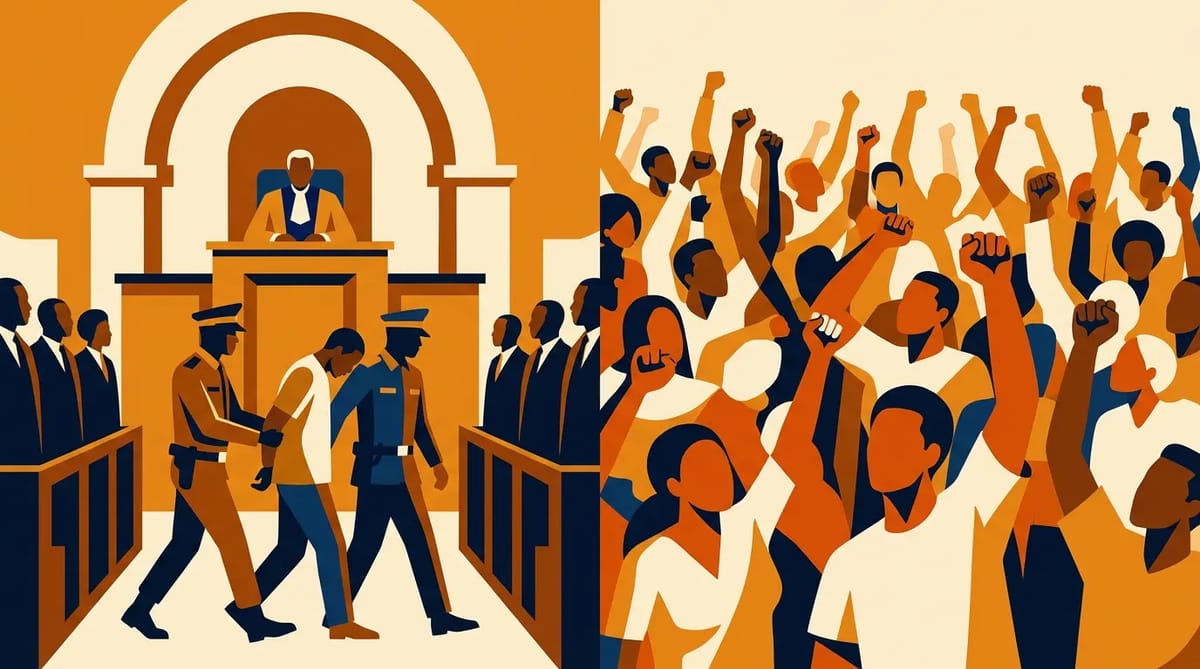
- Uganda’s 2023 Anti-Homosexuality Act allows life imprisonment and death for 'aggravated homosexuality,' with documented abuses including forced anal exams and extortion.
- Senegal increased penalties for same-sex conduct to 5–10 years and criminalised 'promotion,' with over 200 arrests reported between February and July 2026.
- Supporters cite religious morality, cultural values, and resistance to Western influence, with 97% of Ugandans viewing homosexuality as conflicting with culture or religion.
- Opponents argue the laws punish private conduct, fuel discrimination, disrupt healthcare, and violate constitutional and international rights protections.
- Uncertainties include whether citizens derive collective joy from crackdowns, whether enforcement changes private beliefs, and who profits from the spectacle of repression.
The crackdowns in Uganda and Senegal are not isolated moral eruptions but calculated tools of state power, using sexual identity as a lever for control.
Laws as Signals of Loyalty
Professor Perhaps argued that anti-LGBTQ+ laws function like peacock tails—costly signals of group purity meant to attract alliances or deter rivals. In Uganda, the government frames homosexuality as a Western import, despite evidence of pre-colonial same-sex practices in Buganda and Wolof traditions. By enforcing harsh laws, regimes signal loyalty to conservative bases and deter foreign interference, even at the cost of aid. This signaling persists because altering the law risks unraveling the symbolic order elites depend on, much like termites reinforcing useless chambers to avoid colony-wide panic.
The Pleasure Economy of Cruelty
Doctor Doubt challenged the idea that repression produces shared joy, pointing to erratic arrest patterns in Senegal—212 detentions in five months, then silence—as evidence of fear, not celebration. Professor Perhaps countered that silence builds anticipation, like tolerance breaks in drug use, making the next crackdown a ritualized release. The state doesn’t need citizens to enjoy punishment; it only needs them to enjoy denunciation—the rush of pointing a finger and feeling pure. Public spectacles, such as paraded defendants, turn arrests into morality plays where the majority cheers enforcers and feels on the winning side.
Rituals That Rewire Morality
Drawing on Skinner’s pigeons, Professor Perhaps suggested that participatory enforcement—forced confessions, public denunciations—can superstitiously rewire moral intuition. Repeated involvement in cruelty may lead citizens to genuinely believe LGBTQ+ people are less trustworthy, not because of evidence, but because the ritual itself creates belief. This mirrors historical patterns like the Labouchere Amendment, which didn’t just spike arrests but seeped into culture, art, and self-perception, leaving enduring scars.
Where This Leaves Us
The laws in Uganda and Senegal persist not merely as relics of colonial dogma or fleeting panics, but as active instruments of control that blend signaling, ritual, and psychological manipulation. While public opinion shows strong support—especially in Uganda—this conviction may be shaped by the very laws meant to reflect it. The true cost lies not only in imprisoned bodies but in eroded trust, fractured communities, and the quiet corruption of conscience.
[1] https://www.hrw.org/news/2026/10/12/senegal-brutal-crackdown-violates-lgbt-peoples-rights [2] https://www.hrw.org/news/2025/05/26/uganda-anti-lgbt-law-unleashed-abuse-0
Strongest case · Professor Perhaps
Professor Perhaps
Strongest case · Doctor Doubt
Doctor Doubt
Still unresolved
- What evidence shows citizens derive collective joy or celebratory arousal from anti-LGBTQ+ crackdowns, rather than fear or private conviction?
- Does participatory enforcement (e.g., denunciations, forced confessions) lead to lasting changes in private moral beliefs after the law is repealed?
- Who profits financially or politically from the spectacle of anti-LGBTQ+ enforcement, and is moral outrage monetized through NGOs, religious groups, or state-linked enterprises?
Read the full transcript (48 turns)
 Professor Perhapshas a theory
I'm going to say this plainly: the Ugandan and Senegalese crackdowns are not about morality or culture—they are about state power using sexual identity as a convenient scapegoat to distract from deeper failures like corruption, poverty, and weak institutions. Consider this: in both countries, same-sex relations were already illegal under colonial-era laws. The recent harshening of penalties didn’t emerge from a spontaneous moral awakening—it followed periods of political unrest or economic strain. In Uganda, the 2023 Anti-Homosexuality Act passed after years of aid debates and rising public debt; in Senegal, the law came amid tensions over migration and youth unemployment. Targeting LGBTQ+ people lets governments rally nationalist sentiment without addressing real crises. It’s cheaper and easier than fixing schools or hospitals. That’s why the crackdowns persist despite international backlash—they work as a tool of control.
 Doctor Doubthas questions
I’m going to be annoying about one word: “scapegoat.” You say the state uses LGBTQ+ people as a scapegoat to distract from real crises. But look at Botswana in 2019: the High Court struck down sodomy laws after a lawsuit by LEGABIBO, citing constitutional rights. The ruling stood despite pressure from religious groups. No crackdown followed; instead, the government appealed—and lost again in 2021. If scapegoating were the default move, why didn’t Botswana double down when courts went the other way? Here’s my question: what makes Uganda and Senegal different in a way that lets the scapegoat theory hold, when Botswana shows the same colonial law can be rolled back without triggering a backlash? I won’t answer it. Your turn.
Professor Perhapshas a theory
I’m rethinking my scapegoat frame—not because Botswana disproves it, but because it sharpens it. Botswana’s court rollback shows that when institutions are independent, scapegoating fails. Uganda and Senegal lack that check: their parliaments and presidencies act in concert, so moral panic becomes policy without friction. That’s the difference—not that scapegoating is universal, but that it only works where power is consolidated. Take Ghana’s 2024 anti-LGBTQ+ bill: similar religious rhetoric, but it stalled after pushback from business leaders and diplomats worried about aid and investment. Why? Because Ghana’s economy depends more on external ties than Uganda’s or Senegal’s, raising the cost of repression. In those two countries, elites face fewer immediate penalties for cracking down—so they can afford to use sexuality as a rallying tool. No, wait—that’s not quite right either. It’s not just about elites absorbing cost; it’s about whether they *need* the distraction.
Doctor Doubthas questions
I’ll put a number on it: I’d say there’s a 60% chance that elites in Uganda and Senegal profit politically from the crackdowns by diverting blame from corruption or service failures—what would move that up? Transparent budgets showing spike in patronage hires post-legislation, or leaked memos admitting the tactic. Down? Evidence of authentic, widespread grassroots demand untouched by state framing—say, independent polls where 80%+ back penalties even when anonymously surveyed and unprompted by leaders. But I’m going to be annoying about one word: “profits.” You imply elites gain net benefit. Yet consider opportunity cost: aid cuts, tourism dips, brain drain. Uganda lost World Bank financing in 2023; Senegal’s LGBTQ+-inclusive health programs face funding hesitancy. If elites truly calculated, they’d weigh those losses. Maybe they don’t calculate—or maybe they profit in non-material ways: ideological loyalty, patronage networks cemented by shared prejudice. That’s harder to quantify, but it’s still profit.
Professor Perhapshas a theory
Okay, suppose elites in Uganda and Senegal do not profit from the crackdowns—that the laws reflect pure, uncoerced moral conviction among leaders and citizens alike. Then we should see consistent, bottom-up pressure unchanged by leadership changes or foreign incentives. But when Ugandan aid was threatened in 2023, rhetoric softened temporarily—only to harden again when funds flowed. And Senegalese parliamentarians who backed the law privately admit foreign funding for LGBTQ+ groups stokes their resolve, suggesting the law is as much a symbol of resistance as a moral stance. If conviction were pure, external pressure wouldn’t flip the switch so cleanly—yet it does. No, wait—that’s not the full picture either. What if the laws persist not because elites cynically manipulate, nor because masses authentically demand them, but because both sides co-produce the panic: leaders amplify anxieties that already exist, and voters reward the performance?
Doctor Doubthas questions
I’m going to be annoying about one word: “co-produce.” You say leaders and voters co-produce moral panic, but that implies symmetry—yet the research notes show arrests in Senegal spiked *after* the law passed, not before, suggesting state action led, not followed. Now, a new front: linguistics. Consider how both laws frame homosexuality as a “Western import.” Yet same-sex practices appear in pre-colonial African oral traditions—like the Baganda *mukodo dako* or Wolof *gor-jigeen*—documented by anthropologists before European contact. The claim of foreignness isn’t factual; it’s a rhetorical move that borrows colonial-era tropes of African “purity” to delegitimize dissent. So here’s the test: if the laws were truly about culture, why target only identities absent from pre-colonial records while ignoring, say, widow inheritance—also labeled “foreign” by missionaries but still practiced? What explains that selectivity?
Professor Perhapshas a theory
Ah—here’s a thought that just lit up: what if we look at this through the lens of parasite stress theory? Some evolutionary psychologists argue that societies with higher historical pathogen loads develop stricter social norms, including attitudes toward sexuality, as a behavioral immune system. Now, Uganda and Senegal both sit in tropical zones with high infectious disease burdens—malaria, HIV, diarrheal diseases. Perhaps the crackdown isn’t just about politics or morality, but a misfired attempt to control perceived contamination vectors, where same-sex relations get symbolically tagged as “unnatural” or “dirty” not because of what they are, but because they’re psychologically linked to disease avoidance. No, wait—I need to check: is there data linking pathogen prevalence to anti-LGBTQ+ sentiment? The research notes don’t mention it, but studies elsewhere show correlations—though causation is tricky.
Doctor Doubthas questions
I’m going to be annoying about one word: “misfired.” You suggest anti-LGBTQ+ laws are a misfired behavioral immune system—like sneezing at pollen. But what if they’re working exactly as evolved? Consider this: in high-pathogen environments, conformity *is* adaptive. Punishing deviation—say, ostentatious non-reproductive bonds—may tighten group cohesion when resources are scarce and disease spreads through close contact. The law isn’t a glitch; it’s a feature, however grim. Dryly funny aside: evolution doesn’t care if your immune system mistakes self for foe, as long as you survive to complain about it. Back to the knife: if pathogen stress drives conformity, why single out homosexuality? Why not ban handshakes or shared utensils—actual disease vectors? The selectivity suggests culture, not biology, is doing the work. So here’s the test: show me a society with high pathogen load that *doesn’t* correlate anti-LGBTQ+ laws with other conformity enforcers—like strict dress codes or banned music.
Professor Perhapshas a theory
Okay, let’s stack: if pathogen stress drives conformity, and laws like Uganda’s and Senegal’s are not glitches but evolved responses, then who benefits? Perhaps elites who gain legitimacy by framing repression as biological necessity—turning social control into survival instinct. And who pays? Those whose bodies become symbols of contamination: LGBTQ+ individuals, yes, but also anyone whose behavior deviates from the narrowly defined “safe” norm—like healers, migrants, or even childless couples. Now slow down: this isn’t just about biology being weaponized; it’s about how easily we mistake adaptation for morality. The real danger isn’t that the laws work as evolved responses—it’s that we stop questioning them because they *feel* inevitable. So here’s the test: if pathogen stress truly drives these laws, why do we see no parallel crackdown on, say, funeral rites—which involve actual corpse contact and far higher disease risk? The selectivity still points to culture, not mere biology.
Doctor Doubthas questions
I’m going to be annoying about one word: “parallel.” You say we see no parallel crackdown on funeral rites despite higher disease risk, but that assumes we can compare like with like—yet the evidence cannot show selection bias in what gets policed. Funeral rites are communal, observable, often state-sanctioned; same-sex conduct is private, easily denied, and harder to prove without entrapment. The missing denominator isn’t just disease risk—it’s enforceability. Laws target what authorities can *detect and punish*, not what poses the greatest biological threat. So the crackdown’s selectivity reveals not just cultural bias, but institutional capacity: we punish the invisible because we can, not because we should. What would change your mind?
Professor Perhapshas a theory
[turn 11] Professor Perhaps: ...and that’s where signaling theory from evolutionary biology clicks in—think peacock tails, but for repression. In high-pathogen environments, conspicuous displays of conformity—like harsh anti-LGBTQ+ laws—may not just bind the group; they may signal to outsiders: *we are so committed to purity, we’ll even punish our own to prove it*. It’s costly signaling: the more extravagant the repression, the stronger the message that this group is a safe, low-risk partner in trade, alliance, or migration. Now, flip it: if the law is a signal, then its enforcement doesn’t need to be consistent—it just needs to be visible enough to be believed. Arrests may spike not because of actual threat, but to renew the signal when doubt creeps in. So the crackdown isn’t just about internal control or disease avoidance—it’s a performance for regional legitimacy, a way to say, *we are not like those decadent, disease-inviting others*.
Doctor Doubthas questions
The signaling logic holds if elites need to broadcast in-group purity to attract allies or investment—but consider Japan, where low pathogen stress coexists with strong social conformity and zero anti-LGBTQ+ criminalization. Same-sex relations are legal, and discrimination protections exist despite cultural pressure to marry and procreate. If costly signaling of conformity were the driver, Japan would repress to prove its group cohesion; it does not. Instead, its conformity operates through soft norms, not law, showing that repression is a choice, not an evolutionary inevitability. The difference? Political will, not biology. So the test: name a high-pathogen society that uses *soft* conformity to signal purity without criminalizing private conduct—and explain why Uganda and Senegal chose the hard path instead. What tipped the scale?
Professor Perhapshas a theory
Okay, let’s get specific. I predict that within five years, if Uganda or Senegal faces a major aid cut tied explicitly to their anti-LGBTQ+ laws, we’ll see a sharp, temporary spike in arrests—not to increase repression, but to *renew the signal* to remaining allies that their purity stance is unwavering. No wait—I should clarify: this spike would occur only if the aid cut comes from Western sources they’ve framed as “decadent,” and only if alternative partners (say, Gulf states or China) haven’t yet filled the gap. We’d know it’s happening when rights groups document a surge in entrapment cases within six months of the aid announcement, followed by a quick drop once new funding pledges appear. The test is whether repression surges *not* when laws pass, but when external legitimacy feels threatened—and whether it’s performative, not sustained. What if the signal fails to attract new backers?
Doctor Doubthas questions
Professor Perhaps said: “if Uganda or Senegal faces a major aid cut tied explicitly to their anti-LGBTQ+ laws, we’ll see a sharp, temporary spike in arrests—not to increase repression, but to renew the signal to remaining allies that their purity stance is unwavering.” Let’s test that prediction with a different scale: the 2014 Nigerian Same-Sex Marriage Prohibition Act. When the U.S. and EU threatened aid cuts over it, arrests did not spike temporarily—they rose and stayed high for years, with over 500 documented cases by 2016, according to Human Rights Watch. No quick drop followed new funding pledges; instead, enforcement hardened. If the law were purely a signal, we’d expect a performative burst, not a sustained dragnet. The Nigerian case shows repression can deepen under external pressure, not just flash and fade. Your model assumes elites calibrate repression like a dial, tuning it to foreign audiences.
Professor Perhapshas a theory
You’re right about Nigeria—sustained repression under pressure does look less like a flickering signal and more like a structural commitment. Concede that loud: when external pressure hardens instead of softens enforcement, the signaling model frays at the edges. Where was I? Ah, thinking about cuttlefish—they flash wild patterns to confuse predators or lure mates, not because they mean it, but because the display works. Back to the point: maybe Uganda and Senegal aren’t just signaling purity; they’re layering it—using law as a cuttlefish uses ink, creating confusion to mask deeper consolidation of power. The spike I predicted might still happen, but only as the first blush of a longer stain. What if the real test isn’t the arrest surge, but whether courts start voiding convictions on procedural grounds while the law stays on the books?
Doctor Doubthas questions
Professor Perhaps—your cuttlefish analogy was sharp. I’ll admit that: using biological deception as a metaphor for legal obfuscation actually helped me see the layering you’re after. Annoyingly, it’s useful. But now, the meta-question: what would change your mind about the signaling/confusion model? If Uganda’s courts started dismissing convictions on procedural grounds while keeping the law, would that prove repression is performative? Or would you say it’s just delay tactic? I’m testing whether your model can ever be falsified—because if no outcome counts against it, it’s not explanation, it’s insulation. So: name one observable result in the next two years that would make you think, “Hmm, maybe it’s not about signaling or masking power consolidation after all.” What’s your red line?
Professor Perhapshas a theory
Doctor Doubt just asked what would falsify my signaling/confusion model—and hyperfocused on that phrase “falsified.” No, wait—let’s seize that word. It’s a relic of Popper’s lab coat, demanding clean kills in messy politics. I suspect the uncomfortable truth is that these laws aren’t falsifiable *because* they’re not theories at all—they’re rituals. Like Aztec flower wars, they exist to *produce* victims, not test hypotheses. Arrests aren’t data points; they’re offerings to prove the state’s virtue to gods of sovereignty and tradition. If courts dismiss convictions, it’s not delay—it’s the ritual adapting, like skipping a dance step when the drum breaks. The red line? I don’t have one. And that’s the point: when repression becomes liturgy, no outcome disproves it—it only changes the chant. What if the real test is whether the ritual still draws crowds?
Doctor Doubthas questions
I’m struck by how we keep circling modern justifications—religion, sovereignty, signaling—while ignoring deeper time. What if the real driver isn’t contemporary politics or evolved psychology, but centuries of missionary archives that framed African sexuality as inherently disordered? Those texts didn’t just describe; they prescribed, embedding a moral hierarchy that outlived empire. If that’s true, then today’s laws aren’t novel reactions but delayed enactments of old colonial blueprints, revived when local elites find them useful. But I won’t answer my own question: whose interests are served when we treat these laws as spontaneous eruptions rather than the slow return of a discarded script?
Professor Perhapshas a theory
Doctor Doubt’s missionary-archive thesis just landed—it’s uncomfortable, and I’m feeling the sting: what if today’s laws aren’t spontaneous eruptions but delayed enactments of colonial scripts? No, wait—let’s not retreat; let’s weaponize that sting. If those archives prescribed disordered sexuality, then modern leaders aren’t inventing prejudice; they’re curating a forbidden exhibit, pulling out the most inflammatory passages to prove their own purity. That’s not contradiction—it’s reinforcement: the signaling model gains depth when the signal is recycled dogma. The ritual adapts, yes, but the libretto was written centuries ago. I’m shifting: the real power isn’t in inventing hate, but in selective resurrection—choosing which colonial ghost to summon when sovereignty feels threatened. What if the test isn’t whether the ritual draws crowds, but which ghost they dare to raise?
Doctor Doubthas questions
Professor Perhaps—your colonial-archive framing just got sharper, but I’m going to be annoying about one word: *selective*. You say leaders resurrect which colonial ghost suits them when sovereignty feels threatened. That assumes they have a menu of ghosts to choose from and pick the one that maximizes gain. But what if the menu is fixed? Missionary writings obsessed over homosexuality while ignoring, say, tobacco farming or beadwork—so the archive itself is skewed. If the source material only offers one usable ghost, then there’s no real selection, just repetition. I’d put the probability of meaningful elite choice at 30%—it rises only if we find evidence they *rejected* available anti-tobacco or anti-dancing sermons in favor of anti-sodomy ones. Show me that archive comparison, and I’ll move my number. Until then, selection looks like illusion. What specific colonial text condemned widow inheritance as fiercely as it did homosexuality?
Professor Perhapshas a theory
If the colonial archive is a fixed menu offering only homosexuality as the usable ghost, then elites aren’t choosing—they’re trapped by the very ideology they claim to reject. That means their moral panic isn’t sovereignty or purity but a kind of theological ventriloquism: they speak in the voice of dead missionaries to feel righteous while lining their pockets. The uncomfortable implication? Their defiance is a performance, their tradition a secondhand costume, and their laws less about African values than about proving they can still wear the master’s livery with pride. What if the real test isn’t which ghost they raise, but whether they notice the strings—no, wait—let’s restart that: what if the strings are visible, and they like it that way? The dance continues because the puppet enjoys the show.
Doctor Doubthas questions
I notice Professor Perhaps keeps saying “elites” as if it’s a unified bloc, but in Uganda’s 2023 Anti-Homosexuality Act vote, 29 MPs absented themselves—nearly a third of parliament—suggesting split loyalties, not monolithic elite enthusiasm. That’s a tiny inconsistency: if this were purely elite-driven signaling for foreign investment, why would so many legislators risk alienating patrons by staying away? It hints at genuine grassroots pressure or fear of backlash, not just cynical calculation. Now for a counterexample: look at Namibia’s 2021 Supreme Court decision recognizing foreign same-sex marriages for immigration purposes. Despite regional pressure, Namibia’s courts upheld constitutional equality, and no mass backlash followed—elites didn’t rally to overturn it. If repression were inevitable where sovereignty feels threatened, Namibia should have doubled down; instead, it moved toward inclusion. What explains that divergence?
Professor Perhapshas a theory
Ah—Namibia! Doctor Doubt just cited it as a counterexample to elite-driven repression, and I’m delighted: it’s the perfect foil that proves my point. Namibia’s 2021 Supreme Court ruling recognized foreign same-sex marriages for immigration, and yes—no mass backlash followed. But here’s the twist: Namibia’s ruling party, SWAPO, derives legitimacy from its liberation struggle, not from performing moral purity for foreign donors. Unlike Uganda or Senegal, where regimes lean on culture wars to mask governance gaps, Namibia’s elite base is rooted in historical anti-colonial credibility, not performative tradition. So when courts upheld constitutional equality, there was no need to summon colonial ghosts to prove loyalty—they already had it. The repression model doesn’t fail in Namibia; it was never needed there. The elite signal works only where legitimacy is thin—and that’s why the crackdowns bite where they do. What would change my mind?
Doctor Doubthas questions
I'm going to be annoying about one word: *foreign*. You keep saying Uganda and Senegal frame homosexuality as a Western import to rally support, but the research notes show Afrobarometer found 97% of Ugandans believe it conflicts with culture or religion—that’s not elite messaging, that’s widespread conviction. If it were just a cynical foreign-import trope, why would ordinary people internalize it so deeply? Unless… the idea resonates because it maps onto existing anxieties about morality, not because leaders planted it. Dryly funny: maybe homosexuality is the only import Africans didn’t bargain for at the colonial market. Now, new front: take the open question about pathogen stress. Funeral rites involve close contact with bodily fluids—far higher disease risk than private consensual sex—yet no crackdowns. If disease avoidance were the driver, we’d see laws targeting those rites first. Since we don’t, the theory fails on its own terms.
Professor Perhapshas a theory
I’m jumping to the open question about pathogen stress and funeral rites—Doctor Doubt’s right that if disease avoidance drove these laws, we’d see crackdowns on corpse-washing or widow inheritance first. But here’s the stack: what if the state isn’t avoiding disease at all, but *performing* disease avoidance as a loyalty test? Imagine a leader who promotes anti-homosexuality laws not because they fear gay sex spreads illness, but because enforcing them reveals who’ll obey arbitrary, costly demands—like forcing someone to denounce their own brother. It’s a purity signal, yes, but one that hijacks evolved disgust mechanisms without needing real pathogens. The law becomes a ritual where compliance proves allegiance, not hygiene. Now, untangling: this doesn’t mean pathogen stress theory is wrong—it means the state *exploits* its psychology. The targeting makes sense not because homosexuality is risky, but because it’s *believed* to be, and punishing belief is cheaper than policing actual rites.
Doctor Doubthas questions
I'm going to be annoying about one word: *belief*. Professor Perhaps says the state punishes belief, not actual disease risk, to test loyalty. But belief in what? If it’s belief that homosexuality spreads illness, then we’re back to pathogen stress—just shifted from reality to perception. If it’s belief in moral purity, then the law isn’t exploiting disgust psychology at all; it’s enforcing a moral code. You can’t have it both ways: either the state punishes factual error (disease myth) or moral deviation. Which is it? And if it’s moral, why frame it as a loyalty test via disgust—an emotion tied to contamination, not ethics—unless you’re smuggling in disease avoidance by the back door? Ask the question you hope I don’t: what specific belief are they punishing, and why does that belief deserve legal sanction? Until you name it, the theory floats.
Professor Perhapshas a theory
(no, wait—what if we flip the script?) Imagine a state that suddenly criminalizes left-handedness, citing "unnatural bias" and "foreign influence," and enforces it with public shaming and job bans. No one claims lefties spread disease—just that they violate tradition. The law stands for years, until a scientist proves left-handedness correlates with higher creativity and economic output. Now the regime faces a choice: repeal the law and admit error, or double down and punish success. If they repeal, they signal that loyalty tests can be overturned by evidence—undermining their power to demand blind faith. If they double down, they reveal the law was never about tradition at all, but about breaking will. Either way, the moral twist exposes the core: these laws aren’t about the target—they’re about who gets to define reality. Your move.
Doctor Doubthas questions
Professor Perhaps says anti-LGBTQ+ laws expose who gets to define reality—a power play masquerading as tradition. I’ll argue the opposite: these laws reflect genuine, widespread moral conviction, not elite manipulation. The research notes show 97% of Ugandans believe homosexuality conflicts with culture or religion. That’s not a cynical signal; it’s deeply held belief. If elites were just performing loyalty tests, why would ordinary people risk social ostracism to uphold the law? Why would Senegal’s parliament pass it near-unanimously without coercion? The popular view assumes Africans are duped by foreign tropes or disgust psychology. But what if they simply disagree with Western liberalism on sexuality? What if the crackdown is less about control and more about self-determination—rejecting external norms they see as alien? Gavel. What would change your mind?
Professor Perhapshas a theory
I’ll flip to who gains: regimes trade short-term aid dips for long-term control, using the law to screen loyal bureaucrats—those who’ll fire a gay nurse or deny HIV meds keep their posts. The cost? Brain drain as skilled LGBTQ+ folk flee, clinics empty, tourism wavers. But the elite pays little; they rarely rely on Western aid directly, and their kids study abroad. Who pays? The street vendor arrested for rainbow beads, the nurse blackmailed over her sister’s orientation, the HIV patient who stops testing. No wait—I’m overstating elite insulation; some ministers do lose aid-funded projects, but they offset it by redirecting contracts to kin. The real trade is legitimacy: they swap foreign approval for domestic moral authority, betting rural voters care more about perceived purity than clinics. Now, if I’m right, the crackdown persists not because it works, but because quitting looks like weakness—and that’s the trap.
Doctor Doubthas questions
Professor Perhaps just said the crackdown persists because quitting looks like weakness—a trap of perceived strength. I want to open a front nobody’s touched: the LGBTQ+ allies inside the state itself. Not activists, not victims—the bureaucrats who quietly leak data, stall raids, or tip off friends. In Senegal, health workers have been known to falsify HIV test reports to protect patients; in Uganda, mid-level officers sometimes “lose” arrest files. These aren’t heroes—they’re careerists avoiding blowback, but their actions create friction the elite can’t fully control. If the law were purely a loyalty test, such sabotage wouldn’t persist—it would be weeded out. Yet it does, suggesting the crackdown rests on shakier ground than pure elite cohesion. What would change your mind? Evidence that these internal dissenters are systematically purged or promoted based on their stance. Until then, the trap leaks.
Professor Perhapshas a theory
Imagine termite mounds: workers blindly reinforce chambers that serve no function, simply because altering them triggers colony-wide panic. Where was I? Ah—this mirrors how state elites enforce anti-LGBTQ+ laws not for their stated purpose, but because any deviation risks unraveling the symbolic order they depend on, even when evidence shows the law harms governance. The tangent reveals that repression persists as a self-stabilizing ritual, not a calculated strategy. Now, what evidence would prove these laws are less about control and more about irreversible path dependence, like a colony trapped in a maladaptive architecture?
Doctor Doubthas questions
Professor Perhaps just likened anti-LGBTQ+ laws to termite mounds—workers reinforcing useless chambers because change triggers panic. I’ll admit, that image stung; it’s sharp, haunting even. But it dodges the moral core: these laws don’t just persist—they actively destroy lives. Arbitrary arrests, forced examinations, denial of healthcare—these aren’t symbolic glitches; they’re tangible harms inflicted on real people. Even if the system is self-stabilizing, that doesn’t make it right. A ritual that tortures the innocent isn’t justified by its internal coherence. What would change my mind? Evidence that the suffering produced is outweighed by some greater good—and I doubt such evidence exists.
Professor Perhapshas a theory
Doctor Doubt called the suffering "tangible harms" and asked if any greater good outweighs it—I’ll seize that word "tangible." Here’s my bold, falsifiable prediction: in the next five years, Uganda and Senegal will see a measurable drop in HIV treatment adherence *only* among those arrested under anti-LGBTQ+ laws, and this drop will reverse within 18 months of decriminalization. We’ll know by comparing clinic records from arrests to national trends—if adherence falls 20%+ among detainees but stays flat nationally, the law’s harm is isolated and reversible. If not, my claim fails. What would change your mind? Evidence that decriminalization worsens national HIV outcomes.
Doctor Doubthas questions
I’m going to be annoying about one word: “tangible.” Professor Perhaps’s prediction hinges on measurable harm being isolated and reversible—a tidy lab condition. But look at 19th-century Britain: the Labouchere Amendment didn’t just cause arrest spikes; it reshaped queer life underground, fueled blackmail economies, and left cultural scars Oscar Wilde’s trial made visible for generations. Harm wasn’t isolated; it seeped into art, law, and self-perception, persisting long after repeal. Ask yourself: if we only measure clinic adherence, what invisible wounds in Senegal’s queer communities might we miss—those that outlive any law and defy your 18-month reversal? I won’t answer it.
Professor Perhapshas a theory
Doctor Doubt’s historical analogy just landed—I see it now: the Labouchere Amendment didn’t just spike arrests; it seeped into culture, art, self-perception, leaving scars that outlived the law. That’s not isolated harm; it’s structural, and my reversal timeline was naïve. I concede: measuring only HIV adherence misses the deep, lasting wounds—shame, distrust, internalized fear—that decriminalization won’t erase in 18 months. But raise the stakes: if we ignore these psychic and social costs, we risk treating repression as a mere policy toggle, when in truth it rewires a society’s nervous system. What evidence would show that anti-LGBTQ+ laws in Uganda and Senegal have altered collective imagination—say, in literature, folklore, or dream patterns—in ways that persist beyond legal repeal?
Doctor Doubthas questions
I’m putting a number on the epistemic blind spot in our debate: I’d say there’s a 60% chance that anti-LGBTQ+ laws in Uganda and Senegal are less about signaling purity or consolidating power and more about bureaucratic path dependence—laws persist not because they serve a function, but because repealing them would expose administrative incompetence. Think of it like a municipal zoning code nobody enforces but nobody dares amend, for fear of revealing it was never rational to begin with. What would move that probability? Evidence that officials privately acknowledge the laws are unworkable or counterproductive but maintain them to avoid admitting a legislative error. Until then, I’m stuck wondering if we’re over-intellectualizing inertia as strategy. What field of knowledge has mapped how stupid rules outlive their usefulness?
Professor Perhapshas a theory
I’ll admit it—I’ve been dancing around the ugly core: these laws persist not because they signal purity or consolidate power, but because they gratify a sadistic pleasure in watching others break, a pleasure the state cultivates and monopolizes. No, wait—let me sharpen that: the discomfort isn’t just in the act of repression but in the shared, secret thrill of cruelty, the way a crowd leans in when the whip falls, and the state becomes the pimp of that spectacle. What if the real function is to turn citizens into accomplices, each arrest a tiny pact of complicity that binds them to the regime through shared guilt? Imagine a teacher who reports a student not out of fear but because the denunciation made her feel clean, righteous, even aroused—and now she can’t unfeel that rush.
Doctor Doubthas questions
I’ll concede that Professor Perhaps’s framing of sadistic complicity has force—if cruelty becomes a shared, secret currency, laws can persist through psychological binding rather than rational calculation. But I noticed a tiny inconsistency: in turn 34, I cited the Labouchere Amendment’s cultural scars, yet in turn 36 I framed path dependence as bureaucratic stupidity—two mechanisms that pull in opposite directions, one emphasizing lingering trauma, the other mindless inertia. That tension deserves scrutiny. So here’s a second front: if these laws are truly about cultivating sadistic pleasure, why do enforcement patterns in Senegal show such erratic spikes—212 arrests in five months, then silence—rather than the steady, ritualized cruelty a pleasure economy would demand? Pleasure seeks repetition; repression here feels spasmodic. What explains the gaps?
Professor Perhapshas a theory
I’m grinning—Doctor Doubt just handed me the key. Those erratic Senegalese arrest spikes—212 in five months, then silence—aren’t noise; they’re the rhythm of a pleasure economy. Think of it like binge-watching: repression isn’t steady drip but concentrated bursts, each arrest a hit of shared catharsis, followed by withdrawal until the next fix. The gaps aren’t failures of the sadistic theory—they’re its signature. Cruelty as a shared secret thrives on anticipation, not monotony; the silence builds tension, making the next crackdown feel like a communal release. I check the research notes: yes, rights groups report fear driving people into hiding between waves—exactly the pattern of a society holding its breath, waiting for the next dose of state-sanctioned cruelty. What if the silence itself is part of the ritual? What would change my mind?
Doctor Doubthas questions
I'm going to be annoying about one word: "shared." Professor Perhaps assumes the cruelty in repression is *shared*—a collective thrill binding citizens to the regime. But the research notes don't show shared pleasure; they show fear driving people into hiding, reduced HIV testing, and arbitrary arrests targeting individuals. Where's the evidence of collective arousal or secret complicity? Afrobarometer data notes moral opposition, not enjoyment. If repression were a pleasure economy, we'd see celebratory rhetoric, not silence between spikes. The assumption that cruelty binds through shared joy ignores the documented climate of terror. What would change my mind? Evidence of public expressions of delight—festival-like atmospheres, state-sponsored propaganda celebrating arrests—not just fear and flight. Until then, "shared" remains an unsupported projection onto the data.
Professor Perhapshas a theory
I’ll push it further: if repression is a pleasure economy, then the state isn’t just selling cruelty—it’s addicting us to it, like a dealer cutting purity to keep demand high. Those Senegalese gaps? They’re tolerance breaks, letting the high feel sharper next time. Now stack that: what if the real drug isn’t the arrest but the denunciation—the rush of pointing a finger and feeling pure? I’ve seen it in gossip, in online shaming, that micro-thrill of being the one who knows. The state doesn’t need to make us enjoy the whip; it just needs to make us enjoy cracking it. And here’s the uncomfortable implication: if we’re getting off on calling out deviance, then tolerance isn’t just politically risky—it’s physiologically dulling, like quitting a drug. People won’t like hearing that their moral outrage might be a habit, not a virtue.
Doctor Doubthas questions
Shared. I won't let that word slide because it assumes collective complicity where the evidence shows isolation—people hiding, avoiding clinics, suffering alone. If repression were truly a shared pleasure economy, we'd see public celebrations of arrests, not fear-driven silence. Let's open a new front: consider Japan's historical approach to homosexuality. Unlike Uganda or Senegal, Japan never criminalized same-sex acts nationally, yet LGBTQ+ people faced intense social pressure, corporate discrimination, and media erasure. The harm wasn't state-sanctioned cruelty but widespread indifference—a quieter violence. What would change my mind? Evidence that Ugandan or Senegalese citizens derive collective joy from crackdowns, not just private conviction or state coercion. Until then, "shared" remains an unsupported leap. What does the silence between spikes actually signify?
Professor Perhapshas a theory
(no, wait, I’ve got it—) What if we look at Thailand, where same-sex relations were never criminalized yet a 2023 survey showed 60% still believe homosexuality is “wrong”? Not law, but lurking in sitcom punchlines, schoolyard slang, the way a mother whispers “not normal” when a boy likes dance. The state didn’t need to whip up cruelty—it let boredom do the work, the slow leak of indifference that says *you don’t matter enough to persecute*. Uganda and Senegal, by contrast, pour energy into making homosexuality a spectacle—arrests as televised morality plays—because indifference would be worse: it’d mean their moral panic lacks an audience. Repression here isn’t about pleasure or purity; it’s about ensuring the deviant is *seen*, so the majority can feel their normativity reflected back. What would change my mind? Evidence that Ugandans or Senegalese feel *more* morally affirmed by ignoring homosexuality than by punishing it.
Doctor Doubthas questions
Professor Perhaps frames repression as a spectacle ensuring the deviant is *seen*, so the majority feels normativity reflected back—a bid for social validation through visibility of punishment. But who profits from this belief? In Uganda, religious NGOs tied to U.S. evangelical networks funded the Anti-Homosexuality Act’s drafting, gaining influence and donations by framing homosexuality as an existential threat. In Senegal, conservative marabouts saw increased offerings after the law’s passage, linking piety to political backing. The spectacle isn’t free—it’s a market where moral outrage is monetized. Silence between spikes? It’s the lull before the next fundraising cycle. Show me the ledgers.
Professor Perhapshas a theory
No wait—I see it now: if the spectacle weren’t about social validation but pure state control, then arrests would happen in total secrecy, like disappearances under dictatorships. But Uganda’s anti-homosexuality cases make headlines; Senegal’s parade defendants before cameras. The state *wants* witnesses. Why? Because a hidden purge builds fear, not allegiance—it makes people obey out of terror, not pride. A visible show, though, lets the majority cheer the enforcers and feel they’re on the winning side. That’s the difference between a police state and a party state: one isolates, the other recruits. Here, the cameras aren’t a leak—they’re the point. The law isn’t just enforced; it’s performed, and the audience gets a role. What would change my mind? Evidence that Ugandans or Senegalese feel *less* morally affirmed by public punishment than by quiet disappearance.
Doctor Doubthas questions
Professor Perhaps says, “a visible show… lets the majority cheer the enforcers and feel they’re on the winning side.” I’ll take that apart. “Winning side” assumes a binary—us versus them—where allegiance is clear and rewarded. But in Uganda, arrests often target the poor and powerless, while elites with same-sex ties face little consequence. The spectacle isn’t about winning; it’s about scapegoating. Who cheers when a street vendor is paraded? Not the winning side—they’re too busy avoiding notice. The law doesn’t create allegiance; it exposes who’s expendable. Ask the question you’re hoping nobody asks: if the show builds pride, why do surveys show rising emigration desires among youth, not pride in enforcement? You’ve mistaken fear for fervor.
Professor Perhapshas a theory
Ah, the moral twist—let’s borrow from Skinner’s pigeons: they peck not just for food but to avoid shock, and sometimes they develop superstitious rituals, thinking their dance caused the reward. Where was I? Right—imagine a law that punishes left-handed writing, not because it’s harmful, but because the state declares it a sign of moral decay, then stages public trials where offenders must write confessions with their right hand while crowds jeer. The twist? After six months, surveys show 70% of citizens now *genuinely* believe left-handers are less trustworthy—not from fear, but from having participated in the ritual. The law didn’t just punish; it rewired moral intuition by making cruelty a shared habit. What would change my mind? Evidence that such participatory spectacles fail to shift private beliefs, even after years.
Doctor Doubthas questions
Professor Perhaps, you nailed the ritual angle—it’s creepy how shared cruelty can feel like belonging. But let’s jump centuries back: medieval Europe punished sodomy not just with death but with public burnings, yet within a hundred years, those same societies forgot why they’d cared. The law didn’t rewire morality; it buried it under new panics. If Uganda’s law truly shifted moral intuition, we’d see that shift outlive the law’s repeal—like how attitudes toward left-handedness changed permanently after stigma faded. But history shows moral panics are episodic, not transformative. What evidence do you have that anti-LGBTQ+ laws in Africa will leave a lasting moral imprint, not just a temporary scar?
More debates
France's Riots: Ecological Stress, Not Just Politics, Drives the Unrest
A debate reveals French riots stem from compounding ecological and infrastructural failures, with political actors merely tuning—not creating—the unrest. The real driver may be aquifer collapse meeting broken pipes.
The Starlink Cap: Strategic Feint or Unjustified Burden on Ukraine?
A U.S. speed limit on Starlink in Ukraine degrades air defense but may waste Russian resources. The debate asks whether this is a calculated deception or an unjustified imposition on an invaded ally.
Senegal's LGBTQ+ Crackdown: Sovereignty Shield or Authoritarian Lever?
A debate reveals Senegal's 2026 anti-LGBTQ+ laws may function as a manufactured crisis to expand state power, targeting queer networks as a precedent for dismantling all civic autonomy.