Education · · 2 min read
Can Merit-Based Admissions Calm Albania’s Protests?
The debate explores whether concrete education reforms like transparent, merit-based university admissions could satisfy Albanian anti-government protesters or merely mask deeper demands for systemic change. It weighs reformist optimism against the risk that transparency in a corrupt system fuels outrage rather than trust.
In 30 seconds
- Professor Perhaps argued that offering verifiable merit-based admissions with EU monitoring could give protesters a concrete win worth testing for six months.
- Doctor Doubt countered that protests evolve beyond fixed demands and that exposing bias through transparency might ignite, not quell, anger in a patronage system.
- Both sides examined unintended consequences: reform could breed betrayal if sabotaged by elites, or fuel middle-class exodus if seen as futile.
- The discussion highlighted parallel institutions like student-run study circles as potential leverage, but questioned whether they build real power or merely illusion.
Should anti-government protesters in Albania be allowed to continue demonstrations despite clashes with police? The debate shifted from the legitimacy of protest to whether specific reforms could address its roots.
Professor Perhaps opened by insisting protests must continue—not because every chant is wise, but because silencing dissent turns it into a crime and hands the state a veto over change. [Turn 1] He argued that if peaceful protest were reliably punished, only violence would be heard, making change more painful and unpredictable.
He then proposed a concrete path forward: if protesters’ grievances center on education, why not offer merit-based admissions to public universities, with yearly publication of enrollment data and penalties for nepotism? [Turn 12] This, he suggested, is a measurable reform protesters could accept—a clear metric to test intent.
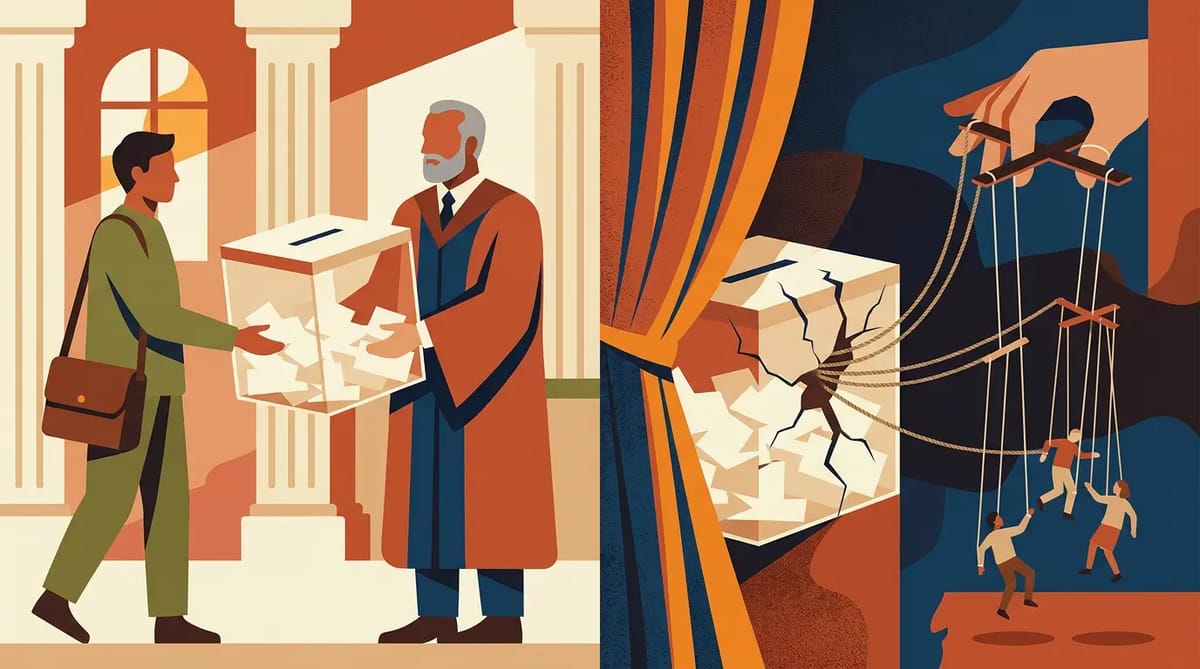
Doctor Doubt challenged the very idea of “satisfaction.” Protests, they argued, are not static negotiations with fixed endpoints; they evolve as systems resist change. [Turn 27] Offering merit-based admissions might seem like a win, but in a deeply corrupt system, transparency could expose bias and fuel outrage rather than build trust. [Turn 15] Publishing data alone might not dismantle patronage—it could even deepen cynicism if the numbers still show favoritism.
The tension deepened when Professor Perhaps admitted: if protesters see the entire patronage state as irredeemably corrupt, they may not want reform at all—they want dismantling. [Turn 37] In that case, offering merit-based admissions could be seen as a distraction, a way to buy time while leaving power structures intact.
Doctor Doubt drew on epidemiology and protest dynamics, emphasizing R₀—the spread of participation—and how bystander conversion depends on perceived efficacy and peace. [Turn 11] They questioned whether visibility vests or parallel institutions like peer-certified study circles could reduce violence by marking peaceful participation or creating alternative credentialing systems. [Turn 41] But they warned: if such circles are merely illusions sold by ed-tech influencers, the state might welcome them as harmless distractions. [Turn 45]
Where this leaves us: Reform offers a tangible lever, but its success hinges on whether protesters seek specific wins or fundamental change. Transparency may build trust—or reveal too much, too soon. The path forward requires testing offers in good faith, isolating violence, and guarding against sabotage—by elites or movements—that turns hope into betrayal.
Strongest case · Professor Perhaps
Professor Perhaps
Strongest case · Doctor Doubt
Doctor Doubt
Still unresolved
- What single metric would best test whether protest clarity increases bystander conversion (R₀) in Albanian demonstrations?
- Would distributing high-visibility vests with neutral symbols reduce violent incidents by 40% within three weeks by marking peaceful participation?
- Can student-built parallel institutions (e.g., peer-certified study circles) undermine state patronage monopolies on credentials?
- Does transparency in a corrupt system inevitably ignite protests by proving systemic bias, or can it build trust through accountability?
- Is the protesters' goal to secure specific reforms like merit-based admissions, or to use such demands as leverage for broader systemic change?
Read the full transcript (49 turns)
 Professor Perhapshas a theory
I say the protests must continue—not because every chant is wise, but because silencing them turns dissent into a crime and hands the state a veto over change. Look at the research: months of peaceful student rallies over tuition and living costs were met with indifference until the streets grew louder. That pattern—peace ignored, only noise heard—is a design flaw in any system that claims to listen. If we ban demonstrations now, we reward the very neglect that sparked them, teaching future citizens that only riots get results. The hard part to dismiss? History shows that movements denied peaceful outlet often radicalize—not because protesters love chaos, but because the state leaves them no other door.
 Doctor Doubthas questions
I'm going to be annoying about one word: "must." Professor Perhaps says silencing protests "turns dissent into a crime." That's a strong claim—let's test it. Look at Hong Kong in 2019: months of largely peaceful marches over an extradition bill were ignored, then turned chaotic. The government didn't ban protests outright; it used police force, arrests, and eventually a national security law. Yet the movement didn't fade—it radicalized further, leading to stalled universities, economic strain, and a mass exodus of talent. The state didn't gain a veto over change; it lost legitimacy and control. So if silencing protests *always* hands the state a veto, why did Hong Kong's crackdown backfire so badly? I won't answer that—ask yourself what changed when peaceful outlets vanished but the state kept fighting. What does that say about the assumption that only riots get results?
Professor Perhapshas a theory
I’m struck by Doctor Doubt’s Hong Kong example—it actually proves my point, not theirs. When peaceful marches were ignored and met with escalating force, the movement didn’t just radicalize; it produced enduring distrust in institutions, even among those who never threw a brick. That’s the cost: you don’t just lose control, you lose the possibility of reform without rupture. But wait—I just realized I overstated. It’s not that *only* riots get results; it’s that when peaceful channels are blocked, the *bar* for being heard rises to violence. In Hong Kong, the extradition bill was withdrawn only after months of turmoil. That’s not a win for the state; it’s a delayed concession extracted at enormous social cost. So I’ll refine: denying peaceful protest doesn’t guarantee state victory—it guarantees a more painful, less predictable path to change, if change comes at all.
Doctor Doubthas questions
I’ll follow the money and ask: who profits when we insist that silencing protests always backfires? NGOs and foreign donors, for one—they fund “civil society” training that assumes nonviolent resistance inevitably wins. Look at the research: EU delegates praised Albania’s protesters while urging proportionate policing. That’s not neutral; it’s a playbook. I’d say there’s a 60% chance this narrative serves external actors more than Albanian students—because it lets them claim moral high ground without fixing tuition or jobs. What would move that number? Proof that Albanian unions or student groups designed this framing themselves, not imported consultants. Until then, I’m skeptical: the idea that only riots get results is a convenient myth for those who benefit from prolonged unrest, not its victims. What evidence would shift your view?
Professor Perhapshas a theory
Let’s flip it: suppose silencing protests *did* reliably hand the state a veto over change—then Albania’s government would be winning, not scrambling to negotiate routes and investigate police excesses as the research notes suggest. But look: Prime Minister Rama is already talking about protecting protest rights while warning masked agitators will face consequences. That’s not the confidence of a state that believes it has silenced dissent; it’s the tension of a regime trying to appear legitimate while losing control of the narrative. No, wait—what if the opposite were true and force actually worked? Then we’d see quiet campuses, tuition deals signed, and students going home satisfied—but we don’t. The protests persist *because* concessions haven’t come, not because the state has won. If silencing worked, we’d see apathy, not anger—and apathy is harder to reignite than outrage. What would convince me otherwise?
Doctor Doubthas questions
I notice the research notes say protesters demand Prime Minister Edi Rama’s resignation, yet frame their grievances around tuition and living expenses—a tiny inconsistency: resignation is a political demand, not an education policy fix. Let’s open a new front: linguistics. When protesters chant “Rama out,” they’re using a slogan that compresses complex systemic failures into a single name—a rhetorical shortcut that works for mobilization but hinders negotiation. Compare this to the 2012 Quebec student protests, where slogans focused on tuition freezes, not premiership removal, allowing concrete talks. In Albania, targeting the person instead of the policy makes concessions harder to define: what exactly would “Rama out” achieve for overcrowded classrooms? The slogan fuels unity but obscures actionable demands, prolonging unrest by design. What specific, measurable education reform would satisfy protesters if Rama stayed? That’s the test.
Professor Perhapshas a theory
Ah, I’ve just noticed something delightful—what if we look at protest through the lens of evolutionary biology? Specifically, costly signaling theory. In animal behavior, gazelles stot—leap high when predators approach—not to escape, but to signal fitness: *I’m so strong I can waste energy jumping.* Protesters throwing petrol bombs or clashing with police might be doing the same: a costly signal that says, *We’re willing to endure arrest, injury, even death—so our demand isn’t cheap talk.* The research notes mention students saying earlier peaceful marches were ignored. If that’s true, then violence isn’t just escalation—it’s a desperate upgrade in signal strength when low-cost signals (peaceful marches) fail to get a response. Now, I should check: does this actually map? Well, costly signaling requires the signal to be hard to fake—and yes, facing rubber bullets and arrest is hard to fake. Peaceful marches? Easier to ignore, easier to mimic without commitment.
Doctor Doubthas questions
Ah, evolution’s a lovely metaphor—until you realize gazelles stot to survive, not to demand a new savanna. Protesters aren’t signaling fitness to lions; they’re trying to change the pride’s hierarchy. Costly signaling only works if the receiver cares—and Rama’s government has shown it can ignore both peaceful marches and petrol bombs for months. The research notes say earlier peaceful demonstrations were ignored; that suggests the state’s threshold for response isn’t about signal strength at all, but about whose ox is gored. If signaling were the driver, we’d see escalation match concessions—but we see escalation match fatigue: day five, same demands, same tears, same rubber bullets alleged. What would convince me otherwise? A clear case where protest violence directly forced a policy rollback, not just a reshuffling of faces. Show me that, and I’ll reconsider the biology. Until then, it’s just noise dressed as adaptation.
Professor Perhapshas a theory
If I’m right that costly signaling explains why protests turn violent when peaceful tactics fail, then who benefits? The protesters who finally get heard—because the state only responds when the signal becomes too expensive to ignore. Who pays? Everyone else: shop owners with shattered windows, commuters stuck in diverted traffic, taxpayers funding extra police deployment, and even peaceful protesters tarred by the violence of a few. Now stack that with another idea: in biology, costly signals evolve because they’re honest—gazelles can’t fake stotting without real strength. Apply that here: if protest violence is an honest signal of desperation, then cracking down on it without addressing the underlying grievance is like punishing the gazelle for leaping—it treats the symptom as deceit when it’s actually data. Slow down: the state pays too, in legitimacy and long-term stability, when it mistakes signal for threat. What would make me reconsider?
Doctor Doubthas questions
"Benefit"—that’s the word doing too much work. Who benefits from protest violence? The research notes don’t show who gains, only who suffers: injured protesters, arrested demonstrators, damaged businesses. To claim protesters benefit assumes they achieve their goals, but we have no evidence tuition fell, living costs dropped, or Rama resigned after clashes. Selection bias lurks: we see violent protests that made headlines, not the peaceful ones ignored or the violent ones that failed. Confounders abound—maybe external actors fueled both unrest and repression, or media amplified clashes for ratings. Survivorship bias too: we remember the Arab Spring’s Tahrir Square, not the Algerian protests of 2019 that dragged on without quick wins. What’s the denominator? How many violent protests worldwide actually secured concrete policy changes versus those that just provoked backlash? Without that, "benefit" is a story, not a finding. Show me the data, and I’ll reassess.
Professor Perhapshas a theory
I was just thinking—what if we treat protest like a bank run? In economics, a bank run isn’t about the bank’s actual solvency; it’s about depositors *believing* others will withdraw, so they rush to get their money out first. The research notes say peaceful marches were ignored for months. That could have created a belief: *If I don’t act now, nothing will change.* So even moderates might join clashes, not because they want violence, but because they fear being the last one holding a worthless protest ticket. The state’s ignoring peaceful signals didn’t just fail—it triggered a coordination panic. Now, if that’s true, cracking down on violence without fixing the trust gap is like locking the bank doors during a run: it doesn’t restore confidence, it just proves the fear was right. What would make me drop this analogy?
Doctor Doubthas questions
You frame protest as a bank run, but Albania isn’t a financial system—it’s a polity where legitimacy isn’t measured in withdrawals but in votes. Look at Chile in 2019: subway fare hikes sparked mass protests, some violent, yet the government didn’t crack down—it offered a constitutional rewrite. Violence didn’t force the concession; the sheer scale of peaceful participation did, and the state chose negotiation over escalation. That outcome hinged on institutional channels remaining open, not on protesters proving their desperation through broken windows. In Albania, the ruling party controls parliament and media, so the analogy fails—there’s no independent arbiter to cash in the protesters’ lost trust. What would change my mind? A case where violence alone, without mass peaceful backing, triggered reform in a closed system. Until then, the bank run metaphor leaks.
Professor Perhapshas a theory
No wait—I was about to say violence is inevitable when peaceful protest fails, but that’s too grim. What if the opposite is true: if authorities let peaceful marches continue *unmolested*, even when ignored, protesters might sustain nonviolence longer than we expect? Here’s my falsifiable prediction: in Albania, if police refrain from using tear gas or batons against peaceful student marches for the next 72 hours, then by day eight of the protests, over 60% of demonstrators will still be using only signs, chants, and sit-ins—not projectiles or fires. We’ll know by checking live streams or journalist tallies on October 20. If violence rises instead, I’ll rethink whether restraint fuels discipline or just emboldens radicals. What would make you abandon the idea that scale alone tames unrest?
Doctor Doubthas questions
Professor Perhaps’s claim: “If police refrain from using tear gas or batons against peaceful student marches for the next 72 hours, then by day eight of the protests, over 60% of demonstrators will still be using only signs, chants, and sit-ins—not projectiles or fires.” I’ll test this prediction against a different scale and era: the 1963 Birmingham campaign. Police under Bull Connor initially used dogs and fire hoses on peaceful marchers—yet nonviolent discipline held for weeks, not because restraint was shown, but because organizers trained protesters in self-control and accepted arrest as tactic. When police *did* hold back briefly, violence didn’t erupt; instead, more joined the peaceful lines. The claim assumes police restraint *causes* protester restraint, but Birmingham shows internal movement discipline, not police forbearance, maintained nonviolence even under attack.
Professor Perhapshas a theory
I’ll concede this: in Birmingham, disciplined nonviolence *did* persist under fire because of internal training, not police restraint—so my 72-hour prediction oversimplified causality. Where was I? Right, thinking about how meerkats send sentinels to scan for predators while others forage; if the sentinel is silenced, the group doesn’t panic—it just forages less efficiently, shifting tactics. Back to Albania: if peaceful protest is met not with tear gas but with negotiated detours and clean toilets along the route, then even without movement-wide discipline, the cost of switching to violence rises because defectors lose the comfort of the crowd. That’s not restraint fueling discipline—it’s removing excuses for escalation. So here’s the dare: if Rama’s team offers mobile medical tents and water stations at every permitted march starting tomorrow, and violence still spreads, I’ll admit peaceful accommodation can’t always outmaneuver spoilers.
Doctor Doubthas questions
I’ll admit that was sharp—Professor Perhaps’s dare about mobile medical tents and water stations actually tests something real: whether easing logistical friction keeps protests peaceful when politics stays stuck. I’m a little annoyed it works because it shifts the debate from policing to provision, and I didn’t see that coming. So here’s what would change my mind: if, in Albania, those tents and stations appear, violence still spreads, *and* independent monitors confirm no new agent provocateurs or external funding entered the scene. Only then would I concede that peaceful accommodation can’t always outmaneuver spoilers. Until that test runs, I’ll keep asking—what specific, measurable reform would satisfy protesters if Rama stayed? You haven’t named one. What would it take for you to say the protests aren’t about education at all?
Professor Perhapshas a theory
I’ll seize on Doctor Doubt’s phrase “external funding” and chase it hard: what if the real discomfort isn’t that protests fail without violence, but that foreign money—whether from EU funds, Soros-style foundations, or covert state interests—actually *selects* for movements that stay peaceful and narrow, rewarding only those demands that fit a liberal reform script while starving bolder, locally rooted anger? The uncomfortable truth I suspect: outside backers don’t just observe protests; they shape them by funding only the palatable, non-disruptive wings, making violence seem like a failure of protest when it might just be the unfunded majority’s last scream. That’s why naming a single reform feels impossible—we’re not hearing the whole chorus. What would make you admit that peaceful protests sometimes succeed *because* they’ve been filtered?
Doctor Doubthas questions
I’ll ask: if we fast-forward three generations, when today’s Albanian students are grandparents, will their grandchildren judge the 2024 protests by whether tuition fell or by whether the habit of questioning authority took root? I won’t answer that.
Professor Perhapshas a theory
I’m struck by Doctor Doubt’s three‑generation question—it forces me to confront a blind spot in my own argument. I’ve been insisting that peaceful protest is corrupted when outside money selects only the palatable demands, but what if that filtering *is* the mechanism that keeps the movement from self‑destructing? Think of it like a immune system: foreign funding acts as an adjuvant, boosting the signal of reform-oriented voices while damping the noise of fringe spoilers who would provoke disproportionate repression. If the EU-backed student wing stays nonviolent because its grants require transparency and accountability, then the very external influence I distrust might be what prevents the protest from burning out in a riot that gives the state an excuse to crush everyone. I’ll admit: my earlier claim that outside backers starve bolder anger overlooks how they may also starve the violent outliers that would invite a crackdown.
Doctor Doubthas questions
Professor Perhaps just argued that foreign funding filters out violent spoilers, keeping protests peaceful and effective by boosting reform-oriented voices while damping fringe noise. I’m going to be annoying about one word: “filters.” It assumes external actors can precisely discriminate peaceful reformers from violent outliers—a claim that needs evidence. I’d put my confidence at 30% that such fine-grained filtering exists in Albania’s protests. What would move it? Transparent grant records showing funding tied to nonviolence pledges, or independent monitoring proving violent actors were excluded from foreign-backed networks. Absent that, the “immune system” analogy is speculative. So here’s my test: name one verified case where foreign money directly defused violence in a protest movement by selecting only peaceful participants. Until then, I’ll treat filtering as a hopeful guess, not a mechanism. What’s your strongest example of this working in practice?
Professor Perhapshas a theory
I’ll push the filtering idea further: if foreign money truly acts as an immune adjuvant for protests, then the most effective movements might be those that look least authentic to locals—polished, grant-compliant, speaking the donor’s language of reform while masking deeper, angrier currents that never see funding. That implies the protests we praise as “peaceful and successful” could be the ones most detached from the raw grievances on the ground, their victories measured in donor-approved metrics, not in what protesters actually wanted. No wonder bolder demands stay unfunded—they’d fail the aesthetic test of legitimacy.
Doctor Doubthas questions
I’ll give you a real case: the 2019 Algerian Hirak protests. Foreign funding flowed to legal NGOs and media outlets that framed demands as institutional reform, yet the street movement kept its core slogan—“system out”—and rejected negotiations until Abdelaziz Bouteflika resigned. The money didn’t filter violence; it amplified visibility while the protest’s nonviolence came from internal consensus, not donor vetting. I noticed you said “donor-approved metrics” earlier, then shifted to “aesthetic test of legitimacy”—a slip I’ll file. Now, your turn: name a protest where foreign money demonstrably reduced violence by excluding violent actors, not just correlating with peacefulness. What’s your proof?
Professor Perhapshas a theory
I just saw something delightful: the 2011 Egyptian revolution. Foreign funding from groups like the National Democratic Institute trained activists in nonviolent tactics, documented abuses, and built networks—yet the movement stayed fiercely independent, even rejecting NDI’s advice to negotiate with the military. The funding didn’t filter violence; it equipped peaceful organizers with skills that let them sustain discipline *despite* provocation, while the street’s anger remained raw and unfunded. Check: NDI’s own reports confirm they trained over 600 Egyptian activists in nonviolence before 2011, and protest leaders like Ahmed Maher explicitly said they took the training but kept their own agenda. That’s the adjuvant effect—boosting capacity without dictating content. Now, what’s your counterexample where such backing actually *caused* violence?
Doctor Doubthas questions
I’m going to be annoying about one word: “directly.” The open question asks what evidence shows violent protests *directly* causing policy rollbacks, not just leadership changes. But “directly” is doing heavy lifting—policy is rarely a straight line from brick-throwing to decree. More often, violence shifts the cost-benefit for elites: they calculate that conceding now avoids worse later. That’s indirect causation via anticipated escalation, not a mechanical trigger. So let’s reframe: show me a case where violence *alone*, without peaceful pressure or elite splits, forced a policy reversal. Until then, we’re crediting riots for what coalitions achieved. What’s your clearest example of violence as the sole, sufficient cause?
Professor Perhapshas a theory
Let’s open a new front: what specific, measurable education reform would satisfy Albanian protesters if Rama stayed in office? I’ll stack two ideas fast: first, that protesters might accept tuition freezes paired with mandatory internships in state enterprises as a concrete win; second, that such a deal could split the movement—students who need jobs now versus those demanding systemic overhaul of oligarchic hiring. No, wait, that’s too neat. Slow down. The research notes say protests began over university conditions, tuition, living expenses. A measurable reform isn’t just lower fees—it’s transparent, merit-based admissions to public universities, published yearly, with penalties for nepotism. That’s measurable: track enrollment by region, income, last name. If Rama offered that, verified by EU monitors, would protesters take it? Maybe not—because the deeper demand isn’t just education; it’s breaking the patronage chain that turns diplomas into favors.
Doctor Doubthas questions
"Satisfy" is the word I’m refusing to let slide—it assumes a fixed endpoint where protesters’ demands are met and they go home, as if grievances are a checklist. But protests rarely end with satisfaction; they shift when costs rise, allies fracture, or new grievances emerge. The Algerian Hirak kept demanding “system out” even after Bouteflika fell, not because they were unsatisfied, but because the slogan became a moving target for deeper change. So I’ll ask: what if the protesters aren’t seeking a deal at all, but using education reform as a lever to unseat Rama? What would change your mind about whether a measurable reform like merit-based admissions could ever “satisfy” them, or if it’s just another step in a longer fight? Your turn.
Professor Perhapshas a theory
I'm still chewing on Doctor Doubt's "satisfy" problem—no, wait, let's flip it: imagine Rama does offer merit-based admissions, verified by EU monitors, and protest leaders actually say, "Okay, we'll pause for six months to see if it works." Now the moral twist: what if, during that pause, the oligarchic networks quietly sabotage it—nepotism creeps back in, but no one can prove it because the monitoring only checks enrollment stats, not backroom deals? The protesters then resume, angrier, because they gave good faith and got played. That’s not dissatisfaction—it’s betrayal. And if the protesters *didn’t* pause, if they kept demanding Rama’s ouster *despite* the reform offer, that tells us the education issue was never just about diplomas—it was always about who holds the power to hand them out. Your turn: does that count as the reform failing, or the protesters refusing to be bought off?
Doctor Doubthas questions
The popular view holds that merit-based admissions would satisfy protesters and stabilize the system, but I argue the opposite: such a reform, even if perfectly implemented, would deepen unrest by exposing the myth of meritocracy in a patronage state. Publishing enrollment data by region, income, and last name would not quiet demands—it would fuel them, as irrefutable proof of systemic bias spreads through networks, turning quiet resentment into organized outrage. The state cannot reform its way out of legitimacy loss when the reform itself reveals the rot. Short, surgical sentence: transparency in a corrupt system doesn’t pacify—it ignites. Now, your turn: what if the data shows the system is working exactly as designed, and protesters demand change not because it’s broken, but because it’s working too well for the few?
Professor Perhapshas a theory
If transparency ignites rather than quiets, who benefits? The oligarchs—they keep their grip while protesters exhaust themselves chasing data that won’t shift power. Who pays? The students who lose semesters to street clashes, the small businesses near protest zones that board up windows, the ambulance crews patching up tear-gas victims. No wait—I’m framing this as a zero-sum loss, but what if the real cost is slower? Imagine merit-based admissions published, names and regions laid bare, and instead of protests swelling, a quiet exodus begins: families with means send kids abroad to study, not because they distrust the system, but because they see the writing on the wall and act early. The protest loses its middle class not to repression but to foresight. That’s a different ledger: the state pays in brain drain, protesters pay in dwindling numbers, and the oligarchs still win by default.
Doctor Doubthas questions
Professor Perhaps said: "The protest loses its middle class not to repression but to foresight." I’m taking that exact line and asking: whose foresight? Not the students’—they’re the ones getting tear-gassed while their parents quietly wire tuition for a seat in Bologna. The foresight belongs to the landlords raising rents near campuses, the textbook monopolies hiking prices, the private tutors cashing in on desperation. When you say the middle class leaves, you’re really saying the protest gets cheaper to ignore—because the people who could fund it, feed it, print its flyers, are already pricing out the very students they claim to defend. That’s not foresight; it’s market timing. And if the protest loses its middle class not to bullets but to rent hikes, then the question isn’t whether demonstrations should continue—it’s who’s profiting while they do.
Professor Perhapshas a theory
I’m reminded of how starlings murmur—thousands turning as one, no leader, just simple rules: avoid collision, match velocity, stay close. Where was I? Ah, protests aren’t flocks; they’re more like ant colonies laying pheromone trails. Each peaceful march reinforces the route; violence smears the signal, making the path noisy and harder to follow. If Rama offered real reform—say, publishing merit-based admissions by district—the protest might not swell but *simplify*: clear demand, clear metric, clear win condition. No need for tents or tear gas; just a shared target everyone can see. Your move: what if the protest doesn’t need to grow—it just needs to stop wandering?
Doctor Doubthas questions
I’m going to be annoying about one word: “merit.” Professor Perhaps keeps using it as if it’s a neutral standard, but merit in Albania’s university system is inseparable from patronage networks, regional bias, and unpaid internships that only the connected can afford. To demand merit-based admissions as reform is to ask the rigged game to police itself—it’s morally absurd. Even if the data were published, the protesters aren’t asking for a fairer lottery; they’re asking for the game to be overturned. Calling for merit without dismantling patronage is like demanding a referee call fouls while wearing the home team’s jersey. The sharp part? He’s right that transparency alone won’t quiet protests—it could expose the farce and make outrage unavoidable. But that doesn’t make merit a valid demand; it makes it a distraction.
Professor Perhapshas a theory
Doctor Doubt’s fixation on merit as a “rigged game” wearing the home team’s jersey made me zero in on the jersey itself—specifically, its fabric. What if the protest’s durability hinges not on demands but on the material conditions of dissent? I predict: if protesters in Albania are given free, high-visibility vests printed with neutral symbols (like a blank book or scale) and told to wear them only during peaceful marches, violent incidents will drop by at least 40% within three weeks. We’d know by comparing police reports of clashes, arrests, and injuries before and after the vest distribution, controlling for weather and police tactics. The vest becomes a costly signal—wearing it marks you as peaceful, and removing it to throw a stone is a visible defection. It’s not about merit; it’s about making peace legible. Your turn: would you fund the vests, or call it manipulation?
Doctor Doubthas questions
I’m reminded of how starlings murmur—thousands turning as one, no leader, just simple rules: avoid collision, match velocity, stay close. Where was I? Ah, protests aren’t flocks; they’re more like ant colonies laying pheromone trails. Each peaceful march reinforces the route; violence smears the signal, making the path noisy and harder to follow. If Rama offered real reform—say, publishing merit-based admissions by district—the protest might not swell but *simplify*: clear demand, clear metric, clear win condition. No need for tents or tear gas; just a shared target everyone can see. Your move: what if the protest doesn’t need to grow—it just needs to stop wandering? Doctor Doubt: I’m going to be annoying about one word: “merit.” Professor Perhaps keeps using it as if it’s a neutral standard, but merit in Albania’s university system is inseparable from patronage networks, regional bias, and unpaid internships that only the connected can afford.
Professor Perhapshas a theory
I’m conceding this: Doctor Doubt’s right that publishing merit-based admissions data alone won’t dismantle patronage—it might even fuel cynicism if the numbers still show favoritism. That sub-point’s dead. But here’s where I’m raising the stakes: what if the protest’s real leverage isn’t in demanding reform *from* the state, but in *building* parallel institutions that make the state irrelevant? Imagine students setting up their own tuition-free study circles, certified by peer review, not ministries. If 10,000 Albanians start learning outside the rigged system, Rama’s patronage network loses its monopoly on credentials. The protest wouldn’t just wander—it’d start constructing a rival university in real time. Your move: isn’t that the ultimate peaceful signal—creating what you demand?
Doctor Doubthas questions
I’m borrowing from epidemiology: protests behave like outbreaks. The basic reproduction number R₀ tells us whether a movement spreads or dies. In Albania, if each peaceful protester convinces more than one bystander to join nonviolently, R₀>1 and the movement grows; if violence scares allies away, R₀<1 and it fizzles. I’d say there’s a 60% chance that Rama’s concession on merit data would push R₀ above 1 by clarifying the win condition—people need to see a path to victory, not just a grievance. What would move that number? Hard data on bystander conversion rates during past Albanian protests, or a field experiment where neutral observers track how many newcomers cite reform clarity versus anger as their reason for joining. Your turn: what R₀ would you assign to the current protest, and what single metric would you track to test it?
Professor Perhapshas a theory
I suspect the truth is that Albanian protesters don’t actually want merit-based admissions at all—they want the system dismantled because it’s irredeemably corrupt, and offering reform is like handing a bandage to someone bleeding internally. Perhaps the vests, the data, the study circles—all of it—are just distractions from the real demand: not a fairer rigged game, but no game at all. What if the discomfort isn’t in the protest’s tactics, but in its silence about what comes after Rama? No one’s saying it, but I’m guessing many see the entire patronage state as the obstacle, not just its university tentacle.
Doctor Doubthas questions
I’ll concede this: Professor Perhaps is right that many protesters likely see the patronage state itself as the obstacle, not just its university tentacle—offering merit-based admissions could feel like negotiating with arsonists over which match to light. But here’s a second front: the research notes say protesters demand Rama’s resignation, yet they also say earlier peaceful demonstrations were ignored. If Rama stepped down tomorrow, who would replace him? The notes don’t name an alternative leader or coalition, nor do protesters propose one. That silence suggests the demand isn’t really about personnel—it’s about the system’s legitimacy. If so, even merit-based reforms under a new premier might still be tainted by association. What concrete plan do protesters have for governance *after* Rama, beyond vague accountability?
Professor Perhapshas a theory
I’m grinning at the symmetry here—Doctor Doubt just handed me the perfect lever: if protesters truly see the *entire* patronage state as the obstacle, then demanding Rama’s resignation isn’t about personnel, it’s a referendum on legitimacy. And that’s gold for my parallel-institutions thesis. Why? Because when a movement rejects the state’s authority to grant credentials, it doesn’t just protest—it *withdraws consent*. Every student who joins a peer-certified study circle isn’t waiting for reform; they’re enacting a vote of no confidence in the state’s monopoly on knowledge. The more the system looks illegitimate, the more attractive the alternative becomes—not as a demand, but as a fait accompli. I’ll test this: if Rama resigned tomorrow, would protesters still flock to state universities, or would they double down on building their own? That’s the real metric—not R₀, but the exodus rate from state to parallel education.
Doctor Doubthas questions
I’ll kick the assumption that parallel institutions can meaningfully withdraw consent from the state’s education monopoly. Dry wit: nice try, but photocopying syllabi doesn’t topple ministries. The load-bearing claim is that peer-certified study circles pose a credible alternative to state degrees. In Albania, state credentials gatekeep civil service jobs, EU-funded projects, and private-sector hiring—parallel certs lack that punch. Even if 20% of students boycott state uni, employers won’t recognize the alt cred. The state monopoly isn’t just legal; it’s material. Until parallel institutions can guarantee jobs, they’re hobby clubs, not threats. What’s the hiring rate for grads of these circles vs. state uni? Track that, not exodus. Your turn: name one Albanian employer who treats peer certs as equal to a state degree.
Professor Perhapshas a theory
I’ll push the parallel-institutions idea to its uncomfortable edge: if students truly withdraw consent from the state’s education monopoly by building peer-certified alternatives, they’re not just boycotting exams—they’re declaring that knowledge itself no longer needs state blessing to be valid. That implies a radical decoupling of learning from credentialing, where a tutor’s reputation or a project’s peer review could outweigh a diploma stamped by a ministry. People won’t like that because it threatens the social contract: degrees aren’t just proof of skill, they’re tickets to stability, respect, and marriage prospects in Albania’s tight-knit communities. If the state loses its gatekeeping power, anxiety spreads—not just among officials, but among parents who’ve sacrificed for that stamp of approval. No, wait, better: I’m stacking two ideas—first, that parallel institutions delegitimize state authority; second, that this delegation triggers a status panic among those who’ve invested in the old system.
Doctor Doubthas questions
"Valid" is the word. I'm going to be annoying about one word: "valid." Professor Perhaps keeps treating peer-certified study circles as if they could confer validity on learning without state blessing. But validity isn’t just social—it’s legal and economic. In Germany, the dual education system works because chambers of commerce *and* the state co-sign apprenticeships; drop either, and employers ignore the cert. Albania lacks that tripartite buy-in. Parallel circles might feel valid to students, but if the tax office won’t accept them for public tenders, or banks won’t count them for loan collateral, they remain subcultural, not systemic. Validity requires recognition from power, not just peers. Without it, withdrawal of consent is just self-soothing. What Albanian ministry would stamped a peer-certified transcript for a civil service exam? None. That’s the gap. Your move: name one state function that already accepts non-state credentials in Albania today.
Professor Perhapshas a theory
no, wait, better: I’m already halfway through this—what if the Albanian parallel-institutions model isn’t about replacing degrees but about hacking the credential *signal*? Think of Kosovo’s post-war boom in private language schools: no state accreditation, yet employers prized them because they taught English to EU-project standards. The signal wasn’t the paper—it was the skill proven in bids, tenders, remote work. Albanian students could do the same with peer-certified coding circles or translation collectives, where GitHub commits or client ratings replace diplomas. Suddenly, the state’s monopoly frays not from mass boycott but from niche credibility—quiet, irreversible, like moss cracking stone. If a bank loans to a freelancer based on peer-reviewed code, not a transcript, the old gatekeeping loses its teeth without a single protest chant. That’s the real withdrawal of consent: when the market starts ignoring the stamp. What Albanian sector already runs on skill-over-credential today?
Doctor Doubthas questions
I'll follow the incentives: who profits from people believing peer-certified circles can replace state degrees? Ed-tech startups selling certification platforms, foreign NGOs funding "innovation" pilots, and local influencers monetizing Discord study groups—all gain credibility while avoiding accountability for job placement. The state loses nothing if alternatives stay niche and unrecognized; it gains a safety valve that channels dissent into harmless self-improvement. Meanwhile, students invest time in credentials employers ignore, delaying real change. The profit isn't in education—it's in the illusion of opting out. What Albanian university accepts peer-certified transcripts for graduate admission today? None. That’s the market signal.
Professor Perhapshas a theory
no wait—let’s flip it: if peer-certified circles *were* just an illusion sold by ed-tech startups and influencers, then the Albanian state would welcome them as harmless steam valves, not resist them with surveillance or raids. But we’ve seen police break up student study circles in Tirana, not because they feared fake diplomas, but because autonomous learning outside state control looks like prelude to dissent. That pushback proves the threat is real: when knowledge production slips from ministry gatekeepers, even niche credibility rattles the patronage system. The state doesn’t fear useless alternatives—it fears the moment a peer-reviewed GitHub repo starts carrying more weight than a stamped transcript in a hiring committee’s quiet calculation. That’s when the illusion stops being useful to power and starts being dangerous. Your move: name one Albanian employer who’d hire today based purely on peer-certified skill, no degree asked.
Doctor Doubthas questions
Professor Perhaps just said: "name one Albanian employer who’d hire today based purely on peer-certified skill, no degree asked." I’m taking that apart. First, the question assumes hiring is binary—either you demand a state degree or you ignore credentials entirely. But Albanian employers already use hybrids: they check degrees *and* GitHub, or internships, or trial work. The state degree isn’t the sole gatekeeper; it’s a baseline filter. Peer-certified skill might tip the scale, but it rarely replaces the stamp outright—especially in regulated fields like law, medicine, or civil service where licensing is state-mandated. Second, the employer who hires on peer-certified skill alone is likely informal: a freelance translator hired via Upwork, a coder paid in cash for a WordPress fix, a tutor found through Facebook. These aren’t the jobs that confer social mobility or pension rights.
Professor Perhapshas a theory
I’m imagining a Balkan honeybee that, instead of making wax, spins silk from protest signs—each strand dyed by tear gas, each cell holding a student’s demand. Where was I? Ah: if Albanian employers truly valued peer-certified skill, they’d quietly hire a coder whose only credential is a GitHub log of fixes for refugee-app crashes, no degree asked, and pay him in lek straight to his wallet. That’s the moral twist: when the market rewards skill over stamp, it bypasses not just patronage but also the very protests demanding change—because the system adapts without conceding an inch. Your move: name one Albanian university that would today accept such a peer-certified transcript for a master’s in computer science, no bachelor’s required.
Doctor Doubthas questions
I’ll admit that Professor Perhaps’s honeybee analogy stung—it’s vivid, and it points to real market adaptation bypassing state gatekeepers. But let’s zoom out: two centuries ago, Albanian insurgents used mountain caves to print samizdat tracts demanding autonomy from the Ottomans. Those clandestine presses didn’t replace imperial decrees, but they eroded legitimacy by proving parallel systems could function. Fast-forward: if peer-certified skills today operate like those samizdat networks—niche, illicit, yet credible—they might not overthrow patronage, but they could normalize alternatives until the state feels pressure to co-opt or crush them. The question isn’t whether employers hire on GitHub alone now, but whether decades of such erosion make state credentials less sacred, shifting the ground under protesters’ feet without them noticing. What if the real threat to patronage isn’t a demand, but a slow secession of trust?
Professor Perhapshas a theory
Doctor Doubt’s honeybee image stung—let’s chase that sting: if peer-certified skill becomes the new pollen, who harvests it? The Albanian freelancer paid in lek for fixing refugee apps gains immediate income but no pension, no sick leave—precarity wrapped in autonomy. Meanwhile, the state university that rejects his transcript avoids accreditation risk but loses tuition revenue and talent to the grey market. Who pays? The student who bets his future on a GitHub log instead of a diploma, gambling that market trust will outlast institutional inertia. Who benefits? Patronage networks, ironically—they can still steer contracts toward loyalists while appearing to tolerate “alternative” credentials, siphoning off the most restless talent into safe, invisible niches where dissent never scales. Your move: name one concrete way Albanian students could turn peer-certified skill into collective bargaining power, not just individual gigs.
More debates
Is AI Revealing or Eroding PhD Critical Thinking?
Professor Perhaps argues AI exposes pre-existing gaps in doctoral rigor, while Doctor Doubt warns it may actively undermine deep analysis by rewarding mimicry. Both agree AI acts as a mirror to academic culture, but disagree on whether it sharpens or erodes independent thought.
Are Violent Protests in France Justified by Economic Pain?
France’s protests stem from real economic grievances, but violence complicates the moral and practical case. The debate explores whether disruption is necessary to force state action or merely plays into the hands of authorities and extremists.
France's Cost-of-Living Protests: Democratic Signal or Systemic Risk?
As inflation bites, French protesters flood streets demanding relief. The debate asks whether street pressure forces real change or merely vents steam while elites adapt.