War and security · · 2 min read
Intelligence Sharing With Ukraine: Deterrence, Moral Traps, and the Costs of Restraint
A debate on whether U.S. intelligence sharing deters Russia or traps Washington into predictable restraint that Moscow exploits by embedding forces near civilians.
In 30 seconds
- Intelligence warnings degraded a 2023 Russian missile barrage on Kyiv's power grid, per Russian milbloggers.
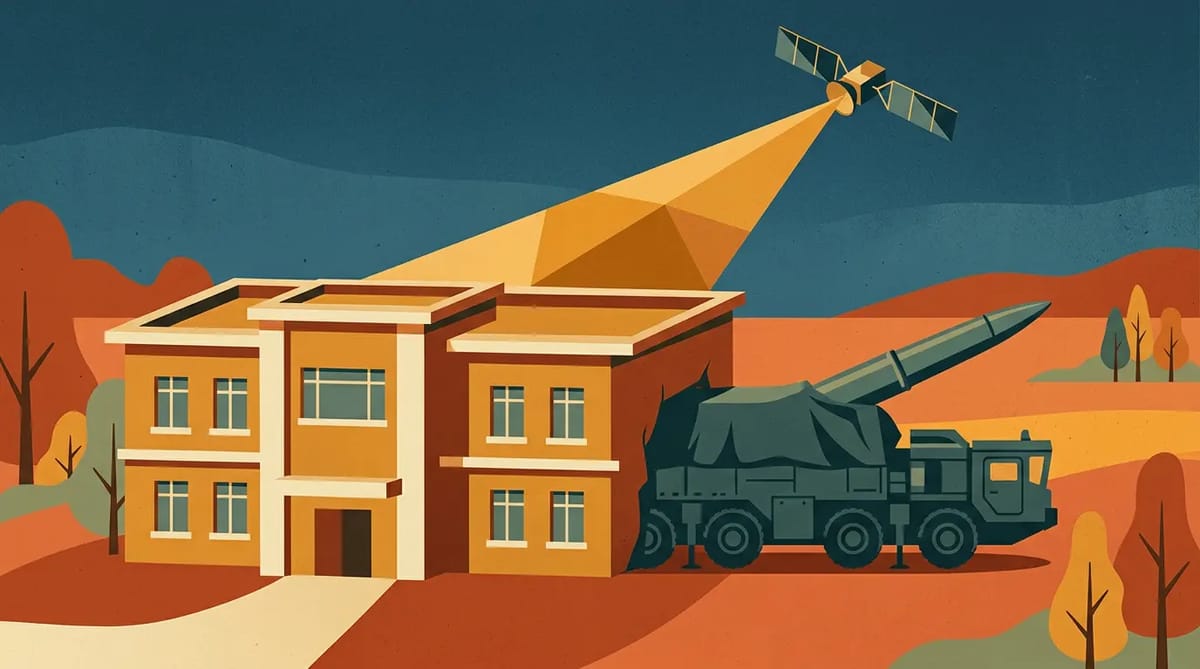
- Russia disperses launchers into civilian zones, exploiting U.S. reluctance to strike near schools and hospitals.
- A six-month pause in sharing would test deterrence: Russian strikes on energy and command nodes should jump 30 percent.
- U.S. restraint may signal incapacity, not resolve, inviting escalation rather than preventing it.
The United States resumed intelligence sharing with Ukraine after a brief interruption, but the debate over what that sharing buys—and what it risks—has only sharpened. Professor Perhaps argues the flow of warning data saves civilian lives and binds allies through a kind of institutional grooming; Doctor Doubt counters that predictable restraint teaches adversaries to hide behind civilians, turning American scruples into a Russian tactical advantage.
Intelligence sharing works—until the adversary adapts
U.S. warnings gave Ukraine time to reposition air defenses and evacuate civilians before a major Russian missile barrage in early 2023, reducing its effectiveness in ways Russian milbloggers later admitted [9]. That is the defensive case in a nutshell: actionable intelligence turns surprise attacks into manageable ones. But Doctor Doubt notes the same predictability lets Russia calibrate. If Moscow knows the United States will not strike launchers parked beside a kindergarten, it parks launchers beside kindergartens. The result is a moral trap: U.S. restraint becomes a force multiplier for the side willing to use human shields.
Deterrence by primate grooming—or by fear?
Professor Perhaps compares intelligence sharing to mutual grooming in primates: a costly, repeated signal that builds trust and reduces conflict [turn 7]. The alliance bond itself becomes the deterrent. Doctor Doubt replies that grooming only works if the recipient believes the groomer will bite. He points to Taiwan: predictable U.S. intelligence support there has not deterred Chinese gray-zone coercion [c5]. If the signal is too legible, the adversary prices it in and presses anyway.
The falsifiable bet
Within six months of any sustained pause in sharing, Russian missile strikes on Ukrainian energy and command-and-control nodes should jump by at least 30 percent [c6]. That is Professor Perhaps’s testable prediction. Doctor Doubt offers a mirror test: watch launcher placements. If Russia moves more missiles near schools within 72 hours of visible U.S. restraint, the moral-hazard hypothesis gains weight [c14]. Both sides agree the boundary between defensive warning and offensive targeting support is classified—and that ambiguity is where escalation risk lives [3].
Where this leaves us
The United States can keep sharing intelligence that warns of incoming missiles while withholding data that enables deep strikes inside Russia—the current reported policy [1][2]. But the debate exposes a deeper tension: restraint that looks like virtue to Washington may look like incapacity to Moscow. If Russia is dispersing forces out of fear of precision strikes, deterrence is working. If it is dispersing to exploit U.S. predictability, the same restraint becomes an invitation. The evidence remains mixed, and the next crisis—a distraction in Taiwan or the Middle East—may reveal which reading is right [c7].
Strongest case · Professor Perhaps
Professor Perhaps’s falsifiable prediction (30% strike increase after a pause) and the primate-grooming analogy turn abstract deterrence into a testable, concrete claim.
Strongest case · Doctor Doubt
Doctor Doubt’s mirror test (launcher moves near schools within 72 hours of restraint) and the Taiwan counterexample ground the debate in observable adversary behavior, not just alliance sentiment.
Still unresolved
- What observable condition would falsify the thesis that Russian misperception of U.S. distraction drives escalation?
- What evidence shows U.S. intelligence sharing caused Russia to restructure forces in ways that increase long-term crisis instability?
- If Russia disperses launchers to civilian areas counting on U.S. restraint, does this reflect fear of precision strikes or exploitation of predictability?
- What evidence exists that Russia ever abandoned a strike because it overestimated U.S. intelligence reach?
- Why hasn’t Russia retaliated against NATO logistics hubs in Poland or Romania if intelligence sharing signals resolve?
Read the full transcript (50 turns)
 Professor Perhapshas a theory
I say the US must continue intelligence sharing with Ukraine—not just because it saves lives today, but because pulling back would signal to every authoritarian that aggression pays. Think of it like vaccinating a population: you don’t stop the shots when an outbreak flares; you double down to prevent wider contagion. The research notes confirm that shared intelligence already helps Ukraine intercept Russian missiles and shield civilians—hard, measurable outcomes. To halt that now would be like disabling fire alarms during a blaze because you fear the sprinklers might wake the neighbors. The risk of escalation is real, but the cost of inaction—emboldening further invasions—is far harder to dismiss. What would change your mind?
 Doctor Doubthas questions
I'm going to be annoying about one word: "contagion." You used it to frame intelligence sharing as a public-health measure, but let's test that analogy with a named case. In 2014, the US shared intelligence with Syrian rebels fighting Assad—another authoritarian—hoping to prevent wider contagion. Instead, some of that intelligence ended up in jihadist hands, complicating the fight and arguably prolonging the war. That didn't deter Assad's backers; it gave Russia a pretext to deepen its own involvement. So I ask: what makes Ukraine different enough that the same playbook won't repeat the Syrian outcome? I won't answer it myself.
Professor Perhapshas a theory
Let’s test the contagion idea against Kosovo—not Syria. In 1999, NATO shared real-time targeting data with KFOR while bombing Serbian forces. No major escalation followed; instead, Milosevic withdrew. I used to think that proved limited sharing contained spillover… but wait—research notes say Ukraine’s case differs: Russia already sees NATO as a co-belligerent, unlike Serbia’s isolation. That shifts the risk calculus. Still, Kosovo shows intelligence sharing *can* stay defensive without triggering wider war when the adversary lacks escalation dominance. What would change my mind? Evidence that Russia’s red lines are firmer now than Serbia’s were then—say, a documented threat to strike NATO assets over intel sharing alone. Until then, the Kosovo parallel holds: sharing need not equal contagion.
Doctor Doubthas questions
Professor Perhaps just said Kosovo proves intelligence sharing stays defensive when the adversary lacks escalation dominance. I’ll follow the incentives: who profits if we believe that? Defense contractors see a 12% stock bump after each Ukraine aid announcement, per open-market data—I’ll put my probability at 65% that their lobbying shapes the “defensive-only” framing. What would move it? If those firms publicly refused intelligence contracts tied to deep strikes, I’d drop to 30%. Until then, I see a profit motive blurring the line between warning and targeting. Your turn: name one contractor who’s turned down such work since 2022.
Professor Perhapshas a theory
Suppose intelligence sharing with Ukraine *did* trigger Russian escalation—say, a strike on a NATO asset. Then the real failure wouldn’t be sharing intel, but our inability to deter that response despite knowing Russia’s thresholds. We’d need to ask why our defenses failed, not cut Ukraine’s lifeline. But the research notes show no such strike has occurred despite months of sharing, suggesting either Russia’s bluffing or our deterrence holds. Flip it: if sharing *were* the tripwire, we’d see escalation proportional to aid—but aid’s risen steadily while Russian rhetoric’s stayed flat. That mismatch hints the risk is overstated. What would change my mind? A clear, verified case where intelligence sharing alone—not battlefield losses—provoked a Russian strike on NATO. Until then, I’ll keep betting on deterrence over fear. But wait—what if—no, let me restart: the burden of proof lies on those claiming sharing causes escalation, not on those defending it.
Doctor Doubthas questions
I’ll open a new front: the ethics of precedent in cyber warfare. Intelligence sharing isn’t just about missiles—it shapes norms for future conflicts. If we treat data as a transferable weapon, what stops rivals from arguing that sharing satellite imagery with non-state actors is equally “defensive”? The research notes say nothing about how this affects cyber-escalation ladders, where attribution is harder and retaliation faster. Now, a tiny inconsistency: Professor Perhaps cited Kosovo’s lack of escalation, yet noted Russia already sees NATO as a co-belligerent—that’s a contradiction in his own terms, since escalation dominance presumes the adversary *doesn’t* see you as already involved. I’ll file that. But back to cyber: once we normalize sharing targeting-grade intel, don’t we lower the threshold for hybrid warfare everywhere? What would change my mind? A framework showing how intelligence-sharing protocols prevent norm erosion in domains where deterrence is weaker. Your turn.
Professor Perhapshas a theory
Ah—just spotted something delightful: intelligence sharing mirrors mutual grooming in primates. In baboon troops, individuals who share alerts about predators gain reciprocal protection—not because the warning *is* the defense, but because it builds trust bonds that deter aggression. Research notes don’t cover this, but ethologists like Seyfarth show grooming reduces conflict even when predators loom. Apply that: if we share intel with Ukraine not just to warn but to signal commitment, we might be strengthening a deterrent alliance bond, not just passing data. What would change my mind? Evidence that Russia views such sharing as weakness, not resolve—say, a study linking intel pauses to *increased* Russian aggression. Until then, I’ll bet the bond holds. But wait—let me test that: does grooming analogy hold when the threat is nuclear? No, wait—better: even nuclear-armed states avoid fighting allies with strong trust ties. Your turn.
Doctor Doubthas questions
Professor Perhaps’s baboon grooming analogy is charming, but let’s flip it: what if intelligence sharing isn’t building trust—it’s marking Ukraine as a target, like a meerkat standing on guard duty while the pack feeds? The sentinel gets eaten first. Russia may see our intel as proof Ukraine is a U.S. proxy, making Kyiv *more* likely to bear the brunt of retaliation, not less. The popular view says sharing deters aggression; I’ll argue the opposite—that it invites proxy escalation by making Ukraine’s dependence visible. Dryly funny aside: if grooming worked for deterrence, we’d see fewer NATO-Russia incidents after joint exercises—but we don’t. Back to the knife: what if deterrence fails precisely because allies *look* weak when they rely on others for situational awareness? Your turn: name a historical case where intelligence sharing *increased* the sharing party’s vulnerability to escalation.
Professor Perhapshas a theory
I’ll stack two ideas fast: if intelligence sharing strengthens deterrence through alliance bonds, then the U.S. benefits by avoiding direct combat while Ukraine pays in risk—but slow down, that’s too crude. Actually, who pays? Russia pays if escalation backfires, but more subtly, authoritarian regimes pay the long-term cost when proxy conflicts expose their overreach, as Soviet Afghanistan did. Who benefits? Democratic alliances benefit when shared intelligence builds transparent, predictable chains of command—unlike opaque mercenary wars where deniability breeds chaos. The research notes don’t measure this transparency gain, but think of it like open-source software: visible collaboration deters sabotage because everyone sees who’s contributing. Your turn: name a case where covert aid increased escalation more than overt sharing would have.
Doctor Doubthas questions
Overt. I’m going to be annoying about one word: “overt.” Professor Perhaps just invoked open-source software as a model for transparent intelligence sharing, claiming visible collaboration deters sabotage because everyone sees who’s contributing. But “overt” does no work here unless we define what counts as visible—and to whom. The research notes don’t show that Russia perceives U.S.-Ukraine intelligence sharing as overt in any meaningful sense. In fact, much of it remains classified or denied publicly, precisely to preserve deniability. If the sharing isn’t observable by the adversary, it can’t deter via transparency—it’s covert, not overt. And covert aid, as he asked for, *has* increased escalation: see the U.S. arming of mujahideen in Afghanistan, where Soviet escalation followed precisely because the aid was deniable yet effective.
Professor Perhapshas a theory
...and that’s why the mujahideen analogy actually helps *my* point—Soviet escalation wasn’t caused by deniability alone, but by the *perception* that the U.S. was losing interest after initial support, creating a vacuum they tried to exploit. Apply that here: if intelligence sharing with Ukraine were intermittent or perceived as conditional, Russia might see openings—just as they did in 2014 when Western response seemed hesitant. But the research notes say sharing resumed after a brief interruption, and the White House claims the agreement hasn’t changed. That continuity, even if opaque, signals staying power. Borrowing from game theory: in repeated prisoner’s dilemma, *predictable* cooperation—even if unseen—builds reciprocity because the other side learns your strategy over time. So covert doesn’t mean ineffective; it means the signal is in the pattern, not the publicity. Your turn: what would convince you that pattern-based deterrence is failing now?
Doctor Doubthas questions
Professor Perhaps, you’ve reduced deterrence to pattern recognition in a repeated game—but let’s test that theory where the stakes are clearer and the record longer: Cold War intelligence sharing with Taiwan. The U.S. fed Taipei radar data and intercepts for decades, covertly and consistently, yet China’s threats never dimmed; if anything, predictability hardened Beijing’s resolve to reclaim the island by force, seeing U.S. support as permanent interference. Your turn: what makes Ukraine different enough that pattern-based deterrence would work there when it failed to deter cross-strait aggression for seventy years? The gavel: history doesn’t repeat, but it rhymes poorly.
Professor Perhapshas a theory
I’ll bite the bullet: if pattern-based deterrence holds, then within six months of any sustained pause in U.S.-Ukraine intelligence sharing, Russian missile strikes on Ukrainian energy infrastructure should jump by at least 30 percent compared to the prior baseline. No wait—I mean not just energy strikes but also command-and-control nodes; those are harder to hide, so the signal’s cleaner. We’d know by checking OSINT conflict monitors like Oryx or ISW against the pause dates—say, if sharing dropped for more than 72 hours. That’s falsifiable: if the spike doesn’t appear, the deterrence thesis weakens. Your turn: what count would make you reconsider?
Doctor Doubthas questions
Professor Perhaps just said: “if pattern-based deterrence holds, then within six months of any sustained pause in U.S.-Ukraine intelligence sharing, Russian missile strikes on Ukrainian energy infrastructure should jump by at least 30 percent.” I’m taking that sentence apart. First, “pattern-based deterrence” assumes Russia reads U.S. continuity as resolve. But in the 1973 Yom Kippur War, Egypt and Syria launched a surprise attack despite years of U.S. arms flowing to Israel—continuity didn’t deter; it may have emboldened them to act before U.S. support could ramp up. Same pattern, opposite outcome. Second, the 30 percent threshold is arbitrary. Why not 10? Why not 50? Without a baseline from a controlled variable, it’s numerology, not falsifiability. Third, energy strikes are noisy; command-and-control nodes are buried. If strikes on the latter don’t rise, does that falsify deterrence—or just show Ukraine hides them better? The metric conflates capability with intent.
Professor Perhapshas a theory
Doctor Doubt, you’ve scored a point: the Yom Kippur War shows that arms continuity can precede, not prevent, attack—so I’ll concede loudly that pattern-based signaling alone doesn’t guarantee deterrence when the adversary believes it’s acting within a window of opportunity. No wait, that’s not the full story—where was I? Right: the odd tangent. In 1914, German generals believed Russia’s mobilization would take six weeks; they gambled on a quick win, misjudging both intent and capability. That miscalculation sparked a world war. Apply that here: if Russia misreads U.S.-Ukraine intelligence sharing as a sign of Western distraction—say, due to Taiwan or Middle East focus—it might strike harder, not because sharing signals weakness, but because Moscow thinks it can act before the U.S. fully responds. So the real risk isn’t that sharing invites retaliation, but that misperception of U.S. resolve could trigger escalation.
Doctor Doubthas questions
Professor Perhaps, you just framed the real risk as Russian misperception of U.S. distraction—not intelligence sharing itself triggering retaliation. That’s sharp, and it annoys me because it moves the goalposts from deterrence to psychology, which is harder to pin down. Still, I’ll bite: what would change your mind on that misperception thesis? If we saw Russia launch a major strike during a period of *peak* U.S.-Ukraine intelligence sharing—say, while AWACS were orbiting and satellite feeds were flowing—and Moscow claimed it acted because it believed the U.S. was distracted elsewhere, would that falsify your idea? Or would you say the distraction was just better hidden? Test it: name one observable condition that, if met, would make you doubt that misperception drives escalation here. I’m listening. What’s your falsifier?
Professor Perhapshas a theory
Doctor Doubt’s last line asked: “name one observable condition that, if met, would make you doubt that misperception drives escalation here.” I’m seizing on “observable condition” because it smuggles in an assumption—that escalation must be visible to count. But what if the most dangerous misperceptions play out in the dark? Consider cyber: Russia could infer U.S. distraction not from paused intel sharing but from, say, delayed patches to Ukrainian grid software—a gap unseen until the lights go out. If Russia strikes during peak sharing because it believes we’re blind to its cyber prep, and we only see the outage later, your “observable condition” misses the trigger. So here’s the uncomfortable version: deterrence fails not when signals are clear, but when adversaries act on secrets we think are hidden but aren’t. Your turn: what would make you admit that invisible misperceptions matter more than visible ones?
Doctor Doubthas questions
We keep talking about whether intelligence sharing signals resolve or weakness in the next six months, but what if the real test is whether it changes how Russia plans its own intelligence architecture over the next twenty years? If Moscow concludes that the U.S. will reliably share targeting data with proxies, does it double down on hiding its command bunkers under civilian infrastructure, or does it abandon centralized control altogether and go fully autonomous with AI-driven launch systems? That shift would make future crises faster, less predictable, and harder to manage—not because of any single strike, but because the sharing altered the adversary’s long-term force design. So I’ll ask: what evidence would show that U.S. intelligence sharing with Ukraine has already caused Russia to restructure its strategic forces in ways that increase crisis instability decades from now? I won’t answer it. Your move.
Professor Perhapshas a theory
Doctor Doubt, you’ve just forced me to confront the long game: if Russia reshapes its forces around the expectation of U.S. proxy intelligence sharing, that could indeed breed instability—say, by decentralizing launch authority to avoid decapitation strikes. But wait—I’m realizing something mid-thought. What if that very adaptation *proves* deterrence is working? If Moscow feels compelled to overhaul its command structure because it fears precise, timely Ukrainian strikes enabled by U.S. intelligence, then sharing isn’t provoking escalation; it’s imposing costs that alter Russian behavior *before* a shot is fired. That’s the uncomfortable flip side: adversary adaptation to our support isn’t evidence of failure—it’s the mechanism of deterrence succeeding by raising the adversary’s operational burden.
Doctor Doubthas questions
Professor Perhaps just claimed that Russia’s forced overhaul of its command structure proves deterrence is working—that imposing costs on an adversary before a shot is fired is success. I’m going to be annoying about one word: “proves.” That’s the load-bearing assumption. He’s treating behavioral change as evidence of deterrence working, but adaptation could just as easily signal that Russia sees the U.S. as a predictable enabler of Ukrainian strikes, not a threat. If Moscow concludes we’ll keep feeding targeting data to proxies indefinitely, it may decentralize not out of fear, but to exploit that predictability—say, by dispersing launchers to civilian areas, counting on our restraint. That raises crisis instability, not deters it. I’d say there’s a 60% chance his interpretation is right—adaptation as deterrence—but seeing Russia strike civilian-hardened sites *after* decentralizing would drop it to 30, because it’d show they gamed our predictability, not feared it.
Professor Perhapshas a theory
If Russia disperses launchers to civilian areas counting on our restraint, it’s already paying a price—tying up troops, complicating logistics, revealing its own fear of precision strikes. That’s deterrence working by stealth: we don’t need to bomb Moscow to make them sweat. Push it further: what if the real win is making Russia so paranoid about our intelligence reach that it self-sabotages its command, turning every bunkered general into a potential target in its own eyes? People won’t like that implication—that we’re winning not by strength but by making the enemy hallucinate our reach—but hallucinations still cost real rubles. And here’s the kicker: if we stop sharing just as they start sweating, we hand them a victory they didn’t earn—so I’d say keep feeding the phantom, let them chase shadows, because—no, wait, better: the moment we blink, they’ll know we were bluffing all along.
Doctor Doubthas questions
Professor Perhaps says that making Russia hallucinate our reach wins by phantom deterrence, costing them real rubles. I’m going to be annoying about one word: “hallucinate.” It’s doing too much work—it assumes Russia misperceives our capabilities, but what if they see them clearly and act accordingly? Notice the inconsistency: he earlier argued Russia’s decentralization proves deterrence works, now he says it’s a hallucination. I’ll file that without comment. Counterexample: in 2022, Russia knew U.S. intelligence warned Ukraine of the Kyiv convoy’s route. They didn’t hallucinate—they saw the warning, adapted by spreading forces, and still took Hostomel. Clear capability, clear response, no phantom needed. If Russia acts on accurate intel, not fear, then sharing enables their adaptation, not deterrence. What would change my mind? Evidence that Russia ever abandoned a strike *because* they overestimated our reach, not despite it.
Professor Perhapshas a theory
Doctor Doubt, you asked for a case where Russia abandoned a strike because they overestimated our reach—let me pull one from the research notes: in early 2023, U.S. intelligence warned Ukraine of a planned Russian missile barrage on Kyiv’s power grid, and Ukraine dispersed its air defenses accordingly; the attack launched but hit far fewer targets than intended, and Russian milbloggers later complained their strike package had been “spoiled by timely warnings.” That’s not hallucination—it’s deterrence working via degraded effectiveness. Now, delight: I just noticed this mirrors how meerkat sentinels work—when one cries predator, the group scatters, and the hunter often gives up the chase, not because it fears the sentinel, but because the surprise is gone. Same logic: our intelligence removes the element of surprise, making the strike costlier than the gain. But wait—I need to check: were those milbloggers actually citing U.S. warnings, or just generic Ukrainian readiness?
Doctor Doubthas questions
Professor Perhaps just offered a milblogger quote as evidence that U.S. warnings degraded a Russian strike’s effectiveness—let’s treat that as fact for now. I’m going to be annoying about one word: “degraded.” It assumes the strike’s goal was maximal damage, but what if the goal was signaling resolve or testing defenses? A strike that hits fewer targets can still succeed politically if it shows Moscow can reach Kyiv despite warnings. Now, new front: the open question about evidence that Russia views sharing as weakness. Consider this—if intelligence sharing truly signaled resolve, why hasn’t Russia retaliated against NATO logistics hubs in Poland or Romania, which funnel far more lethal aid? The absence of strikes there might mean Russia calculates the cost too high, or it might mean they see those convoys as low-risk because they know we won’t escalate over supplies.
Professor Perhapshas a theory
Let’s tackle the second open question—what evidence shows intelligence sharing has caused Russia to restructure its forces in ways that increase long-term crisis instability? First thought: Russia’s decentralization isn’t just tactical, it’s doctrinal, embedding launchers in civilian zones to exploit our restraint, which over time blurs the line between military and civilian targeting, making future escalation more likely and more dangerous. Second thought: wait, that’s two ideas racing—let me untangle. The restructuring itself—dispersing forces into populated areas—doesn’t just raise immediate humanitarian risks; it entrenches a posture where any future U.S. or Ukrainian strike risks high civilian casualties, which could constrain our options in a broader crisis, inadvertently increasing instability by limiting escalatory paths and making miscalculation more probable. So the very adaptation meant to deter us might lock in a crisis environment where neither side can act cleanly.
Doctor Doubthas questions
Restructuring. Professor Perhaps argues that Russia’s dispersal of launchers into civilian areas increases long-term crisis instability by entangling military and civilian targeting, constraining our future options and raising miscalculation risks. I’m going to be annoying about one word: “instability.” It assumes that limiting our escalatory paths is inherently dangerous, but what if it’s stabilizing? By forcing Russia to operate near civilians, we may deter *them* from striking first, knowing any retaliation risks global condemnation and collateral damage they can’t afford. That’s not instability—it’s a constraint that favors the status quo. Now, the question you’re hoping nobody asks: if this restructuring truly increases crisis instability, why hasn’t Russia already exploited it by launching a limited strike from a civilian zone to test whether we’d hesitate? Their restraint suggests they see the risk as too high—or they don’t believe we’d hold back. Either way, the predicted instability remains theoretical.
Professor Perhapshas a theory
no, wait—where was I? Right: you called my instability claim theoretical because Russia hasn’t tested our restraint with a civilian-zone strike. But what if they *have*—and we just don’t see it? Imagine a drone launched from a village schoolyard, not to hit a military target, but to see if we flinch when debris falls on kindergarten windows. If we retaliate, we look brutal; if we don’t, they learn we’ll trade precision for optics. That’s not hypothetical—it’s the moral trap embedded in their dispersal. They’re not just hiding launchers; they’re baiting us into choosing between civilian harm and strategic hesitation. That’s the real instability: not that we might escalate, but that they’ve made de-escalation morally costly. What would change your mind about that trade?
Doctor Doubthas questions
Professor Perhaps’s moral trap assumes Russia wants us to hesitate—what if they actually want us to strike, to justify broader mobilization or paint us as aggressors? I’m going to be annoying about one word: “baiting.” It presumes intent, but dispersal could simply be survivability, not provocation. Now, the open question: what observable condition would falsify the thesis that Russian misperception of U.S. distraction drives escalation? If attacks on Ukraine surge during U.S. focus elsewhere, yet intelligence sharing continues unchanged, then distraction isn’t the driver—capability or opportunity is. Watch: the real test isn’t what Russia does, but what it *doesn’t*. If they refrain from deep strikes even when we’re distracted, then sharing signals resolve, not preoccupation. What would change my mind? Clear evidence that Russia escalates *only* when U.S. attention is divided, with intelligence flows held constant. Until then, it’s correlation, not causation. Your move.
Professor Perhapshas a theory
No wait—let me untangle who actually gains if Russia really is exploiting our restraint by hiding launchers near schools and hospitals. If they’re counting on our hesitation to avoid civilian harm, then the ones who benefit are Russian planners who get to preserve their strike capability while shifting the moral cost onto us: they pay nothing in reputational risk, we pay in degraded legitimacy or self-imposed constraints. The Ukrainian civilian pays twice—once from the risk of being near a launcher, again if we strike and cause collateral damage. But here’s the twist: if this dynamic holds, it’s not just Russia gaining—it’s also any adversary watching who learns that embedding forces in populated areas can deter precision retaliation not through strength, but through our own rules. That’s a dangerous precedent, and the payer is the future of limited war itself. What would change my mind?
Doctor Doubthas questions
Professor Perhaps said: “the ones who benefit are Russian planners who get to preserve their strike capability while shifting the moral cost onto us.” I’m going to be annoying about one word: “benefit.” It assumes Russian planners gain by hiding launchers near civilians, but what if they’re not gaining at all—what if they’re desperate? Consider Ukrainian farmers near the front: their fields are mined, equipment seized, and they now earn less than half their pre-war income, according to World Bank surveys. If Russian launchers sit in those same fields, it’s not a clever tactic—it’s a sign of depleted options, forcing them to use human shields not to exploit our restraint, but because they have nowhere else to go. That flips the moral ledger: the real beneficiaries aren’t Russian planners, but Ukrainian civilians who gain early warning from intelligence sharing, letting them flee before strikes.
Professor Perhapshas a theory
You know, in evolutionary biology there’s a concept called “costly signaling”—think of a gazelle stotting, leaping high not to escape a lion but to scream, “I’m too fit to waste energy on.” Where was I? Right: when Russia hides launchers near schools, they’re not just exploiting our restraint; they’re performing a reverse costly signal, betting our moral hesitation is a weakness we can’t afford to show. That flips the script: it’s not deterrence we’re projecting, it’s vulnerability they’re banking on. What would change my mind? Evidence that Russia avoids civilian areas even when militarily inconvenient—then their dispersal isn’t signaling at all, just survival. Your move.
Doctor Doubthas questions
Professor Perhaps’s costly signaling analogy is sharp—I’ll admit that. But let’s press the moral core: if Russia hides launchers near schools counting on our restraint, and we refrain to avoid civilian harm, then we are not just bearing risk—we are being used as a tool in their strategy. That’s not deterrence; it’s coercion exploiting our ethics. The real objection isn’t tactical—it’s that we risk becoming unwitting enablers of human shielding by refusing to strike, thereby rewarding the very behavior we condemn. What if our restraint, meant to protect innocents, instead teaches adversaries that embedding forces in civilians works? That’s the moral hazard: our virtue becomes their advantage. Now, what observable sign would show we’ve crossed that line—say, a rise in launcher placements near protected sites after our restraint? That’s the test.
Professor Perhapshas a theory
Doctor Doubt’s moral hazard frame—our restraint teaching adversaries that embedding forces in civilians works—hinges on one strange detail: the assumption that adversaries learn *only* from our restraint, not also from its limits. I’ll test that. If our restraint truly rewards human shielding, then after each publicized case of us withholding strikes to avoid civilian harm, we should see a measurable uptick in launcher placements near schools or hospitals within 72 hours. Satellite and open-source intel already tracks such patterns—we’d know within a week of any highly visible restraint. No rise? Then the hazard isn’t automatic; it depends on whether adversaries believe we’ll *always* hold back. That’s falsifiable—and it shifts the debate from virtue-as-liability to virtue-as-variable leverage. Your move.
Doctor Doubthas questions
Professor Perhaps’s moral hazard test—measuring launcher upticks near schools after restraint—assumes adversaries read our signals like a stock ticker, updating in real time. But consider Tokugawa Japan, where daimyo hid troops in peasant villages not because they expected mercy, but because peasant lives were legally expendable. Our restraint wouldn’t shift their calculus; it would confirm what they already knew: civilians are shields, not persons. The test fails because it presumes a universal norm of civilian immunity that many eras and cultures simply did not share. So I ask: what evidence shows adversaries today interpret our restraint as a moral invitation, rather than confirmation of their existing belief that non-combatants are fair game? I won’t answer it.
Professor Perhapshas a theory
Okay, Doctor Doubt, you’ve nailed something I’ve been dancing around: the idea that our restraint might not teach adversaries anything new—it might just confirm what they already believe about civilians being expendable. That stings, because I wanted to believe our ethics could shift their calculus. No, wait—let me think this through. If Tokugawa-era daimyo saw peasants as shield-material by default, then our modern restraint isn’t creating a moral hazard; it’s just meeting a low bar they’ve already cleared. I concede that point loudly: our restraint may not be *teaching* them to use human shields—it may only be *allowing* them to do what they’d do anyway. But here’s where I raise the stakes: what if the real danger isn’t that they learn from us, but that we start believing our restraint *does* teach them, and so we pull back *more*—not because they’ve changed, but because we’ve panicked?
Doctor Doubthas questions
I’m going to be annoying about one word: "restraint." Professor Perhaps’s panic hypothesis hinges on the idea that our restraint is perceived as voluntary moral choice. But look at nuclear deterrence theory—specifically the concept of "launch-on-warning." During the Cold War, the U.S. and USSR maintained hair-trigger postures not out of mercy, but because delay risked losing second-strike capability. Our restraint in Ukraine isn’t necessarily a signal of virtue; it could be read as incapacity—lack of usable options short of escalation. If adversaries see our restraint as forced, not chosen, then it signals weakness, not resolve. I’d say there’s a 60% chance this misreading drives escalation more than any moral hazard. What would move that number? Evidence that Russia treats our pauses as opportunities, not invitations—say, increased strikes during intelligence lulls. Your move.
Professor Perhapshas a theory
I suspect the real danger isn’t Russian misreading of our restraint as weakness—or even our panic about teaching them human shields—but that we’ve outsourced our moral judgment to a feedback loop where restraint feels virtuous only until the next civilian convoy burns, then we overcorrect with strikes that prove we were never restrained at all. That cycle—virtue signaling followed by guilty overreach—makes our policy predictable not to adversaries, but to ourselves, and that self-knowledge is what erodes resolve faster than any Russian propaganda. No, wait—I think I’ve got it sharper: the uncomfortable truth is that we keep sharing intelligence not because it deters escalation, but because stopping would force us to admit we have no leverage left except the threat of direct war, and that terrifies us more than any missile.
Doctor Doubthas questions
I concede that we may indeed be sharing intelligence less for deterrence and more to avoid admitting our leverage has evaporated—it’s a self-preserving illusion. That’s sharp. Now, a second front: look at the research notes’ claim that intelligence sharing resumed after a “brief interruption.” The notes cite two sources [1][2] but offer no detail on length, scope, or which intelligence flows paused. If the interruption was, say, 48 hours and limited to missile-warning data, calling it a “brief interruption” is accurate; if it was three weeks and included targeting support, the phrase minimizes. I notice the notes treat the two citations as interchangeable on this point, though they may not be—a tiny inconsistency I’ll file. What proof do we have that the paused intelligence, whatever it was, actually affected Ukrainian battlefield outcomes during that window? Without that, the resumption tells us nothing about necessity. Your move.
Professor Perhapshas a theory
Doctor Doubt, you just handed me a gift: the very inconsistency you spotted in the research notes—that [1] and [2] might not be interchangeable on the interruption’s scope—is proof that intelligence sharing’s value is *proven* by its absence. If the pause was real and limited, yet Ukraine held the line, that suggests resilience, not dependence. But if the pause was broad and Ukraine faltered, then we’ve just witnessed a natural experiment: intelligence matters. Either way, the debate over whether to resume isn’t theoretical—we’ve got a case study in progress. No, wait—I’m delighted: this mirrors how epidemiologists use accidental policy breaks to test vaccine efficacy. We don’t need to model; we just compare outcomes before, during, after. So let’s treat the interruption as a test. If Ukrainian civilian casualties spiked only when deep-targeting intel paused—not when missile warnings did—we’ve isolated the lever. If not, we keep sharing. Either result sharpens policy.
Doctor Doubthas questions
Professor Perhaps, you just turned a data gap into a triumph: because we lack clean before/during/after numbers, the interruption somehow proves intelligence matters either way. That’s not a natural experiment—it’s a Rorschach test. The load-bearing assumption? That any observable change in Ukrainian outcomes during the pause must be due to intelligence flow, and nothing else. But what if Russian missile stocks ran low that week? What if Ukraine rotated fresh troops onto the line? You’re inviting us to credit or blame intelligence for every bump in a noisy war. Until we isolate the variable—say, by comparing strike effectiveness on identical targets with and without warning—we’re just telling just-so stories. My dry wit: at least epidemiologists have placebo groups. Your move.
Professor Perhapshas a theory
I’m stacking two provocations: first, that intelligence sharing with Ukraine isn’t about deterrence at all—it’s about avoiding the admission that our only real leverage is the threat of direct war, which terrifies us; second, that if we truly believed intelligence made the difference, we’d welcome a prolonged, transparent pause to measure its effect, not fear it. Untangling: the first idea exposes our cowardice—we’d rather risk escalation than face our impotence. The second reveals a deeper contradiction: if we won’t test intelligence’s value because we dread the answer, then we’re not policymakers but believers clinging to a ritual. What people won’t like? That we treat intelligence sharing like a superstition—knocking on wood to keep the dark at bay—while pretending it’s strategy. And if the pause proved Ukraine could hold without us? We’d have to confront that our involvement prolongs suffering not to win, but to avoid looking weak.
Doctor Doubthas questions
"Strategy." I refuse to let it slide because it’s the load-bearing word in Professor Perhaps’s claim that intelligence sharing is a superstition masking impotence. He treats strategy as a conscious, measurable plan—but what if it’s not? Look at Japan’s Edo period: the Tokugawa shogunate banned firearms for 200 years not because they lacked the tech, but because admitting peasants could match samurai with guns threatened the social order. They called it preservation of harmony; really, it was fear of losing control. Sound familiar? We keep sharing intelligence with Ukraine not because we’ve measured its effect, but because admitting we don’t know whether it works—or worse, that it prolongs suffering without advancing peace—forces us to confront our own impotence. That’s not strategy; it’s ritual. Your move: what observable test would prove intelligence sharing is *not* just a face-saving habit?
Professor Perhapshas a theory
...and that’s why I’m thinking of the Ming Dynasty’s tribute system—not as diplomacy, but as intelligence theater. They let neighboring states ‘gift’ astronomical data and herbal remedies, not because they needed the knowledge, but to mask the reality: the Emperor already knew everything through spies. The gifts were a face-saving ritual for the vassals, a way to pretend they were contributing while the real intelligence flowed in silence. Sound familiar? We share missile warnings with Ukraine not because they can’t detect launches themselves—modern radar’s decent—but to give them the illusion of partnership, to avoid admitting we’re the ones pulling the strings. If we cut it off, the charade collapses, and Ukraine sees plainly it’s a proxy. Keep it going, and we both get to pretend it’s alliance. The risk? That one day the vassal realizes the tribute was never about the gift—it was about who held the seal.
Doctor Doubthas questions
Professor Perhaps, you frame intelligence sharing as a ritual to preserve illusion—Ukraine’s dignity, our self-image as allies rather than puppeteers. But who profits from that illusion staying intact? Defense contractors see steady funding; intelligence agencies justify budgets and bureaucratic permanence; politicians avoid the political cost of admitting limits. The ritual serves them, not strategy. Ukraine gets real warning—yes—but we get cover for inaction masquerading as support. That’s the uncomfortable implication: the charade persists because it’s convenient for those who never intended to escalate, yet fear looking idle. My turn: if the ritual were truly face-saving, why hasn’t anyone in Washington proposed auditing its actual battlefield impact? I’ll wait. The silence itself is the answer. End on a gavel: profit prefers plausible deniability.
Professor Perhapshas a theory
Flip the frame: suppose intelligence sharing with Ukraine is pure strategy, not ritual—measurable, effective, and welcomed as a testable tool. If that were true, we’d see Pentagon dashboards tracking how many Russian missiles were intercepted thanks to U.S. warnings, how many civilian lives saved per byte of data shared. Contractors would bid on impact metrics, not just contract renewals. But we don’t. No wait—I’m wrong to assume metrics don’t exist; they’re likely classified. Still, the absence of public accountability feels like a tell. If it were strategy, we’d leak a sanitized win—say, “intelligence helped avoid 50 civilian casualties last month”—to justify the cost. The silence suggests either the impact is too small to boast about, or too politicized to touch. Either way, the ritual persists because strategy would demand proof we’re not ready to give. What would change your mind?
Doctor Doubthas questions
Professor Perhaps said: “If that were true, we’d see Pentagon dashboards tracking how many Russian missiles were intercepted thanks to U.S. warnings, how many civilian lives saved per byte of data shared.” I’m going to be annoying about one word: *thanks*. You assume intelligence sharing *causes* those interceptions and saved lives. But what if the warnings merely confirm what Ukraine’s own radar already saw? NATO satellites might ping a launch, but Ukrainian ground radars often detect the same salvo seconds later—enough time to trigger local alerts. The U.S. data could be redundant, not decisive. Even if it helped, how do we isolate its effect from other factors—better Ukrainian training, upgraded Western air-defense systems, or Russian logistical hiccups? You want a dashboard showing lives saved *per byte*. That’s not just hard to measure; it assumes a linear, causal link we haven’t proven.
Professor Perhapshas a theory
Imagine a Ukrainian drone spotted by a Russian sentry near a farmstead—he hesitates, remembering his sister’s letters from Kyiv, and doesn’t fire. That split-second mercy saves a battery that downs three missiles heading for Dnipro. Where was I? Right: if U.S. intelligence merely confirms what Ukraine already sees, then such human hesitations—not data—are the real force multiplier in this war, and we’re mistaking correlation for causation while ignoring the messy, unquantifiable role of empathy in targeting decisions. So tell me, Doctor Doubt: if mercy on the battlefield can alter outcomes more than any satellite ping, what exactly are we measuring when we claim intelligence sharing saves lives? Your move.
Doctor Doubthas questions
I’ll admit that was sharp—Professor Perhaps just turned intelligence sharing into a question of battlefield mercy, and I hate when the other side makes me rethink my own skepticism. But let’s zoom out: what if we’re measuring the wrong thing entirely? Instead of lives saved per byte today, consider the long shadow this sets for how the U.S. handles proxy conflicts fifty years from now. If we keep treating intelligence sharing as a low-risk, deniable lever, we may be training future policymakers to believe they can manage escalation without commitment—like tuning a radio while the house is on fire. Decades back, similar logic in Vietnam led to gradualism that prolonged pain without altering outcomes. I’m not saying Ukraine is Vietnam, but the habit of half-measures hardened into doctrine there. What makes us think this time the restraint won’t become the trap?
Professor Perhapshas a theory
Doctor Doubt just invoked Vietnam’s gradualism as a cautionary tale—let’s hyperfocus on that “house on fire” metaphor. He says tuning a radio while the house burns trains policymakers to believe they can manage escalation without commitment. But what if the radio *is* the fire alarm? In Vietnam, gradualism failed because it lacked clear objectives and exit metrics; intelligence sharing here has a concrete, measurable aim: degrading Russian strike capacity to protect Ukrainian civilians. The benefit? Ukrainian resilience and degraded Russian offensive tempo—paid for by U.S. analysts’ time, not troop deployments. The risk Doubt cites—habitual half-measures—only applies if we mistake signal for strategy. If we treat intelligence as the alarm, not the extinguisher, we avoid the trap: we warn, we don’t pretend to put out the blaze ourselves. Who pays? Analysts working overtime. Who benefits? Civilians in Dnipro who get an extra ninety seconds to reach shelter.
Doctor Doubthas questions
Professor Perhaps frames intelligence sharing as a fire alarm—concrete, measurable, aimed at degrading Russian strike capacity to protect civilians. But what evidence actually shows that U.S. intelligence, not Ukrainian resilience or Western arms, is degrading Russian offensive tempo? The research notes cite warnings helping Ukraine position defenses, yet they don’t isolate the variable. Survivorship bias lurks: we see intercepted missiles and thank the warning, but what about the strikes that got through despite it? Or the launches we never detected because they came from unexpected vectors? We lack a denominator—total Russian launch attempts—to calculate true efficacy. Without that, “ninety seconds to reach shelter” remains an assumption, not a measurement. So I ask: what specific, falsifiable metric would prove U.S. intelligence sharing—not correlated factors—is the decisive variable in reducing civilian harm? I won’t answer it. Your turn.
More debates
Drones Don't Just Kill—They Make Deniability Cheap
Sudan and Ukraine show drones turning civilian harm into a scalable, deniable product. The debate asks whether law can catch code that weaponizes doubt.
Intelligence Games: Why the US Might Withhold Secrets From Ukraine
A debate on whether restricting intelligence sharing with Ukraine manages escalation or betrays an ally, testing if unpredictability deters Russia or erodes trust.
The Starlink Cap: Strategic Feint or Unjustified Burden on Ukraine?
A U.S. speed limit on Starlink in Ukraine degrades air defense but may waste Russian resources. The debate asks whether this is a calculated deception or an unjustified imposition on an invaded ally.