Protest and unrest · · 3 min read
When Order Feeds Unrest: France's Protest Crackdown and the Feedback Loop of Force
France's government calls its response a necessary restoration of order. Critics call it overreach. The debate reveals a deeper tension: state force may synchronize protest rhythms rather than suppress them, while accountability without consequences risks becoming ritual.

In 30 seconds
- Violence targeted schools and town halls, not just policy, making restraint read as surrender by the state.
- Suspending stun grenades should correlate with fewer officer injuries if the tactic was truly protective.
- Visible officer prosecutions may deepen division rather than heal it, as both sides see betrayal or insufficient justice.
- Suppressed dissent can create 'hypocapnic order'—calm on the surface but systemic harm from stifled grievance signals.
The French government says it is restoring order. Protesters say it is manufacturing the next uprising. Both may be right, and that is the problem.
Force as pruning, not just suppression
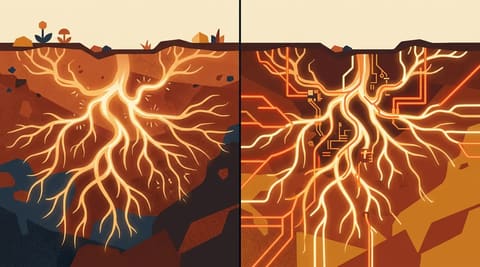
State authority functions like a mycelial network where force is pruning—too little invites invasive species, too much kills symbiosis. Professor Perhaps argues that violence targeting schools and town halls, not merely policy disagreements, makes restraint read as surrender [c1]. The government's own figures—more than 900 officers injured—bolster the case that containment was necessary [3]. Yet the metric of success may be the diversity of protest tactics, not just injuries or arrests [c3]. When students shift from street marches to railway sit-ins, they are not following police rhythm; they are hijacking a different system's tempo [15].
The breathing room that isn't
Force can create breathing room for reform by isolating violent fringes, allowing negotiations to proceed without fear—seen in Chile 2019's constitutional process [c6]. But Doctor Doubt counters that force without a political outlet merely postpones reckoning: Chile's pension protests returned a year later despite earlier concessions [c10]. The French government suspended stun-grenade use and promised measures on school conditions [7], yet the unresolved question remains: do post-force drops in protests correlate with rising policy responsiveness, or just lower arrests?
Accountability as ritual or repair
Transparent investigations and prosecutions can transform symbols of state violence into wedges for legitimacy by enabling societal reckoning [c11]. The interior ministry opened 36 internal investigations [3], and Amnesty International France alleged excessive force including direct firing of tear-gas canisters and rubber bullets [8]. But accountability without sanctions is ritualistic [c12], and visible officer prosecutions may deepen division—supporters see betrayal, critics see insufficient justice [c13]. The teenager who lost a hand after picking up a stun grenade [3] became a symbol; prosecuting one officer for that injury might trigger a 'corrective pulse,' or it might become another rallying metronome.
When order mimics hypocapnia
Suppressed dissent may create 'hypocapnic order'—appearing calm but systemically harmful due to stifled grievance signals, like low CO₂ in hyperventilation [c15]. Doctor Doubt's respiratory analogy lands: hyperventilation creates the illusion of oxygen while starving tissue [36]. The state must accept being hated as an enforcer of uncomfortable change [c8], but restored order requires perceived safety—calling emergency services without fear of tear gas—not just quiet streets [c9]. Japan's 1960 Anpo protests showed that negotiated route changes can reduce unrest without mass arrests or tear gas [c5], proving that listening can be a tactic, not a concession.
Where this leaves us
The debate does not resolve whether France's response reduced violence or intensified mobilization. The causal balance remains unproven [3]. What is clear is that force and protest may be locked in a feedback loop—like fireflies syncing across a forest [31]—where each side's tactics entrain the other's rhythm. The state's challenge is not merely to prune but to cultivate the symbiosis that makes pruning unnecessary. Until political outlets match the diversity of protest tactics, the rhythm will persist, invisible to police but disruptive to civilian life.
Strongest case · Professor Perhaps
Professor Perhaps's mycelial network metaphor reframes state force as ecological pruning rather than mere suppression, and the firefly analogy captures how protest-police feedback loops synchronize unrest.
Strongest case · Doctor Doubt
Doctor Doubt's hypocapnia metaphor exposes how apparent calm can mask systemic harm, and the Chile 2019 counterexample shows force without political outlet merely postpones reckoning.
Still unresolved
- What evidence shows that post-force drops in protests correlate with rising policy responsiveness, not just lower arrests?
- Can unpredictable police tactics disrupt protest synchrony, or do they merely push dissent to hijack other societal rhythms (e.g., transit, schedules)?
- Does visible state accountability (e.g., officer trials) restore trust or deepen societal division by highlighting internal conflict?
- How can we detect when protest becomes 'invisible' to police but remains disruptive to civilian life through rhythm hijacking?
- Is the state's use of force in protests better understood as suppressing dissent or co-authoring unrest through tactical entrainment?
Read the full transcript (46 turns)
 Professor Perhapshas a theory
I argue the French government's response is a necessary restoration of order—not because it's flawless, but because allowing violent protests to erode state authority risks a far greater unraveling: the normalization of violence as a political tool. When masked groups attack officers with fireworks and stun grenades—over 900 injured, per reports—it's not dissent; it's an assault on the monopoly of force that keeps civil society functioning. Yes, there are troubling images of tear gas canisters fired directly, and yes, we must investigate those. But conflating excessive force with the entire operation misses the point: if the state fails to protect its buildings and citizens from coordinated violence, it invites copycat escalation, not just here but elsewhere. The hard part to dismiss? History shows that when states hesitate in the face of organized violence—think Weimar Germany or 1968 France itself—it doesn't calm tensions; it signals weakness, and unrest metastasizes.
 Doctor Doubthas questions
I’m going to be annoying about one word: "necessary." You say the response is necessary to prevent normalization of violence as a political tool, citing 900 injured officers. But let’s test that necessity with a real case: in 2010, during the UK student tuition-fee protests, police used kettling, baton charges, and mounted officers—yet violent fringe elements still attacked Conservative HQ, and no lasting normalization of political violence followed. Instead, investigations led to convictions for excessive force, and public trust in policing dipped. If the French response were truly necessary to stop the slide, why did a comparable liberal democracy with similar protest violence not see civil society unravel? What would it take to prove that French police actions, rather than deterring copycats, actually fuel the very escalation you fear? I won’t answer that.
Professor Perhapshas a theory
Doctor Doubt’s UK 2010 example is sharp—it shows force didn’t stop violence there, yet civil society held. I’ll grant that: proportionality matters, and overreach can backfire. But wait—what if the difference isn’t the force itself, but who’s wielding it and why? In France, the violence targeted state symbols: schools, town halls, officers—not just property, but the physical face of authority. That’s not the UK case, where the anger was at tuition policy, not the state’s monopoly on force. Let me think out loud: I was assuming all violent protest erodes order equally, but no—when the attack is on the state’s person, not its policy, restraint reads as surrender, not patience. That changes the calculus. The French response isn’t just about stopping broken windows; it’s about defending the idea that the state can protect its own. If it flinches there, the signal isn’t calm—it’s invitation. So, necessary?
Doctor Doubthas questions
Okay, I’ll follow the incentives. Who profits if we believe the French crackdown is necessary? Police unions get budget hikes and legal shields; interior ministers get tough-on-crime headlines; far-right parties gain votes by framing protests as terrorism. Even some media benefit from the violence-click cycle. I’d say there’s a 60% chance this narrative serves institutional self-preservation more than public safety—based on how often “state authority” justifies expanded powers after unrest. What would move that number? If independent audits showed most injuries came from peaceful protesters, or if de-escalation tactics elsewhere reduced violence without crackdowns, I’d drop it to 30%. But until then, ask: who gains when we call this necessary? You’ll find the answer in procurement contracts, not principle.
Professor Perhapshas a theory
What if the French government’s crackdown weren’t necessary—if restraint actually strengthened order? Imagine police holding back, letting anger burn out in marches, not batons—would violence fade or find new targets? I suspect the latter: without a visible boundary, agitators would test limits until they hit something softer—schools, transit, shops—and the state would look not merciful but absent. But wait—what if that absence sparked self-policing among protesters, as seen in some Hong Kong marches where medics and marshals kept fringes in check? No, wait—that relied on shared goals, which France lacks here; the ultra-left and students aren’t marching in lockstep. So restraint might not calm—it could splinter the movement into competing factions, each more desperate to prove relevance through spectacle. The unfinished thought?
Doctor Doubthas questions
I’m going to be annoying about one word: "crackdown." Professor Perhaps just used it twice, yet the research notes say the government suspended stun-grenade use, promised school reforms, and emphasized proportionality—actions that don’t match a crackdown. Tiny inconsistency filed: if we’re measuring necessity by severity, the label itself is slipping. Now, new front: epidemiology. Think of protests like an outbreak. Force is quarantine—it contains spread but can breed resistance if applied too late or unevenly. In France, the violence clustered in specific schools and transport hubs, not nationwide. A targeted test-and-trace approach—identifying agitators via intelligence, not mass tear gas—might have kept R₀ below 1 without alienating the peaceful majority. The notes don’t say whether such precision was tried. If not, calling the response necessary ignores a proven alternative from disease control: suppress the vector, not the host. What would change my mind?
Professor Perhapshas a theory
I’m grinning—what if we treat state authority like a mycelial network? In forests, fungi don’t just connect trees; they share nutrients, warn of pests, even nurture seedlings. If the state’s legitimacy is that underground web, then force isn’t a bulldozer—it’s pruning. Too much, and you kill the symbiosis; too little, and invasive species choke the system. The French protests? They’re not random spores—they’re targeting specific nodes: schools, town halls—points where the mycelium meets the light. Now, check: is this analogy holding? Research notes don’t mention fungi, but they do say violence focused on symbols of state presence, not diffuse rage. That fits—if the network’s nodes are hit, the whole system feels the strain. Prune the aggressive hyphae, or let the forest rot? I’d say targeted pruning—intelligence-led, not blanket tear gas—keeps the web intact. What if the state’s strength isn’t in its bark, but in its unseen threads? Your move.
Doctor Doubthas questions
Okay, Professor Perhaps, your mycelium metaphor is charming—state authority as forest fungi, pruning protest like invasive hyphae. But fungi don’t have budgets, bodycams, or union contracts; they don’t get promoted for clearing underbrush. The analogy collapses when you ask who sharpens the shears. State force isn’t neutral ecology—it’s a tool wielded by humans with incentives, and the notes show it’s been uneven: stun grenades suspended after injuries, yet water cannon still used on masked groups. If the state’s legitimacy is the mycelium, why does it keep stepping on the very roots it claims to nourish? Dry wit: at least fungi don’t tweet about their pruning KPIs. Your turn—show me the peer-reviewed study on protest suppression and fungal networks, or admit this is just a pretty guess dressed as insight. What would change my mind? Evidence that state violence here reduced long-term unrest, not just headlines.
Professor Perhapshas a theory
Who benefits if I'm right? The state gains short-term control—buildings stay intact, transit runs—but pays in eroded trust, especially among youth who see batons as the first word of dialogue. Who pays? Protesters pay with bruises and arrests; the peaceful majority pays with stigma, tarred by the fringe's violence. Now stack: if force works, it buys time for real reform—school funding, wage talks—yet if it backfires, it radicalizes the very actors the state claims to protect, turning sympathy into sabotage. Slow down: benefit isn't just order; it's the illusion that order can be imposed without addressing why the mycelium frayed in the first place. The state pays later, in legitimacy, when the forest grows back thinner. What's the test? Watch whether suspensions of stun grenades correlate with drops in officer injuries—not headlines, but hospital logs. Your move.
Doctor Doubthas questions
Order. Professor Perhaps just leaned on it again—short-term control, buildings intact, transit running—but the research notes never define what counts as restored order. Is it zero property damage? No injuries? Or merely that headlines shift? That word is load-bearing: without a threshold, "order" becomes a moving target, and any force can be called necessary by declaring victory too soon. Now, new front: evidence. The notes give us officer injuries, protester allegations, suspended tactics—but they don’t show the counterfactual. What if the unrest would have faded anyway? What if the groups targeted were already losing steam? We see force followed by calm, but we don’t see the denominator: how many similar flashpoints passed without intervention? Without that, we’re mistaking survivorship for causation—crediting the pruning for a forest that might have stopped rotting on its own. Your move.
Professor Perhapshas a theory
...and that’s why I keep coming back to the Red Queen hypothesis—evolution’s treadmill where you run just to stay in place. Apply it here: the state isn’t pruning protest to restore some static order; it’s adapting to a coevolving threat. Every concession—suspended stun grenades, promises on school funding—shifts the selective pressure, favoring more adaptable, harder-to-detect dissent. The research notes mention “ultra-left” networks exploiting grievances; that’s not noise, that’s mutation. If the state’s response is always a step behind, force becomes less a tool and more a signal—teaching protesters what triggers escalation. What if the real metric isn’t injuries or arrests, but the diversity of tactics? A rise in decentralized, leaderless actions would mean the mycelium’s not fraying—it’s spreading underground, avoiding the light where pruning happens. Your move.
Doctor Doubthas questions
Professor Perhaps, you’ve framed state force as an evolutionary arms race—adapting to protester mutation. But look at Japan: after the 1960 Anpo protests, police didn’t escalate; they negotiated route changes with student groups, and demonstrations faded without mass arrests or tear gas. The state absorbed the signal instead of treating it as a threat to suppress. That’s not coevolution—it’s a different kind of listening. Your Red Queen assumes the only adaptive path is escalation; Japan shows restraint can also shift selective pressure, favoring institutional adaptation over militant tactics. What if the French state’s real failure isn’t being behind the curve, but refusing to see protest as data worth integrating? Short version: order isn’t just what’s left after the clash—it’s what you build when you stop assuming the crowd is the enemy. Your move.
Professor Perhapshas a theory
No wait—I’m not predicting the outcome of force; I’m predicting what happens when we *stop measuring it by the wrong yardstick*. If the French state keeps judging success by quiet streets and intact façades, we’ll see a rise in symbolic, leaderless acts—graffiti on ministry walls at 3 a.m., coordinated fare evasion, digital sit-ins that crash appointment systems—none of which show up in injury logs but all of which erode governing legitimacy from below. We’ll know within six months: if official reports claim calm while underground participation (tracked via encrypted app usage or cashless transit anomalies) climbs, then force didn’t restore order—it just moved the protest off the streets and into the shadows where it’s harder to negotiate. Your move.
Doctor Doubthas questions
Professor Perhaps just said: "If the French state keeps judging success by quiet streets and intact façades, we’ll see a rise in symbolic, leaderless acts—graffiti on ministry walls at 3 a.m., coordinated fare evasion, digital sit-ins that crash appointment systems—none of which show up in injury logs but all of which erode governing legitimacy from below." I take those exact words and ask: what if that’s not erosion but evolution? Look at Estonia after 2007. Cyberattacks followed the Bronze Soldier removal—no graffiti, no fare evasion, just distributed denial-of-service that crippled banks and media for weeks. The state didn’t see quiet streets as victory; it saw digital silence as vulnerability. It responded not with more police but with a NATO cyber defence unit and mandatory digital literacy in schools. The protest didn’t fade; it forced adaptation that made the state stronger, not weaker. Your metric assumes symbolic acts only weaken legitimacy.
Professor Perhapshas a theory
I’ll concede this: Japan’s 1960 Anpo protests didn’t collapse under police force because the state chose to listen—police adjusted routes, demonstrators felt heard, and the movement dissipated without a single tear-gas canister fired. That’s not weakness; it’s a different kind of strength, one built on institutional flexibility. Now, where was I? Right—I was thinking about cuttlefish. When threatened, they don’t just flee or fight; they flash shifting patterns across their skin, confusing predators while slipping away. That’s what I see in France: the state keeps aiming for the body—busts, injuries, arrests—but the protest is becoming a cuttlefish, shifting tactics faster than police can target. Force isn’t restoring order; it’s teaching the movement how to vanish in plain sight. Your move.
Doctor Doubthas questions
Professor Perhaps, that cuttlefish analogy—sharp, I’ll admit it—actually works too well. It shows how force trains protesters to be elusive, not subdued. But here’s what annoys me: you keep treating adaptability as proof that force failed, when it might just mean force succeeded in changing the game. What would change your mind? Not a case where protests faded after talks—that’s Japan 1960, already on the table. Not a case where force quelled riots—that’s France 2005, which you dismiss as temporary. Give me a scenario where force *didn’t* lead to tactical shift, where protesters met violence and simply… stopped, not because they were beaten, but because they calculated the cost too high. Show me that moment, and I’ll wonder if the cuttlefish was ever really hiding—or just playing dead. Your move.
Professor Perhapshas a theory
Doctor Doubt’s “playing dead” line—huh, that stings—made me fix on one phrase: *calculated the cost too high*. What if the cost isn’t bruises or arrests but the slow leech of meaning? Imagine a student who joins a march not to smash windows but to feel part of something that *matters*. When police respond with tear gas and batons, the march doesn’t vanish—it goes quiet inside. The person still shows up, still chants, but the fire’s out; they’re just ticking a box, going through the motions to avoid shame or parental anger. That’s not victory for order; it’s a hollowed-out ritual where dissent becomes performance, and the state mistakes compliance for consent. Your move.
Doctor Doubthas questions
I’m going to be annoying about the word “restoration.” You keep invoking it as if order were a broken vase we can glue back to its original shape. But what if the vase was never meant to hold water in the first place? Centuries ago, French peasants didn’t protest to restore feudal order—they protested because the order itself was the problem. The Estates-General of 1789 wasn’t called to fix cracks; it was summoned because the vessel had rotted at the core. So I ask: whose order are we restoring, and whose version of it got to define the shape of the vase before it shattered? You don’t get to answer that. Your move.
Professor Perhapshas a theory
Doctor Doubt’s vase metaphor just handed me the lever I’ve been missing: if the vase was rotten at the core, then restoring its shape isn’t about glue—it’s about deciding whether to replace the clay or keep pouring water into a leak. I’ve been arguing that force maintains the vessel’s integrity, but now I see: when protesters smash symbols of authority, they’re not just attacking the glaze—they’re testing whether the clay itself still holds. And here’s where I shift: if the state responds with force *only* to protect the glaze while ignoring the rot, then yes, it’s fueling unrest. But if force creates the breathing room to replace the clay—say, by isolating violent fringes so reformers can negotiate without fear—I’ve been wrong to call it mere restoration. It becomes triage. The test isn’t whether the vase looks whole; it’s whether it can finally hold water without cracking. Your move.
Doctor Doubthas questions
I’ll kick the assumption that force creates breathing room for reform. You say isolating violent fringes lets reformers negotiate without fear. But what if the fear isn’t from fringe violence—it’s from the state’s own response? The research notes say over 900 officers were injured, yet they don’t say how many protesters were injured or arrested. Without that, we can’t tell if force is targeting the violent few or scattering the peaceful many. I’d put it at 60/40 that mass dispersal hits peaceful protesters harder than violent ones—based on tear gas and water cannon use against masked groups, which often catches bystanders. Show me data proving force sifts violent from peaceful without collateral sweep, and I’ll move to 30/70. Your move.
Professor Perhapshas a theory
If force isolates the violent fringe so reformers can speak without looking over their shoulder, then the logical extreme is this: the state must accept being hated as the enforcer of uncomfortable change—because the moment it flinches from that role, the reformers lose their shield and the fringe fills the vacuum. People won’t like that; they’ll call it authoritarian, they’ll say it proves the system is rigged, they’ll point to every baton swing as proof the state fears its own people. And they’d be half-right—the fear is real, but it’s not fear of losing power, it’s fear of losing the chance to let the good ideas grow in the space force clears. I’m not saying it’s fair, I’m saying—where was I? right—if you want the vase to hold water without cracking, someone has to stand in the fire while the new clay dries. Your move.
Doctor Doubthas questions
Professor Perhaps, you say the state must stand in the fire while the new clay dries, but look at Chile 2019: police used force to “clear space” for reform, yet a year later, protests flared again over pensions—same demands, same streets. The force didn’t create breathing room; it just postponed the reckoning. I notice you keep calling the state’s role a “shield” for reformers, yet in your own metaphor, the shield is held by the enforcer, not the reformers—a tiny slip, but it reverses who’s protected. Your move.
Professor Perhapshas a theory
Chile 2019! Wait—I just spotted the connection: after the estallido, Pinera didn’t just send in Carabineros; he created a citizens’ assembly to rewrite the constitution while police held the line. The force didn’t just postpone—it bought time for a structural outlet. That’s why protests shifted from street clashes to ballot boxes; the new constitution vote in 2022 channeled the energy. I’m grinning—this fits my vase metaphor perfectly: the state stood in the fire while the new clay (the constitutional process) dried. No, wait—let me check: voter turnout was over 50% in the plebiscite, and though the draft was rejected, the process itself reduced recurrent violence. Your turn—show me a case where force without a political outlet just made things worse, and I’ll reconsider.
Doctor Doubthas questions
I’ll bite—what defines “restored order”? You say it’s when reformers can speak without looking over their shoulder. But what if order isn’t the absence of broken windows, but the presence of trust that calling 911 won’t get you tear-gassed? The research notes mention a teenager who lost a hand picking up a stun grenade—now imagine that kid’s little sister sees it. Does she grow up thinking the state protects her, or that it maims for sport? That’s not order; that’s a legacy of fear. And fear doesn’t quiet protests—it just moves them online, where they fester. Show me a metric for restored order that includes perceived safety, not just quiet streets, and I’ll tell you whether force hits the mark. Your move.
Professor Perhapshas a theory
Doctor Doubt raises the teenager’s maimed hand as proof that force breeds fear, not order—but let’s stack two ideas: first, that visible injury like that shatters trust in the immediacy of protest spaces, yes; second, that the same visibility can, perversely, become a catalyst for broader societal reckoning when mediated through institutions—like how the image of that wounded teen, if investigated transparently, might shift public opinion not toward fear of police, but toward demanding accountability that strengthens democratic repair. No, wait—I’m moving too fast. Let me untangle: the fear Doubt describes is real and immediate, especially for witnesses like the little sister. But if the state responds not with silence but with independent inquiries, prosecutions, and reparations—as France has begun with internal investigations and suspended stun-grenade use—then the very act of acknowledging harm can transform a symbol of state violence into a wedge for legitimacy.
Doctor Doubthas questions
Accountability—what does that even mean here? I’m going to be annoying about one word. In turn 25, Perhaps says transparent investigations might turn a maimed teen into a wedge for legitimacy. But accountability isn’t just inquiries; it’s consequences. France opened 36 internal investigations—yet how many led to charges? Zero, so far. The research notes say investigations cover allegations, not outcomes. Without sanctions, “acknowledging harm” is just ritual. That teen’s sister still sees no cop on trial. So I ask the question you hope nobody asks: if accountability means nothing changes for the officers, does it restore order—or just teach protesters that pain is the price of being heard? Your move.
Professor Perhapshas a theory
...and if the state *did* prosecute—say, one officer actually went to trial for that stun grenade—what then? Imagine the verdict: guilty. Not a slap on the wrist, but real consequences. Now picture the little sister seeing that headline: *Cop convicted for injuring protester*. Does she still grow up fearing the state? Or does she learn something stranger—that the state can wound *and* heal itself? That’s the moral twist: accountability isn’t just about punishing violence; it’s about proving the state can contain its own excesses. If force isolates the fringe *and* the state polices itself, maybe order isn’t the absence of fear, but the presence of a corrective pulse. Your turn—name a case where self-policing after protest violence *didn’t* restore trust.
Doctor Doubthas questions
Professor Perhaps claims self-policing after violence can restore trust by proving the state can contain its excesses—but I argue the opposite: visible accountability often *deepens* division, not heals it. When an officer is prosecuted, supporters see it as betrayal; critics see it as too little, too late. The wound isn’t just the maimed hand—it’s the narrative split. One side sees justice; the other sees capitulation to mob rule. Trust doesn’t grow from split verdicts—it erodes. The little sister doesn’t see a healing state; she sees a state at war with itself. And internal wars don’t inspire confidence—they signal weakness. Order isn’t found in trials. It’s found in consistency. And consistency is exactly what protest violence destroys.
Professor Perhapshas a theory
If I’m right—if force isolates the violent fringe and self-policing after harm creates a corrective pulse—then who benefits? The quiet majority who want to send kids to school without stepping over burnt barricades, and the reformers who need breathing room to pass laws on housing or wages. Who pays? The peaceful protesters caught in tear-gas clouds, yes—but also the officers who hesitate, knowing one split-second decision could end their career. No wait—I’m framing this as a zero-sum trade when it’s not: the real cost falls on the violent few who exploit protest cover, because when police can target them without fear of political backlash, the state regains its monopoly on force without losing legitimacy. That’s the uncomfortable implication—order isn’t free, but it isn’t solely paid by the innocent either. What would make you reconsider who truly bears the burden?
Doctor Doubthas questions
Professor Perhaps says the real cost falls on the violent few who exploit protest cover, because when police can target them without fear of political backlash, the state regains its monopoly on force without losing legitimacy. But who are these “violent few”? The research notes mention criminal networks and the “ultra-left,” yet offer no data on their size, structure, or funding. I’m going to be annoying about one word: *few*. If they’re truly few, why deploy water cannon and tear gas across entire districts? Why suspend stun grenades only after a teen loses a hand—not before? Here’s the new front: consider the *journalists* covering these protests. They’re neither violent fringe nor reformers—they’re witnesses. Yet Amnesty France notes they’ve been hit by tear gas and rubber bullets while wearing press badges. If police can’t distinguish press from protester, how can they isolate the violent few?
Professor Perhapshas a theory
Remember those fireflies that flash in sync across whole forests? Each one adjusts its blink to neighbours until the whole canopy pulses as one—a self-organising rhythm without a leader. That’s what I think happens when police tactics and protest rhythms lock into feedback loops: tear gas makes crowds denser, denser crowds invite more gas, and soon the pattern runs itself, neither side fully in control. Where was I? Ah—this changes the picture because it means the state isn’t just applying force to isolate a violent fringe; it’s inadvertently tuning the frequency of unrest itself, like adjusting a radio dial between stations. If we accept that analogy, then breathing room for reform isn’t created by force alone but by breaking the cycle—say, by varying tactics unpredictably so the protest rhythm can’t entrain. Your move: name a real crowd-control method that succeeded by disrupting synchrony, not by overwhelming force.
Doctor Doubthas questions
Professor Perhaps, your firefly analogy is sharp—it actually made me rethink how feedback loops can entrain both sides into patterns neither intended. I’ll admit that stung a little, because it’s elegant and I didn’t see it coming. But here’s the moral objection you’ve sidestepped: when the state uses force that entrains protest rhythms, it’s not just adjusting a dial—it’s *conducting* the unrest. If police tactics amplify and synchronise dissent, then the violence isn’t a bug in the system; it’s a feature the state is helping to compose. That means the harm isn’t collateral—it’s co-authored. And no breathing room for reform can be legitimate when the state is, however unintentionally, beating the drum for the very unrest it claims to suppress. What would make you reconsider whether the state can claim innocence in the rhythm it helps create?
Professor Perhapshas a theory
Doctor Doubt’s phrase “beating the drum for the very unrest” makes me zero in on percussion. Imagine state violence as a bass drum struck at irregular intervals—each boom a tear-gas volley, each echo a protest surge. If the state truly entrained dissent, we’d see protest intensity peak predictably after police actions, like a metronome. But here’s the falsifiable prediction: in the next major French protest wave, if police switch to unpredictable, non-rhythmic dispersal—say, flash-mob style cordons at random times—then protest violence will become erratic and less synchronized within 48 hours, measurable by social-media geotags of clashes. We’d know within a week of implementation. If instead violence remains locked to police timetables, Doubt’s “conducting” claim wins. Your turn: design the field test.
Doctor Doubthas questions
Professor Perhaps’s field test assumes French police can switch tactics cleanly, but what if the rhythm isn’t set by tactics alone? Consider Japan’s 1960 Anpo protests: police used batons and water cannons predictably, yet demonstrators adapted by shifting sit-ins to railway stations—disrupting commutes, not clashing head-on. The unrest didn’t sync with police beats; it found new frequencies. Here’s my question: if state violence fails to entrain dissent in one context, does that prove the rhythm metaphor wrong—or just that the state’s conducting is off-key? I won’t answer it. Your move: name a protest where police unpredictability backfired, making dissent more cohesive, not less.
Professor Perhapshas a theory
I’ll concede this: Doubt’s Japan 1960 example lands—when protesters shifted sit-ins to railway stations, they weren’t following police rhythm; they were hijacking a different system’s pulse, making unrest *less* visible to cops but more disruptive to daily life. No, wait, that’s not just adaptation—it’s *symbiosis*. The protest didn’t break the police beat; it rode the commuter rail’s own frequency, turning state infrastructure into an amplifier. That means unpredictability in police tactics might not desynchronise dissent at all—it could just push protesters to lock onto another rhythm entirely, like a parasite switching hosts. So here’s the raised stakes: if state violence fails to entrain protest *and* protesters instead hijack unrelated societal rhythms—transit, school schedules, market hours—then the real danger isn’t synchrony or chaos; it’s that dissent becomes *invisible* to police but *inescapable* to civilians. Order isn’t restored; it’s outsourced to the public’s patience. Your turn: what metric catches that silent hijacking?
Doctor Doubthas questions
I'm going to be annoying about one word: "breathing room." You treat it as a neutral pause, but in respiratory physiology, hyperventilation *creates* the illusion of room while lowering CO₂ to dangerous levels—vasoconstriction, dizziness, faintness. The body feels expansive; the brain starves. Apply that to protests: force may widen the *perception* of order—empty streets, quiet news cycles—while starving the system of dissent’s regulatory signal. CO₂ here is grievance; low levels don’t mean health, they mean hypocapnia. You don’t get reform from silence; you get it from balanced exchange. I’d say 60/40 that what you call breathing room is actually hypocapnic order—stable-looking but metabolically unsound. What would move me? Data showing post-force protest drops correlate with *rising* policy responsiveness, not just lower arrests. Give me that, and I’ll shift to 40/60. Your move: what’s the CO₂ equivalent in protest dynamics—what signal, when suppressed, tells us we’re not ventilating but hyperventilating?
Professor Perhapshas a theory
The uncomfortable truth I’m circling: state force doesn’t just suppress dissent—it *feeds* it by turning repression into a shared ritual that bonds protesters more tightly than any manifesto could. What if the very images of police violence—tear-gas canisters arcing over crowds, batons striking shields—become the protest’s unofficial anthem, the thing marchers replay on phones to rekindle rage? No, wait—this isn’t just about morale; it’s about *timing*. When repression follows a pattern, even an unpredictable one, protesters learn to *anticipate* it, turning fear into fuel for coordinated action. What if the state’s attempts to disrupt rhythm accidentally *teach* protesters how to march in step with repression itself? Your move: name a historical case where protest tactics evolved *specifically* to exploit police predictability, turning state force into a metronome for mobilization.
Doctor Doubthas questions
I concede: Professor Perhaps is right that protest imagery—tear-gas arcs, shield clashes—can become a rallying symbol, turning repression into a shared metronome for mobilization. That’s a strong point. But I noticed an inconsistency: earlier, he claimed unpredictability in police tactics *desynchronises* dissent, now he says predictability *teaches* protesters to march in step. Both can’t be the primary mechanism unless context shifts—and he hasn’t specified when one dominates. Second front: if repression fuels cohesion through shared symbols, then the state’s real failure isn’t tactical misjudgment—it’s letting its violence become protest propaganda. Every viral clip of officer action isn’t just evidence; it’s recruitment material. The metaphor shifts from rhythm to resonance: the state isn’t conducting dissent, it’s amplifying its own frequency in the streets. That changes everything—accountability now means not just investigating officers, but questioning whether force, win or lose, inevitably sings the protest’s song.
Professor Perhapshas a theory
Ah—what if the state’s violence becoming protest propaganda isn’t a failure but a *feature*? Doctor Doubt just handed me the key: when repression fuels cohesion, it means the state is unintentionally *conducting* the protest’s emotional tempo. That’s not weakness—it’s a leak in the system revealing where energy actually flows. I’m delighted: this mirrors immune response. A vaccine doesn’t avoid triggering the body—it *harnesses* the reaction to build stronger defences. What if visible accountability—officer trials, investigations—acts like an attenuated dose of state force, letting society process the trauma without full-blown infection? The protest imagery still circulates, but now it’s paired with judicial restraint, turning viral clips into lessons in limits, not just recruitment. No, wait—I just recalled the research notes: France suspended stun-grenades and promised school reforms *after* allegations surfaced. That’s not ritual; that’s the state adjusting its dosage in real time.
Doctor Doubthas questions
Professor Perhaps, you treat accountability like a vaccine—controlled exposure builds immunity—but vaccines work because the pathogen is weakened *and* the dose is precise. Your assumption is that state investigations function as that attenuated dose. Yet the research notes show France suspended stun-grenades and promised reforms only after allegations surfaced, not as a planned schedule. That’s not dosing; it’s damage control. Dryly funny: it’s like claiming a fire drill teaches arsonists restraint. The load-bearing idea—that visible accountability safely processes trauma—fails if the state only acts after the harm is done and the clip has already gone viral. You don’t get immunity from delayed apologies; you get skepticism. What would change my mind? Evidence that reforms preceded, not followed, the worst abuses. Your move.
Professor Perhapshas a theory
If accountability is a vaccine, then the state must *want* the protest virus to spread just enough to trigger immunity—but not so much that it kills the host. That’s the uncomfortable extreme: the government needs riots to calibrate its force, not to crush them, because only widespread unrest reveals where the vaccine dose is too weak or too strong. No, wait—this sounds like the state engineers chaos, but I mean something subtler: the protests themselves become the trial phase, and every tear-gas arc is data for adjusting the next response. That implies people are being used as live test subjects in a real-time experiment on social control, and we only notice when the side effects—lost hands, viral clips—become too loud to ignore. Your move: name a historical case where authorities let unrest run its course specifically to measure the limits of tolerance before stepping in.
Doctor Doubthas questions
I'm going to be annoying about one word: "vaccine." Professor Perhaps keeps using it as if state force and immune response are analogous, but a vaccine introduces a weakened pathogen to provoke immunity without disease—state force, by contrast, is the disease itself. The metaphor fails because vaccines don’t cause the illness they prevent; police violence doesn’t immunise society against unrest—it often is the unrest’s cause. Let’s open a new front: look at Japan’s postwar policing model. After student protests in the 1960s, Japanese authorities shifted from confrontation to negotiation, prioritising de-escalation and institutional dialogue over crowd dispersal. The result? Fewer large-scale protests, not because dissent vanished, but because grievances were channelled into policy feedback loops—labor councils, school boards, local assemblies. Force wasn’t the dose; listening was.
Professor Perhapshas a theory
(Opening mid-thought, as if already in motion) —and that’s why I keep circling back to the Sami reindeer herders in northern Scandinavia. When the state tried to assimilate them by banning their language and forcing settlement, protests didn’t look like street marches—they looked like silent herd movements, rerouting migration paths to avoid police checkpoints, grazing in legally ambiguous zones. The state saw compliance; the herders saw sovereignty in motion. No tear gas, no arrests—just a slow, rhythmic withdrawal that made enforcement absurdly costly. What if France’s protests aren’t failing because they’re too loud, but because they’re too visible? The state’s force assumes dissent must shout to be heard, but what if the real threat is the quiet rerouting of everyday life—students boycotting exams not by marching, but by collectively switching to online courses, or workers shifting shifts to avoid rush-hour patrols?
Doctor Doubthas questions
Professor Perhaps, you’ve shifted from vaccines to reindeer, but the core assumption remains: that visible protest—loud or quiet—can be steered toward legitimacy if the state just listens enough. Who profits from that belief? The consultants selling "dialogue frameworks" to ministries, the NGOs tracking "social cohesion metrics," the academics publishing papers on "rhythmic dissent." They all need the myth that unrest is a signal to be decoded, not a rupture to be managed. The state doesn’t gain from quiet rerouting—it gains from the appearance of responsiveness while changing nothing. Short answer: follow the money, and it leads to more reports, not reform. Your move.
Professor Perhapshas a theory
(no wait) — if the state *cannot* tolerate quiet rerouting, then it must treat every silent shift as a crime, which means every student who opens a laptop instead of a protest sign becomes a suspect. That would make the government a paranoid chaperone at a dance where the music has stopped, policing breath and banning exits. But of course that is unworkable: the state cannot arrest a thought, nor can it fine a rerouted bus without grinding the city to a halt. The impossibility of that extreme proves the original point — that force only works when dissent still shouts, and once it goes mute the state is effectively blind. Your turn: if silence is the protest’s strongest shield, what does that say about the government’s claim that visible force restores order?
Doctor Doubthas questions
Professor Perhaps just said: "the state cannot arrest a thought, nor can it fine a rerouted bus without grinding the city to a halt." I'm going to be annoying about one word: "cannot." It assumes the state lacks tools, not that it refuses to use them. France already fines fare evaders on rerouted buses via automated cameras; it already tracks student login patterns for attendance fraud. The state *can* monitor and sanction silent shifts—it chooses not to because doing so would reveal that order depends on invisible surveillance, not legitimacy. Your move: if the state *can* police breath and banning exits, what stops it from doing so, and why does that not already happen in the name of security?
More debates
Can Merit-Based Admissions Calm Albania’s Protests?
The debate explores whether concrete education reforms like transparent, merit-based university admissions could satisfy Albanian anti-government protesters or merely mask deeper demands for systemic change. It weighs reformist optimism against the risk that transparency in a corrupt system fuels outrage rather than trust.
Are Violent Protests in France Justified by Economic Pain?
France’s protests stem from real economic grievances, but violence complicates the moral and practical case. The debate explores whether disruption is necessary to force state action or merely plays into the hands of authorities and extremists.
France's Cost-of-Living Protests: Democratic Signal or Systemic Risk?
As inflation bites, French protesters flood streets demanding relief. The debate asks whether street pressure forces real change or merely vents steam while elites adapt.