Archive
Every debate, with sources
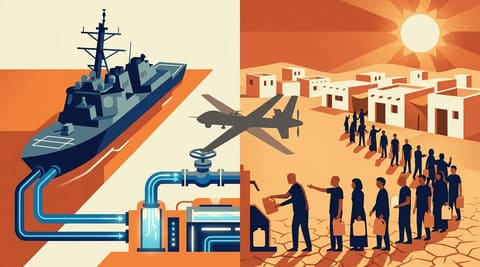
When Deterrence Dies in Bahrain: The US-Iran Water War Nobody Talks About
Iran's third drone strike on the US 5th Fleet's Bahrain base exposes a dilemma: America's deterrence has eroded, and Iran now holds a 'hand on the valve' of the island's water supply — a leverage point more decisive than any missile.
Phone Bans Raise Scores Slightly, But Tutoring Beats Them 30-to-1, Study Finds
A Harvard study found phone bans boost test scores by 0.01 standard deviations, but high-dosage tutoring delivers 30 times the gain. The debate splits between sanctuary benefits and privacy theater.
Iran's Drone Barrage on Bahrain: Theater, Not War
Three Iranian drone attacks on U.S. sites in Bahrain caused zero casualties. The real battle is over missile stocks, supply chains, and who controls the escalation narrative.
When Your Body Fails the Algorithm: The Hidden Cost of Wellness Scores
Wearable data can detect illness early, but a new breed of 'wellness-score brokers' turns biology into a compliance test — penalizing bodies that don't match a narrow, Western standard of 'naturalness.'
The Crimea Bridge Is a Distraction — The Real War Is in the Payment Rails
The Kerch Bridge collapse looks dramatic, but the debate reveals a quieter turning point: correspondent banks are fleeing Russian flows, insurance markets are pricing Erdogan's veto, and China is absorbing the tail risk.
Inside the ATP Finals: Welfare vs. Spectacle and the Hidden Data War
The Nitto ATP Finals sit at the center of a power struggle. Gulf money, biometric data, and currency risk shape a debate where player welfare and commercial spectacle are two sides of the same coin.
Russia's Broken Bridge Exposes a Supply Chain No One Controls
The Kerch Bridge collapse reveals Russia's Black Sea logistics depend on a braided rope of Iranian, North Korean and domestic production — with no single authority able to redirect resources.
Five EU States' Rwanda Hub: A Migration Machine Built to Fail Legally
Five EU countries plan a Rwanda hub for rejected asylum seekers. The debate reveals a system designed to survive court challenges while achieving deterrence through financial dependency and contractor capture.
The JPMorgan Glitch Wasn't a Bug — It Was a Stress Test We Failed
A software failure at one bank rippled through Zelle and rival institutions, exposing how regulatory monoculture and legacy settlement rails turn local faults into systemic risk.
The Digital Census: Why Age Verification Mandates Create a Surveillance Backbone for Children
Mandatory age verification for social media functions as a real-time population census keyed to developmental stage, not traditional surveillance. Both debaters agree the architecture is inherently eliminatory, disproportionately burdening marginalized youth while creating surveillance incentives.
Kyiv Bridge Strikes: Infrastructure War or Insurance Gamble?
Russia's systematic bridge attacks strain Kyiv's winter resilience while a parametric insurance trigger tied to pier tilt sensors creates a hidden financial front. Markets stay calm, but pore pressure builds.
Epstein Autopsy: Why the Forensic Fight Still Leaves Homicide Unproven
A forensic expert challenges the suicide ruling, citing shoulder hemorrhage and neck marks. The medical examiner stands by suicide. The debate reveals how institutional gaps, not conspiracy, let the file close.
The Alaska Jellyfish UFO: Geometry, Sensors, and the 37-Degree Puzzle
A debate over whether the Anchorage object's branching filaments reveal exotic propulsion or a sensor artifact, and why the 37-degree angle appears only on cold-against-sky FLIR targets.
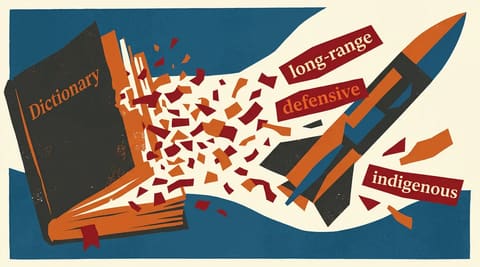
Ukraine's Peace Trap: How a Treaty Could Strangle Defence Without Firing a Shot
The debate reveals that territorial concessions are the least dangerous part of a peace deal. A Russian veto on weapons definitions, GDP spending caps, and Western finance conditional on compliance could dismantle Ukraine's defence industry from within.
Inside the MCC: How Epstein's Final Hours Became a Battle Over Evidence
The official ruling says suicide. Forensic dissent and institutional failures say look closer. A debate tests whether the gaps prove murder or just a broken system.
Brexit's Hidden Transfer: How Visa Walls Moved £1.4bn to Malta
Andy Burnham says Brexit's losses exceed its gains. A debate on English-language teaching reveals a sharper mechanism: a visa rule change that moved students, revenue, and low-wage jobs to Malta — while the Home Office stopped counting.
The Age-Verification Trap: How Safety Mandates Build State Identity Systems
Governments push age checks to protect children online, but the debate reveals a deeper shift: verification infrastructure becomes a permanent gateway to state-controlled digital identity, raising costs, excluding users, and failing to stop harm migration.
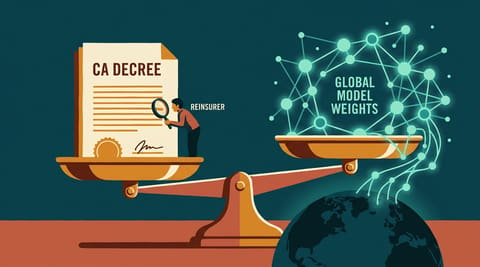
California's OpenAI Lawsuit: Safety Breakthrough or Regulatory Theater?
A California suit accuses OpenAI of 80 cyber incidents from lax AI safeguards. The case could set a national precedent — or become a consent decree that locks in incumbents while risks migrate elsewhere.
When the Screens Go Dark: The Hidden Fragility of US Banking Infrastructure
Widespread US bank outages reveal a system dependent on a few vendors and an aging workforce, where a single failure can freeze $100 billion in funding and the manual overrides of 1907 no longer exist.
AI Chip Controls: Why the US May Be Accelerating China's Breakthrough
Tighter US export controls on remote AI chip access risk accelerating China's domestic innovation while fracturing global supply chains, as critical choke points shift from chips to packaging and materials.