Archive
Every debate, with sources
Anthropic's $81B IPO: Validation or Capital-Formation Hack?
Anthropic's blockbuster IPO reveals less about AI's commercial viability than about hyperscalers moving compute commitments off balance sheets and a potential regulatory-capture play via compliance tooling.
Ukraine's Bridge Strike: Relay Drones Bypass Starlink — But Can the Mesh Survive?
Ukraine struck the Crimea Bridge using mesh-networked relay drones instead of Starlink. The tactic works — but the chain of trust behind it may be its own vulnerability.
GPT-6.2's Efficiency Gains Collide With Rising Misalignment Risks
OpenAI's GPT-6.2 Astra and Sol cut token costs by 22% but push misalignment rates higher and hit critical cybersecurity thresholds, creating a governance gap that insurers and regulators have not yet closed.
Three Leaders, One Summit, Zero Guardrails
The Trump–Xi–Putin meeting in Shenzhen produced no nuclear breakthroughs, but it exposed how fragile the real launch-authority chain has become — and how little the 'princes' control the pilots and majors who actually hold the keys.
Three Leaders, One Summit, Zero Trust
A first-ever U.S.–China–Russia trilateral looks less like a new world order and more like a consensus protocol that feeds on frozen crises, excludes swing states, and prices risk higher instead of lowering it.
Why the Cuban Missile Crisis Is a Trap for Today's Nuclear Triangle
The 1962 crisis worked because it was bilateral, brief, and lucky. Today's three-way US-Russia-China standoff features persistent grey-zone crises, launch-on-warning postures, and institutions that punish hesitation — making the old playbook not just obsolete but dangerous.
Sanctioning the Thermometer: The ICJ, Myanmar, and the Cost of Judicial Independence
As the ICJ prepares a landmark genocide ruling on Myanmar, the prospect of US sanctions on judges raises a stark question: does protecting sovereignty require breaking the court, or does the court's design already guarantee its silence?
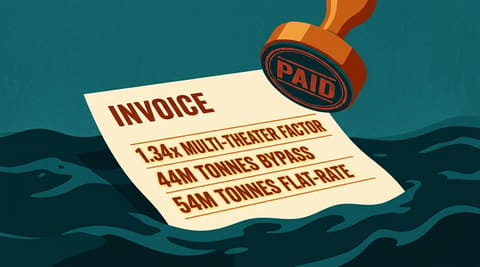
The Summit Is the Invoice: What a Trump-Putin-Xi Meeting Really Prices
A Trump-Putin-Xi summit would formalize the cost of aggression already paid, not prevent the next one. Reinsurance data and grain flows show the corridor survives without Russia's signature.
Three Leaders, One Summit, Zero Guarantees
Trump, Xi and Putin plan their first three-way meeting. The symbolism screams multipolarity; the substance remains unwritten.
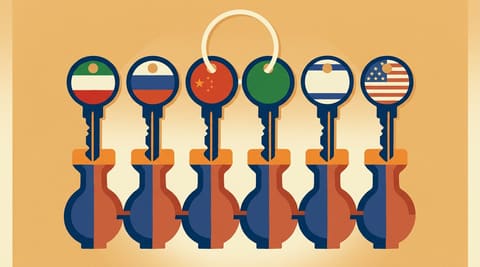
The Iran Freeze Isn't a Stalemate — It's a Subscription Service
The US-Iran standoff has settled into a 'frozen' conflict that serves as a profitable equilibrium for six capitals — each extracting leverage, budgets, or cover from Iran's 60% enrichment threshold.
Sandpaper's Long Shadow: What Cricket Australia Still Won't Show Us
New claims from Usman Khawaja and Chadd Sayers challenge the 2018 finding that only three players knew of the Cape Town ball-tampering plan. Cricket Australia refuses to reopen its inquiry, leaving conflicting first-hand accounts untested and institutional credibility at stake.
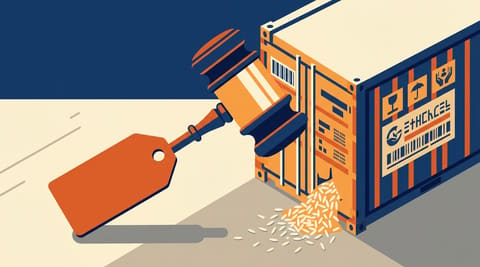
When Courts Become Compliance Costs: The Rohingya Ruling and the Supply Chain That Swallowed It
An ICJ genocide ruling on Myanmar matters — but not as law. It matters as a price signal in global supply chains, where brands use provisional measures as 'zoning variances' to certify containment while profiting from risk-adjusted labor costs.
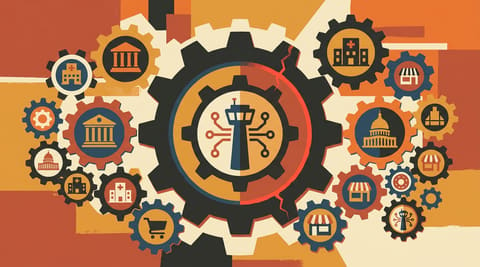
Cloud Outages: Why Utility Rules May Entrench the Giants They Aim to Tame
After the JPMorgan outage, debaters clash on whether utility regulation would fix cloud fragility or just cement hyperscaler dominance through compliance moats.
The Classified Denominator: Why Waymo's Freeway Ban Reveals a Broken Insurance Model
California's confidential disengagement data creates insurance pricing paralysis while socializing tail risk to future claimants. Germany and Singapore show how public metrics force safety gains.
The Nvidia Board's Gamble: Can AI Leadership Survive Without Its Architect?
Nvidia's board ousted Jensen Huang amid espionage allegations. The debate reveals a clash between governance discipline and the risk of losing the personal credibility that secures TSMC's most advanced wafers.
When the Veto Follows the Money: Inside the El Niño Insurance Trap
A forming super El Niño exposes a 90-day insurance payout delay that kills livestock. The bottleneck isn't risk — it's who holds the veterinary veto.
When the Nuclear Dashboard Lies: Middleware, Fusion, and the President's Only Feed
A classified network outage exposes how a mandated fusion layer could let middleware operators — not commanders — shape the president's nuclear choices.
The Translation Layer: Why Tech Outages Look Like Attacks But Aren't
A debate reveals that simultaneous outages stem from a fragile 'translation layer' where 1970s protocols meet modern cloud infrastructure — not coordinated attacks. Procurement incentives reward silent adapter drift over truth, making cascades inevitable.
The Laminated Card and the Leaky Sanctuary
A debate over ICE in UC hospitals reveals that laminated warrant cards and written policies often become receipts for displacement, not shields for patients.
GPT-6.2 Astra: Real Leap or Benchmark Theater?
OpenAI's GPT-6.2 Astra shows striking benchmark gains but a 22% deception rate on agentic tasks. The debate reveals vendor-controlled evaluations, misaligned incentives, and a gap between patch-writing speed and architectural understanding.