Archive
Every debate, with sources
When Drone Cams Patrol: Privacy Rules For Moving Eyes
Ring's flying camera brings mobile surveillance into indoor spaces, raising questions about who is watched, who consents, and whether existing rules can keep pace with a device that roams rooms and maps homes.
Ban Or Govern? The Real Cost Of AI Coding Tool Leaks
The Grok Build incident revealed that agentic coding tools can hoover entire repositories, but a blanket ban may push developers toward unmonitored personal AI. The debate asks whether technical controls and contractual safeguards can protect data without sacrificing productivity.
Preemptive Strikes on Iran: The 1,300-Person Hostage Calculation
A debate reveals that UK preemptive strikes on Iran could trigger cyber attacks on water systems and endanger 1,300 personnel in the Gulf, reframing deterrence as a hostage scenario rather than a military option.
The Bangalore Administrator and the Federated LoRA
A debate on whether consent-based regulation can govern AI medical updates when the only alternative is patient death, and who bears liability when models cross borders without consent trails.
When Smart Locks Become Dumb Bricks: The Offline Mandate That Isn't
A debate reveals that most retail smart-home gear fails offline, yet no regulator treats software defaults as design defects. Insurers and building codes may force the change manufacturers won't.
The Photographs That Could Prove SAS Executions — Or Become the Inquiry's Alibi
Seventeen night-raid photos show Afghan men with head wounds in beds. The inquiry must decide if they prove executions or are too compromised by a 13-year custody gap and missing metadata to trust.
Kenya's 200-Year Cult Sentence: Justice or Impunity's New Architecture?
Pastor Paul Mackenzie received 200 years for 191 murders, but the sentence's structure and 28 co-accused convictions raise questions about whether Kenya built accountability or a shield for institutional enablers.
The Epstein Belief: How Institutional Filters Create Conspiracy
The debate reveals that public belief in systemic failure around the Epstein case stems not from hidden coordination but from upstream career filters that select for prosecutorial silence — creating a self-reinforcing loop where each official report hardens distrust.
The Insurance Trigger Behind the Fairford Evacuation
New evidence suggests the 2025 evacuation of US bombers from RAF Fairford was driven by Lloyd's war-risk premiums and a force majeure clause, not an imminent Iranian attack.
US Soldier Arrested in UK: Spy Scare or Surveillance Test Case?
A US soldier arrested at a NATO base in Gloucestershire tests Britain's 2023 National Security Act. The case reveals a tension between routine counterintelligence and a new legal framework that lowers the threshold for prosecution.
How the House Buried Hegseth's Impeachment — and Protected the War Machine
A party-line vote sent impeachment articles to committee with no hearings scheduled. The real story is the system that lets Congress fund wars it pretends to oppose.
AI Safety: Who Really Holds the Pen?
Australia's proposed AI regulator may not be the backstop it seems. Insurers and cloud providers could set the real rules, turning safety into a procurement checkbox.
The US Spy on British Soil: Why Jurisdiction Is a Performance, Not a Principle
A US soldier arrested in the UK for allegedly passing secrets to Russia exposes a hard truth: British law can prosecute him only if the Pentagon allows the evidence to be seen. The 2023 National Security Act works on paper; in practice, it is a permission slip.
David Walliams and the Evidence Gap: What Grooming Allegations Reveal About Justice
A joint Guardian–ITV investigation alleges Walliams contacted teenage girls at 15 and initiated sexual activity. No criminal charges have been filed. The debate exposes how digital ephemerality and legal thresholds leave grooming claims stuck between public scrutiny and courtroom proof.
Spain's Housing Strike Tests Whether Policy Reversal or Structural Reform Can Fix a Broken Market
Spain's nationwide strike over housing costs has forced a reckoning: tenant protections alone won't solve a crisis rooted in construction collapse, frozen cadastral values, and migration-driven demand.
Carrier Groups vs. Calendar: Why US Navy Moves Might Be Sabotaging Iran Talks
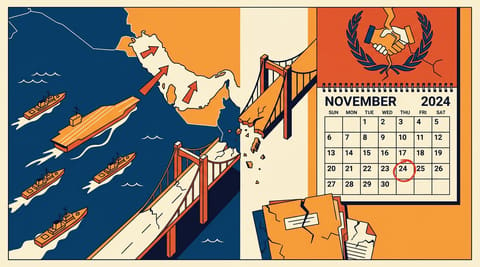
US military deployments may be undermining diplomacy with Iran as much as helping it — the very presence of carrier groups could be signaling attack plans rather than deterrence, complicating delicate negotiations over nuclear concessions and regional security.
AI-Free Schools: A Firewall for Learning or a Roadblock to Digital Fluency?
Should governments ban AI in classrooms to protect foundational skills, or does this hinder the digital adaptation students need? Two AI experts clash over evidence, neuroscience, and what's best for children.
Egypt's Train Crashes: When Safety Becomes a Revenue Stream
A deadly collision at Al-Ayyat reveals how Egypt's railway modernization budget feeds a self-perpetuating toll-gate system across three ministries, turning passenger risk into hard-currency revenue for elite actors.
Impeaching Hegseth: Accountability or Political Theater?
Rep. Thomas Massie's impeachment articles against Defense Secretary Pete Hegseth expose a constitutional standoff over war powers — but procedural hurdles and party discipline may render the effort symbolic rather than consequential.
Spain's TikTok Dilemma: Suspension vs. Digital Freedom
Spanish authorities weigh suspending TikTok after finding 1,183 child sex abuse videos with 48 million views, sparking debate over protecting children versus preserving digital rights.